

P0303 on 2015 Dodge Journey: Cylinder 3 Misfire Causes and Fixes
P0303 indicates a misfire in cylinder 3. On a 2015 Dodge Journey, this is most often caused by a worn spark plug or a failing ignition coil. For the 3.6L V6, a persistent P0303 can also be an early sign of rocker arm or cylinder head issues. For the 2.4L I4, TSBs point towards potential software updates or crankshaft sensor issues. Replacing the coil and plug for cylinder 3 is the most common and inexpensive first step.
- P0303 on a 2015 Dodge Journey means cylinder 3 is misfiring.
- The most likely causes are a bad spark plug or a faulty ignition coil, which are simple DIY fixes.
- A quick way to diagnose a bad coil is to swap it with another cylinder and see if the misfire code follows.
- On 2.4L models, pay attention to code P0335 (Crankshaft Position Sensor), as TSBs indicate it is a known related issue.
- Do not ignore a flashing check engine light, as this signals a severe misfire that can damage your catalytic converter.
What's Unique About the 2015-2015 Dodge JOURNEY
For the 2015 Dodge Journey, both the 2.4L I4 and 3.6L V6 engines can experience this code. On the 2.4L engine, Technical Service Bulletins (TSBs) #18-081-17 and #18-033-16 explicitly state that a P0303 code can appear alongside a P0335 (Crankshaft Position Sensor Circuit) code, often requiring a PCM software update to resolve. For the 3.6L Pentastar V6, while standard ignition issues are common, a persistent P0303, especially if accompanied by a ticking noise, can be an early indicator of rocker arm or cylinder head issues, a known weakness in this engine family.
Diagnostic Flowchart
Tap your situation to follow the diagnostic path that matches what you're seeing on this vehicle.
Symptoms You May Notice
- Rough or shaky idle
- Hesitation or stumbling during acceleration
- Reduced engine power
- Poor fuel economy
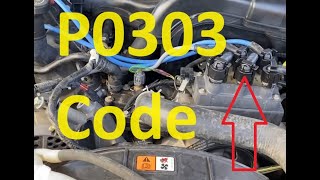
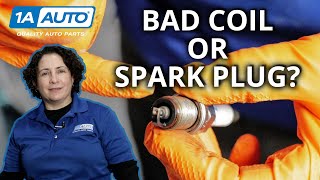
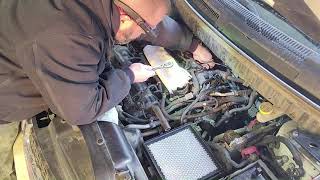
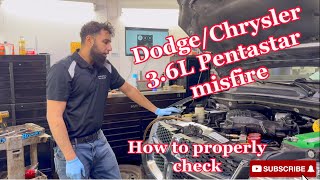
- Solid or flashing Check Engine Light 🎬 Watch: How to diagnose spark plugs and ignition coils
- Fuel smell from the exhaust
- Replacing oxygen (O2) sensors. O2 sensors report on the efficiency of combustion but do not typically cause a single-cylinder misfire. A bad O2 sensor would more likely trigger other codes, such as P0133 or P0420.
Most Likely Causes
- Worn or Fouled Spark Plug 🔴 High Probability Spark plugs are a regular maintenance item. On the 2.4L, oil leaking from the valve cover gasket into the spark plug tubes is a common cause of fouling and misfires.
How to confirm: Remove the spark plug from cylinder 3 and inspect it for wear, damage, or fouling (black, wet, or white deposits). A wet, fuel-smelling plug indicates a lack of spark, while heavy black soot points to a rich condition or oil contamination. Compare it to a plug from another cylinder.
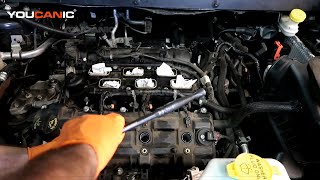
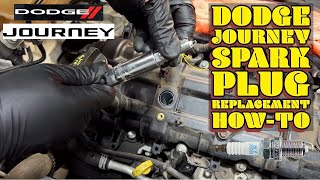
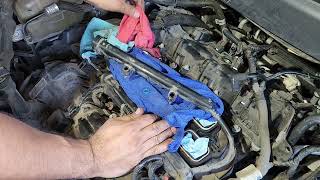
Typical fix: Replace the spark plug. It is recommended to replace all spark plugs at the same time 🎬 See this step-by-step 3.6L spark plug replacement walkthrough for even performance. Ensure they are gapped correctly; for the 2.4L, the gap is often specified around 0.039-0.043 inches.
Est. part cost: $5-$25 per plug - Failing Ignition Coil 🔴 High Probability
How to confirm: Swap the ignition coil from cylinder 3 with another cylinder (e.g., cylinder 1). Clear the codes and drive the vehicle. If the code changes to P0301, the ignition coil is faulty. Visually inspect the coil boot for cracks or carbon tracking (black lines).
Typical fix: Replace the faulty ignition coil. While you can replace just one, it's often wise to replace them as a set if they are original and high-mileage.
Est. part cost: $30-$90 per coil - Faulty Fuel Injector 🟡 Medium Probability
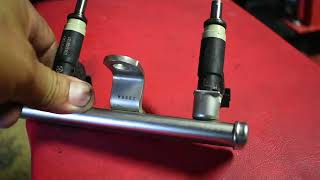
How to confirm: Listen for a consistent clicking sound from the injector with a mechanic's stethoscope. A more definitive test is to swap the fuel injector with another cylinder, similar to the coil swap test, though this is more labor-intensive as it requires removing the fuel rail. A definitive electrical test is to measure the injector's resistance; a good injector should read around 12 ohms, while a failed one will read as an open circuit.
Typical fix: Replace the faulty fuel injector. This was the reported solution for a 2017 Journey with a persistent P0303 after plugs and coils were changed.
Est. part cost: $50-$120 - Crankshaft Position Sensor or PCM Software ⚪ Low Probability TSBs #18-081-17 and #18-033-16 specifically link misfire codes, including P0303, with the crankshaft position sensor code P0335 on the 2.4L engine. The bulletins indicate the primary fix is a PCM software update, not necessarily a sensor replacement.
How to confirm: Check for code P0335 alongside P0303 with a capable scanner. The vehicle may also experience stalling when coming to a stop. The fix requires a dealer or a shop with a wiTECH tool to perform the PCM flash.
Typical fix: Reprogram the PCM with the latest software per TSB #18-081-17. If the code persists, then replace the crankshaft position sensor.
Est. part cost: $20-$70 for sensor, $100-$200 for PCM flash
Rare But Worth Checking
- Low Engine Compression: This indicates a more serious internal engine problem, such as a leaking head gasket, worn piston rings, or a bad valve/valve seat. A leak-down test is the best way to diagnose this, as it can pinpoint where the compression is being lost (intake, exhaust, or crankcase).
- Vacuum Leak: A leak in the intake manifold gasket near cylinder 3 can lean out the air/fuel mixture and cause a misfire. This may be accompanied by a hissing sound at idle and potentially other lean codes.
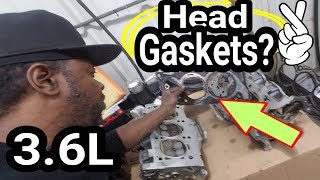
- Failed Rocker Arms / Cylinder Head (3.6L V6): On the 3.6L Pentastar engine, failing rocker arms (often due to seized bearings) can cause a ticking noise and lead to a misfire. In more severe cases, this can be related to the known Pentastar cylinder head issue, which was more common in earlier models but can still occur. This is a more involved repair that requires removing the valve cover for inspection and potentially the cylinder head. 🎬 Watch: How to identify rocker arm noise and head gasket issues
Diagnosis Steps
- Read all stored fault codes with an OBD-II scanner. Note any codes that appear with P0303, especially P0335 on a 2.4L engine.
- For the 3.6L V6: Identify cylinder 3. It is the middle cylinder on the rear bank (closest to the windshield). The rear bank is cylinders 1, 3, 5 from front to back (right to left).
- For the 2.4L I4: Identify cylinder 3. It is the third cylinder from the front of the engine (left to right when facing the engine). The firing order is 1-3-4-2.
- Swap the ignition coil from cylinder 3 with an adjacent, easily accessible cylinder (e.g., cylinder 1). Clear the codes, run the engine, and re-scan. If the code moves to P0301, the coil is bad.
- If the code remains P0303, inspect the spark plug. Remove the plug from cylinder 3 and check for wear, oil/fuel fouling, or damage. If it looks suspect, replace it. You can also swap the plug to another cylinder to see if the misfire follows.
- If the misfire still remains on cylinder 3, inspect the wiring and connector for the ignition coil and fuel injector for any visible damage, corrosion, or loose connections.
- If wiring is okay, the next step is to check the fuel injector. This can be done by swapping it with another cylinder, though this is a more advanced repair that involves depressurizing and removing the fuel rail.
- If all ignition and fuel components for cylinder 3 test good, check for a vacuum leak near cylinder 3's intake runner. If no leak is found, perform an engine compression and leak-down test to rule out mechanical issues like bad valves, rings, or head gasket.
Parts You'll Likely Need
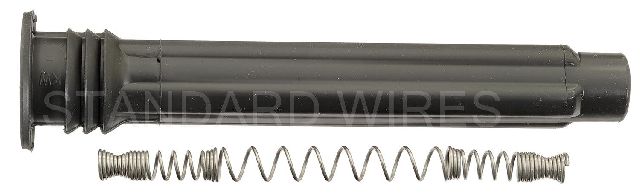
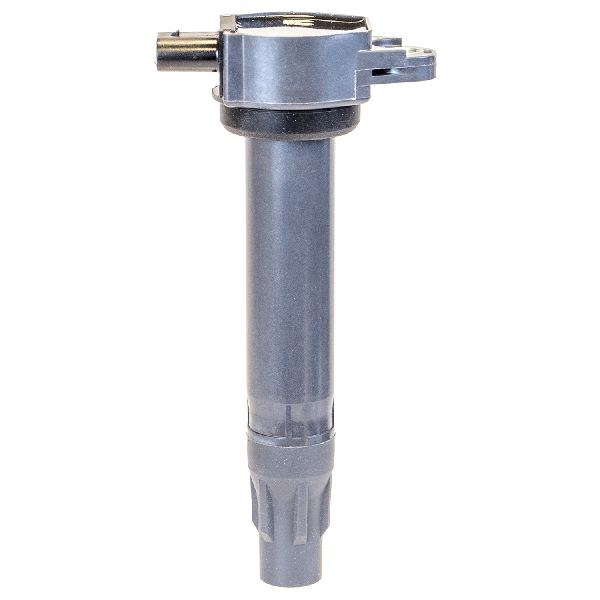
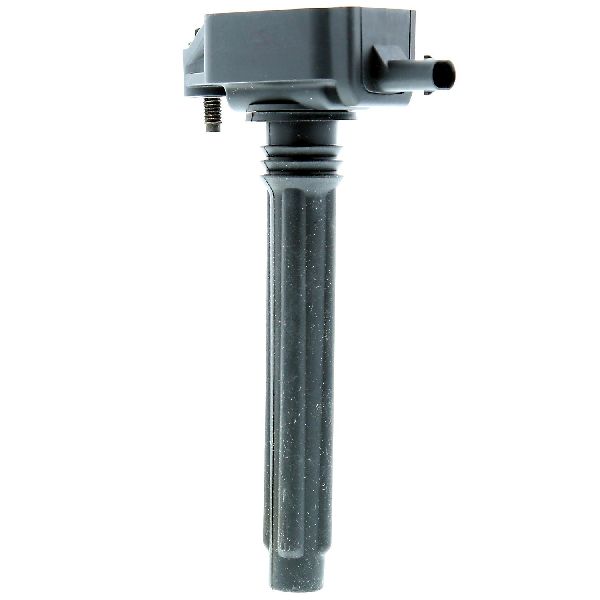
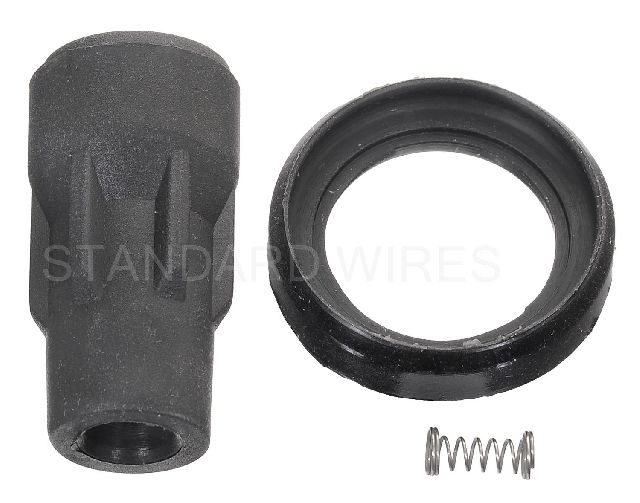
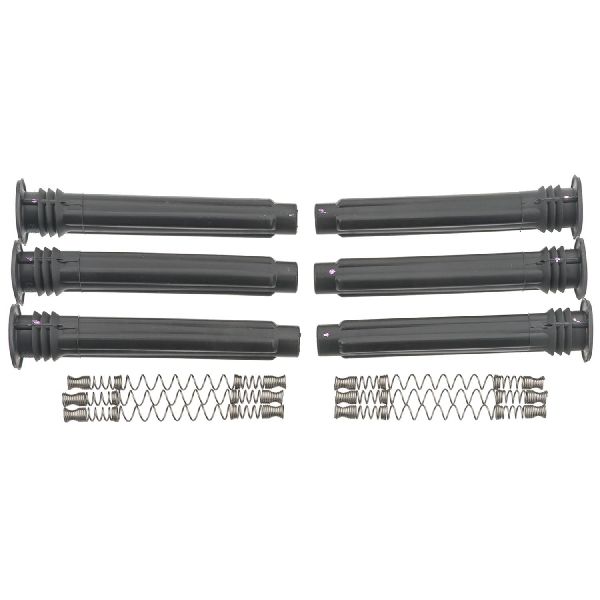
- Ignition Coil
(OEM #5149168AI (or superseding #5149168AJ) for 3.6L V6; 4606824AC for 2.4L I4)— This is one of the most common failure points for a single-cylinder misfire and is easy to diagnose via swapping.
Trusted brands: Mopar, NGK, Denso
OEM price range: $85-$130
Aftermarket price range: $30-$75 - Spark Plug
(OEM #SP149125AE (or superseding #SP149125AF) for 3.6L V6; SP0ZFR5F11 for 2.4L I4)— As a standard wear item, a fouled or worn-out spark plug is a very frequent cause of P0303.
Trusted brands: Mopar (Champion/NGK), NGK, Autolite
OEM price range: $15-$35
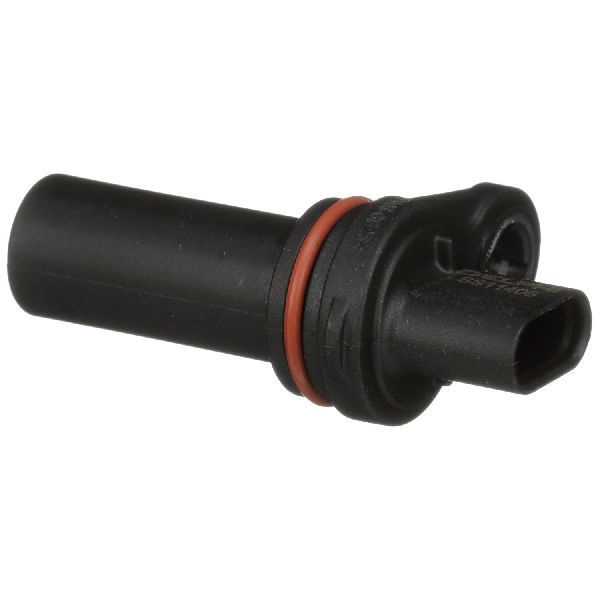
Aftermarket price range: $5-$20 - Crankshaft Position Sensor
(OEM #5149167AF)— Specifically cited in TSBs for the 2.4L engine as a potential cause for misfire codes, including P0303, though a software update is the first recommended step.
Trusted brands: Mopar, Bosch, Standard Motor Products
OEM price range: $70-$130
Aftermarket price range: $20-$50
Related Codes That Often Appear With This One
- P0300 — If the misfire is intermittent or affects multiple cylinders, a P0300 (Random/Multiple Cylinder Misfire) may be stored alongside P0303.
- P0301, P0302, P0304, P0305, P0306 — Other cylinder-specific misfire codes may appear if the root cause (like low fuel pressure or a vacuum leak) affects more than just cylinder 3.
- P0335 — As per TSBs #18-081-17 and #18-033-16, a faulty crankshaft position sensor circuit or related software glitch can cause misfires on the 2.4L engine, logging P0335 along with P030x codes.
Technical Service Bulletins (TSBs) & Recalls
- 18-081-17: Supersedes 18-033-16. Involves reprogramming the PCM for various issues on 2.4L and 3.6L engines, including misfire codes (P0301-P0304) appearing with P0335 on the 2.4L.
- 18-033-16: Original TSB related to PCM software updates for misfires and other issues on the 2.4L engine.
Platform-Specific Known Issues
- TSB 18-081-17 & 18-033-16: These bulletins apply to the 2.4L engine and note that codes P0301, P0302, P0303, and P0304 can be set in the PCM along with code P0335 for the crankshaft position sensor circuit. The bulletins call for a PCM software update to fix this condition, which can also cause stalling.
- 3.6L Pentastar Rocker Arm/Lifter Tick: A known issue on the 3.6L V6 is a ticking sound that develops, often caused by a failing rocker arm bearing. This can lead to improper valve lift and cause a misfire on the affected cylinder. If you hear a ticking noise along with your P0303, this is a strong possibility.
Mechanic-Grade Diagnostic Values
- 3.6L Fuel Injector Resistance — expected: Approximately 12.0 - 12.2 ohms. Failure: An open circuit (infinite resistance) or a dead short (zero resistance) indicates a failed injector.
- Ignition Coil Primary Resistance — expected: 0.2 - 3.0 ohms. Failure: A reading outside this range suggests a faulty coil. It's best to compare the reading to a known-good coil.
- Ignition Coil Secondary Resistance — expected: 5,000 - 15,000 ohms (5-15 kOhms). Failure: A reading significantly outside this range indicates a failure in the secondary winding.
- 3.6L Fuel Pressure (Key On, Engine Off) — expected: 58 - 64 psi. Failure: Pressure significantly below this range indicates a weak fuel pump or a leak in the system.
- 3.6L Engine Oil Pressure (Warmed Up) — expected: ~30 psi at idle, 60-70 psi under load. Failure: Consistently low oil pressure can lead to lifter and rocker arm failure, a known cause of misfires on this engine.
Hidden / Shadow Codes Worth Checking
- Mode $06 Misfire Counters: The Engine Control Module (ECM) continuously counts misfire events for each cylinder, even if the rate is too low to set a P030x trouble code and turn on the Check Engine Light. Accessing this data can reveal an intermittent or developing misfire on a specific cylinder before it becomes a constant fault. (see via A professional scan tool (like the dealer's wiTECH) or an advanced consumer OBD-II scanner with Mode $06 capability. The data will be listed under a specific Test ID (TID) or Monitor ID, which can be labeled as 'Misfire Cylinder Data'.)
Scan Tool Commands That Help
- wiTECH (or other advanced scan tool): Misfire Monitor / Cylinder Misfire Counts — Use this function when a misfire is felt but no code is present, or to confirm the misfire is isolated to cylinder 3. The tool provides a live count of misfire events per cylinder, which is invaluable for diagnosing intermittent issues.
- wiTECH: Reprogram PCM — This service function is required to perform the software update specified in TSBs #18-081-17 and #18-033-16 for the 2.4L engine, which addresses false misfire codes that can be set along with P0335.
Wiring & Ground Locations
- Main Engine Ground (Driver Side) — The negative battery cable connects to a ground stud on the driver's side strut tower. A separate cable runs from this stud to the engine block.. A poor engine ground can cause a weak or inconsistent spark from the ignition coils and erratic behavior from fuel injectors, leading to misfires. This is a foundational check for any electrical issue.
- Chassis Ground (Passenger Side) — A ground wire is located on the passenger side engine mount, which connects to a ground stud on the passenger strut tower.. Multiple ground points are used to ensure electrical stability. A fault at any of these locations can introduce electrical noise and resistance, potentially causing misfires.
Real Owner Repair Stories
- YouTube channel 'ProMasters Only' (2016 Ram Promaster with 3.6L Pentastar V6 (same engine family)) — Persistent P0303 misfire on cylinder 3.
❌ Tried (didn't work) Swapping ignition coils, Replacing spark plug, Swapping fuel injectors
✅ What actually fixed it The mechanic removed the valve cover and found the intake camshaft lobe for cylinder 3 was severely worn and grooved. The associated rocker arms were also damaged and their bearings had seized. Replacing the intake camshaft, two rocker arms, and two lifters for cylinder 3 resolved the misfire.
OEM Part Supersession History
5149168AI→5149168AJ— Standard part revision and improvement by the manufacturer.
Heads up: The new part number (5149168AJ) is the correct direct replacement for the original ignition coil on the 3.6L V6.
Model Year Variations Within This Range
- 2011-2013 (for context): The 3.6L Pentastar V6 in 2011-2013 models was subject to an extended warranty for a defective left cylinder head that caused premature valve seat wear and misfires, particularly on cylinders 2, 4, and 6. While the 2015 model has a revised head design, the general engine architecture and potential for rocker arm failure remains.
Helpful Videos
Used OEM Parts in Stock


New Aftermarket Parts Available

The information in this article is provided for general reference and educational purposes only. Vehicle specifications, procedures, and part compatibility can vary by production date, trim level, and region. Always consult your vehicle's factory service manual and verify part numbers before purchasing or performing repairs. Safety-critical components such as airbags, seat belts, and braking systems should be installed by a qualified professional.
- Dodge JOURNEY:
- 🎬 Helpful Videos
- 🛍️ Shop This Part
- What's Unique About the 2015-2015 Dodge JOURNEY
- Diagnostic Flowchart
- Symptoms You May Notice
- Most Likely Causes
- Rare But Worth Checking
- Diagnosis Steps
- Parts You'll Likely Need
- Related Codes That Often Appear With This One
- Technical Service Bulletins (TSBs) & Recalls
- Platform-Specific Known Issues
- Mechanic-Grade Diagnostic Values
- Hidden / Shadow Codes Worth Checking
- Scan Tool Commands That Help
- Wiring & Ground Locations
- Real Owner Repair Stories
- OEM Part Supersession History
- Model Year Variations Within This Range
- 🎟️ Get 5% Off