

P0303 on 2022-2025 Dodge Durango: Cylinder 3 Misfire Causes & Fixes
P0303 indicates a misfire in cylinder 3. On the 2022-2025 Dodge Durango, this is most often caused by a bad ignition coil or a worn spark plug. While these are simple fixes, this code can also be an early warning for more serious mechanical engine problems like lifter failure, a known issue on HEMI V8 engines, or rocker arm failure on the Pentastar V6.
- P0303 means cylinder 3 is misfiring.
- The most likely cause is a bad ignition coil or spark plug, which are simple to diagnose by swapping parts with another cylinder.
- Do not drive if the check engine light is flashing, as this can cause rapid and expensive damage to your catalytic converter.
- Be aware that on Durango V6 and V8 engines, this code can be an early symptom of more serious internal engine problems like failed lifters or rocker arms.
- Always diagnose the problem before buying parts. A simple coil swap can save you from buying unnecessary components.
What's Unique About the 2022-2025 Dodge DURANGO
For the Dodge Durango, a P0303 code requires careful diagnosis. While the root cause is often a simple ignition component, both primary engine options have well-documented mechanical weaknesses that can present as a misfire. The 5.7L and 6.4L HEMI V8 engines are known for potential lifter and camshaft failures, which can start as an intermittent misfire. This issue, often called the 'Hemi tick,' occurs when a lifter's roller bearing seizes, causing it to grind down the camshaft lobe. 🎬 See this walkthrough on replacing Hemi camshafts and lifters. The problem is reportedly more common on cylinders deactivated by the Multi-Displacement System (MDS). The 3.6L Pentastar V6 has a history of rocker arm failures where the needle bearings in the roller seize, also leading to misfire codes. The provided NHTSA technical service bulletins (TSBs) mentioning misfires during cold starts or warm-up could point to early signs of these mechanical issues or, in some cases, a simple software glitch that requires a PCM update. [Bulletin #18-039-26, Bulletin #18-034-26]
Diagnostic Flowchart
Tap your situation to follow the diagnostic path that matches what you're seeing on this vehicle.
Symptoms You May Notice
- Rough or shaky idle
- Engine hesitation or stumbling during acceleration
- Noticeable loss of engine power
- Flashing or solid check engine light
- Reduced fuel economy
- Smell of fuel from the exhaust
- For HEMI engines, a distinct 'ticking' or 'knocking' noise from the engine bay, which is a classic sign of a failing lifter.
- Replacing oxygen sensors. While an O2 sensor can be affected by a misfire, it is almost never the cause of a single-cylinder misfire code like P0303.
- Replacing the catalytic converter. A misfire can damage a catalytic converter, but a bad converter will not cause a misfire in a specific cylinder.
- On HEMI engines, mistaking the 'Hemi tick' of a failing lifter for a less serious exhaust manifold leak.
Most Likely Causes
- Faulty Ignition Coil 🔴 High Probability Coil-on-plug systems are a common failure point due to constant exposure to high heat and vibration. It's one of the most frequent causes of a single-cylinder misfire.
How to confirm: Swap the ignition coil from cylinder 3 with another cylinder (e.g., cylinder 1). Clear the codes and drive the vehicle. If the code changes to P0301, the ignition coil is faulty. This is a free and effective diagnostic step.
Typical fix: Replace the failed ignition coil. It is often recommended to replace the corresponding spark plug at the same time.
Est. part cost: $40-$100 - Worn or Defective Spark Plug 🔴 High Probability Spark plugs are a standard maintenance item that wear out over time. A worn electrode, incorrect gap, or cracked porcelain insulator will cause a weak or inconsistent spark, leading to a misfire.
How to confirm: Remove the spark plug from cylinder 3. Inspect it for wear on the electrode, carbon fouling, oil deposits, or cracks in the porcelain insulator. Compare it to a plug from a different cylinder. A black, fuel-smelling plug indicates a lack of spark or other issue.
Typical fix: Replace the spark plug. It is best practice to replace all spark plugs as a set if they are near the end of their service life, especially on a high-mileage vehicle.
Est. part cost: $15-$30 per plug - Failed Fuel Injector 🟡 Medium Probability
How to confirm: Listen to the injector with a mechanic's stethoscope; it should have a consistent clicking sound. You can also test the injector's resistance with a multimeter; it should be around 12-14 ohms. Swapping the injector with another cylinder is a definitive test, but this is more labor-intensive than swapping a coil.
Typical fix: Replace the clogged or failed fuel injector. It's a good idea to clean the fuel rail during this service.
Est. part cost: $70-$200 - Engine Mechanical Failure (Lifter/Camshaft/Rocker Arm) 🟡 Medium Probability HEMI V8 engines (5.7L, 6.4L) are known for lifter and camshaft failures, often called the 'Hemi tick'. The roller on a lifter can seize, destroying the camshaft lobe. This often starts as a single-cylinder misfire before escalating. The 3.6L V6 can experience rocker arm failures, where the roller's needle bearings seize, causing similar damage.
How to confirm: Requires a compression test and/or a cylinder leak-down test to check the mechanical integrity of the cylinder. A distinct ticking noise is a strong audible clue. A visual inspection is ultimately required, involving removal of the valve covers or cylinder heads to inspect the camshaft lobes and lifters/rocker arms.
Typical fix: This is a major repair. For HEMI engines, it typically involves replacing the camshaft, all lifters (not just the failed one), and associated gaskets. For the Pentastar V6, it involves replacing the failed rocker arms and potentially the camshafts.
Est. part cost: $500-$2000+
Rare But Worth Checking
- Vacuum Leak: A leak in the intake manifold gasket near cylinder 3 can lean out the air/fuel mixture and cause a misfire on just that cylinder. A hairline crack in the plastic intake manifold itself is also possible.
- Faulty Powertrain Control Module (PCM): This is extremely rare, but the PCM can fail and incorrectly report a misfire or fail to fire the ignition coil or fuel injector. A damaged injector driver in the PCM is a possible, though unlikely, cause.
Diagnosis Steps
- Retrieve all stored fault codes with an OBD-II scanner. Note if the check engine light was flashing or solid.
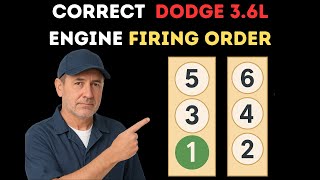
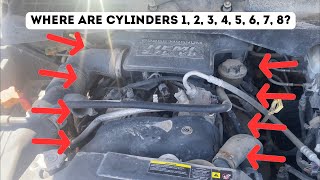
- Determine the location of cylinder 3. For the 3.6L V6, it's the middle cylinder on the passenger side (front to rear: 1-3-5). For the 5.7L/6.4L V8, it's the second cylinder from the front on the driver's side (front to rear: 1-3-5-7).
- Listen for an engine 'tick', especially on HEMI V8s. A rhythmic ticking noise is a strong indicator of a potential lifter/camshaft issue, which should steer diagnosis towards mechanical checks.
- Swap the ignition coil from cylinder 3 to an easily accessible cylinder (e.g., cylinder 1). Clear the codes, run the engine, and see if the misfire code moves to the new cylinder (P0301). If it does, the coil is bad.
- If the code remains P0303, move the spark plug from cylinder 3 to the new cylinder. If the code follows the plug, the spark plug is the issue.
- If the misfire is still on cylinder 3, inspect the wiring and connector for the ignition coil and fuel injector for any damage, corrosion, or loose connections.
- If ignition and wiring are good, the next likely culprit is the fuel injector. This can be tested by swapping it with another cylinder or by checking its function with specialized tools.
- If the injector is not at fault, perform a compression test on cylinder 3 to check for mechanical engine problems. A significant loss of compression compared to other cylinders indicates an internal issue like a bad valve, piston ring, or the known lifter/camshaft problem.
Parts You'll Likely Need
- Ignition Coil
(OEM #68238603AA (for 5.7L/6.4L V8); 68223569AD (for 3.6L V6))— A common failure point for ignition systems and one of the most frequent causes of a single-cylinder misfire.
Trusted brands: Mopar, NGK, Delphi
OEM price range: $60-$120
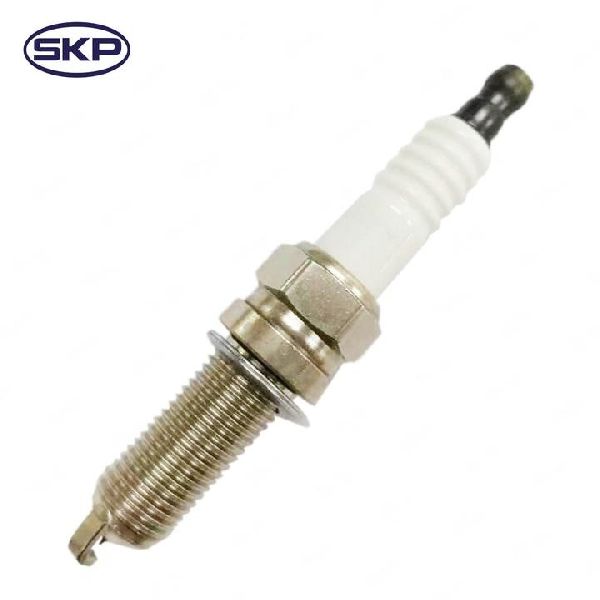
Aftermarket price range: $40-$80 - Spark Plug
(OEM #SP149212AC (for 6.4L V8); SP225755AB (replaces 68225755AA, for 3.6L V6))— Spark plugs are a standard maintenance item that wear out over time, leading to a weak or inconsistent spark.
Trusted brands: Mopar, NGK, Champion
OEM price range: $20-$40
Aftermarket price range: $15-$30 - Fuel Injector — Can become clogged or fail electronically, preventing the correct amount of fuel from being delivered to cylinder 3.
Trusted brands: Mopar, Bosch, Standard Motor Products
OEM price range: $120-$200
Aftermarket price range: $70-$150 - Rocker Arm (3.6L V6)
(OEM #5184296AH)— A known failure point on the Pentastar V6 where the roller bearing seizes, causing a misfire and potential camshaft damage.
Trusted brands: Mopar, Melling
OEM price range: $10-$20 per arm
Aftermarket price range: $8-$15 per arm
Related Codes That Often Appear With This One
- P0300 — If the misfire becomes more widespread or is caused by a system-wide issue like a vacuum leak or low fuel pressure, a P0300 (Random/Multiple Cylinder Misfire) code may appear alongside P0303.
- P0301, P0302, P0304, etc. — If other cylinders are also misfiring, their respective codes will be stored.
- P2308 — On some models, this code for 'Ignition Coil 3 Secondary Circuit-Insufficient Ionization' can appear with P0303, pointing more directly to a bad coil, wiring, or PCM driver issue.
Technical Service Bulletins (TSBs) & Recalls
- 18-039-26: Mentions P0303 as a potential code set during the engine warm-up period.
- 18-034-26: Cites P0303 as a code that can be set during cold start catalyst heating.
- 09-011-25: Lists P0303 as one of several misfire codes that may be exhibited by the vehicle.
Platform-Specific Known Issues
- HEMI V8 Lifter/Camshaft Failure: On 5.7L and 6.4L HEMI engines, a common point of failure is the hydraulic lifters, which can seize and cause damage to the camshaft. This often presents initially as a single-cylinder misfire and may be accompanied by a ticking noise from the engine. Forum users report this failure can occur even at relatively low mileage (e.g., 38k miles) and that a P0303 code is a classic early symptom.
- Pentastar V6 Rocker Arm Failure: The 3.6L V6 engine has a known issue with rocker arms failing, where the roller's needle bearings seize. This can cause a misfire code and a ticking noise, often more noticeable on cold starts before subsiding as the engine warms.
- Software Updates for Cold Misfires: TSBs #18-039-26 and #18-034-26 indicate that misfires on cylinders 1-4 can occur during engine warm-up or cold start catalyst heating, which may require a software update rather than a hardware replacement.
Mechanic-Grade Diagnostic Values
- Fuel Injector Resistance — expected: 11.5 - 14 Ohms. Failure: A reading of 0 ohms indicates a shorted injector, while a significantly higher reading indicates an open circuit. Readings should be consistent across all injectors.
- Ignition Coil Primary Resistance — expected: 0.4 - 2.0 Ohms (approximate). Failure: A reading outside this range may indicate a fault, but this test is often inconclusive on modern coil-on-plug units.
- Fuel Pressure (HEMI V8, Key-On Engine-Off) — expected: 55 - 60 PSI. Failure: Pressure significantly below this range indicates a weak fuel pump or a leak in the system.
- Engine Compression (3.6L V6) — expected: Should be consistent across all cylinders.. Failure: Even a small, consistent drop of 10-15 PSI on one cylinder compared to the others can be enough to cause a detectable misfire, pointing to a mechanical issue.
Hidden / Shadow Codes Worth Checking
- Mode 6, Test ID $A2-$AC: Misfire Counts Per Cylinder. This is not a typical DTC but rather raw data from the PCM's self-tests. It shows the number of misfire events the computer has counted for each specific cylinder during the current or last drive cycle. (see via Requires an OBD-II scanner with Mode 6 ($06) data capability. This allows a technician to confirm which cylinder is misfiring and how frequently, even before a P030x code is officially set.)
Scan Tool Commands That Help
- wiTECH, Autel, or other advanced scanner: Misfire Counter / Cylinder Misfire Data — Use this live data screen to confirm that cylinder 3 is the only cylinder misfiring. Watching the counts accumulate in real-time helps verify the fault and confirm a repair after it's been made.
- Autel (with oscilloscope) or similar graphing tool: Ignition Coil Waveform Graphing — After swapping the coil, plug, and injector with no change, this advanced test can be used to check the signal from the PCM to the ignition coil. By comparing the waveform from cylinder 3 to a known-good cylinder, you can determine if the PCM's coil driver has failed, which is a rare but possible cause.
Wiring & Ground Locations
- Engine Wiring Harness Chafe Points — General areas to inspect include where the harness passes near the ECM/TCM mounting bracket, the driver's side upper control arm, and the shock tower.. Engine vibration can cause the wiring harness to rub against sharp metal edges, eventually wearing through the insulation and causing a short in the ignition coil or fuel injector circuit for cylinder 3. While specific bulletins are for other manufacturers, this is a common issue in modern engine bays and a forum post confirms harness decay can be an issue on Durangos.
Real Owner Repair Stories
- Reddit user in r/Dodge (2017 Dodge Durango 3.6L V6, ~83k miles) — P0303 - Cylinder 3 Misfire
❌ Tried (didn't work) Replaced spark plugs, Replaced ignition coils
✅ What actually fixed it The consensus from experienced users was a failed rocker arm and follower (lifter) on cylinder 3, a known issue with the 3.6L Pentastar engine. The user was advised this was the next logical step after ignition components were ruled out. - YouTube channel 'Astral Auto Repairs' (2012 Dodge Durango SXT 3.6L V6) — P0303, slight misfire felt at idle once warm.
❌ Tried (didn't work) Swapped ignition coil from cylinder 3 to 1 (misfire remained on 3)., Swapped spark plug (misfire remained on 3)., Swapped fuel injector (misfire remained on 3).
✅ What actually fixed it Diagnosis concluded an internal engine problem. A compression test showed cylinder 3 was about 10 PSI lower than cylinders 1 and 5. This pointed directly to a mechanical failure, most likely related to the valvetrain (rocker arm/lifter), which is a common failure pattern for this engine.
"I Checked Everything" — The Actual Cause
- A technician may perform a smoke test to check for vacuum leaks and find nothing. However, the misfire could be caused by an issue that a smoke test won't detect, such as a software glitch requiring a PCM update as mentioned in TSBs #18-039-26 and #18-034-26, which note misfires occurring specifically during warm-up or cold start periods. Another cause could be a hairline crack in the plastic intake manifold that only opens under specific thermal or vibration conditions, not at idle during a smoke test.
OEM Part Supersession History
5184296AD, 5184296AE, 5184296AF, 5184296AG→5184296AH— This is the rocker arm for the 3.6L Pentastar V6. Earlier versions were prone to bearing failure. The updated 'AH' part features an improved design, reportedly with a dual-snap ring retainer to prevent the arm from detaching.5149168AI→5149168AJ— Ignition coil for 5.7L HEMI V8 engines. Part was updated for reliability/performance.
Model Year Variations Within This Range
- 2011-2015 vs 2016+: The 3.6L Pentastar V6 engine was significantly updated in 2016, adding a two-step variable valve lift (VVL) system and other efficiency improvements. While the 2022-2025 Durango models all use this updated version, it's important to know that the underlying architecture is similar to earlier models known for rocker arm issues. Chrysler has made efforts to address the problem with updated parts, but the potential for failure still exists.
Helpful Videos
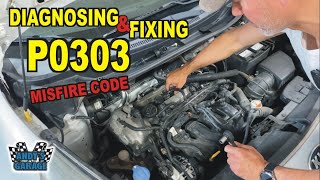
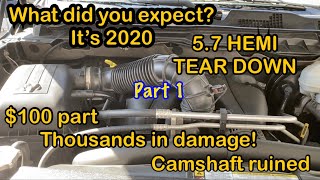
Used OEM Parts in Stock


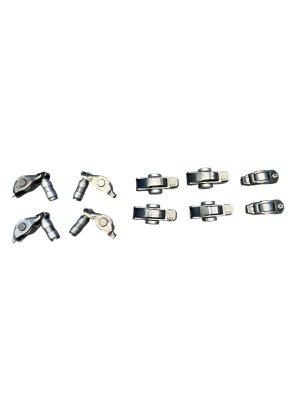

New Aftermarket Parts Available

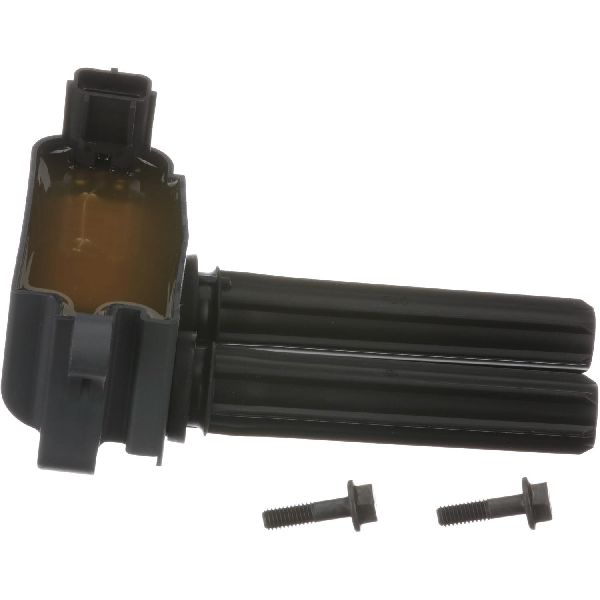

The information in this article is provided for general reference and educational purposes only. Vehicle specifications, procedures, and part compatibility can vary by production date, trim level, and region. Always consult your vehicle's factory service manual and verify part numbers before purchasing or performing repairs. Safety-critical components such as airbags, seat belts, and braking systems should be installed by a qualified professional.
- Dodge DURANGO:
- 🎬 Helpful Videos
- 🛍️ Shop This Part
- What's Unique About the 2022-2025 Dodge DURANGO
- Diagnostic Flowchart
- Symptoms You May Notice
- Most Likely Causes
- Rare But Worth Checking
- Diagnosis Steps
- Parts You'll Likely Need
- Related Codes That Often Appear With This One
- Technical Service Bulletins (TSBs) & Recalls
- Platform-Specific Known Issues
- Mechanic-Grade Diagnostic Values
- Hidden / Shadow Codes Worth Checking
- Scan Tool Commands That Help
- Wiring & Ground Locations
- Real Owner Repair Stories
- "I Checked Everything" — The Actual Cause
- OEM Part Supersession History
- Model Year Variations Within This Range
- 🎟️ Get 5% Off