

P0303 on 2014-2021 Dodge Durango: Cylinder 3 Misfire Causes and Fixes
P0303 on a Dodge Durango most often indicates a failed spark plug or ignition coil on cylinder 3. This is a relatively simple DIY fix, with parts costing between $20 for a spark plug and $50-$100 for an ignition coil. However, on both the 3.6L V6 and 5.7L V8, this code can also be the first sign of more serious, well-documented engine-specific mechanical failures like rocker arms (V6) or camshaft/lifters (V8).
- P0303 signifies a misfire specifically in cylinder 3.
- The most common and easiest fixes are replacing the spark plug and/or ignition coil for cylinder 3.
- Always diagnose before replacing parts. Swapping the ignition coil with another cylinder is a free and effective way to confirm a bad coil.
- Be aware of engine-specific issues: the 3.6L V6 can have rocker arm failures, and the 5.7L V8 can have lifter/camshaft failures, which are more serious repairs.
- If the check engine light is flashing, pull over and stop driving to avoid catastrophic damage to your catalytic converter.
What's Unique About the 2014-2021 Dodge DURANGO

For the 2014-2021 Dodge Durango, the cause of a P0303 misfire can differ significantly between the 3.6L Pentastar V6 and the 5.7L HEMI V8. While both engines commonly suffer from bad spark plugs and coils, each has a notorious mechanical weakness that can manifest as a single-cylinder misfire. The Pentastar V6 is known for premature failure of the valvetrain's rocker arms, where the roller bearing seizes, causing the arm to fail and the valve to stop operating. The 5.7L HEMI V8, particularly in vehicles with the Multi-Displacement System (MDS), has a widely documented history of lifter failure (the "Hemi tick"), where a lifter's roller gets stuck and grinds down the corresponding camshaft lobe, leading to a misfire.
Diagnostic Flowchart

Tap your situation to follow the diagnostic path that matches what you're seeing on this vehicle.
Symptoms You May Notice

- Check engine light is on or flashing
- Rough or shaky idle
- Engine hesitation or stumbling during acceleration
- Loss of engine power
- Reduced fuel economy
- Fuel smell from the exhaust
- A distinct ticking or tapping sound from the engine, especially on the 5.7L HEMI
- Replacing only the spark plug when the ignition coil is the actual cause (or vice-versa).
- Repeatedly replacing ignition and fuel parts (the 'parts cannon' approach) when the underlying cause is a mechanical valvetrain issue like a rocker arm (on the 3.6L) or lifter/camshaft (on the 5.7L).
- Ignoring a persistent engine tick as 'normal' when it is often a precursor to lifter and camshaft failure on the 5.7L HEMI.
Most Likely Causes

- Worn or Faulty Spark Plug 🔴 High Probability Spark plugs are a regular maintenance item. Over time, the electrode wears down, or the insulator can crack, leading to a weak or inconsistent spark. TSB 09-013-20 REV. A specifically notes that some 3.6L Pentastar engines can experience misfires from internally cracked spark plugs.
How to confirm: Remove the spark plug from cylinder 3 and inspect it for wear, damage, carbon fouling, or oil contamination. A cracked porcelain insulator is a definitive sign of failure. Compare its condition to a plug from another cylinder.
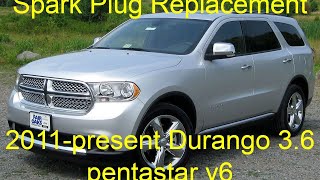
Typical fix: Replace the spark plug in cylinder 3. It is highly recommended to replace all spark plugs at the same time to ensure even performance and prevent future misfires. 🎬 See this walkthrough for replacing spark plugs on the 3.6L engine.
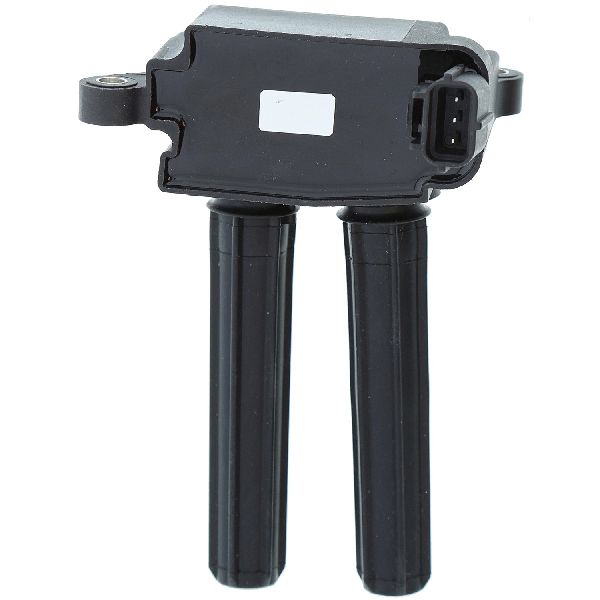
Est. part cost: $15-$30 for a single OEM-quality plug, $90-$180 for a full set. - Failed Ignition Coil 🔴 High Probability Ignition coils are subjected to constant high heat cycles within the engine bay and can fail electronically over time, preventing them from delivering the necessary voltage to the spark plug.
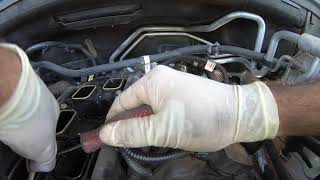
How to confirm: The easiest way to confirm a bad coil is to swap the ignition coil from cylinder 3 with another cylinder (e.g., cylinder 1 on the 3.6L or 5.7L). Clear the codes and drive the vehicle. If the code changes to P0301, the coil is faulty. 🎬 Watch how to test your spark plugs and ignition coils.
Typical fix: Replace the faulty ignition coil. While you can replace just one, if the vehicle has high mileage or one has failed, others may soon follow.
Est. part cost: $50-$100 per coil. - Clogged or Faulty Fuel Injector 🟡 Medium Probability
How to confirm: Listen for a consistent clicking sound from the injector with a mechanic's stethoscope to ensure it's actuating. You can also test the injector's resistance with a multimeter (should be around 12-14 ohms). Swapping the injector with another cylinder is also possible but is more labor-intensive than a coil swap.
Typical fix: Replace the faulty fuel injector. It's also a good idea to clean the fuel rail during this service.
Est. part cost: $70-$150 per injector. - Failed Rocker Arm (3.6L Pentastar V6) ⚪ Low Probability The 3.6L Pentastar engine has a known design flaw with the rocker arm bearings, which can seize and cause the arm to collapse or fall off, leaving the valve inoperative. TSB 09-011-25 acknowledges a manufacturing issue with valvetrain components.
How to confirm: This requires removing the valve cover to visually inspect the rocker arms for excessive play, damage, or being out of place. A ticking or tapping noise from the top of the engine is a strong audible clue. A compression test may not always show a fault.
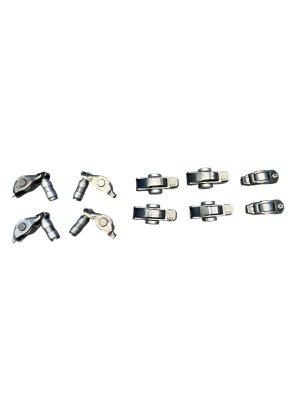
Typical fix: Replace the failed rocker arm and the associated lifter. It is highly recommended to inspect all rocker arms on that cylinder bank and replace any that show signs of wear. The updated Mopar part is 5184296AH.
Est. part cost: $20-$30 per rocker arm, plus valve cover gaskets. - Failed Lifter/Camshaft (5.7L HEMI V8) ⚪ Low Probability The 5.7L HEMI engine, particularly those with the Multi-Displacement System (MDS), can suffer from lifter failure. The roller on the lifter can seize, which then grinds down the camshaft lobe it rides on. This often starts as the infamous 'Hemi tick'. This issue is widely discussed by owners of Durangos, Ram 1500s, and Grand Cherokees.
How to confirm: Diagnosis starts with hearing a persistent ticking noise from the engine that increases with RPM. A compression test may show low or zero compression. Visual confirmation requires removing the valve cover and potentially the cylinder head to inspect the lifters and camshaft lobes for scoring and wear.
Typical fix: Requires replacing the camshaft, all lifters (especially the four MDS lifters), head gaskets, and other related components. This is a major and expensive repair, often costing thousands of dollars in labor.
Est. part cost: $700-$1500+ for parts alone.
Rare But Worth Checking
- Software Issues: Several TSBs (e.g., 18-033-26, 18-055-16) indicate that a Powertrain Control Module (PCM) software update can resolve misfire codes. This is often the case when no mechanical or electrical fault can be found, and the misfire might occur under specific conditions like a cold start.
- Vacuum Leak: A vacuum leak from a cracked intake manifold gasket or a faulty PCV valve near cylinder 3's intake runner can lean out the air-fuel mixture and cause a misfire. A smoke test is the best way to identify the source of a leak.
- Low Engine Compression: Beyond lifter/rocker issues, low compression can be caused by a burnt valve, a damaged piston, or a failed head gasket. A compression test and a cylinder leak-down test are necessary to diagnose these more severe internal engine problems.
Diagnosis Steps
- Read the code with an OBD-II scanner. 🎬 Watch this step-by-step guide on diagnosing a P0303 misfire code. Note any other pending or stored codes and check freeze-frame data to see the engine conditions when the code was set.
- Identify the location of cylinder 3. On the 3.6L V6, it is the middle cylinder on the passenger side (right bank). On the 5.7L V8, it is the second cylinder from the front on the driver's side (left bank).
- Listen for abnormal noises. A light ticking could be a fuel injector, but a heavier, metallic ticking from the top of the engine could indicate a rocker arm (3.6L) or lifter (5.7L) problem.
- Swap the ignition coil from cylinder 3 with an adjacent, easily accessible cylinder (like cylinder 1).
- Clear the codes, start the engine, and let it run or drive it for a few minutes. A scanner with live data can show misfire counts per cylinder in real-time.
- Re-scan for codes. If the code has moved to the other cylinder (e.g., P0301), the ignition coil is bad and needs to be replaced.
- If the P0303 code returns, the problem is not the coil. Proceed to inspect the spark plug for wear, cracking, or fouling. Replace if necessary.
- If the plug and coil are good, check the fuel injector. Listen for its operation or test its electrical circuit.
- If ignition and fuel components are ruled out, check for relevant TSBs. A PCM software update may be required.
- If a mechanical noise is present or other steps fail, perform a compression test and a cylinder leak-down test to check for mechanical engine problems. This will help identify issues like bad valves, rocker arms, or lifters.
Parts You'll Likely Need
- Ignition Coil
(OEM #5149168AH (superseded by 5149168AJ))— This is one of the most common failures causing a single-cylinder misfire. - Spark Plug — Spark plugs are a routine maintenance item and a frequent cause of misfires.
- Rocker Arm (3.6L V6)
(OEM #5184296AH)— A known failure point on the Pentastar V6 engine that leads to misfires and engine noise. - Camshaft and Lifter Kit (5.7L V8) — Required for the common 'Hemi tick' repair, which involves replacing the failed lifters and the damaged camshaft.
Related Codes That Often Appear With This One
- P0300 — If the misfire is intermittent or begins to affect other cylinders, a P0300 (Random/Multiple Cylinder Misfire) code may appear alongside P0303.
- P0301, P0302, P0304, P0305, P0306 — Other single-cylinder misfire codes may appear if the root cause, like low fuel pressure, a major vacuum leak, or a failing camshaft, affects the entire engine bank.
- P219A — This code (Bank 1 Air-Fuel Ratio Imbalance) is sometimes seen with a misfire code on one of the bank 1 cylinders (like cylinder 3 on the HEMI), indicating the computer is detecting an issue with the overall mixture on that side of the engine, often related to the misfire event.
Technical Service Bulletins (TSBs) & Recalls
- TSB 09-013-20 REV. A: Addresses rough running and misfire codes (including P0303) on 3.6L Pentastar engines due to potential internal cracks in the spark plugs, recommending replacement of all six.
- TSB 18-033-26: Pertains to 2021 models, noting that misfire codes like P0303 can be set during cold start catalyst heating, suggesting a software logic condition that may require a PCM update.
- TSB 09-011-25: Points to a manufacturing issue with cams/rockers in some Pentastar Upgrade ('PUG') engines, causing misfires and noise.
- TSB 18-055-16 REV. A: Involves a PCM software update for various issues, including a list of misfire codes (P0301-P0306) and an EVAP leak code (P0456), indicating a software fix can resolve these DTCs.
- TSB 18-070-15 & 18-033-17 REV. A: These bulletins also involve reprogramming the PCM with updated software to address a range of DTCs, including single and multiple cylinder misfires on HEMI V8 engines.
Platform-Specific Known Issues

- 3.6L Pentastar V6: These engines can suffer from a ticking noise that develops into a P0303 (or other cylinder) misfire. This is very often caused by a failed rocker arm, where the needle bearings in the roller seize up. When inspecting, it's critical to check all rockers on the affected bank, as multiple are likely worn if one has failed completely. The OEM part has been updated several times, with the latest version being 5184296AH.
- 5.7L HEMI V8: The infamous 'Hemi tick' is a direct symptom of a failing lifter, which is a common cause for a P0303 code on this engine. The problem is most prevalent on cylinders that are deactivated by the Multi-Displacement System (MDS). The roller on the lifter fails, destroying the camshaft lobe. This is not a simple fix; it requires replacing the camshaft, all lifters, and associated gaskets. Ignoring the tick will lead to a costly repair.
Mechanic-Grade Diagnostic Values
- Fuel Pressure (In-Tank Pump) — expected: 58 - 64 PSI. Failure: Pressure below 58 PSI can indicate a weak fuel pump, potentially causing a lean misfire.
- Spark Plug Torque (5.7L HEMI) — expected: 13 ft-lbs (17.6 Nm) +/- 2 ft-lbs. Failure: Over-torquing can damage the tapered-seat cylinder heads, while under-torquing can lead to compression loss and misfires.
- Ignition Coil Primary Resistance — expected: No reliable specification available for modern coil-on-plug units.. Failure: Testing resistance on modern coils is often inconclusive. The most reliable test is swapping the coil to another cylinder and seeing if the misfire code follows.
- Fuel Injector Resistance — expected: Approximately 12-14 Ohms. Failure: A reading significantly outside this range, or an open circuit (infinite resistance), indicates a failed injector coil.
Hidden / Shadow Codes Worth Checking
- P2308: Ignition Coil 3 Secondary Circuit - Insufficient Ionization (see via This is a manufacturer-specific code that may only be visible on advanced scan tools like Mopar's wiTECH or high-end Autel/Snap-on scanners. It points more directly to a problem with the coil's high-voltage output or its wiring, rather than just a general misfire.)
- Mode 6, Test ID $A2-$AC: Misfire Counts per Cylinder (see via Accessible on most modern OBD-II scanners that support Mode 6 data. This allows a technician to see the raw number of misfire events detected on each cylinder in real-time or during the last drive cycle, which is crucial for confirming the misfire before a DTC is officially set.)
Scan Tool Commands That Help
- wiTECH, Autel, etc.: Live Data - Misfire Counter — Use this to watch misfire counts on cylinder 3 in real-time while the engine is running. This confirms the misfire is active and is essential for verifying a fix or confirming the misfire moves after swapping a component like an ignition coil.
- wiTECH, Autel, etc.: Cylinder Contribution Test / Power Balance Test — This function deactivates one cylinder at a time (either by cutting fuel or spark) and measures the corresponding drop in engine RPM. A cylinder that causes little or no RPM drop when deactivated is not contributing power, confirming the misfire location.
Wiring & Ground Locations
- G901a — Located at the left rear of the engine compartment.. A poor ground at this location can cause a variety of sensor and actuator issues, including erratic behavior from ignition coils or injectors on the driver's side of the engine.
- G904 (5.7L) — Located on the lower left side of the engine block.. This is a primary engine ground. Corrosion or a loose connection here can cause insufficient voltage to reach the ignition coils, leading to a weak spark and misfires.
- Cylinder 3 Coil/Injector Harness — On the 5.7L V8, cylinder 3 is the second from the front on the driver's side. On the 3.6L V6, it is the middle cylinder on the passenger side.. The wiring harness leading to the coil and injector for cylinder 3 can become brittle from heat cycles or chafe against other components, causing an intermittent open or short in the circuit. This can trigger a P0303 or a more specific P2308 code.
Real Owner Repair Stories
- Online Auto Repair Videos on YouTube (2012 Dodge Durango SXT 3.6L) — Rough running engine, check engine light with code P0303.
❌ Tried (didn't work) Initial scan and code reading.
✅ What actually fixed it The technician swapped the ignition coil from cylinder 3 with the coil from cylinder 1. After clearing the codes and running the engine, the misfire count on the scan tool moved to cylinder 1, confirming the ignition coil was faulty. Replacing the bad coil resolved the issue. - Auto-Trend Repairs Forum (2016+ Dodge/Jeep/Chrysler with 3.6L Pentastar V6) — P0303 misfire code, engine noise on cold start-up that runs rough for 10-20 seconds and then subsides.
❌ Tried (didn't work) Assuming it was the same common rocker arm/lifter failure as pre-2016 models.
✅ What actually fixed it The mechanic noted that the 2016+ updated Pentastar engine has Variable Valve Lift (VVL) and a different valvetrain design. The diagnosis was more complex, requiring removal of the intake manifold and a water-cooled EGR system just to access the valve cover for inspection. The issue was still valvetrain related but required awareness of the new engine design for proper diagnosis and repair.
When the Usual Fixes Don't Work
- While a P0303 is most often a straightforward spark plug or ignition coil, it is not always a simple fix. In one documented case for a Dodge vehicle, an owner replaced the PCM, multiple fuel injectors, spark plugs, and two ignition coils, yet the P0303 misfire persisted. The spark plug for cylinder 3 was consistently found to be black and smelled of gas, indicating a problem that was not being solved by replacing common ignition and fuel components. This highlights that when basic swaps fail, the root cause is likely more severe, such as a mechanical compression issue (piston, rings, valves) or a wiring problem causing an injector to stick open, and simply throwing more parts at the problem will not resolve it.
OEM Part Supersession History
5149168AH→5149168AJ— Part was updated by the manufacturer for improved reliability or a change in supplier.
Heads up: The original part 5149168AH was first superseded by 5149168AI, and then by the current part 5149168AJ. Using the latest version is recommended.
Model Year Variations Within This Range
- 2016-2021: The 3.6L Pentastar V6 was significantly updated in 2016, adding Variable Valve Lift (VVL), a two-stage intake, and a water-cooled EGR system. A P0303 on these later models can be more complex to diagnose. For example, accessing the valvetrain for inspection requires removing the intake manifold and dealing with the EGR cooler, which is more labor-intensive than on 2014-2015 models. The root cause of a misfire could be related to the new VVL system, not just the previously common rocker arm bearing failure.
Helpful Videos
Used OEM Parts in Stock


New Aftermarket Parts Available


The information in this article is provided for general reference and educational purposes only. Vehicle specifications, procedures, and part compatibility can vary by production date, trim level, and region. Always consult your vehicle's factory service manual and verify part numbers before purchasing or performing repairs. Safety-critical components such as airbags, seat belts, and braking systems should be installed by a qualified professional.
- Dodge DURANGO:
- 🎬 Helpful Videos
- 🛍️ Shop This Part
- What's Unique About the 2014-2021 Dodge DURANGO
- Diagnostic Flowchart
- Symptoms You May Notice
- Most Likely Causes
- Rare But Worth Checking
- Diagnosis Steps
- Parts You'll Likely Need
- Related Codes That Often Appear With This One
- Technical Service Bulletins (TSBs) & Recalls
- Platform-Specific Known Issues
- Mechanic-Grade Diagnostic Values
- Hidden / Shadow Codes Worth Checking
- Scan Tool Commands That Help
- Wiring & Ground Locations
- Real Owner Repair Stories
- When the Usual Fixes Don't Work
- OEM Part Supersession History
- Model Year Variations Within This Range
- 🎟️ Get 5% Off