

P0303 on 2014 Chrysler 300: Cylinder 3 Misfire Causes and Fixes
P0303 indicates a misfire on cylinder 3. On a 2014 Chrysler 300, this is most often caused by a faulty ignition coil or a worn-out spark plug. A simple diagnostic step is to swap the cylinder 3 ignition coil with another cylinder (e.g., cylinder 1) to see if the code changes to P0301. If a ticking noise is present, suspect a more serious engine-specific mechanical failure.
- P0303 on a 2014 Chrysler 300 is a misfire specific to cylinder 3.
- The most common and easiest fixes are replacing the ignition coil or spark plug for cylinder 3.
- A simple coil-swap is the fastest way to diagnose a bad ignition coil.
- Listen for a ticking sound. On the 3.6L V6, it could indicate a failing rocker arm; on the 5.7L Hemi, it could mean a failing lifter. These are serious mechanical issues.
- Do not drive with a flashing check engine light, as you risk destroying your catalytic converter, turning a small repair into a very expensive one.
What's Unique About the 2014-2014 Chrysler 300
The 2014 Chrysler 300 was available with two distinct engines, the 3.6L Pentastar V6 and the 5.7L Hemi V8. While both can suffer from common ignition failures like coils and plugs, they each have well-documented, engine-specific mechanical issues that can cause a P0303 misfire. The 3.6L Pentastar is known for potential rocker arm failure, which can cause a ticking noise and misfires. The 5.7L Hemi can experience lifter failure, particularly related to its Multi-Displacement System (MDS), which can also lead to a ticking sound known as the 'Hemi tick' and misfires. A persistent P0303 that isn't resolved with new plugs and coils is a strong indicator of these more serious issues.
Diagnostic Flowchart
Tap your situation to follow the diagnostic path that matches what you're seeing on this vehicle.
Symptoms You May Notice
- Rough or shaky idle
- Hesitation or stumbling during acceleration
- Reduced engine power
- Flashing Check Engine Light (indicates a severe misfire)
- Noticeable engine vibration
- Fuel smell from the exhaust
- Engine ticking or knocking noise
- Replacing only the spark plugs when the ignition coil is the actual cause.
- Replacing ignition or fuel components when the underlying cause is a mechanical failure like a bad rocker arm (3.6L) or lifter (5.7L), especially if a ticking noise is present.
Most Likely Causes
- Faulty Ignition Coil 🔴 High Probability Coil-on-plug ignition systems are common failure points due to constant heat cycling and potential for internal insulation breakdown.
How to confirm: Swap the ignition coil from cylinder 3 with another cylinder (e.g., cylinder 1 or 5). Clear the codes and drive the vehicle. If the code changes to P0301 or P0305, the ignition coil is faulty.
Typical fix: Replace the faulty ignition coil. It is often recommended to replace all coils if they are original and high-mileage.
Est. part cost: $40-$100 per coil - Worn or Fouled Spark Plug 🔴 High Probability
How to confirm: After confirming the coil is good, inspect the spark plug from cylinder 3. Look for wear on the electrode, carbon fouling, oil, or cracks in the ceramic. A cracked ceramic insulator is a known cause. You can also swap the plug with another cylinder to see if the misfire follows.
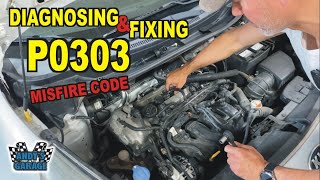
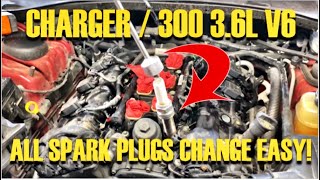
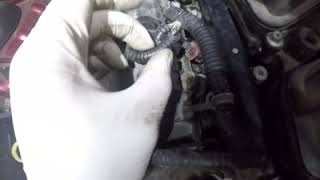
Typical fix: Replace the spark plug. It is best practice to replace all spark plugs at the same time. 🎬 Watch: Fast and easy spark plug and coil replacement walkthrough. The 5.7L Hemi has two plugs per cylinder.
Est. part cost: $10-$30 per plug - Faulty Fuel Injector 🟡 Medium Probability
How to confirm: Listen to the injector with a mechanic's stethoscope to confirm it is clicking. Check for a pulse signal at the injector's electrical connector using a noid light. You can also swap the injector with another cylinder, though this is more labor-intensive, to see if the misfire code moves.
Typical fix: Replace the clogged or failed fuel injector.
Est. part cost: $50-$150 - Vacuum Leak ⚪ Low Probability
How to confirm: A vacuum leak, such as from a failed intake manifold gasket near cylinder 3, can cause a lean misfire. A mechanic can perform a smoke test to identify the source of the leak.
Typical fix: Replace the leaking gasket or hose.
Est. part cost: $20-$200
Rare But Worth Checking
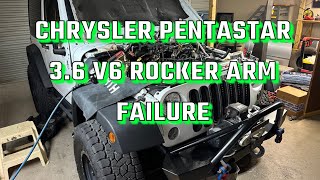
- Failed Rocker Arm (3.6L Pentastar V6): This is a known issue on the Pentastar engine. A ticking noise from the top of the engine is a primary symptom. The rocker arm's needle bearings can fail, causing the arm to seize and grind down the camshaft lobe, leading to improper valve lift and misfires. While a 2014 model is less susceptible than 2011-2013 models, the failure can still occur.
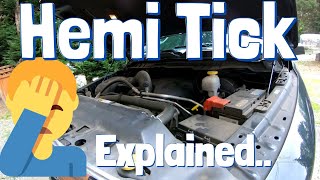
- Failed Lifter (5.7L Hemi V8): The Hemi engine, particularly with the MDS system, is prone to lifter failure, often called the 'Hemi tick'. The lifter's roller can seize and damage the camshaft lobe, causing a persistent tick and misfire. A user on RamForum.com detailed a P0303 code that persisted after swapping plugs and coils, pointing towards this common lifter/camshaft failure as the next likely culprit.
- Low Engine Compression: If ignition and fuel systems are confirmed to be working, a compression test is needed. Low compression in cylinder 3 could be due to a bad valve, worn piston rings, or a leaking head gasket. On early 3.6L engines (2011-2013), this was a known issue with the left cylinder head leading to an extended warranty (X56), though less common on 2014 models. 🎬 Watch: Real-world diagnosis of a 2014 Chrysler 300 P0303 misfire.
- Damaged Wiring Harness: Rodents can chew through the wiring for the ignition coil or fuel injector, or wires can become brittle and break from heat cycling, causing an intermittent or constant misfire on that cylinder.
Diagnosis Steps
- Read the code with an OBD-II scanner and check for any other stored codes, such as P0300, P0353, or P0203.
- To locate cylinder 3: On the 3.6L V6, it is the middle cylinder on the passenger's side (right bank). On the 5.7L Hemi V8, it is the second cylinder from the front on the driver's side (left bank).
- Listen for an audible ticking noise from the top of the engine. A distinct 'Hemi tick' on the 5.7L or a similar valvetrain tick on the 3.6L strongly suggests a mechanical failure (lifter/rocker arm) is the root cause.
- Swap the ignition coil from cylinder 3 with an adjacent, easily accessible cylinder (like cylinder 1 or 5). Clear the codes, run the engine, and re-scan. If the code moves (e.g., to P0301), the coil is bad.
- If the code remains P0303, swap the spark plug from cylinder 3 with the one from the other cylinder. If the code moves, the spark plug is bad.
- Inspect the wiring and connector for the cylinder 3 ignition coil and fuel injector for any damage, corrosion, or looseness.
- If spark components are good, test the fuel injector. Use a noid light to confirm it's receiving a pulse from the PCM. Listen for a clicking sound from the injector with a stethoscope.
- If ignition and fuel delivery seem okay, perform an engine compression test on cylinder 3 to check for mechanical issues like bad valves or piston rings.
- If a ticking noise is present and other tests are inconclusive, a physical inspection of the valvetrain (rocker arms on 3.6L, lifters and camshaft on 5.7L) is necessary. This requires removing the valve cover(s).
Parts You'll Likely Need
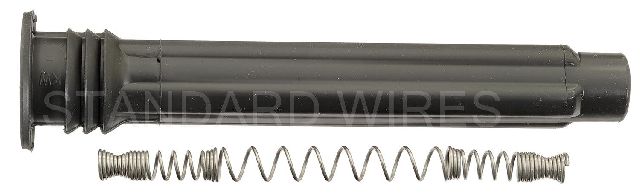
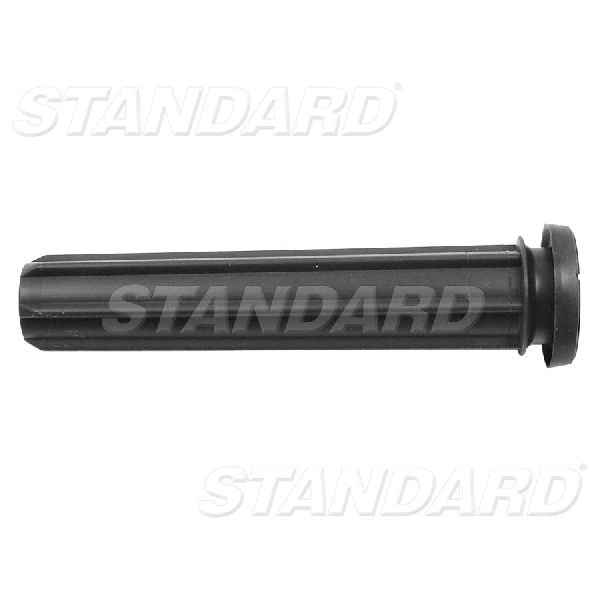
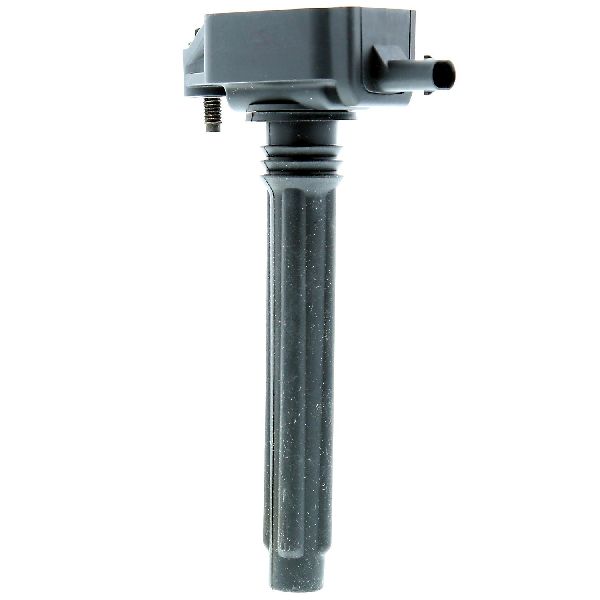
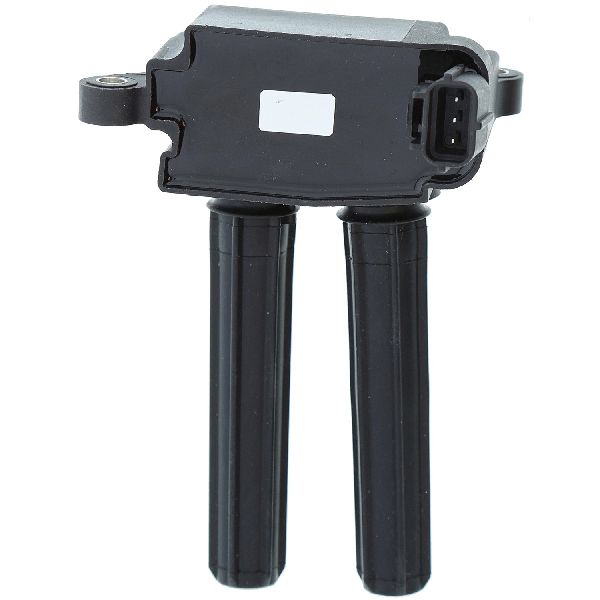
- Ignition Coil
(OEM #68238603AA (5.7L Hemi))— This is the most common failure part for a single-cylinder misfire. Heat and vibration cause the internal windings to fail over time.
Trusted brands: Mopar, NGK, Bosch, Denso
OEM price range: $90-$145
Aftermarket price range: $40-$80 - Spark Plug
(OEM #SP149125AF (3.6L V6), SP143877AB (5.7L V8))— Spark plugs are a routine maintenance item and can cause misfires when the electrode wears down or becomes fouled. Some owners report that Pentastar engines are sensitive and prefer OEM NGK plugs over other brands like Champion.
Trusted brands: Champion, NGK, Denso, Autolite
OEM price range: $20-$30
Aftermarket price range: $8-$25
Related Codes That Often Appear With This One
- P0300 — If the misfire becomes more widespread due to a systemic issue like a major vacuum leak, failing fuel pump, or significant valvetrain problems, a P0300 (Random/Multiple Cylinder Misfire) may be triggered alongside P0303.
- P0353 — This code indicates a malfunction in the ignition coil's primary or secondary circuit for cylinder 3. If P0353 appears with P0303, it strongly suggests the problem is the ignition coil itself or its wiring/connector, not a fuel or mechanical issue.
- P0203 — This code points to a malfunction in the fuel injector circuit for cylinder 3. Seeing it alongside P0303 isolates the problem to the fuel injector, its wiring, or the injector driver in the PCM.
Technical Service Bulletins (TSBs) & Recalls
- 18-094-16: This Technical Service Bulletin from Chrysler involves a software update for the Powertrain Control Module (PCM). It addresses a range of falsely set diagnostic trouble codes, including P0303, P2610 (PCM Internal Engine Off Timer Performance), and P0456 (EVAP Small Leak), indicating that in some cases, the misfire may be a software anomaly.
- 18-031-14 REV. A: For some 2014 models (specifically the Jeep Cherokee with the 3.2L, a related Pentastar engine), this TSB addresses a PCM software update to fix falsely set P0300 codes that may occur during a 1-2 upshift, among other issues. This highlights that software updates can be a valid fix for misfire codes.
Platform-Specific Known Issues
- 3.6L Pentastar V6: These engines are known for a valvetrain issue where the rocker arm bearings fail, causing a distinct ticking sound. This can lead to improper valve actuation, causing a misfire code like P0303 and eventually camshaft damage if not addressed. While TSB 09-002-14 and the X56 extended warranty addressed a separate cylinder head valve seat/guide issue on 2011-2013 models, the rocker arm failure is a distinct and still possible issue on 2014 models.
- 5.7L Hemi V8: These engines can suffer from lifter failure, often related to the Multi-Displacement System (MDS). The needle bearings in the lifter can fail, causing the roller to stop spinning and grind against the camshaft lobe. This results in a ticking noise (the 'Hemi tick') and a misfire, which can lead to costly camshaft replacement. A P0303 code is a classic early symptom of this failure. A failed MDS solenoid can also cause misfires.
Mechanic-Grade Diagnostic Values
- Fuel Injector Resistance (3.6L & 5.7L) — expected: Approximately 12.0 - 16.5 Ohms. All injectors should be within 0.5 Ohms of each other.. Failure: A reading significantly outside the expected range (e.g., 63 Ohms as seen in one failure) or an open/short circuit indicates a bad injector.
- Ignition Coil Primary Resistance — expected: Approximately 0.4 - 2.0 Ohms.. Failure: A reading outside this range suggests a faulty primary winding in the coil.
- Ignition Coil Secondary Resistance — expected: Approximately 6,000 - 15,000 Ohms (6kΩ - 15kΩ).. Failure: A reading outside this range indicates a problem with the secondary winding.
- Fuel Pressure (at fuel rail, vacuum line disconnected) — expected: Approximately 39 PSI (269 kPa).. Failure: Pressure significantly lower than specification indicates a weak fuel pump or clogged filter.
- Short-Term Fuel Trim (STFT) — expected: Fluctuating between -10% and +10% at idle.. Failure: Sustained readings above +10% suggest the PCM is adding fuel to compensate for a lean condition (like a vacuum leak). Sustained readings below -10% suggest a rich condition.
Hidden / Shadow Codes Worth Checking
- Mode 6 Misfire Counts: This is not a separate code but a function within a capable OBD-II scanner that shows raw misfire counts per cylinder, even if the count isn't high enough to trigger a P030x code. It's invaluable for identifying intermittent or developing misfires. (see via Use a professional scan tool like Chrysler's wiTECH or an advanced consumer scanner. On wiTECH, this is found under "OBD II monitors" and then "Which cylinder is misfiring".)
Scan Tool Commands That Help
- wiTECH (Chrysler Dealer Tool): Misfire Monitor / "Which cylinder is misfiring" — This function provides live data on misfire events per cylinder. It is essential for confirming which cylinder is actually misfiring when a P0300 (random misfire) is present or to see the severity of a specific cylinder misfire like P0303.
- wiTECH or equivalent professional scanner: Injector Kill Test — This bidirectional command allows a technician to shut off the fuel injector for a specific cylinder. When cylinder 3's injector is turned off, if there is no change in engine RPM or roughness, it confirms that cylinder was not contributing, pointing to an issue with that cylinder's fuel, spark, or compression.
Wiring & Ground Locations
- Cylinder 3 Coil & Injector Wiring — The wiring for the coil and injector for cylinder 3 runs through the main engine harness. For the 5.7L Hemi, the injector control wire (Inj ctrl 3) is listed in the engine performance wiring diagram.. A break, short, or corrosion in the specific wire for the cylinder 3 coil or injector will cause a persistent P0303. The PCM connector is a critical place to test for signal continuity.
- Engine Grounds — Key ground points are located on the engine block and chassis. For example, on the 3.6L, a ground (G105) is often located on the front of the engine block. A wiring diagram shows various grounds like G305 in the luggage compartment and G111 at the base of the C-pillar, which are less likely but still part of the overall electrical system.. A poor engine ground can cause erratic behavior in sensors, ignition coils, and injectors, leading to misfires that can be difficult to trace. Ensuring the main engine-to-chassis ground strap is clean and tight is a crucial step.
Real Owner Repair Stories
- Reddit user in /r/MechanicAdvice (2012 Dodge Ram 1500 5.7L Hemi) — P0303 code, rough running, stalling, blue/white smoke, even after a complete engine replacement.
❌ Tried (didn't work) Replaced engine, Replaced all spark plugs, Replaced all ignition coils, Replaced fuel injector on cylinder 3
✅ What actually fixed it The issue was a faulty Powertrain Control Module (PCM). The injector driver for cylinder 3 was stuck on, flooding the cylinder with fuel. Replacing the PCM (a used unit with data transferred from the old one) finally resolved the issue. - RamForum.com user 'loopless' (2013 RAM 1500 5.7L Hemi, 90k miles) — Misfire on cylinder #7 (P0307), loss of power, limp mode feeling.
❌ Tried (didn't work) Standard OBD reader gave no clue to the specific cause.
✅ What actually fixed it A failed Multi-Displacement System (MDS) solenoid. The intake manifold had to be removed to access and replace all four solenoids, which resolved the misfire. Another user with a P0303 on a similar truck found this information helpful after replacing all other common parts without success. - YouTube video by 'Andy's Garage' (Dodge Magnum (similar coil-on-plug setup)) — P0303 misfire code, rough idle when cold.
❌ Tried (didn't work) Initial diagnosis focused on cylinder 3.
✅ What actually fixed it The diagnostic process of swapping the cylinder 3 ignition coil to cylinder 1 was demonstrated. When the code changed to P0301, it definitively proved the ignition coil was the faulty component.
When the Usual Fixes Don't Work
- In a particularly difficult case reported on a Reddit forum, a 2012 Ram 1500 with the 5.7L Hemi exhibited a persistent P0303 code with smoke from the exhaust. The owner and mechanic went as far as replacing the entire engine, believing the original had scored cylinder walls. However, the P0303 code immediately returned on the new engine. After replacing the spark plug, ignition coil, and fuel injector again to no avail, the final cause was identified as a faulty Powertrain Control Module (PCM). The driver circuit for the cylinder 3 fuel injector was stuck in the 'on' position, continuously flooding the cylinder with fuel. This demonstrates a rare but critical failure mode where the control module itself is the culprit, even after all mechanical and component-level causes have been ruled out or replaced.
OEM Part Supersession History
5184296AD, 5184296AE, 5184296AF, 5184296AG→5184296AH— Updated design for the 3.6L Pentastar V6 rocker arm, likely to improve durability and reduce the risk of bearing failure.
Helpful Videos
Used OEM Parts in Stock


New Aftermarket Parts Available

The information in this article is provided for general reference and educational purposes only. Vehicle specifications, procedures, and part compatibility can vary by production date, trim level, and region. Always consult your vehicle's factory service manual and verify part numbers before purchasing or performing repairs. Safety-critical components such as airbags, seat belts, and braking systems should be installed by a qualified professional.
- Chrysler 300:
- 🎬 Helpful Videos
- 🛍️ Shop This Part
- What's Unique About the 2014-2014 Chrysler 300
- Diagnostic Flowchart
- Symptoms You May Notice
- Most Likely Causes
- Rare But Worth Checking
- Diagnosis Steps
- Parts You'll Likely Need
- Related Codes That Often Appear With This One
- Technical Service Bulletins (TSBs) & Recalls
- Platform-Specific Known Issues
- Mechanic-Grade Diagnostic Values
- Hidden / Shadow Codes Worth Checking
- Scan Tool Commands That Help
- Wiring & Ground Locations
- Real Owner Repair Stories
- When the Usual Fixes Don't Work
- OEM Part Supersession History
- 🎟️ Get 5% Off