

P0303 on 2018-2019 Chevrolet Equinox: Cylinder 3 Misfire Causes and Fixes
Code P0303 on a 2018-2019 Chevy Equinox means cylinder 3 is misfiring. The most common fix is replacing a faulty ignition coil or a worn/cracked spark plug. This is a relatively simple DIY repair with parts costing between $25 and $75. For the 1.5L engine, also be aware of known issues with moisture in the charge air cooler and, more rarely, cracked pistons.
- P0303 means your Equinox's third cylinder is misfiring.
- The most likely cause is a bad ignition coil or a worn-out spark plug.
- A simple diagnostic step is to swap the coil from cylinder 3 to another cylinder to see if the misfire code follows it.
- Driving with a flashing check engine light can cause expensive damage to your catalytic converter.
- For 1.5L models, misfires in wet weather could be caused by a unique issue with the charge air cooler, as noted in a GM service bulletin.
What's Unique About the 2018-2019 Chevrolet EQUINOX

For the 2018-2019 Equinox, particularly with the 1.5L (LYX) engine, misfire codes can sometimes be related to moisture buildup in the charge air cooler (CAC), especially when driving in heavy rain or high humidity. A heavy acceleration can pull this moisture into the engine, causing a misfire. While standard ignition or fuel issues are more common, this is a known vehicle-specific condition that led to Technical Service Bulletin 22-NA-065. Additionally, GM investigated issues with cracked spark plug insulators on these engines (TSB PIE0505), and in more severe cases, some owners have experienced cracked pistons on the 1.5L engine, which is a much more serious mechanical failure.
Diagnostic Flowchart

Tap your situation to follow the diagnostic path that matches what you're seeing on this vehicle.
Symptoms You May Notice
- Rough or shaky idle
- Engine hesitation or stumbling during acceleration
- Noticeable loss of power
- Solid or flashing Check Engine Light
- Possible fuel smell from the exhaust
- Vehicle may go into 'accessory mode' instead of shutting off, sometimes displaying a 'Shift to Park' message, which can drain the battery.
- Replacing oxygen sensors. While O2 sensors can cause various performance issues, they are unlikely to cause a misfire isolated to a single, specific cylinder like P0303.
Most Likely Causes

- Faulty Ignition Coil 🔴 High Probability Coil-on-plug systems are common failure points on many modern engines as they age due to constant heat and vibration.
How to confirm: Swap the ignition coil from cylinder 3 with another cylinder (e.g., cylinder 2). Clear the codes and drive the vehicle. If the code changes to P0302, the ignition coil is the culprit. This is a standard and effective diagnostic step.
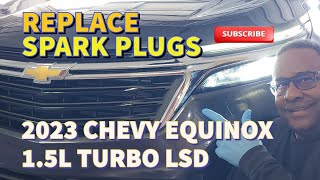
Typical fix: Replace the faulty ignition coil. It's often recommended to replace all coils and spark plugs 🎬 Watch: Step-by-step guide to replacing spark plugs and coil packs. at the same time for preventative maintenance.
Est. part cost: $40-$75 for one OEM ACDelco coil - Worn or Fouled Spark Plug 🔴 High Probability
How to confirm: After ruling out the coil, remove the spark plug from cylinder 3. Inspect it for wear, oil fouling, or damage to the electrode. A cracked porcelain insulator is a known issue on these engines and can cause a misfire. You can also swap the plug with another cylinder to see if the misfire follows.
Typical fix: Replace the spark plug. It is best practice to replace all spark plugs as a set with OEM-spec Iridium plugs.
Est. part cost: $10-$25 per iridium spark plug - Faulty Fuel Injector 🟡 Medium Probability
How to confirm: This is more complex. A professional can test the injector's flow and electrical pulse. A DIY method is to listen for a clicking sound from the injector with a mechanic's stethoscope. Swapping injectors between cylinders is possible but more labor-intensive than swapping coils or plugs.
Typical fix: Replace the faulty fuel injector.
Est. part cost: $50-$120
Rare But Worth Checking
- Cracked Spark Plug Insulator: GM issued TSB PIE0505 to investigate misfires on the 1.5L LYX engine. A common finding was a cracked ceramic insulator at the firing end of the spark plug. The loose piece can slide and block the plug gap, preventing a proper spark. The fix is to replace all four spark plugs.
- Charge Air Cooler (CAC) Moisture Ingestion: Specific to the 1.5L LYX engine, TSB #22-NA-065 describes how moisture can collect in the charge air cooler during rainy/humid conditions. A heavy acceleration can draw this moisture into the engine, causing a misfire (usually P0300, but can be a single cylinder). For 2018 models built before March 1, 2018, the fix is to replace the CAC with an updated part (P/N 85163204). For later models, the fix is to install a lower grille cover (P/N 84624274).
- Cracked Piston: A severe but documented cause for misfires on the 1.5L LYX engine is a cracked piston, specifically the ring land. This will result in a significant loss of compression in the affected cylinder. A compression test is required for diagnosis. A YouTube video by 'WeberAuto' shows a teardown of a 1.5L engine with this exact failure, leading to a P0301 code. While this video is for cylinder 1, the failure mode is relevant for any cylinder.
- Low Engine Compression: This indicates a more serious mechanical problem, such as worn piston rings, a bad valve, or a damaged cylinder head gasket. A compression test is needed to confirm. As noted, some owners of the 1.5L engine have reported piston-related issues leading to low compression.
Diagnosis Steps

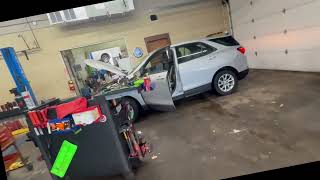
- Read the codes with an OBD-II scanner to confirm P0303 and check for any other codes. 🎬 Watch a real-world diagnosis of P0303 and related engine codes. A flashing check engine light indicates a severe misfire requiring immediate attention.
- Using a scan tool with live data, monitor the misfire counters for each cylinder while driving. This can confirm the misfire is isolated to cylinder 3, even if the initial code was P0300.
- Perform a visual inspection of the wiring and connector for the cylinder 3 ignition coil and fuel injector.
- Swap the ignition coil from cylinder 3 to cylinder 2. Clear the codes, run the engine, and see if the misfire code changes to P0302. If it does, the coil is bad.
- If the misfire remains on cylinder 3, remove the spark plug. Inspect for a cracked insulator, wear, or fouling. Swap the spark plug from cylinder 3 to cylinder 1. Clear codes and re-test. If the code changes to P0301, the spark plug is bad.
- If the misfire still remains on cylinder 3, the issue is likely fuel or mechanical. Inspect the fuel injector and its wiring.
- If fuel and ignition components are confirmed to be good, perform an engine compression test on cylinder 3 to check for mechanical engine problems like a bad valve or cracked piston.
- For 1.5L engines, if the misfire occurs in wet/humid weather after a long drive, consider the possibility of moisture in the charge air cooler as described in TSB #22-NA-065.
Parts You'll Likely Need
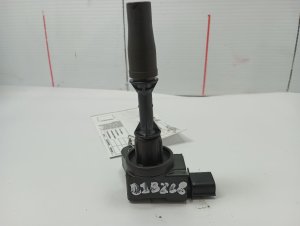
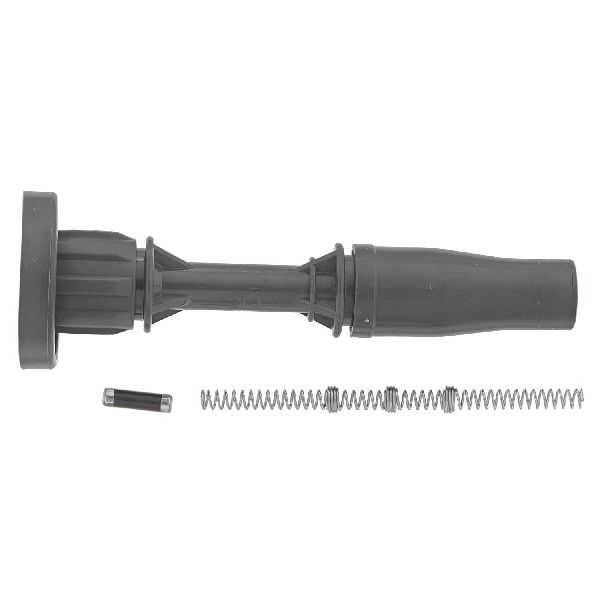
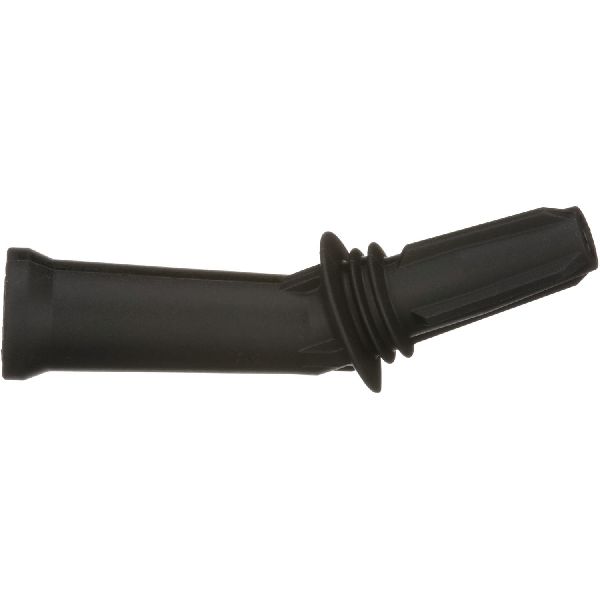
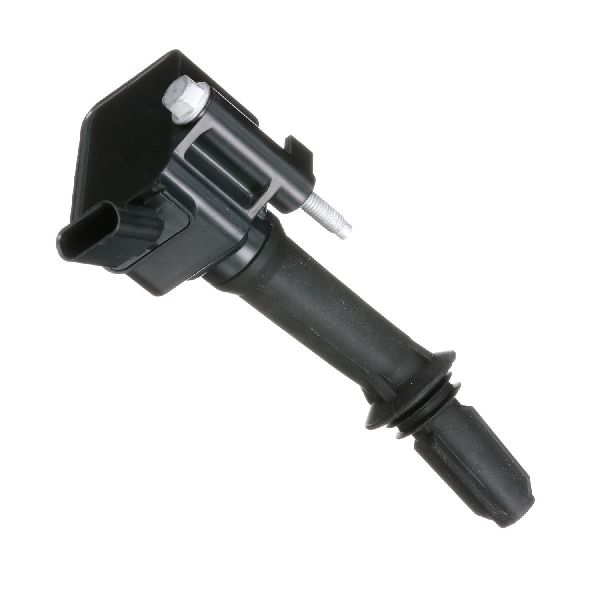
- Ignition Coil
(OEM #12697989)— This is one of the most common failure items to cause a single-cylinder misfire. This part is used on the 1.5L LYX engine.
Trusted brands: ACDelco (OE), Delphi, NGK
OEM price range: $50-$75
Aftermarket price range: $30-$55 - Iridium Spark Plug
(OEM #41-166 (supersedes 41-156))— Spark plugs are a routine maintenance item and can wear out or crack, causing a weak or inconsistent spark. TSB PIE0505 specifically investigated cracked plugs on this engine. Part number 41-166 is the updated plug for the 1.5L engine.
Trusted brands: ACDelco (OE), NGK
OEM price range: $15-$25
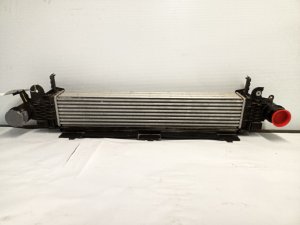
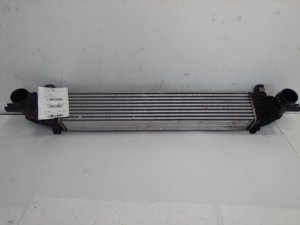
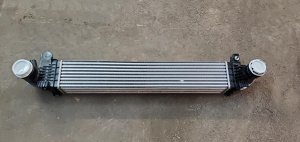
Aftermarket price range: $10-$20 - Charge Air Cooler Grille Cover
(OEM #84624274)— For the 1.5L engine, this part is the prescribed fix in TSB 22-NA-065 to prevent moisture ingestion into the CAC during humid or rainy conditions.
Trusted brands: ACDelco (OE)
OEM price range: $30-$50
Related Codes That Often Appear With This One
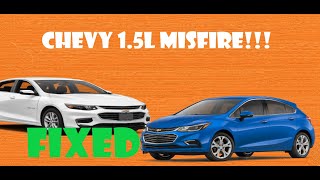
- P0300 — If the misfire is intermittent or affects multiple cylinders, a P0300 (Random/Multiple Cylinder Misfire) may be stored alongside P0303. This is especially common with the CAC moisture issue. 🎬 See how to diagnose and fix common P0300 misfire causes.
- P0301, P0302, P0304 — If other single-cylinder misfire codes are present, it points towards a common problem affecting all cylinders, such as low fuel pressure, a major vacuum leak, or the charge air cooler issue. GM's TSB PIE0505A was issued to investigate this exact pattern of codes.
- P0299, P2227 — These codes (Turbo/Supercharger Underboost and Barometric Pressure Sensor Performance) can appear with misfire codes when the issue is related to the charge air system, such as moisture in the CAC or issues in extreme cold as described in TSB 22-NA-067.
Technical Service Bulletins (TSBs) & Recalls
- PIE0505A: Seeking field information on rough running and engine misfire codes P0300-P0304. This bulletin was an effort by GM to root-cause a pattern of misfires.
Platform-Specific Known Issues
- A known condition for the 1.5L LYX engine involves moisture collecting in the charge air cooler during long drives in high humidity or rain. A sudden, heavy acceleration can ingest this water, causing a misfire and setting a P0300 code, which may be accompanied by a single cylinder misfire code like P0303. GM issued TSB #22-NA-065 to address this, which involves installing a lower grille cover (P/N 84624274).
- GM issued TSBs #PIE0505 and #PIE0505A seeking information from the field regarding rough running and multiple misfire codes (including P0303) on 2018 models. The investigation pointed towards issues like cracked spark plug insulators.
- In rare but severe cases, the 1.5L LYX engine can suffer from cracked pistons, leading to a persistent misfire and low compression in one cylinder. This is a major mechanical failure requiring significant engine repair.
Mechanic-Grade Diagnostic Values
- Low-Side Fuel System Pressure (1.5L LYX) — expected: 345 - 650 kPa (50 - 94 PSI) while engine is running.. Failure: Pressure below this range suggests a weak in-tank fuel pump or clogged filter.
- High-Pressure Fuel Rail Pressure (1.5L/2.0L GDI) — expected: ~440 PSI at idle, up to 2,000-2,800 PSI under load.. Failure: Significantly lower or erratic pressure can indicate a failing High Pressure Fuel Pump (HPFP).
- Ignition Coil Primary Winding Resistance — expected: 0.4 – 2.0 ohms.. Failure: A reading outside this range (e.g., open loop or significantly higher resistance) indicates a faulty coil.
- Ignition Coil Secondary Winding Resistance — expected: 6,000 – 15,000 ohms (6kΩ - 15kΩ).. Failure: A reading far outside this range suggests an internal failure of the coil's secondary windings.
- Crankcase Pressure (1.5L LYX) — expected: -1 to -5 inches of water at hot idle.. Failure: Pressure at or above 0 inches H2O (positive pressure) indicates a clogged or failing PCV system.
Hidden / Shadow Codes Worth Checking
- Misfire Counters (Current/History): Most professional scan tools, including GM's GDS2, provide access to live misfire counters for each cylinder. These are not DTCs but are critical for diagnosis. 'Current Misfire' shows misfires happening in the current drive cycle, while 'Misfire History' shows events from previous cycles. A high count on a specific cylinder confirms the location of the misfire even before a DTC is set. (see via GM GDS2 or professional-grade scan tool with GM-specific software. Look under Engine Data List (EDL) for misfire data.)
Scan Tool Commands That Help
- GDS2 (or equivalent professional scanner): Cylinder Power Balance Test — This is a primary diagnostic step to confirm which cylinder is misfiring without swapping parts. The tool deactivates one cylinder at a time (by cutting fuel) and measures the RPM drop. If disabling cylinder 3 causes little or no RPM drop compared to other cylinders, it confirms cylinder 3 is not contributing power.
- GDS2 (or equivalent professional scanner): Crankshaft Position System Variation Learn (Crank Learn) — This procedure must be performed after replacing the crankshaft position sensor, engine, flywheel, or ECM. It allows the ECM to learn the minor variations in the crankshaft reluctor wheel. If not performed, the ECM can misinterpret these variations as a misfire and set false codes like P0303.
Wiring & Ground Locations
- Main Engine Grounds — Key grounds are located on the engine block, the cylinder head, and via a strap from the engine/transmission to the chassis frame rail. A primary ground is often found on the front left of the engine block, near the starter.. A poor engine ground can cause erratic behavior in sensors and actuators, including the ignition coils and fuel injectors, leading to misfires.
- ECM/PCM Grounds — On the main connectors to the Engine Control Module (ECM), there are typically large gauge black or black-and-white wires that serve as the primary grounds for the module.. High resistance on an ECM ground pin can cause the module to misinterpret sensor data or fail to properly fire the ignition coil or fuel injector for cylinder 3.
Real Owner Repair Stories
- YouTube channel 'Lakes Automotive Diagnostics' (2018 Chevrolet Equinox) — Rough idle, flashing check engine light.
❌ Tried (didn't work) Initial scan showed P0303 and a P0442 (EVAP leak).
✅ What actually fixed it The misfire was fixed by replacing the faulty ignition coil on cylinder 3. The customer declined diagnosis for the separate EVAP code. - Reddit user 'RefrigeratorGold8291' in r/MechanicAdvice (Vehicle with persistent cylinder 3 misfire (model not specified, but failure is relevant to Equinox 1.5L)) — Persistent P0303, car idled like crap but still drove.
❌ Tried (didn't work) Implied that standard diagnostics were attempted.
✅ What actually fixed it The final cause was found to be blown rings and a cracked ringland on the piston. The engine was replaced under warranty. This highlights a severe mechanical failure as a possible root cause. - YouTube channel 'DadsGarage Diagnostic Specialist' (2018 Chevrolet Equinox 1.5L) — P1101 (Intake Airflow System), P0300 (Random Misfire), and P0304 (Cylinder 4 Misfire).
❌ Tried (didn't work) Another shop diagnosed a failed PCV valve for the P1101 but did not diagnose the misfire.
✅ What actually fixed it The misfire on cylinder 4 was caused by a cracked spark plug. This is a real-world example of the failure mode described in GM TSB PIE0505 and is directly applicable to a P0303 fault.
When the Usual Fixes Don't Work
- While the most common fixes for P0303 are an ignition coil or spark plug, owners should be aware that a persistent misfire on the 1.5L LYX engine that is not resolved by swapping ignition components could indicate a much more severe mechanical problem. There are documented cases where the final root cause was a cracked piston ring land, resulting in loss of compression. If a coil and plug swap do not resolve the P0303 code, a compression test should be the next step to rule out serious internal engine damage before replacing more parts like fuel injectors.
OEM Part Supersession History
ACDelco 41-156→ACDelco 41-166— Updated spark plug design for the 1.5L LYX engine, likely to improve durability and prevent insulator cracking.23270538 → 84454110 → 85163204→85046823— This is the supersession chain for the 1.5L engine's Charge Air Cooler (CAC). The parts were repeatedly updated to mitigate moisture and ice accumulation as described in GM TSBs.
Heads up: 85046823 is the latest design and should be used over previous versions to best prevent the moisture-related misfire issue.12672582→12705503— Part revision for the Fuel Rail Pressure Sensor used on the 1.5L engine.
Model Year Variations Within This Range
- 2018: Per TSB #22-NA-065, the fix for the Charge Air Cooler (CAC) moisture issue differs by build date. Models built before March 1, 2018, require replacement of the CAC itself (P/N 85163204 or newer). Models built after this date receive a new lower grille cover (P/N 84624274).
Helpful Videos
Used OEM Parts in Stock


New Aftermarket Parts Available



The information in this article is provided for general reference and educational purposes only. Vehicle specifications, procedures, and part compatibility can vary by production date, trim level, and region. Always consult your vehicle's factory service manual and verify part numbers before purchasing or performing repairs. Safety-critical components such as airbags, seat belts, and braking systems should be installed by a qualified professional.
- Chevrolet EQUINOX:
- 🎬 Helpful Videos
- 🛍️ Shop This Part
- What's Unique About the 2018-2019 Chevrolet EQUINOX
- Diagnostic Flowchart
- Symptoms You May Notice
- Most Likely Causes
- Rare But Worth Checking
- Diagnosis Steps
- Parts You'll Likely Need
- Related Codes That Often Appear With This One
- Technical Service Bulletins (TSBs) & Recalls
- Platform-Specific Known Issues
- Mechanic-Grade Diagnostic Values
- Hidden / Shadow Codes Worth Checking
- Scan Tool Commands That Help
- Wiring & Ground Locations
- Real Owner Repair Stories
- When the Usual Fixes Don't Work
- OEM Part Supersession History
- Model Year Variations Within This Range
- 🎟️ Get 5% Off