

P0303 on 2016 Acura MDX: Cylinder 3 Misfire Causes and Fixes
P0303 on a 2016 Acura MDX means cylinder 3 is misfiring. The most common causes are a failed ignition coil or a worn spark plug. Swapping the coil from cylinder 3 with another is the fastest way to diagnose the problem. Faulty fuel injectors are also a known issue on this engine.
- P0303 on a 2016 MDX is a misfire in cylinder 3, the rear-most cylinder on the driver's side.
- The most likely cause is a bad ignition coil or a worn spark plug.
- A simple diagnostic is to swap the coil from cylinder 3 with another cylinder to see if the misfire code follows the coil.
- Do not ignore a flashing check engine light, as it can lead to expensive catalytic converter damage.
- If plugs and coils are good, the next most likely cause is a faulty fuel injector, a known issue on this platform.
What's Unique About the 2016-2016 Acura MDX
The 2016 Acura MDX uses the generally reliable J35Y5 3.5L V6 direct-injection engine. While the core causes of a misfire are universal, this engine platform has known issues with fuel injectors, as noted in Acura and Honda Technical Service Bulletins (TSBs) for random and specific cylinder misfires. For example, Honda TSB 18-025 for the mechanically similar 2016 Pilot states that misfires can be caused by injectors that were improperly installed at the factory. Additionally, there have been recalls and investigations into other engine components like fuel pumps and connecting rod bearings for this engine family, which could, in rare cases, lead to misfire symptoms.
Diagnostic Flowchart
Tap your situation to follow the diagnostic path that matches what you're seeing on this vehicle.
Symptoms You May Notice
- Check Engine Light (CEL) is on or flashing
- Rough or shaky idle
- Vehicle hesitates or jerks during acceleration
- Noticeable loss of engine power
- Reduced fuel economy
- Sputtering or popping sound from the exhaust
- Engine may feel like it's 'choking' or struggling to maintain speed
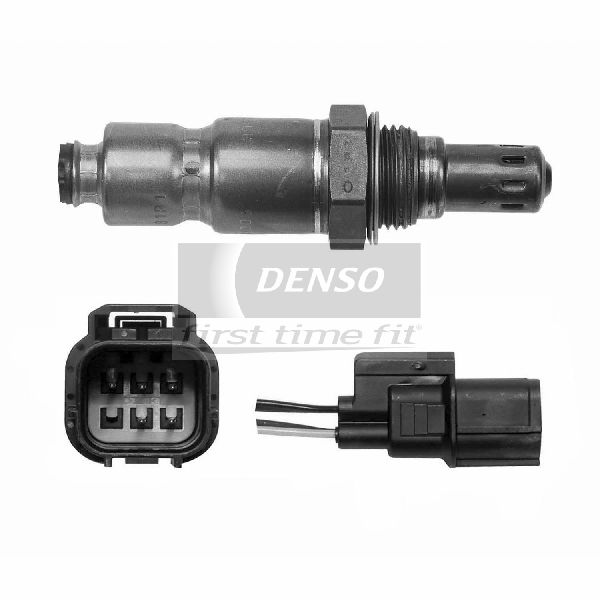
- Replacing oxygen sensors. An O2 sensor can report lean or rich conditions caused by a misfire, but it is almost never the root cause of a single-cylinder misfire code like P0303.
- Ignoring fuel system issues. Because ignition components are easier to check, some may replace plugs and coils without investigating a potential fuel injector problem, which is a known issue on this platform.
Most Likely Causes
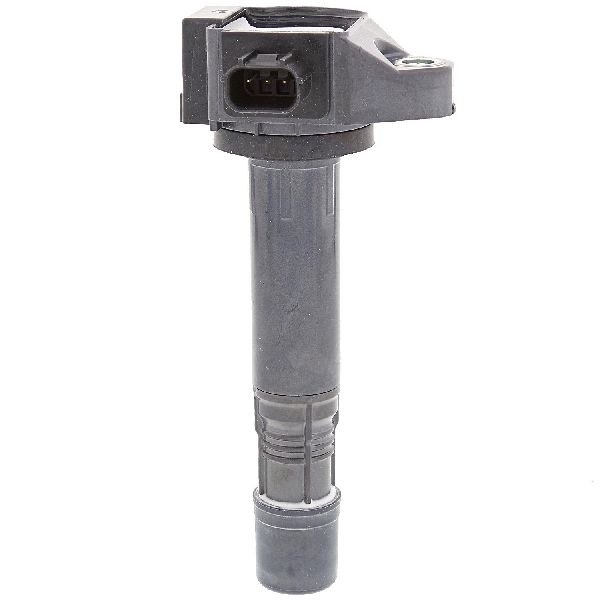
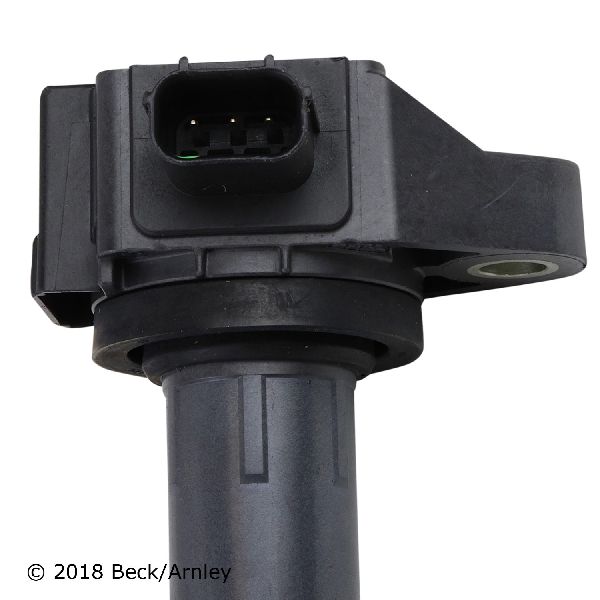
- Faulty Ignition Coil 🔴 High Probability Coil-on-plug systems are a common failure point on many modern engines as they age. Forum discussions among Acura owners frequently point to a bad coil as the first part to check for a single-cylinder misfire. In one Acurazine thread, a user with a P0303 code confirmed a bad coil using a spark tester and fixed the issue by swapping it.
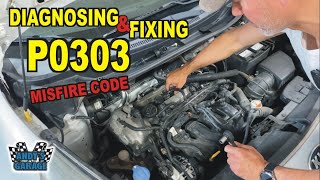
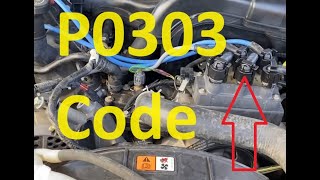
How to confirm: Swap the ignition coil from cylinder 3 with another cylinder (e.g., cylinder 1). Clear the codes and drive the vehicle. If the code changes to P0301 (Cylinder 1 Misfire), the ignition coil is faulty. You can also use an inline spark tester to see if the coil is generating a spark. A technician can test the coil's resistance with a multimeter.
Typical fix: Replace the failed ignition coil. While some owners and mechanics replace only the failed coil, many recommend replacing all six if they are original and the vehicle has high mileage to prevent future failures.
Est. part cost: $60-$120 per coil - Worn or Fouled Spark Plug 🔴 High Probability Spark plugs are a routine maintenance item with a service interval of around 100,000 miles. If overdue for replacement, their performance degrades, leading to a weak or inconsistent spark. Issues with the VCM system on some Honda V6 engines can also lead to premature spark plug fouling on specific cylinders.
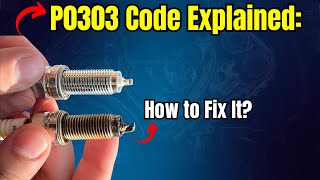
How to confirm: After ruling out the ignition coil, remove and inspect the spark plug from cylinder 3. Look for heavy carbon deposits, oil or fuel fouling, or a worn-out electrode. A wet, black appearance suggests the plug is not firing. Compare it to a plug from a known good cylinder.
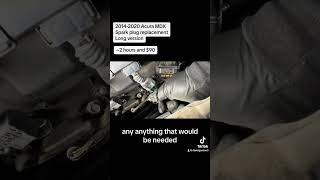
Typical fix: Replace the spark plug in cylinder 3. It is best practice to replace all six spark plugs at the same time with OEM-spec (NGK or Denso) plugs to ensure consistent performance and avoid future misfires. 🎬 See this step-by-step walkthrough for replacing Acura MDX spark plugs.
Est. part cost: $15-$30 per plug - Faulty Fuel Injector 🟡 Medium Probability Acura and Honda have issued TSBs and internal investigations related to fuel injectors for the 3.5L direct-injection engine family. TSB 18-025 and its replacements explicitly call for replacing all fuel injectors for misfire codes due to debris from the high-pressure pump or manufacturing process. This indicates a known vulnerability.
How to confirm: Listen to the injector with a mechanic's stethoscope; it should have a consistent, audible clicking sound. A professional can perform a fuel injector balance test to measure its flow rate. Another diagnostic step is to swap the fuel injector from cylinder 3 with another cylinder, but this is significantly more labor-intensive than swapping a coil or plug.
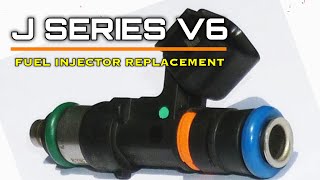
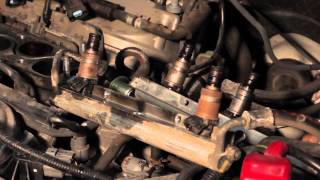
Typical fix: Replace the faulty fuel injector. Due to the labor involved in accessing the fuel rail and the known issues on this platform, it is highly recommended to replace all six injectors at once. This is an expensive repair, with parts alone potentially costing over $1,200. 🎬 Watch: A detailed guide on replacing fuel injectors on J-series engines.
Est. part cost: $150-$250 per injector (OEM)
Rare But Worth Checking
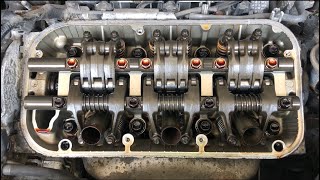
- Needs Valve Adjustment: Honda J-series engines require periodic valve clearance adjustments. If the valves become too tight, they may not close properly, leading to a loss of compression and misfires, especially when the engine is warm. This is often overlooked but is a critical maintenance item that can resolve persistent, otherwise undiagnosed misfires.
- Internal Engine Mechanical Failure: While very rare for a single-cylinder misfire, the 3.5L V6 in the 2016 MDX has been part of a recall and a wider NHTSA investigation for connecting rod bearing failure, which can lead to catastrophic engine damage and misfires. This would typically be accompanied by severe engine knocking noises and is not a common cause for an isolated P0303.
- Leaking Head Gasket: A head gasket leak allowing coolant into the cylinder can foul the spark plug and cause a misfire. This is uncommon but possible. Symptoms would include unexplained coolant loss, white smoke from the exhaust, a milky appearance in the engine oil, or a gurgling sound from the heater core.
Diagnosis Steps
- Read the trouble codes with an OBD-II scanner to confirm P0303 and check for any other codes, such as P0300 or P219A/B.
- Identify Cylinder 3. On the 3.5L V6, the cylinders are arranged in two banks. The rear bank (closest to the firewall) contains cylinders 1, 2, and 3 from passenger to driver side. The front bank contains 4, 5, and 6. Cylinder 3 is the rear-most cylinder on the driver's side.
- Swap the ignition coil from cylinder 3 with another cylinder (e.g., cylinder 6 on the front bank for easier access). Clear the codes and run the engine. If the code changes to P0306, the coil is bad.
- If the code remains P0303, inspect the ignition coil connector and wiring for any damage or looseness.
- If the coil is good, swap the spark plug from cylinder 3 with the one from cylinder 6. If the code changes to P0306 after clearing and re-running, the spark plug was the issue.
- If the code still remains P0303, the problem is likely related to the fuel injector or a mechanical issue.
- Listen to the fuel injector on cylinder 3 with a mechanic's stethoscope. It should make a steady clicking noise. Compare the sound to an adjacent injector.
- If the injector seems quiet or has an irregular sound, the issue is likely the injector itself, as this is a known problem area. Professional replacement of all six injectors is often the recommended fix.
- If ignition and fuel seem okay, a compression test should be performed on cylinder 3 to check for mechanical engine problems like a bad valve, worn piston rings, or a head gasket leak. Low compression could also indicate the need for a valve adjustment.
Parts You'll Likely Need
- Ignition Coil
(OEM #30520-5G0-A01)— This is the most frequent and easiest-to-diagnose failure point for a single-cylinder misfire on this engine.
Trusted brands: Denso, NGK, Hitachi
OEM price range: $90-$120
Aftermarket price range: $50-$80 - Spark Plug
(OEM #NGK DILZKR7A11GS (Acura P/N: 12290-R9P-A01))— Spark plugs are a maintenance item and a worn plug is a very common cause of a misfire.
Trusted brands: NGK, Denso
OEM price range: $20-$30
Aftermarket price range: $15-$25 - Fuel Injector Set (6)
(OEM #16010-R9P-A01)— A known, though more expensive, cause of misfires on this platform. TSBs for platform mates recommend replacing all six injectors to resolve misfire issues. RepairPal estimates the cost to replace all injectors on a 2016 MDX can be over $3,000, with the parts alone costing around $1,210.
Trusted brands: Acura (OEM)
OEM price range: $150-$250 per injector
Aftermarket price range: $70-$120
Related Codes That Often Appear With This One
- P0300 — If the misfire is intermittent or begins to affect other cylinders, a P0300 (Random Misfire) code may appear alongside P0303.
- P0301, P0302, P0304, P0305, P0306 — If other cylinders are also misfiring, their corresponding codes will be stored. An Acura internal investigation mentions these codes appearing together, which could point to a systemic issue like a faulty fuel injector set or a software problem.
- P219A / P219B — These codes indicate an air-fuel ratio imbalance between cylinders on a specific bank. They are often seen with misfire codes on this engine and strongly point towards a fuel injector problem, as noted in Honda TSBs 18-025 and 21-010.
Technical Service Bulletins (TSBs) & Recalls
- BPAS04242017901: An internal NHTSA reference to an Acura investigation into a pattern of misfire codes (P0300-P0306) on the 2016 MDX.
Platform-Specific Known Issues
- Acura has conducted internal investigations (referenced by NHTSA ID BPAS04242017901) for the 2016 MDX regarding MIL illumination with DTCs P0300 through P0306, confirming a recognized pattern of misfire codes.
- A recall (NHTSA #19V256000) was issued for 2016-2018 MDX models because fuel particulates could reduce fuel pump performance, potentially leading to fuel starvation and misfires.
- A major NHTSA investigation and a subsequent recall (#23V751000) were launched for potential connecting rod bearing failure on the 3.5L V6 engine, which could cause severe engine damage and misfires.
Mechanic-Grade Diagnostic Values
- Ignition Coil Primary Winding Resistance — expected: 0.49 - 0.57 ohms. Failure: A reading outside this range indicates a faulty coil.
- Ignition Coil Secondary Winding Resistance — expected: 9.5 - 11.1 kilohms. Failure: A reading outside this range indicates a faulty coil.
- Fuel Injector Resistance (General Acura Spec, pre-direct injection) — expected: 10 - 13 ohms. Failure: While for older models, a significant deviation on the J35Y5 could still indicate an electrical fault. Direct injector specs are harder to find but this provides a baseline.
- Low-Side Fuel Pressure (Regulator) — expected: 57 - 64 psi. Failure: Pressure outside this range can indicate a problem with the in-tank fuel pump or regulator, starving the high-pressure pump.
Scan Tool Commands That Help
- Honda HDS (Honda Diagnostic System): CKP Pattern Relearn — To resolve false misfire codes (P0300-P0306) that can occur after the battery has been disconnected or replaced. The PCM may lose its learned crankshaft position data.
- Honda HDS (Honda Diagnostic System): Snapshot Data Capture — Acura/Honda TSBs frequently require technicians to capture a 'snapshot' of engine data when the misfire or judder occurs. This data is then sent to Tech Line for analysis to confirm the root cause, such as a bad torque converter or fuel injector issue, before authorizing a major repair.
- Honda HDS (Honda Diagnostic System): Injector Test — The HDS can perform a power balance test by individually disabling fuel injectors to see how it affects engine RPM. If disabling an injector causes no change in idle, that injector or cylinder is not contributing, helping to isolate the fault.
Real Owner Repair Stories
- Acurazine user 'Maxxx' (2006 MDX, 180k miles) — P0303 misfire code, rough idle, gurgling sound from heater core.
❌ Tried (didn't work) Previous owner had valves adjusted, coils/plugs checked., Owner was hesitant to assume it was a head gasket because there was no coolant loss or white smoke.
✅ What actually fixed it The previous owner had temporarily fixed it with a head gasket sealant (Barrs). The problem returned, and the symptoms (especially the heater core gurgle) strongly pointed to a very small head gasket breach, even without the classic signs of coolant loss or smoke. The final fix was implied to be a head gasket repair.
OEM Part Supersession History
30520-RN0-A01→30520-5G0-A01— Part update/revision by the manufacturer.
Heads up: While they may look similar, using the older -RN0-A01 coil on a vehicle specified for the -5G0-A01 is not recommended as internal electronics may differ.
Helpful Videos
Used OEM Parts in Stock

New Aftermarket Parts Available

The information in this article is provided for general reference and educational purposes only. Vehicle specifications, procedures, and part compatibility can vary by production date, trim level, and region. Always consult your vehicle's factory service manual and verify part numbers before purchasing or performing repairs. Safety-critical components such as airbags, seat belts, and braking systems should be installed by a qualified professional.
- Acura MDX:
- 🎬 Helpful Videos
- 🛍️ Shop This Part
- What's Unique About the 2016-2016 Acura MDX
- Diagnostic Flowchart
- Symptoms You May Notice
- Most Likely Causes
- Rare But Worth Checking
- Diagnosis Steps
- Parts You'll Likely Need
- Related Codes That Often Appear With This One
- Technical Service Bulletins (TSBs) & Recalls
- Platform-Specific Known Issues
- Mechanic-Grade Diagnostic Values
- Scan Tool Commands That Help
- Real Owner Repair Stories
- OEM Part Supersession History
- 🎟️ Get 5% Off