

P0302 on 2012-2016 Toyota Prius V: Cylinder 2 Misfire Causes and Fixes
On a 2012-2016 Prius V, code P0302 indicates a misfire in cylinder 2. While this can be a simple spark plug or ignition coil, it is frequently caused by a clogged Exhaust Gas Recirculation (EGR) system, as noted in Toyota Technical Service Bulletin T-SB-0116-15 Rev. This often requires cleaning or replacing the intake manifold. A second, very serious possibility is a failing head gasket, often preceded by a rattling noise on cold starts and unexplained coolant loss.
- P0302 on a 2012-2016 Prius V is a cylinder 2 misfire, but the cause is often more complex than on other vehicles.
- Before buying parts, perform a simple ignition coil swap between cylinder 2 and another cylinder to rule out a bad coil.
- The most likely vehicle-specific cause is a clogged EGR system (cooler, valve, intake manifold), as documented in Toyota TSB T-SB-0116-15 Rev.
- Always check the engine coolant level. Unexplained coolant loss combined with a P0302 code is a strong indicator of a potential head gasket problem.
- Do not ignore the code, as continued driving can lead to costly catalytic converter damage.
What's Unique About the 2012-2016 Toyota PRIUS V

The 2012-2016 Prius V, with its 2ZR-FXE engine, is uniquely prone to misfires caused by a clogged Exhaust Gas Recirculation (EGR) system. Over time, carbon and oil deposits from the PCV system can block passages in the EGR cooler and intake manifold, disrupting airflow to the cylinders and causing misfires, particularly during light acceleration. This issue is so common that Toyota issued a Technical Service Bulletin (T-SB-0116-15 Rev) recommending the replacement of the intake manifold to resolve recurring misfire codes. A clogged EGR system is also considered a primary contributor to the platform's other notorious issue: premature head gasket failure, which often manifests first as a cold-start misfire. Another TSB (T-SB-0147-16) addresses misfires at cold start with an ECM software update.
Diagnostic Flowchart

Tap your situation to follow the diagnostic path that matches what you're seeing on this vehicle.
Symptoms You May Notice

- Rough or shaking idle, especially on a cold start.
- Hesitation or stumbling during light acceleration.
- Flashing or solid Check Engine Light.
- Noticeable loss of power.
- Reduced fuel economy.
- Loud rattling or knocking noise from the engine bay on startup, sometimes described as 'marbles in a can'.
- Unexplained loss of engine coolant.
- Replacing only the spark plug and ignition coil without checking for the common EGR clogging issue. If the misfire returns, especially under light acceleration or on cold starts, the EGR system or head gasket is the likely culprit.
- Cleaning only the EGR valve or pipe, but not the EGR cooler and intake manifold passages. The entire circuit must be cleaned for a lasting repair.
Most Likely Causes

- Clogged EGR System and/or Intake Manifold 🔴 High Probability The 2ZR-FXE engine's EGR design is highly susceptible to carbon buildup, which restricts flow and causes uneven air distribution to the cylinders, with cylinders 1 and 2 often being the most affected. This is a well-documented issue addressed by Toyota TSB T-SB-0116-15 Rev.
How to confirm: Inspect the EGR valve, EGR cooler, and intake manifold passages for heavy, oily carbon deposits. The issue often occurs with misfire codes during light acceleration. The entire system needs to be removed for proper inspection and cleaning.
Typical fix: Thoroughly clean the EGR valve, cooler, and all passages within the intake manifold. Many owners on forums like PriusChat recommend soaking the components in solutions like OxiClean or using oven cleaner and a pressure washer for the cooler. In severe cases, or as recommended by the TSB, the intake manifold assembly must be replaced with the updated part.
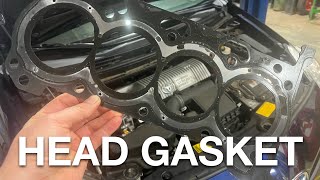
Est. part cost: $20-$50 (for cleaning supplies) or $200-$400 (for a new intake manifold) - Leaking Head Gasket 🟡 Medium Probability Head gasket failure is a widely reported problem on this engine, often a direct consequence of a clogged EGR system causing increased combustion temperatures. It typically manifests as a cold-start misfire as coolant leaks into a cylinder overnight, preventing proper combustion on startup.
How to confirm: Check for unexplained coolant loss. A key sign is a 'whoosh' of air being sucked in when opening the cool coolant reservoir cap, indicating negative pressure from coolant being drawn into a cylinder. A combustion leak tester ('block tester') can detect exhaust gases in the coolant. A borescope inspection of cylinder 2 after the car has sat overnight may show a 'steam-cleaned' piston top or visible coolant droplets.
Typical fix: This is a major repair requiring replacement of the head gasket and machining of the cylinder head. It is critical to also clean the entire EGR circuit (cooler, valve, intake manifold) during this repair to prevent a repeat failure.
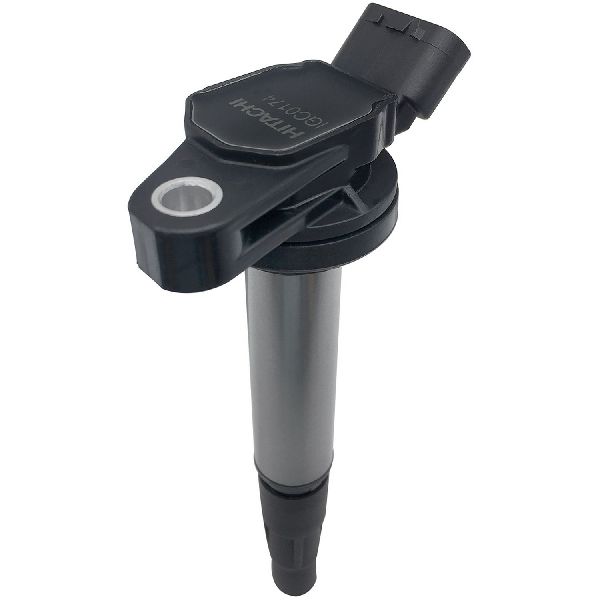
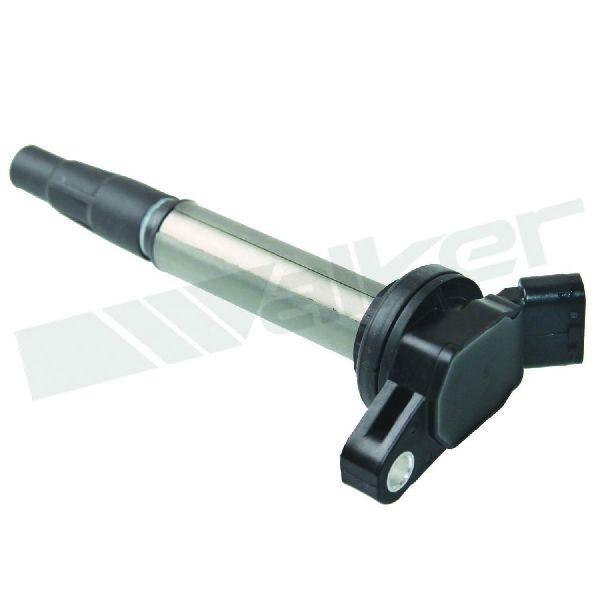
Est. part cost: $100-$300 (for gasket set and bolts) - Faulty Ignition Coil 🟡 Medium Probability
How to confirm: Swap the ignition coil from cylinder 2 with another cylinder (e.g., cylinder 1). Clear the codes and drive the vehicle. If the code changes to P0301, the ignition coil is faulty. This is the most common first diagnostic step.
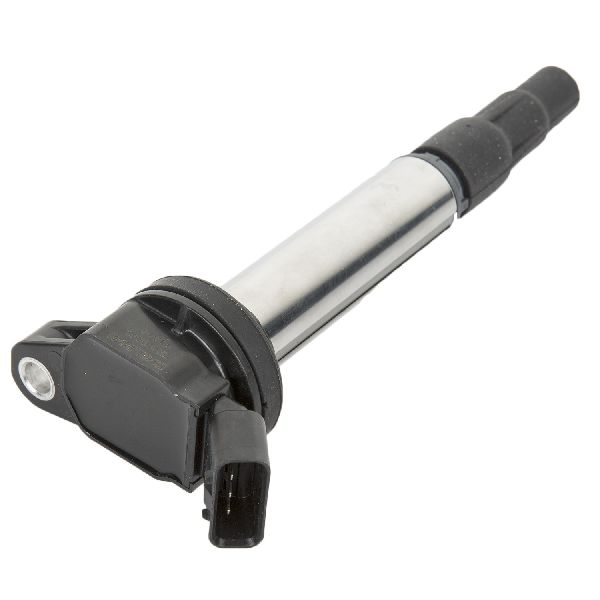
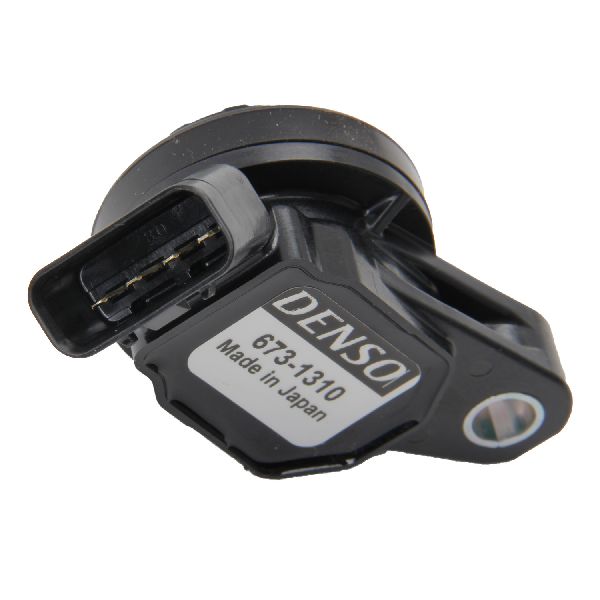
Typical fix: Replace the faulty ignition coil. It is often recommended to replace all four if they are original and high-mileage. Many owners recommend sticking with OEM Denso coils.
Est. part cost: $30-$80 per coil - Worn or Fouled Spark Plug 🟡 Medium Probability
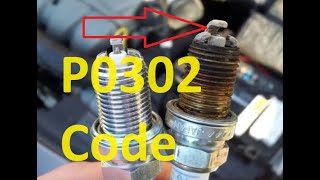
How to confirm: Remove the spark plug from cylinder 2 and inspect it. Look for wear on the electrode, carbon fouling, or signs of oil or coolant contamination. A coolant-fouled plug will often look unusually clean or have white deposits.
Typical fix: Replace the spark plug. It is best practice to replace all four spark plugs at the same time with OEM-spec plugs (e.g., NGK or Denso Iridium).
Est. part cost: $10-$25 per plug - Outdated Engine Control Module (ECM) Software ⚪ Low Probability Toyota TSB T-SB-0147-16 identifies that outdated ECM logic can cause misfires and a tapping/rattling noise at cold start.
How to confirm: A Toyota dealership or a qualified shop with access to Toyota's Techstream software can check the current software calibration and determine if an update is available.
Typical fix: Update the ECM software to the latest version.
Est. part cost: $0 (if covered) or dealer labor charge ($100-$200)
Rare But Worth Checking
- Faulty Fuel Injector: A clogged or failing fuel injector can cause a lean misfire on a single cylinder. This can sometimes be resolved with a quality fuel system cleaner (like Techron) before resorting to replacement, though it is less common than EGR or ignition issues.
Diagnosis Steps
- Read the code with an OBD-II scanner to confirm P0302 and check for any other pending or active codes. Note any freeze frame data.
- Check the engine coolant level in the reservoir when the engine is cold. A low level without visible external leaks is a major red flag for a head gasket issue. Also, listen for a 'whoosh' sound when opening the cap, which indicates a vacuum and likely coolant leak into a cylinder.
- Swap the ignition coil from cylinder 2 to another cylinder (e.g., cylinder 3). Clear the codes. If the code changes to P0303, the coil is bad. This is a quick and definitive test for the coil.
- If the code remains P0302, inspect the spark plug from cylinder 2. Replace it if it appears worn, fouled, or damaged. It's best to replace all four.
- If the misfire persists, especially on cold starts, a head gasket failure is highly suspected. Use a borescope to inspect the top of the piston in cylinder 2 after the car has sat overnight. Look for coolant droplets or a 'steam-cleaned' appearance compared to other pistons.
- Perform a combustion leak test ('block tester') on the cooling system to check for exhaust gases, which confirms a head gasket failure.
- If the head gasket tests are negative, the next step is to inspect the EGR system. This requires removing the intake manifold, EGR valve, and EGR cooler to check for heavy carbon buildup. If clogged, a thorough cleaning is required.
- If all else fails, consider having a dealership check if the ECM software is up to date per TSB T-SB-0147-16.
Parts You'll Likely Need
- Intake Manifold
(OEM #17120-37054)— Recommended replacement by Toyota TSB T-SB-0116-15 Rev to fix misfires caused by clogged EGR passages. This is the updated part number that supersedes several previous versions. An even newer part, 17120-37091, was also released to address related issues.
Trusted brands: Toyota (OEM)
OEM price range: $250-$400
Aftermarket price range: $150-$250 - Ignition Coil
(OEM #90919-02258)— A common failure item that directly causes a misfire on a single cylinder.
Trusted brands: Denso (OEM), NGK, Bosch
OEM price range: $90-$120
Aftermarket price range: $30-$80 - Spark Plug
(OEM #90919-01275)— A standard maintenance item. A worn or fouled plug is a common cause of a single-cylinder misfire.
Related Codes That Often Appear With This One
- P0300 — This 'Random/Multiple Cylinder Misfire' code often appears with P0302 if the underlying issue, like a clogged EGR system or failing head gasket, begins to affect other cylinders.
- P0301, P0303, P0304 — Misfire codes for other cylinders. Seeing them alongside P0302 strongly points to a systemic problem affecting the whole engine, such as the EGR system, head gasket, or fuel delivery.
- P0401 — This code means 'EGR Flow Insufficient'. It is a very strong indicator that the EGR system is clogged and is the root cause of the misfire codes.
Technical Service Bulletins (TSBs) & Recalls
- T-SB-0116-15 Rev: Addresses misfires during light acceleration due to clogged EGR passages, recommending intake manifold replacement.
- T-SB-0147-16: Addresses rough idle or tapping noise at cold start with an ECM software update.
Platform-Specific Known Issues
- EGR System Clogging: The most prominent issue for P0302 on this vehicle. Toyota TSB T-SB-0116-15 Rev states that 2012-2016 Prius V vehicles may exhibit a rough run condition and misfire DTCs (P0300-P0304) during light acceleration due to the EGR system. The official fix is to replace the intake manifold assembly with an updated part (17120-37054).
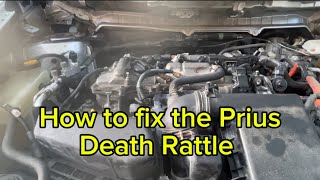
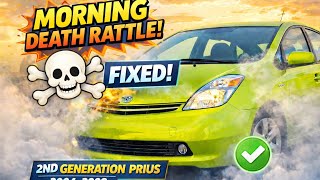
- Cold Start Misfire/Rattle: A very common symptom that points to either a clogged EGR system causing condensation to be ingested or, more seriously, a failing head gasket leaking coolant into a cylinder overnight. The rattle itself is caused by the transmission's input damper as the hybrid system struggles to sync with the erratically running engine.
- Head Gasket Failure: A widely documented failure on the 2ZR-FXE engine, often occurring between 150k-200k miles. It is strongly believed to be a downstream effect of a clogged EGR system creating excessive heat and pressure in the cylinders. Symptoms start with the cold start rattle and unexplained coolant loss before escalating.
Mechanic-Grade Diagnostic Values
- Ignition Coil Primary Resistance — expected: There is no official resistance specification provided by Toyota for a static test. The recommended diagnostic method is to swap the coil with a known good one.. Failure: An outlier measurement when comparing all four coils may indicate a problem, but swapping coils is the definitive test.
- Spark Plug Electrode Gap (Used) — expected: Up to 1.3 mm (0.051 in.). Failure: A gap larger than 1.3 mm indicates the plug is worn and needs replacement.
- Spark Plug Electrode Gap (New) — expected: 1.0 to 1.1 mm (0.039 to 0.043 in.). Failure: N/A - for reference.
- Ignition Coil Bolt Torque — expected: 10 N·m (7 ft·lbf). Failure: Improper torque can lead to poor connection or damage.
Hidden / Shadow Codes Worth Checking
- Mode $06, Test ID $EA, Component ID $02: This is not a DTC, but a diagnostic monitor in the OBD-II system that shows the raw misfire count for cylinder 2 for the current and last 10 driving cycles. It can show misfires happening even if they aren't frequent enough to set a P0302 code. (see via An advanced scan tool capable of viewing Mode $06 data, such as Toyota Techstream or some high-end consumer OBD-II scanners.)
Scan Tool Commands That Help
- Toyota Techstream: Active Test: Control the Fuel Injection — This allows a technician to individually disable the fuel injector for cylinder 2. If the engine's idle quality does not change when the injector is disabled, it confirms cylinder 2 was not contributing power, isolating the fault to that cylinder's fuel, spark, or compression.
- Toyota Techstream: Misfire Count (Live Data) — While driving under the conditions that cause the misfire (e.g., light acceleration), a technician can watch the live misfire counter for each cylinder. This provides immediate feedback to confirm which cylinder is misfiring and under what specific load/RPM conditions.
Wiring & Ground Locations
- ECM Ground (E1/E01) — The main engine grounds for the ECM are typically located on the cylinder head or engine block near the transmission housing on the passenger side of the engine bay.. A poor ECM ground can cause erratic behavior in the ignition system, including weak or mistimed sparks, which can lead to misfire codes. While not a common cause, it's a critical check if ignition coils and spark plugs are known to be good but misfires persist.
- Ignition Coil No. 2 Connector — On top of the valve cover, the second coil from the passenger (transaxle) side.. The 4-pin connector provides power, ground, the trigger signal (IGT2) from the ECM, and the confirmation signal (IGF) back to the ECM. Checking for battery voltage at Pin 1 (+B) with the key on is a primary diagnostic step.
Real Owner Repair Stories
- Reddit user in r/prius (2013 Toyota Prius V, 140,000 miles) — Persistent P0302 code, very low coolant level.
❌ Tried (didn't work) Replaced all four spark plugs., Swapped ignition coils between cylinder 1 and 2.
✅ What actually fixed it The owner did not post the final repair, but the combination of a persistent P0302 after a coil swap and significant coolant loss led the community and owner to conclude it was a head gasket failure requiring replacement. - PriusChat user 'pingd' (2013 Prius, 200,000 miles) — Sudden engine knock on startup and when the gas engine re-engages, P0302 code. No coolant loss reported.
❌ Tried (didn't work) The owner had previously performed extensive preventative maintenance, including cleaning the intake manifold and replacing the EGR cooler, EGR tube, and PCV valve.
✅ What actually fixed it The user swapped the original 200k-mile ignition coil from cylinder 2 to cylinder 1, and the misfire code followed, changing to P0301. Replacing the faulty ignition coil resolved the issue. This highlights that even with a well-maintained EGR system, simple components can still fail. - YouTube channel 'Random car & home stuff' (2012 Prius) — Check Engine Light with P0301 (Cylinder 1 misfire), engine knocking.
❌ Tried (didn't work) Not specified, but the video focuses on the final diagnosis.
✅ What actually fixed it The ultimate cause was a failed head gasket. The mechanic emphasizes that for this generation of Prius, if a misfire code (especially P0301 or P0302) is present and the coolant expansion tank is low, the head gasket is the most probable cause, and owners should not waste money on plugs and coils first.
When the Usual Fixes Don't Work
- While EGR clogging and head gasket failure are the most notorious causes of P0302 on this vehicle, they should not be assumed to be the cause without diagnosis. As one owner story confirmed, after 200,000 miles, a simple ignition coil failure was the root cause, even though the owner had meticulously maintained the EGR system. The standard diagnostic procedure of swapping the ignition coil to another cylinder remains the most important first step before assuming a more complex and expensive repair is needed.
OEM Part Supersession History
90919-02252→90919-02258— Standard part revision for improved reliability or manufacturing process change.
Helpful Videos
Used OEM Parts in Stock


New Aftermarket Parts Available


The information in this article is provided for general reference and educational purposes only. Vehicle specifications, procedures, and part compatibility can vary by production date, trim level, and region. Always consult your vehicle's factory service manual and verify part numbers before purchasing or performing repairs. Safety-critical components such as airbags, seat belts, and braking systems should be installed by a qualified professional.
- Toyota PRIUS V:
- 🎬 Helpful Videos
- 🛍️ Shop This Part
- What's Unique About the 2012-2016 Toyota PRIUS V
- Diagnostic Flowchart
- Symptoms You May Notice
- Most Likely Causes
- Rare But Worth Checking
- Diagnosis Steps
- Parts You'll Likely Need
- Related Codes That Often Appear With This One
- Technical Service Bulletins (TSBs) & Recalls
- Platform-Specific Known Issues
- Mechanic-Grade Diagnostic Values
- Hidden / Shadow Codes Worth Checking
- Scan Tool Commands That Help
- Wiring & Ground Locations
- Real Owner Repair Stories
- When the Usual Fixes Don't Work
- OEM Part Supersession History
- 🎟️ Get 5% Off