

P0302 on 2017 Lincoln Continental: Cylinder 2 Misfire Causes & Fixes
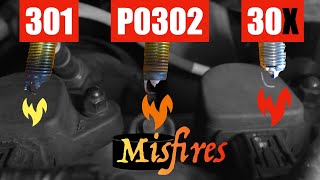
P0302 indicates a misfire on cylinder 2. The most common causes are a faulty ignition coil or a worn spark plug. For the 2.7L and 3.0L EcoBoost engines, this code must be taken seriously, as it can be a symptom of a significant internal engine problem related to valve guides, as documented in Ford TSB 19-2243. If your vehicle also has high oil consumption and blue or white exhaust smoke, professional diagnosis is required.
- P0302 signifies a misfire in cylinder 2, most commonly caused by a bad ignition coil or spark plug.
- A simple way to diagnose is to swap the coil and then the spark plug from cylinder 2 with another cylinder to see if the fault code follows.
- On 2.7L and 3.0L twin-turbo engines, be vigilant for signs of high oil consumption or exhaust smoke, as this could indicate a more severe, TSB-documented engine problem.
- Do not drive if the check engine light is flashing, as this can cause rapid and expensive damage to the catalytic converter.
- When replacing ignition coils or spark plugs, it is recommended to replace them as a full set to ensure even performance and prevent future misfires.
What's Unique About the 2017-2017 Lincoln CONTINENTAL
While a P0302 code is often a simple ignition component failure, the 2017 Lincoln Continental with the 2.7L or 3.0L twin-turbo engines has a known history of more severe issues. Manufacturer Technical Service Bulletins (TSBs), specifically TSB 19-2243, link misfire codes (P0300-P0306) to excessive oil consumption (1 quart in under 3,000 miles) and internal engine problems. The root cause is identified as faulty valve guides, which can lead to oil leaking into the combustion chamber. This elevates the diagnostic importance of checking for oil consumption or smoke from the exhaust when this code appears, as the prescribed fix is cylinder head replacement.
Diagnostic Flowchart
Tap your situation to follow the diagnostic path that matches what you're seeing on this vehicle.
Symptoms You May Notice
- Check Engine Light is on or flashing
- Rough or shaking idle
- Engine hesitation or stumbling during acceleration
- Reduced engine power
- Poor fuel economy
- Blue or white smoke from the exhaust, especially after a hot restart (a key symptom for 2.7L/3.0L engines)
- Excessive oil consumption, potentially 1 quart in less than 3,000 miles
- Fuel smell from the exhaust
- Replacing only the spark plug when the ignition coil is the actual cause, or vice-versa. It's crucial to swap components to isolate the faulty part.
- Ignoring signs of oil consumption and blue/white smoke. Many owners may replace ignition components multiple times, only to find the P0302 code returns because the root cause is the mechanical engine issue described in TSB 19-2243.
- Attributing a rough idle solely to ignition parts when it could be caused by carbon buildup on the intake valves, a common issue with GDI engines.
Most Likely Causes
- Faulty Ignition Coil 🔴 High Probability Coil-on-plug systems are a common failure point on modern engines. Heat and vibration cause the internal windings to fail over time, leading to a weak or no-spark condition.
How to confirm: Swap the ignition coil from cylinder 2 with another cylinder (e.g., cylinder 1, which is the front-most on the passenger side bank). Clear the codes and drive. If the code changes to P0301, the coil is faulty. Cylinder 2 is the middle cylinder on the passenger side.
Typical fix: Replace the failed ignition coil. It is best practice to replace all six coils and spark plugs at the same time for long-term reliability, especially on higher mileage vehicles.
Est. part cost: $45-$75 per coil - Worn or Fouled Spark Plug 🔴 High Probability Spark plugs are a regular maintenance item with a finite lifespan. The electrodes wear down, increasing the gap and leading to a weak spark. On the 2.7L/3.0L engines, oil fouling can also occur due to the valve guide issues noted in TSBs, contaminating the plug and causing a misfire.
How to confirm: After swapping the coil does not move the code, inspect the spark plug from cylinder 2. Look for wear on the electrode, a cracked ceramic insulator, carbon buildup, or oil fouling. Compare it to a plug from a working cylinder.
Typical fix: Replace the spark plug. It is highly recommended to replace all six spark plugs as a set, using the specified Iridium plugs for longevity.
Est. part cost: $15-$25 per plug - Internal Engine Malfunction (Cylinder Head Valve Guides) 🟡 Medium Probability TSB 19-2243 (which supersedes 17-2235) was issued for 2017 Continentals with 2.7L/3.0L engines built between April 1, 2016, and January 1, 2017. It identifies a problem with valve guides causing oil to leak into the cylinders, leading to oil consumption, smoke, and misfire codes like P0302.
How to confirm: This must be confirmed by a professional. Diagnosis involves verifying the vehicle's build date, confirming excessive oil consumption (greater than 1 quart per 3,000 miles), and then performing compression and cylinder leak-down tests to check for poor valve sealing. The presence of blue/white exhaust smoke is a strong indicator.
Typical fix: Requires replacement of both cylinder heads as per the procedure in TSB 19-2243. This is a complex and expensive repair.
Est. part cost: $1500-$3000+ - Faulty Fuel Injector ⚪ Low Probability
How to confirm: If ignition and compression are good, the fuel injector is the next suspect. A professional can test the injector's flow rate. A DIYer can check its resistance with a multimeter or listen for a consistent clicking sound with a mechanic's stethoscope. Swapping injectors between cylinders is also possible but more labor-intensive than swapping coils.
Typical fix: Replace the faulty fuel injector. It's often recommended to replace all injectors on the same bank if they are high mileage.
Est. part cost: $70-$150
Rare But Worth Checking
- Vacuum Leak: A leak in a vacuum hose or intake manifold gasket can introduce unmetered air, leading to a lean mixture and misfires. This would typically cause multiple or random misfire codes (P0300) but can sometimes isolate to one cylinder if the leak is near the cylinder 2 intake runner.
- Leaking Valve Cover Gasket: A common issue on many engines is the valve cover gasket or, more specifically, the integrated spark plug tube seals leaking oil into the spark plug wells. This oil can saturate and short out the ignition coil and spark plug, causing a misfire. When removing the ignition coil, check for liquid oil in the tube.
- Carbon Buildup on Intake Valves: As direct-injection (GDI) engines, the 2.7L and 3.0L EcoBoost are susceptible to carbon buildup on the back of the intake valves over time. Fuel does not wash over these valves to clean them. Excessive buildup can disrupt airflow into the cylinder, causing misfires, hesitation, and rough idling. The typical fix is a professional media blasting service, such as walnut blasting.
Diagnosis Steps
- Read all trouble codes with an OBD-II scanner and note any other codes present, especially oil pressure codes (P0524, P06DD).
- Check for a flashing check engine light. If flashing, do not drive the vehicle to prevent catalytic converter damage.
- Verify vehicle build date to see if it falls within the range specified in TSB 19-2243 (April 1, 2016 - Jan 1, 2017) for the 2.7L/3.0L engines.
- Inspect for signs of high oil consumption or blue/white smoke from the exhaust. If present, suspect the TSB-related engine issue and seek professional diagnosis.
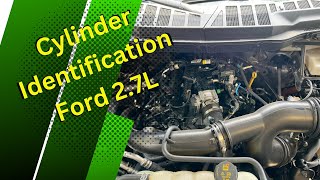
- Locate Cylinder 2: On the V6 engines, this is the middle cylinder on the passenger side (Bank 1).
- Swap the ignition coil from cylinder 2 with another cylinder (e.g., cylinder 1). Clear the codes and see if the misfire code moves to the new cylinder (P0301). If it does, the coil is bad.
- If the code remains P0302, inspect the spark plug well for oil. If oil is present, the valve cover gasket/tube seal is leaking and needs replacement.
- If no oil is in the well, swap the spark plug from cylinder 2 with another cylinder. If the code moves, the spark plug is bad.
- If ignition components are good, the fuel injector for cylinder 2 is the next likely cause. Test its function or swap it with another cylinder.
- If all else fails, a professional should perform a compression test and a cylinder leak-down test to check for mechanical engine problems like bad valves or piston rings, as suggested by the TSBs.
Parts You'll Likely Need
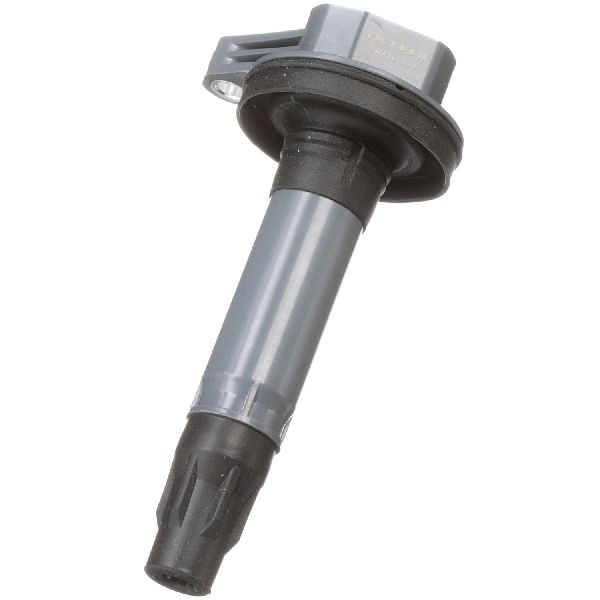
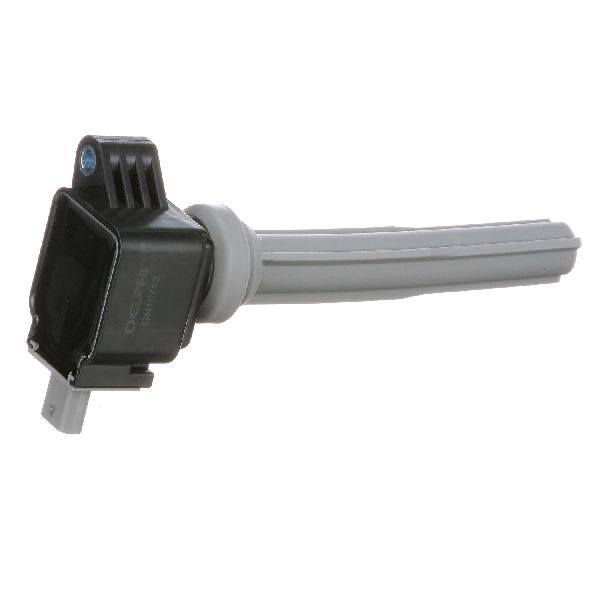
- Ignition Coil
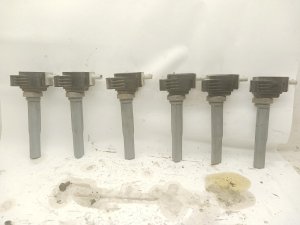
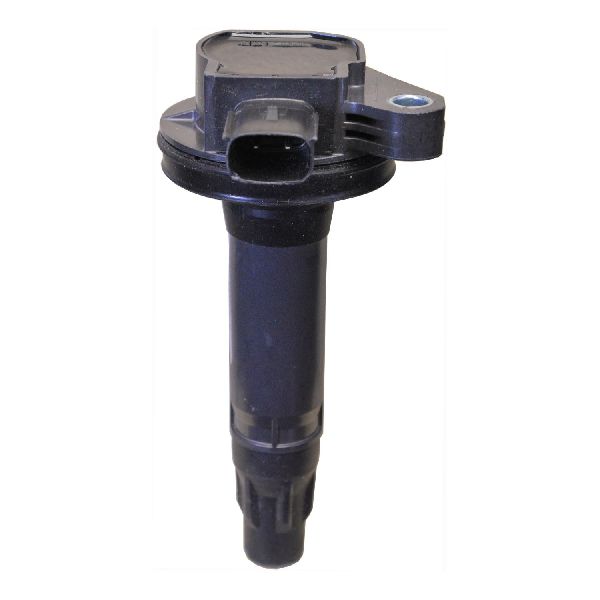
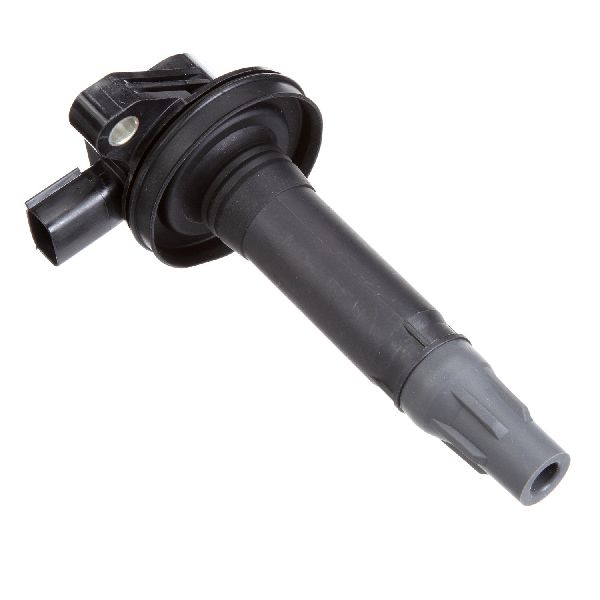
(OEM #FT4Z-12029-A)— This is one of the most common causes for a single-cylinder misfire. The OEM part for the 2.7L/3.0L engines is FT4Z-12029-A, sold under the Motorcraft part number DG-555. The 3.7L engine uses a different coil, 7T4Z-12029-F (Motorcraft DG-563).
Trusted brands: Motorcraft, NGK, Denso
OEM price range: $60-$85
Aftermarket price range: $40-$65 - Spark Plug
(OEM #SP-542)— Spark plugs are a maintenance item and can become worn or fouled by oil or carbon, leading to a misfire. The 2.7L/3.0L EcoBoost engines require specific iridium plugs for proper performance. The Motorcraft part number is SP-542.
Trusted brands: Motorcraft, NGK, Bosch
OEM price range: $15-$25
Aftermarket price range: $10-$20
Related Codes That Often Appear With This One
- P0300 — If the misfire is intermittent or affects multiple cylinders, a P0300 (Random Misfire Detected) may be stored alongside P0302. This is explicitly mentioned in the TSBs for the valve guide issue.
- P0301, P0303, P0304, P0305, P0306 — Other cylinder-specific misfire codes may appear if the underlying cause (like a vacuum leak, low fuel pressure, or the systemic valve guide issue) affects more than just cylinder 2.
- P0202 — This code for 'Cylinder 2 Injector Circuit Malfunction' points directly to an issue with the fuel injector or its wiring for cylinder 2. It may appear with P0302 if the misfire is fuel-related.
- P0524 / P06DD — These codes, related to low oil pressure, are specifically mentioned in TSBs SSM 54504, SSM 46364, and 19-2243 as appearing with misfire codes when excessive oil consumption and internal engine problems are present. Their presence strongly suggests the more severe mechanical failure.
Technical Service Bulletins (TSBs) & Recalls
- TSB 19-2243: Supersedes previous versions. Addresses oil consumption (over 1 quart per 3000 miles), blue/white smoke, and misfires on 2.7L/3.0L EcoBoost engines built between 01-Apr-2016 and 01-Jan-2017. The stated cause is faulty valve guides, and the fix is cylinder head replacement.
- SSM 54504 / SSM 46364: Earlier service messages that also link misfire DTCs with excessive oil consumption and potential cylinder head issues on these engines, corroborating the issue's history.
- TSB 19-2384: A similar TSB specifically for the 2.7L EcoBoost in the F-150, confirming the valve guide issue was present across different platforms using this engine.
Platform-Specific Known Issues
- A Technical Service Bulletin (TSB 19-2243, which supersedes others) was issued for some 2017 Lincoln Continentals with the 2.7L or 3.0L EcoBoost engines for excessive oil consumption, rough idle, and misfire codes (P0300-P0306). The bulletin states this may be due to valve guide issues in engines built from April 2016 to January 2017 and recommends replacing the cylinder heads.
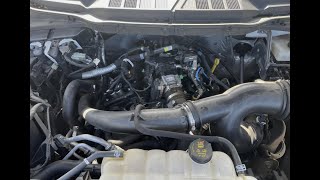
- The cylinder numbering for the V6 engines is 1-2-3 on the passenger side (Bank 1, front to back) and 4-5-6 on the driver side (Bank 2, front to back). Cylinder 2 is therefore the middle cylinder on the bank closer to the passenger side.
Mechanic-Grade Diagnostic Values
- Low-Pressure Fuel System — expected: 50-70 PSI. Failure: Pressure below 50 PSI indicates a problem with the in-tank fuel pump or fuel pump driver module.
- High-Pressure Fuel System (GDI) — expected: Can be up to 2,000+ PSI under load.. Failure: When monitoring desired vs. actual fuel rail pressure with a scan tool, if the actual pressure cannot keep up with the desired pressure (and low pressure is confirmed good), it points to a failing High-Pressure Fuel Pump (HPFP).
- Engine Oil Pressure (2.7L/3.0L EcoBoost with Variable Displacement Pump) — expected: Highly variable; can be as low as ~19-22 PSI at hot idle and increase to 50-65 PSI under load.. Failure: Consistently low oil pressure across all RPMs, especially if accompanied by codes P0524 or P06DD, can indicate a serious mechanical issue as noted in TSBs.
Hidden / Shadow Codes Worth Checking
- Mode $06 Misfire Data: This is not a DTC but a function of the OBD-II system that stores raw test data. For misfires, it keeps a running count for each cylinder. A technician can view these counts to see if cylinder 2 has a significantly higher count than others, confirming the P0302 before the misfire is severe enough to be constantly felt. (see via A pro-level scan tool or software like FORScan can access Mode $06 test results. The PCM must complete a 'crank relearn' procedure before it can accurately detect and store misfire data.)
Scan Tool Commands That Help
- Ford IDS (or equivalent pro-level scanner): Power Balance Test — This is a critical diagnostic function for a P0302. The test graphically displays the power contribution of each cylinder in real-time. A technician can see a clear drop in the graph for cylinder 2, confirming it's not contributing power. The tool also allows the technician to disable individual injectors one by one to see the effect on the engine, helping to isolate the misfiring cylinder.
Wiring & Ground Locations
- Engine Harness Chafing Points — On some Ford/Lincoln models, the engine wiring harness may chafe against the ECM/TCM bracket, the driver's side upper control arm, and/or the shock tower.. A document for a similar platform notes that an improperly secured engine harness can rub through, causing shorts or open circuits in wires for ignition coils or fuel injectors. While not specific to P0302, intermittent electrical faults from chafing are a known cause of misfires that can be difficult to diagnose.
- G104 — A major chassis ground point located on the left front of the engine compartment.. A poor ground connection at this point can cause erratic behavior from various engine sensors and actuators, including the PCM, potentially leading to false or intermittent misfire codes.
- C1016 / C1168 — C1016 is the connector at the Engine Coolant Temperature (ECT) sensor, and C1168 is a downstream inline harness connector.. While directly related to ECT sensor codes, TSB SSM 47791 highlights this wiring path as a known area for damage. A faulty ECT reading can cause incorrect fuel mixture calculations by the PCM, which can lead to misfires, although this would typically set other codes as well.
OEM Part Supersession History
FT4Z-12029-A→FT4Z-12029-A (current)— This part number remains current for the 2.7L and 3.0L engines.
Heads up: This part is also sold under the Motorcraft part number DG-555. It is not compatible with the 3.7L V6 engine, which uses a different coil (7T4Z-12029-F / DG-563).
Helpful Videos

Used OEM Parts in Stock


New Aftermarket Parts Available

The information in this article is provided for general reference and educational purposes only. Vehicle specifications, procedures, and part compatibility can vary by production date, trim level, and region. Always consult your vehicle's factory service manual and verify part numbers before purchasing or performing repairs. Safety-critical components such as airbags, seat belts, and braking systems should be installed by a qualified professional.
- Lincoln CONTINENTAL:
- 🎬 Helpful Videos
- 🛍️ Shop This Part
- What's Unique About the 2017-2017 Lincoln CONTINENTAL
- Diagnostic Flowchart
- Symptoms You May Notice
- Most Likely Causes
- Rare But Worth Checking
- Diagnosis Steps
- Parts You'll Likely Need
- Related Codes That Often Appear With This One
- Technical Service Bulletins (TSBs) & Recalls
- Platform-Specific Known Issues
- Mechanic-Grade Diagnostic Values
- Hidden / Shadow Codes Worth Checking
- Scan Tool Commands That Help
- Wiring & Ground Locations
- OEM Part Supersession History
- 🎟️ Get 5% Off