

P0302 on 2011-2018 Jeep Grand Cherokee: Cylinder 2 Misfire Causes and Fixes
P0302 indicates a misfire in cylinder 2 on your Jeep Grand Cherokee. For 2011-2013 models, this is very often caused by a defective left cylinder head, a known issue addressed by an extended warranty (X56) and TSB 09-002-14 Rev. B. For 2014-2018 models, the cause is more likely a common ignition system part (spark plug, coil) or a failed rocker arm causing the 'Pentastar Tick'. Diagnosis involves swapping ignition components before checking for mechanical engine problems.
- P0302 is a misfire on cylinder 2, located at the front of the engine on the driver's side.
- For 2011-2013 models, a bad left cylinder head is a very common cause. A cylinder leak-down test is required to confirm this.
- For all years, start diagnosis with the simple and cheap parts: swap the ignition coil, then inspect/replace the spark plug.
- A flashing check engine light indicates a severe misfire that can damage your catalytic converter; pull over and shut off the engine as soon as it is safe.
- Check for available PCM software updates, especially on 2015 models, before replacing parts.
What's Unique About the 2011-2018 Jeep GRAND CHEROKEE

For the 2011-2018 Grand Cherokee (WK2 generation) with the 3.6L Pentastar V6, P0302 is a code with a dual personality depending on the model year. It is notoriously linked to a significant factory defect in the left cylinder head on 2011-2013 models. This defect, caused by premature valve guide and seat wear, leads to a loss of compression and persistent misfires on the left bank cylinders (2, 4, and 6). The problem was so widespread that Chrysler/Jeep issued Technical Service Bulletin #09-002-14 Rev. B and an extended warranty (X56) to cover diagnosis and replacement. For later models (approx. 2014-2018), after the cylinder head design was updated, a P0302 is more commonly associated with either standard ignition failures or a different known Pentastar issue: failing rocker arms.
Diagnostic Flowchart


Tap your situation to follow the diagnostic path that matches what you're seeing on this vehicle.
Symptoms You May Notice

- Rough idle or shaking
- Flashing or solid Check Engine Light
- Hesitation or loss of power during acceleration
- Reduced fuel economy
- Engine stalling
- Audible ticking or tapping noise from the engine (indicative of rocker arm failure)
- On 2011-2013 models, repeatedly replacing spark plugs and ignition coils without performing a leak-down test. This results in the P0302 code returning because the root cause is the faulty cylinder head.
- On 2014+ models, assuming the cause is the cylinder head issue from earlier models, when it is more likely a failed rocker arm causing the 'Pentastar Tick'.
Most Likely Causes

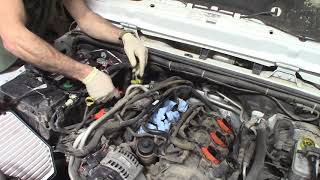
- Faulty Left Cylinder Head (2011-2013 models) 🔴 High Probability A known manufacturing defect involving premature wear of the valve guides and seats in the left cylinder head on early 3.6L Pentastar engines causes a loss of compression and misfires. This was addressed by TSB #09-002-14 Rev. B. 🎬 Watch: A guide to the cylinder head replacement and warranty.
How to confirm: After ruling out spark and fuel, perform a cylinder leak-down test on cylinder 2. Leakage of 25% or greater confirms the issue as per the TSB, indicating valves are not sealing properly.
Typical fix: Replacement of the left cylinder head assembly with an updated part (e.g., Mopar RL141353AC). This was covered under an extended warranty (X56) for 10 years/150,000 miles, which is likely expired for most vehicles. Out-of-warranty repair can cost over $2,800.
Est. part cost: $800-$1500 - Worn Spark Plug 🔴 High Probability Spark plugs are a routine maintenance item and a primary cause for any isolated misfire code. The manufacturer recommends replacement at 100,000 miles, but they can fail sooner, causing a weak or inconsistent spark.
How to confirm: Remove the spark plug from cylinder 2 and inspect it for wear (worn electrode), fouling (black carbon or wet oil), or an incorrect gap. Compare it to a new plug.
Typical fix: Replace the spark plug. It is highly recommended to replace all six at the same time to maintain consistent performance.
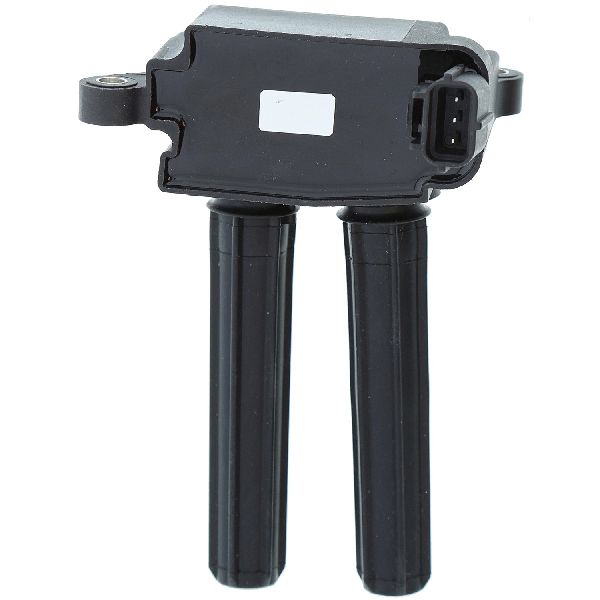
Est. part cost: $10-$25 per plug - Failed Ignition Coil 🟡 Medium Probability Coil-on-plug systems are common points of failure across all modern vehicles. Constant exposure to engine heat and vibration can cause the coil's internal windings to fail over time.
How to confirm: Swap the ignition coil from cylinder 2 with another cylinder (e.g., cylinder 4). Clear the codes and drive. If the code changes to P0304, the coil is definitively bad.
Typical fix: Replace the faulty ignition coil. Many owners choose to replace all three on the same bank for preventative maintenance.
Est. part cost: $40-$90 - Failed Rocker Arm / Worn Camshaft Lobe (2014-2018 models) 🟡 Medium Probability Later model Pentastars are known for a 'Pentastar Tick' which is an audible ticking noise caused by the needle bearings failing in a rocker arm. The failed rocker arm can damage the camshaft lobe, preventing the valve from opening and closing properly, leading to a misfire.
How to confirm: Listen for a sharp, metallic ticking sound from the driver's side valve cover area. The sound is distinct from the quieter clicking of fuel injectors. Visual inspection requires removing the valve cover to check for play in the rocker arms and visible wear on the camshaft lobes.
Typical fix: Replace all 12 rocker arms on the affected cylinder head, along with any damaged camshafts and lifters. This is a labor-intensive job. 🎬 See how to fix the Pentastar tick and replace rocker arms. The updated Mopar rocker arm is part number 5184296AH.
Est. part cost: $250-$800 (depending on camshaft replacement) - Clogged or Faulty Fuel Injector ⚪ Low Probability
How to confirm: Listen for a consistent clicking sound from the injector with a mechanic's stethoscope to confirm it's operating. A more definitive test is to swap the fuel injector from cylinder 2 with another cylinder to see if the misfire code follows. This is labor-intensive as it requires removing the intake manifold.
Typical fix: Replace the fuel injector for cylinder 2.
Est. part cost: $50-$120
Rare But Worth Checking
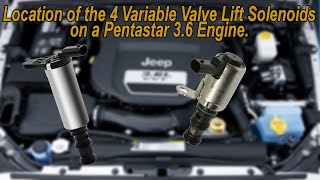
- Faulty VVL Solenoid: As reported in NHTSA complaint #11480402 and confirmed in owner forums, a bad Variable Valve Lift (VVL) solenoid can get stuck, causing a misfire. This is often accompanied by code P105D 'Intake Valve Stuck in High Lift Position (Cylinder 2)'. A Reddit user documented fixing their P0302/P105D codes by cleaning, and later replacing, the VVL solenoid for cylinder 2 (part number 5047897AC). 🎬 Watch: Diagnosing and fixing the P105D intake valve stuck code.
Diagnosis Steps
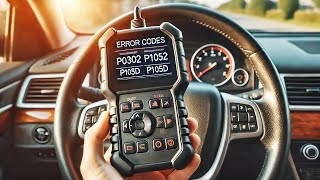
- Read the code with an OBD-II scanner and note any other codes present, especially P0300, P0304, P0306, or P105D.
- Identify Cylinder 2: On the 3.6L Pentastar, the engine is mounted longitudinally. The passenger side bank contains cylinders 1, 3, 5 (front to back). The driver's side bank contains cylinders 2, 4, 6 (front to back). Cylinder 2 is the front-most cylinder on the driver's side.
- Listen to the Engine: Start the engine and listen for a distinct metallic ticking noise from the driver's side valve cover. If present, this strongly suggests a rocker arm/camshaft issue, common on 2014+ models.
- Swap the Ignition Coil: Swap the coil from cylinder 2 with the coil from cylinder 4 (middle cylinder, driver's side). Clear the codes and run the engine. If the code changes to P0304, the ignition coil is the problem.
- Inspect and Swap the Spark Plug: If the coil is good, remove the spark plug from cylinder 2. Inspect it for heavy carbon deposits, oil fouling, or a worn electrode. If in doubt, swap it with cylinder 4's plug and see if the misfire moves.
- Check the Fuel Injector: Listen to the injector with a stethoscope to ensure it's clicking. Swapping injectors is a more involved job and should be done after easier checks. A resistance check can also be performed; a healthy injector should measure around 12 Ohms.
- Perform a Compression Test: If ignition and fuel components are ruled out, a compression test can reveal a mechanical problem. Low compression in cylinder 2 points towards a valve or piston ring issue.
- Perform a Cylinder Leak-Down Test (Especially for 2011-2013): This is the definitive test for the cylinder head issue. Pressurize the cylinder and measure the percentage of air that leaks out. Per TSB #09-002-14 Rev. B, leakage of 25% or more confirms a bad cylinder head requiring replacement.
Parts You'll Likely Need
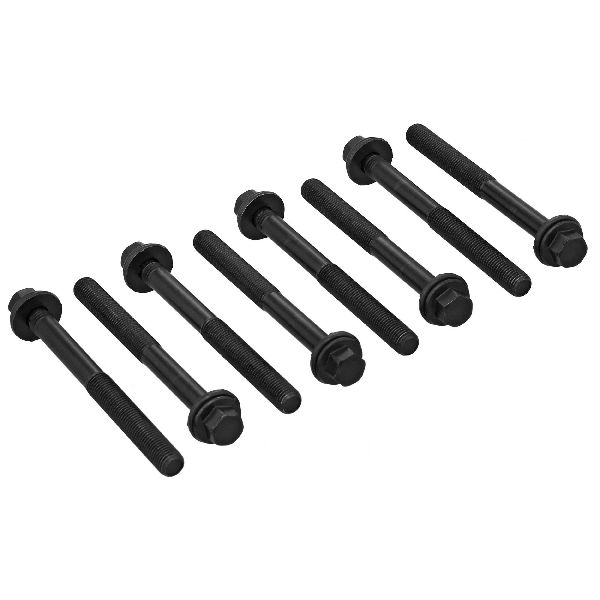
- Left Cylinder Head Assembly
(OEM #RL141353AC)— This is the definitive fix for the common P0302 cause on 2011-2013 models due to a factory defect, as outlined in TSB #09-002-14. This is a remanufactured part with the design flaw corrected.
Trusted brands: Mopar
OEM price range: $1000-$1500
Aftermarket price range: $800-$1200 - Rocker Arm
(OEM #5184296AH)— A common failure on 2014+ models causing the 'Pentastar Tick' and misfires. The 'AH' revision is the most updated part designed to prevent the bearing failure of earlier versions.
Trusted brands: Mopar
OEM price range: $10-$15 per arm
Aftermarket price range: $5-$10 per arm - Ignition Coil — A standard wear item and a frequent cause of an isolated misfire. Easy to diagnose by swapping with an adjacent cylinder.
Trusted brands: Mopar, NGK, Denso
OEM price range: $50-$90
Aftermarket price range: $30-$60 - Spark Plug — The most common maintenance item related to a misfire. Should be replaced as a set of six.
Trusted brands: Champion, NGK
OEM price range: $15-$25 per plug
Aftermarket price range: $8-$15 per plug - Fuel Injector
(OEM #0280158233)— Less common than ignition parts, but can become clogged or fail electronically, causing a misfire on a single cylinder.
Trusted brands: Bosch, Mopar
OEM price range: $65
Aftermarket price range: $40-$55
Related Codes That Often Appear With This One
- P0300 — Indicates random/multiple cylinder misfires. If the underlying issue (like a failing cylinder head or bad fuel) is severe, it may trigger misfires on other cylinders in the same bank (P0304, P0306), eventually logging a P0300 code.
- P0304, P0306 — These are misfire codes for cylinders 4 and 6, which are on the same left cylinder bank as cylinder 2. A failing left cylinder head often affects all three cylinders simultaneously.
- P105D — This code for 'Intake Valve Stuck in High Lift Position (Cylinder 2)' points directly to a problem with the Variable Valve Lift (VVL) solenoid for cylinder 2, which can be the direct cause of the P0302 misfire.
- P0202 — Indicates a problem with the fuel injector circuit for cylinder 2. This could be a bad injector, a wiring issue, or a PCM driver fault. An open injector circuit will prevent fuel delivery and directly cause a P0302 misfire.
Technical Service Bulletins (TSBs) & Recalls
- 0900214a / 09-002-14: Describes the diagnosis (cylinder leak-down test) and repair (cylinder head replacement) for P0300, P0302, P0304, or P0306 on 2011-2013 models with the 3.6L engine.
- 18-055-16: A software flash for the PCM on 2015 models to correct issues that could cause false misfire codes.
Platform-Specific Known Issues
- Extended Warranty X56 for Left Cylinder Head (2011-2013): Jeep issued TSB #09-002-14 Rev. B for 2011-2013 Grand Cherokees with the 3.6L engine experiencing misfires on cylinders 2, 4, or 6. This was due to a manufacturing defect causing valve seat/guide wear. The warranty was extended to 10 years or 150,000 miles. Dealers were instructed to perform a leak-down test and replace the left cylinder head if leakage was 25% or greater. This warranty has likely expired for most vehicles due to age.
- 'Pentastar Tick' and Rocker Arm Failure (2014-2018): After the cylinder head issue was resolved, a different common problem emerged known as the 'Pentastar Tick'. This is a distinct metallic tapping sound from the valvetrain, usually caused by a failed needle bearing in one or more rocker arms. If ignored, the failed rocker arm will destroy the corresponding lobe on the camshaft, leading to a persistent misfire (like P0302) and a much more expensive repair. The fix involves replacing the rocker arms and potentially the camshafts.
Mechanic-Grade Diagnostic Values
- Fuel Injector Resistance — expected: 12.0 - 12.5 Ohms. Failure: A reading significantly higher (e.g., double the normal resistance) or an open circuit (infinite resistance) indicates a failed injector. Readings slightly out of spec (e.g., 11.4 Ohms) may also indicate a developing problem.
- Fuel Pressure (at fuel rail) — expected: 58.01 PSI (Minimum) to 63.81 PSI (Maximum). Failure: Low fuel pressure would typically cause multiple/random misfires (P0300) rather than an isolated P0302, but it's a foundational check. Pressure below spec indicates a weak fuel pump or faulty regulator.
Scan Tool Commands That Help
- wiTECH (Dealer Tool) or advanced bidirectional scanner: Cylinder Power Balance Test — This test allows the technician to disable individual fuel injectors one by one to see the effect on engine RPM. If disabling cylinder 2 causes little or no change in RPM drop compared to other cylinders, it confirms cylinder 2 is not contributing power, pinpointing the misfire without having to swap parts.
- wiTECH (Dealer Tool) or advanced bidirectional scanner: VVT/VVL Solenoid Actuation Test — If codes like P105D are present with P0302, this command allows the technician to manually activate the VVL solenoid for cylinder 2 to check for a response. A solenoid that doesn't click or respond is likely stuck or has failed electrically.
Wiring & Ground Locations
- G103 / Engine Dipstick Tube Stud — On the passenger side of the engine block, often sharing a stud with the engine oil dipstick tube.. This is a critical ground point for multiple engine management components, including the PCM, ignition control module, and fuel injectors. A poor connection here can cause a wide range of erratic issues, including misfires that are difficult to diagnose.
- G108 — On the passenger side inner fender, near the back of the power distribution block (fuse box).. This ground serves the Body Control Module (BCM) and Transmission Control Module (TCM). While not a direct cause for a single cylinder misfire, a fault here can cause widespread communication errors that could complicate diagnosis.
- G106 / G107 — Located on the driver's side inner fender, typically behind the airbox.. This is the main ground point for the ABS module and various left-side accessories. A loose or corroded connection here is less likely to cause a P0302 but is a key location to check for general electrical integrity on the driver's side of the engine bay.
Real Owner Repair Stories
- Reddit user VehicleSuccessful196 (Jeep Grand Cherokee (year not specified, but post is about a 2017), ~100,000 miles) — Engine sputtering, misfiring at low speeds/RPM, flashing check engine light.
❌ Tried (didn't work) Dealer replaced spark plugs., Dealer replaced the EGR valve.
✅ What actually fixed it The owner diagnosed the issue themselves after the dealer failed. They found codes P0302 and P105D. After researching, they removed the VVL solenoid for cylinder #2 (part number 5047897AC), found it was stuck, cleaned it with mass airflow sensor cleaner, and reinstalled it. This resolved the misfire. - Reddit user Gullible_Bowl7746 (2017 Jeep Grand Cherokee 3.6L, 110k miles) — Intermittent flashing check engine light, misfire, and trouble accelerating, particularly on an incline. The issue would disappear after restarting the vehicle.
❌ Tried (didn't work) Replaced spark plugs and the ignition coil for cylinder 2.
✅ What actually fixed it The user's post is a request for help and does not have a final confirmed fix. However, the symptoms (intermittent, occurs under specific load conditions, temporarily fixed by restart) and the parts already replaced point strongly towards a fuel delivery issue (injector) or a sticking VVL solenoid, which are common next steps after ignition components are ruled out.
OEM Part Supersession History
5184296AE, 5184296AF, 5184296AG→5184296AH— The original rocker arms were prone to premature needle bearing failure, causing the 'Pentastar Tick' and subsequent camshaft damage. The 'AH' revision is the latest updated part designed to be more durable.05184085AB→05184085AC (also Bosch P/N 0280158233)— Standard part evolution and manufacturing updates for the fuel injector.
Model Year Variations Within This Range
- 2011-2013 (specifically engines built on or before July 25, 2012): These years are highly prone to the left cylinder head defect (TSB 09-002-14). A P0302 on these models should immediately raise suspicion of a head problem, warranting a leak-down test early in the diagnosis.
- 2014-2018: These model years feature an updated cylinder head design, making the original defect far less likely. A P0302 is more commonly caused by a failed rocker arm ('Pentastar Tick'), a faulty VVL solenoid (on later models with VVL), or standard ignition/fuel component failures.
- 2016-2018: These later models of the 3.6L Pentastar were updated with a two-step Variable Valve Lift (VVL) system for improved efficiency. This introduces new potential failure points, specifically the VVL solenoids and their associated hardware, which can cause misfires when they fail or stick.
Helpful Videos

Used OEM Parts in Stock



New Aftermarket Parts Available




The information in this article is provided for general reference and educational purposes only. Vehicle specifications, procedures, and part compatibility can vary by production date, trim level, and region. Always consult your vehicle's factory service manual and verify part numbers before purchasing or performing repairs. Safety-critical components such as airbags, seat belts, and braking systems should be installed by a qualified professional.
- Jeep GRAND CHEROKEE:
- 🎬 Helpful Videos
- 🛍️ Shop This Part
- What's Unique About the 2011-2018 Jeep GRAND CHEROKEE
- Diagnostic Flowchart
- Symptoms You May Notice
- Most Likely Causes
- Rare But Worth Checking
- Diagnosis Steps
- Parts You'll Likely Need
- Related Codes That Often Appear With This One
- Technical Service Bulletins (TSBs) & Recalls
- Platform-Specific Known Issues
- Mechanic-Grade Diagnostic Values
- Scan Tool Commands That Help
- Wiring & Ground Locations
- Real Owner Repair Stories
- OEM Part Supersession History
- Model Year Variations Within This Range
- 🎟️ Get 5% Off