

P0302 on 2025-2026 Jeep Compass: Cylinder 2 Misfire Causes & Fixes
P0302 on a 2025-2026 Jeep Compass signifies a misfire in cylinder 2, most commonly caused by a bad ignition coil or a worn/cracked spark plug. A DIY diagnosis involves swapping the coil from cylinder 2 to another cylinder to see if the code follows. Always check for other codes, as Jeep TSBs link this misfire to broader fuel pressure (P0087) and even spark plugs cracking during installation (TSB 18-079-23), which may point to a more systemic issue.
- P0302 means cylinder 2 is misfiring, but on a 2025-2026 Compass, the 'why' can be complex.
- The easiest and most common fixes are replacing the ignition coil or spark plug for cylinder 2.
- A flashing check engine light is a critical warning to stop driving to avoid expensive catalytic converter damage.
- Always check for other codes. If you see P0087 or P006C, the problem is likely related to the fuel system or turbo intake, as documented in official Jeep TSBs.
- The diagnostic 'coil swap' is the fastest way to confirm a bad ignition coil without spending any money on parts.
What's Unique About the 2025-2026 Jeep COMPASS
The 2025-2026 Jeep Compass uses the 2.0L Turbocharged I4 engine, part of the Stellantis Global Medium Engine (GME) family. While a P0302 code on any car often points to a simple ignition part failure, Jeep has issued multiple Technical Service Bulletins (TSBs) for this specific vehicle and its platform mates (like the Dodge Hornet) that are crucial to consider. TSB 18-079-23 for the 2023 Dodge Hornet with the same engine points to spark plugs cracking during installation as a cause for misfires. Furthermore, TSBs like #14-009-25 REV. D and #09-016-25 show that a P0302 code is frequently accompanied by misfire codes for other cylinders (P0300, P0301, P0303, P0304) and, more significantly, with codes for low fuel rail pressure (P0087) and turbo pressure sensor correlation issues (P006C). This indicates that on this platform, a single-cylinder misfire might be the first symptom of a more systemic fuel delivery problem (like a failing high-pressure fuel pump) or an installation issue, rather than just an isolated bad coil or plug.
Diagnostic Flowchart
Tap your situation to follow the diagnostic path that matches what you're seeing on this vehicle.
Symptoms You May Notice
- Rough or shaky idle
- Engine hesitation or stumbling during acceleration
- Noticeable loss of power
- Check engine light is on (solid or flashing)
- Reduced fuel economy
- Engine stalling
- Smell of gasoline from the exhaust
- Engine running rougher than usual
- Replacing the oxygen sensor. While a misfire can affect O2 sensor readings, the sensor is rarely the root cause of the misfire itself.
- Ignoring other trouble codes. Failing to address codes like P0087 (Low Fuel Pressure) when present with P0302 will lead to an incorrect diagnosis, as the issue is systemic rather than isolated to cylinder 2.
- Replacing only ignition parts when the oil smells of gasoline, which is a strong indicator of a failing high-pressure fuel pump leaking into the crankcase.
Most Likely Causes
- Faulty Ignition Coil 🔴 High Probability Coil-on-plug systems are subject to high heat and vibration, leading to eventual failure. This is a common wear item on most modern engines, including the 2.0L Turbo.
How to confirm: Swap the ignition coil from cylinder 2 with an adjacent cylinder (e.g., cylinder 1 or 3). Clear the codes and drive the vehicle. If the trouble code changes to P0301 or P0303, the ignition coil is confirmed to be faulty.
Typical fix: Replace the faulty ignition coil. It is often recommended to replace all four coils at the same time for preventative maintenance, especially on higher mileage vehicles.
Est. part cost: $80-$162 - Worn or Fouled Spark Plug 🔴 High Probability Spark plugs are a regular maintenance item. TSB 18-079-23 was issued for the platform-mate Dodge Hornet for misfire codes caused by cracks in the spark plugs during installation, indicating a sensitivity on this engine. Over time, electrodes also wear down or can become fouled by oil or carbon deposits, leading to a weak or inconsistent spark.
How to confirm: Remove the spark plug from cylinder 2. Inspect the electrode for excessive wear and the porcelain insulator for cracks or heavy carbon/oil fouling. The correct gap for the OEM NGK plugs is approximately 0.026 inches.
Typical fix: Replace the spark plug. It is best practice to replace all four spark plugs at the same time to ensure consistent performance. Per TSB 18-079-23, the recommended fix is to replace all four plugs. Use high-quality Iridium plugs for longevity.
Est. part cost: $60-$90 for a set of four - Faulty Fuel Injector 🟡 Medium Probability
How to confirm: Listen to the injector with a mechanic's stethoscope; it should have a consistent clicking sound. A more advanced test involves a scan tool to perform an injector balance test or measuring the injector's resistance with a multimeter, which should be around 12 Ohms. TSB #14-009-25 REV. D outlines a procedure using an endoscope to check for leaking injectors.
Typical fix: Replace the faulty fuel injector. It's also wise to clean the fuel rail and consider replacing other injectors if they are original and high-mileage. Some owners have had success using a quality fuel injector cleaner additive as a first step.
Est. part cost: $70-$150 - Low Fuel Pressure 🟡 Medium Probability As noted in TSBs #14-009-25 REV. D and #09-016-25, this platform can experience low fuel pressure issues that trigger misfires. This is especially likely if code P0087 is also present 🎬 Watch: How to diagnose a P0087 low fuel pressure code. and often points to a failing high-pressure fuel pump (HPFP).
How to confirm: Test the fuel pressure using a fuel pressure gauge to ensure it is within the manufacturer's specified range. The high-pressure side should be capable of reaching up to 2,900 PSI (200 bar) under load. A dealership can use a wiTECH scan tool to graph desired vs. actual fuel pressure.
Typical fix: Replacement of the failing component, such as the high-pressure fuel pump (HPFP), in-tank lift pump, or fuel pressure sensor. In some cases, a PCM software update may address erroneous fuel pressure codes.
Est. part cost: $200-$800+
Rare But Worth Checking
- Vacuum Leak: A vacuum leak near the intake manifold runner for cylinder 2 can lean out the air-fuel mixture and cause a misfire. Check for cracked hoses or a bad intake manifold gasket.
- Low Engine Compression: This is a more serious mechanical issue, such as a worn piston ring, a bad valve, a damaged cylinder head, or a failed head gasket. A compression test is needed to diagnose this.
- PCM Software Issue: In some cases, particularly when accompanied by other codes like P0087, a Powertrain Control Module (PCM) software update is required to fix misfire detection logic or fuel pressure readings. This is a dealer-level repair.
Diagnosis Steps
- Read all stored trouble codes with an OBD-II scanner. Note any codes that appear alongside P0302, paying close attention to P0087 or P0300.
- If the check engine light is flashing, stop the engine immediately to prevent catalytic converter damage.
- Locate cylinder 2. On the 2.0L I4 engine, the cylinders are numbered 1-2-3-4 from front (belt side) to back (transmission side).
- Swap the ignition coil from cylinder 2 with cylinder 3. Clear the codes and run the engine. If the code changes to P0303, the ignition coil is bad and needs replacement.
- If the code remains P0302, remove the spark plug from cylinder 2. Inspect it for wear, damage, or fouling. Pay close attention to any hairline cracks in the porcelain, as noted in TSB 18-079-23. If it looks worn or damaged, replace all four spark plugs.
- If the coil and plug are good, check the fuel injector. Listen for a steady clicking with a stethoscope. Compare the sound to the other injectors.
- Check the engine oil dipstick. If the oil level is high and smells strongly of gasoline, this could indicate a failing high-pressure fuel pump (HPFP) leaking fuel into the crankcase, a known issue on similar engines.
- If codes like P0087 are present, a fuel pressure test is the next step to check the fuel delivery system, as suggested by the TSBs.
- If all else fails, perform a compression test on cylinder 2 to check for mechanical engine problems like bad valves or piston rings.
Parts You'll Likely Need
- Ignition Coil
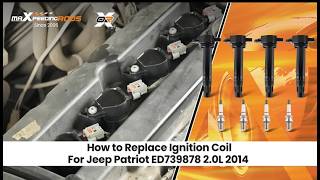
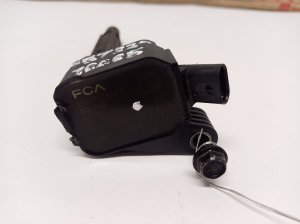
(OEM #68211953AA)— This is the most common failure part for a single-cylinder misfire. Heat and vibration cause the internal windings to fail over time. 🎬 See this walkthrough on how to replace an ignition coil.
Trusted brands: Mopar, NGK, Delphi, Carquest Premium
OEM price range: $100-$150
Aftermarket price range: $80-$120 - Spark Plug
(OEM #68292346AA)— Spark plugs are a maintenance item that wears out. A worn or fouled plug cannot create a strong enough spark for proper combustion. TSB 18-079-23 also identified cracked plugs as a source of misfires on this engine family.
Trusted brands: NGK, Bosch, Champion
OEM price range: $20-$35 per plug
Aftermarket price range: $15-$25 per plug
Related Codes That Often Appear With This One
- P0300 — If the underlying cause, like low fuel pressure, affects multiple cylinders intermittently, a P0300 (Random/Multiple Cylinder Misfire) code will be stored.
- P0301, P0303, P0304 — These codes indicate misfires in other cylinders and often appear with P0302 when there is a systemic issue like bad fuel or low fuel pressure, as documented in multiple TSBs.
- P0087 — This code for 'Fuel Rail Pressure Too Low' is explicitly linked to misfire codes on this vehicle in TSB #09-016-25 and #14-009-25 REV. D, pointing to a fuel delivery problem, likely with the high-pressure fuel pump.
- P006C — This code for 'MAP - Turbocharger Inlet Pressure Correlation' is also mentioned in the same TSBs, suggesting an issue in the air induction system could be a contributing factor.
Technical Service Bulletins (TSBs) & Recalls
- 14-003-26
- 14-009-25 REV. D
- 09-026-25
- 09-016-25
- 18-079-23 (for Dodge Hornet)
Platform-Specific Known Issues
- Multiple Technical Service Bulletins have been issued by Jeep for the 2025-2026 Compass that include code P0302.
- TSB #14-009-25 REV. D and TSB #09-016-25 specifically link P0302 and other misfire codes to Diagnostic Trouble Codes P0087 (Fuel Rail Pressure Too Low) and P006C (MAP - Turbocharger Inlet Pressure Correlation).
- TSB 18-079-23, issued for the Dodge Hornet which shares the 2.0L Turbo engine, identifies cracked spark plugs during installation as a direct cause for misfire codes P0300-P0304, with the repair being the replacement of all four plugs.
- The combination of these bulletins strongly suggests that when diagnosing P0302 on this vehicle, technicians should look beyond a simple coil or plug failure and investigate potential systemic fuel pressure issues or subtle spark plug damage.
Mechanic-Grade Diagnostic Values
- High-Pressure Fuel System Pressure — expected: Up to 2,900 PSI (200 bar) under load.. Failure: Significantly lower pressure, especially when code P0087 is also present.
- Fuel Injector Resistance — expected: Approximately 12 Ohms.. Failure: An open circuit (infinite resistance) or a reading significantly different from the other injectors.
- Spark Plug Gap (OEM NGK) — expected: ~0.026 inches (0.66mm).. Failure: An incorrect gap can lead to a weak or inconsistent spark.
- Long-Term Fuel Trim (LTFT) — expected: Within +/- 5%.. Failure: Values consistently above +10% suggest the PCM is compensating for a lean condition (e.g., vacuum leak) that could cause misfires.
- Ignition Coil Primary Resistance — expected: Approximately 0.6 - 1.1 Ohms (based on similar engines).. Failure: An open circuit or resistance far outside the expected range.
Hidden / Shadow Codes Worth Checking
- Mode $06, TID $A2-$AF: OBD-II Mode $06 provides access to non-continuous monitor test results. Technicians can view the raw misfire counts for each cylinder before they cross the threshold to set a formal P030x trouble code. For example, Test ID $A3, Component ID $02 would show the misfire count for cylinder 2. (see via An advanced OBD-II scan tool that supports Mode $06 data streaming.)
Scan Tool Commands That Help
- wiTECH (FCA/Stellantis Dealer Tool): Power Balance Test / Cylinder Kill Test — To confirm a misfire and its impact. The tool disables one cylinder at a time (e.g., by cutting fuel to the injector) and measures the RPM drop. A cylinder with a small or no RPM drop when disabled is the one that is not contributing power (misfiring).
- wiTECH (FCA/Stellantis Dealer Tool): Clear Mis-fire TLC (Trip Life Cycle) — After a repair, this function can be used to reset the misfire counters and learning procedures within the PCM.
- wiTECH (FCA/Stellantis Dealer Tool): Mis-fire Mon SWC (Software Counter) — This screen allows for live monitoring of the misfire counters for each cylinder during a test drive or specific engine conditions (e.g., wide-open throttle stabs) to diagnose intermittent issues.
Wiring & Ground Locations
- PCM Connector C2, Pin 25 — On the Powertrain Control Module (PCM).. This is the 'Coil Control 2' circuit. The wire is typically Dark Blue/Light Green (DB/BG). A break or short in this wire will prevent the PCM from firing the ignition coil for cylinder 2.
- PCM Connector C2, Pin 9 — On the Powertrain Control Module (PCM).. This is the 'Injector Control 2' circuit. The wire is typically Brown/Dark Blue (BN/DB). A break or short in this wire will prevent the PCM from activating the fuel injector for cylinder 2.
- Cylinder 2 Fuel Injector Connector — On the fuel rail, plugged into the #2 fuel injector.. This 2-pin connector provides the signal to the injector. Corrosion or damage to the connector or its pigtail harness is a common point of failure that will stop the injector from firing, causing a P0302.
Real Owner Repair Stories
- Jeep Wrangler Forum user (platform with same 2.0L GME engine) (2018 Jeep Wrangler JLU) — Check engine light with P0301 and other misfire codes.
❌ Tried (didn't work) Dealer swapped the spark plug from cylinder 1 to cylinder 2; the P0301 code remained., Standard ignition component swaps did not resolve the issue.
✅ What actually fixed it An independent mechanic discovered oil was leaking from the valve cover gasket directly onto the downstream O2 sensor. The oil contamination caused the O2 sensor to send incorrect data to the PCM, which then incorrectly flagged a misfire. Replacing the valve cover gasket and the fouled O2 sensor resolved the codes. - General GDI Engine Diagnosis Pattern (Jeep Compass or similar with 2.0L GME Turbo Direct Injection engine) — Persistent, intermittent misfire (P0302, P0300) especially on cold starts, that does not resolve after replacing spark plugs and ignition coils.
❌ Tried (didn't work) Replacing spark plugs., Swapping ignition coils, with the misfire code not following the coil.
✅ What actually fixed it The root cause was heavy carbon buildup on the intake valves, a known long-term issue with Gasoline Direct Injection (GDI) engines. Since fuel is injected directly into the cylinder, it doesn't wash over and clean the valves. The buildup restricts airflow to cylinder 2, causing the misfire. The fix was a professional intake valve cleaning (e.g., walnut blasting).
"I Checked Everything" — The Actual Cause
- A common diagnostic step for misfires is a smoke test to find vacuum leaks. However, a smoke test would come back clean in a scenario reported on a similar engine platform where the root cause was an oil leak, not an air leak. Oil from a failed valve cover gasket dripped onto an O2 sensor, causing it to send faulty readings and trigger a misfire code. This type of external contamination affecting a sensor would not be found with a smoke test.
When the Usual Fixes Don't Work
- While the most common advice is to swap ignition coils and spark plugs to diagnose a P0302, there are documented cases on vehicles with the same engine where this procedure fails to find the fault. In one instance, a dealer swapped ignition components, but the misfire code on a specific cylinder remained. The actual cause was found by an independent shop to be an oil leak from the valve cover gasket fouling a downstream oxygen sensor. This skewed the sensor's readings, causing the PCM to incorrectly report a combustion misfire. This demonstrates that the root cause can be external to the cylinder itself and may not be found by simply swapping parts within the ignition system.
OEM Part Supersession History
68211953AA→N/A— No supersession found.
Heads up: The OEM ignition coil part number 68211953AA appears to be the original and currently specified part for the 2018-2026 2.0L Turbo engine family, with no common revisions or supersessions noted in parts catalogs as of early 2026. This suggests the part has been stable.
Model Year Variations Within This Range
- 2025-2026: No significant variations in parts or common causes for the P0302 code have been documented between the 2025 and 2026 model years as of early 2026. Both years use the same 2.0L GME Turbo engine and associated components.
Helpful Videos
We Have This Part in Stock

The information in this article is provided for general reference and educational purposes only. Vehicle specifications, procedures, and part compatibility can vary by production date, trim level, and region. Always consult your vehicle's factory service manual and verify part numbers before purchasing or performing repairs. Safety-critical components such as airbags, seat belts, and braking systems should be installed by a qualified professional.
- Jeep COMPASS:
- 🎬 Helpful Videos
- 🛍️ Shop This Part
- What's Unique About the 2025-2026 Jeep COMPASS
- Diagnostic Flowchart
- Symptoms You May Notice
- Most Likely Causes
- Rare But Worth Checking
- Diagnosis Steps
- Parts You'll Likely Need
- Related Codes That Often Appear With This One
- Technical Service Bulletins (TSBs) & Recalls
- Platform-Specific Known Issues
- Mechanic-Grade Diagnostic Values
- Hidden / Shadow Codes Worth Checking
- Scan Tool Commands That Help
- Wiring & Ground Locations
- Real Owner Repair Stories
- "I Checked Everything" — The Actual Cause
- When the Usual Fixes Don't Work
- OEM Part Supersession History
- Model Year Variations Within This Range
- 🎟️ Get 5% Off