

P0302 on 2014-2019 Jeep Cherokee: Cylinder 2 Misfire Causes and Fixes
P0302 on a Jeep Cherokee indicates a misfire in cylinder #2. The most common causes are a bad ignition coil or a worn/fouled spark plug. For the 2.4L engine, oil consumption can foul plugs, while the 3.2L V6 is known for valvetrain issues like failed rocker arms. A simple swap test between cylinders can quickly identify a faulty coil or plug. Expect to pay $100-$355 for a shop to replace a coil, or $360-$475 for spark plugs.
- P0302 on a 2014-2019 Jeep Cherokee means cylinder #2 is misfiring.
- The most likely culprits are a bad ignition coil or spark plug; use a 'swap test' to diagnose them for free.
- If you have the 2.4L engine, check your oil level immediately, as low oil or oil fouling is a very common cause of misfires on this engine.
- If you have the 3.2L V6 and hear a ticking noise, the misfire could be due to a more serious valvetrain issue like a failed rocker arm.
- Do not ignore a flashing check engine light, as this signals a severe misfire that can quickly destroy your expensive catalytic converter.
What's Unique About the 2014-2019 Jeep CHEROKEE

On the 2014-2019 Jeep Cherokee, the cause of a P0302 misfire can be engine-specific. Models with the 2.4L "Tigershark" engine are known for excessive oil consumption, which can foul the spark plug in cylinder 2, leading to a misfire. A leaking valve cover gasket can also cause oil to pool in the spark plug tubes, saturating the coil and plug. For the 3.2L "Pentastar" V6, while standard ignition issues are common, a persistent P0302 code, especially when accompanied by a ticking noise, can point to a more serious valvetrain problem, such as a failed rocker arm or lifter, a known issue for this engine family.
Diagnostic Flowchart

Tap your situation to follow the diagnostic path that matches what you're seeing on this vehicle.
Symptoms You May Notice
- Rough or shaking idle
- Hesitation or stumbling during acceleration
- Flashing or solid Check Engine Light
- Reduced engine power
- Poor fuel economy
- Engine stalling
- Smell of unburnt gasoline from the exhaust
- Replacing the oxygen (O2) sensors. O2 sensors report on the combustion process; they are rarely the cause of a single-cylinder misfire.
- Replacing the catalytic converter. A misfire can damage a catalytic converter, but the converter itself does not cause the misfire.
Most Likely Causes

- Failed Ignition Coil 🔴 High Probability On the 2.4L engine, TSB #08-027-20 was issued for replacing the ignition coil insulating boots, which can degrade and cause misfires, sometimes without the coil itself being faulty. Oil leaks from the valve cover gasket can also saturate and ruin the coil.
How to confirm: Swap the ignition coil from cylinder 2 with another cylinder (e.g., cylinder 4 on a 2.4L, or cylinder 4/6 on a 3.2L). Clear the codes and drive. If the code changes to P0304 or P0306, the ignition coil is faulty.
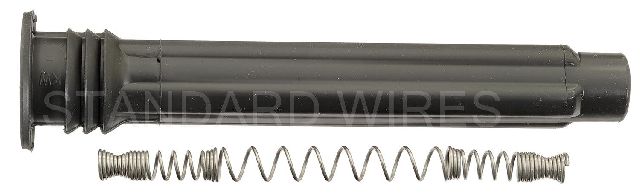
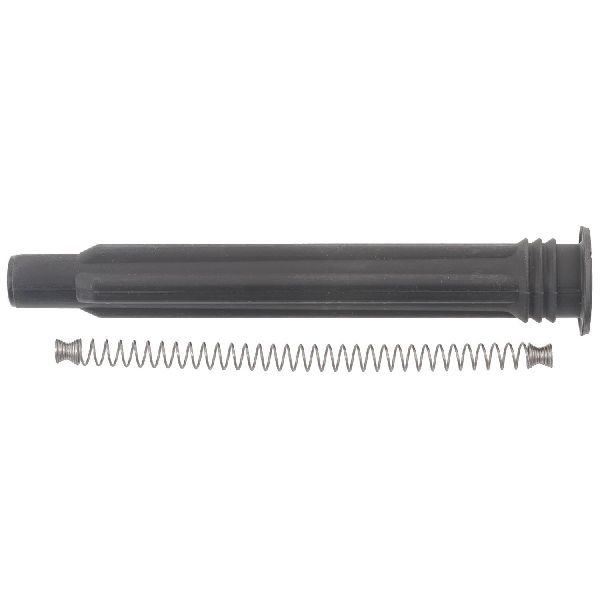
Typical fix: Replace the failed ignition coil. On the 2.4L, inspect the coil boot first; sometimes only the boot needs replacement. It is often recommended to replace them in sets if they are original and high-mileage.
Est. part cost: $40-$90 (aftermarket), $100-$150 (OEM) - Worn or Fouled Spark Plug 🔴 High Probability The 2.4L Tigershark engine has a known issue with oil consumption that can foul spark plugs, causing misfires. A leaking valve cover gasket is also a common cause of oil fouling on the plugs for this engine.
How to confirm: After confirming the coil is good, remove the spark plug from cylinder 2. Inspect it for wear, heavy carbon buildup, or signs of oil (black, greasy) or fuel (wet) fouling. Compare it to a plug from another cylinder.
Typical fix: Replace the spark plug. If one is worn or fouled, it is best practice to replace all spark plugs at the same time. Ensure new plugs are gapped correctly (e.g., ~0.047 inches for the 2.4L).
Est. part cost: $5-$25 per plug - Clogged or Faulty Fuel Injector 🟡 Medium Probability Injectors can become clogged over time from fuel deposits. On the 3.2L V6, accessing the injectors is significantly more labor-intensive as it requires removing the upper and lower intake manifolds.
How to confirm: If spark and ignition are good, the fuel injector is a likely cause. A professional can test the injector's flow rate. A DIYer can listen for a clicking sound with a mechanic's stethoscope to confirm it's activating. Swapping injectors between cylinders is also possible but is difficult on the 3.2L V6.
Typical fix: Replace the faulty fuel injector. It is often recommended to replace all injectors if the vehicle has high mileage.
Est. part cost: $50-$200 per injector
Rare But Worth Checking
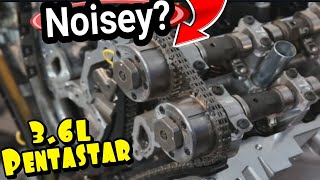
- Failed Rocker Arm/Lifter (3.2L V6): The Pentastar engine family has a known weakness in the valvetrain. A ticking noise from the top of the engine is a key symptom. A failed rocker arm bearing can seize, causing a persistent misfire and potentially damaging the camshaft. 🎬 See how a failed rocker arm causes ticking and misfires. This is a labor-intensive repair, often costing over $2,000 at a shop.
- Low Engine Compression: This indicates a serious internal engine problem like a burnt valve, leaking head gasket, or damaged piston rings. A compression test is needed to confirm. A reading more than 15-20% lower than other cylinders is a red flag. One owner of a 2015 Grand Cherokee with a P0302 found the cause to be a bad valve requiring a cylinder head replacement.
- Vacuum Leak: A leak in a vacuum hose or intake manifold gasket can lean out the air-fuel mixture and cause a misfire. This would typically be accompanied by other codes (like P0171) or affect multiple cylinders.
- PCM Software Issue: TSB 18-110-20 for the 2017 2.4L Cherokee indicates that a PCM software update can resolve issues that may cause various misfire codes, including P0302. This should be considered if no mechanical fault can be found.
Diagnosis Steps
- Read the code using an OBD-II scanner to confirm P0302 and check for any other codes.
- Note if the Check Engine Light is steady or flashing. A flashing light indicates a severe misfire that can damage the catalytic converter.
- For the 2.4L engine, check the engine oil level immediately. Low oil is a symptom of the oil consumption issue that can foul the spark plug.
- Perform an 'ignition swap test'. Swap the ignition coil from cylinder 2 with another cylinder (e.g., cylinder 4). Clear the codes and run the engine. If the code changes to P0304, the ignition coil is the problem.
- If the code remains P0302, swap the spark plug from cylinder 2 with the one from the other cylinder. If the code now moves, the spark plug was the issue.
- Inspect the spark plug from cylinder 2. Look for signs of oil fouling (black, greasy), fuel fouling (wet with gas), or excessive wear on the electrode.
- If ignition components are good, check the fuel injector on cylinder 2. Listen for a steady clicking with a stethoscope or use a 'noid light' to check for an electrical pulse. If P0202 is also present, focus on the injector circuit.
- For the 3.2L V6, listen carefully for a 'ticking' or 'tapping' sound from the top of the engine, which could indicate a rocker arm/lifter failure.
- If all else fails, perform a compression test on cylinder 2 and compare the reading to other cylinders. A significant loss of pressure (more than 15-20% lower than the others) points to a mechanical engine problem like a valve or piston ring issue.
Parts You'll Likely Need
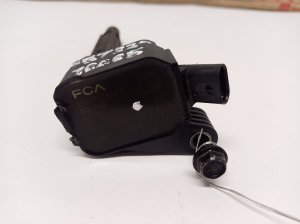
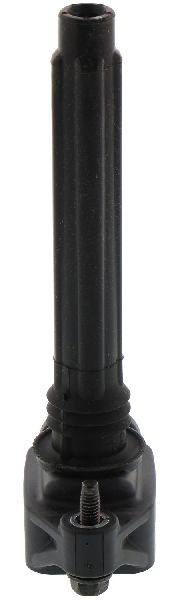
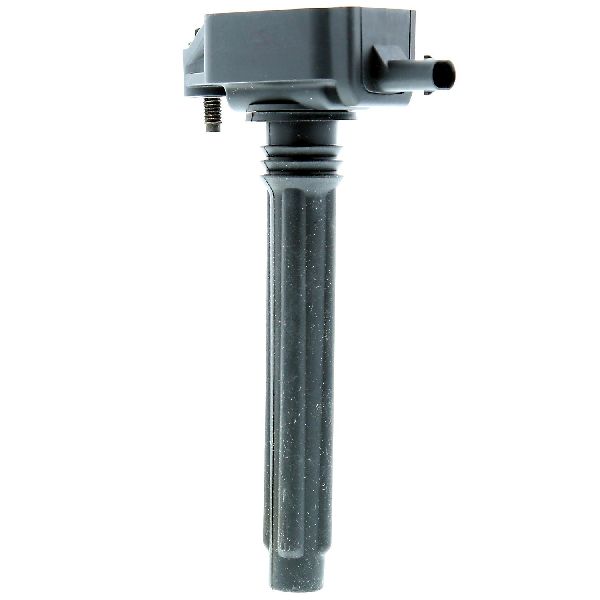
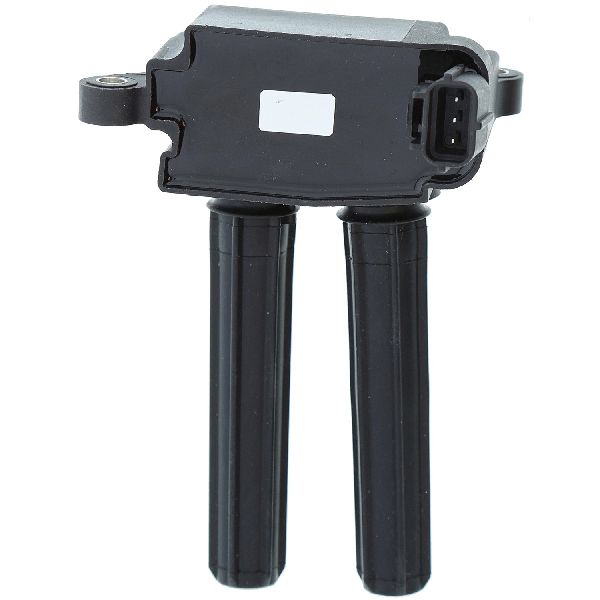
- Ignition Coil
(OEM #68242286AA (2.4L), 68080580AB (2.4L))— This is one of the most common failure points for a single-cylinder misfire. It's responsible for generating the high voltage for the spark plug.
Trusted brands: Mopar, NGK, Delphi, Denso
OEM price range: $100-$150
Aftermarket price range: $40-$90 - Spark Plug
(OEM #SP148183AB (3.2L))— Spark plugs are a routine maintenance item that wear out over time. On the 2.4L engine, they are particularly susceptible to fouling from oil consumption, making them a primary suspect for P0302.
Trusted brands: Mopar, NGK, Champion
OEM price range: $15-$25 per plug
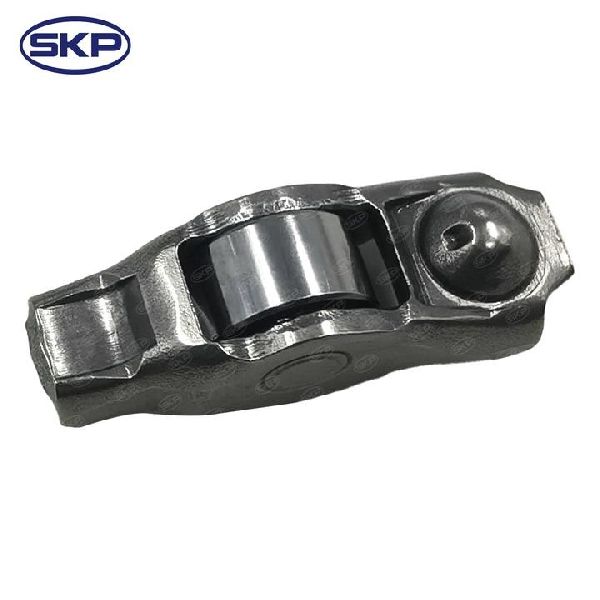
Aftermarket price range: $5-$15 per plug - Rocker Arm (3.2L V6)
(OEM #5184296AH)— A known failure point on the 3.2L Pentastar V6 that leads to a persistent misfire and ticking noise.
Trusted brands: Mopar, Melling
OEM price range: $18-$25 per arm
Aftermarket price range: $8-$15 per arm
Related Codes That Often Appear With This One
- P0300 — If the misfire is intermittent or affects other cylinders, a P0300 (Random/Multiple Cylinder Misfire) code may be stored alongside P0302. This is noted in several manufacturer TSBs.
- P0301, P0303, P0304, etc. — It's common to see other cylinder-specific misfire codes if the root cause (like bad fuel, a vacuum leak, or low fuel pressure) affects the entire engine. TSB 18-110-20 mentions this possibility.
- P0202 — This code indicates a fault in the fuel injector circuit for cylinder 2. If you see P0302 and P0202 together, the fuel injector or its wiring is the most likely culprit.
Technical Service Bulletins (TSBs) & Recalls
- Bulletin #18-110-20: For 2017 models with the 2.4L engine, this TSB involves a PCM software update to address several potential DTCs, including P0302, which could be caused by software logic issues rather than mechanical failure.
- Bulletin #08-027-20: For 2.4L engines, this bulletin addresses a rough running condition and misfire codes (P0300-P0304) by replacing all four ignition coil insulating boots, which can fail and cause a poor connection.
- Bulletin #18-004-16 REV. A: Lists P0302 among a wide range of potential DTCs that can be stored in the PCM, related to a software update.
- TSB #09-002-14: While for the larger 3.6L Pentastar, this TSB is relevant as it addresses a cylinder head issue that causes misfires on the left bank (cylinders 2, 4, 6), showing a history of valvetrain issues in the engine family.
Platform-Specific Known Issues

- 2.4L Tigershark Engine: These engines are widely known for excessive oil consumption due to piston ring design. This can cause the oil level to drop, but more relevant to P0302, it can foul spark plugs with oil, leading directly to misfires. A leaking valve cover gasket can also cause oil to seep into the spark plug tubes, ruining the plug and coil. Always check the oil level and look for oil in the spark plug wells first if you have this engine.
- 3.2L Pentastar V6 Engine: This engine family can suffer from failed rocker arm bearings, which causes a ticking sound and can lead to a persistent misfire. The updated Mopar part number for the rocker arm is 5184296AH. A more severe, though less common, issue is a valve sealing problem that requires cylinder head removal to fix.
Mechanic-Grade Diagnostic Values
- Fuel Injector Resistance (3.2L V6) — expected: 12-15 Ohms (when cold). Failure: Resistance reading significantly higher than the expected range, especially when the engine is hot. One documented failure showed a reading of 41 Ohms on the bad injector.
- Ignition Coil Primary Resistance — expected: 0.6 - 1.2 Ohms. Failure: A reading outside of this range indicates a faulty coil winding.
- Ignition Coil Secondary Resistance — expected: 6,000 - 15,000 Ohms (6kΩ - 15kΩ). Failure: A reading outside this range, or an open circuit (OL), points to a failure in the secondary winding.
Hidden / Shadow Codes Worth Checking
- Mode 6, Test ID $A2-$AF: Mode 6 data provides access to raw test results from the PCM's self-diagnostics. For misfires, Test IDs like $A3 (for cylinder 2) will show a raw count of misfire events per driving cycle, even if the count isn't high enough to set a P0302 code yet. This is invaluable for diagnosing intermittent misfires. (see via An advanced OBD-II scanner with Mode 6 capability is required.)
- P105C / P105D: On the 3.2L Pentastar V6, these codes relate to the Variable Valve Lift (VVL) system, indicating a valve is stuck in its low or high lift position. These can be a root cause for a P0302 misfire, pointing towards a mechanical valvetrain issue rather than ignition or fuel. (see via Standard OBD-II scanner.)
Scan Tool Commands That Help
- wiTECH (OEM) or advanced aftermarket scanner: Cylinder Contribution / Power Balance Test — This test helps identify which cylinder is not contributing equally to the engine's power output. It's a quick way to confirm the misfire is on cylinder 2 and see its severity relative to others without disassembly.
- wiTECH (OEM) or advanced aftermarket scanner: Fuel Injector Kill — This bidirectional command allows the user to shut off the fuel injector for cylinder 2. If there is no change in the engine's idle when the injector is killed, it confirms that cylinder was not contributing in the first place, pointing towards a problem with that cylinder's fuel, spark, or compression.
Wiring & Ground Locations
- Cylinder 2 Fuel Injector Wiring — Connector at the fuel injector for cylinder 2.. A common wiring pattern on Jeeps is a shared power wire color across all injectors (e.g., Dark Green/Orange) and a unique PCM ground wire for each injector. For a related '99 model, the cylinder 2 injector ground wire is Tan. A break or short in this specific wire can cause a P0302 and/or P0202 code.
- G103 / G104 (example ground points) — On the engine block, often near the dipstick tube or on a stud behind the motor mount. Also on the inner fenders.. While specific locations vary by model, a poor engine block ground or PCM ground can cause erratic sensor readings and weak spark, potentially leading to misfires. Cleaning the main engine-to-chassis and PCM ground points is a crucial step in diagnosing persistent, hard-to-trace electrical issues.
Real Owner Repair Stories
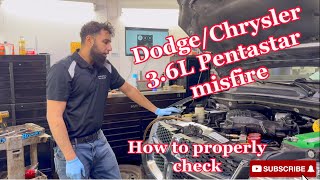
- Pine Hollow Auto Diagnostics (YouTube) (2015 Jeep Grand Cherokee 3.6L Pentastar V6, 132k miles) — P0302 misfire, rough running. Check engine light was cleared before arrival.
❌ Tried (didn't work) All 6 ignition coils replaced, All 6 spark plugs replaced, All 6 fuel injectors replaced
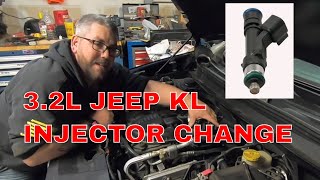
✅ What actually fixed it Diagnosis using a relative compression test (via oscilloscope on battery voltage) showed a clear lack of contribution from cylinder 2. This pointed to a mechanical sealing issue. The final diagnosis was a bad valve, requiring cylinder head removal for repair. - Gerard Burke (YouTube) (Jeep Cherokee (KL) 3.2L Pentastar V6) — P0302, P0300, and P0202 codes. Rough running that worsened as the engine heated up.
❌ Tried (didn't work) Initial diagnosis focused on spark, but the presence of P0202 shifted focus to the fuel injector circuit.
✅ What actually fixed it The technician tested the resistance of the fuel injectors. Good injectors measured 12-15 ohms. The injector on cylinder 2 measured 41 ohms when hot, indicating it was failing under heat. Replacing the single faulty fuel injector resolved all codes.
"I Checked Everything" — The Actual Cause
- In a documented case on a related 3.6L Pentastar engine, a shop had already replaced all plugs, coils, and injectors to fix a P0302, but the misfire persisted. A smoke test for vacuum leaks would have come back clean. The actual cause was found to be a mechanical valve sealing problem inside the cylinder head, which requires much deeper engine work and can only be identified with a compression test, leak-down test, or in-cylinder pressure analysis.
When the Usual Fixes Don't Work
- While the most common fixes for P0302 are spark plugs and ignition coils, there are numerous documented cases for the Jeep Cherokee where these repairs do not solve the problem. One of the most notable counter-examples involves the 3.2L V6, where a persistent P0302, especially after replacing ignition components, often points to a deeper mechanical issue. In one such case, a 2015 Grand Cherokee with the related 3.6L engine had all its plugs, coils, and injectors replaced by a shop with no success. The ultimate cause was a bad valve, a purely mechanical failure that required removing the cylinder head to fix, demonstrating that simply replacing common parts can be a costly and ineffective strategy.
OEM Part Supersession History
5184296AG (and earlier versions like AF, AE, AD)→5184296AH— This is the rocker arm for the 3.2L Pentastar V6. The original design was prone to bearing failure, causing a ticking noise and misfires. The 'AH' revision is the updated part intended to be more durable.
Model Year Variations Within This Range
- 2019+: A major refresh for the 2019 model year introduced an all-new 2.0L direct-injection turbocharged I-4 engine as an option. This engine has its own unique components (direct injection, turbocharger) that can be potential causes for a P0302 not present on earlier models.
- 2019+: The 3.2L Pentastar V6 and 9-speed automatic transmission received new software calibrations for the 2019 model year refresh, which could affect diagnostic strategies compared to 2014-2018 models.
Helpful Videos
Used OEM Parts in Stock


New Aftermarket Parts Available

The information in this article is provided for general reference and educational purposes only. Vehicle specifications, procedures, and part compatibility can vary by production date, trim level, and region. Always consult your vehicle's factory service manual and verify part numbers before purchasing or performing repairs. Safety-critical components such as airbags, seat belts, and braking systems should be installed by a qualified professional.
- Jeep CHEROKEE:
- 🎬 Helpful Videos
- 🛍️ Shop This Part
- What's Unique About the 2014-2019 Jeep CHEROKEE
- Diagnostic Flowchart
- Symptoms You May Notice
- Most Likely Causes
- Rare But Worth Checking
- Diagnosis Steps
- Parts You'll Likely Need
- Related Codes That Often Appear With This One
- Technical Service Bulletins (TSBs) & Recalls
- Platform-Specific Known Issues
- Mechanic-Grade Diagnostic Values
- Hidden / Shadow Codes Worth Checking
- Scan Tool Commands That Help
- Wiring & Ground Locations
- Real Owner Repair Stories
- "I Checked Everything" — The Actual Cause
- When the Usual Fixes Don't Work
- OEM Part Supersession History
- Model Year Variations Within This Range
- 🎟️ Get 5% Off