

P0302 on 2014-2019 Jaguar F-TYPE: Cylinder 2 Misfire Causes and Fixes
P0302 indicates a misfire in cylinder 2. On the Jaguar F-TYPE, this is most often caused by a failed ignition coil or a worn spark plug. Swapping the coil from cylinder 2 with another cylinder is a quick way to diagnose the problem. If ignition components are not at fault, a failing or seized fuel injector is a strong, platform-specific possibility.
- P0302 is a misfire on cylinder 2, most commonly caused by a bad ignition coil or spark plug.
- The easiest first step is to swap the ignition coil from cylinder 2 to another cylinder to see if the misfire code follows it.
- Be aware of the platform's known issue with failing and seizing fuel injectors, which is a more complex and expensive repair.
- If the check engine light is flashing, pull over immediately to prevent damage to the catalytic converters.
- Cylinder 2 is on the passenger side (US models) for both V6 and V8 engines.
What's Unique About the 2014-2019 Jaguar F-TYPE

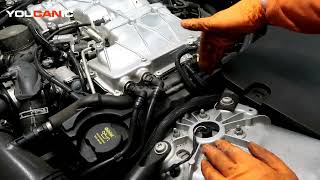
For the 2014-2019 Jaguar F-TYPE, which uses the AJ126 V6, AJ133 V8, and Ingenium I4 engines, a P0302 code points to common ignition issues but can also be a symptom of a more notorious platform-specific problem: failing or seized fuel injectors. These direct injection (GDI) injectors can fail and stick open or become seized in the cylinder head due to moisture and corrosion. This issue is often exacerbated by the design of the hood vents on RWD models, which can allow rainwater to drip directly onto the engine, accelerating corrosion around the injectors 🎬 See how to prevent water ingress and save your injectors. and ignition coils. While ignition parts are the first place to look, a persistent P0302 code warrants a closer look at the fuel system, as injector replacement can be a very difficult and costly repair.
Diagnostic Flowchart
Tap your situation to follow the diagnostic path that matches what you're seeing on this vehicle.
Symptoms You May Notice
- Rough or vibrating idle
- Hesitation or stumbling during acceleration
- Reduced engine power
- Flashing or solid Check Engine Light
- Fuel smell from the exhaust
- Engine noise, such as knocking, which may be more pronounced due to the imbalance caused by the misfire.
- Replacing only the spark plug without testing the ignition coil first. The coil-swap is a free and effective diagnostic step that should be performed before buying parts.
- Assuming the misfire is only an ignition problem when it persists after replacing plugs and coils. On the F-TYPE, the next logical step is to strongly consider a fuel injector issue before suspecting deeper engine mechanical problems.
Most Likely Causes

- Faulty Ignition Coil 🔴 High Probability Coil-on-plug ignition systems are a common failure point on many modern engines as they age. Moisture ingress from hood vents can also accelerate failure on the F-TYPE.
How to confirm: Swap the ignition coil from cylinder 2 with another cylinder (e.g., cylinder 4 or 6). Clear the codes and drive the vehicle. If the code changes to the cylinder you moved the coil to (e.g., P0304 or P0306), the coil is bad.
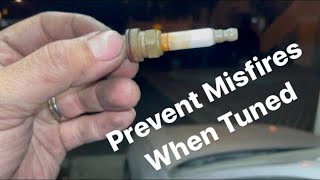
Typical fix: Replace the faulty ignition coil. 🎬 Watch: Step-by-step ignition coil and spark plug replacement guide. It is often recommended to replace all coils on the same bank, or all coils at once if they are high mileage, as they have been exposed to the same conditions.
Est. part cost: $118-$134 per coil - Worn or Fouled Spark Plug 🔴 High Probability Spark plugs are a regular maintenance item. High-performance engines like those in the F-TYPE can be demanding on plugs, and extended service intervals can lead to wear. A misfire from another cause, like a leaky injector, can also foul the plug, making it seem like the primary issue.
How to confirm: After confirming the coil is good, remove the spark plug from cylinder 2. Inspect it for wear, carbon fouling, oil, or damage to the electrode or ceramic. Compare it to a plug from a working cylinder.
Typical fix: Replace the spark plug in cylinder 2. It is best practice to replace all spark plugs at the same time to ensure even performance.
Est. part cost: $15-$30 per iridium plug - Faulty or Clogged Fuel Injector 🟡 Medium Probability The direct injection engines in the F-TYPE (AJ126 V6 and AJ133 V8) are known to have issues with fuel injectors failing or becoming seized in the cylinder head. This is often caused by corrosion from water ingress via the hood vents, which allows moisture to pool around the injector body. When the injector fails, it can stick open, washing fuel down the cylinder bore.
How to confirm: This is more difficult to diagnose. A professional may need to perform a fuel injector balance test. Sometimes, specific injector circuit codes (like P02F2 for cylinder 5) may accompany the misfire code. In other cases, after ruling out ignition components, the injector becomes the prime suspect, especially if there is evidence of corrosion in the engine valley.
Typical fix: Replace the faulty fuel injector. This can be a very labor-intensive job, as the injectors are known to seize in the cylinder head, sometimes requiring special slide hammers or even cylinder head removal for extraction. Due to the difficulty, many owners recommend replacing all injectors on a bank, or all of them, at the same time.
Est. part cost: $100-$250 per injector
Rare But Worth Checking
- Vacuum Leak: A leak in the intake manifold gasket near cylinder 2 can lean out the air/fuel mixture and cause a misfire. A smoke test is the best way to confirm. One owner on JaguarForums noted a hissing sound after shutdown which they suspected was an intake leak.
- Low Cylinder Compression: Internal engine issues like a worn piston ring, leaking valve, or a bad head gasket can cause a loss of compression, leading to a misfire. A compression test on cylinder 2 will identify this problem. One owner on JaguarForums with multiple misfire codes, including P0302, discovered low compression in multiple cylinders, pointing to a serious internal engine problem.
- Faulty Variable Valve Timing (VVT) Solenoid: TSB SSM74160 indicates that misfire codes P0302 and P0303 can be stored alongside several timing-related DTCs (P054A-00, P0014-71, P000B-00, P0341-00). The cause is identified as a batch of faulty VVT solenoids. The fix is to replace the solenoid with a part manufactured after August 23, 2018.
- PCM Software Calibration: TSB JTB00533NAS1 addresses an issue where misfire codes (including P0302) and P0316 (Misfire on Startup) can occur during a cold start (coolant temp below 75°C/167°F). This is caused by a fuel injection calibration issue, and the prescribed fix is to update the PCM software.
Diagnosis Steps

- Read the code with an OBD-II scanner and confirm P0302 is present. Note any other codes, especially timing-related ones.
- Identify the location of cylinder 2. For the V6 (AJ126) and V8 (AJ133), Bank 1 is the passenger side (US) and Bank 2 is the driver's side. Cylinder numbering is 1,3,5 on Bank 1 and 2,4,6 on Bank 2 (front to back). Cylinder 2 is the front-most cylinder on the driver's side (left-hand) bank.
- Swap the ignition coil from cylinder 2 with an adjacent cylinder on the same bank (e.g., cylinder 4). Clear the codes and test drive.
- If the misfire code moves to the new cylinder (e.g., P0304), the ignition coil is faulty and needs replacement.
- If the code remains P0302, swap the spark plug from cylinder 2 with the one from the cylinder you just moved the coil to. Clear codes and test drive.
- If the code moves, the spark plug was the issue. Replace all spark plugs for best results.
- If the code remains P0302, inspect the engine bay, particularly the valley between cylinder banks, for signs of water pooling, corrosion, or rust, which points towards the common water ingress issue.
- If the code is accompanied by timing codes, refer to TSB SSM74160 and investigate the VVT solenoid.
- If the misfire only occurs on cold starts, refer to TSB JTB00533NAS1, as a PCM software update may be required.
- If ignition and software are ruled out, the issue is likely with the fuel injector or cylinder compression. Inspect the wiring and connector for the fuel injector on cylinder 2.
- Perform a cylinder compression test to rule out mechanical engine damage.
- If compression is good, the fuel injector is the most likely remaining cause. This may require professional diagnosis and repair due to the high risk of the injector being seized in the cylinder head.
Parts You'll Likely Need
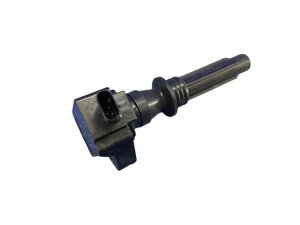
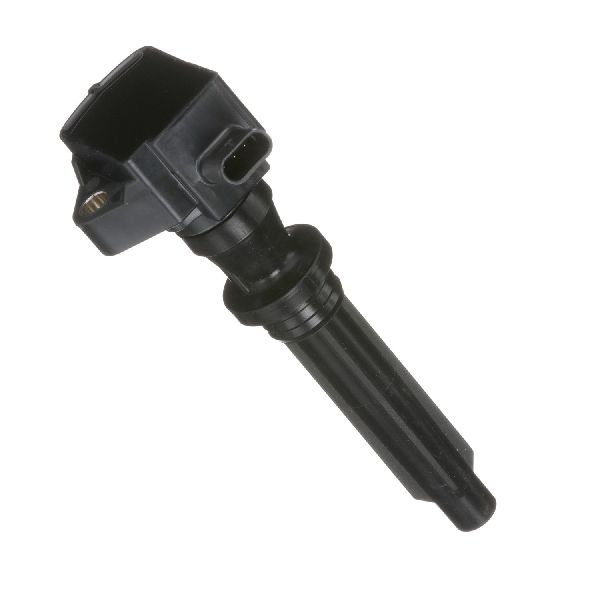
- Ignition Coil
(OEM #C2Z18619 (for V6/V8), JDE38637 (for 2.0L I4))— This is the most common cause of a single-cylinder misfire on the F-TYPE.
Trusted brands: Bosch, NGK, Delphi, Bremi
OEM price range: $120-$150
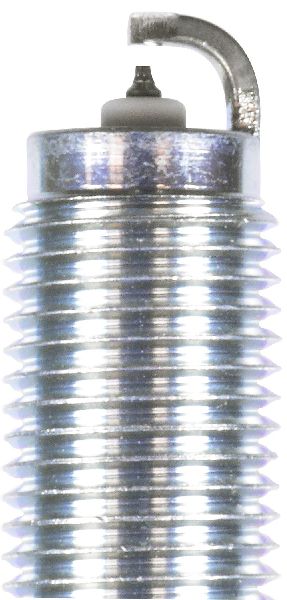
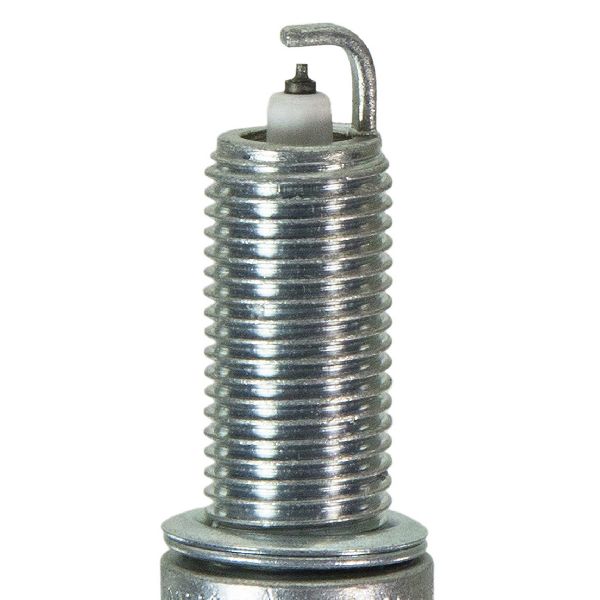
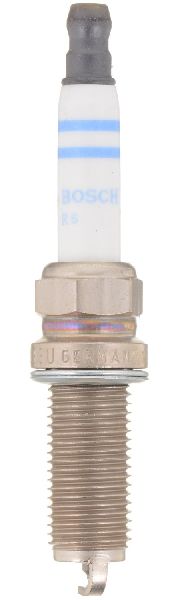
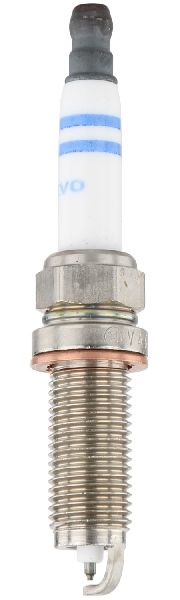
Aftermarket price range: $80-$120 - Spark Plug — Spark plugs are a routine maintenance item and can become worn or fouled, leading to a misfire.
Trusted brands: NGK, Bosch, Denso
OEM price range: $20-$35
Aftermarket price range: $15-$30 - Fuel Injector
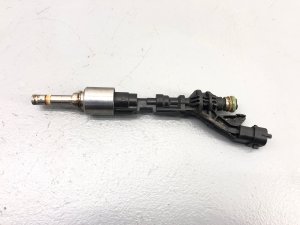
(OEM #C2D55183 (5.0L V8), C2D55169 (3.0L V6), T2H33701 (2.0L I4))— A known failure point on this platform, especially when ignition components have been ruled out.
Trusted brands: Bosch
OEM price range: $120-$250
Aftermarket price range: $95-$180
Related Codes That Often Appear With This One
- P0300 — If the misfire is intermittent or affects other cylinders, a P0300 (Random/Multiple Cylinder Misfire) may be stored alongside P0302. This is common when the root cause is systemic, like a vacuum leak, fuel delivery issue, or timing problem.
- P1315 — This is a Jaguar-specific code for 'Persistent Misfire,' which can damage the catalyst. It often appears with specific cylinder misfire codes to indicate the severity.
- P0301, P0303, P0304, etc. — If other cylinder-specific misfire codes are present, it may point to a systemic issue like low fuel pressure, a large vacuum leak, or a timing problem.
- P054A-00, P0014-71, P000B-00, P0341-00 — According to TSB SSM74160, these timing-related codes appearing with P0302 strongly suggest a faulty VVT solenoid is the root cause, not a primary ignition or fuel component on that cylinder.
Technical Service Bulletins (TSBs) & Recalls
- JTB00533NAS1: Addresses conditions where the MIL is illuminated with P0316 and various misfire codes (P0300-P0308).
- SSM74160: Notes that P0302 can be stored with other electrical and timing DTCs, sometimes without driveability concerns.
Platform-Specific Known Issues

- Seized Fuel Injectors: On both the V6 and V8 engines, fuel injectors can become seized in the cylinder head due to corrosion. This makes replacement extremely difficult and labor-intensive, often requiring specialized slide hammers or even cylinder head removal, dramatically increasing repair costs. Main dealers may recommend cylinder head removal as the standard procedure for a seized injector.
- Water Ingress: The design of the hood vents on RWD models can allow rainwater to drip directly onto the engine, particularly over the fuel injectors and ignition coils. This moisture accelerates corrosion and contributes to both injector and ignition component failure. Some owners fabricate or apply shields using high-temp silicone sheets or tape to mitigate this.
- TSB JTB00533NAS1: This Technical Service Bulletin notes that the Malfunction Indicator Lamp (MIL) may be on with code P0316 (Misfire Detected On Startup) and one or more cylinder misfire codes (P0300-P0308). The cause is a fuel injection calibration issue on cold starts, and the fix is a PCM software update.
- TSB SSM74160: This bulletin mentions that P0302-00 can be stored in the PCM along with several timing-related codes (P054A-00, P0014-71, etc.). This points to a faulty Variable Valve Timing (VVT) solenoid, not a primary ignition or fuel issue. The fix is to replace the solenoid with an updated part.
Mechanic-Grade Diagnostic Values
- Low-Pressure Fuel System (LPFP) at Crank/Prime — expected: 90 - 105 PSI. Failure: Significantly lower pressure can indicate a failing in-tank fuel pump and lead to fuel starvation for the high-pressure pumps.
- Low-Pressure Fuel System (LPFP) at Idle — expected: 70 - 80 PSI. Failure: Pressure well below this range suggests a weak LPFP or a problem with the fuel pump driver module.
- High-Pressure Fuel System (HPFP) at Idle — expected: 500 - 800 PSI. Failure: Pressure that is erratic or significantly lower than this range can indicate a failing high-pressure fuel pump or sensor issue.
- High-Pressure Fuel System (HPFP) under Load — expected: ~2,100 - 2,800 PSI. Failure: Failure to reach high pressures under acceleration (WOT) can cause hesitation and misfires, often pointing to a failing HPFP.
- Ignition Coil Voltage — expected: 12V. Failure: The coil is a 3-pin design; tests would involve checking for 12V supply, ground, and the command signal from the PCM.
Hidden / Shadow Codes Worth Checking
- Mode $06, Test ID $53: On many Ford/Jaguar platforms, this test ID monitors cylinder-specific misfire counts. A high value for component ID 02 (representing cylinder 2) can indicate a developing misfire before the PCM stores a permanent P0302 code. (see via A professional scan tool capable of displaying Mode $06 data. The raw data needs to be interpreted, but many modern scanners translate it automatically.)
Scan Tool Commands That Help
- Jaguar SDD (Symptom Driven Diagnostics): Misfire Identification — To confirm the cylinder numbering layout and verify which cylinder the system identifies as misfiring, which is crucial before physically touching components.
- Jaguar SDD (Symptom Driven Diagnostics): Power Balance / Relative Injector Flow Test — After ruling out ignition components, these tests can help identify an underperforming cylinder due to a fuel injector or compression issue without disassembly.
- Jaguar SDD (Symptom Driven Diagnostics): Module Reprogramming (Reflash) — This is required to perform the fix outlined in TSB JTB00533NAS1, where a PCM software update is needed to correct a fuel injection calibration issue causing cold-start misfires.
Wiring & Ground Locations
- Engine Control Module (ECM) — Located in the left rear of the engine compartment.. The ECM is the source of the command signal for both the ignition coil and the fuel injector for cylinder 2. Any wiring damage or corrosion at its connectors could cause a misfire.
- Ground Point (Generic) — A key engine-to-chassis ground is located behind the left front fender splash shield.. A poor engine ground can cause erratic behavior in sensors and actuators, including ignition coils, leading to intermittent and hard-to-diagnose misfires.
- G4D151B — A ground distribution point located on the left side of the luggage compartment.. While not an engine ground, this point grounds multiple vehicle modules. A fault here could cause widespread electrical issues, and checking all major grounds is a valid step in a difficult diagnosis.
Real Owner Repair Stories
- JaguarForums user (2017 F-Type with 59k miles) — Multiple misfire codes (P0300, P0301, P0302, P0303), Cold Start Ignition Timing Performance (P050B), and Persistent Misfire (P1315).
❌ Tried (didn't work) The user went straight for a combined repair rather than individual part swaps.
✅ What actually fixed it Replacing all fuel injectors, spark plugs, and ignition coils resolved the issue. The owner stated they were 'pretty sure it was only the injectors' but replaced the other parts preventatively since they are in the same area.
When the Usual Fixes Don't Work
- While the standard diagnostic approach for a single cylinder misfire is to swap one component at a time (coil, then plug), owner experiences on this platform suggest that if multiple misfire codes are present (e.g., P0300, P0302, P0301), the problem may be more systemic. A 2017 F-Type owner ultimately fixed their multi-cylinder misfire by replacing all injectors, coils, and plugs, believing the injectors to be the primary failure point. This indicates that for persistent or multiple misfires, a broader approach targeting the known weak points (injectors) may be more effective than a simple one-part swap.
OEM Part Supersession History
C2P16489, C2D24386, C2D45732→C2D55183— Likely an updated design to improve reliability or performance.
Heads up: When replacing injectors on the 5.0L V8, it is critical to use the latest part number (C2D55183) to ensure compatibility and benefit from design improvements.C2Z18619→N/A— This part number for the V6/V8 ignition coil appears to be consistent throughout the model years.
Model Year Variations Within This Range
- 2018-2019: The introduction of the 2.0L I4 Ingenium engine brought different components. The ignition coil is part number JDE38637 and the fuel injector is T2H33701, which are not interchangeable with the V6 and V8 engines.
Helpful Videos
Used OEM Parts in Stock



New Aftermarket Parts Available


The information in this article is provided for general reference and educational purposes only. Vehicle specifications, procedures, and part compatibility can vary by production date, trim level, and region. Always consult your vehicle's factory service manual and verify part numbers before purchasing or performing repairs. Safety-critical components such as airbags, seat belts, and braking systems should be installed by a qualified professional.
- Jaguar F-TYPE:
- 🎬 Helpful Videos
- 🛍️ Shop This Part
- What's Unique About the 2014-2019 Jaguar F-TYPE
- Diagnostic Flowchart
- Symptoms You May Notice
- Most Likely Causes
- Rare But Worth Checking
- Diagnosis Steps
- Parts You'll Likely Need
- Related Codes That Often Appear With This One
- Technical Service Bulletins (TSBs) & Recalls
- Platform-Specific Known Issues
- Mechanic-Grade Diagnostic Values
- Hidden / Shadow Codes Worth Checking
- Scan Tool Commands That Help
- Wiring & Ground Locations
- Real Owner Repair Stories
- When the Usual Fixes Don't Work
- OEM Part Supersession History
- Model Year Variations Within This Range
- 🎟️ Get 5% Off