

P0302 on 2017-2018 Honda CR-V 1.5T: Cylinder 2 Misfire Causes and Fixes
P0302 on a 2017-2018 CR-V with the 1.5L Turbo engine is often more than a bad spark plug. It is frequently linked to a known oil dilution issue that Honda addressed with software updates under TSB A19-032. The most likely fixes involve a software update from a dealer or replacing faulty fuel injectors. If these fail, the issue could be a rarer mechanical problem like a head gasket failure.
- P0302 on a 2017-2018 CR-V 1.5T is very often related to a known oil dilution issue, not just a simple bad spark plug.
- Before starting any repairs, contact a Honda dealer with your VIN to see if your vehicle needs the free software update covered by TSB A19-032.
- If the software is already updated, the most likely cause is a faulty fuel injector in cylinder 2.
- This code is frequently accompanied by P0172 (Fuel System Too Rich), which strongly points to the oil dilution or injector problem.
- Do not ignore a flashing check engine light, as continued driving with a misfire can damage the catalytic converter.
What's Unique About the 2017-2018 Honda CR-V

On the 2017-2018 CR-V with the 1.5L Turbo (L15B7) engine, P0302 is often a symptom of a larger, well-documented issue: fuel dilution of the engine oil. 🎬 Watch: Exploring the oil dilution issue and debunking common myths. This problem is inherent to the direct-injection engine's design, particularly in colder climates or on short trips. Unburnt gasoline washes past the piston rings and seeps into the crankcase, thinning the oil's viscosity. This degraded oil can lead to poor performance, misfires (P0302), a rich-running condition (P0172), and potential long-term engine wear. Honda acknowledged this by issuing Technical Service Bulletins (like A19-032) and warranty extensions that provide a software update to change engine warm-up parameters, A/C logic, and transmission behavior as the primary fix.
Diagnostic Flowchart

Tap your situation to follow the diagnostic path that matches what you're seeing on this vehicle.
Symptoms You May Notice

- Check Engine Light is on or flashing
- Rough engine idle, especially on cold starts
- Hesitation or stumbling during acceleration
- Reduced engine power, sometimes entering a 'limp mode'
- Poor fuel economy
- Smell of gasoline from the exhaust or on the oil dipstick
- All dashboard warning lights illuminating simultaneously (a 'Christmas tree' effect)
- Replacing only the spark plug and ignition coil without addressing the underlying software or fuel injector issue. The new parts will likely foul again, and the misfire will return.
- Assuming the software update (TSB A19-032) is a permanent fix for all vehicles. Many owners report needing to replace the fuel injectors even after the update is performed.
Most Likely Causes

- Outdated Engine Software (Oil Dilution Issue) 🔴 High Probability The factory software on the 1.5T engine allows fuel to dilute the oil, especially during short trips in cold weather, leading to misfires. Honda released TSB A19-032 to correct this with a software update that alters engine and transmission logic to help the engine warm up faster.
How to confirm: Contact a Honda dealership and provide your VIN. They can check if TSB A19-032 or related updates have been performed on your vehicle. The warranty for this issue was extended to 6 years with unlimited mileage.
Typical fix: A Honda dealer applies a software update to the Engine Control Module (ECM) and Transmission Control Module (TCM), replaces the A/C control unit, and performs an oil change. This is covered under a warranty extension.
Est. part cost: $0 - Faulty Fuel Injector 🔴 High Probability Leaking or clogged fuel injectors are a very common failure point on the L15B7 direct-injection engine and are often the root cause when the software update doesn't resolve the issue. A stuck-open injector dumps excess fuel, causing both the P0302 misfire and the related P0172 rich code.
How to confirm: A mechanic can perform a fuel injector balance test. A DIY method involves swapping the suspect injector with one from another cylinder to see if the misfire code follows (e.g., changes to P0301 if swapped with cylinder 1).
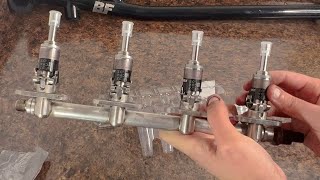
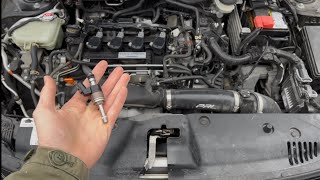
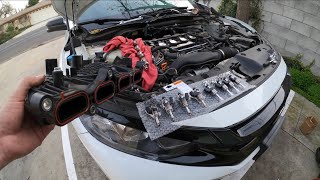
Typical fix: Replace the faulty fuel injector. It is highly recommended to replace all four injectors as a matched set 🎬 Watch: How to change fuel injectors on the 1.5T engine. using the OEM kit (part number 06160-5PA-305).
Est. part cost: $50-$150 per injector (aftermarket), $550+ for an OEM set of four - Worn or Fouled Spark Plugs 🟡 Medium Probability While spark plugs are a normal wear item, the underlying oil dilution or a leaking injector can cause them to foul prematurely with fuel or carbon. Even if they aren't the root cause, they are often a casualty of the main problem.
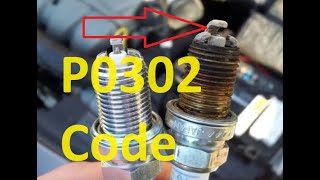
How to confirm: Remove the spark plug from cylinder 2 and inspect it for wear, carbon fouling, or fuel saturation. Compare it to a new plug or one from a working cylinder.
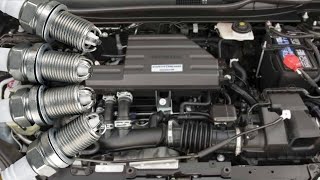
Typical fix: Replace the spark plug. It is best practice to replace all four spark plugs at the same time. Use the specified OEM NGK Iridium plugs 🎬 See this step-by-step walkthrough for replacing your CR-V spark plugs. for this engine.
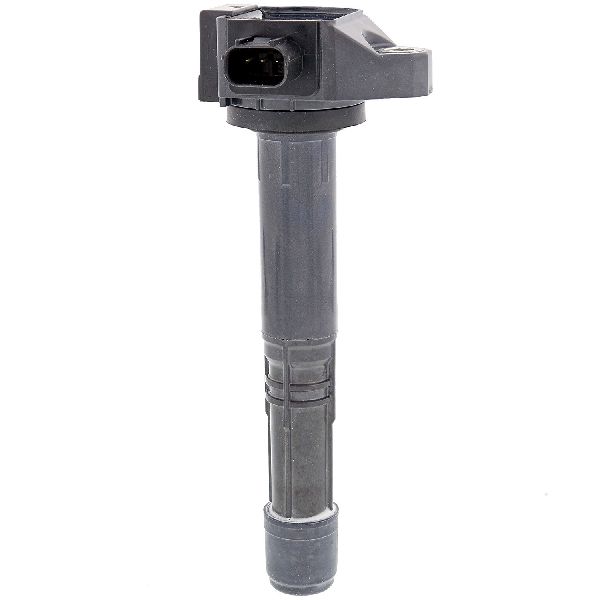
Est. part cost: $80-$120 for a set of four OEM plugs - Failed Ignition Coil ⚪ Low Probability Ignition coils can fail on any vehicle, but they are less likely to be the primary cause on this platform compared to the well-documented software or injector issues.
How to confirm: Swap the ignition coil from cylinder 2 with another cylinder (e.g., cylinder 3). Clear the codes and drive the vehicle. If the code changes to P0303, the coil is bad.
Typical fix: Replace the faulty ignition coil. It's good practice to use OEM or a reputable brand like Denso/NGK.
Est. part cost: $50-$100
Rare But Worth Checking
- Blown Head Gasket: Multiple owner and technician reports confirm that the L15B7 engine can suffer from head gasket failure, leading to coolant leaking into a cylinder and causing a misfire. Symptoms include a rough idle on cold start and unexplained coolant loss. An owner complaint to the NHTSA (ODI #11599538) also reported a blown head gasket on a 2018 CR-V with P0302 and P0303 codes. This is a severe mechanical failure to consider if other diagnostics fail.
- Carbon Buildup on Intake Valves: Direct injection (GDI) engines like the L15B7 are prone to carbon buildup on the back of intake valves over time, as fuel is injected directly into the cylinder and does not wash over the valves. This can restrict airflow and cause misfires, typically in higher-mileage vehicles.
- Worn Camshafts / Valve Adjustment Needed: In one diagnostic case, after ruling out ignition and fuel, a technician noted that heavy fluctuations in the MAP sensor reading pointed toward a mechanical issue. The diagnostic tree suggested inspecting for worn camshafts or incorrect valve clearance, which can cause a persistent, isolated misfire.
Diagnosis Steps
- Read the trouble codes with an OBD-II scanner. Note if P0302 appears alone or with other codes like P0172 or other P030x codes.
- Contact a Honda dealer with your VIN to determine if your vehicle is eligible for the warranty extension and has had the software updates from TSB A19-032 (or related bulletins) performed. If not, this is the most important first step, as it is a free, manufacturer-provided fix.
- If the software is up to date, perform a basic ignition system check. Swap the ignition coil from cylinder 2 with another cylinder (e.g., cylinder 3). Clear the codes and see if the misfire moves to P0303. If it does, the coil is bad.
- If the coil is good, inspect the spark plug from cylinder 2. Look for heavy carbon fouling, fuel saturation, or damage. Even if it looks okay, consider replacing all four plugs with the OEM-spec part if they are high mileage.
- If ignition components are good, the next most likely cause is a faulty fuel injector. This is a common failure point on this engine. A skilled DIYer can swap injectors between cylinders to see if the misfire follows, but it is a more involved job.
- If the misfire persists after ignition and fuel system checks, investigate mechanical issues. Check MAP sensor readings at idle; significant, rapid fluctuations (greater than 0.4 volts) can indicate a mechanical problem like a valve issue or worn camshaft.
- Perform a cooling system pressure test and check for unexplained coolant loss. A failing head gasket is a known, though less common, cause of misfires on this engine.
- If all else fails, a cylinder compression test or leak-down test should be performed to check for mechanical engine problems like a bad valve, piston rings, or a failing head gasket.
Parts You'll Likely Need
- Fuel Injector Set
(OEM #06160-5PA-305)— Faulty injectors are a very common cause of misfires and rich conditions on this direct-injected engine, often requiring replacement even after the software fix. It is recommended to replace them as a set.
Trusted brands: Honda (OEM), Bosch, Standard Motor Products
OEM price range: $550-$650 (for the set of 4)
Aftermarket price range: $200-$400 (for a set of 4) - Ignition Spark Plug
(OEM #12290-5PA-A01)— Often fouled as a result of the oil dilution or injector problems. A necessary replacement for a proper tune-up. The OEM part is NGK ILZKAR8J8SY.
Trusted brands: NGK (OEM), Denso
OEM price range: $25-$35 per plug
Aftermarket price range: $15-$25 per plug - Ignition Coil
(OEM #30520-59B-013)— While less common than injectors, an ignition coil can fail, causing a misfire isolated to one cylinder. It's a common diagnostic step to swap coils to confirm the failure.
Trusted brands: Honda (OEM), Denso, NGK
OEM price range: $70-$90
Aftermarket price range: $40-$60
Related Codes That Often Appear With This One
- P0172 — This code for 'Fuel System Too Rich' is commonly seen with P0302 because the root cause (oil dilution, faulty injectors) involves excess unburnt fuel entering the combustion chamber and overwhelming the system.
- P0300, P0301, P0303, P0304 — These are misfire codes for random misfires or misfires on other cylinders. Their presence indicates the problem is affecting the entire engine, pointing strongly towards the systemic oil dilution/software issue or a failure of all four fuel injectors.
Technical Service Bulletins (TSBs) & Recalls
- A19-032
- A18-147
- A19-037
- A18-114
- ONLX4A07112019
Platform-Specific Known Issues
- Engine Oil Dilution: The most significant issue for the 2017-2018 CR-V 1.5T. Excess fuel enters the engine oil, primarily due to software logic for engine warm-up in cold weather, causing a rise in oil level and leading to misfires (P0300-P0304) and rich conditions (P0172). This issue was widespread enough to trigger a warranty extension from Honda and multiple class-action lawsuits.
Mechanic-Grade Diagnostic Values
- Ignition Coil Primary Resistance — expected: ~0.46 Ohms. Failure: Significant deviation from the expected value or an open circuit.
- Ignition Coil Secondary Resistance — expected: ~15.70 kOhms. Failure: Significant deviation from the expected value or an open circuit.
- MAP Sensor Voltage Fluctuation at Idle — expected: Stable reading, minimal fluctuation.. Failure: Heavy, rapid fluctuations exceeding 0.4 volts, indicating a potential mechanical engine failure like worn camshafts or valve issues.
Hidden / Shadow Codes Worth Checking
- Mode $06 Misfire Data (e.g., TID $A2-$AB, CID $01-$04): Mode $06 provides raw data from the PCM's self-tests before a full-blown Diagnostic Trouble Code (DTC) is set. For misfires, it contains a counter for each cylinder. This allows a technician to see which cylinder is misfiring, even if the misfire isn't frequent enough to trigger the Check Engine Light. (see via Requires an advanced OBD-II scan tool that can access Mode $06 data. The specific Test ID (TID) and Component ID (CID) for misfires can vary, but the scan tool will typically label them by cylinder number.)
Scan Tool Commands That Help
- Honda i-HDS (Honda Diagnostic System): Misfire Data Stream — To view live misfire counts for each individual cylinder. This is the most direct way to confirm that cylinder 2 is the source of the misfire and to see if other cylinders are also contributing, even without setting their own codes.
- Honda i-HDS (Honda Diagnostic System): CKP Pattern Clear/CKP Pattern Learn — After major engine work or if a P0300-series code persists after repairs. The PCM relies on the crankshaft position (CKP) sensor pattern to detect misfires. If this pattern is corrupted, it can lead to false misfire codes. Clearing and relearning the pattern ensures the PCM has an accurate baseline.
Wiring & Ground Locations
- PCM Connectors A, B, C — The Powertrain Control Module (PCM) is located in the engine bay. Its connectors are embossed with geometric shapes for identification: Connector A (white) has a square, and Connector B (gray) has a triangle.. When diagnosing a persistent misfire that may be caused by a wiring issue between the PCM and the ignition coil or fuel injector, correctly identifying the PCM connectors and pins is crucial for testing continuity and voltage.
- Ignition Coil Connector — Directly on top of the ignition coil for cylinder 2.. This 3-wire connector provides power, ground, and the trigger signal from the PCM to the ignition coil. Checking for voltage and signal at this connector is a key step in determining if the coil itself or the wiring/PCM is at fault.
- Fuel Injector Connector — On the fuel injector for cylinder 2, located under the intake manifold.. This connector supplies the electrical pulse that fires the injector. Testing for a pulse signal (using a noid light) at this connector can quickly determine if the injector is receiving the command to open from the PCM.
Real Owner Repair Stories
- Reddit user DisasterLucky9504 in r/crv (2018 Honda CR-V LX 1.5T) — Not specified, but implied misfire/drivability issues.
❌ Tried (didn't work) The user notes that the software update for oil dilution helps but is not always a complete fix.
✅ What actually fixed it The user had to replace the fuel injectors and fuel rail at 135,000 km. They recommend using a fuel injector cleaner (like Techron) at each oil change and using top-tier fuel to prolong injector life.
OEM Part Supersession History
16010-5PA-305→06160-5PA-305— This is the updated OEM fuel injector kit from Honda. The new part number includes all four fuel injectors, O-ring seals, and the fuel feed pipe.
Model Year Variations Within This Range
- 2017-2018: There are no significant mechanical differences in the L15B7 engine or its related components between the 2017 and 2018 model years that would alter the diagnosis for a P0302 code. Both are subject to the same oil dilution TSBs and common failure points like fuel injectors.
Helpful Videos


Used OEM Parts in Stock


New Aftermarket Parts Available


The information in this article is provided for general reference and educational purposes only. Vehicle specifications, procedures, and part compatibility can vary by production date, trim level, and region. Always consult your vehicle's factory service manual and verify part numbers before purchasing or performing repairs. Safety-critical components such as airbags, seat belts, and braking systems should be installed by a qualified professional.
- Honda CR-V:
- 🎬 Helpful Videos
- 🛍️ Shop This Part
- What's Unique About the 2017-2018 Honda CR-V
- Diagnostic Flowchart
- Symptoms You May Notice
- Most Likely Causes
- Rare But Worth Checking
- Diagnosis Steps
- Parts You'll Likely Need
- Related Codes That Often Appear With This One
- Technical Service Bulletins (TSBs) & Recalls
- Platform-Specific Known Issues
- Mechanic-Grade Diagnostic Values
- Hidden / Shadow Codes Worth Checking
- Scan Tool Commands That Help
- Wiring & Ground Locations
- Real Owner Repair Stories
- OEM Part Supersession History
- Model Year Variations Within This Range
- 🎟️ Get 5% Off