

P0302 on 2016-2022 Honda Accord: Cylinder 2 Misfire Causes and Fixes
P0302 on a 2016-2022 Accord indicates a cylinder 2 misfire. The most common DIY fixes are a faulty ignition coil or a worn spark plug. However, a known issue with faulty fuel injectors is a very frequent cause, especially on 2018-2022 models with the 1.5L Turbo engine. Always start by swapping the cylinder 2 ignition coil with another cylinder to see if the misfire code follows. If the injector is the cause, it is often replaced as a set of four.
- P0302 is a misfire on cylinder 2. On the 2016-2022 Accord, do not immediately assume it's just a spark plug.
- Always perform the simple ignition coil swap first. It's a free, 10-minute diagnostic step that can save you money.
- If the coil and spark plug are good, the fuel injector is the next most likely cause, especially on 2018+ models.
- If you also have a P0172 (Fuel System Too Rich) code, the problem is almost certainly a faulty fuel injector.
- Driving with a flashing check engine light can cause permanent damage to your catalytic converter, a very expensive repair.
What's Unique About the 2016-2022 Honda ACCORD

The 2016-2022 Honda Accord spans two generations, both using direct-injection engines that behave differently from older port-injected designs. While standard ignition issues are common, these Accords are particularly susceptible to fuel injector problems causing a P0302 code. This is especially well-documented on the 10th Generation (2018-2022) 1.5L Turbo engine, where faulty fuel injectors can lead to misfires and rich fuel conditions, an issue Honda has formally investigated and which is widely discussed by owners.
Diagnostic Flowchart

Tap your situation to follow the diagnostic path that matches what you're seeing on this vehicle.
Generation note: The 2016-2022 range covers the end of the 9th Generation (2016-2017) and the 10th Generation (2018-2022). The 9th gen primarily uses a 2.4L direct-injection engine, while the 10th gen uses 1.5T and 2.0T engines. While fuel injector issues can cause P0302 on both, the problem is more widely reported and officially acknowledged by Honda on the 10th generation's 1.5T engine. TSB A23-026 specifically addresses misfires on the 2.0T engine with a software update.
Symptoms You May Notice

- Rough or shaking idle
- Hesitation or stumbling during acceleration
- Noticeable loss of engine power
- Flashing Check Engine Light
- Vehicle entering a low-power 'limp mode'.
- Engine stalling.
- Smell of gasoline from the exhaust
- A 'Christmas Tree' of dashboard lights, including emissions, power steering, and vehicle stability warnings. 🎬 Watch: How faulty injectors trigger a dashboard full of warning lights.
- Replacing only spark plugs when a faulty fuel injector is the root cause, especially on 2018+ 1.5T models.
- Replacing the battery or alternator due to multiple warning lights on the dash, when the root cause is the engine misfire triggering a system-wide fault cascade.
- Using cheap, counterfeit spark plugs or ignition coils from online marketplaces, which can fail quickly and cause the misfire to return.
Most Likely Causes

- Faulty Ignition Coil 🔴 High Probability
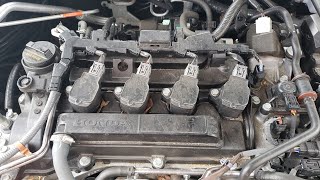
How to confirm: Swap the ignition coil from cylinder 2 with the coil from another cylinder (e.g., cylinder 3). Clear the codes and drive. If the code changes to P0303, the ignition coil is bad. This is the standard first diagnostic step mentioned in numerous owner forums.
Typical fix: Replace the faulty ignition coil. It's a simple unbolt-and-unplug job.
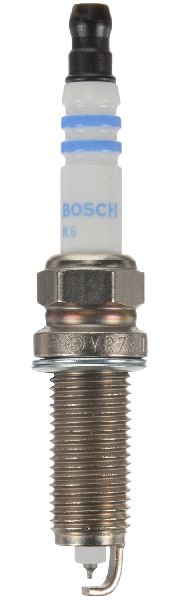
Est. part cost: $25-$60 - Worn or Fouled Spark Plug 🔴 High Probability Using counterfeit or improperly gapped spark plugs can cause persistent misfires. Owners on Reddit have warned against buying plugs from non-reputable sources like eBay or Amazon, as they may be fakes that fail quickly.
How to confirm: After ruling out the ignition coil, remove the spark plug from cylinder 2. Inspect it for wear, carbon fouling, or oil. Compare it to a new plug. You can also swap it with another cylinder's plug to see if the misfire moves.
Typical fix: Replace the spark plug. It is recommended to replace all four spark plugs at the same time for even performance, using high-quality OEM-spec plugs (e.g., NGK or Denso).
Est. part cost: $15-$30 per plug - Faulty or Clogged Fuel Injector 🔴 High Probability This is a well-documented issue, particularly on the 10th-gen 1.5T engine. Honda TSB #A23-026 and NHTSA complaints directly link P0302 to injector problems. Owner forums are filled with stories of this failure, with some noting the replacement parts were on backorder, suggesting a widespread problem.
How to confirm: If swapping the coil and plug doesn't work, the injector is the next suspect. A professional can perform a flow test. A DIY method is to listen to the injector with a mechanic's stethoscope to ensure it's clicking. A P0172 (Fuel System Too Rich) code alongside P0302 strongly points to a leaking injector.
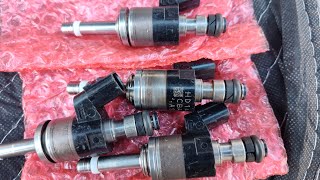
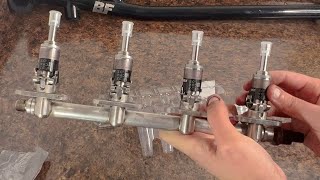
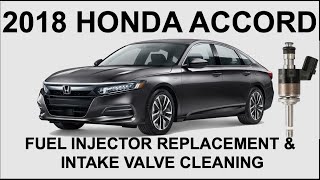
Typical fix: Replace the faulty fuel injector. It is highly recommended to replace all four injectors as a matched set with the updated part number (16010-6A0-A02). The repair involves removing the intake manifold. 🎬 Watch: Step-by-step fuel injector replacement and intake valve cleaning guide.
Est. part cost: $70-$150 per injector
Rare But Worth Checking
- Carbon Buildup on Intake Valves: Direct-injection engines like those in the Accord are prone to carbon buildup over time, which can impede airflow into the cylinder and cause misfires. This is a known issue on other Honda DI engines like the one in the Fit.
- Low Engine Compression: Internal engine issues like worn piston rings, a bad valve, or a problem with the cylinder head can cause a loss of compression, leading to a misfire. This is less common and requires a compression test to diagnose.
- Head Gasket Leak: An owner complaint mentioned low coolant levels without visible leaks in conjunction with misfire-like symptoms, which could indicate a potential head gasket issue allowing coolant into the cylinder. Honda has also investigated a potential link between misfire codes and head gasket leaks on 2018-2019 1.5T models.
- Faulty Crankshaft Position Sensor (CKP): A failing CKP sensor can cause intermittent misfires on multiple cylinders, often accompanied by code P0339 (CKP Sensor Circuit Intermittent Interruption). One owner on an Accord forum detailed a long struggle with P0302/P0303 and P0339 that persisted after replacing plugs and coils.
Diagnosis Steps
- Read the trouble codes with an OBD-II scanner. Note any other codes present, especially P0172 or other P030x codes.
- Swap the ignition coil from cylinder 2 with the coil from cylinder 1 or 3.
- Clear the codes and test drive the vehicle. Re-scan for codes. If the code has moved to P0301 or P0303, the ignition coil is the problem.
- If the code remains P0302, swap the spark plug from cylinder 2 with the one from the cylinder you used previously.
- Clear codes and test drive again. If the code moves, the spark plug is faulty.
- If the P0302 code persists after swapping the coil and plug, the fuel injector on cylinder 2 is the most likely culprit, especially on a 1.5T engine.
- Check the part number on the fuel injectors. If they are the original 16010-6A0-A01 parts, they are the likely source of the problem.
- Inspect the wiring and connector for the cylinder 2 injector for any visible damage.
- If the above steps do not identify the issue, consider a more advanced diagnosis like a fuel pressure test, an engine compression test, or checking for a head gasket leak.
Parts You'll Likely Need
- Ignition Coil
(OEM #30520-5A2-A01)— A very common failure point for isolated cylinder misfires. Easy to diagnose and replace.
Trusted brands: Hitachi, Denso, NGK
OEM price range: $50-$80
Aftermarket price range: $25-$60 - Spark Plug
(OEM #12290-5A2-A01 (NGK DILKAR8P8SY))— A standard maintenance item that wears out over time and can cause misfires. Use of correct OEM plugs is critical.
Trusted brands: NGK, Denso
OEM price range: $25-$40
Aftermarket price range: $15-$30 - Fuel Injector
(OEM #16010-6A0-A02 (Updated Part))— A known high-failure item on this platform, especially the 1.5T engine, directly causing P0302 and often P0172. The original part number was 16010-6A0-A01. It is recommended to replace all four as a set.
Trusted brands: Keihin (OEM), Bosch
OEM price range: $120-$180
Aftermarket price range: $70-$120
Related Codes That Often Appear With This One
- P0300 — Indicates a random misfire across multiple cylinders. It can appear with P0302 if the issue is intermittent or starting to affect other cylinders, such as a failing fuel pump or widespread injector issues.
- P0301, P0303, P0304 — Misfire codes for other cylinders. If seen with P0302, it points to a systemic problem like a vacuum leak, low fuel pressure, or widespread injector issues. Honda's TSB A23-026 acknowledges all these codes appearing together.
- P0172 — Indicates the engine is running too rich. This code is a strong clue that the P0302 misfire is caused by a leaking or faulty fuel injector delivering too much fuel. This combination is explicitly mentioned in Honda TSBs for both the Accord and other models with the 1.5T engine.
Technical Service Bulletins (TSBs) & Recalls
- A23-026: Addresses engine misfire concerns (P0300-P0304) and rich fuel conditions (P0172) on 2018-2022 models with the 2.0L engine. The corrective action is primarily a PGM-FI software update and an oil change.
- Warranty Extension (Civic/CR-V 1.5T): While not for the Accord specifically, bulletins for the Civic (18-077) and CR-V (18-091) extend the warranty for identical issues (misfires, P0172) on the same 1.5T engine, showing a pattern of problems with this powertrain.
Platform-Specific Known Issues

- Fuel Injector Failures (10th Gen 1.5T): The most significant issue for the 2018-2022 Accord with the 1.5L Turbo engine is a known problem with fuel injectors. Owner complaints filed with the NHTSA describe the P0302 code leading to a sudden loss of power, with the car entering a 'safe mode with no power'. This issue is significant enough that Honda issued Technical Service Bulletin (TSB) #A23-026 and began formally investigating misfire and rich condition codes (P030x, P0172) on 2019-2022 Accords with the 1.5T engine, focusing specifically on fuel injectors.
- **Real Owner Repair Story
Mechanic-Grade Diagnostic Values
- Ignition Coil Primary Winding Resistance — expected: 0.4 to 2.0 ohms. Failure: A reading of OL (overload/open) or significantly outside the expected range.
- Ignition Coil Secondary Winding Resistance — expected: 6,000 to 10,000 ohms (6k-10k Ω). Failure: A reading of OL (overload/open) or significantly outside the expected range. Note that some modern coils with internal electronics may not provide a readable value.
- Fuel Pressure (1.5T Engine) — expected: Boost pressure up to 20.2 PSI. Failure: Low fuel pressure can cause lean misfires, though P0302 on this platform is more often associated with rich conditions from faulty injectors.
- Mode 6 Misfire Counts — expected: Zero or very low counts per cylinder.. Failure: A high number of misfire counts logged for cylinder 2, even before the Check Engine Light is triggered. This data can confirm which cylinder is the problem.
Scan Tool Commands That Help
- Honda Diagnostic System (HDS) or equivalent (e.g., Foxwell NT530, Autel MX808S): Cylinder Power Balance / Misfire Counter — To view live misfire data for each cylinder, confirming that cylinder 2 is the source of the issue. This is more precise than waiting for a P030x code to set.
- Honda Diagnostic System (HDS) or equivalent: Fuel Injector Cut-off Test — To diagnose a faulty injector. The tool commands the ECU to stop firing a specific injector. If disabling the cylinder 2 injector causes no change in engine idle, it confirms that cylinder was not contributing, pointing to a bad injector, coil, or plug.
Wiring & Ground Locations
- G101 — Typically located on the driver's side of the intake manifold or on the cylinder head. It serves as a primary ground for the engine sensor harness and ECU.. A poor connection at G101 can cause erratic signals from sensors like the crankshaft position sensor, or affect the grounding for ignition coils and fuel injectors, leading to misfires.
- Chassis to Transmission Ground — A heavy gauge wire typically running from a bolt on the transmission case to the vehicle's chassis, often near the driver's side frame rail.. This is a main ground path for the entire engine and transmission assembly. Corrosion or a loose connection here can cause a wide range of electrical issues, including weak spark and misfires.
Real Owner Repair Stories
- Reddit user in /r/Honda (2018 Honda Accord Sport 1.5T, 92k miles) — Initially had misfire codes, which led to preventative replacement of injectors, coils, and plugs. Later, a P0302 code returned.
❌ Tried (didn't work) The user had already replaced fuel injectors, ignition coils, and spark plugs as a set.
✅ What actually fixed it The user suspected either counterfeit spark plugs purchased from an online marketplace or improperly torqued plugs. The community advised verifying the authenticity of the parts and ensuring the spark plugs were torqued to the correct specification (13-18 ft-lbs for this engine).
OEM Part Supersession History
16010-6A0-A01→16010-6A0-A02— The original fuel injectors on 1.5T engines were prone to failure, causing misfires and rich conditions. The -A02 part is an updated design to address this known issue.
Heads up: It is highly recommended to replace all four injectors with the updated -A02 part number as a matched set to ensure proper fuel delivery and prevent future failures of the remaining original injectors.
Model Year Variations Within This Range
- 2018-2022 (10th Gen): The 1.5T engine (L15BE) in the Accord was the first use of VTEC on the exhaust side for this engine family, working with the VTC to improve gas scavenging. It also uses a higher boost pressure (20.2 psi) than the same engine in the Civic. The 2.0T engine is a different engine series entirely (K20C4).
- 2018-2020: Some early 10th generation models were subject to software updates to help the engine warm up faster, which was intended to reduce issues like fuel dilution in the oil. TSB A23-026 also calls for a software update on some 2.0T models to address misfire concerns.
Helpful Videos
Used OEM Parts in Stock


New Aftermarket Parts Available



The information in this article is provided for general reference and educational purposes only. Vehicle specifications, procedures, and part compatibility can vary by production date, trim level, and region. Always consult your vehicle's factory service manual and verify part numbers before purchasing or performing repairs. Safety-critical components such as airbags, seat belts, and braking systems should be installed by a qualified professional.
- Honda ACCORD:
- 🎬 Helpful Videos
- 🛍️ Shop This Part
- What's Unique About the 2016-2022 Honda ACCORD
- Diagnostic Flowchart
- Symptoms You May Notice
- Most Likely Causes
- Rare But Worth Checking
- Diagnosis Steps
- Parts You'll Likely Need
- Related Codes That Often Appear With This One
- Technical Service Bulletins (TSBs) & Recalls
- Platform-Specific Known Issues
- Mechanic-Grade Diagnostic Values
- Scan Tool Commands That Help
- Wiring & Ground Locations
- Real Owner Repair Stories
- OEM Part Supersession History
- Model Year Variations Within This Range
- 🎟️ Get 5% Off