

P0302 on 2008-2015 Honda Accord: Cylinder 2 Misfire Causes and Fixes
P0302 indicates a misfire in cylinder 2. On a 2008-2015 Honda Accord, this is most often caused by a faulty ignition coil or a fouled spark plug. A simple ignition coil swap between cylinders can quickly diagnose a bad coil. If the spark plug is oil-fouled, particularly on 2008-2012 V6 models, it could be a symptom of a deeper, well-documented piston ring issue related to the VCM system, which Honda addressed with a warranty extension.
- P0302 is a misfire on cylinder 2. On your Accord, start by swapping the ignition coil from cylinder 2 to another cylinder to see if the code follows.
- If the coil is good, inspect the spark plug for wear or oil fouling. Oil on the plug is a major clue, pointing towards a known oil consumption issue.
- For 2008-2012 models, be aware of TSB A13-078, which describes an engine issue that causes spark plugs to foul. A simple plug replacement may only be a temporary fix.
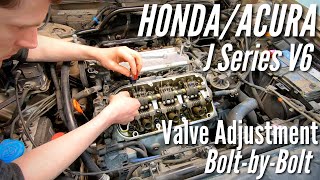
- Don't overlook regular maintenance. A valve adjustment is a required periodic service on these engines and can resolve persistent, otherwise unexplained misfires.
What's Unique About the 2008-2015 Honda ACCORD

For the 2008-2012 Accord models with the J-series V6 engine, a P0302 code is frequently more than just a simple ignition component failure. It is often the first symptom of an underlying issue with excessive oil consumption. This is caused by the Variable Cylinder Management (VCM) system, which deactivates cylinders (including cylinder #2) to save fuel. This process can lead to oil seeping past the piston rings, fouling the spark plugs. Honda acknowledged this with Technical Service Bulletin (TSB) A13-078 and a subsequent class-action lawsuit settlement and warranty extension. While replacing the plug or coil will temporarily fix the misfire, it may return until the root cause of the oil consumption is addressed, which may involve disabling the VCM or a more intensive piston ring repair.
Diagnostic Flowchart

Tap your situation to follow the diagnostic path that matches what you're seeing on this vehicle.
Generation note: This range covers the 8th generation (2008-2012) and the first part of the 9th generation (2013-2015) Accord. The piston ring and oil consumption issue, detailed in TSB A13-078, is most prominently documented for the 2008-2012 V6 automatic transmission models due to the design of their VCM system. While the 9th generation (2013+) uses an updated VCM system and is less prone to this specific issue, it can still occur. Both generations can suffer from common misfire causes like coils and plugs.
Symptoms You May Notice

- Rough or shaky engine idle
- Hesitation or stumbling during acceleration
- Noticeable loss of engine power
- Flashing or solid Check Engine Light
- Reduced fuel economy
- Engine shuddering when stopped
- Vibration or shutter when the 'ECO' light turns on/off (V6 models)
- Replacing only the ignition coil when the spark plug is severely oil-fouled. The misfire will return quickly if the fouled plug isn't also replaced and the root oil consumption issue isn't addressed.
- Repeatedly replacing spark plugs without addressing the underlying cause of oil fouling (VCM issue, bad piston rings).
- Replacing ignition and fuel parts when the true cause is incorrect valve clearance (valves are too tight).
Most Likely Causes

- Fouled Spark Plug 🔴 High Probability As documented in TSB A13-078, piston ring issues on 2008-2012 V6 models can cause excessive oil consumption, which fouls the spark plugs, leading to misfires. This is a primary symptom of the VCM-related engine problem. It is also a common failure from normal wear after 80,000-100,000 miles.
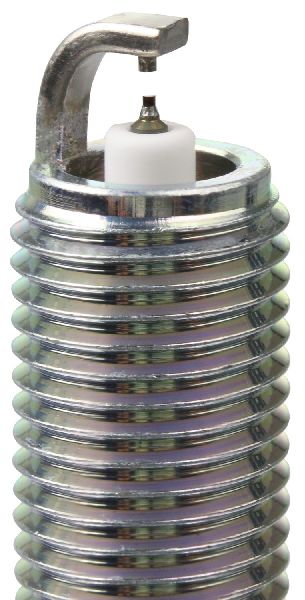
How to confirm: Remove the spark plug from cylinder 2 and inspect it. Look for a black, oily, or sooty deposit on the electrode. Compare it to a plug from another cylinder (e.g., cylinder 5 or 6 on a V6, which are not affected by VCM).
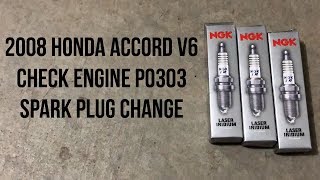
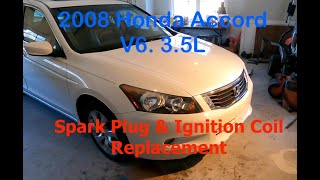
Typical fix: Replace the fouled spark plug. 🎬 Watch this step-by-step guide to replacing V6 spark plugs. It is recommended to replace all spark plugs at the same time. If oil fouling is the cause, the problem will likely return until the oil consumption issue is resolved.
Est. part cost: $15-$30 per plug - Faulty Ignition Coil 🔴 High Probability Ignition coils are a common wear-and-tear item on most modern vehicles with coil-on-plug ignition systems. While durable, they can fail with age and heat cycles.
How to confirm: Swap the ignition coil from cylinder 2 with another cylinder (e.g., cylinder 1 or 3). Clear the codes and drive the car. If the code changes to P0301 or P0303, the ignition coil is faulty.
Typical fix: Replace the failed ignition coil. It is often recommended to use OEM (Honda) or high-quality OE-supplier brands like Hitachi, Denso, or NGK for longevity.
Est. part cost: $40-$100 - Needs Valve Adjustment 🟡 Medium Probability Honda K-series (I4) and J-series (V6) engines use a mechanical valvetrain that requires periodic valve lash adjustments, typically every 100,000 miles. Over time, valve clearances tighten, which can lead to a loss of compression and cause misfires, especially when the engine is cold.
How to confirm: A valve clearance inspection must be performed using feeler gauges when the engine is cold. This is a more involved diagnostic step.
Typical fix: Adjust the valve clearances on all cylinders to manufacturer specifications. This requires removing the valve cover and replacing the gasket set.
Est. part cost: $20-$50 (for valve cover gasket set) - Clogged or Faulty Fuel Injector ⚪ Low Probability
How to confirm: Listen for a consistent clicking sound from the injector with a mechanic's stethoscope. You can also test the injector's resistance with a multimeter or swap it with an injector from another cylinder to see if the misfire code follows.
Typical fix: Replace the faulty fuel injector. Sometimes, a professional fuel system cleaning can restore function to a clogged injector.
Est. part cost: $70-$200
Rare But Worth Checking
- Internal Engine Damage (Piston Rings): While a fouled plug is the common immediate cause, the root problem on 2008-2012 V6 models is often the piston rings themselves, as described in TSB A13-078. The official repair involves cleaning pistons and replacing the rings on affected cylinders (1-4). This is a major, labor-intensive repair costing thousands of dollars if not covered by warranty.
- Low Engine Compression: Caused by worn piston rings, a leaking head gasket, or burnt valves (often from overdue valve adjustment). A compression test will confirm if cylinder 2 has significantly lower pressure than the others.
- Aftermarket Starter Interference (I4 Models): On 2008-2012 4-cylinder models, some owners and technicians have reported that poorly shielded aftermarket starters can create electrical interference, disrupting the crankshaft position (CKP) sensor signal and causing random misfire codes, including P0302. The fix is to install an OEM starter and perform a CKP relearn procedure.
Diagnosis Steps
- Read the code with an OBD-II scanner to confirm P0302 and check for any other codes, especially other misfire codes (P0300, P0301, P0303, P0304) or VCM codes (P3400, P3497).
- Perform the easiest test first: Swap the ignition coil from cylinder 2 with the coil from another cylinder (e.g., cylinder 1 or 3). Clear the codes and drive. If the code changes to P0301 or P0303, you have a bad ignition coil.
- If the code remains P0302, remove the spark plug from cylinder 2. Inspect it for wear, damage, or fouling (especially black, wet oil). If it's fouled or worn (over 80k miles), replace it. It's best practice to replace all plugs at once.
- If the new spark plug also becomes oil-fouled after a short time on a V6 model, this is strong evidence of the VCM-related piston ring issue. Investigate TSB A13-078.
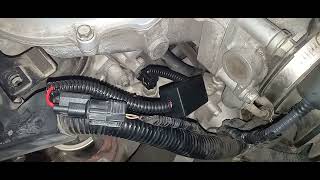
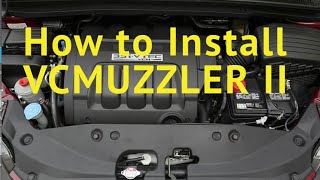
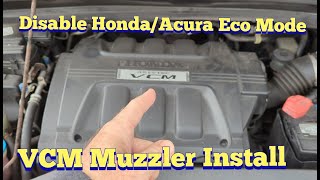
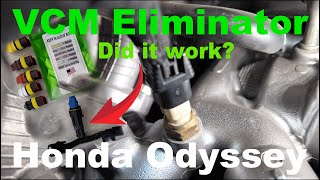
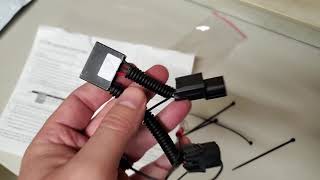
- As a preventative measure for V6 models, many owners install a VCM deactivation device (e.g., VCMuzzler, S-VCM Controller) to prevent 🎬 See how to install a VCM disabler to protect your engine. the system from engaging, which can stop or slow the oil consumption problem.
- If the plug and coil are good, check the fuel injector on cylinder 2. Listen for its operation with a stethoscope or test its electrical resistance.
- If basic components are ruled out, perform an engine compression test to check for mechanical issues like worn rings, valves, or a bad head gasket.
- If the vehicle has over 100,000 miles, a valve adjustment is a likely required maintenance item that can resolve persistent misfires. 🎬 Watch EricTheCarGuy demonstrate a proper Honda valve adjustment.
Parts You'll Likely Need
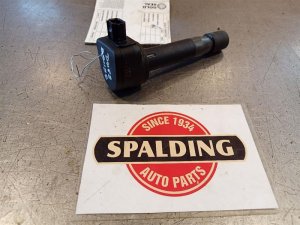
- Ignition Coil (4-Cylinder)
(OEM #30520-R40-007)— A very common failure point for single-cylinder misfires on the K24 engine. Easy to diagnose by swapping between cylinders.
Trusted brands: Honda (OEM), Hitachi, Denso, NGK
OEM price range: $80-$120
Aftermarket price range: $40-$75 - Ignition Coil (V6)
(OEM #30520-R70-A01 (superseded by 30520-R70-S01))— Common failure point for misfires on the J35 engine. The coil swap diagnostic is equally effective here.
Trusted brands: Honda (OEM), Hitachi, Denso, NGK
OEM price range: $70-$110
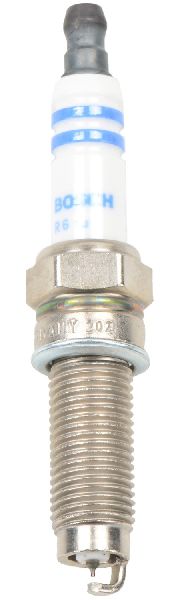
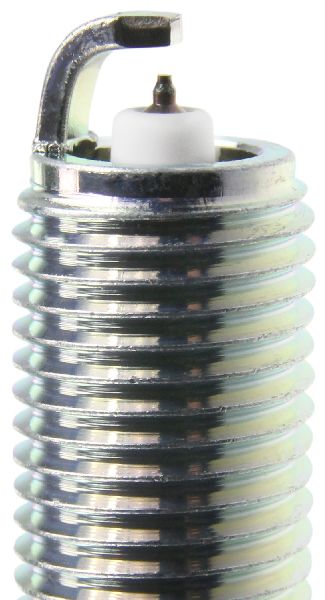
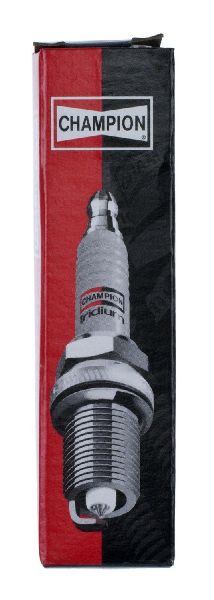
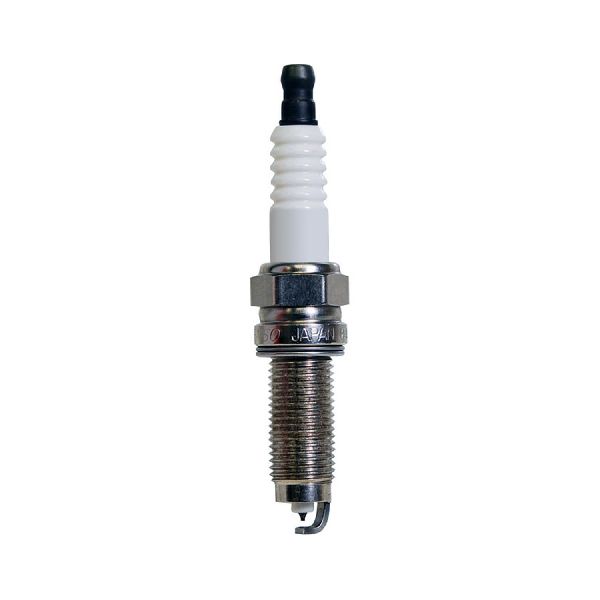
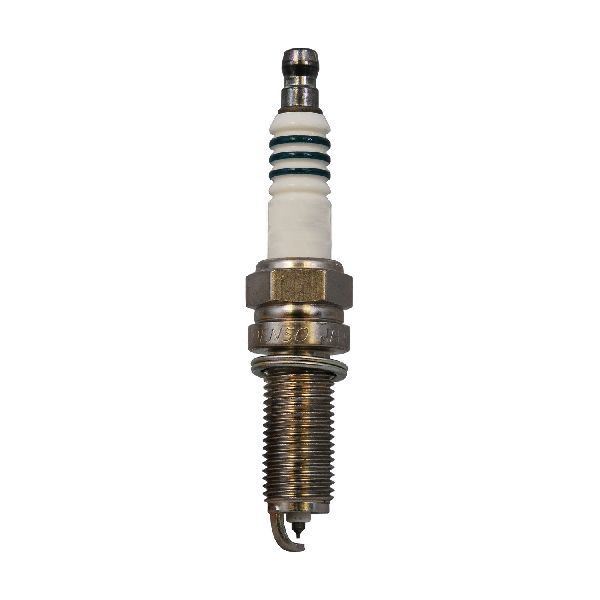
Aftermarket price range: $40-$70 - Spark Plug — A primary cause of misfires due to normal wear or oil fouling from the VCM issue on V6 models. Should be replaced every 100,000 miles or when found to be fouled.
Trusted brands: NGK (Laser Iridium), Denso (Iridium Long Life)
OEM price range: $20-$35
Aftermarket price range: $15-$25 - VCM Disabler/Muzzler — For V6 models, this aftermarket device is a popular preventative fix to stop the VCM system from engaging, thereby preventing the oil consumption that leads to fouled plugs and misfires.
Trusted brands: VCMTUNER II, S-VCM Controller
OEM price range: N/A
Aftermarket price range: $100-$150
Related Codes That Often Appear With This One
- P0300 — Stands for 'Random Misfire Detected'. A persistent misfire in one cylinder can sometimes be misinterpreted by the ECM or cause imbalances that lead to setting the general P0300 code as well.
- P0301, P0303, P0304 — If multiple misfire codes are present on cylinders 1-4 for a V6 model, it strongly points towards the VCM-related piston ring issue described in TSB A13-078.
- P3400 / P3497 — These codes relate to the VCM system being 'stuck off' on bank 1 or 2. They indicate a fault within the VCM system itself (often a spool valve/solenoid issue) which is the root cause of the oil consumption and subsequent misfires.
Technical Service Bulletins (TSBs) & Recalls
- A13-078: Warranty Extension: MIL Comes On with DTCs P0301 thru P0304. This TSB details the diagnosis and repair for the VCM-related piston ring issue on 2008-2012 V6 Accords. The repair involves a software update and, if necessary, cleaning pistons and replacing rings on cylinders 1-4.
Platform-Specific Known Issues
- Piston Ring Alignment and Oil Fouling (2008-2012 V6 Models): Honda issued TSB A13-078 due to an issue where the Variable Cylinder Management (VCM) system causes piston rings on cylinders 1-4 to align or stick. This allows oil to enter the combustion chamber, fouling the spark plugs and causing misfires (P0301, P0302, P0303, P0304). The initial fix was a PCM software update, but if the issue persisted, the official repair is a costly piston ring replacement. A class-action lawsuit resulted in a warranty extension for this specific problem.
- VCM Muzzler/Disabler as a Common Owner Fix: Many owners of V6 models, even those outside the TSB range, proactively install an aftermarket electronic device (often called a 'VCM Muzzler' or 'S-VCM Controller') that prevents the VCM from activating. This keeps the engine running on all 6 cylinders continuously, which users report prevents or resolves the oil consumption and spark plug fouling issue at the cost of a slight decrease in fuel economy.
- Aftermarket Starter Interference (2008-2012 I4 Models): A less common but documented issue is electrical noise from some aftermarket starters interfering with the crankshaft position sensor, leading to misfire codes P0302 and P0303. The fix involves replacing the starter with an OEM unit and performing a CKP relearn.
Mechanic-Grade Diagnostic Values
- Valve Clearance (K-Series I4 Engine, Cold) — expected: Intake: 0.20-0.24 mm (0.008-0.009 in). Exhaust: 0.28-0.32 mm (0.011-0.013 in).. Failure: Clearance outside of this range, especially tight exhaust valves, can cause compression loss and misfires.
- Valve Clearance (J-Series V6 Engine, Cold) — expected: Intake: 0.20-0.24 mm (0.008-0.009 in). Exhaust: 0.28-0.32 mm (0.011-0.013 in).. Failure: Valves that are too tight will not seat properly, causing low compression and misfires. Valves that are too loose will be noisy.
- Ignition Coil Primary Resistance — expected: Approximately 0.5 to 2.0 ohms.. Failure: A reading of OL (Open Loop) or significantly higher resistance indicates a failed primary winding.
- Ignition Coil Secondary Resistance — expected: Approximately 12-16 kΩ (kilo-ohms).. Failure: An open circuit (OL) or a reading far outside the expected range indicates a failed secondary winding.
- Mode $06 Misfire Count (per cylinder) — expected: Value should be at or very close to zero during a drive cycle.. Failure: A count that is significantly higher for cylinder 2 compared to other cylinders indicates an intermittent misfire is occurring, even if a P0302 code is not yet set.
Hidden / Shadow Codes Worth Checking
- Mode $06, Test ID $53: On pre-CAN bus Honda vehicles, this test ID tracks cylinder-specific misfire counts. A non-zero value for component ID 02 (Cylinder 2) can reveal intermittent misfires before they are frequent enough to set a P0302 trouble code. (see via A scan tool capable of displaying Mode $06 data. The data is presented as raw hexadecimal values and counts, not a standard DTC.)
Scan Tool Commands That Help
- Honda HDS, Launch, Foxwell, or other professional scan tools: CKP Pattern Clear / CKP Pattern Learn — This procedure must be performed after replacing a crankshaft position (CKP) sensor, PCM, or sometimes after replacing a starter (especially on I4 models). It erases the old crankshaft variation data and allows the PCM to learn the new pattern. Failing to do this can cause false misfire codes like P0302.
- Honda HDS or equivalent: EGR System Test — If multiple misfire codes are present (e.g., P0300, P0301, P0302, etc.), a bidirectional test can be used to command the EGR valve open. If the engine stumbles or stalls, the valve is likely functioning; if there is no change in engine RPM, the valve or its passages are likely clogged.
Wiring & Ground Locations
- G101 — On the driver's side of the intake manifold plenum for the V6, or on the thermostat housing for some models.. G101 is a primary ground point for the engine control system, including the PCM and various sensors. A poor connection at this ground can cause erratic sensor readings and unexplained electrical issues, including false misfire codes.
- Cylinder 2 Ignition Coil Connector — On top of the valve cover, connected to the ignition coil for cylinder 2. For the V6, cylinder 2 is the middle cylinder on the front bank (closest to the radiator).. When diagnosing, you can test for 12V power at Pin 3 (Black/Yellow wire) and ground at Pin 2 with the key on, engine off. The signal from the PCM to fire the coil is on Pin 1.
Real Owner Repair Stories
- YouTube user comment on BCauto_ video (2008 Honda Accord 4-Cylinder) — Car went into limp mode with a misfire code. Flashing check engine light.
❌ Tried (didn't work) Replaced all spark plugs, Replaced all 4 ignition coils
✅ What actually fixed it The root cause was a recently installed aftermarket starter creating electrical interference. The fix was to replace the aftermarket starter with an OEM starter and then have a shop perform the 'CKP to crank position sensor RELEARN' procedure. - Reddit user on r/MechanicAdvice (2008 Honda Accord LX coupe) — P0300 and P0302 codes, flashing check engine light, car in 'snail mode' (limp mode).
❌ Tried (didn't work) Replaced all spark plugs, Replaced 2 ignition coils, Replaced crankshaft positioning sensor, Performed a compression test (all cylinders were good at 180psi)
✅ What actually fixed it The user's post was a request for help and did not have a final resolution, highlighting the difficulty of diagnosis when common parts are replaced without success. - driveaccord.net forum user (2008 Honda Accord V6) — Multiple misfire codes including P0301, P0302, P0303, P0305, plus VSA light.
❌ Tried (didn't work) 60,000-mile service including spark plug replacement and valve adjustment.
✅ What actually fixed it The issue returned 4,000 miles after the service. The story points towards the classic VCM piston ring issue, as a standard tune-up provided only a temporary fix. The final resolution was not posted but strongly implies the need for the TSB A13-078 repair.
OEM Part Supersession History
30520-R70-A01→30520-R70-S01— Standard part revision by Honda for the V6 engine ignition coil.
Heads up: The parts are interchangeable, with the S01 version being the current replacement.37240-R70-A02 / 37240-R70-A03→37240-R70-A04— Part revision for the VCM oil pressure switch located on the spool valve assembly.
Heads up: These switches are critical for VCM operation. Using the latest revision is recommended. A failure of this switch can cause codes P3400 or P3497 and lead to the oil consumption issues that cause misfires.
Model Year Variations Within This Range
- 2008-2012 (8th Gen): These V6 models feature the first-generation VCM system that is most prone to the oil consumption and spark plug fouling issue outlined in TSB A13-078.
- 2013-2015 (9th Gen): These V6 models use an updated VCM system (J35Y1 engine) that is less susceptible to the severe oil consumption issues seen in the 8th generation, though problems are not entirely eliminated. Many owners still opt to install VCM disabling devices as a preventative measure.
- 2008-2012 (4-Cylinder): These models are susceptible to misfire codes caused by electrical interference from aftermarket starters, an issue not commonly reported on the V6 models.
Helpful Videos
Used OEM Parts in Stock



New Aftermarket Parts Available

The information in this article is provided for general reference and educational purposes only. Vehicle specifications, procedures, and part compatibility can vary by production date, trim level, and region. Always consult your vehicle's factory service manual and verify part numbers before purchasing or performing repairs. Safety-critical components such as airbags, seat belts, and braking systems should be installed by a qualified professional.
- Honda ACCORD:
- 🎬 Helpful Videos
- 🛍️ Shop This Part
- What's Unique About the 2008-2015 Honda ACCORD
- Diagnostic Flowchart
- Symptoms You May Notice
- Most Likely Causes
- Rare But Worth Checking
- Diagnosis Steps
- Parts You'll Likely Need
- Related Codes That Often Appear With This One
- Technical Service Bulletins (TSBs) & Recalls
- Platform-Specific Known Issues
- Mechanic-Grade Diagnostic Values
- Hidden / Shadow Codes Worth Checking
- Scan Tool Commands That Help
- Wiring & Ground Locations
- Real Owner Repair Stories
- OEM Part Supersession History
- Model Year Variations Within This Range
- 🎟️ Get 5% Off