

P0302 on 2010-2013 GMC Yukon Denali: Cylinder 2 Misfire Causes and Fixes
P0302 indicates a misfire on cylinder 2. For the 2010-2013 Yukon Denali, this is most often caused by a bad spark plug, ignition coil, or a loose spark plug wire. These are affordable DIY fixes, typically under $100. However, be aware of the potential for a more serious Active Fuel Management (AFM) lifter failure if basic ignition parts don't solve the issue, often signaled by a persistent ticking noise.
- P0302 is a misfire on the front passenger-side cylinder.
- Always start diagnosis with the cheapest and easiest parts: check the spark plug wire connection, then swap the ignition coil with another cylinder to see if the code follows.
- If the check engine light is flashing, pull over and have the vehicle towed to avoid catastrophic damage to the catalytic converter.
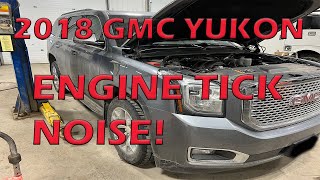
- If you hear a persistent ticking or chirping noise along with the misfire, the cause is very likely a failed AFM lifter, which is a common but expensive repair on this engine.
What's Unique About the 2010-2013 Gmc YUKON DENALI
The 6.2L V8 engine (L94, L9H) in this generation of Yukon Denali is equipped with Active Fuel Management (AFM), also known as Displacement on Demand (DOD). This system deactivates cylinders 1, 4, 6, and 7 to improve fuel economy, but its hydraulic lifters are a well-documented failure point. While cylinder 2 is not an AFM-controlled cylinder, problems within the AFM system (like oil pressure issues or debris from failing lifters) can sometimes cause misfires in other cylinders. A persistent ticking or chirping noise accompanying the misfire is a strong indicator of this more serious lifter issue, which can also lead to bent pushrods.
Diagnostic Flowchart
Tap your situation to follow the diagnostic path that matches what you're seeing on this vehicle.
Symptoms You May Notice
- Rough or shaking idle.
- Hesitation or stumbling during acceleration.
- Noticeable loss of engine power.
- Solid or flashing Check Engine Light.
- Engine ticking, chirping, or knocking noise.
- Stabilitrak and/or Traction Control warning lights may illuminate.
- Replacing all ignition coils and spark plugs when the actual issue is a failed AFM lifter. If a ticking noise is present, the valvetrain should be investigated before replacing numerous ignition parts.
- Assuming the problem is complex before checking for a simple loose spark plug wire, which is a known issue per TSB #PIP4819A.
Most Likely Causes
- Worn or Fouled Spark Plug 🔴 High Probability Spark plugs are a standard maintenance item. The original spec for the LS-based engines was a 0.060" gap, but this was later revised by GM to 0.040" for better performance and longevity. Plugs wear out, and incorrect gaps can cause misfires.
How to confirm: Remove the spark plug from cylinder 2 (front passenger side) and inspect it for wear, carbon fouling, oil deposits, or a cracked insulator. The correct gap for the recommended ACDelco 41-162 plug is 0.040 inches.
Typical fix: Replace the spark plug. If the plugs are near or over their service interval (around 60,000-100,000 miles), it is best practice to replace all eight with pre-gapped Iridium plugs. 🎬 Watch: A step-by-step guide to changing your 6.2L spark plugs.
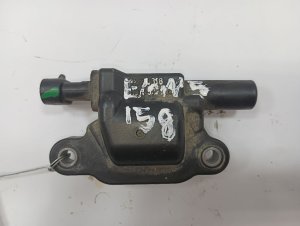
Est. part cost: $10-$25 per plug - Faulty Ignition Coil 🔴 High Probability The coil-on-plug design places the coil directly on the engine, where it is exposed to constant heat and vibration, leading to eventual failure of the internal windings.
How to confirm: Swap the ignition coil from cylinder 2 with another cylinder (e.g., cylinder 4, the next one back on the same side). Clear the codes and drive the vehicle. If the code changes to P0304, the ignition coil is bad.
Typical fix: Replace the faulty ignition coil. It is generally recommended to replace only the failed coil, but if the vehicle has high mileage and coils are original, replacing the set can be preventative.
Est. part cost: $40-$90 - Loose or Damaged Spark Plug Wire 🟡 Medium Probability A GM Technical Service Bulletin (TSB #PIP4819A) specifically calls out loose spark plug wires as a cause for misfires on these engines. The connection at the coil or plug can become loose from vibration or heat cycles, or the wire itself can degrade.
How to confirm: Visually inspect the spark plug wire for cylinder 2. Ensure it is firmly clicked onto both the ignition coil and the spark plug. Check for any signs of burns, cracks, or corrosion. A resistance test should show between 4,000 and 20,000 ohms; a reading over 30,000 ohms indicates a bad wire.
Typical fix: Reseat the wire firmly. If the wire is damaged or the connection remains loose, replace the spark plug wire set. Using a small amount of dielectric grease inside the boot is recommended.
Est. part cost: $50-$120 for a set - Failed Active Fuel Management (AFM) Lifter 🟡 Medium Probability The AFM system lifters are a notorious weak point on this engine platform. They can become stuck or collapse, preventing the valve from opening correctly. This often presents with a distinct ticking or chirping noise. While cylinder 2 is not an AFM cylinder, a failure in an AFM cylinder (1, 4, 6, or 7) can cause debris to circulate in the oil, affecting other components, or the PCM may trigger other codes in confusion.
How to confirm: This is a more complex diagnosis. It often starts with a persistent ticking noise. A mechanic will typically perform a compression test; a bouncing or low reading can indicate a valvetrain issue. The next step is often removing the valve cover to inspect the valvetrain components (rocker arms, pushrods) for lack of movement or damage.
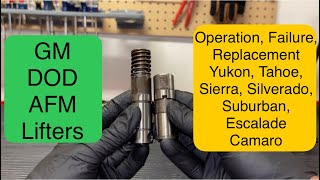
Typical fix: This is a major repair that involves replacing the failed lifters, lifter guides, and often the camshaft if it has been damaged by the failed lifter. Many owners opt to perform an 'AFM delete' at this time, replacing the AFM components with standard lifters and a non-AFM camshaft to prevent future failures. 🎬 Watch: Why these AFM lifters fail and how the delete works.
Est. part cost: $400-$1200 for parts - Clogged or Faulty Fuel Injector ⚪ Low Probability
How to confirm: Listen to the injector with a mechanic's stethoscope to confirm it is making a steady clicking sound. You can also swap the injector with another cylinder, but this is more labor-intensive than an ignition coil swap. A professional may perform an injector balance test. Resistance should be between 11 and 14 ohms.
Typical fix: Replace the faulty fuel injector. Sometimes running a high-quality fuel system cleaner can resolve a minor clog.
Est. part cost: $60-$150
Rare But Worth Checking
- Low Engine Compression: If all ignition and fuel-related causes have been ruled out, a mechanical issue like a worn piston ring, a bad valve, a broken valve spring, or a leaking head gasket could be the cause. A compression test is needed to confirm this. A healthy L94 engine should have readings around 165 PSI.
- Intake Manifold Gasket Leak: A vacuum leak from a failed intake manifold gasket near the port for cylinder 2 can lean out the air/fuel mixture enough to cause a misfire. This can sometimes be diagnosed with a smoke test.
Diagnosis Steps
- Read the trouble codes with an OBD-II scanner and check for any other pending or stored codes.
- Inspect the spark plug wire for cylinder 2. Ensure it is securely connected at both the coil and the spark plug, per TSB #PIP4819A.
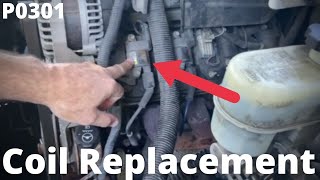
- Swap the ignition coil from cylinder 2 with the coil from cylinder 4. Clear the codes, run the engine, and see if the misfire code moves to P0304. If it does, the coil is bad. 🎬 See this quick walkthrough on how to replace the ignition coil.
- If the misfire remains on cylinder 2, remove and inspect the spark plug for wear, fouling, or damage. Check that the gap is 0.040". Replace if necessary.
- If ignition components are good, listen for a steady ticking or clicking noise from the engine, which could indicate a lifter problem.
- Listen to the fuel injector on cylinder 2 with a stethoscope to ensure it's operating (making a clicking sound).
- If the problem persists, perform a compression test on cylinder 2 to check for mechanical engine problems. A healthy reading should be steady around 165 PSI. A bouncing needle can indicate a valve issue.
- If compression is low, further investigation of the valves (e.g., broken spring, dropped seat), piston rings, or head gasket is required.
Parts You'll Likely Need
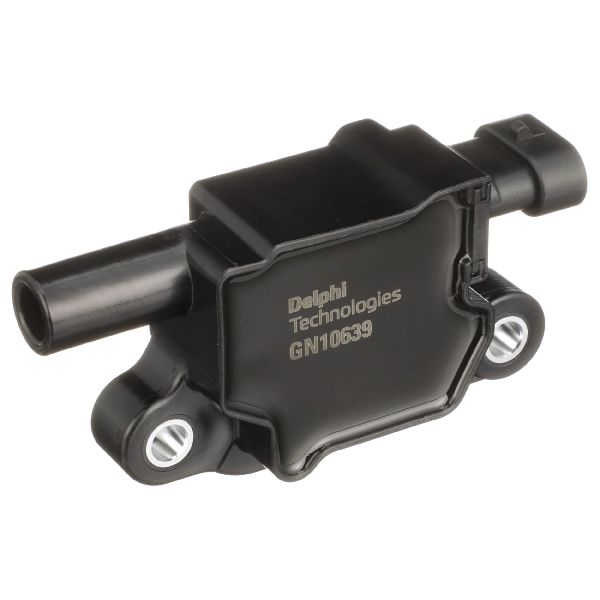
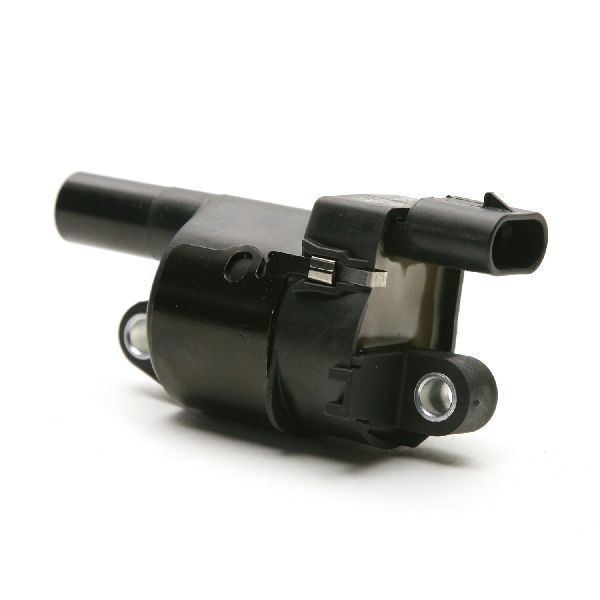
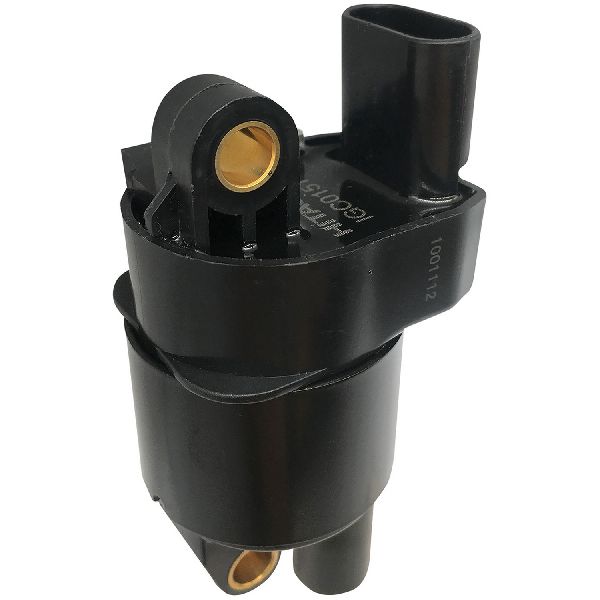
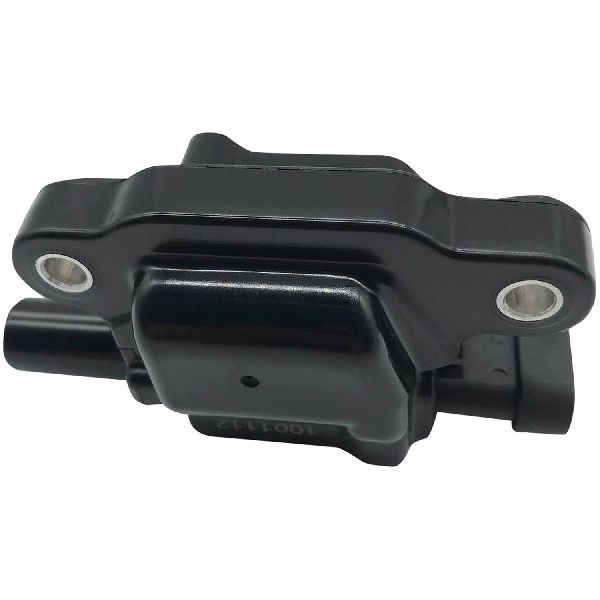
- Ignition Coil
(OEM #12611424 (superseded by 12632479, ACDelco D515C))— Ignition coils are a very common failure item causing a single-cylinder misfire. The coil swap test is a simple and definitive diagnostic.
Trusted brands: ACDelco, Delphi, Denso
OEM price range: $60-$90
Aftermarket price range: $40-$70 - Spark Plug
(OEM #41-162)— Spark plugs are a routine maintenance part and the primary component for ignition. A worn or fouled plug is a high-probability cause. The correct plug is an Iridium type gapped to 0.040".
Trusted brands: ACDelco, NGK
OEM price range: $15-$25
Aftermarket price range: $10-$20 - Spark Plug Wire Set
(OEM #9748RR (ACDelco))— A GM TSB specifically mentions loose wires as a cause. If a wire is damaged or won't stay seated, it must be replaced. It's best practice to replace as a set.
Trusted brands: ACDelco, NGK/NTK
OEM price range: $70-$120
Aftermarket price range: $50-$90
Related Codes That Often Appear With This One
- P0300 — If the misfire is intermittent or affects multiple cylinders, a P0300 (Random/Multiple Cylinder Misfire Detected) may be stored alongside P0302.
- P0430 — If the P0302 misfire has been ignored for a long time, unburnt fuel can damage the catalytic converter on Bank 2 (passenger side), leading to a P0430 (Catalyst System Efficiency Below Threshold Bank 2) code.
- P3400 — This code for 'Cylinder Deactivation System Bank 1' can appear alongside a misfire code if the root cause is related to the AFM system.
Technical Service Bulletins (TSBs) & Recalls
- PIP4819A: Mentions that a Service Engine Soon light and misfire codes (P0300-P0308) can be caused by loose spark plug wires. Instructs technicians to inspect and replace any loose wires.
- 19-NA-219: While not specific to P0302, this bulletin details various causes for engine misfires and associated noises (chirp, squeak, tick) on this engine family, including worn cam lobes, sticking valves, broken valve springs, and collapsed AFM lifters.
Platform-Specific Known Issues
- Active Fuel Management (AFM) lifter failure is a significant and well-documented issue with these V8 engines. A collapsed or stuck lifter can cause a persistent misfire, often accompanied by a ticking noise. While cylinder 2 is not an AFM cylinder, system-wide problems can arise from a failure elsewhere.
- TSB #PIP4819A directly addresses misfire codes on these engines being caused by something as simple as a spark plug wire that is not fully seated. Always check this first.
Mechanic-Grade Diagnostic Values
- Fuel Pressure (at idle) — expected: 42-45 PSI. Failure: Pressure significantly below this range indicates a weak pump or clogged filter.
- Fuel Injector Resistance — expected: 11 - 14 Ohms. Failure: A reading outside this range suggests a faulty injector coil.
- Ignition Coil Primary Resistance — expected: 0.4 - 2.0 Ohms. Failure: A reading of 0 (short) or infinity (open) indicates a failed coil.
- Ignition Coil Secondary Resistance — expected: 6,000 - 10,000 Ohms. Failure: A reading significantly outside this range points to a faulty secondary winding.
- Spark Plug Wire Resistance — expected: 4,000 - 20,000 Ohms. Failure: Resistance above 30,000 Ohms indicates the wire is bad and needs replacement.
Hidden / Shadow Codes Worth Checking
- Mode $06, Test ID $A2-$AB: This is not a 'code' but a data function. A professional scan tool can access Mode $06 data to view the raw misfire count for each individual cylinder (Cyl 1-8 correspond to Test IDs $A2-$A9 for GM). A high count for cylinder 2 confirms the P0302 without waiting for the CEL to flash. (see via Professional scan tool like GM Tech2, GDS2, or high-end OBD-II scanners with Mode $06 capability.)
Scan Tool Commands That Help
- GM Tech2 / GDS2: Power Balance Test — This function allows a technician to disable one cylinder at a time and observe the corresponding drop in engine RPM. If disabling cylinder 2 causes little or no change in RPM, it confirms that cylinder is not contributing power, pinpointing the misfire location.
- GM Tech2 / GDS2: Misfire History / Data — Used to view the number of misfire events per cylinder over different drive cycles. This helps determine if the misfire is consistent, intermittent, or only occurs under specific conditions (e.g., high RPM, cold start).
Wiring & Ground Locations
- G102 — Located at the left rear of the engine.. This is the primary ground point for all eight ignition coils. A loose or corroded connection here can cause weak spark and random misfires, including P0302.
- G103 — On the front of the right cylinder head.. This is a critical engine ground. A poor connection here can affect various sensors and the Engine Control Module (ECM), potentially leading to incorrect readings and misfire codes.
- G104 — On the front of the left cylinder head.. This is another main engine ground point that ensures proper grounding for the engine block and its attached components.
- Cylinder 2 Ignition Coil Connector — The electrical connector on the ignition coil for the front-most cylinder on the passenger side.. The pins in this connector supply power, ground, and the trigger signal from the ECM. A visual inspection for corrosion or pushed-out pins is a necessary step. A wiring diagram is needed for pin-point voltage testing.
Real Owner Repair Stories
- Tahoe Yukon Forum User (2007 GMC Yukon with 137k miles (GMT900 platform, same generation)) — P0302 code, rough idle but no issues at speed.
❌ Tried (didn't work) Not specified, but implied basic ignition parts were checked.
✅ What actually fixed it The issue was diagnosed by a dealer as being related to the Displacement on Demand (DOD/AFM) system, likely a failing lifter. - Forum User Comment (General GM V8) (General GM V8) — Persistent P0302 after replacing parts.
❌ Tried (didn't work) Replacing spark plugs, Replacing ignition coils
✅ What actually fixed it The fuel injector was clogged. Using a high-quality fuel system cleaner (brand mentioned was Redline) in the fuel tank resolved the rough idle and cleared the code after some driving.
When the Usual Fixes Don't Work
- While faulty ignition components (plugs, coils, wires) are the most common cause for P0302, they are not the only cause. In one documented case involving a similar GM V8, a persistent P0302 that was not resolved by replacing plugs and coils was ultimately fixed by using a potent fuel system cleaner in the gas tank. This indicates that a clogged or dirty fuel injector can perfectly mimic the symptoms of a failed ignition part. Before spending significant money on ignition hardware, running a bottle of high-quality injector cleaner through a tank of gas is a low-cost diagnostic step that may resolve the issue if it's fuel-related.
OEM Part Supersession History
12570616→12611424 (also known as ACDelco D510C, a square-shaped coil)— Design update by GM.
Heads up: This is considered the '1st Design' coil.12611424→12739916— Further part revision by GM.
Heads up: This appears to be the latest official GM supersession for this part number.ACDelco D515C→N/A— This is the common aftermarket replacement part number for the original coil, often cross-referencing multiple OEM numbers.
Heads up: While listed as a replacement for 12611424, it's important to visually match the coil shape (square vs. round/Delphi style) to what is on the engine, as different styles were used.
Model Year Variations Within This Range
- 2010-2013: These models primarily use the 6.2L L94 engine, which includes Active Fuel Management (AFM). This is a critical difference from the 2009 L9H engine, as AFM lifter failure is a well-documented cause of misfires on the L94 that does not affect earlier non-AFM versions.
- 2009 vs 2010+: The 2009 L9H and 2010+ L94 engines are both Flex-Fuel capable, but use different fuel injectors. The L9H has 4-hole injectors, while the earlier non-flex-fuel L92 had 2-hole injectors. Ensure the correct injector is used if replacement is necessary.
Helpful Videos
Used OEM Parts in Stock
New Aftermarket Parts Available


The information in this article is provided for general reference and educational purposes only. Vehicle specifications, procedures, and part compatibility can vary by production date, trim level, and region. Always consult your vehicle's factory service manual and verify part numbers before purchasing or performing repairs. Safety-critical components such as airbags, seat belts, and braking systems should be installed by a qualified professional.
- Gmc YUKON DENALI:
- 🎬 Helpful Videos
- 🛍️ Shop This Part
- What's Unique About the 2010-2013 Gmc YUKON DENALI
- Diagnostic Flowchart
- Symptoms You May Notice
- Most Likely Causes
- Rare But Worth Checking
- Diagnosis Steps
- Parts You'll Likely Need
- Related Codes That Often Appear With This One
- Technical Service Bulletins (TSBs) & Recalls
- Platform-Specific Known Issues
- Mechanic-Grade Diagnostic Values
- Hidden / Shadow Codes Worth Checking
- Scan Tool Commands That Help
- Wiring & Ground Locations
- Real Owner Repair Stories
- When the Usual Fixes Don't Work
- OEM Part Supersession History
- Model Year Variations Within This Range
- 🎟️ Get 5% Off