

P0302 on 2021-2025 Ford Mustang: Cylinder 2 Misfire Causes and Fixes
P0302 on a 2021-2025 Ford Mustang indicates a misfire in cylinder #2. For the 2.3L EcoBoost engine, this is most often a faulty ignition coil or spark plug, a fix costing between $50 and $150. For the 5.0L V8, causes can also include PCM software issues that may require a dealer visit for a reflash under TSB 22-2464.
- P0302 is a misfire on cylinder #2. On a Mustang, the cause is often engine-specific.
- For 2.3L EcoBoost models, the most likely culprits are a bad ignition coil or spark plug, which are DIY-friendly fixes.
- For 5.0L V8 models (especially 2021-2022), the issue could be software-related, requiring a trip to the dealer for a PCM update per TSB 22-2464.
- Always diagnose before replacing parts. Swapping the coil and then the spark plug to another cylinder is the easiest way to confirm the faulty component.
- If the check engine light flashes, stop driving immediately to prevent catalytic converter damage.
What's Unique About the 2021-2025 Ford MUSTANG

On the 2021-2025 Mustang, the cause of a P0302 code often depends on the engine. The 2.3L EcoBoost engine is specifically mentioned in multiple Ford Technical Service Bulletins (TSBs) for misfires caused by spark plugs and/or ignition coils. In contrast, the 5.0L V8 has TSB 22-2464 pointing towards PCM strategies causing misfire codes, which may require a software update from a dealer. High-speed or track operation can also trigger this code on manual transmission models, as noted in TSB SSM 53215.
Diagnostic Flowchart

Tap your situation to follow the diagnostic path that matches what you're seeing on this vehicle.
Generation note: This year range covers two Mustang generations: the S550 (2021-2023) and the S650 (2024-2025). While the primary engines (2.3L EcoBoost and 5.0L Coyote V8) are carried over, there are differences in electronics and PCM software. The S650 features a new 4th generation Coyote V8 and updated electronics. The cited TSBs apply to vehicles in both generations, indicating the potential for similar issues across the model years.
Symptoms You May Notice
- Rough or erratic idle
- Engine hesitation or stumbling during acceleration
- Noticeable loss of power
- Solid or flashing Check Engine Light
- Fuel smell from the exhaust
- Engine surging while cruising at steady speeds
- Replacing oxygen (O2) sensors before diagnosing the ignition or fuel system. A misfire will cause poor O2 sensor readings, but the sensor is not the cause.
- Replacing the catalytic converter. A misfire can destroy a catalytic converter, but replacing it without fixing the misfire will only result in the new converter failing as well.
Most Likely Causes

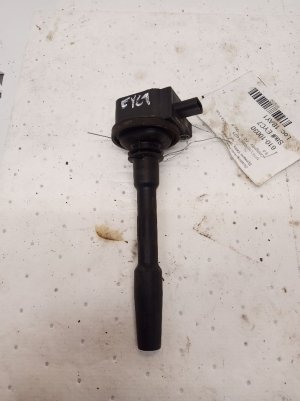
- Faulty Ignition Coil 🔴 High Probability Multiple TSBs (SSM 53971, TSB 24-2384, SSM 52630) specifically name ignition coils as a primary cause for misfires on the 2.3L EcoBoost engine. These coil-on-plug units are a very common failure point.
How to confirm: Swap the ignition coil from cylinder #2 with another cylinder (e.g., cylinder #1). Clear the codes and run the engine. If the code changes to P0301, the ignition coil is faulty. 🎬 Watch: How to swap coils to identify a bad one.
Typical fix: Replace the faulty ignition coil. It is often recommended to replace the corresponding spark plug at the same time and apply dielectric grease to the new coil boot.
Est. part cost: $40-$90 - Worn or Fouled Spark Plug 🔴 High Probability Ford TSBs for the 2.3L EcoBoost engine list spark plugs as a common culprit for misfires. These direct-injection, turbocharged engines can be harder on plugs than naturally aspirated ones, shortening their effective lifespan.
How to confirm: After ruling out the coil, remove the spark plug from cylinder #2. Inspect it for excessive wear on the electrode, carbon fouling, oil, or coolant contamination. Compare it to a plug from a healthy cylinder.
Typical fix: Replace the spark plug in cylinder #2. It is best practice to replace all spark plugs as a set to ensure even performance.
Est. part cost: $10-$25 per plug - PCM Software Issue 🟡 Medium Probability TSB 22-2464 specifically applies to 2021-2022 Mustang 5.0L models and states that various misfire codes, including P0302, can be caused by 'various strategies within the PCM software'. Forum users have confirmed this dealer-performed reflash fixes the issue.
How to confirm: This must be confirmed by a Ford dealership or a qualified shop with access to Ford's service information to check for available PCM updates against your vehicle's VIN.
Typical fix: Reprogramming the Powertrain Control Module (PCM) with the latest software version. The labor operation is listed as 0.4 hours.
Est. part cost: $0 if under warranty, otherwise labor cost for reprogramming (approx. $100-$200) - Faulty Fuel Injector ⚪ Low Probability While less common than ignition issues, a clogged or failing fuel injector can prevent the correct amount of fuel from entering cylinder #2, causing a lean misfire. Use of poor quality or contaminated fuel can contribute. One owner found a cheap, non-OEM injector with a bad seal to be the cause of a P0302.
How to confirm: A professional can perform a fuel injector balance test. A DIY method is to swap the fuel injector from cylinder #2 with another cylinder, but this is a more labor-intensive job than swapping a coil or plug.
Typical fix: Replace the faulty fuel injector. It is recommended to use a quality OEM or reputable brand replacement.
Est. part cost: $70-$200
Rare But Worth Checking
- Extended High-Speed Operation: Specifically for manual transmission vehicles, TSB SSM 53215 notes that P0302 can be set after extended high-speed or racetrack driving. This may not indicate a faulty part and may be related to engine harmonics or software sensitivity under extreme conditions.
- Incorrect Camshaft Timing: A mechanical timing issue can cause a persistent misfire on a specific cylinder. In one documented case, a 5.0L V8 was mistimed by a half-tooth on the passenger side exhaust cam phaser during a repair, leading to a stubborn P0302 code at idle.
- Vacuum Leak: A leak in the intake manifold gasket near the cylinder #2 runner can lean out the air/fuel mixture and cause a misfire isolated to that cylinder.
- Low Engine Compression: A mechanical issue like a burnt valve, worn piston rings, or a head gasket failure can cause a loss of compression, leading to a persistent misfire. This is the least likely and most expensive cause. A compression test can confirm this.
Diagnosis Steps
- Read the trouble codes with an OBD-II scanner and note any other codes present. Freeze frame data can help identify the conditions when the misfire occurred.
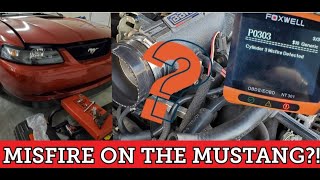
- Identify cylinder #2. 🎬 See this walkthrough on diagnosing and fixing Mustang misfires. For the 2.3L I4, it is the second cylinder from the front of the engine. For the 5.0L V8, it is the second cylinder from the front on the passenger side (Bank 1).
- Swap the ignition coil from cylinder #2 with the coil from cylinder #1. Clear the codes and drive the vehicle to see if the misfire code returns as P0301. If it does, the ignition coil is bad.
- If the code remains P0302, swap the spark plug from cylinder #2 with the plug from cylinder #1. Clear codes and drive. If the code moves to P0301, the spark plug is bad.
- If the misfire is still on cylinder #2, inspect the wiring and connector for the ignition coil and fuel injector for any damage or corrosion. Pay close attention to known engine harness chafe points.
- If ignition components and wiring are good, the next step is to investigate the fuel injector. This may require professional diagnosis or a more involved swap to another cylinder.
- If the vehicle is a 2021-2022 5.0L model, contact a Ford dealer to check if TSB 22-2464 (PCM update) applies to your VIN.
- If all else fails, a mechanical compression test should be performed to check for internal engine problems like bad valves, piston rings, or head gasket issues.
Parts You'll Likely Need
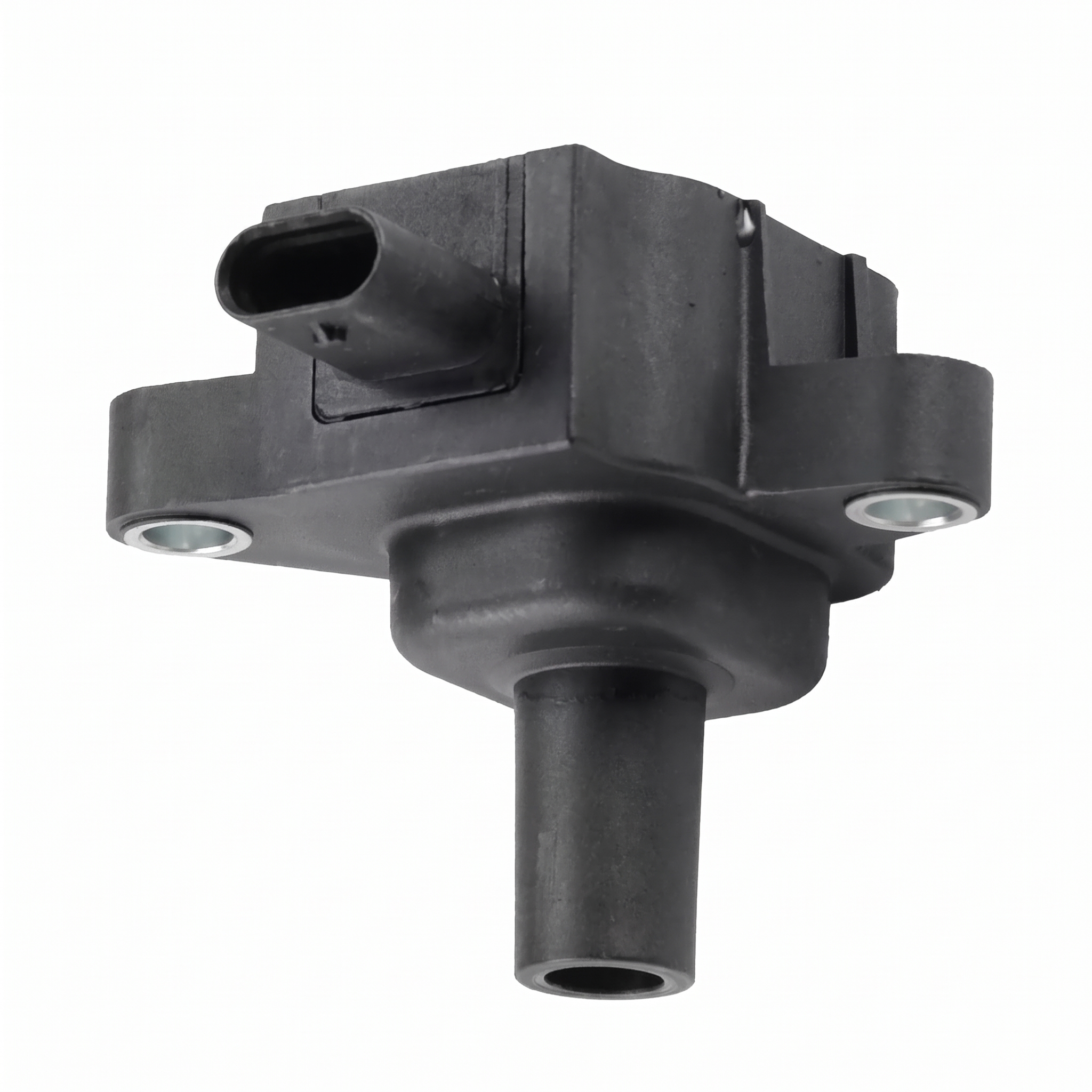
- Ignition Coil
(OEM #GJ937CT (For 2.3L EcoBoost))— This is a primary cause of misfires on the 2.3L EcoBoost engine, as cited by multiple Ford TSBs.
Trusted brands: Motorcraft, NGK, Denso
OEM price range: $60-$100
Aftermarket price range: $40-$90 - Spark Plug
(OEM #CYFS-12Y-PCTX (or replacement SP-550) (For 2.3L EcoBoost))— A common wear item and a frequent cause of misfires. It's recommended to replace them during an ignition coil replacement.
Trusted brands: Motorcraft, NGK, Bosch
OEM price range: $15-$30
Aftermarket price range: $10-$25
Related Codes That Often Appear With This One
- P0300 — This code for 'Random/Multiple Cylinder Misfire' often appears with P0302 if the misfire is intermittent or beginning to affect other cylinders. It is also seen alongside specific cylinder codes in the case of the PCM software issue on 5.0L models.
- P0301, P0303, P0304 — These codes indicate misfires in other cylinders. Seeing them together can point to a common cause like a vacuum leak, fuel delivery issue, or a PCM problem as noted in TSBs.
- P0316 — Misfire Detected on Startup (First 1000 Revolutions). This code often accompanies other P030x codes and helps pinpoint when the misfire is occurring. It was seen in a confirmed case of the TSB 22-2464 software issue.
Technical Service Bulletins (TSBs) & Recalls

- SSM 53971: Notes P0301-P0304 on 2.3L EcoBoost may be due to spark plugs and/or ignition coils.
- TSB 22-2464: Mentions P0300-P0308 on 2021-2022 5.0L engines may be due to PCM strategies. Fix is a PCM reprogram.
- SSM 53215: Notes P0300, P0302, and P0308 can be stored after extended high-speed or racetrack operation on manual transmission vehicles.
- TSB 24-2384: Cites engine misfires with P0301-P0304 on 2024-2025 2.3L EcoBoost engines.
- SSM 52630: Points to spark plugs as a potential cause for P0301-P0304 on 2024 2.3L EcoBoost engines.
Platform-Specific Known Issues
- 2.3L EcoBoost Misfires: TSBs #SSM 53971, #TSB 24-2384, and #SSM 52630 all point to spark plugs and/or ignition coils as the likely cause for P0302 on 2024-2025 Mustangs with this engine.
- 5.0L V8 PCM Logic: TSB #22-2464 indicates that on 2021-2022 Mustangs with the 5.0L engine, misfire codes (P0300-P0308) can be triggered by the PCM's internal software, requiring a dealer-installed update to correct.
- Manual Transmission High-Speed Misfire: TSB #SSM 53215 notes that P0302 can appear on manual transmission cars after being driven at high speeds or on a racetrack, and may not indicate a component failure.
Mechanic-Grade Diagnostic Values
- Low-Pressure Fuel System (5.0L V8) — expected: Nominal 55 PSI. Failure: Significantly lower pressure can cause lean misfires.
- High-Pressure Fuel System (5.0L V8) — expected: Stock setting is approx. 2900 PSI.. Failure: Pressure that does not build or hold indicates a failing high-pressure fuel pump.
- Ignition Coil Resistance (2.3L EcoBoost Aftermarket) — expected: Primary: ~0.3-0.5 ohms. Secondary: ~4.9k-7.3k ohms. Note: Testing resistance is not considered a reliable method for modern coil-on-plug units with internal electronics.. Failure: Readings far outside this range, or an open circuit. A coil swap is the more definitive test.
- Spark Plug Gap (2.3L EcoBoost, Motorcraft SP-550) — expected: 0.027 - 0.031 inches (0.70 - 0.80 mm). Failure: An excessively wide gap due to electrode wear can cause weak spark and misfires.
- Engine Compression — expected: Approx. 150-170 PSI, with less than 15% variation between cylinders. A healthy 5.0L V8 may show higher values, around 195-200 PSI.. Failure: A cylinder reading more than 15% lower than the others indicates a mechanical engine problem.
Hidden / Shadow Codes Worth Checking
- Mode 6, Test ID $80-$83, Component ID $01-$0C: This data, accessible via advanced scan tools, shows raw misfire counts for each cylinder over the last 10 drive cycles. Even if a P0302 hasn't been set, a high count for cylinder 2 can confirm it's the problem cylinder. (see via An OBD-II scanner with Mode 6 capability.)
Scan Tool Commands That Help
- Ford IDS (or equivalent high-end scanner): Power Balance Test — To graphically view the contribution of each cylinder in real-time. A drop on the graph for cylinder #2 confirms the misfire and allows for live testing while wiggling wires or tapping components.
- Ford IDS, SCT, HP Tuners: Crankshaft Position Sensor Relearn (Misfire Monitor Neutral Profile Correction) — This procedure is required after replacing a clutch, flywheel, or the crankshaft position sensor itself. It recalibrates the PCM's reference for crankshaft speed variations. Failure to perform it can cause false misfire codes.
Wiring & Ground Locations
- Engine Harness Chafe Points — On the driver's side, inspect for the harness contacting: 1) The sharp edge of the ECM/TCM bracket, 2) The upper control arm, and 3) The shock tower bolt/stud.. Chafing can short the ignition coil or fuel injector wiring for any cylinder, causing a persistent or intermittent misfire. A bulletin was issued for this known problem.
- G104 — In the engine bay, near the battery.. This ground point serves the Data Link Connector (DLC). While not a direct cause, a poor ground here can affect scan tool communication during diagnosis.
- G201 — On the passenger side kick panel, near the PCM.. This is a primary ground for the Powertrain Control Module (PCM). A poor connection here can cause a wide range of erratic engine behavior, including misfires.
Real Owner Repair Stories
- Mustang6G Forum User (2015 Mustang GT (5.0L)) — P0300, P0302, P0304 codes. Car drove and idled perfectly fine, but CEL would come on.
❌ Tried (didn't work) Swapping spark plugs, Swapping ignition coils, Taking it to a dealer who wanted to replace plugs and coils again.
✅ What actually fixed it The owner self-diagnosed and found the Intake Manifold Runner Control (IMRC) actuator for bank 1 was not getting enough vacuum to open the runners, causing an air/fuel imbalance. Replacing the intake manifold resolved the issue. - Reddit User r/ecoboostmustang (2019 Mustang EcoBoost (2.3L) with 26k miles) — Cold start misfires for a few seconds, P0302 code, coolant level dropping over time.
❌ Tried (didn't work) Swapping spark plug and ignition coil between cylinder 2 and 3; the misfire stayed on cylinder 2.
✅ What actually fixed it A dealer confirmed coolant was present in cylinder #2. This is a symptom of a known internal coolant leak/head gasket failure on this engine. The final recommended fix was a complete long block engine replacement.
"I Checked Everything" — The Actual Cause
- A persistent P0302 (often with other bank 1 codes) can be caused by a faulty or sticking Intake Manifold Runner Control (IMRC) valve. This mechanical issue inside the intake manifold won't be found by a smoke test looking for vacuum leaks, but it disrupts airflow to the cylinders, causing a misfire that is often misdiagnosed as an ignition or fuel problem.
- A failing EVAP purge valve stuck in the open position can feed unmetered fuel vapors into the intake, creating a rich condition that leads to misfires at idle. This may not present as a typical vacuum leak and can be overlooked.
When the Usual Fixes Don't Work
- In one complex case on a 2019 5.0L, a persistent P0302 at idle under load was not fixed by swapping coils, plugs, or injectors (both port and direct). A compression test was perfect, and a PCM software update provided no relief. The owner even replaced the entire engine harness. This indicates that in rare cases, the cause can be extremely elusive and may not be one of the common culprits, potentially pointing to deeper mechanical or electronic module issues.
OEM Part Supersession History
SP-537 (CYFS-12Y-2), SP-527→SP-550 (CYFS-12Y-PCTX)— Updated design/materials for the 2.3L EcoBoost engine.P2GE-12A366-AB→P2GE-12A366-AC, JX6Z-12029-A, JX6Z-12029-B— Part number revisions for the 2.0L/2.3L EcoBoost ignition coil.
Heads up: These numbers are generally interchangeable for the application.
Model Year Variations Within This Range
- 2024-2025 (S650): The 5.0L V8 is the updated 4th Generation 'Coyote,' featuring a dual air intake and dual throttle body design. The 2.3L EcoBoost is also a revised version. While the fundamental causes of P0302 are the same, component locations and some diagnostic procedures may vary slightly from the S550 (2021-2023) models.
Helpful Videos
We Have This Part in Stock


The information in this article is provided for general reference and educational purposes only. Vehicle specifications, procedures, and part compatibility can vary by production date, trim level, and region. Always consult your vehicle's factory service manual and verify part numbers before purchasing or performing repairs. Safety-critical components such as airbags, seat belts, and braking systems should be installed by a qualified professional.
- Ford MUSTANG:
- 🎬 Helpful Videos
- 🛍️ Shop This Part
- What's Unique About the 2021-2025 Ford MUSTANG
- Diagnostic Flowchart
- Symptoms You May Notice
- Most Likely Causes
- Rare But Worth Checking
- Diagnosis Steps
- Parts You'll Likely Need
- Related Codes That Often Appear With This One
- Technical Service Bulletins (TSBs) & Recalls
- Platform-Specific Known Issues
- Mechanic-Grade Diagnostic Values
- Hidden / Shadow Codes Worth Checking
- Scan Tool Commands That Help
- Wiring & Ground Locations
- Real Owner Repair Stories
- "I Checked Everything" — The Actual Cause
- When the Usual Fixes Don't Work
- OEM Part Supersession History
- Model Year Variations Within This Range
- 🎟️ Get 5% Off