

P0302 on 2011-2018 Ford F-150: Cylinder 2 Misfire Causes and Fixes
P0302 on a 2011-2018 Ford F-150 most often indicates a bad ignition coil or a worn spark plug on cylinder 2. A simple ignition coil swap is the first diagnostic step. Expect to pay $30-$75 for a new Motorcraft coil and $5-$15 for a spark plug. On EcoBoost engines, incorrect spark plug gap and carbon buildup are also frequent culprits.
- P0302 is a misfire on cylinder 2. On most F-150 engines, this is caused by a bad ignition coil or spark plug.
- The first and easiest diagnostic step is to swap the cylinder 2 ignition coil with one from another cylinder to see if the misfire code follows the coil.
- Be aware of your engine type. EcoBoost (direct injection) engines can also suffer from carbon buildup on intake valves, a less common but known cause of misfires.
- If the Check Engine Light is flashing, stop driving to prevent expensive damage to the catalytic converter.
- Check for TSBs relevant to your specific year and engine, as some known issues (like oil consumption on 2.7L models) have specific repair procedures.
What's Unique About the 2011-2018 Ford F-150

The 2011-2018 F-150 spans two generations and multiple engine families, including the naturally aspirated 5.0L V8 and the direct-injection EcoBoost V6s (2.7L, 3.5L). While ignition components are a common cause across all engines, the EcoBoost models are uniquely susceptible to carbon buildup on intake valves, which can cause misfires because fuel is injected directly into the cylinder and does not wash the valves clean. Additionally, early 3.5L EcoBoost models (approx. 2011-2014) can suffer from condensation buildup in the intercooler, especially in humid climates, which can be ingested by the engine and cause a misfire under acceleration. Specific model years like the 2016-2017 2.7L EcoBoost have documented TSBs for excessive oil consumption leading to misfires due to internal engine issues.
Diagnostic Flowchart

Tap your situation to follow the diagnostic path that matches what you're seeing on this vehicle.
Generation note: This range covers the 12th generation (2011-2014) and the 13th generation (2015-2018) F-150. Engine options and some part designs (like ignition coils) differ. For example, the 2.7L EcoBoost was introduced in 2015, and the 3.5L EcoBoost was significantly updated in 2017. Always verify parts for your specific year and engine, as ignition coil and spark plug part numbers change between engines and model years.
Symptoms You May Notice
- Rough idle or engine shaking
- Hesitation or stumbling during acceleration
- Noticeable loss of engine power
- Flashing or solid Check Engine Light
- Reduced fuel economy
- Smell of raw fuel from the exhaust
- For early 3.5L EcoBoost models, a violent shudder or bogging down under acceleration in humid weather
- For certain 2.7L EcoBoost models, blue exhaust smoke after a hot restart
- Replacing only the spark plug when the ignition coil boot is the actual cause of the spark leak due to a tear or moisture intrusion.
- Replacing fuel injectors on an EcoBoost engine when the problem is actually carbon buildup on the intake valves.
- Assuming a flashing check engine light is always a coil or plug, without considering intercooler condensation on early 3.5L EcoBoost models under specific weather conditions.
Most Likely Causes

- Faulty Ignition Coil 🔴 High Probability Ignition coils are a common wear item exposed to high heat in the engine bay. The coil-on-plug boots can also degrade, crack, or fail to seal, allowing moisture into the spark plug well, which causes a misfire. Some models had coil designs that were later superseded by improved parts.
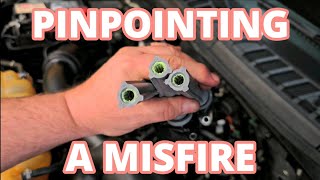
How to confirm: Swap the ignition coil from cylinder 2 with another cylinder (e.g., cylinder 1). Clear the codes and drive the truck. If the code changes to P0301, the coil is faulty. Also inspect the coil boot for white or brown carbon tracks, tears, or moisture.
Typical fix: Replace the faulty ignition coil. It is highly recommended to replace the corresponding spark plug at the same time. Using OEM Motorcraft coils is advised to prevent compatibility issues.
Est. part cost: $30-$75 for a Motorcraft coil - Worn or Fouled Spark Plug 🔴 High Probability EcoBoost engines, in particular, are hard on spark plugs due to turbocharging and direct injection. An incorrect spark plug gap is a very frequent cause of misfires; the gap must be set precisely. A cracked porcelain insulator is another common failure point that will cause a persistent misfire.
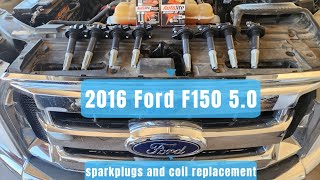
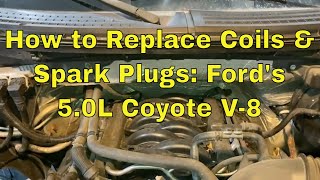
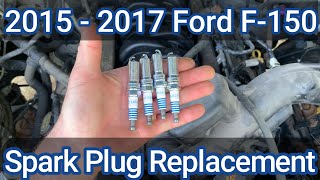
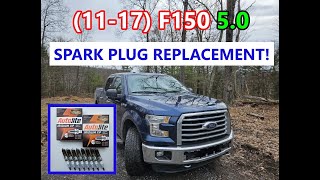
How to confirm: After ruling out the coil, remove the spark plug from cylinder 2. Inspect it for wear (worn electrode), damage (cracked porcelain), oil fouling, or excessive carbon buildup. Check that the gap is to OEM specification using a feeler gauge. 🎬 See this walkthrough for replacing 5.0L V8 coils and plugs.
Typical fix: Replace the spark plug. It is best practice to replace all spark plugs as a set to ensure even performance, especially if they are near the end of their service life.
Est. part cost: $5-$20 per plug - Faulty Fuel Injector 🟡 Medium Probability
How to confirm: If ignition parts are good, the fuel injector is the next likely cause. A mechanic can perform a fuel injector balance test. A stuck-open injector may also be accompanied by a P0087 (Fuel Rail Pressure Too Low) code and a strong fuel smell in the engine oil.
Typical fix: Replace the faulty fuel injector. This is a more involved and expensive job, especially on direct-injection engines where the intake manifold may need to be removed.
Est. part cost: $50-$150 for the part, labor is significantly more - Carbon Buildup on Intake Valves 🟡 Medium Probability This is specific to the direct-injection EcoBoost engines (2.7L, 3.5L). Since fuel is injected directly into the cylinder, it doesn't wash over the intake valves, allowing carbon deposits to form and restrict airflow, which disrupts the air/fuel mixture and causes misfires.
How to confirm: Requires a borescope inspection of the intake ports and valves to visually confirm buildup. A compression test may also show lower-than-normal readings for the affected cylinder.
Typical fix: The intake manifold must be removed and the valves cleaned. The most effective method is walnut shell blasting. This service can cost between $400 and $800 at a repair shop.
Est. part cost: $0 (service cost is labor)
Rare But Worth Checking
- Internal Engine Damage (Valve Guides): Per TSB 19-2384, some 2016-2017 F-150s with the 2.7L EcoBoost engine built between April 1, 2016, and Jan 1, 2017, may experience misfires due to worn cylinder head valve guides, leading to excessive oil consumption (over 1 quart in 3,000 miles). This is a major repair requiring cylinder head replacement.
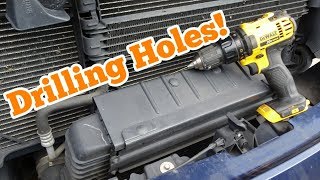
- Intercooler Condensation (EcoBoost only): On 2011-2014 3.5L EcoBoost engines, especially in humid climates, water and oil vapor can condense inside the stock intercooler. During hard acceleration, this liquid can be sucked into the engine, causing a sudden, violent misfire and shudder. Owners have reported drilling a 1/16" weep 🎬 Watch: How drilling an intercooler hole fixes EcoBoost condensation misfires. hole in the intercooler as a DIY fix.
- Vacuum Leak: A leak in a vacuum hose (like a PCV line) or intake manifold gasket near cylinder 2 can lean out the air/fuel mixture and cause a misfire. This would typically be accompanied by other lean codes (like P0171 or P0174) or a high, hunting idle.
- Low Cylinder Compression: Mechanical issues like a worn piston ring, a burned valve, or a leaking head gasket can cause a loss of compression and a persistent misfire that does not resolve with ignition or fuel part swaps. A compression test is needed to diagnose this.
Diagnosis Steps
- Read the DTCs with an OBD-II scanner to confirm P0302 and check for any other codes.
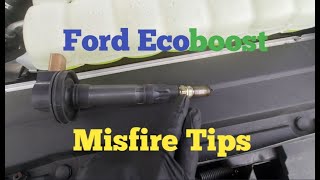
- Locate cylinder 2. On the 5.0L V8, it's the second cylinder from the front on the passenger side. On the 3.5L EcoBoost, it's the front cylinder on the passenger side. 🎬 Watch: Troubleshooting tips for EcoBoost misfire codes P0301-P0306. On the 2.7L EcoBoost, it's the front cylinder on the driver's side.
- Swap the ignition coil from cylinder 2 with an adjacent, easily accessible cylinder (e.g., cylinder 1).
- Clear the codes, start the engine, and let it run or drive it briefly. Re-scan for codes. If the code has moved to P0301, the ignition coil is bad and needs replacement.
- If the code remains P0302, the coil is likely good. Turn off the engine and move the original coil back to cylinder 2. Now, swap the spark plug from cylinder 2 with the one from cylinder 1. Clear codes and re-test. If the code moves to P0301, the spark plug was the issue.
- If the misfire still remains on cylinder 2, carefully inspect the wiring and electrical connector for the ignition coil and fuel injector. Look for brittle plastic, corrosion, or loose pins.
- If wiring is okay, the problem is likely a fuel injector, carbon buildup (EcoBoost), or a mechanical issue. At this point, a fuel injector balance test, a borescope inspection for carbon buildup, or a compression test are the next logical steps.
Parts You'll Likely Need
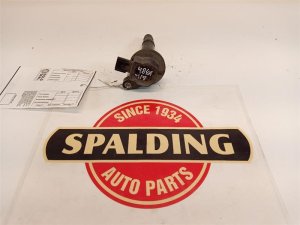
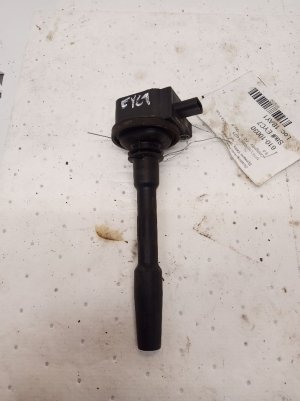
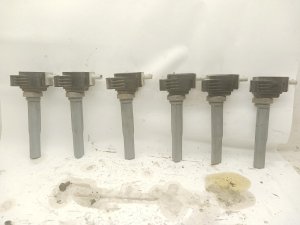
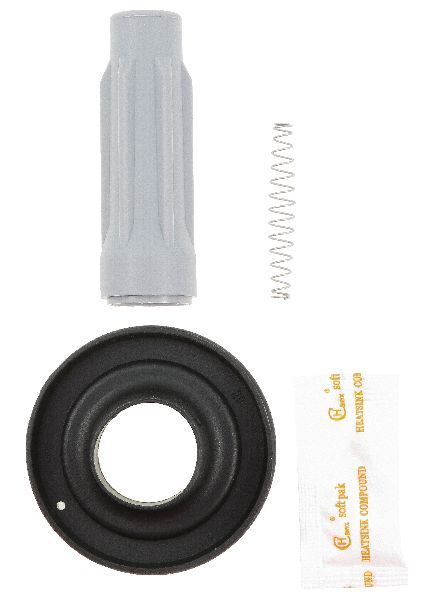
- Ignition Coil
(OEM #Motorcraft DG549 (Gen 2 3.5L EcoBoost), DG561 (2.7L EcoBoost), DG521 (5.0L V8, varies by year))— This is the most common failure part for a single-cylinder misfire.
Related Codes That Often Appear With This One
- P0300 — This is a 'Random Misfire' code. It can appear alongside P0302 if the misfire is intermittent or beginning to affect other cylinders. If multiple cylinder codes are present, the cause is likely global (e.g., fuel pressure, vacuum leak).
- P0316 — This code means 'Misfire Detected on Startup (First 1000 Revolutions)'. It often appears with specific cylinder misfire codes and is mentioned in several TSBs for the F-150, including TSB 18-2058 and TSB 19-2384.
- P0301, P0303, P0304, etc. — If multiple cylinder misfire codes are present, it suggests a problem common to all cylinders, such as low fuel pressure, a major vacuum leak, or contaminated fuel, rather than a single component failure.
- P0087 — Stands for 'Fuel Rail/System Pressure - Too Low'. This can appear with a P0302 if a failing high-pressure fuel pump or a stuck-open injector is causing a drop in fuel pressure, leading to a lean misfire.
Technical Service Bulletins (TSBs) & Recalls

- TSB 19-2384: Excessive oil consumption and misfires on 2016-2017 2.7L EcoBoost engines.
- TSB 18-2237: Superseded by TSB 19-2384, related to oil consumption and misfires.
- TSB 18-2058: Misfire DTCs may be present with no drivability concerns on some 2018 models.
- TSB-14-0160: Misfire codes on GTDI (EcoBoost) engines.
Platform-Specific Known Issues
- TSB 19-2384 (supersedes 18-2237): Some 2016-2017 F-150s with the 2.7L EcoBoost (built 4/1/2016-1/1/2017) may exhibit excessive oil consumption, rough idle, and misfire codes (P0300-P0306). The cause is identified as faulty cylinder head valve guides, and the prescribed fix is to replace both cylinder heads.
- Intercooler Condensation: Primarily on 2011-2014 3.5L EcoBoost models, moisture can collect in the intercooler and be ingested by the engine, causing misfires. Ford issued TSB 13-8-1 for this, but many owners report limited success and opt for drilling a small 'weep hole' in the intercooler.
Mechanic-Grade Diagnostic Values
- Ignition Coil Primary Resistance — expected: 0.3 to 1.0 ohms. Failure: A reading outside this range indicates a faulty coil.
- Ignition Coil Secondary Resistance — expected: 8,000 to 11,500 ohms (8k-11.5k Ω). Failure: A reading significantly higher or lower suggests the coil's secondary winding has failed.
- Low-Pressure Fuel System (at idle) — expected: 40-60 PSI. Failure: Pressure below this range can indicate a weak in-tank fuel pump.
- High-Pressure Fuel System (EcoBoost, at WOT) — expected: 1,500 to 2,175 PSI (150 bar). Failure: If actual pressure lags requested pressure by more than 200 PSI, it can indicate a failing high-pressure fuel pump (HPFP).
- Spark Plug Gap (2015-2017 2.7L EcoBoost) — expected: 0.028 - 0.031 inches. Failure: An incorrect gap, especially on tuned engines, is a primary cause of misfires under load.
- Spark Plug Gap (2015-2017 3.5L EcoBoost) — expected: 0.030 - 0.033 inches. Failure: A gap that has widened due to wear can cause misfires. Tuned trucks often require a smaller gap (e.g., 0.028").
Hidden / Shadow Codes Worth Checking
- Mode 6, Test ID $81, Component ID $02: This is not a DTC, but a specific monitor within the OBD-II system (Mode 6) that tracks the raw misfire count for Cylinder 2. It can show misfires happening before they are frequent enough to trigger a P0302 code. (see via A professional scan tool or an advanced DIY scanner like FORScan that can access Mode 6 data.)
Scan Tool Commands That Help
- Ford IDS (or FORScan): Power Balance Test — This is a key diagnostic step. The test graphically displays the power contribution of each cylinder in real-time, allowing a technician to visually confirm that cylinder 2 is the one dropping out. It's used to verify the misfire location before swapping parts.
- Ford IDS (or FORScan): Cylinder Cutout / Injector Disable — This bidirectional command allows the user to manually disable the fuel injector for a specific cylinder. Disabling cylinder 2 should result in no change to the engine's idle if it's already misfiring. Disabling a good cylinder will cause the engine to run noticeably worse, confirming the other cylinders are firing correctly.
Wiring & Ground Locations
- G101 — Right front of engine compartment.. This is a primary engine ground. A poor connection at G101 can cause erratic behavior in various engine sensors and actuators, including the ignition system, potentially leading to misfires.
- G104 — Engine compartment, front, LH (driver's) side.. Another critical ground point for engine components. On some model years, this ground is essential for the PCM and ignition system components.
- Ignition Coil Connector — On top of the valve cover, plugging into the ignition coil for cylinder 2.. The plastic locking tab on this connector can become brittle and break, leading to a poor connection that can cause an intermittent misfire. The wiring itself can also chafe on the engine cover or nearby brackets.
Real Owner Repair Stories
- F150 Forum user (2020 F-150 2.7L, 112,000 miles) — Shudder/stutter under hard acceleration, eventually leading to a P0302 code.
❌ Tried (didn't work) Replacing only the spark plug on cylinder 2.
✅ What actually fixed it The user found a hairline crack in the new spark plug's porcelain insulator. Replacing the spark plug AND the ignition coil (which had been superseded by a new part number) resolved the issue. The problem later occurred on another cylinder, and replacing all remaining original coils was the final fix. - Reddit user r/f150 (2015 F-150 3.5L EcoBoost, 98,000 miles) — Initially P0302 and P0303. After parts replacement, intermittent misfire under light load and a hard misfire (P0303) under heavy acceleration.
❌ Tried (didn't work) Replaced all spark plugs and all ignition coils.
✅ What actually fixed it The user did not post a final resolution, but another user noted that on EcoBoost engines, detonation/knock can be misinterpreted by the PCM as a misfire, especially with lower octane fuel. The original poster noted that using 93 octane instead of 87 seemed to lessen the issue, lending credibility to this being a knock/detonation issue rather than a pure ignition or fuel part failure. - Mustang6G.com Forum (relevant EcoBoost issue) (Ford EcoBoost engine (Mustang)) — Rough idle and stumbling after a drive, codes P0304 and P0316 (misfire on cylinder 4 and at startup).
❌ Tried (didn't work) Initial diagnosis pointed towards tune or fuel issues.
✅ What actually fixed it The user found a cracked porcelain insulator on the spark plug for the misfiring cylinder. The user noted this is a known issue on F-150s as well, sometimes related to intercooler condensation being ingested by the engine, causing a thermal shock to the plug. Replacing the plug fixed the issue.
OEM Part Supersession History
8L3Z12029A (for 5.0L V8)→DG-521— Part number consolidation and minor design updates for reliability.
Heads up: While physically similar, using coils designed for the 2-valve or 4-valve modular engines of previous generations can cause immediate failure or driveability issues. Always verify the part number for the specific engine and year.Varies by year (e.g., ribbed coil body on some 2.7L)→Newer design with a smooth coil body— Improved design to reduce failures, potentially related to heat management or preventing spark plug insulator cracking.
Heads up: A forum user with a 2020 2.7L noted the dealership provided a new, visually different coil as the superseding part for the original ribbed-body coil.
Model Year Variations Within This Range
- 2017-2018 (and beyond): The 3.5L EcoBoost engine was significantly redesigned for 2017 (Gen 2). It features a new dual-injection system (port and direct), new turbochargers, and a different valvetrain. This makes many parts, including some sensors and potentially fuel system components, incompatible with the 2011-2016 Gen 1 engine.
- 2018 (and beyond): The 2.7L EcoBoost engine was updated for 2018 (Gen 2), adding a port fuel injection system alongside the direct injection. This helps reduce carbon buildup on intake valves, a common cause of misfires on earlier direct-injection-only models. It also received a torque increase.
- 2011-2014: Early 3.5L EcoBoost engines are more prone to the intercooler condensation issue, where water and oil vapor collect and can be ingested by the engine, causing a sudden misfire. Later intercooler designs and software updates helped mitigate this.
Helpful Videos

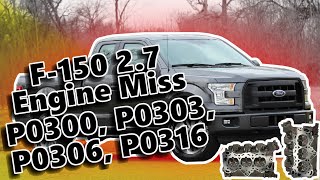
Used OEM Parts in Stock


New Aftermarket Parts Available


The information in this article is provided for general reference and educational purposes only. Vehicle specifications, procedures, and part compatibility can vary by production date, trim level, and region. Always consult your vehicle's factory service manual and verify part numbers before purchasing or performing repairs. Safety-critical components such as airbags, seat belts, and braking systems should be installed by a qualified professional.
- Ford F-150:
- 🎬 Helpful Videos
- 🛍️ Shop This Part
- What's Unique About the 2011-2018 Ford F-150
- Diagnostic Flowchart
- Symptoms You May Notice
- Most Likely Causes
- Rare But Worth Checking
- Diagnosis Steps
- Parts You'll Likely Need
- Related Codes That Often Appear With This One
- Technical Service Bulletins (TSBs) & Recalls
- Platform-Specific Known Issues
- Mechanic-Grade Diagnostic Values
- Hidden / Shadow Codes Worth Checking
- Scan Tool Commands That Help
- Wiring & Ground Locations
- Real Owner Repair Stories
- OEM Part Supersession History
- Model Year Variations Within This Range
- 🎟️ Get 5% Off