

P0302 on 2023-2025 Ford Escape: Cylinder 2 Misfire Causes and Fixes
On a 2023-2025 Ford Escape, code P0302 almost always indicates a failed ignition coil or a worn spark plug in cylinder #2. This is a relatively simple DIY fix, with parts costing between $25 for a single spark plug and $150 for a set of plugs and a new coil. However, be aware of Ford TSBs 24-2384 and SSM 52419, which warn that a damaged spark plug could be a symptom of a more serious internal engine problem requiring a borescope inspection.
- P0302 means your Ford Escape's cylinder #2 is misfiring.
- The most likely cause is a bad ignition coil or a worn-out spark plug.
- A simple DIY diagnostic is to swap the cylinder 2 ignition coil with another cylinder's coil to see if the code follows it.
- Do not ignore this code, especially a flashing check engine light, as it can lead to costly catalytic converter damage.
- While checking for simple ignition faults, also monitor your coolant level, as a P0302 code can be an early symptom of a more serious engine issue noted in some Ford EcoBoost engines.
What's Unique About the 2023-2025 Ford ESCAPE
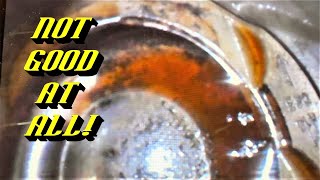
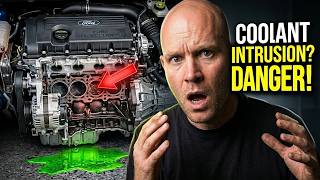
The 2023-2025 Ford Escape falls within the fourth generation, which primarily uses a 1.5L 3-cylinder and a 2.0L 4-cylinder EcoBoost engine. While these engines are sensitive to ignition health, their history is what makes them unique. Earlier versions (pre-2020) were notorious for a coolant intrusion design flaw that caused misfires. While the engine 🎬 Watch: Real-world example of coolant intrusion causing a P0302 misfire. block was redesigned to mitigate this, Ford's own TSBs for the 2023-2025 models (TSB 24-2384, SSM 53971) still instruct technicians to check for cylinder wall damage with a borescope if a misfire is accompanied by a damaged spark plug, acknowledging the potential for serious internal issues remains. Additionally, some startup misfires on this platform have been traced to PCM software glitches requiring a dealer update.
Diagnostic Flowchart
Tap your situation to follow the diagnostic path that matches what you're seeing on this vehicle.
Symptoms You May Notice
- Rough or vibrating idle
- Hesitation or stumbling during acceleration
- Loss of engine power
- Flashing or solid Check Engine Light
- Reduced fuel economy
- Difficulty starting the engine
- Sweet smell from the exhaust (indicates burning coolant)
- White smoke from exhaust, especially on cold start
- Replacing oxygen sensors or the catalytic converter. These parts may fail as a *result* of a persistent misfire, but they are almost never the *cause* of a single-cylinder misfire code like P0302.
Most Likely Causes
- Faulty Ignition Coil 🔴 High Probability Coil-on-plug systems are common failure points due to heat and vibration. Ford's EcoBoost engines, in particular, have a history of ignition coil issues noted in owner forums and TSBs for related engines. TSB 24-2384 and SSM 53971 list ignition system components as a primary area of investigation for this code.
How to confirm: Swap the ignition coil from cylinder 2 with another cylinder (e.g., cylinder 1). Clear the codes and drive the vehicle. If the code changes to P0301, the ignition coil is faulty.
Typical fix: Replace the faulty ignition coil. It is held in by a single 8mm bolt.
Est. part cost: $40-$80 - Worn or Damaged Spark Plug 🔴 High Probability Turbocharged, direct-injection engines like the EcoBoost are harder on spark plugs. Ford TSBs SSM 53971 and 24-2384 specifically call out inspecting for damaged spark plugs on these engines as a primary step for misfire codes. A damaged plug could indicate a deeper engine problem.
How to confirm: After ruling out the coil, remove the spark plug from cylinder 2. Inspect it for wear, carbon fouling, oil, or cracks in the porcelain insulator. A coolant-fouled plug is a major red flag for engine damage.
Typical fix: Replace the spark plug. It's recommended to replace all spark plugs at the same time to ensure consistent performance.
Est. part cost: $15-$30 per plug - Clogged or Faulty Fuel Injector 🟡 Medium Probability Direct injection fuel injectors operate under high pressure and can be susceptible to carbon buildup or failure over time, leading to an improper fuel mixture in the cylinder.
How to confirm: This is more complex. A professional can perform a fuel injector balance test. A DIY method involves swapping the injector with another cylinder, similar to the coil swap, but this is a more involved job requiring fuel system depressurization.
Typical fix: Clean or replace the fuel injector for cylinder 2.
Est. part cost: $70-$150
Rare But Worth Checking
- Internal Engine Damage (Coolant Intrusion): Though more widely known on earlier 1.5L and 2.0L EcoBoost engines (pre-2020), a P0302 code accompanied by unexplained coolant loss could indicate a serious engine block issue. TSBs for the 2023-2025 models (SSM 52630, TSB 24-2384) instruct technicians to use a borescope to check for cylinder wall scoring or damage if a spark plug is found to be damaged, which can be a symptom of this problem. If damage is found, a long block replacement may be necessary.
- Vacuum Leak: A vacuum leak near the intake manifold runner for cylinder 2 could lean out the air/fuel mixture and cause a misfire. This is less common for a single-cylinder misfire code but can happen due to a failed intake gasket.
- Low Cylinder Compression: Mechanical issues like a burnt valve or worn piston rings can cause a loss of compression, leading to a misfire. This would be confirmed with a compression test after ignition and fuel issues are ruled out. TSB 24-2384 recommends a compression and leakage test if no other damage is found.
- PCM Software Calibration Issue: On this specific generation of Escape, other misfire-related codes like P0316 (startup misfire) have been traced to overly sensitive PCM software. Ford has issued TSBs (like 24-2014 and 25-2133) to update the software. While less common for a single cylinder code, it's a known possibility for misfire detection on this platform.
Diagnosis Steps
- Read the code with an OBD-II scanner to confirm P0302 is the primary code.
- Check for any other codes, especially P0300, P0316, or any overheating codes.
- Swap the ignition coil from cylinder 2 with an adjacent cylinder (e.g., cylinder 1).
- Clear the codes and drive the vehicle until the check engine light returns.
- Re-scan the codes. If the code is now P0301, the ignition coil is bad and needs replacement.
- If the code remains P0302, the coil is likely good. Proceed to inspect the spark plug.
- Remove the spark plug from cylinder 2. Check for wear, damage, or fouling (especially for signs of moisture/coolant). Replace the spark plug (it's best practice to replace all of them).
- Per TSB 24-2384, if the spark plug is damaged, a borescope inspection of the cylinder wall for scoring is the next step.
- If the spark plug and coil are good, and there is no cylinder damage, the issue may be with the fuel injector or a mechanical problem.
- Check for any signs of coolant loss in the reservoir, which could point to the more serious engine issue.
- If the problem persists, a professional diagnosis involving a fuel system test and cylinder compression test is recommended.
Parts You'll Likely Need
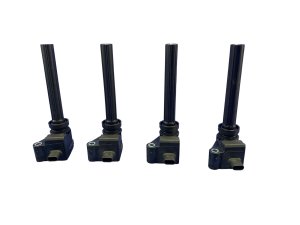
- Ignition Coil
(OEM #HX7Z-12029-A (1.5L), JX6Z-12029-B (2.0L))— This is one of the most common failure points for a single-cylinder misfire on modern engines.
Trusted brands: Motorcraft, NGK, Denso
OEM price range: $45-$90
Aftermarket price range: $35-$70 - Iridium Spark Plug
(OEM #SP-597-X (1.5L), SP-594 (2.0L))— Spark plugs are a regular maintenance item and the second most likely cause of a P0302 code. EcoBoost engines require high-quality iridium plugs.
Trusted brands: Motorcraft, NGK, Bosch
OEM price range: $20-$30
Aftermarket price range: $15-$25
Related Codes That Often Appear With This One
- P0300 — If the misfire is intermittent or affects multiple cylinders, a P0300 (Random Misfire Detected) code may appear alongside P0302.
- P0316 — This code indicates a misfire was detected within the first 1,000 engine revolutions on startup, which often accompanies a specific cylinder misfire code. On this platform, it can sometimes be caused by a software glitch.
- P0217 — This code for 'Engine Overheat Condition' may appear if the misfire is caused by the more serious coolant intrusion issue, which can lead to overheating.
Technical Service Bulletins (TSBs) & Recalls
- TSB 24-2384: Misfire With DTCs P0301, P0302, P0303, And/Or P0304 Stored In The PCM on 2023-2025 Escapes.
- SSM 52630: Misfire With Diagnostic Trouble Code (DTC) P0301, P0302, P0303, And/Or P0304 Stored In The PCM on 2023-2024 Escapes.
- SSM 53971: Notes misfire codes on 1.5L, 2.0L, and 2.3L EcoBoost engines may be due to spark plugs and/or ignition coils.
Platform-Specific Known Issues
- TSB 24-2384: Ford issued this bulletin for 2023-2025 Escapes with 1.5L and 2.0L engines for misfire codes including P0302, directing technicians to inspect spark plugs, battery connections, PCM grounds, and ultimately use a borescope to check for piston and cylinder wall damage if a plug is damaged.
- SSM 52630: This service message also covers 2023-2024 Escapes with 2.3L engines, noting that misfires can be due to damaged spark plugs. It explicitly states that if cylinder walls are found to be scored or damaged, the long block engine assembly should be replaced.
- History of Coolant Intrusion: While the engine block was redesigned after 2019 to address a known coolant intrusion flaw, the diagnostic procedures in the latest TSBs show that internal engine damage resulting from misfires remains a concern for Ford engineers.
- Manufacturing Debris (1.5L Engine): Other TSBs for this engine (SSM 52219) have noted issues with machining chips from manufacturing causing coolant blockages and overheating, which can be related to engine misfires and damage.
Mechanic-Grade Diagnostic Values
- Ignition Coil Primary Resistance — expected: 0.4 to 2.0 ohms. Failure: A reading outside this range suggests a faulty primary winding.
- Ignition Coil Secondary Resistance — expected: 6,000 to 10,000 ohms. Failure: A reading outside this range, or an open circuit (OL), indicates a faulty secondary winding.
- Mode $06 Misfire Count (per cylinder) — expected: A low number, ideally 0.. Failure: A consistently high or incrementing number for a specific cylinder (e.g., TID $A2, CID $02 for Cylinder 2) points to that cylinder as the source of a misfire, even without a P030x code. A Type B misfire may log a code if the count exceeds 12 misfires per 1000 revolutions.
Hidden / Shadow Codes Worth Checking
- Mode $06, Test ID $A2-$AD: This is not a DTC, but a diagnostic monitor that tracks the raw misfire count for each cylinder over the last 10 driving cycles. For an 8-cylinder, Test ID $A2 corresponds to cylinder 1, $A3 to cylinder 2, and so on. This data can reveal a cylinder that is misfiring intermittently before the count is high enough to trigger a P0302 code. (see via Requires an advanced scan tool (like Ford IDS or FORScan) or an OBD-II reader that can display Mode $06 test results.)
Scan Tool Commands That Help
- Ford IDS (or advanced aftermarket scanner like Snap-on): Power Balance Test / Cylinder Contribution Test — This is a primary diagnostic function for a P0302. The tool disables one cylinder at a time and displays the RPM drop for each. The cylinder with the smallest RPM drop is the one that is misfiring, as it was contributing the least power. This confirms the misfire is currently happening on cylinder 2.
- Ford IDS (or advanced aftermarket scanner): Misfire Monitor Neutral Profile Correction — This relearn procedure must be performed after any significant engine repairs, such as replacing a crank sensor, internal engine work, or replacing the PCM. The PCM learns the natural variations in the crankshaft's rotation to accurately detect misfires. Failure to perform this can lead to false misfire codes.
Real Owner Repair Stories
- Reddit user on r/fordescape (2018 Ford Escape 1.5L, 97k miles) — Check engine light came on three weeks after purchase.
❌ Tried (didn't work) The user did not report trying any fixes before diagnosis.
✅ What actually fixed it The P0302 code was diagnosed as a symptom of the known coolant intrusion defect. The entire engine needed to be replaced, which was covered under warranty. This highlights that on EcoBoost engines, P0302 can be an early indicator of catastrophic engine failure. - YouTube video by 'Ford Tech Makuloco' (implied) (2019 Ford Escape 1.5L EcoBoost, 16k miles) — Check engine light on, low coolant in reservoir, P0302 and P0316 codes present.
❌ Tried (didn't work) The video focuses on direct diagnosis, not failed attempts.
✅ What actually fixed it A pressure test of the cooling system and a borescope inspection confirmed coolant was pooling inside cylinder 2. The root cause was the known engine block design flaw (a slot between cylinders). The required fix was a new engine short block with the updated design.
OEM Part Supersession History
JX6Z-12029-A→JX6Z-12029-B— Standard part revision by the manufacturer.
Heads up: The new part number (JX6Z-12029-B, also known as DG-576) is the correct replacement for the 2.0L EcoBoost engine in this vehicle range.
Model Year Variations Within This Range
- 2023 vs 2024-2025: For 2024, Ford discontinued the 'Base' trim level for consumers, making the 'Active' trim the new entry point. There were no significant changes to the powertrain options (1.5L, 2.0L, and hybrid variants) or overall appearance between the 2023 and 2024 model years.
Helpful Videos
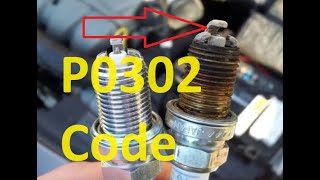

We Have This Part in Stock

The information in this article is provided for general reference and educational purposes only. Vehicle specifications, procedures, and part compatibility can vary by production date, trim level, and region. Always consult your vehicle's factory service manual and verify part numbers before purchasing or performing repairs. Safety-critical components such as airbags, seat belts, and braking systems should be installed by a qualified professional.
- Ford ESCAPE:
- 🎬 Helpful Videos
- 🛍️ Shop This Part
- What's Unique About the 2023-2025 Ford ESCAPE
- Diagnostic Flowchart
- Symptoms You May Notice
- Most Likely Causes
- Rare But Worth Checking
- Diagnosis Steps
- Parts You'll Likely Need
- Related Codes That Often Appear With This One
- Technical Service Bulletins (TSBs) & Recalls
- Platform-Specific Known Issues
- Mechanic-Grade Diagnostic Values
- Hidden / Shadow Codes Worth Checking
- Scan Tool Commands That Help
- Real Owner Repair Stories
- OEM Part Supersession History
- Model Year Variations Within This Range
- 🎟️ Get 5% Off