

P0302 on 2011-2015 Dodge Journey: Cylinder 2 Misfire Causes and Fixes
P0302 indicates a misfire in cylinder 2. While common causes like a bad spark plug or ignition coil are possible, 2011-2013 Journeys with the 3.6L V6 are known for a serious left cylinder head defect that causes this code, often with P0304 and P0306. This issue was covered by a 10-year/150,000-mile extended warranty (X56). For the 2.4L engine, a faulty crankshaft position sensor or its circuit is a known issue, often accompanied by code P0335.
- P0302 is a cylinder 2 misfire, but on a 2011-2015 Dodge Journey, the cause is often vehicle-specific.
- For 2011-2013 3.6L V6 models, immediately investigate the possibility of the known left cylinder head defect, which may be covered by an extended warranty.
- For 2.4L models, consider the crankshaft position sensor as a potential cause if simple tune-up parts don't solve the problem.
- A simple swap of ignition coils and spark plugs is a good first diagnostic step for any engine.
- Do not ignore a flashing check engine light, as this indicates a severe misfire that can quickly damage the catalytic converter.
What's Unique About the 2011-2015 Dodge JOURNEY

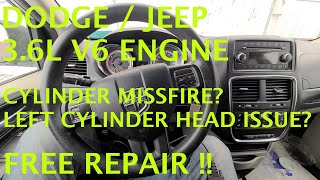
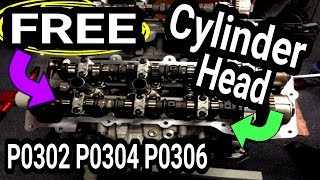
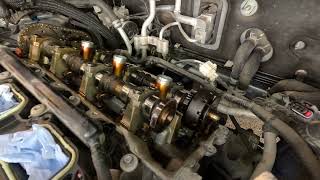
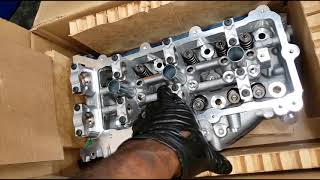
For the Dodge Journey, P0302 is more than just a simple tune-up code. On 3.6L V6 models from 2011-2013, this code is frequently linked to a known manufacturing defect with the left cylinder head, which led to a 10-year/150,000-mile warranty extension (X56). 🎬 Watch: How to get a free cylinder head warranty replacement. The failure is due to excessive wear on valve guides and seats, specifically affecting the left head which houses cylinders 2, 4, and 6. On the 2.4L 4-cylinder engine, manufacturer bulletins also connect P0302 to problems with the crankshaft position sensor circuit, which can cause misfires across multiple cylinders and may require a PCM software update as part of the fix. Later model year 3.6L engines (2014+) are less prone to the head issue but can suffer from failed rocker arms, which also cause misfires and a distinct ticking noise.
Diagnostic Flowchart

Tap your situation to follow the diagnostic path that matches what you're seeing on this vehicle.
Symptoms You May Notice

- Check Engine Light is on or flashing
- Rough or vibrating idle
- Reduced engine power and acceleration
- Engine hesitation or stumbling
- Poor fuel economy
- Engine stalling
- Noticeable ticking or tapping sound from the engine, especially on 3.6L models with rocker arm failure.
- Replacing only spark plugs and ignition coils without further diagnosis. As noted in an owner complaint, this may not solve the issue if the underlying cause is a faulty cylinder head or sensor. [OWNER COMPLAINT] NHTSA ODI #11445950 (2015, ENGINE, filed 2022-01-03)
- On 3.6L V6 models, attributing the P0302 code to a simple tune-up part when it is a symptom of the more serious cylinder head or rocker arm failure.
Most Likely Causes


- Failed Left Cylinder Head (3.6L V6 Only, primarily 2011-2013) 🔴 High Probability Early 3.6L Pentastar V6 engines had a known manufacturing defect with valve guides and seats in the left cylinder head (which includes cylinder 2), causing poor sealing, loss of compression, and misfires. This prompted Chrysler to issue warranty extension X56 (10 years/150,000 miles).
How to confirm: A cylinder leak-down test is the definitive diagnostic step. TSB #09-002-14 REV. B specifies that leakage of 25% or more in cylinders 2, 4, or 6 confirms the failure. The presence of codes P0304 and P0306 alongside P0302 is a very strong indicator.
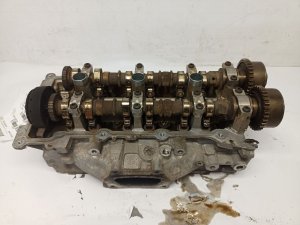
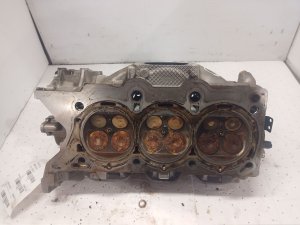
Typical fix: Replacement of the left cylinder head assembly. This was covered under extended warranty X56 for affected 2011-2013 models. The redesigned head is part number RL141353AC or a later revision.
Est. part cost: $800-$1500 - Worn Spark Plug 🟡 Medium Probability
How to confirm: Remove the spark plug from cylinder 2 and inspect it for wear, fouling, or damage. Compare it to a new plug. A common diagnostic step is to swap the plug with another cylinder (e.g., cylinder 4) and see if the misfire code follows (e.g., becomes P0304). 🎬 Watch: How to diagnose and fix multiple misfire codes at once.
Typical fix: Replace the spark plug. It is recommended to replace all spark plugs at the same time as a set.
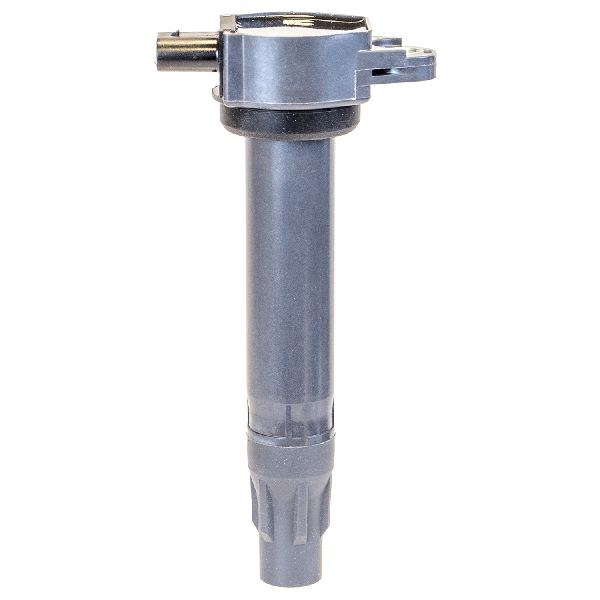
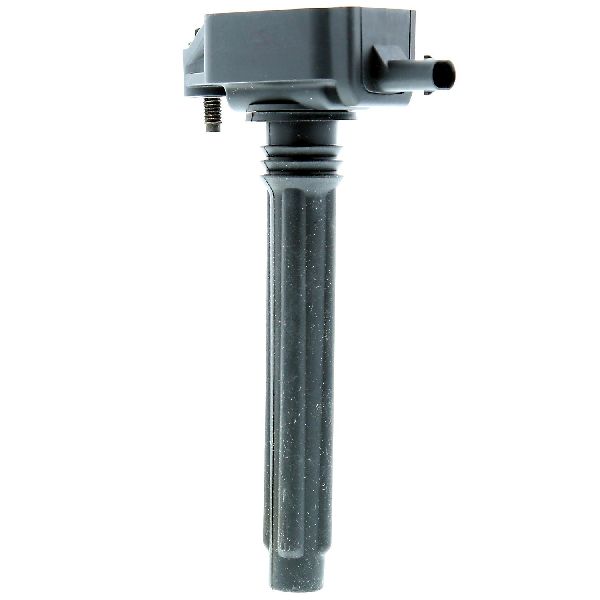
Est. part cost: $5-$20 per plug - Faulty Ignition Coil 🟡 Medium Probability
How to confirm: Swap the ignition coil from cylinder 2 with another cylinder (e.g., cylinder 4). Clear the codes and drive the vehicle. If the trouble code changes to P0304, the coil is faulty.
Typical fix: Replace the failed ignition coil.
Est. part cost: $40-$90 - Faulty Crankshaft Position Sensor (2.4L Engine) ⚪ Low Probability Dodge issued TSBs #18-081-17 and #18-033-16 indicating that a faulty crankshaft position sensor or its circuit can trigger P0302 along with other misfire codes on the 2.4L engine. The TSB may also involve a PCM software update.
How to confirm: This is often diagnosed when accompanied by code P0335. A mechanic can test the sensor's signal with an oscilloscope or follow the diagnostic procedure outlined in the TSB.
Typical fix: Replace the crankshaft position sensor and potentially reprogram the PCM per the TSB.
Est. part cost: $30-$70 - Clogged or Faulty Fuel Injector ⚪ Low Probability
How to confirm: Listen for a consistent clicking sound from the injector with a mechanic's stethoscope to confirm it's activating. An injector can also be swapped with another cylinder to see if the misfire follows. A professional can perform a fuel injector balance test to measure flow rate.
Typical fix: Clean or replace the fuel injector for cylinder 2.
Est. part cost: $50-$120
Rare But Worth Checking
- Failed Rocker Arm / Lifter (3.6L V6): A more common issue on later Pentastar engines but can occur on all years. A collapsed lifter or failed rocker arm bearing can cause a misfire and a distinct ticking or tapping noise. One owner on a forum described tackling this job themselves at 185,000 miles after experiencing power loss.
- Powertrain Control Module (PCM) Failure: Though rare, internal PCM faults can incorrectly trigger misfire codes. TSB #18-069-16 notes PCM replacement for misfire codes on some 2015-2016 3.6L vehicles, though the Journey is not explicitly listed, it points to a known issue in the family. TSB #18-081-17 for the 2.4L also includes PCM software updates to correct false misfire detection.
- Low Compression (not related to head): Issues like worn piston rings or other internal engine damage can cause a loss of compression and lead to a misfire. A compression test can diagnose this.
Diagnosis Steps
- Read the code with an OBD-II scanner and check for any other accompanying codes, such as P0300, P0304, P0306, or P0335.
- On a 3.6L V6, identify the cylinder location. Cylinder 2 is the front-most cylinder on the bank closer to the radiator.
- If on a 2011-2013 3.6L V6, check the vehicle's VIN for eligibility for the X56 warranty extension on the left cylinder head.
- Perform a basic ignition system check. Swap the ignition coil from cylinder 2 with another cylinder (e.g., cylinder 4). Clear the codes and see if the misfire moves to P0304. If it does, the coil is bad.
- If the misfire does not move, swap the spark plug from cylinder 2 with another cylinder. If the misfire moves, the spark plug is bad.
- Inspect the fuel injector for cylinder 2. Listen for a steady clicking sound. Check the wiring harness for damage.
- If the above steps do not identify the issue, especially on a 3.6L V6 with codes P0302/P0304/P0306, perform a cylinder leak-down test. Leakage over 25% points to the cylinder head issue as per TSB 09-002-14 REV. B.
- On a 2.4L engine, if code P0335 is also present, test the crankshaft position sensor and its circuit, and check if TSB #18-081-17 applies.
- On a 3.6L, listen carefully for a ticking noise that could indicate a failed rocker arm or lifter, which would require removing the valve cover for inspection. 🎬 See this walkthrough on replacing failed rocker arms and lifters.
Parts You'll Likely Need
- Left Cylinder Head Assembly (3.6L V6)
(OEM #RL141353AC)— This is the definitive fix for the known valve seat/guide issue on 2011-2013 3.6L Pentastar engines that causes P0302, P0304, and P0306. This is a remanufactured part number that supersedes previous versions.
Trusted brands: Mopar
OEM price range: $1000-$1500
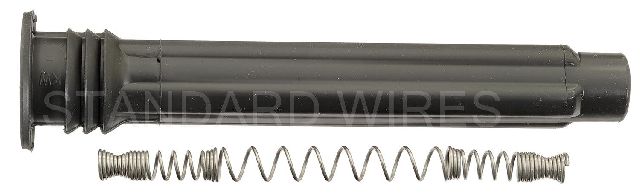
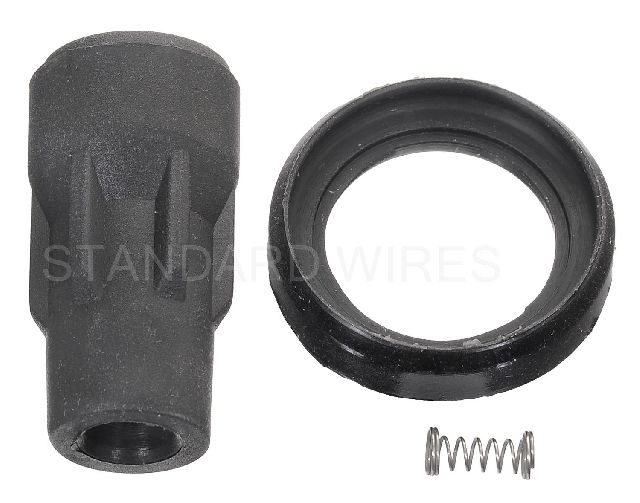
Aftermarket price range: $800-$1200 - Ignition Coil
(OEM #05149168AI)— A failed ignition coil is a common cause for an isolated cylinder misfire.
Trusted brands: Mopar, NGK, Delphi, Bosch
OEM price range: $60-$90
Aftermarket price range: $40-$70 - Spark Plug
(OEM #SP149125AE (NGK Iridium))— A worn or fouled spark plug cannot create a strong enough spark, leading to a misfire. It's a common maintenance item and a frequent cause of an isolated misfire.
Trusted brands: Mopar, NGK, Champion
OEM price range: $15-$25
Aftermarket price range: $5-$20
Related Codes That Often Appear With This One
- P0300 — This code for 'Random/Multiple Cylinder Misfire' often appears with P0302, especially if the cause (like the cylinder head or crank sensor) is affecting more than one cylinder.
- P0304 / P0306 — These codes indicate misfires in cylinders 4 and 6. Seeing them with P0302 on a 3.6L V6 is a strong indicator of the known left cylinder head issue, as all three cylinders (2, 4, 6) are on the left bank (radiator side).
- P0335 — This code for 'Crankshaft Position Sensor Circuit' is specifically linked to P0302 on the 2.4L engine in TSB #18-081-17, indicating the sensor may be the root cause.
Technical Service Bulletins (TSBs) & Recalls
- 09-002-14 REV. B: The primary TSB for the 3.6L V6 left cylinder head issue. It outlines the diagnostic criteria (leak-down test >25%) and the repair procedure (replace left cylinder head) for P0300, P0302, P0304, and P0306 codes.
- D-14-12 (X56 Warranty Extension): This is the warranty bulletin that officially extended the coverage for the left cylinder head on affected 2011-2013 vehicles to 10 years or 150,000 miles.
- 18-081-17: This TSB addresses multiple DTCs on the 2015 Journey with the 2.4L engine, including P0302 and P0335 (Crankshaft Position Sensor Circuit). The fix involves a PCM software update to prevent false codes and improve diagnostics.
Platform-Specific Known Issues
- 3.6L V6 Left Cylinder Head Defect (2011-2013): A significant number of early 3.6L Pentastar engines suffered from premature wear on the valve guides and seats of the left cylinder head. This causes a loss of compression and misfires, most commonly triggering codes P0302, P0304, and P0306. Chrysler acknowledged this with TSB 09-002-14 REV. B and extended warranty X56, covering the repair for 10 years or 150,000 miles. The fix is a complete replacement of the left cylinder head with an updated part (RL141353AC).
- 3.6L V6 Rocker Arm Failure (All Years): The Pentastar V6 is also known for rocker arm bearing failures, which create a distinct ticking sound and can eventually lead to a misfire code like P0302 if the arm fails on a cylinder #2 valve. This is a separate issue from the cylinder head defect and is more common on higher mileage vehicles. Forum users report replacing all 24 rocker arms and lifters as a preventative measure during a tune-up.
- 2.4L I4 Crankshaft Position Sensor Circuit Fault (2015+): TSB #18-081-17 was released for 2015 Journeys with the 2.4L engine to address an issue where a fault in the crankshaft position sensor circuit would cause multiple misfire codes (including P0302) and potentially cause the engine to stall. The fix involves a PCM software update and, if necessary, sensor replacement.
Mechanic-Grade Diagnostic Values
- Ignition Coil Secondary Resistance — expected: 6,000 to 10,000 ohms (6-10 kΩ). Failure: A reading outside of this range indicates a faulty coil winding.
- Ignition Coil Primary Resistance — expected: 0.4 to 2.0 ohms. Failure: A reading outside of this range suggests a problem with the primary coil winding.
- Fuel Pressure (3.6L V6) — expected: 55-65 psi. Failure: Pressure below this range can indicate a weak fuel pump, leading to a lean condition and misfires.
- Engine Oil Pressure (3.6L V6, warm engine) — expected: ~30 psi at idle, 60-70 psi under load. Failure: Significantly lower pressure can indicate oiling problems which may lead to valvetrain issues (like rocker arm failure) and misfires.
Hidden / Shadow Codes Worth Checking
- Live Misfire Counters: Instead of a formal sub-code, Chrysler/Dodge vehicles provide live data PIDs showing the number of misfire events per cylinder. This allows a technician to see which cylinder is actively misfiring in real-time, even before a P030x code is formally set. (see via Dealer-level scan tools like wiTECH or high-end aftermarket scanners with Chrysler-specific software can display this data under engine live data or OBD-II monitors.)
Scan Tool Commands That Help
- wiTECH: Actuator Tests (Bidirectional Controls) — Allows a technician to command individual ignition coils to fire and fuel injectors to pulse. This is used to confirm if the component is capable of functioning when commanded directly by the scan tool, helping to isolate a bad part from a wiring or PCM driver issue.
- wiTECH / Snap-on / Autel: Misfire Data / Which Cylinder is Misfiring — This is a live data screen used to confirm which cylinder(s) are misfiring and under what conditions (idle, load, etc.). It is the primary diagnostic data point for confirming the location and frequency of a misfire.
Wiring & Ground Locations
- Engine Ground Stud (Driver Side) — Located on the driver's side strut tower in the engine bay. The main battery negative cable connects here, along with a 4-gauge cable that runs to the engine block.. A poor connection at this primary ground point can cause a host of electrical issues, including weak spark or erratic sensor readings that can lead to misfire codes. Forum members have noted this as a weak point in the Journey's electrical system.
- Engine Ground (Passenger Side) — A ground wire runs from the passenger side engine mount to a ground stud on the passenger strut tower.. This is another critical engine-to-chassis ground. Corrosion or a loose connection here can contribute to electrical noise and intermittent faults. Some owners add a supplemental ground cable here for improved reliability.
- G105 — A ground point located near the ABS pump in front of the driver's side strut tower.. While primarily for the ABS module, all grounds are interconnected. A fault at this location was reported by an owner to cause a crank/no-start condition, demonstrating the sensitivity of the vehicle's electronics to ground integrity.
Real Owner Repair Stories
- Dodge Journey Forum user (2015 Dodge Journey 3.6L with 78,000 miles) — P0302 code only. Rough idle at stop or very low speeds. Code would clear but return after a few miles of slow driving.
❌ Tried (didn't work) Replaced all spark plugs, Replaced ignition coil on cylinder #2
✅ What actually fixed it The owner took it to a Chrysler dealership where the mechanical foreman's 'immediate reaction' was that the rocker arms needed to be replaced due to likely failure of the needle bearings, a known issue on the 3.6L Pentastar. The estimated repair was $1200-$1500. - Dodge Journey Forum user 'Parz1val' (2017 Dodge Journey V6 AWD) — P0302 Misfire on Cylinder 2.
❌ Tried (didn't work) Replaced spark plugs (code returned after ~50 miles), Replaced ignition coil pack (code returned after ~50 miles)
✅ What actually fixed it The user was still diagnosing but the failure of common tune-up parts to provide a lasting fix pointed towards a more significant mechanical issue, with the user suspecting a valve/head problem and preparing to do a more in-depth repair. This highlights the pattern of simple fixes not resolving the code. - Dodge Journey Forum user (2016 Dodge Journey RT AWD with 185,000 miles) — Infamous rocker arm tapping noise for a long time, eventually leading to low-end power loss.
✅ What actually fixed it The owner performed a '185,000 mile tuneup' which involved replacing all 24 rocker arms and all 24 lifters, which resolved the power loss and tapping noise. This was not for a specific P0302 code but addresses the root cause of many 3.6L misfires.
When the Usual Fixes Don't Work
- While the severe left cylinder head defect is most strongly associated with 2011-2013 3.6L engines, valvetrain problems remain a primary cause of P0302 on later models within this range. A documented case of a 2015 Journey with only 78,000 miles presented with an isolated P0302 code. After replacing the plug and coil failed to fix the issue, a dealership foreman immediately identified failed rocker arms as the most likely cause. This shows that for 2014-2015 models, while the cylinder head itself is more robust, the rocker arms are a significant failure point that produces the same misfire code and can be misdiagnosed as a simple tune-up issue.
OEM Part Supersession History
68141353AA, 68141353AB, 68196637AA→RL141353AC (Remanufactured), 68141353AC (New)— This is the left cylinder head for the 3.6L V6. The original parts were prone to valve guide and seat failure. The superseding parts are the revised design to fix the issue.
Heads up: CRITICAL: When replacing the cylinder head, Mopar specifies that Bolt/Plug Kit #68154699AA MUST be used. Failure to install these new oil gallery bolts/plugs will result in trouble codes being set.05149168AI→5149168AJ— Standard revision update for the ignition coil used on the 3.6L and 2.4L engines.
Model Year Variations Within This Range
- 2011-2013: These years of the 3.6L Pentastar V6 are most susceptible to the left cylinder head failure due to valve guide/seat issues.
- 2014-2015: For the 2014 model year, the 3.6L Pentastar engine received a redesigned oil filter and oil cooler assembly, which is a common leak point on earlier models. While less prone to the widespread cylinder head defect, these later models are more commonly diagnosed with rocker arm failure as the cause for ticking noises and misfires.
- 2016+: Post-2015, the 3.6L engine received a major update (Pentastar Upgrade or PUG) with redesigned heads, two-stage variable valve lift (VVL), new injectors, and new coils. This is outside the scope of the 2011-2015 vehicle range but is important context for part compatibility.
Helpful Videos
Used OEM Parts in Stock


New Aftermarket Parts Available

The information in this article is provided for general reference and educational purposes only. Vehicle specifications, procedures, and part compatibility can vary by production date, trim level, and region. Always consult your vehicle's factory service manual and verify part numbers before purchasing or performing repairs. Safety-critical components such as airbags, seat belts, and braking systems should be installed by a qualified professional.
- Dodge JOURNEY:
- 🎬 Helpful Videos
- 🛍️ Shop This Part
- What's Unique About the 2011-2015 Dodge JOURNEY
- Diagnostic Flowchart
- Symptoms You May Notice
- Most Likely Causes
- Rare But Worth Checking
- Diagnosis Steps
- Parts You'll Likely Need
- Related Codes That Often Appear With This One
- Technical Service Bulletins (TSBs) & Recalls
- Platform-Specific Known Issues
- Mechanic-Grade Diagnostic Values
- Hidden / Shadow Codes Worth Checking
- Scan Tool Commands That Help
- Wiring & Ground Locations
- Real Owner Repair Stories
- When the Usual Fixes Don't Work
- OEM Part Supersession History
- Model Year Variations Within This Range
- 🎟️ Get 5% Off