

P0302 on 2011-2018 Dodge Durango: Cylinder 2 Misfire Causes and Fixes
P0302 indicates a misfire on cylinder 2. For most 2011-2018 Durangos, this is commonly caused by a bad ignition coil or spark plug. However, for 2011-2013 models with the 3.6L V6 (built on or before July 25, 2012), this code is a strong indicator of a more serious cylinder head failure, an issue covered by a 10-year/150,000-mile warranty extension (X56).
- For a P0302 code, always start with the simplest fixes: check the ignition coil and spark plug for cylinder 2.
- The 'swap test' is the easiest and cheapest way to confirm a bad ignition coil.
- If you own a 2011-2013 Durango with the 3.6L V6, be aware that P0302 is a primary symptom of a known cylinder head defect that may require major engine work.
- A flashing Check Engine Light indicates a severe misfire that can cause expensive catalytic converter damage. Do not continue to drive if the light is flashing.
- Cylinder 2 is located on the driver's side of the engine, closest to the front bumper.
What's Unique About the 2011-2018 Dodge DURANGO

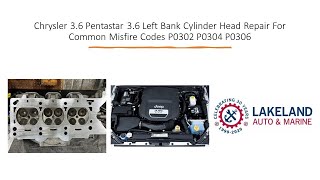
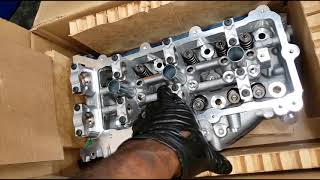
For the 2011-2018 Dodge Durango, particularly models from 2011-2013 equipped with the 3.6L Pentastar V6, a P0302 code is uniquely concerning. These early Pentastar engines, specifically those built on or before July 25, 2012, were known to have a manufacturing defect in the left-side cylinder head, which houses cylinder 2. This defect caused excessive wear on the valve guides and seats, leading to a loss of compression and misfires. The issue was so prevalent that Chrysler issued Technical Service Bulletin (TSB) #09-002-14 REV. B and a warranty extension (X56) for 10 years or 150,000 miles to address it, often requiring a full cylinder head replacement. 🎬 Watch: A detailed walkthrough of the left bank cylinder head repair. Therefore, while a P0302 could be a simple ignition problem, it must be investigated with the high probability of this serious mechanical fault in mind for affected model years.
Diagnostic Flowchart

Tap your situation to follow the diagnostic path that matches what you're seeing on this vehicle.
Symptoms You May Notice

- Rough or shaking idle
- Hesitation or stumbling during acceleration
- Noticeable loss of engine power
- Check Engine Light (CEL) is on and steady, or flashing
- Reduced fuel economy
- Engine stalling
- Audible ticking noise from the top of the engine
- Replacing only the spark plugs when the ignition coil is the actual cause.
- Replacing ignition and fuel parts on a 2011-2013 3.6L V6 without first considering the high probability of the cylinder head defect, leading to wasted time and money.
- Confusing the infamous 'Pentastar Tick' from rocker arms/lifters with the valvetrain noise caused by the cylinder head defect, which are two distinct issues.
Most Likely Causes

- Faulty Ignition Coil 🔴 High Probability Coil-on-plug systems are a common failure point on many modern engines as they age. They are exposed to significant heat and vibration.
How to confirm: Swap the ignition coil from cylinder 2 with another cylinder (e.g., cylinder 4). Clear the codes and drive. If the code changes to P0304, the coil is faulty. Cylinder 2 is the front-most cylinder on the driver's side.
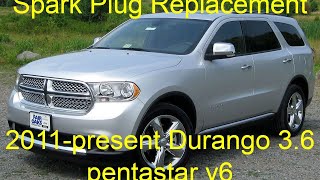
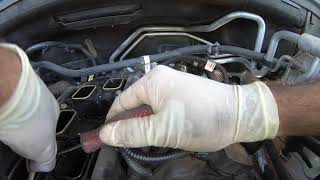
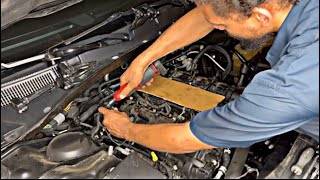
Typical fix: Replace the faulty ignition coil. 🎬 See how to replace the coils and plugs on your V6.
Est. part cost: $30-$75 - Worn or Fouled Spark Plug 🔴 High Probability Spark plugs are a regular maintenance item. The 5.7L Hemi uses 16 spark plugs (two per cylinder) which increases the chance of a failure. The 3.6L V6 has had TSBs for spark plug issues.
How to confirm: After ruling out the coil, inspect the spark plug from cylinder 2. Look for wear, carbon buildup, or damage. You can also swap the plug with another cylinder to see if the misfire follows.
Typical fix: Replace the spark plug(s). It is recommended to replace all plugs on the affected bank or all plugs at once for even performance.
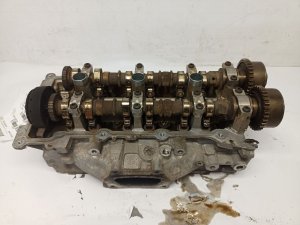
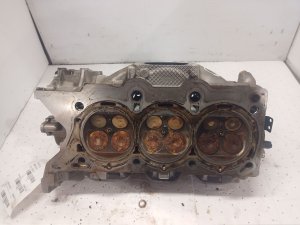
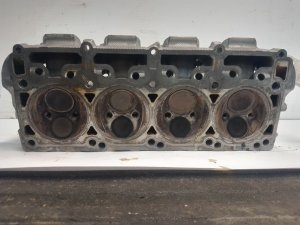
Est. part cost: $5-$20 per plug - Failed Left Cylinder Head (3.6L V6 Only, 2011-2013) 🔴 High Probability A known manufacturing defect affects the left cylinder head on 3.6L engines built on or before July 25, 2012, causing excessive valve guide wear and loss of compression. This specifically triggers misfires on the left bank cylinders: 2, 4, and/or 6.
How to confirm: If ignition and fuel system checks do not resolve the issue, a cylinder leak-down test is the definitive diagnostic step. A leakage of 25% or more confirms the internal engine problem as described in TSB #09-002-14 REV. B.
Typical fix: Replace the left cylinder head assembly with the updated part. This was covered under an extended warranty (X56) for 10 years/150,000 miles for affected vehicles.
Est. part cost: $800-$1500 for the head assembly - Faulty Fuel Injector ⚪ Low Probability
How to confirm: Listen to the injector with a mechanic's stethoscope for a consistent clicking sound. You can also test resistance with a multimeter or swap the injector with another cylinder to see if the misfire code moves (this is more labor-intensive as it requires removing the intake manifold on the 3.6L).
Typical fix: Replace the faulty fuel injector.
Est. part cost: $50-$120 - Failed Rocker Arms / Lifters ⚪ Low Probability The 3.6L Pentastar and 5.7L Hemi can both suffer from valvetrain issues, including failed lifters and rocker arms with worn bearings, which can lead to a misfire. This is often accompanied by a distinct ticking noise.
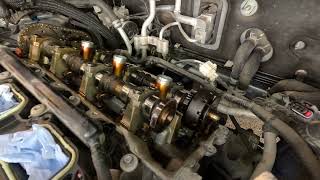
How to confirm: Requires removing the valve cover to visually inspect the valvetrain for worn or broken components, particularly the camshaft lobes and rocker arm rollers.
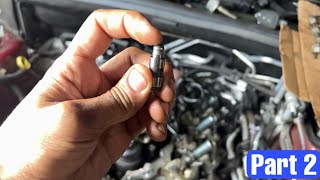
Typical fix: Replace the failed rocker arms and/or lifters. 🎬 Watch: Step-by-step guide to replacing Pentastar lifters and rockers. It is often recommended to replace all on the affected bank.
Est. part cost: $100-$400 for parts
Rare But Worth Checking
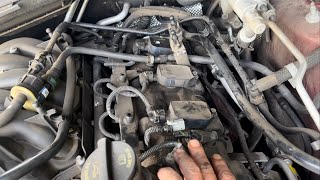
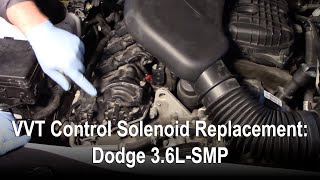
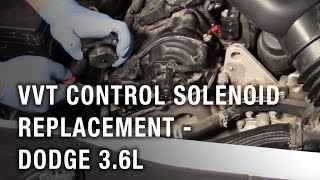
- Failed VVT Solenoid: A faulty Variable Valve Timing (VVT) solenoid for the front of the driver's side bank can cause an intermittent misfire on cylinder 2. A user on DodgeForum.com with a 2017 Durango GT successfully diagnosed a P0302 by swapping the front VVT solenoids between the driver and passenger side banks, causing the misfire to move to cylinder 1 (P0301). Replacing the bad solenoid fixed the issue.
- Failed VVL Solenoid (3.6L Pentastar Upgrade): On later model 3.6L engines with Variable Valve Lift (VVL), a stuck VVL solenoid can cause a misfire. This is often accompanied by code P105D (Intake Valve Stuck in High Lift Position). A Jeep Grand Cherokee owner with P0302 and P105D fixed the issue by cleaning and eventually replacing the VVL solenoid for cylinder 2 (Part #5047897AC).
- Intake Manifold Gasket Leak: A vacuum leak specifically at the cylinder 2 intake runner can lean out the mixture enough to cause a misfire. This is less common than other causes but possible, especially after recent service that required removing the intake manifold.
Diagnosis Steps
- Read the code with an OBD-II scanner and note any other codes present, especially P0300, P0304, P0306, or P0202.
- Identify Cylinder 2: On both the 3.6L V6 and 5.7L V8, cylinder 2 is the front-most cylinder on the driver's side of the engine.
- Perform the 'Swap Test' for the Ignition Coil: Swap the ignition coil from cylinder 2 with the coil from cylinder 4 (the middle cylinder on the driver's side). Clear the codes and drive. If the code returns as P0304, the ignition coil is bad and needs replacement.
- Inspect and Swap the Spark Plug: If the misfire remains on cylinder 2, remove the spark plug. Inspect it for wear, damage, or fouling. If it looks suspect, replace it. You can also swap it with another cylinder's plug to confirm.
- Check the Fuel Injector: Listen for a steady clicking from the injector. If accessible, check its wiring connector for damage. On the 3.6L, this requires removing the upper intake manifold. A more advanced test is to swap injectors between cylinders.
- For 2011-2013 3.6L V6 Only: If the above steps do not resolve the issue, the next step is to investigate the known cylinder head defect. A professional should perform a cylinder leak-down test on cylinders 2, 4, and 6. A result showing 25% or more leakage confirms the need for cylinder head replacement as per TSB #09-002-14 REV. B. Check vehicle eligibility for the X56 warranty extension (10yr/150k miles).
- For all other engines/years: If ignition and fuel seem okay, perform a compression test on cylinder 2 to check for mechanical issues like bad rings, valves, or a failed head gasket.
- Inspect Valvetrain: If a persistent ticking noise is present, remove the valve cover to inspect camshaft lobes, rocker arms, and lifters for wear or damage, which can also cause a P0302 misfire.
Parts You'll Likely Need
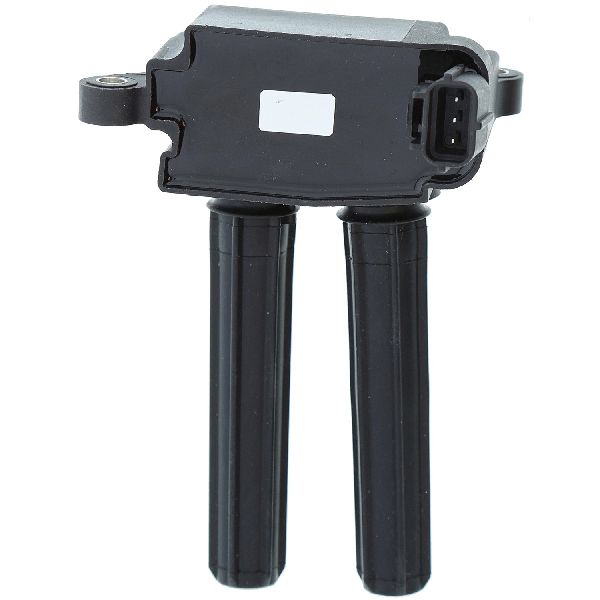
- Ignition Coil
(OEM #5149168AI (3.6L), 68238603AA (5.7L))— This is one of the most common failure items causing a single-cylinder misfire.
Trusted brands: Mopar, NGK, Denso
OEM price range: $45-$99
Aftermarket price range: $30-$50 - Spark Plug
(OEM #SP149125AE (3.6L), SP142582AC (5.7L))— Spark plugs are a routine wear item and a frequent cause of misfires.
Trusted brands: NGK, Champion
OEM price range: $10-$20
Aftermarket price range: $5-$15 - Left Cylinder Head Assembly (3.6L V6, pre-2014)
(OEM #RL141353AC)— The official, updated replacement part to fix the inherent defect in 2011-2013 models.
Trusted brands: Mopar
OEM price range: $1000-$1500
Aftermarket price range: $600-$900 - Rocker Arm — A known failure point on the 3.6L Pentastar engine that can cause ticking and misfires.
Trusted brands: Mopar, Enginetech
OEM price range: $10-$15 each
Aftermarket price range: $5-$10 each
Related Codes That Often Appear With This One
- P0300 — If the misfire is severe or affects multiple cylinders, a P0300 (Random/Multiple Cylinder Misfire) may be set alongside P0302. This is also a primary code listed in the cylinder head TSB.
- P0304 — On 3.6L V6 models, seeing P0302, P0304, and/or P0306 together strongly points to the common left cylinder head failure, as all these cylinders are on the same bank.
- P0306 — On 3.6L V6 models, seeing P0302, P0304, and/or P0306 together strongly points to the common left cylinder head failure, as all these cylinders are on the same bank.
- P0202 — This code indicates an issue with the cylinder 2 injector circuit. If you see P0202 with P0302, the problem is almost certainly related to the fuel injector or its wiring.
- P105D — On later 3.6L engines, this code for 'Intake Valve Stuck in High Lift Position' can appear with P0302, pointing towards a faulty Variable Valve Lift (VVL) solenoid.
Technical Service Bulletins (TSBs) & Recalls
- 09-002-14 REV. B: The primary TSB detailing the diagnosis (cylinder leak-down test) and repair (cylinder head replacement) for the 3.6L V6 left cylinder head issue on 2011-2013 models.
- D-14-12 (X56 Warranty Extension): The warranty bulletin announcing the 10-year/150,000-mile extended coverage for the left cylinder head on affected 3.6L V6 vehicles.
- 18-055-16 REV. A: A PCM software update for 2015 models that addresses various misfire codes, including P0302.
- 09-011-25: A 2018 TSB that lists P0302 among other potential misfire DTCs.
Platform-Specific Known Issues
- 3.6L Pentastar Left Cylinder Head Defect (2011-2013): The most significant issue for this platform. Engines built before mid-2012 are prone to premature wear of the left cylinder head's valve guides/seats, causing compression loss and misfires on cylinders 2, 4, and 6. It was addressed by TSB 09-002-14 and warranty extension X56.
- Rocker Arm / Lifter Failure (All Years): Both the 3.6L and 5.7L engines can experience failure of the rocker arm roller bearings or lifters, leading to a ticking sound and eventually a misfire code like P0302 if a valve stops actuating correctly.
Mechanic-Grade Diagnostic Values
- 3.6L Pentastar Ignition Coil Primary Resistance — expected: 0.46 Ohms. Failure: A reading significantly higher or lower than the specification.
- 3.6L Pentastar Ignition Coil Secondary Resistance — expected: 15.70 kOhms. Failure: A reading significantly higher or lower than the specification.
- 5.7L Hemi Fuel Injector Resistance — expected: 11.5 - 11.7 Ohms. Failure: A low reading (e.g., 0.5 Ohms) or an open circuit indicates a failed injector.
- 3.6L Pentastar Ignition Coil Primary Resistance (Service Manual) — expected: 0.558 to 0.682 Ohms at 25°C (77°F). Failure: Resistance outside of this range.
Scan Tool Commands That Help
- wiTECH (or equivalent advanced scan tool): Power Balance Test — This function allows a technician to disable one cylinder at a time to see the effect on engine RPM. If disabling cylinder 2 causes no change in RPM, it confirms that cylinder is not contributing (misfiring). This is a powerful tool to confirm the misfire location without any disassembly.
- wiTECH (or equivalent advanced scan tool): View Misfire Monitor — Before starting any physical diagnosis, use the scan tool to view the live misfire counter for each cylinder. This can help confirm if the misfire is isolated to cylinder 2 or if other cylinders are also misfiring intermittently, which might not have set a code yet.
Wiring & Ground Locations
- G903 / G903A — Located on the right side of the engine compartment, near the front.. This is a primary ground point for the Powertrain Control Module (PCM) and various engine sensors. A loose or corroded connection at G903 can cause erratic sensor readings and intermittent issues, including misfires, that are difficult to trace.
- Cylinder 2 Ignition Coil Control Circuit — The wiring harness running to the front driver's side ignition coil.. The PCM sends the signal to fire the coil through this specific wire. A service manual for a 2012 Durango indicates this circuit can be probed with a test light while cranking; a bright flicker indicates the PCM is commanding the coil to fire, helping to isolate the problem to the coil itself or the spark plug.
Real Owner Repair Stories
- DodgeForum.com user 'Branden_28' (2017 Dodge Durango GT 3.6L, 148,000 km) — Check engine light on, rough running.
❌ Tried (didn't work) Replaced spark plugs, Replaced cylinder 2 ignition coil, Replaced cylinder 2 fuel injector, Visually inspected camshafts for wear
✅ What actually fixed it The user swapped the front VVT (Variable Valve Timing) solenoids between the driver's side (bank 2) and passenger's side (bank 1). The misfire code moved from P0302 to P0301 (cylinder 1). Replacing the faulty VVT solenoid for cylinder 2 resolved the issue. - YouTube channel 'Repairs and Stuff' (2012 Dodge Challenger 3.6L (same engine family)) — Misfire on cylinder 2 (P0302), running rough.
❌ Tried (didn't work) Swapped ignition coils between cylinders
✅ What actually fixed it Upon removing the valve cover, a rocker arm was found to be missing (fallen off) and the camshaft lobe was damaged. The final repair involved replacing the camshaft, all rocker arms, and all lifters on that bank.
OEM Part Supersession History
56029129AA, 56029129AB, 56029129AF, 68060346AA→68238603AA— Standard part evolution for improved reliability and performance.
Heads up: While the older part numbers may physically fit, using the latest superseded part (68238603AA) is recommended for all 5.7L Hemi applications to ensure compatibility and benefit from any design improvements.N/A→68223569AD (supersedes 68223569AB, 68223569AC)— Part updates for the 3.6L Pentastar Upgrade (PUG) engine.
Heads up: These ignition coils are for the later model 3.6L engines and are not interchangeable with the coils used on the 2011-2015 models.
Model Year Variations Within This Range
- 2011-2013: These years, particularly with the 3.6L V6, are highly susceptible to the left cylinder head defect covered by TSB 09-002-14. P0302 is a primary indicator.
- 2014-2020: A significant facelift occurred for the 2014 model year, which included a new eight-speed automatic transmission for all models. While the base engines remained the same, the likelihood of P0302 being caused by the cylinder head defect is much lower compared to pre-2014 models.
- 2016-2018: For the 3.6L V6, the updated 'Pentastar Upgrade' (PUG) engine was introduced starting in 2016. This engine features Variable Valve Lift (VVL) and has different ignition coils (PN 68223569AD) and potential failure modes, such as faulty VVL solenoids, which can cause a P0302.
Helpful Videos
Used OEM Parts in Stock


New Aftermarket Parts Available




The information in this article is provided for general reference and educational purposes only. Vehicle specifications, procedures, and part compatibility can vary by production date, trim level, and region. Always consult your vehicle's factory service manual and verify part numbers before purchasing or performing repairs. Safety-critical components such as airbags, seat belts, and braking systems should be installed by a qualified professional.
- Dodge DURANGO:
- 🎬 Helpful Videos
- 🛍️ Shop This Part
- What's Unique About the 2011-2018 Dodge DURANGO
- Diagnostic Flowchart
- Symptoms You May Notice
- Most Likely Causes
- Rare But Worth Checking
- Diagnosis Steps
- Parts You'll Likely Need
- Related Codes That Often Appear With This One
- Technical Service Bulletins (TSBs) & Recalls
- Platform-Specific Known Issues
- Mechanic-Grade Diagnostic Values
- Scan Tool Commands That Help
- Wiring & Ground Locations
- Real Owner Repair Stories
- OEM Part Supersession History
- Model Year Variations Within This Range
- 🎟️ Get 5% Off