

P0302 on 2019-2021 Dodge Charger: Cylinder 2 Misfire Causes and Fixes
P0302 indicates a misfire in cylinder 2. On a 2019-2021 Dodge Charger, this is most commonly caused by a faulty ignition coil or a worn-out spark plug. A simple diagnostic is to swap the ignition coil from cylinder 2 with another cylinder to see if the code follows. For 3.6L engines, a persistent P0302 can indicate a failed rocker arm, while on 5.7L/6.4L HEMI engines, it can be an early sign of lifter failure.
- P0302 signifies a misfire on cylinder 2, most often due to a bad ignition coil or spark plug.
- A simple, no-cost diagnostic is to swap the cylinder 2 ignition coil with another cylinder's coil to see if the misfire code follows it.
- Cylinder 2 is the front cylinder on the driver's side for the 3.6L V6, and the front cylinder on the passenger's side for HEMI V8s.
- Do not ignore a flashing check engine light, as it signals a severe misfire that can destroy your catalytic converter, a very expensive part to replace.
- While less common on 2019+ models, be aware of the platform's history of valvetrain issues (rocker arms on V6, lifters on V8) if simple fixes don't work.
What's Unique About the 2019-2021 Dodge CHARGER
The 2019-2021 Dodge Charger is part of the LD generation, which began in 2011. While the infamous left cylinder head issue on the 3.6L Pentastar V6 primarily affected 2011-2013 models, later models are not entirely immune to valvetrain problems. On the 3.6L V6, a persistent P0302 not solved by ignition parts can point to a failing rocker arm or, less commonly, a VVT (Variable Valve Timing) solenoid. For the 5.7L and 6.4L HEMI V8 engines, a P0302 misfire can be an early symptom of a failing Multi-Displacement System (MDS) lifter, a condition often preceded by a 'Hemi tick' and can lead to camshaft damage.
Diagnostic Flowchart
Tap your situation to follow the diagnostic path that matches what you're seeing on this vehicle.
Symptoms You May Notice
- Check engine light is on or flashing
- Rough or shaky idle
- Engine hesitation or stumbling during acceleration
- Noticeable loss of engine power
- Reduced fuel economy
- Fuel smell from the exhaust
- Difficulty starting the engine
- Replacing all ignition coils and spark plugs when only one has failed. The coil-swapping trick can save significant money by isolating the single faulty component.
- On 2011-2013 3.6L models, replacing ignition components repeatedly when the root cause is the known cylinder head defect.
- Assuming a ticking noise is harmless. On both Pentastar and HEMI engines, a tick can be the first sign of a valvetrain failure that will eventually cause a misfire.
Most Likely Causes
- Faulty Ignition Coil 🔴 High Probability Coil-on-plug systems are common failure points due to constant exposure to engine heat and vibration, leading to internal failure.
How to confirm: Swap the ignition coil from cylinder 2 with another cylinder (e.g., cylinder 4). Clear the codes and drive. If the code changes to P0304, the ignition coil is bad.
Typical fix: Replace the faulty ignition coil. It's often recommended to replace the corresponding spark plug at the same time.
Est. part cost: $40-$90 - Worn or Fouled Spark Plug 🔴 High Probability Spark plugs are a regular maintenance item with a finite lifespan. The recommended 100,000-mile service interval for iridium plugs can be optimistic, and they can fail earlier causing a weak or nonexistent spark.
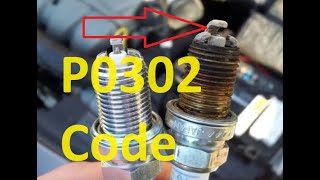
How to confirm: After confirming the ignition coil is good, remove the spark plug from cylinder 2. Inspect it for wear, carbon buildup, oil fouling, or damage to the electrode. You can also swap it with another cylinder's plug to see if the misfire code moves.
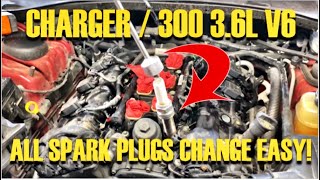
Typical fix: Replace the spark plug. It is best practice to replace all spark plugs for the engine at the same time to ensure even performance. HEMI engines have two plugs per cylinder.
Est. part cost: $10-$30 per plug - Faulty Fuel Injector 🟡 Medium Probability
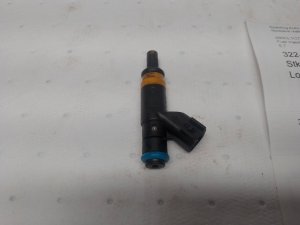
How to confirm: Listen to the injector with a mechanic's stethoscope; it should make a consistent clicking sound. Compare its sound to an adjacent injector. A more definitive test is to swap the injector with another cylinder, though this is more labor-intensive and may require replacing intake gaskets.
Typical fix: Replace the faulty fuel injector and its seals. Sometimes running a quality fuel system cleaner can resolve a minor clog.
Est. part cost: $70-$150 - Failed Rocker Arm/Lifter (Valvetrain Issue) ⚪ Low Probability On 3.6L Pentastar engines, rocker arm bearings can fail, causing a ticking noise that develops into a misfire. On 5.7L/6.4L HEMI engines, the MDS lifters are a known failure point, often starting as a 'Hemi tick' that can progress to a misfire and damage the camshaft if not addressed. 🎬 Watch: How to identify a failing HEMI MDS lifter.
How to confirm: Diagnosis typically starts with hearing a persistent ticking noise from the engine's top end. A mechanic will need to remove the valve cover to visually inspect the rocker arms and camshaft lobes for wear or damage.
Typical fix: Replace the failed rocker arms, lifters, and potentially the camshaft if it has been damaged. This is a significant and costly repair.
Est. part cost: $200-$1500+
Rare But Worth Checking
- Cylinder Head Issue: While the major cylinder head campaign (TSB 09-002-14 REV. B / Warranty Extension X56) was for 2011-2013 3.6L engines, internal mechanical failure is still a possibility on later models. A definitive diagnosis requires a cylinder leak-down test showing leakage over 25%.
- Intake Manifold Gasket Leak: A vacuum leak isolated to the runner for cylinder 2 can cause a lean misfire. A smoke test is the best way to diagnose this. Accessing cylinder 2 on the 3.6L V6 requires removing the upper intake manifold, making gasket replacement a necessary part of many repairs in that area.
- Faulty Powertrain Control Module (PCM): A failed PCM driver can cause a misfire that doesn't respond to any other repair. This is very rare and should be the last item to consider after all other possibilities are exhausted.
- Stuck VVT Solenoid: On the 3.6L Pentastar, a dirty or failed Variable Valve Timing (VVT) or Variable Valve Lift (VVL) solenoid for cylinder 2 can cause misfires, sometimes accompanied by code P105D.
Diagnosis Steps
- Read the trouble codes with an OBD-II scanner and note any other codes present, such as P0300 or P105D.
- Identify cylinder 2. On the 3.6L V6, it is the front-most cylinder on the driver's side (left bank). On HEMI V8s, it is the front-most cylinder on the passenger's side (right bank).
- Swap the ignition coil from cylinder 2 with the coil from another cylinder (e.g., cylinder 4). Clear the codes, run the engine, and see if the misfire code changes to P0304. If it does, the coil is faulty.
- If the code remains P0302, swap the spark plug from cylinder 2 with the one from another cylinder. If the code moves, the spark plug is bad.
- If the misfire is still on cylinder 2, inspect the wiring and connector for the ignition coil and fuel injector for any signs of damage, corrosion, or looseness.
- Listen to the fuel injector on cylinder 2 with a mechanic's stethoscope or a long screwdriver. It should have a steady, rhythmic clicking. Compare the sound to an adjacent injector.
- If ignition and fuel delivery seem okay, a mechanical issue is possible. Listen for a ticking sound near the cylinder 2 valve cover, which could indicate a rocker arm or lifter issue.
- Perform a compression test and a cylinder leak-down test on cylinder 2 to check for issues with piston rings, valves, or the head gasket.
Parts You'll Likely Need
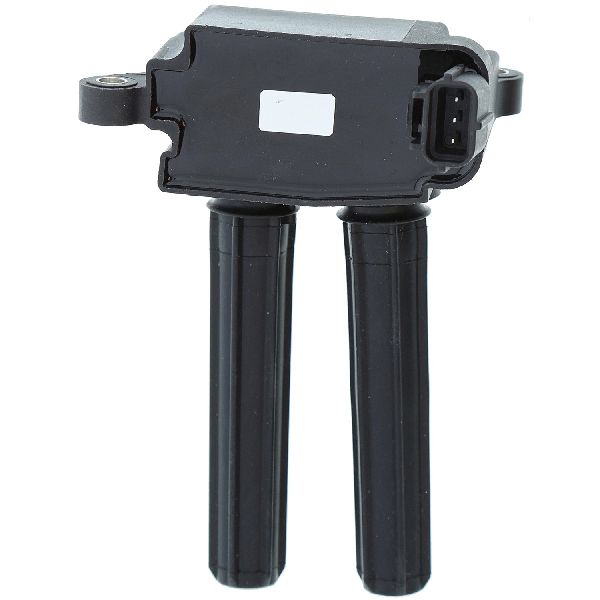
- Ignition Coil
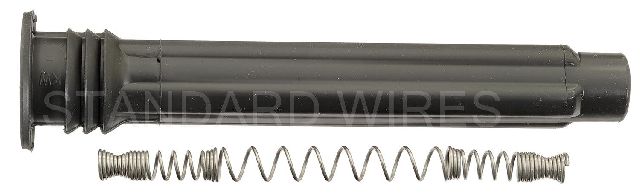
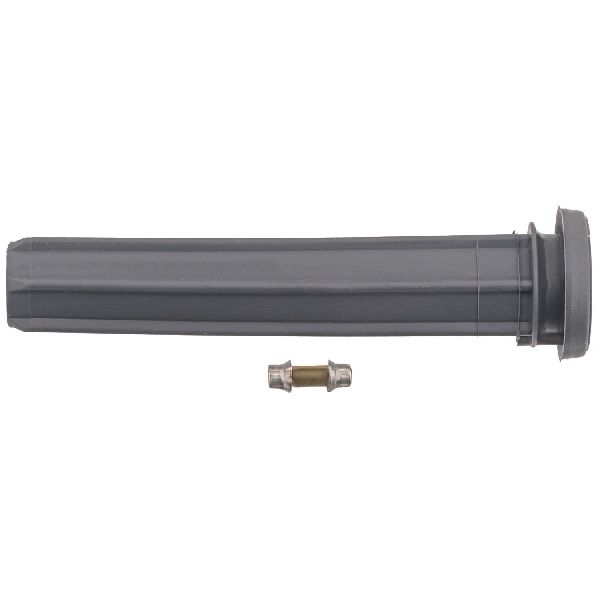
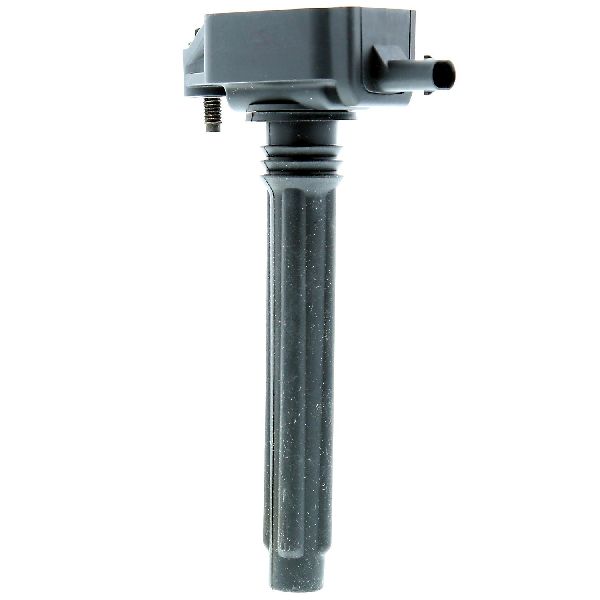
(OEM #5149168AJ (for 3.6L V6), 68238603AA (for 5.7L/6.4L V8))— This is the most common cause of a single-cylinder misfire on modern engines. Heat and vibration cause the internal windings to fail over time.
Trusted brands: Mopar, NGK, Denso
OEM price range: $60-$100
Aftermarket price range: $40-$90 - Spark Plug
(OEM #SP149125AE (for 3.6L V6), SP143877AB (for 5.7L/6.4L V8))— A standard wear item that is critical for proper ignition. A worn or fouled plug is a very common cause of misfires. The HEMI V8 engines use two spark plugs per cylinder.
Trusted brands: NGK, Champion
OEM price range: $15-$30
Aftermarket price range: $10-$25 - Fuel Injector
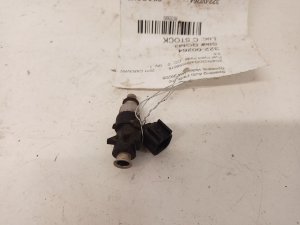
(OEM #05184085AD (for 3.6L V6))— Less common than ignition parts, but a clogged or electronically failed injector will prevent the correct amount of fuel from reaching the cylinder.
Trusted brands: Mopar, Bosch, Standard Motor Products
OEM price range: $100-$180
Aftermarket price range: $70-$150
Related Codes That Often Appear With This One
- P0300 — If the misfire is intermittent, affects multiple cylinders, or is a precursor to a more serious issue like a failing camshaft, a P0300 (Random/Multiple Cylinder Misfire) code may appear alongside P0302.
- P0304, P0306 — On 3.6L V6 engines, if the cause is systemic to the driver's side bank (like a bad head gasket, valvetrain issue, or the historical cylinder head defect), you may see misfire codes for other cylinders on that bank (2, 4, 6).
- P105D — On some 3.6L Pentastar engines, a P0302 may be paired with P105D (Intake Valve Stuck in High Lift Position Cylinder 2), strongly pointing to a faulty Variable Valve Lift (VVL) solenoid for that cylinder.
- P0352 — If the PCM detects a specific electrical fault in the ignition coil circuit for cylinder 2, it may set P0352 (Ignition Coil 'B' Primary/Secondary Circuit) in addition to P0302, pointing directly to an electrical coil failure rather than a spark or fuel issue.
Technical Service Bulletins (TSBs) & Recalls
- 1400322REVA: Lists P0302 as a possible Diagnostic Trouble Code for 2021 models, but the TSB is primarily related to exterior lighting.
- 09-002-14 REV. B: The definitive bulletin for the 2011-2013 3.6L Pentastar left cylinder head issue, which caused P0302, P0304, and P0306. It details the diagnostic procedure (cylinder leak-down test) and repair (head replacement). While not directly applicable to 2019-2021 models, it provides crucial historical context for Pentastar valvetrain problems.
Platform-Specific Known Issues
- 3.6L Pentastar V6: While the major TSB for lef
Mechanic-Grade Diagnostic Values
- Ignition Coil Primary Resistance (5.7L HEMI) — expected: 0.558 - 0.682 Ohms. Failure: A reading outside this range indicates a faulty coil winding.
- Ignition Coil Primary Resistance (3.6L V6) — expected: ~0.46 Ohms. Failure: Significant deviation from this value suggests a bad coil.
- Ignition Coil Secondary Resistance (General) — expected: 6,000 - 10,000 Ohms. Failure: A reading outside this range, or an open circuit (infinite resistance), points to a failed coil.
- Fuel Injector Resistance (3.6L V6) — expected: 12.0 - 12.5 Ohms. Failure: A significantly higher reading or an open circuit indicates a failed injector.
- Fuel Pressure (Key On, Engine Off) — expected: 58 - 60 PSI. Failure: Significantly lower pressure indicates a weak fuel pump or regulator issue.
- Cylinder Leak-Down Test — expected: Less than 15% leakage. Failure: Leakage of 25% or more is the threshold Chrysler uses in TSBs to indicate a critical sealing issue, often requiring head replacement.
Hidden / Shadow Codes Worth Checking
- P0352: Ignition Coil 'B' (Cylinder 2) Primary/Secondary Circuit Malfunction. This is a more specific code than P0302, as it points directly to an electrical fault within the ignition coil's circuit rather than a general misfire. (see via This code may be set alongside P0302 and is visible with most standard OBD-II scanners.)
- Injector Shut-Down Status: This is not a code, but a PCM action. On a consistent misfire, the PCM will disable the fuel injector for that cylinder to protect the catalytic converter. This can be observed on an advanced scan tool by monitoring injector pulse width (it will go to zero) or through a status flag. (see via Advanced scan tool (like wiTECH) live data, monitoring injector pulse width for cylinder 2.)
Scan Tool Commands That Help
- wiTECH or advanced generic scanner: Cylinder Cutout / Kill Test — Use this test at idle to confirm if cylinder 2 is contributing power. The tool commands the PCM to stop firing a specific cylinder. If disabling cylinder 2 causes no change in engine RPM or smoothness, it confirms that cylinder was not working to begin with.
Wiring & Ground Locations
- Cylinder 2 Location (3.6L V6) — Front-most cylinder on the driver's side (left bank) of the engine.. Correctly identifying the physical cylinder is the first step for any hands-on diagnosis like swapping coils or plugs.
- Cylinder 2 Location (5.7L/6.4L V8) — Front-most cylinder on the passenger's side (right bank) of the engine.. Correctly identifying the physical cylinder is the first step for any hands-on diagnosis. The V8 numbering is different from the V6.
- Main Engine Bay Ground — Underneath the intake airbox, there is a factory grounding point bolted to the chassis.. Poor grounding at this point can cause erratic behavior in sensors and ignition components, potentially leading to misfire codes. It should be cleaned and secured.
- Driver Side Cylinder Head Ground — A threaded stud on the driver's side cylinder head, often used to hold an intake manifold bracket, serves as a grounding point.. This provides a direct ground for the cylinder head where cylinder 2 is located on the 3.6L V6. A poor connection here could affect ignition performance for that bank.
Real Owner Repair Stories
- ScannerDanner Forum (2014 Dodge Challenger 3.6L V6) — Constant misfire on cylinder 2 (P0302) at idle and low RPM (<1500). No misfires at highway speed.
❌ Tried (didn't work) Swapping spark plugs, ignition coils, and fuel injectors, Replacing the PCM (by a previous shop), Passing compression and leak-down tests, Replacing the four lifters and rocker arms for cylinder 2, Removing the cylinder head and having it serviced (valves, guides, seats checked), Swapping VVT solenoids and camshaft sensors between banks
✅ What actually fixed it After all other steps failed, the technician purchased a new remanufactured cylinder head from the dealer. Replacing the entire head and installing new lifters/rockers for that bank finally resolved the misfire. - YouTube Commenter (Unspecified vehicle with P0302) — Cylinder 2 misfire.
❌ Tried (didn't work) Replacing ignition coils, Replacing spark plugs
✅ What actually fixed it The problem was a clogged fuel injector for cylinder 2.
"I Checked Everything" — The Actual Cause
- In a documented case on a 3.6L engine, a technician performed a smoke test and found no vacuum leaks, yet the P0302 misfire persisted. After exhausting all ignition, fuel, and standard mechanical tests (compression/leak-down), the root cause was determined to be a faulty cylinder head that required complete replacement, suggesting a hairline crack or valve guide issue not detectable by conventional means.
When the Usual Fixes Don't Work
- While most P0302 codes are resolved by replacing a spark plug or ignition coil, there are documented cases where the issue is far more complex. In one instance involving a 3.6L engine, a persistent cylinder 2 misfire was not fixed by new plugs, coils, injectors, or even a PCM. Advanced mechanical tests like compression and leak-down also showed no faults. Even after replacing the rocker arms and having the cylinder head serviced by a machine shop, the misfire remained. The ultimate fix was to replace the entire cylinder head with a new unit, suggesting an undetectable flaw in the original head. This serves as counter-evidence to the idea that a P0302 is always a simple fix and that standard mechanical tests are always 100% conclusive.
OEM Part Supersession History
5149168AH, 5149168AI→5149168AJ— Standard part revision and improvement by the manufacturer.
Heads up: The newer part number (5149168AJ) is the correct service replacement for the older numbers and is fully compatible.
Model Year Variations Within This Range
- 2019-2021: There are no significant changes to the core engine hardware or electronics related to the 3.6L V6 or 5.7L V8 that would alter the diagnosis of a P0302 code within this specific year range. Trim packages and exterior styling were updated, but the fundamental causes and fixes remain consistent.
Helpful Videos
Used OEM Parts in Stock




New Aftermarket Parts Available


The information in this article is provided for general reference and educational purposes only. Vehicle specifications, procedures, and part compatibility can vary by production date, trim level, and region. Always consult your vehicle's factory service manual and verify part numbers before purchasing or performing repairs. Safety-critical components such as airbags, seat belts, and braking systems should be installed by a qualified professional.
- Dodge CHARGER:
- 🎬 Helpful Videos
- 🛍️ Shop This Part
- What's Unique About the 2019-2021 Dodge CHARGER
- Diagnostic Flowchart
- Symptoms You May Notice
- Most Likely Causes
- Rare But Worth Checking
- Diagnosis Steps
- Parts You'll Likely Need
- Related Codes That Often Appear With This One
- Technical Service Bulletins (TSBs) & Recalls
- Platform-Specific Known Issues
- Mechanic-Grade Diagnostic Values
- Hidden / Shadow Codes Worth Checking
- Scan Tool Commands That Help
- Wiring & Ground Locations
- Real Owner Repair Stories
- "I Checked Everything" — The Actual Cause
- When the Usual Fixes Don't Work
- OEM Part Supersession History
- Model Year Variations Within This Range
- 🎟️ Get 5% Off