

P0302 on 2011-2018 Dodge Challenger: Cylinder 2 Misfire Causes and Fixes
P0302 indicates a misfire on cylinder 2. On 3.6L V6 models from 2011-2013, this is very often caused by a known cylinder head defect covered by an extended warranty (X56). For all engines, start diagnosis by swapping the ignition coil from cylinder 2 with another cylinder. If the misfire moves, the coil is bad. For V8s, a 'Hemi tick' can indicate a failing lifter, another common cause.
- P0302 is a misfire on cylinder 2. The most common, simple fixes are a new ignition coil or spark plug.
- For 2011-2013 Challengers with the 3.6L V6, P0302 is a major red flag for a known cylinder head defect.
- Before buying any parts for a 3.6L V6, perform a coil and plug swap. If the misfire doesn't move, a cylinder leak-down test is the next crucial step to check for the cylinder head issue.
- If you own a 2011-2013 3.6L model, contact a Dodge dealer with your VIN to see if the X56 warranty extension might still apply, even though it is likely expired by now.
- Never drive for an extended period with a flashing check engine light, as it can quickly destroy your catalytic converter.
What's Unique About the 2011-2018 Dodge CHALLENGER
For 2011-2013 Dodge Challengers equipped with the 3.6L Pentastar V6, the P0302 code is infamous. It is frequently a symptom of a manufacturing defect in the left cylinder head, which houses cylinders 2, 4, and 6. This issue, caused by premature valve guide and seat wear, was so common that Chrysler issued a 10-year/150,000-mile warranty extension (code X56) to cover the repair. While standard causes like coils and plugs are still possible, the likelihood of this specific mechanical failure on early 3.6L engines is exceptionally high. For Hemi V8 engines (5.7L, 6.4L), a P0302 can be an early sign of the 'Hemi tick,' which is often a failing MDS lifter that can lead to camshaft damage.
Diagnostic Flowchart
Tap your situation to follow the diagnostic path that matches what you're seeing on this vehicle.
Symptoms You May Notice
- Rough or shaking idle
- Noticeable loss of engine power and acceleration
- Engine hesitation or stumbling
- Flashing or solid Check Engine Light
- Reduced fuel economy
- Engine stalling
- Audible ticking or tapping noise from the top of the engine, especially on 3.6L (rocker arm) or Hemi V8s (lifter).
- Replacing the Powertrain Control Module (PCM) before exhausting all other possibilities. A forum user reported a shop replaced the PCM unnecessarily when the root cause was a bad cylinder head.
- Repeatedly replacing spark plugs and coils on a 2011-2013 3.6L V6 without performing a leak-down test. The misfire often returns until the underlying cylinder head issue is addressed.
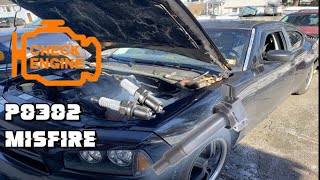
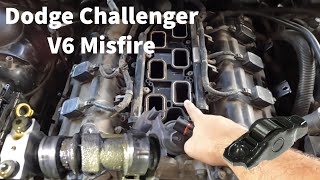
- Mistaking a rocker arm failure for the cylinder head defect on 2014+ 3.6L models. 🎬 See how a failed rocker arm causes this misfire.
Most Likely Causes
- Faulty Ignition Coil 🔴 High Probability Coil-on-plug systems are a common failure point due to constant heat and vibration in the engine bay.
How to confirm: Swap the ignition coil from cylinder 2 with another cylinder (e.g., cylinder 4 on a V6, or cylinder 8 on a V8). Clear the codes and run the engine. If the code changes to P0304 or P0308, the ignition coil is the culprit. This is the easiest first diagnostic step.
Typical fix: Replace the faulty ignition coil. It is often recommended to replace them in sets if they are original.
Est. part cost: $30-$90 - Worn or Fouled Spark Plug 🔴 High Probability Spark plugs are a routine maintenance item. Hemi engines use two plugs per cylinder (16 total), increasing the chance of a failure. On some newer 3.6L engines, a TSB (09-013-20 REV. A) was issued for spark plugs with internal cracks causing misfires.
How to confirm: After ruling out the coil, inspect the spark plug for cylinder 2. Look for wear on the electrode, carbon buildup, or oil fouling. You can also swap the spark plug with another cylinder to see if the misfire follows.
Typical fix: Replace the spark plug. It is recommended to replace all spark plugs at the same time for even performance.
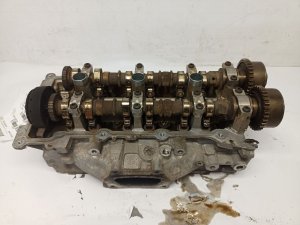
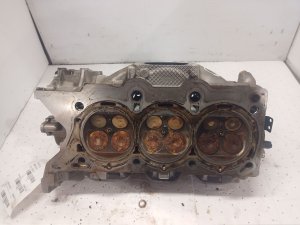
Est. part cost: $5-$25 per plug - Left Cylinder Head Failure (2011-2013 3.6L V6 Only) 🔴 High Probability A known manufacturing defect on 3.6L engines built before mid-2012 caused premature wear of valve guides and seats on the left cylinder head (cylinders 2, 4, 6). This leads to a loss of compression and misfires.
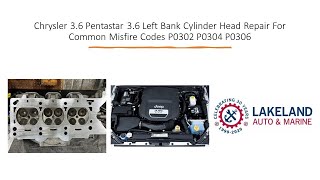
How to confirm: If coil and plug swaps don't resolve the P0302 (or if you also have P0304/P0306), a cylinder leak-down test is required. A leakage of 25% or more confirms the issue, as specified in TSB #09-002-14 REV. B. 🎬 Watch: Step-by-step guide to replacing the Pentastar cylinder head. Many owners on forums confirm this was their issue.
Typical fix: Replace the left cylinder head with the updated part (OEM part number RL141353AC or newer). This was covered under Chrysler's X56 warranty extension (10 years/150,000 miles), which has likely expired for most vehicles.
Est. part cost: $500-$1000 for the head assembly - Faulty Fuel Injector 🟡 Medium Probability
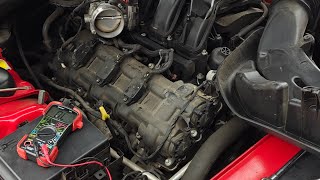
How to confirm: If ignition and mechanical checks pass, swap the fuel injector from cylinder 2 with another cylinder. If the misfire code follows the injector, it is faulty. You can also test the injector's resistance when hot; a failing injector may show high resistance.
Typical fix: Replace the faulty fuel injector.
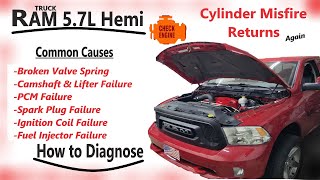
Est. part cost: $50-$120 - Failed Lifter / Worn Camshaft (Hemi V8s) 🟡 Medium Probability The 5.7L and 6.4L Hemi engines are known for developing a 'Hemi tick' caused by a failing lifter, often related to the MDS (Multi-Displacement System). If not addressed, the failed lifter will damage the camshaft lobe, causing a persistent misfire.
How to confirm: Listen for a distinct, rhythmic ticking or tapping sound from the engine. The sound may be more pronounced on a cold start. A visual inspection requires removing the valve cover and intake manifold to check the lifters and camshaft lobes for wear or damage.
Typical fix: Replace all lifters and the camshaft. This is a significant and costly repair. 🎬 Watch: DIY walkthrough for Hemi camshaft and lifter replacement.
Est. part cost: $800-$1500 for cam and lifter kit
Rare But Worth Checking
- Fallen/Worn Rocker Arms (3.6L V6): The 3.6L Pentastar can also suffer from rocker arm bearing failure, where the needle bearings collapse. This causes the rocker arm to fall off or score the camshaft, stopping valve operation for that cylinder. This is a more common cause for P0302 on 2014+ 3.6L models and often produces a loud ticking sound.
- Intake Manifold Gasket Leak: A vacuum leak from a failed intake manifold gasket near the port for cylinder 2 can lean out the air-fuel mixture and cause a misfire. This would usually be found with a smoke test.
- Stuck VVT Solenoid (3.6L V6): On some Pentastar engines, a P0302 code can be accompanied by P105D (Intake Valve Stuck in High Lift Position). This often points to a faulty Variable Valve Timing (VVT) solenoid for cylinder 2, which can be cleaned or replaced to solve the issue.
Diagnosis Steps
- Read the code with an OBD-II scanner and check for any other codes, especially P0300, P0304, P0306, or P105D.
- Locate cylinder 2. On the 3.6L V6, it's the front cylinder on the driver's side (left bank is 2-4-6, front to back). On V8s, it's the front cylinder on the passenger side (passenger bank is 2-4-6-8, front to back).
- Swap the ignition coil from cylinder 2 with an adjacent, easy-to-access cylinder. Clear codes and test drive. If the misfire code moves to the other cylinder (e.g., P0304), the coil is bad.
- If the misfire remains on cylinder 2, swap the spark plug from cylinder 2 with another cylinder. Clear codes and test drive. If the code moves, the spark plug is bad.
- Inspect the wiring and connector for the cylinder 2 ignition coil and fuel injector for any damage, corrosion, or loose pins. A poor pin connection has been documented as a cause.
- (3.6L V6 2011-2013) If steps 3-5 don't identify the issue, proceed to a cylinder leak-down test on cylinders 2, 4, and 6. Per TSB #09-002-14 REV. B, leakage of 25% or more indicates a failed cylinder head requiring replacement.
- (3.6L V6 2014+) If a ticking noise is present, remove the driver's side valve cover to inspect the rocker arms and camshaft lobes for wear or damage.
- (Hemi V8) If a 'Hemi tick' is present, perform a physical inspection of the camshaft and lifters for wear, which requires significant disassembly.
- If other checks pass, consider testing the fuel injector by swapping it with another cylinder or checking its resistance when hot.
- As a final step, a professional may use an oscilloscope for in-cylinder pressure analysis to definitively diagnose mechanical sealing issues.
Parts You'll Likely Need
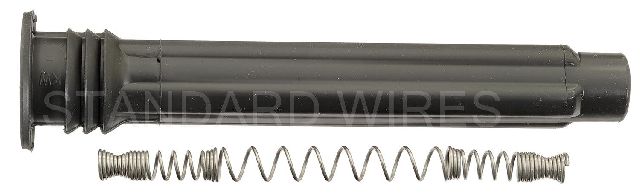
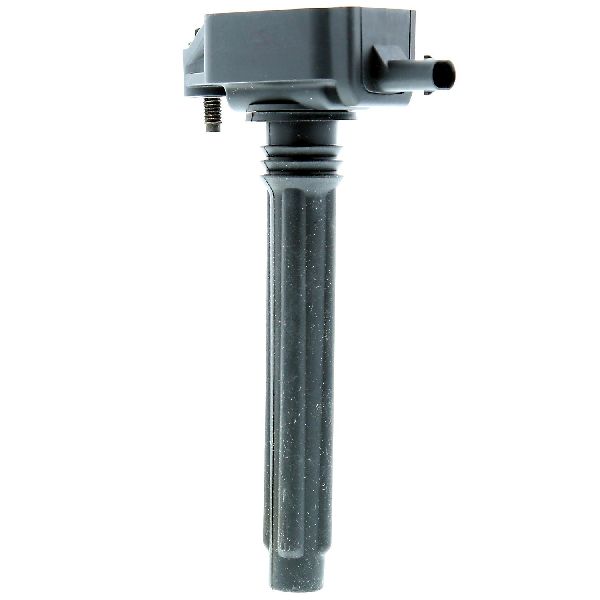
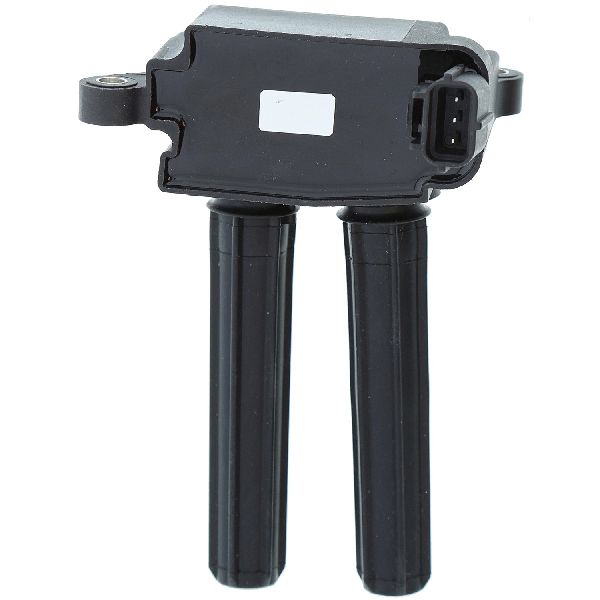
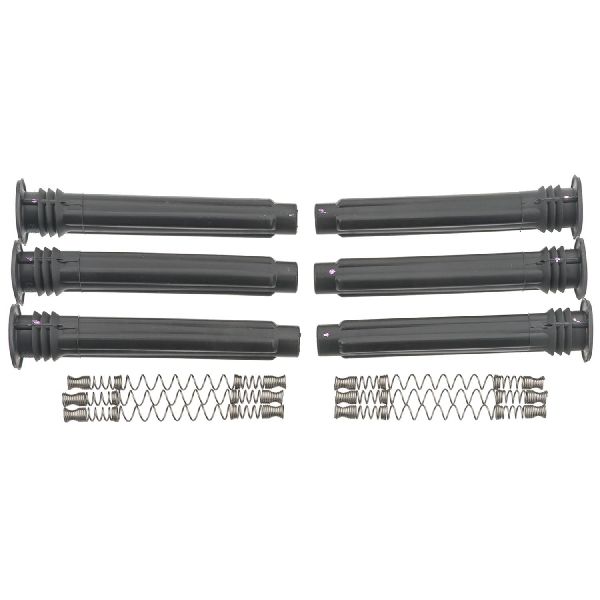
- Ignition Coil
(OEM #5149168AJ (for 3.6L V6), 68238603AA (for 5.7L/6.4L V8))— A common failure point for ignition systems and one of the most frequent causes of a single-cylinder misfire.
Trusted brands: Mopar, NGK, Denso, Accel
OEM price range: $85-$130
Aftermarket price range: $30-$70 - Spark Plug
(OEM #SP149125AE)— A routine maintenance item that can cause a misfire when worn or fouled.
Trusted brands: Mopar, NGK, Champion
OEM price range: $15-$25
Aftermarket price range: $5-$15 - Left Cylinder Head Assembly (3.6L V6)
(OEM #RL141353AC)— The definitive fix for the known valve guide/seat defect on 2011-2013 3.6L Pentastar engines causing P0302, P0304, and P0306.
Trusted brands: Mopar (Remanufactured)
OEM price range: $500-$1000 - Rocker Arm
(OEM #5184296AH)— On 3.6L Pentastar engines, particularly 2014 and newer models, bearing failure in the rocker arm is a common cause of misfires.
Trusted brands: Mopar, SUSUCAR
OEM price range: $10-$20 per arm
Aftermarket price range: $5-$15 per arm
Related Codes That Often Appear With This One
- P0300 — If the misfire is severe or intermittent, the PCM may also log a P0300 for 'Random/Multiple Cylinder Misfire' alongside the specific P0302.
- P0304 / P0306 — On 3.6L V6 models, seeing P0302 with P0304 and/or P0306 is a very strong indicator of the common left cylinder head failure, as all three cylinders are on the affected bank.
- P105D — On 3.6L V6 engines, this code for 'Intake Valve Stuck in High Lift Position (Cylinder 2)' can appear with P0302, pointing towards an issue with the VVT system, often the solenoid itself.
- P0202 — This code indicates an 'Injector Circuit/Open - Cylinder 2'. If you see P0302 and P0202 together, it strongly suggests the problem is with the fuel injector for cylinder 2 or its wiring, not a spark or mechanical issue.
Technical Service Bulletins (TSBs) & Recalls
- 09-002-14 REV. B: Links P0300, P0302, P0304, and P0306 on 3.6L engines to a potential cylinder head failure, requiring a leak-down test of 25% or more and replacement with head RL141353AC.
- D-14-12 (USA) / SAB-2014-11 (Canada): The warranty bulletin announcing the X56 10-year/150,000-mile extended warranty for the left cylinder head on affected 2011-2013 3.6L vehicles.
- 18-094-16: Mentions a PCM software update that can address a list of DTCs, including P0302, potentially improving misfire detection logic.
Platform-Specific Known Issues
- 2011-2013 3.6L V6 Left Cylinder Head Failure: The most critical issue for this vehicle and code. Models built on or before July 25, 2012, are prone to excessive wear on the left cylinder head's valve guides and seats. This causes loss of compression and sets misfire codes P0302, P0304, and P0306. Chrysler issued TSB #09-002-14 REV. B and warranty extension X56 (10 years/150,000 miles) to address this. The fix is a complete replacement of the left cylinder head with an updated part like RL141353AC.
Mechanic-Grade Diagnostic Values
- Fuel Injector Resistance (5.7L/6.4L Hemi) — expected: Approximately 12.0 - 12.5 Ohms. Failure: A reading significantly higher or lower than the expected range, or an open circuit (infinite resistance), indicates a faulty injector coil.
- VVT Solenoid Resistance (3.6L Pentastar) — expected: Approximately 6.9 to 7.9 Ohms. Failure: A reading outside of this range suggests the solenoid's internal coil is failing.
- Fuel Pressure (All Engines) — expected: Approximately 58-60 PSI at the fuel rail. Failure: Low fuel pressure can cause lean misfires, though it would typically affect multiple cylinders, not just one.
- Cylinder Leak-Down Test (3.6L V6 with suspected head issue) — expected: Less than 15% leakage. Failure: Leakage of 25% or more confirms a significant sealing problem, as specified in Chrysler's TSB for the cylinder head issue.
Hidden / Shadow Codes Worth Checking
- Mode 6, Test ID $A2-$AF: These Test IDs in Mode 6 data correspond to misfire counts for each cylinder (e.g., $A3 for Cylinder 2). Even if a misfire isn't frequent enough to set a P0302 code, a technician can view these counters on an advanced scan tool to see if cylinder 2 is accumulating misfires at a higher rate than others, confirming an intermittent issue. (see via Advanced OBD-II scan tool with Mode 6 functionality.)
Scan Tool Commands That Help
- wiTECH (Chrysler Dealer Tool) or equivalent high-end scanner: Crank Relearn / Adaptive Numerator Learn — This function is used to make the PCM relearn the crankshaft position sensor's baseline pulse pattern. It should be performed after major engine work like replacing a flywheel, timing components, or sometimes even the PCM itself. If this learned value is corrupt, the PCM can misinterpret normal crankshaft speed variations as misfires.
- wiTECH or equivalent: Cylinder Contribution Test — This bidirectional test allows the technician to shut off the fuel injector to each cylinder one by one while the engine is idling. When a healthy cylinder is deactivated, the engine RPM should drop noticeably. If deactivating cylinder 2 causes little or no change in RPM, it confirms that cylinder 2 was not contributing power, pinpointing the misfire.
Wiring & Ground Locations
- Cylinder 2 Ignition Coil Connector — On top of the valve cover, connected to the ignition coil for cylinder 2. (Front cylinder on the passenger side for V8s; front cylinder on the driver's side for V6).. The connector pins can become corroded or lose tension, causing a poor connection and intermittent spark. The Dark Blue/Dark Green wire should be the control signal from the PCM, and the Dark Green/Orange wire should be the power feed from the ASD relay.
- G104 — On the front of the driver's side cylinder head.. This is a primary ground point for the PCM and several engine sensors. A loose or corroded G104 ground can cause erratic behavior, including phantom misfire codes, by creating an unstable voltage reference for the ignition coil control circuits.
Real Owner Repair Stories
- ScannerDanner Forum (2014 Dodge Challenger 3.6L V6) — Constant misfire on cylinder 2 (P0302) at idle and low RPM. No misfires on the freeway.
❌ Tried (didn't work) Swapped spark plug, Swapped ignition coil, Swapped fuel injector, Replaced PCM, Smoke test for vacuum leaks (passed), Compression and leak-down tests (passed), Replaced lifters and rocker arms for cylinder 2, Had original cylinder head serviced at a machine shop
✅ What actually fixed it After all other attempts failed, the shop purchased a remanufactured cylinder head directly from a Dodge dealer for around $500. Installing the new head, along with all new lifters and rockers for that bank, finally resolved the misfire. The original machine shop's work on the head was apparently insufficient. - YouTube video by Sick Performance Shop (2012 Dodge Challenger V6) — Rough running, P0302 misfire code.
❌ Tried (didn't work) Swapping ignition coils
✅ What actually fixed it Upon removing the valve cover, the mechanic found a rocker arm had completely fallen off due to bearing failure. There were also visible metal shavings and damage to the camshaft lobe. The final fix was replacing the damaged camshaft, all rocker arms, and all lifters on that cylinder bank.
"I Checked Everything" — The Actual Cause
- In a documented case on a 2014 3.6L V6, a shop performed a smoke test which revealed no vacuum leaks. They also performed compression and leak-down tests which passed. After replacing nearly every component related to cylinder 2, the issue was finally resolved by replacing the entire left cylinder head with a new OEM part, indicating a subtle mechanical sealing issue (like a hairline crack or valve seat problem) that didn't show up in standard tests but manifested as a misfire under running conditions.
OEM Part Supersession History
68141353AA, 68141353AB, 68196637AA→RL141353AC (Remanufactured), 68141353AC (New)— These are the part numbers for the left cylinder head on the 3.6L V6. The original parts were prone to premature valve guide and seat failure. The superseding part numbers are the updated design that corrects this defect.
Heads up: When replacing the cylinder head, Mopar specifies that a new Bolt/Plug Kit (part #68154699AA) must be used to prevent oil gallery leaks and subsequent trouble codes.5184296AG and older revisions→5184296AH— This is the rocker arm for the 3.6L Pentastar engine. Later revisions aimed to improve the durability of the needle bearings, which were a common failure point causing the rocker to fall off and create a misfire.
Model Year Variations Within This Range
- 2011-2013: Models with the 3.6L V6 in this range are highly susceptible to the left cylinder head defect causing P0302, P0304, and P0306. This should be a primary suspicion after basic ignition checks fail.
- 2014-2018: For 3.6L V6 models in this range, the cylinder head issue was largely resolved. A P0302 code, especially if accompanied by a ticking noise, is more likely to be a failed rocker arm due to needle bearing collapse.
- 2015+: Some 2016 and later 3.6L engines were equipped with a Variable Valve Lift (VVL) system. A failure in the VVL solenoid (Part #05047897AC) for cylinder 2 could also cause a misfire, often alongside other VVL-specific codes.
Helpful Videos


Used OEM Parts in Stock



New Aftermarket Parts Available



The information in this article is provided for general reference and educational purposes only. Vehicle specifications, procedures, and part compatibility can vary by production date, trim level, and region. Always consult your vehicle's factory service manual and verify part numbers before purchasing or performing repairs. Safety-critical components such as airbags, seat belts, and braking systems should be installed by a qualified professional.
- Dodge CHALLENGER:
- 🎬 Helpful Videos
- 🛍️ Shop This Part
- What's Unique About the 2011-2018 Dodge CHALLENGER
- Diagnostic Flowchart
- Symptoms You May Notice
- Most Likely Causes
- Rare But Worth Checking
- Diagnosis Steps
- Parts You'll Likely Need
- Related Codes That Often Appear With This One
- Technical Service Bulletins (TSBs) & Recalls
- Platform-Specific Known Issues
- Mechanic-Grade Diagnostic Values
- Hidden / Shadow Codes Worth Checking
- Scan Tool Commands That Help
- Wiring & Ground Locations
- Real Owner Repair Stories
- "I Checked Everything" — The Actual Cause
- OEM Part Supersession History
- Model Year Variations Within This Range
- 🎟️ Get 5% Off