

P0302 on 2012-2016 Dodge Caravan: Cylinder 2 Misfire Causes and Fixes
P0302 indicates a misfire on cylinder 2. On the 3.6L Pentastar V6, this is most often caused by a bad ignition coil or spark plug. A simple diagnostic step is to swap the coil from cylinder 2 with another cylinder (like #4) to see if the code follows. However, for 2012-2013 models specifically, this code is a very strong indicator of a defective left cylinder head, a known issue covered by TSB #09-002-14 REV. B. For all years, a ticking noise accompanying the misfire points towards a failed rock
- P0302 is a misfire on cylinder 2, the front passenger-side cylinder.
- Always start diagnosis by swapping the ignition coil and then the spark plug with a neighboring cylinder to rule out these common, inexpensive parts.
- Listen for a ticking noise. On the 3.6L Pentastar, a tick combined with a misfire strongly suggests a failed rocker arm, a known issue with this engine.
- For 2012-2013 models especially, be aware of the potential for a more serious cylinder head problem, which requires a compression and leak-down test to confirm.
- Do not keep driving if the check engine light is flashing, as this can quickly destroy your catalytic converter, leading to a much more expensive repair.
What's Unique About the 2012-2016 Dodge CARAVAN

For the 2012-2016 Dodge Caravan with the 3.6L Pentastar V6, a P0302 code can be more complex than on other vehicles. While bad ignition coils and spark plugs are common culprits, this engine family has a well-documented history of valvetrain issues. Early models (2012-2013) were known for a specific left cylinder head defect that caused this code, often along with P0304 and P0306. This was so prevalent that Chrysler issued an extended warranty (X56) and Technical Service Bulletin #09-002-14 REV. B. Although the warranty for that specific issue has likely expired due to age, the engine remains prone to rocker arm and lifter failures across all model years, which can also present as a single-cylinder misfire, often accompanied by a distinct ticking sound.
Diagnostic Flowchart

Tap your situation to follow the diagnostic path that matches what you're seeing on this vehicle.
Symptoms You May Notice

- Rough or shaking idle
- Hesitation or lack of power during acceleration
- Flashing or steady Check Engine Light
- Noticeable engine vibration, especially under load (like when the A/C is on)
- Poor fuel economy
- Audible 'ticking' or 'tapping' noise from the top of the engine, especially on a cold start, which may point to a rocker arm failure.
- Replacing only spark plugs when the ignition coil is the actual point of failure.
- Replacing ignition and fuel parts when there is an underlying mechanical problem like a bad rocker arm or low compression. Many owners on forums report spending money on plugs and coils only to find the issue was the cylinder head or rocker arms.
- Confusing the symptoms of a failed rocker arm (ticking) with the cylinder head defect. While both can cause noise and misfires, the diagnostic paths are different.
Most Likely Causes

- Failed Ignition Coil 🔴 High Probability Coil-on-plug systems are common failure points due to constant heat and vibration. It's a frequent issue on the Pentastar engine and the first logical part to check.
How to confirm: Swap the ignition coil from cylinder 2 with the coil from cylinder 4 (the middle cylinder on the front bank). Clear the codes and drive. If the code changes to P0304, the coil is faulty. This is the most common and effective initial diagnostic step. 🎬 Watch: Step-by-step guide to fixing a P0302 misfire.
Typical fix: Replace the failed ignition coil. Many owners choose to replace all six at the same time as a preventative measure, especially if the vehicle has high mileage.
Est. part cost: $25-$60 per coil - Worn or Fouled Spark Plug 🔴 High Probability
How to confirm: After ruling out the coil, inspect the spark plug from cylinder 2. Look for wear on the electrode, oil fouling, carbon buildup, or cracks in the porcelain. Compare it to a plug from a working cylinder. A worn plug gap can also cause a misfire.
Typical fix: Replace the spark plug. It is recommended to replace all six spark plugs at once if they are near the end of their service life (typically around 100,000 miles). Always use the OEM-specified type (e.g., Iridium).
Est. part cost: $8-$20 per plug - Failed Rocker Arm / Lifter 🟡 Medium Probability The 3.6L Pentastar engine is known for rocker arm bearing failures, which seize and cause the roller to stop spinning, leading to camshaft lobe wear. This creates a ticking noise and eventually a misfire. It is a very common failure on this engine across all model years.
How to confirm: Listen for a distinct ticking sound from the top of the engine, often more pronounced on a cold start. Diagnosis requires removing the valve cover to visually inspect the rocker arms and camshaft lobes for wear, scoring, or a rocker arm that has come loose.
Typical fix: Replace all 24 rocker arms and any associated damaged lifters or camshafts. This is a labor-intensive repair. Many DIY-ers attempt this repair, but it's critical to ensure no rocker arms are installed out of position. 🎬 See this complete guided repair for rocker arm replacement.
Est. part cost: $100-$500 for parts, depending on camshaft damage - Clogged or Faulty Fuel Injector ⚪ Low Probability
How to confirm: If ignition and mechanical checks pass, the fuel injector is a possibility. A mechanic can perform a fuel injector balance test. A DIY method is to swap the injector from cylinder 2 with another cylinder, but this is more involved than swapping a coil as it requires removing the fuel rail. Some owners report success using a quality fuel system cleaner as a first step. A resistance test can also be performed; a healthy injector should read around 12-13 Ohms.
Typical fix: Replace the faulty fuel injector. One owner on a forum fixed their P0302 by replacing the injectors after coils and plugs didn't work.
Est. part cost: $50-$120
Rare But Worth Checking
- Cylinder Head Failure (2012-2013 Models): This is the most notorious issue for early 3.6L Pentastars. A defect in the valve seats on the left cylinder head (cylinders 2, 4, 6) causes a loss of compression. TSB #09-002-14 REV. B specifically addresses this. Diagnosis requires a cylinder leak-down test; leakage of 25% or more confirms the failure and necessitates cylinder head replacement. While the extended warranty (X56) has likely expired, this remains the root cause for many P0302 codes on these model years. 🎬 Watch: Understanding the left cylinder head defect and codes.
- Faulty Powertrain Control Module (PCM): TSB #18-069-16 REV. A notes that some 2015-2016 models may have a PCM with inadequate environmental protection, leading to misfire codes. This applied to a specific build range and required PCM replacement.
Diagnosis Steps
- Read the code with an OBD-II scanner to confirm P0302 and check for any other codes (P0300, P0304, P0306 are critical clues).
- Identify cylinder 2: It is the front-most cylinder on the passenger side. The front bank is numbered 2, 4, 6 from passenger to driver side.
- Swap the ignition coil from cylinder 2 with the coil from cylinder 4. Clear the codes, start the engine, and see if the misfire code changes to P0304. If it does, the ignition coil is bad.
- If the code remains P0302, inspect and/or swap the spark plug from cylinder 2 with cylinder 4. If the code then moves to P0304, the spark plug was the issue.
- If the misfire remains on cylinder 2, listen for a loud ticking noise from the driver's side valve cover area, which could indicate a rocker arm/lifter issue.
- CRITICAL STEP for 2012-2013 models, or if a ticking noise is not present: Perform a compression test on cylinder 2 and compare it to adjacent cylinders. A significant drop in pressure (e.g., below 100 psi or more than 25% lower than others) points to a mechanical problem.
- If compression is low, perform a cylinder leak-down test. Per TSB #09-002-14, air leakage of 25% or more points to a bad cylinder head.
- If compression and leak-down tests pass, remove the valve cover to visually inspect the rocker arms and camshaft for damage, which is the next most likely mechanical cause.
- If all of the above tests pass, investigate the fuel injector and its wiring circuit. A resistance test across the injector pins should yield approximately 12-13 Ohms.
Parts You'll Likely Need
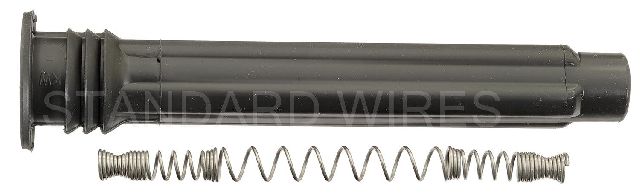
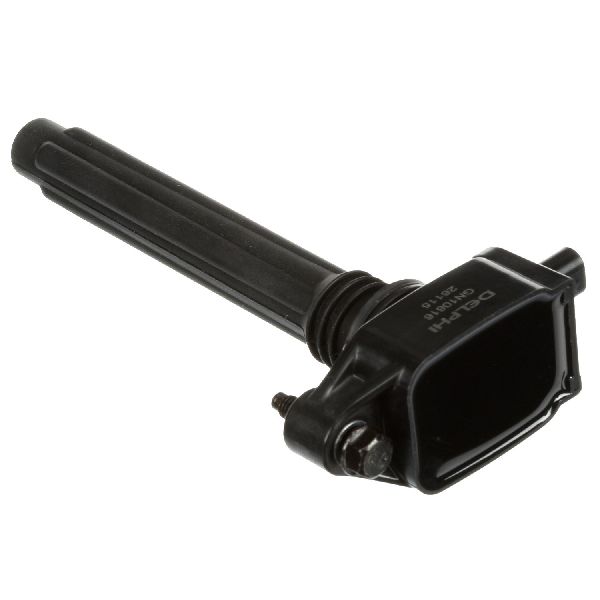
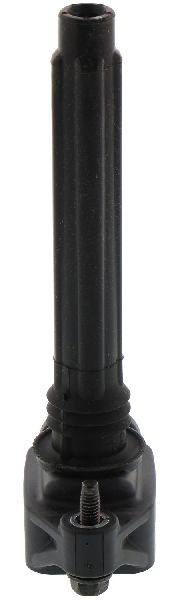
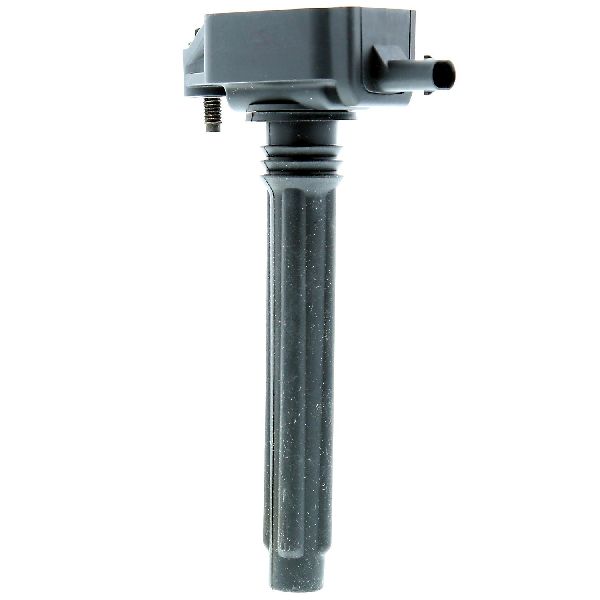
- Ignition Coil
(OEM #5149168AH)— This is the most common cause of a single-cylinder misfire on the 3.6L Pentastar engine and the easiest to diagnose via a 'swap test'.
Trusted brands: Mopar, NGK, Denso, Hitachi
OEM price range: $50-$80
Aftermarket price range: $25-$60 - Iridium Spark Plug
(OEM #SP149125AD)— Spark plugs are a routine maintenance item and can cause misfires when worn. They are often replaced along with the ignition coil. OEM Champion Iridium plugs are recommended.
Trusted brands: Champion (OEM), NGK
OEM price range: $15-$25
Aftermarket price range: $8-$15 - Rocker Arm
(OEM #05184296AH)— A known failure point on this engine that can lead to a misfire. If a ticking noise is present, this is a likely cause. The OEM part has been superseded multiple times (from AD, AE, AF, AG to AH), indicating revisions to the design. It is recommended to replace all 24.
Trusted brands: Mopar
OEM price range: $15-$25 per arm
Aftermarket price range: $8-$15 per arm
Related Codes That Often Appear With This One
- P0300 — If the misfire is intermittent or affects multiple cylinders, a P0300 (Random/Multiple Cylinder Misfire) may be set alongside P0302. This is especially common if the cause is the cylinder head issue.
- P0304, P0306 — These codes indicate misfires on cylinders 4 and 6. Seeing them together with P0302 is a very strong indicator of a systemic problem affecting the entire left bank of cylinders, which points directly to the known cylinder head defect as described in TSB #09-002-14.
- P2305 — This code means 'Ignition Coil 2 Secondary Circuit - Insufficient Ionization'. It often appears with P0302 and points more specifically to an electrical failure of the coil or its control circuit. TSB #18-069-16 REV. A, which addresses faulty PCMs, lists this code alongside the P030x series.
Technical Service Bulletins (TSBs) & Recalls
- 18-069-16: Mentions P0302 as a possible DTC resulting from a faulty PCM on some 2015-2016 models.
- 18-104-15: Lists P0302 as a potential diagnostic trouble code.
- 09-002-14 REV. B: Although for 2011-2013 models, this is a highly relevant TSB that details the diagnosis (cylinder leak-down test) for P0302 caused by a faulty left cylinder head.
Platform-Specific Known Issues
- Cylinder Head Defect (Primarily 2012-2013 models): Early 3.6L Pentastar engines were subject to TSB #09-002-14 REV. B and an extended warranty (X56) for a faulty left cylinder head that caused misfires on cylinders 2, 4, and 6. The TSB outlines a diagnostic procedure using a leak-down test to confirm the failure. While the vehicle range extends beyond this, it's a critical issue to be aware of for the earlier years in this group.
- Rocker Arm/Lifter Failure: A more common issue across all years is the failure of rocker arm needle bearings. This typically starts as a ticking noise and can escalate to a misfire and camshaft damage if not addressed. A forum user on DodgeForum.com detailed their experience replacing the rockers themselves to fix the '3.6 tick' and a subsequent misfire caused by an incorrectly installed arm.
- PCM Environmental Sensitivity: TSB #18-069-16 REV. A was issued for some 2015-2016 models due to a PCM that was not adequately sealed, allowing moisture intrusion that could cause various misfire codes, including P0302.
Mechanic-Grade Diagnostic Values
- Fuel Injector Resistance — expected: 12-13 Ohms. Failure: A significantly higher reading (e.g., >20 Ohms) or an open circuit (infinite resistance) indicates a failed injector.
- Ignition Coil Primary Resistance — expected: ~0.9 Ohms. Failure: A reading significantly outside of this value can indicate a faulty coil, though secondary resistance and on-vehicle testing are more definitive.
- Fuel Pressure — expected: ~43.5 psi (3 Bar). Failure: While low fuel pressure typically causes multiple/random misfires (P0300), it's a baseline to check. This value is the test pressure at which injectors are rated.
Hidden / Shadow Codes Worth Checking
- P2305: Ignition Coil 2 Secondary Circuit - Insufficient Ionization. This is a more specific electrical fault code for the cylinder 2 coil circuit. (see via Most modern OBD-II scanners will display this code. It is often set in conjunction with P0302, especially in cases related to PCM failure as noted in TSB 18-069-16.)
- P0302 pd: The 'pd' suffix indicates a 'Pending' code. This means the misfire was detected on the current or last drive cycle but hasn't occurred frequently enough to illuminate the Check Engine Light on its own. (see via Many consumer-grade OBD-II scanners will show pending codes, which can provide an early warning before the light comes on.)
Scan Tool Commands That Help
- Witech (or advanced aftermarket): Misfire Data / Misfire Counter — To confirm the misfire is isolated to cylinder 2 in real-time. Watching the live counter while driving can help determine if the misfire occurs under specific conditions (idle, load, cold, hot).
- Witech: Reprogram PCM / ECU Flash — This is a required step after replacing the Powertrain Control Module (PCM). TSB 18-069-16 REV. A mandates that a new PCM must be installed and then flashed with the latest software to fix the underlying issue.
Wiring & Ground Locations
- Ignition Coil 2 Connector — On top of the ignition coil for the front-most cylinder on the passenger side (left bank).. This is the primary connection point for the coil. The connector and its wiring are a potential point of failure due to heat and vibration. Inspect for damage or corrosion.
- Fuel Injector 2 Connector — On the fuel rail, connected to the injector for the front-most cylinder on the passenger side. Access requires removing the upper intake manifold.. This connector provides the signal to fire the injector. A poor connection can cause a P0302. The wiring harness in this area can sometimes chafe against the engine.
- G901A — Located at the base of the left 'B' pillar.. This is a major body ground point. While not directly for the ignition coil, poor grounds can cause unpredictable electrical issues throughout the vehicle, potentially affecting PCM operation and sensor readings.
- Powertrain Control Module (PCM) — Located behind the driver's side wheel well liner, toward the front of the vehicle near the headlight.. This is the location of the engine computer. TSB 18-069-16 points to a defect in the PCM itself for some 2015-2016 models. Physical inspection of the connectors for corrosion is a valid diagnostic step.
Real Owner Repair Stories
- ScannerDanner Forum user 'GotJeep' (2017 Dodge Grand Caravan 3.2L Flex Fuel (likely typo, is 3.6L)) — Rough running, P0302 code.
❌ Tried (didn't work) Replaced all spark plugs with NGK Iridium., Replaced all ignition coils with Bosch units.
✅ What actually fixed it Replacing all six fuel injectors with new Bosch injectors resolved the persistent, low-count misfire on cylinder 2 that remained after the tune-up. - Reddit user in r/MechanicAdvice (2018 Dodge Grand Caravan GT) — Check engine light with code P0302.
❌ Tried (didn't work) Changing spark plugs., Replacing ignition coil #2., Replacing fuel injector #2.
✅ What actually fixed it The user's post was unresolved, but the next logical step suggested by professionals was a compression test to check for mechanical engine damage, such as a rocker arm failure or cylinder head issue, which are common culprits after ignition and fuel parts are replaced without success. - YouTube video by 'Moose Mobile Auto Repair' (2007 Dodge Caravan 3.3L V6 (Note: Older generation, but demonstrates a relevant wiring failure)) — P0302 and P0202 (injector circuit fault).
❌ Tried (didn't work) Initial diagnosis pointed towards a bad PCM.
✅ What actually fixed it The wiring harness was found to be shorting out against the engine block/cylinder head, causing the misfire and injector codes. Repairing the damaged wiring fixed the issue without needing a new PCM.
OEM Part Supersession History
5184296AD, 5184296AE, 5184296AF, 5184296AG→05184296AH— Revisions to address the common bearing failure in the rocker arms. The 'AH' version is the latest, most robust design intended to prevent seizing and subsequent camshaft damage.
Heads up: All previous versions should be replaced with the latest 'AH' part. It is highly recommended to replace all 24 rocker arms at once, not just the failed one, to prevent future failures of the older-style parts.5149168AH→5149168AI, then 5149168AJ— Standard part revisions for ignition coils, potentially for improved durability or manufacturing process changes.
Heads up: The newer part numbers are direct replacements for the older ones.
Model Year Variations Within This Range
- 2012-2013: These model years are highly susceptible to the left cylinder head defect (affecting cylinders 2, 4, 6) as described in TSB #09-002-14. A P0302 on these years requires an immediate compression/leak-down test to rule this in or out.
- 2015-2016: Vehicles built between July 27, 2015, and September 11, 2015, are subject to TSB #18-069-16 REV. A. This bulletin states the PCM may have an improperly coated atmospheric vent, leading to internal failure and misfire codes. For these specific VINs, the recommended repair is to replace the PCM without further diagnosis.
Helpful Videos
We Have This Part in Stock


The information in this article is provided for general reference and educational purposes only. Vehicle specifications, procedures, and part compatibility can vary by production date, trim level, and region. Always consult your vehicle's factory service manual and verify part numbers before purchasing or performing repairs. Safety-critical components such as airbags, seat belts, and braking systems should be installed by a qualified professional.
- Dodge CARAVAN:
- 🎬 Helpful Videos
- 🛍️ Shop This Part
- What's Unique About the 2012-2016 Dodge CARAVAN
- Diagnostic Flowchart
- Symptoms You May Notice
- Most Likely Causes
- Rare But Worth Checking
- Diagnosis Steps
- Parts You'll Likely Need
- Related Codes That Often Appear With This One
- Technical Service Bulletins (TSBs) & Recalls
- Platform-Specific Known Issues
- Mechanic-Grade Diagnostic Values
- Hidden / Shadow Codes Worth Checking
- Scan Tool Commands That Help
- Wiring & Ground Locations
- Real Owner Repair Stories
- OEM Part Supersession History
- Model Year Variations Within This Range
- 🎟️ Get 5% Off