

P0302 on 2010-2017 Chevrolet Tahoe: Cylinder 2 Misfire Causes and Fixes
P0302 on a Chevy Tahoe indicates a misfire in cylinder #2. The most common fixes are replacing the spark plug, ignition coil, or spark plug wire. Expect to pay $10-$75 for these parts. However, be aware of potential valvetrain issues like a broken valve spring or, more broadly, problems related to the Active Fuel Management (AFM) system, which can lead to more serious and expensive repairs.
- P0302 specifically points to a misfire on cylinder #2, located at the front of the passenger's side engine bank.
- Always start with the cheapest and easiest fixes: inspect the spark plug and wire, and swap the ignition coil with another cylinder to diagnose it for free.
- A flashing check engine light is a serious warning that requires you to stop driving to prevent costly damage to the catalytic converter.
- While the most likely cause is a simple ignition part, be aware of the well-documented AFM lifter issues on these GM V8 engines, which represent a much more serious and expensive mechanical repair.
What's Unique About the 2010-2017 Chevrolet TAHOE

The 2010-2017 Tahoe, spanning two generations (GMT900 and K2XX), primarily uses 5.3L (LC9, L83) and 6.2L V8 engines equipped with Active Fuel Management (AFM). While standard ignition faults are common, these engines are widely known for AFM lifter failures, where a lifter can become stuck or collapse, causing a persistent misfire. Although P0302 points to a non-AFM cylinder, the overall valvetrain is still a known weak point. A broken valve spring, for example, can cause an identical misfire and is a documented issue on this engine family. Therefore, mechanical problems must be a consideration if simple ignition and fuel fixes fail.
Diagnostic Flowchart

Tap your situation to follow the diagnostic path that matches what you're seeing on this vehicle.
Generation note: This range covers the end of the 3rd generation (GMT900, 2010-2014) with Gen IV V8s (like the 5.3L LC9), and the start of the 4th generation (K2XX, 2015-2017) which introduced Gen V EcoTec3 V8s (like the 5.3L L83) with direct injection. While the core causes of a P0302 misfire are similar, the later generation's direct injection system adds the high-pressure fuel pump and injectors as potential, though less common, points of failure.
Symptoms You May Notice
- Rough or shaky idle
- Hesitation or stumbling during acceleration
- Noticeable loss of engine power
- Flashing Check Engine Light (indicates a severe misfire)
- Solid Check Engine Light
- Engine may smell of raw fuel
- Difficulty starting the engine.
- Replacing the oxygen (O2) sensors. O2 sensors report on combustion efficiency; they do not typically cause a single-cylinder misfire.
- Replacing the catalytic converter. A misfire can destroy a catalytic converter, but a bad converter does not cause the misfire.
Most Likely Causes

- Worn or Fouled Spark Plug 🔴 High Probability Spark plugs are a standard wear item. Oil fouling can also occur due to PCV issues or piston ring wear, which are known possibilities on these engines.
How to confirm: Remove the spark plug from cylinder #2 and inspect it for wear, carbon tracking, oil fouling, or damage to the electrode or ceramic insulator. Compare it to a plug from a working cylinder.
Typical fix: Replace the spark plug. It is best practice to replace all 8 spark plugs at the same time using the correct OEM plugs for your engine generation.
Est. part cost: $8-$20 per plug - Faulty Ignition Coil 🔴 High Probability
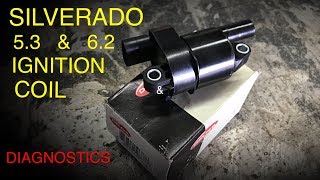
How to confirm: Swap the ignition coil from cylinder #2 with another cylinder (e.g., cylinder #4, the next one back on the same side). Clear the codes and drive the vehicle. If the code changes to P0304, the coil is bad. This is a very common and effective diagnostic step mentioned in many forums.
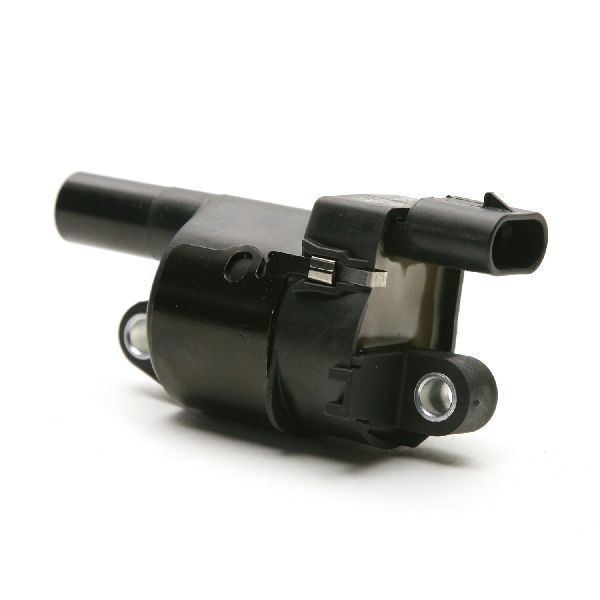
Typical fix: Replace the faulty ignition coil. It's often wise to use an OEM or high-quality aftermarket brand like Delphi.
Est. part cost: $40-$95 - Bad Spark Plug Wire 🟡 Medium Probability A known issue where the connection at the coil or plug becomes loose, causing intermittent spark. This is documented in manufacturer TSB #PIP4819A.
How to confirm: Inspect the wire for cylinder #2 for any signs of cracking, melting, or corrosion. Ensure it 'clicks' firmly onto both the spark plug and the ignition coil. A wire can look good but be internally broken; test its resistance with a multimeter.
Typical fix: Replace the spark plug wire. It is often recommended to replace the full set with a quality brand like ACDelco or NGK.
Est. part cost: $15-$30 for a single wire, $50-$120 for a set - Clogged or Failed Fuel Injector 🟡 Medium Probability
How to confirm: Use a mechanic's stethoscope to listen to the injector; it should make a consistent clicking sound. A noid light can confirm if the injector is receiving an electrical signal. Swapping the injector with another cylinder is also a definitive test, but more involved, especially on Gen V direct injection engines.
Typical fix: Replace the faulty fuel injector. For minor clogging, a high-quality fuel system cleaner like Seafoam has been reported by some owners to resolve the issue.
Est. part cost: $50-$150 for Gen IV (port), $100-$250+ for Gen V (direct) - Active Fuel Management (AFM) Lifter Failure ⚪ Low Probability AFM/DOD lifters are a very common failure point on these GM V8 engines, though they typically cause misfires on the AFM cylinders (1, 4, 6, or 7). While a failure on cylinder #2 is not directly an AFM lifter, oil pressure issues or debris from a failing AFM system can potentially affect the entire engine.
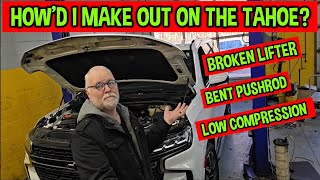
How to confirm: This requires advanced diagnostics, starting with a compression test. A reading of 90psi, as seen in one forum post, is low and points to a mechanical issue. If compression is low, removal of the valve cover is needed to inspect for a collapsed lifter, bent pushrod, or broken valve spring.
Typical fix: Requires replacing all lifters (and often the camshaft) for the affected cylinder bank. Many owners opt for a full AFM delete kit to prevent future issues. 🎬 Watch this walkthrough on replacing a failed AFM lifter and pushrod. This is a complex and expensive repair.
Est. part cost: $400-$1200 for a lifter and camshaft kit
Rare But Worth Checking
- Intake Manifold Gasket Leak: A vacuum leak near the cylinder #2 intake runner can lean out the air/fuel mixture and cause a misfire. This can be diagnosed by spraying brake cleaner near the runner (listen for an RPM change) or, more safely and effectively, with a smoke test.
- Low Engine Compression: Caused by internal mechanical issues like a worn piston ring, a bad head gasket, or a problem with the cylinder head valves. A compression test will confirm this. A healthy cylinder should be over 150 PSI with minimal variation between cylinders.
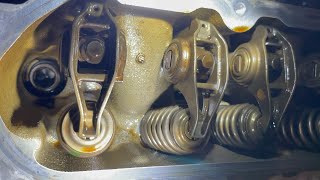
- Broken Valve Spring: A known issue on this engine family that can cause a consistent or intermittent misfire, sometimes with a ticking noise. A visual inspection under the valve cover is required to confirm. One owner on a forum found a broken spring to be the cause of their misfire after basic ignition parts didn't solve it.
- Broken Fuel Injector Connector: TSB #21-NA-283 notes that for some GM trucks, a P0302 can be caused by a broken terminal pin inside the #2 fuel injector wiring harness connector, leading to an intermittent connection.
Diagnosis Steps
- Read the code with an OBD-II scanner and check for any other pending or stored codes. Note the freeze frame data to see the engine conditions when the misfire occurred.
- Visually inspect the spark plug wire and the area around the ignition coil for cylinder #2 (front passenger side).
- Swap the ignition coil from cylinder #2 with the coil from cylinder #4. Clear the codes, run the engine, and see if the misfire code moves to P0304. If it does, the coil is faulty. This is the most common first step.
- If the misfire remains on cylinder #2, remove and inspect the spark plug. Check for wear, damage, or oil/fuel fouling. Replace if necessary. If the plug tube has oil in it, the valve cover gasket is leaking.
- Inspect the fuel injector. Listen for a steady clicking. Check the wiring connector for damage as noted in TSB #21-NA-283. Use a noid light to confirm the injector is getting a signal from the ECM.
- If ignition and fuel signal check out, perform an engine compression test on cylinder #2 and compare it to a healthy cylinder (e.g., #4). A significant loss of compression (e.g., below 120 PSI or more than 20% lower than the other cylinder) points to a mechanical problem.
- If compression is low, remove the passenger side valve cover to inspect the valve springs, pushrods, and rocker arms for damage. A broken valve spring is a known issue and will be visible here.
Parts You'll Likely Need
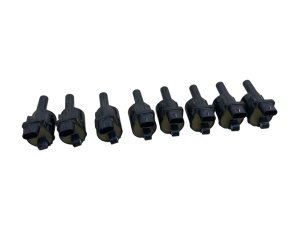
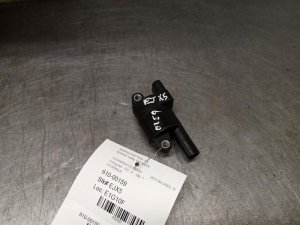
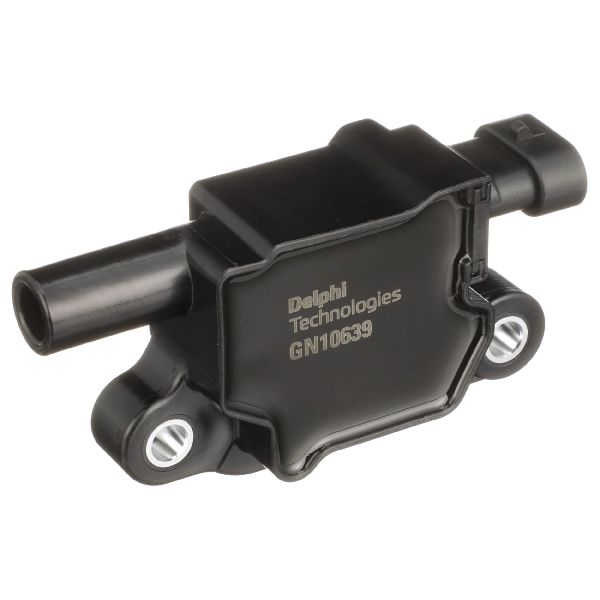
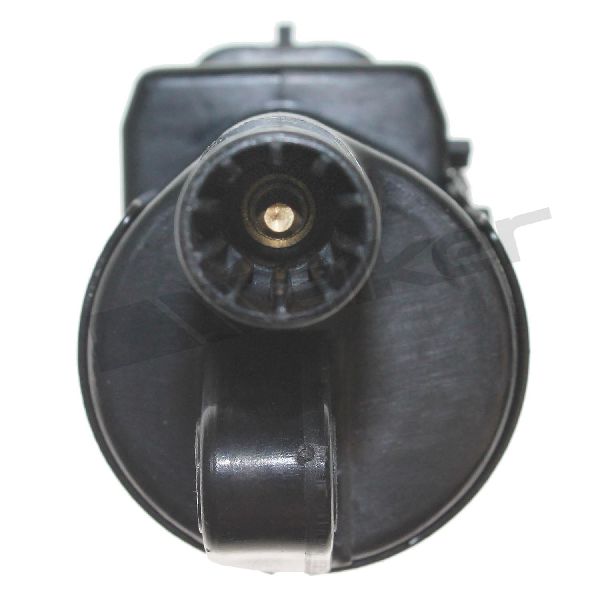
- Ignition Coil
(OEM #12611424 (Gen IV, often superseded by 12699382) / 12699383 (Gen V))— Ignition coils are a frequent failure point and a primary cause of single-cylinder misfires.
Trusted brands: ACDelco, Delphi
OEM price range: $70-$95
Aftermarket price range: $40-$75 - Iridium Spark Plug
(OEM #41-110 (Gen IV 5.3L/6.2L) / 41-162 (Gen V 5.3L/6.2L))— Spark plugs are a routine maintenance item and the most common cause of misfires. Worn or fouled plugs cannot create an adequate spark. Using the correct plug for the generation is critical.
Trusted brands: ACDelco, NGK
OEM price range: $10-$20
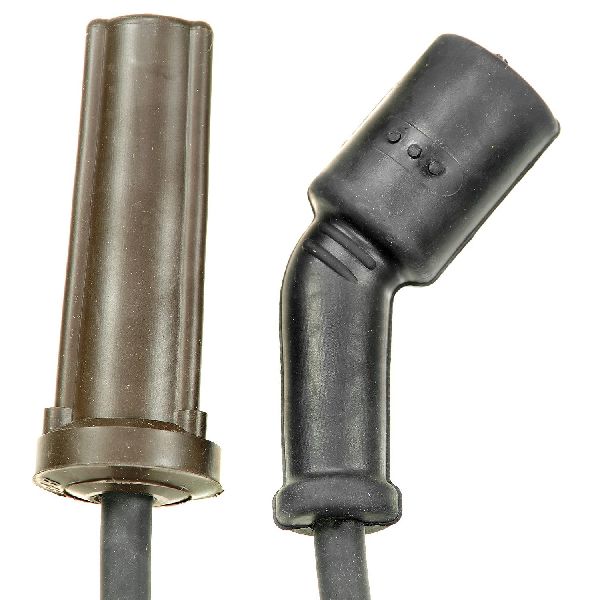
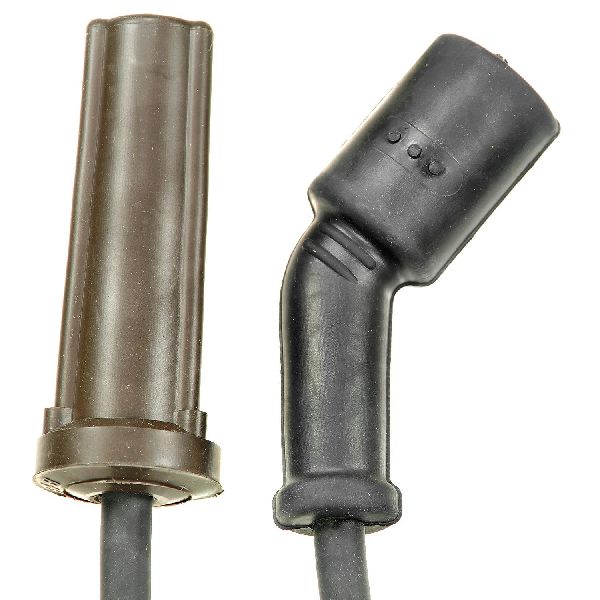
Aftermarket price range: $8-$15 - Spark Plug Wire Set
(OEM #9748RR (ACDelco set for Gen IV) / 12716289 (Single wire for Gen V))— Wires degrade over time, and a loose or damaged wire can prevent spark from reaching the plug, as noted in TSB #PIP4819A.
Trusted brands: ACDelco, NGK
OEM price range: $70-$120 (Set)
Aftermarket price range: $50-$90 (Set)
Related Codes That Often Appear With This One
- P0300 — If the misfire is intermittent or affects other cylinders, the ECM may log a P0300 (Random/Multiple Cylinder Misfire) code in addition to the specific cylinder code.
Technical Service Bulletins (TSBs) & Recalls
- PIP4819A: Addresses engine misfires (P0300-P0308) and advises technicians to inspect for and replace loose-fitting spark plug wires.
- 19-NA-219: Discusses various engine noises and misfires, pointing to potential causes like broken valve springs or collapsed AFM lifters.
- 21-NA-283: Notes that a P0302 can be caused by a broken terminal pin inside the #2 fuel injector wiring harness connector.
Platform-Specific Known Issues

- A known issue with loose spark plug wires can cause misfires on these vehicles, as documented in Technical Service Bulletin #PIP4819A.
- Failure of the Active Fuel Management (AFM) system lifters is a widely documented problem on the 5.3L and 6.2L engines, leading to misfires and potential engine damage. While this typically affects cylinders 1, 4, 6, and 7, any valvetrain issue, like a broken valve spring on cylinder #2, should be considered if basic fixes fail.
Mechanic-Grade Diagnostic Values
- Fuel Injector Resistance (Gen IV, Port Injection) — expected: 11 - 14 Ohms at room temperature.. Failure: A significantly lower reading (e.g., under 5 Ohms) or an open circuit indicates a failed injector.
- Ignition Coil Primary Resistance — expected: 0.4 - 2.0 Ohms.. Failure: A reading outside this range indicates a faulty primary winding.
- Ignition Coil Secondary Resistance — expected: 6,000 - 11,100 Ohms (6.0 - 11.1 kOhms).. Failure: A reading outside this range indicates a faulty secondary winding.
- Low-Side Fuel Pressure (Gen IV, 2010-2014) — expected: 50 - 60 PSI with Key On, Engine Off (KOEO). Pressure should not drop more than 5 PSI in one minute.. Failure: Pressure below 50 PSI or a rapid bleed-down suggests a weak fuel pump or faulty regulator.
- High-Side Fuel Pressure (Gen V, 2015-2017) — expected: 300 - 400 PSI while cranking. At idle, pressure is typically 500-700 PSI.. Failure: Significantly low pressure during cranking can indicate a failed high-pressure fuel pump (HPFP) or a stuck cam actuator.
Hidden / Shadow Codes Worth Checking
- Mode 6 Misfire Counter: This is not a DTC, but rather live data accessible with advanced scan tools. It shows the real-time count of misfire events for each specific cylinder, including cylinder 2. This data can reveal intermittent misfires that haven't yet met the threshold to set a P0302 code. (see via An advanced OBD-II scanner with Mode 6 capability or a dealer-level tool like a GM GDS2/Tech2, often found under 'Misfire Data' or a similar menu.)
Scan Tool Commands That Help
- GM GDS2 / Tech2: Fuel Injector Balance Test — To definitively test a suspected faulty fuel injector on cylinder #2. The tool fires the injector for a precise duration and measures the resulting pressure drop in the fuel rail, comparing it against the other cylinders to identify a clogged or weak injector.
- GM GDS2: Cylinder Deactivation / AFM System Test — To test the functionality of the Active Fuel Management solenoids and lifters. While P0302 is not an AFM cylinder, if P0300 is also present or if oil consumption issues exist, this test helps verify the health of the overall valvetrain system.
- GM GDS2: Camshaft Position Actuator Solenoid Control — For Gen V engines (2014+), if low compression or crank/no-start symptoms accompany the misfire, this command cycles the cam phaser. A stuck phaser can retard valve timing and cause misfires.
Wiring & Ground Locations
- G102 — Located at the left rear of the engine; grounds all 8 ignition coils.. A poor connection at this specific ground can cause weak or intermittent spark for all cylinders, potentially leading to misfire codes.
- G103 — Located on the cowl, above the brake booster (GMT900) or at the rear of the left-hand (driver's side) engine head.. This is a critical ground for the Engine Control Module (ECM) and other modules. A loose or corroded G103 is cited in TSBs as a cause for various electrical issues, including engine performance problems.
- ECM/PCM Ground — A crucial ground wire runs from the main harness to a bolt on the rear of the driver's side of the engine block. It is notoriously difficult to access.. This is the primary ground for the computer that controls ignition timing and fuel injection. Corrosion or a break in this wire can cause erratic sensor readings and misfires that are very difficult to diagnose.
Real Owner Repair Stories
- Tahoe Yukon Forum user (Vehicle year not specified, but within the 2010-2017 range with a 5.3L V8.) — Check Engine Light with P0302, especially after idling for several minutes. Rough idle.
❌ Tried (didn't work) Initial diagnosis was inconclusive.
✅ What actually fixed it Replaced the intake manifold gasket and valve cover gaskets. The owner noted that the intake gasket at cylinder #2 was visibly not sealed correctly, causing a vacuum leak. - Tahoe Yukon Forum user (2013 Tahoe LS 5.3L) — Started as a random misfire (P0300), then isolated to P0302. Intermittent rough idle.
❌ Tried (didn't work) Replacing all spark plugs and wires., Replacing all ignition coils., Checking for vacuum leaks (none apparent).
✅ What actually fixed it The final diagnosis pointed to a mechanical failure. A compression test on cylinder #2 showed a low reading of only 90 PSI. This strongly indicates an internal mechanical problem, such as the suspected broken valve spring, a bent pushrod, or a failed lifter.
"I Checked Everything" — The Actual Cause
- In one documented case, a persistent P0302 that occurred after prolonged idling was finally resolved by replacing the intake manifold gasket. The owner discovered the faulty seal at cylinder #2 while performing another repair. This suggests the vacuum leak may have been intermittent or only present under specific engine temperatures, which could allow it to be missed during a standard, static smoke test.
When the Usual Fixes Don't Work
- While swapping ignition coils and spark plugs is the most common fix, numerous owner accounts show these steps failing to resolve the P0302 code. In these cases, the root cause was often mechanical. One owner fixed the issue by replacing a failed intake manifold gasket that was causing a vacuum leak specifically at cylinder #2. Another diagnostic effort for the same code on a 2013 Tahoe led to a compression test that revealed only 90 PSI in the affected cylinder, pointing directly to a significant mechanical failure like a broken valve spring or bad lifter, rendering ignition part replacement useless.
OEM Part Supersession History
12570616→12611424, which was later superseded by 12739916— Standard part evolution for improved durability and performance.
Heads up: These part numbers apply to Gen IV (2010-2014) engines. Always verify the latest part number with a dealer as they change frequently.ACDelco 41-110 (Iridium)→Remains the recommended plug for most Gen IV applications, though 41-985 and 41-962 are sometimes listed as alternatives.— Supplier changes and offering of different material types (platinum vs. iridium).
Heads up: The Gen V engine (2015-2017) requires a different plug, ACDelco 41-162, which has a longer reach. Using a 41-110 in a Gen V engine can cause poor performance and potential engine damage.
Model Year Variations Within This Range
- 2010-2014 (GMT900) vs. 2015-2017 (K2XX): The primary difference is the engine architecture. 2010-2014 models use Gen IV V8s with port fuel injection, featuring a low-pressure fuel system. 2015-2017 models use Gen V 'EcoTec3' V8s with direct injection, which adds a high-pressure fuel pump (HPFP), high-pressure injectors, and makes the engine susceptible to carbon buildup on intake valves—a potential cause of misfires not seen in the earlier generation.
Helpful Videos
Used OEM Parts in Stock

New Aftermarket Parts Available


The information in this article is provided for general reference and educational purposes only. Vehicle specifications, procedures, and part compatibility can vary by production date, trim level, and region. Always consult your vehicle's factory service manual and verify part numbers before purchasing or performing repairs. Safety-critical components such as airbags, seat belts, and braking systems should be installed by a qualified professional.
- Chevrolet TAHOE:
- 🎬 Helpful Videos
- 🛍️ Shop This Part
- What's Unique About the 2010-2017 Chevrolet TAHOE
- Diagnostic Flowchart
- Symptoms You May Notice
- Most Likely Causes
- Rare But Worth Checking
- Diagnosis Steps
- Parts You'll Likely Need
- Related Codes That Often Appear With This One
- Technical Service Bulletins (TSBs) & Recalls
- Platform-Specific Known Issues
- Mechanic-Grade Diagnostic Values
- Hidden / Shadow Codes Worth Checking
- Scan Tool Commands That Help
- Wiring & Ground Locations
- Real Owner Repair Stories
- "I Checked Everything" — The Actual Cause
- When the Usual Fixes Don't Work
- OEM Part Supersession History
- Model Year Variations Within This Range
- 🎟️ Get 5% Off