

P0302 on 2010-2017 Chevy Silverado 1500: Cylinder 2 Misfire Causes & Fixes
P0302 means your Silverado has a misfire in cylinder 2. The most likely cause is a simple bad spark plug or ignition coil, which is a cheap and easy DIY fix. However, on these V8 engines with Active Fuel Management (AFM), it could also be a failed AFM lifter, a much more serious and expensive repair often preceded by a distinct ticking noise.
- P0302 is a misfire on cylinder 2, which is the front-most cylinder on the passenger side.
- Start your diagnosis with the easiest and cheapest parts: swap the ignition coil with another cylinder to see if the code follows. If not, inspect the spark plug and wire.
- A flashing check engine light means the misfire is severe and can quickly destroy your catalytic converter. Minimize driving immediately.
- If you hear a persistent ticking noise along with the misfire, the cause is very likely a failed AFM lifter, which is a common but serious and expensive repair for this engine.
What's Unique About the 2010-2017 Chevrolet Silverado 1500

This generation of Silverado with the V8 engine uses an Active Fuel Management (AFM) system to improve fuel economy by deactivating cylinders under light loads. While good in theory, this system is a known weak point. The specialized AFM lifters are prone to failure; they can collapse, get stuck, or even damage the camshaft. A class-action lawsuit has even been filed regarding these failures, alleging issues with lifter design and materials. This turns a common misfire code into a potential indicator of a major internal engine problem that is well-documented for these trucks. Technical Service Bulletin 15-06-01-002G specifically addresses engine misfires caused by mechanically collapsed or stuck AFM lifters.
Generation note: The 2010-2017 year range covers two Silverado 1500 generations: the GMT900 (2010-2013) and the K2XX (2014-2017). Both generations use V8 engines with the Active Fuel Management (AFM) system, and the common causes for a P0302 misfire, including lifter failure, are prevalent in both. The 2014+ K2XX models with EcoTec3 engines also feature direct injection, which can introduce carbon buildup on intake valves as another potential, though less common, cause of misfires.
Symptoms You May Notice
- Rough idle or shaking, especially at a stop
- Noticeable loss of engine power and poor acceleration
- Check Engine Light is on solid or flashing
- Engine hesitates or stumbles
- A distinct ticking or chirping sound from the engine bay, often a precursor to lifter failure 🎬 Watch: Hear what a 5.3L engine tick sounds like.
- Roughness or hesitation when the engine switches between V4 (AFM active) and V8 modes
- Replacing only the spark plug when the ignition coil is the actual problem. Swapping the coil first is a better diagnostic step.
- Assuming the problem is a simple tune-up part when a ticking noise is present, which strongly points to a more serious AFM lifter failure.
- Replacing AFM lifters without inspecting the camshaft for lobe damage, leading to a repeat failure.
Most Likely Causes


- Worn or Fouled Spark Plug 🔴 High Probability
How to confirm: Remove the spark plug from cylinder 2 (front passenger side) and inspect it. Look for heavy carbon buildup, oil fouling, a cracked insulator, or a worn-out electrode. Compare it to a plug from another cylinder.
Typical fix: Replace the spark plug. It is highly recommended to replace all 8 spark plugs at the same time for even performance. Use high-quality iridium plugs like the ACDelco OEM parts. The original part 41-110 has been superseded by 41-162 for many applications.
Est. part cost: $8-$20 per plug - Failed Ignition Coil 🔴 High Probability
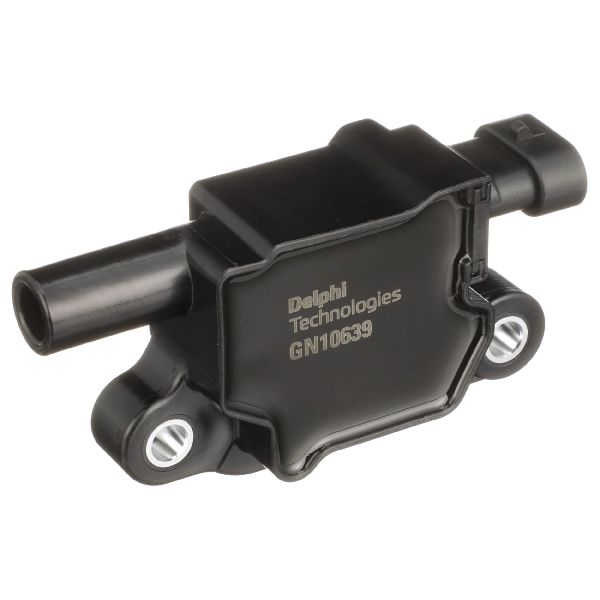
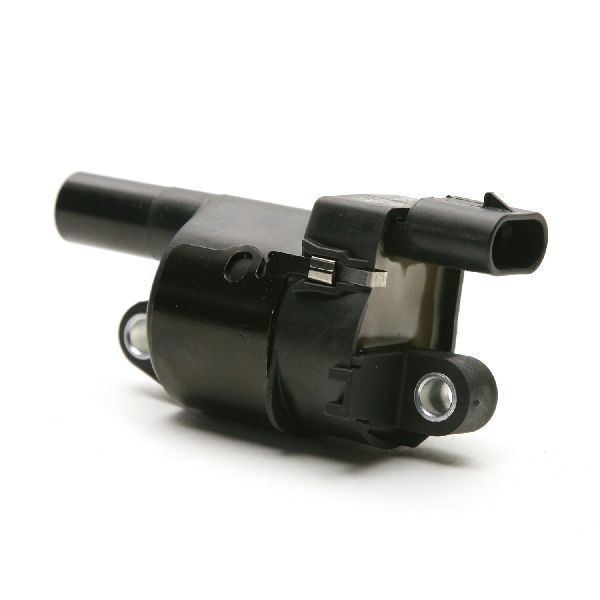
How to confirm: Swap the ignition coil from cylinder 2 with the coil from another cylinder (e.g., cylinder 4, right behind it). Clear the codes and drive the truck. If the code changes to P0304, the coil is faulty.
Typical fix: Replace the failed ignition coil. It's a simple part to replace, typically held on by a single bolt.
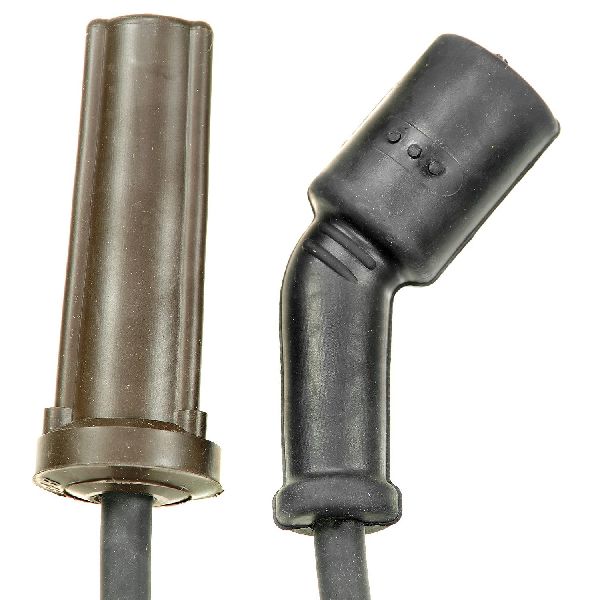
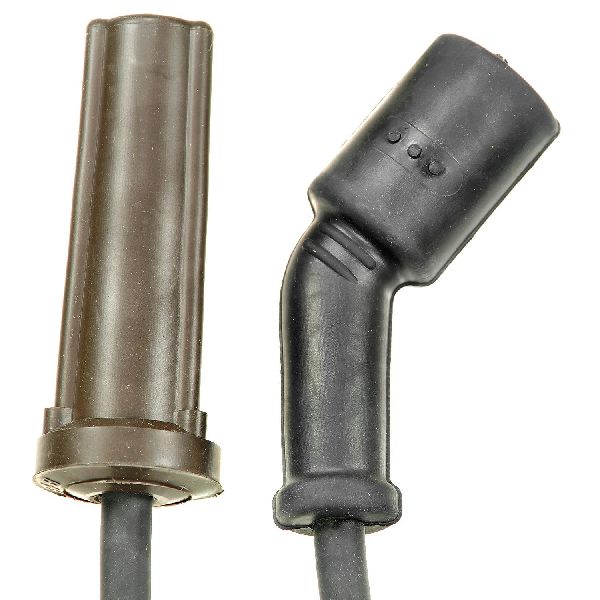
Est. part cost: $30-$75 - Bad Spark Plug Wire 🟡 Medium Probability A GM Technical Service Bulletin (PIP4819A) specifically calls out inspecting for loose or poorly seated spark plug wires as a cause for misfires on these vehicles.
How to confirm: Visually inspect the wire for cylinder 2 for any signs of damage, cracking, or burns. Ensure it is securely clicked onto both the spark plug and the ignition coil. The connection can feel secure but still be inadequate.
Typical fix: Replace the spark plug wire. It's best practice to replace the entire set of 8 wires.
Est. part cost: $50-$100 for a set - Collapsed or Stuck AFM Lifter 🟡 Medium Probability The Active Fuel Management (AFM) system is a well-documented weak point on 5.3L and 6.2L GM V8s. Lifters can fail mechanically, causing them to get stuck, which prevents the valve from opening and results in a persistent misfire on that cylinder. This can also lead to a bent pushrod and damage to the camshaft lobe.
How to confirm: This is an advanced diagnosis. A key symptom is a persistent ticking noise from the engine that corresponds with the misfire. A mechanic can perform a compression test; low or zero compression on cylinder 2 is a strong indicator. Removing the valve cover to observe valvetrain movement (or lack thereof) can confirm if the rocker arms are not moving as they should.
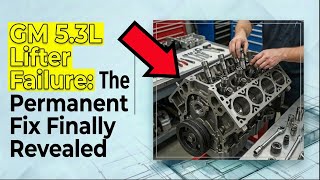
Typical fix: This is a major repair. It requires removing the cylinder head to replace the failed lifter. It is strongly recommended to replace all AFM lifters on that bank of cylinders, and often an AFM delete kit is installed to prevent future failures. 🎬 See a mechanic explain the permanent AFM delete fix. The camshaft must also be inspected for damage and replaced if necessary. A full AFM delete involves replacing the AFM lifters with standard lifters, replacing the valley cover, and reprogramming the ECM.
Est. part cost: $400-$1500 for parts (lifters, gaskets, bolts, camshaft if needed). An AFM delete kit can range from $400 to over $1000. - Clogged or Failed Fuel Injector ⚪ Low Probability
How to confirm: An injector 'noid' light can be used to confirm the injector is receiving an electrical pulse from the ECM. To confirm a clog, you can swap the cylinder 2 injector with another cylinder's injector, but this is more labor-intensive than swapping a coil. A user on a forum confirmed their P0302 was resolved by replacing the injector. 🎬 Watch this walkthrough on replacing a fuel injector.
Typical fix: Replace the faulty fuel injector. Sometimes running a high-quality fuel system cleaner can resolve a minor clog.
Est. part cost: $50-$120
Rare But Worth Checking
- Low Engine Compression: Beyond a failed lifter, low compression can be caused by more severe mechanical issues like worn piston rings, a burnt valve, a broken valve spring, or a failed head gasket. A compression test and cylinder leak-down test are required for diagnosis.
- Failed Valve Lifter Oil Manifold (VLOM): The VLOM, also known as the valley cover, directs pressurized oil to the AFM lifters. It contains solenoids that can fail and a small filter screen that can clog, leading to oil pressure issues that cause lifter failure. It is often replaced during an AFM lifter job.
Diagnosis Steps

- Read the code with an OBD-II scanner to confirm P0302 and check for any other codes. Use the scanner's live data to monitor the misfire counter for cylinder 2.
- Listen for a distinct ticking or tapping noise from the passenger side of the engine, which would point towards a potential lifter issue.
- Inspect the spark plug wire for cylinder 2. Ensure it's securely connected at both ends and shows no signs of damage. As noted in TSB Bulletin #PIP4819A, technicians should specifically check for loose spark plug wires when a P0302 is present.
- Swap the ignition coil from cylinder 2 with the one from cylinder 4 (the next one back on the same side). Clear the codes and run the engine. If the code changes to P0304, the ignition coil is bad and needs to be replaced.
- If the code remains P0302, remove and inspect the spark plug from cylinder 2. If it is fouled or worn, replace it. It's best to replace all 8.
- If the misfire still persists on cylinder 2, the problem is likely related to fuel or a mechanical issue.
- Use a 'noid' light to check for a pulse at the fuel injector connector for cylinder 2. If there is a pulse, the injector is receiving a signal.
- If ignition and fuel injector signal are confirmed good, perform an engine compression test on cylinder 2. Very low or zero compression strongly suggests a mechanical problem, most likely a failed AFM lifter or bent pushrod.
- If compression is low, the next step is removing the passenger-side valve cover to visually inspect for broken valve springs or bent pushrods, and to observe if the rocker arms for cylinder 2 are moving correctly.
Parts You'll Likely Need
- Ignition Coil
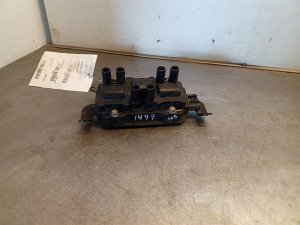
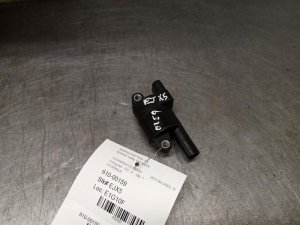
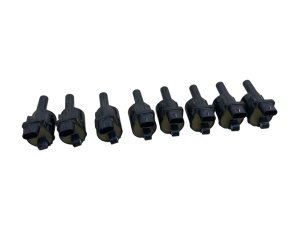
(OEM #12611424)— A very common failure item causing a single-cylinder misfire. Easy to diagnose by swapping.
Trusted brands: ACDelco, Delphi, NGK
OEM price range: $45-$70
Aftermarket price range: $30-$50 - Spark Plug
(OEM #41-162 (supersedes 41-110))— Spark plugs are a standard maintenance item and can foul or wear out, causing a misfire. The 41-162 is the updated ACDelco Iridium part number for many of these engines.
Trusted brands: ACDelco, NGK
OEM price range: $10-$15
Aftermarket price range: $8-$12 - AFM Valve Lifter
(OEM #12645725)— The OEM lifter for the Active Fuel Management system is a very common failure point. When it collapses or gets stuck, it causes a persistent misfire. It is highly recommended to replace all AFM lifters at once.
Trusted brands: ACDelco (GM Original Equipment), Melling
OEM price range: $40-$55 per lifter
Aftermarket price range: $30-$45 per lifter
Related Codes That Often Appear With This One
- P0300 — If the misfire is severe or intermittent, the computer may also log a P0300 'Random/Multiple Cylinder Misfire' code alongside the specific P0302.
Technical Service Bulletins (TSBs) & Recalls
- PIP4819A: Calls out inspection of loose or poorly seated spark plug wires as a cause for misfires. A technician may find Diagnostic Trouble Codes P0300 through P0308 and will need to replace any loose spark plug wires.
- 15-06-01-002G: Addresses engine misfires (P0300) and ticking noises caused by mechanically collapsed or stuck AFM lifters, and potential bent pushrods.
- 19-NA-219: Provides diagnostic guidance for various engine noises and misfires, listing potential causes including worn cam lobes, sticking valves, broken valve springs, and collapsed AFM lifters.
Platform-Specific Known Issues
- Real-World Repair Story: AFM Lifter Failure: On a Chevrolet Forum, an owner of a 2008 Silverado with a 5.3L engine and 137k miles was quoted $3,000 for new lifters and a camshaft by a dealer after experiencing the common failure. This highlights the significant cost and the fact that even well-maintained trucks can be affected.
- DIY Cost of AFM Lifter Replacement: A user on a Reddit forum mentioned replacing the lifters on their 2012 5.3L Silverado themselves. The parts cost was approximately $1,200 (prices from several years ago), and the job took a full day. This provides a baseline for the cost of parts for a DIY repair.
- AFM Delete as a Permanent Solution: In multiple forums, owners who have experienced AFM lifter failure opt for a full 'AFM delete' rather than replacing with the same failure-prone parts. A user on Reddit mentioned their AFM delete kit from Texas Speed cost around $4,000 installed at an independent shop. These kits typically include non-AFM lifters, a new valley cover, a new camshaft, and require an ECU tune to disable the system.
Mechanic-Grade Diagnostic Values
- Ignition Coil Primary Resistance — expected: 0.4 - 2.0 Ohms. A common value for OEM coils is around 0.84 Ohms.. Failure: A reading of infinity (OL) indicates an open circuit, while a reading of 0 indicates a short. Significant deviation from the typical range suggests a failing coil.
- Ignition Coil Secondary Resistance — expected: 5,000 - 20,000 Ohms (5kΩ - 20kΩ).. Failure: A reading outside this range, or an open circuit (OL), indicates a faulty secondary winding. One technician noted a bad coil reading an abnormally low 3,700 Ohms.
- Fuel Pressure (Low Pressure System, 2010-2017) — expected: Key-On, Engine-Off (KOEO): 500 kPa (73 psi) minimum.. Failure: Pressure that does not reach the minimum specification can indicate a weak fuel pump, causing lean conditions and misfires under load.
- Fuel Pressure (High Pressure, Direct Injection, 2014+) — expected: At idle, rail pressure can fluctuate but is often in the 500-1000 psi range. While cranking, pressure should build to 300-400 psi.. Failure: A significant drop in pressure while cranking, or readings that are wildly erratic or consistently low at idle, can point to a failing high-pressure fuel pump (HPFP) or a leaking injector.
Hidden / Shadow Codes Worth Checking
- Mode $06, Test ID $C1-$C8: Mode $06 data on a generic OBD-II scanner can show misfire counts for each cylinder before they are high enough to trigger a P030x code. Test ID $C1 corresponds to Cylinder 1, $C2 to Cylinder 2, and so on. This allows a technician to see if other cylinders are misfiring, even if only P0302 is set. (see via Any advanced OBD-II scanner that supports Mode $06 data.)
Scan Tool Commands That Help
- GDS2 (GM Dealer Tool) or equivalent: Cylinder Power Balance — To graphically display the RPM contribution of each cylinder in real-time. A significant drop for cylinder 2 confirms the misfire is currently happening, helping to diagnose intermittent issues.
- GDS2 (GM Dealer Tool) or equivalent: AFM Cylinder Deactivation / Camshaft Position Actuator Solenoid Valve Control — Allows a technician to command the AFM solenoids on and off while the engine is running to test the functionality of the VLOM (valley cover manifold) and the solenoids themselves. This can help isolate a VLOM issue from a mechanical lifter failure.
- GDS2 (GM Dealer Tool) or equivalent: Fuel Injector Balance Test — This test fires each injector for a set duration and measures the corresponding drop in fuel pressure. A smaller pressure drop for cylinder 2 indicates it is clogged or flowing less fuel than the others.
Wiring & Ground Locations
- G103 / G104 — G103 is on the front of the passenger side cylinder head. G104 is on the rear of the driver's side cylinder head.. These are the primary engine-to-chassis grounds. A loose or corroded connection at G103 (passenger side) is a known cause of weak spark or erratic sensor readings for the passenger-side bank of cylinders, including cylinder 2. Technicians recommend removing the bolt, cleaning the contact surfaces to bare metal, and re-securing.
- Engine Harness Chafe (2014+) — Multiple points, but a common one is where the main engine harness routes near the corner of the cylinder heads, the ECM/TCM bracket, and the driver's side shock tower.. GM has issued TSBs (e.g., 21-NA-149) regarding the harness rubbing through its insulation at these points. If the wire for the cylinder 2 ignition coil or fuel injector shorts to ground, it will cause a persistent P0302. A visual and physical inspection of the harness in these areas is critical.
- G102 — On the left side of the engine block, below the exhaust manifold in the area of cylinder #3.. This ground is for all 8 ignition coils. While less likely to cause a single-cylinder misfire, a poor connection here could cause random misfires or affect the entire bank.
Real Owner Repair Stories
- YouTube Channel 'CollegeAutomotiveClasses' (2014 Chevrolet Silverado 5.3L EcoTec3 (Direct Injection)) — Rough idle, audible clicking/air noise from under the intake manifold, P0300 (random misfire) and P219B (Bank 2 air-fuel ratio imbalance). Cylinder 2 was identified as the primary misfiring cylinder.
❌ Tried (didn't work) Initial diagnosis sounded like a loose spark plug or valvetrain issue.
✅ What actually fixed it The Teflon seal on the tip of the cylinder 2 direct fuel injector had failed, causing compression to leak past the injector into the crankcase. The fix required replacing the fuel injector and the single-use high-pressure fuel line. - YouTube Commenter (General GM V8) — Persistent P0302 with very rough idle, engine shaking, and stalling.
❌ Tried (didn't work) Replaced ignition coils, Replaced spark plugs
✅ What actually fixed it The cylinder 2 fuel injector was clogged. Adding a bottle of Redline fuel system cleaner to the fuel tank and driving the vehicle resolved the misfire and cleared the code. - Reddit user in /r/ChevyTrucks (2014-2018 Silverado 5.3L with ~70,000 miles) — Misfire on an AFM cylinder (in this case, cylinder 7, but the cause is identical for cylinder 2).
❌ Tried (didn't work) Initial thoughts were spark plugs.
✅ What actually fixed it The issue was a failed AFM lifter. One user noted their 2015 model required a full engine replacement because the failed lifter could not be removed from the block. Another user prevented further issues by installing an AFM disabler device via the OBD-II port.
"I Checked Everything" — The Actual Cause
- A smoke test for vacuum leaks would come back clean, but the actual cause was a failed Teflon seal on a direct fuel injector (2014+ models), allowing cylinder compression to leak into the crankcase, which is not detectable by a smoke test.
OEM Part Supersession History
12570616, D510C→12611424— Updated design or manufacturing process for the ignition coil.Various older AFM lifter numbers (e.g., 12571595)→12645725— GM has updated the AFM lifter design multiple times to improve reliability and address the high failure rates. 12645725 is a more recent OEM replacement part.
Heads up: When replacing lifters, it is critical to replace them as a full set (or at least a full bank of 8) to ensure consistent operation and prevent repeat failures from other old-design lifters.
Model Year Variations Within This Range
- 2014-2017: The introduction of the EcoTec3 engine family brought Direct Injection (DI). This means a high-pressure fuel pump (HPFP) is mounted in the engine valley, and the injectors spray directly into the cylinder. This makes the fuel system more complex and introduces new failure points like leaking injector seals and carbon buildup on the back of intake valves, as fuel no longer washes over them.
- 2010-2013: These GMT900 platform trucks use traditional port fuel injection. This system is generally simpler and not prone to intake valve carbon buildup. Fuel system-related misfires are more likely to be a simple clogged injector rather than a high-pressure pump or injector seal failure.
Diagnostic Flowchart
Real Owner Stories
Aggregated from forums and TSBs cited above. Mileages and costs reflect what owners reported in those sources.
2008 Chevrolet Silverado 5.3L — 137000 miles
Symptoms: Experienced the common AFM lifter failure.
What fixed it: Quoted for new lifters and a camshaft by a dealer.
Cost: $3,000
Source hint: Chevrolet Forum
2012 Chevrolet Silverado 5.3L
Symptoms: AFM lifter failure.
What fixed it: Replaced the lifters themselves (DIY repair taking a full day).
Cost: $1,200
Source hint: Reddit forum
Chevrolet Silverado 5.3L
Symptoms: Intermittent misfire on cylinder 2.
What fixed it: Replaced the fuel injector after replacing the plug, wire, and coil resulted in no change.
Source hint: Reddit r/MechanicAdvice - '5.3 Silverado P0302'
2016 GMC Sierra 6.2L — 105000 miles
Symptoms: Classic symptoms of loud ticking and hesitation.
What fixed it: Anticipating a dealer lifter repair.
Cost: $5,000+
Source hint: The Hull Truth Boating and Fishing Forum - 'fix AFM lifters or trade'
Chevrolet Silverado
Symptoms: AFM lifter failure.
What fixed it: AFM lifter and cam replacement at a dealership.
Cost: $7,000
Source hint: Reddit r/Silverado - 'Lifter and Cams replacement- price check'
Related OBD-II Codes
Frequently Asked Questions
Does TSB 15-06-01-002G apply to the P0302 code on my 2010-2017 Silverado 1500 V8?
What spark plugs should I use when replacing the fouled plug on cylinder 2?
Could a loose spark plug wire cause the P0302 on my 5.3L Silverado?
I hear a ticking noise along with the P0302 code. What does that mean for my Silverado?
How much does it cost to fix an AFM lifter failure on a 5.3L or 6.2L V8?
How can I easily test if the ignition coil is causing my P0302?
Helpful Videos
Used OEM Parts in Stock


New Aftermarket Parts Available


The information in this article is provided for general reference and educational purposes only. Vehicle specifications, procedures, and part compatibility can vary by production date, trim level, and region. Always consult your vehicle's factory service manual and verify part numbers before purchasing or performing repairs. Safety-critical components such as airbags, seat belts, and braking systems should be installed by a qualified professional.
- Chevrolet Silverado 1500:
- 🎬 Helpful Videos
- 🛍️ Shop This Part
- What's Unique About the 2010-2017 Chevrolet Silverado 1500
- Symptoms You May Notice
- Most Likely Causes
- Rare But Worth Checking
- Diagnosis Steps
- Parts You'll Likely Need
- Related Codes That Often Appear With This One
- Technical Service Bulletins (TSBs) & Recalls
- Platform-Specific Known Issues
- Mechanic-Grade Diagnostic Values
- Hidden / Shadow Codes Worth Checking
- Scan Tool Commands That Help
- Wiring & Ground Locations
- Real Owner Repair Stories
- "I Checked Everything" — The Actual Cause
- OEM Part Supersession History
- Model Year Variations Within This Range
- Diagnostic Flowchart
- Real Owner Stories
- 2008 Chevrolet Silverado 5.3L — 137000 miles
- 2012 Chevrolet Silverado 5.3L
- Chevrolet Silverado 5.3L
- 2016 GMC Sierra 6.2L — 105000 miles
- Chevrolet Silverado
- Related OBD-II Codes
- Frequently Asked Questions
- 🎟️ Get 5% Off