

P0302 on 2010-2017 Cadillac Escalade ESV: Cylinder 2 Misfire Causes and Fixes
P0302 indicates a misfire on cylinder #2. On the Escalade ESV, this is most often caused by a faulty ignition coil, a worn spark plug, or a bad spark plug wire. A DIY fix for these parts typically costs between $50 and $150. However, this code can also point to a more serious, known issue with Active Fuel Management (AFM) lifters, a well-documented failure point on these GM V8 engines.
- P0302 is a misfire on cylinder #2 (front passenger side).
- Start your diagnosis with the simple, high-probability causes: ignition coil, spark plug, and spark plug wire.
- The 'coil swap' is the fastest way to diagnose a bad ignition coil.
- Be aware that a persistent P0302, especially with an engine ticking noise, may be a symptom of a failed AFM lifter, which is a known issue on this vehicle and a much more involved repair.
- Do not ignore a flashing check engine light, as it signals a severe misfire that can quickly damage your expensive catalytic converters.
What's Unique About the 2010-2017 Cadillac ESCALADE ESV
The 2010-2017 Escalade ESV spans two generations with different V8 engines, but both are known for specific issues that can cause a P0302 code. The earlier models are cited in a GM Technical Service Bulletin for loose spark plug wires causing misfires. More significantly, both the Gen IV (L94) and Gen V (L86) engines use Active Fuel Management (AFM), and the lifters associated with this system are a well-documented failure point that can lead to a persistent misfire on a single cylinder. This issue is so prevalent that it has resulted in class-action lawsuits against GM.
Diagnostic Flowchart
Tap your situation to follow the diagnostic path that matches what you're seeing on this vehicle.
Generation note: This range covers two Escalade generations. The 2010-2014 models belong to the third generation (GMT900 platform) with the 6.2L L94 V8. The 2015-2017 models are part of the fourth generation (K2XX platform) with the 6.2L L86 EcoTec3 V8. While ignition and fuel system causes are similar, specific part numbers for coils and plugs differ, and the AFM/DOD systems have design variations. The L86 also introduced direct injection, which can lead to carbon buildup on injectors as a potential cause.
Symptoms You May Notice
- Flashing or solid Check Engine Light
- Rough or shaking idle
- Engine hesitation or stumbling during acceleration
- Noticeable loss of power
- Reduced fuel economy
- A ticking or tapping noise from the engine (can indicate lifter failure)
- "Service StabiliTrak" message on the dashboard
- Replacing oxygen (O2) sensors. A misfire will disrupt exhaust readings and can trigger O2 sensor codes, but the root cause is the misfire itself, not the sensor.
Most Likely Causes
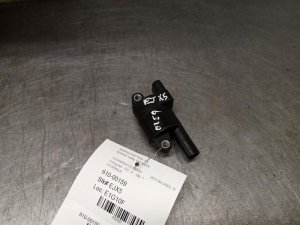
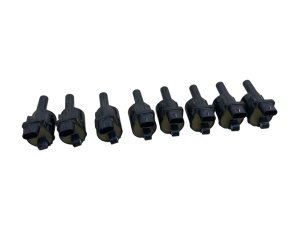
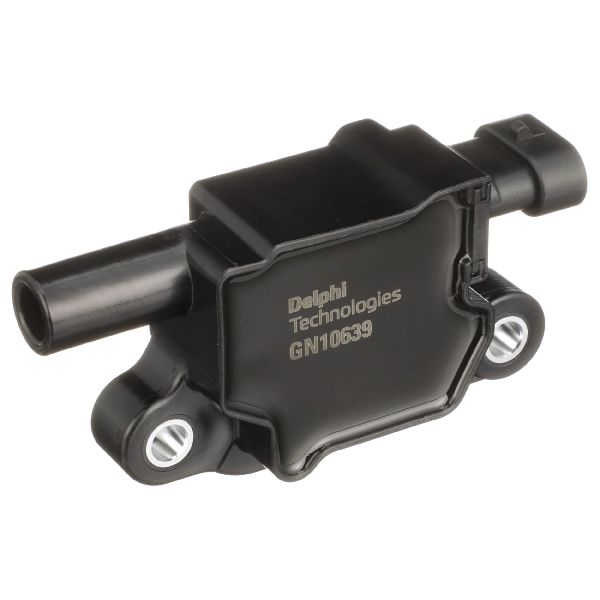
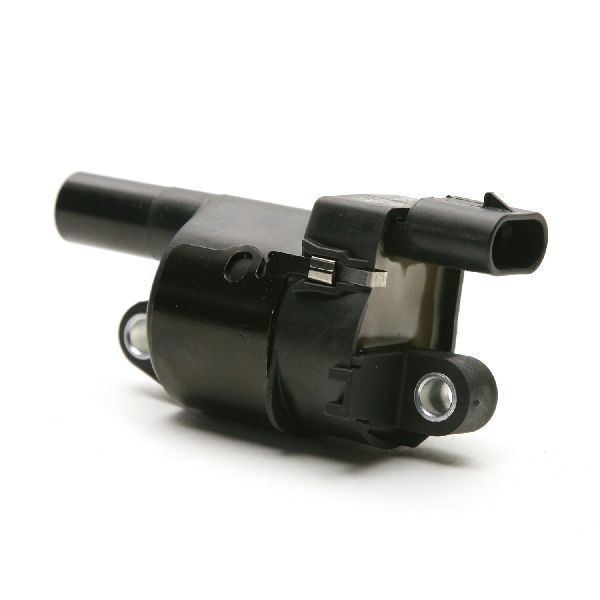
- Faulty Ignition Coil 🔴 High Probability Coil-on-plug systems are common failure points due to constant heat and vibration in the engine bay. Owner forums frequently cite a bad coil as the top cause for a single-cylinder misfire.
How to confirm: Swap the ignition coil from cylinder #2 with another cylinder (e.g., cylinder #4, the next one back on the passenger side). Clear the codes and run the engine. If the code changes to P0304, the coil is bad. This is the standard, effective DIY diagnostic step.
Typical fix: Replace the faulty ignition coil. 🎬 See this quick guide on replacing the ignition coil. It is often recommended to replace the corresponding spark plug at the same time, as a worn plug can overwork a new coil.
Est. part cost: $40-$90 - Worn or Fouled Spark Plug 🔴 High Probability Spark plugs are a standard wear item. Oil consumption issues, sometimes related to the AFM system or PCV system, can also foul plugs prematurely, causing a misfire. A cracked porcelain insulator on the spark plug is also a possible cause.
How to confirm: Remove the spark plug from cylinder #2 and inspect it for wear on the electrode, heavy carbon buildup, oil fouling, or a cracked porcelain insulator. Compare it to a plug from a healthy cylinder.
Typical fix: Replace the spark plug. It is best practice to replace all eight spark plugs if they are near the end of their service life to ensure consistent performance.
Est. part cost: $8-$20 per plug - Loose or Damaged Spark Plug Wire 🟡 Medium Probability A GM Technical Service Bulletin (#PIP4819A) specifically mentions loose spark plug wires as a cause for misfires on 2010 models due to improper seating from the factory or during previous service.
How to confirm: Visually inspect the wire for damage, corrosion, or signs of arcing (white or black marks). Ensure it is securely clicked onto both the ignition coil and the spark plug. You should feel a distinct 'click' when it seats properly.
Typical fix: Replace the spark plug wire. It is often recommended to replace them as a complete set.
Est. part cost: $50-$120 for a set - Failed Active Fuel Management (AFM/DOD) Lifter 🟡 Medium Probability The AFM system uses special hydraulic lifters that can collapse or become stuck, which is a widely documented problem on these GM V8 engines, leading to a dead cylinder. This can be caused by low oil pressure or internal failure of the lifter's locking pin mechanism. This issue is a known weak point discussed extensively in owner forums for the Escalade and its platform mates.
How to confirm: This is often accompanied by a persistent ticking noise from the top of the engine. Diagnosis requires removing the valve cover to observe valve movement; a rocker arm that isn't moving indicates a collapsed lifter. 🎬 Watch: How to diagnose a Cadillac lifter tick. A compression test may also show zero or very low compression on the affected cylinder. Professional diagnosis is often required.
Typical fix: This is a major repair that involves replacing all AFM lifters (there are 8) and non-AFM lifters (8), the lifter guides, and often the camshaft if it has been damaged by the failed lifter. Many owners opt to install an 'AFM delete kit' to prevent future failures.
Est. part cost: $200-$600 for lifters and gaskets - Clogged or Faulty Fuel Injector ⚪ Low Probability On the direct-injected L86 engine (2015-2017), carbon buildup on the injector tip can disrupt the spray pattern. On all models, an injector can fail electrically or become clogged internally.
How to confirm: Listen to the injector with a mechanic's stethoscope to confirm it is clicking. A more advanced method is to swap the injector with another cylinder to see if the misfire follows, though this is more labor-intensive than swapping a coil. A professional can perform a fuel injector balance test.
Typical fix: Replace the faulty fuel injector. It's sometimes recommended to have all injectors professionally cleaned and tested at the same time.
Est. part cost: $50-$150
Rare But Worth Checking
- Low Engine Compression: This indicates a serious internal engine problem. A diagnostic video on a 6.2L Escalade showed a P0302 caused by a loose intake valve seat, which required cylinder head removal to fix. 🎬 Watch: A 6.2L Escalade P0302 diagnosis and repair walkthrough. Other causes include worn piston rings or a leaking head gasket.
- Intake Manifold Gasket Leak: A vacuum leak specifically near the intake runner for cylinder #2 can lean out the air/fuel mixture enough to cause a misfire on just that cylinder. A smoke test is the most effective way to diagnose this.
- Faulty Engine Control Module (ECM): In very rare cases, the driver circuit within the ECM that controls the ignition coil or fuel injector for cylinder #2 can fail. This is usually diagnosed after all other possibilities have been exhausted.
Diagnosis Steps
- Read the trouble codes with an OBD-II scanner and confirm P0302 is present. Note any other codes and check freeze frame data.
- Swap the ignition coil from cylinder #2 with cylinder #4. Clear the codes and drive the vehicle. If the code changes to P0304, the ignition coil is the problem.
- If the code remains P0302, inspect the spark plug wire for damage and ensure it's fully seated. Replace if it appears damaged.
- Remove and inspect the spark plug from cylinder #2. Replace it if it is worn, fouled, or damaged, such as with a cracked insulator.
- If ignition components are good, check the fuel injector. Listen for a steady clicking sound with a mechanic's stethoscope.
- Listen for a distinct, persistent ticking noise from the engine, which strongly suggests a failed AFM lifter.
- If the cause is still not found, perform an engine compression test on cylinder #2 to check for mechanical issues. A low or zero reading points to an internal problem.
- If compression is low or inconsistent, suspect an internal engine problem like a valve train issue (failed AFM lifter, broken valve spring) or a piston/ring problem. This step may require professional assistance.
Parts You'll Likely Need
- Ignition Coil
(OEM #12611424 (ACDelco D510C for 2010-14), 12658210 (ACDelco D521C for 2015-17))— This is one of the most common failure points for a single-cylinder misfire and a frequent topic in owner forums.
Trusted brands: ACDelco, Delphi, NGK
OEM price range: $60-$90
Aftermarket price range: $35-$60 - Spark Plug
(OEM #41-110 (ACDelco Iridium for 2010-14), 41-123 (ACDelco Iridium for 2015-17))— Spark plugs are a routine maintenance item and a primary cause of misfires. Fouling or cracking are common failure modes.
Trusted brands: ACDelco, NGK
OEM price range: $12-$20
Aftermarket price range: $8-$15 - Active Fuel Management (AFM) Valve Lifter
(OEM #12645725 (Superseded by 12740071))— A known weak point on these engines that directly causes misfire codes when they fail. The original part number has been superseded, indicating revisions to address failure modes.
Related Codes That Often Appear With This One
- P0300 — If the misfire is intermittent or starting to affect other cylinders, a P0300 (Random/Multiple Cylinder Misfire) code may appear alongside P0302.
Technical Service Bulletins (TSBs) & Recalls
- PIP4819A
Platform-Specific Known Issues
- TSB for Loose Spark Plug Wires: Technical Service Bulletin #PIP4819A explicitly calls out loose spark plug wires as a potential cause for misfire codes (P0300-P0308) on 2010 models.
- AFM/DOD Lifter Failure: The Active Fuel Management system is a known major issue. The specialized lifters can fail, causing a misfire and often a distinct engine tick. This is a more severe and costly repair than typical ignition problems. This failure is common enough to be discussed at length in forums like the 'Tahoe Yukon Forum', where users often recommend a compression check as a key diagnostic step for AFM-related misfires.
Mechanic-Grade Diagnostic Values
- Engine Compression (Static) — expected: 165-170 PSI and consistent across all cylinders (within 15%).. Failure: A reading below 150 PSI, or a gauge needle that 'bounces' instead of holding steady, can indicate a mechanical issue like a loose valve seat.
- Low-Side Fuel Pressure (2010-2017) — expected: 50-60 PSI with key on, engine off.. Failure: Pressure significantly below this range indicates a weak in-tank fuel pump or clogged filter.
- High-Side Fuel Pressure (2015-2017 L86 Only) — expected: Up to 2,175 PSI (150 bar) under load, regulated by the high-pressure fuel pump.. Failure: Inability to reach commanded pressure under load points to a failing high-pressure pump.
- Ignition Coil Primary Resistance (2010-2014 L94) — expected: 0.3 - 1.0 Ohms.. Failure: A reading outside this range suggests an internal coil failure.
Hidden / Shadow Codes Worth Checking
- Mode $06, Test ID $53: This is not a DTC but a specific monitor within the OBD-II system that tracks the misfire count for each cylinder. A high count for cylinder 2 can confirm the misfire before it's severe enough to keep the MIL on. (see via An advanced OBD-II scanner capable of reading Mode $06 data.)
Scan Tool Commands That Help
- GDS2 / Tech2: Fuel Injector Balance Test — To confirm if the fuel injector on cylinder #2 is delivering a comparable amount of fuel to the other cylinders. This helps isolate a clogged or failing injector without removing it.
- GDS2 / Tech2: Cylinder Deactivation / AFM System Test — To manually command the AFM system on and off while monitoring engine performance. This can help diagnose a stuck AFM lifter or a faulty Lifter Oil Manifold Assembly (LOMA) solenoid.
- GDS2 / Tech2: Misfire Graphic — To view live misfire counts for each cylinder. This is the primary tool for confirming which cylinder is at fault and under what conditions (idle, load, etc.) the misfire occurs.
Wiring & Ground Locations
- G102 — On the left rear of the engine block.. This ground is specifically designated for the 8 ignition coils. A poor connection here could cause erratic spark on one or more cylinders.
- G107 — The main engine ground strap, typically from the right side of the engine block to the frame.. A corroded or loose main ground strap can cause a host of electrical issues, including misfires.
- Cylinder Head Grounds (2015+) — On the rear of the passenger-side cylinder head, there are two ground wires: one connecting to the body/firewall and another connecting to the main engine harness.. These grounds are critical for the sensors and actuators on that bank of cylinders. They must be removed for head service (like a lifter job) and properly reinstalled.
- Lifter Oil Manifold Assembly (LOMA) Connector — On the back of the valley cover, underneath the intake manifold.. This connector supplies power to the AFM solenoids. A bad connection here will disable the AFM system and can cause diagnostic issues or store related codes.
Real Owner Repair Stories
- YouTube channel 'SuperMarioDiagnostics' (2009 Cadillac Escalade ESV 6.2L (L92, similar to L94)) — P0302 misfire on cylinder 2.
❌ Tried (didn't work) Swapping ignition coil, Replacing spark plug and wire
✅ What actually fixed it A loose intake valve seat on cylinder #2. This was diagnosed by a compression test where the gauge needle bounced between 150-165 PSI instead of holding steady. The cylinder head had to be removed and repaired. - YouTube channel 'Mechanic Mode' (2015+ Cadillac Escalade) — Knocking/ticking noise, misfire code.
❌ Tried (didn't work) Initial diagnosis pointed towards a rod lifter, but it was intact.
✅ What actually fixed it A failed AFM valve lifter was found to be seized. More importantly, the plastic lifter guide tray was also damaged, preventing the lifter roller from moving properly. The final fix was replacing both the failed lifter and the lifter guide tray. - YouTube channel 'Branko's Vegas Adventures' (2011 Cadillac Escalade 6.2L) — Persistent lifter tick noise, P0300 misfire code.
❌ Tried (didn't work) Replacing oil pressure switch, intake valve cover, and spark plugs did not stop the tick.
✅ What actually fixed it The owner claims to have fixed a stuck lifter without engine disassembly by adding Marvel Mystery Oil and Seafoam to the crankcase, performing multiple wide-open-throttle accelerations, and then installing an AFM disabler device to prevent the system from activating.
"I Checked Everything" — The Actual Cause
- In a documented case, a P0302 was caused by a loose intake valve seat. A standard smoke test for vacuum leaks would likely show no faults, as the leak path would only open under the high pressures of the compression stroke, not the low pressure of a smoke test. The key symptom was an unstable, 'bouncing' compression gauge reading.
When the Usual Fixes Don't Work
- While a P0302 is most commonly a simple ignition part, master technicians and diagnostic specialists report that on this specific platform, it is critical to investigate deeper if a new plug and coil do not immediately solve the issue. A persistent P0302, especially when accompanied by a ticking noise, is highly indicative of a failing AFM lifter, a known mechanical weak point. In one documented case, the final fix was not an ignition or fuel part, but a loose intake valve seat, which required cylinder head removal. In another, a simple oil additive treatment was claimed to have resolved a stuck lifter, suggesting that in some early-stage cases, a major mechanical repair might be avoidable.
OEM Part Supersession History
12645725→12740071— This is the AFM/DOD valve lifter. The part has been superseded multiple times (12740071 replaces at least 8 previous part numbers), indicating ongoing design revisions by GM to improve durability and prevent collapse or sticking.12611424 (ACDelco D510C)→N/A— This ignition coil for 2010-2014 L94 engines has remained a stable part number, fitting a wide range of GM V8 vehicles from that era.
Model Year Variations Within This Range
- 2010-2014 (L94 Engine): Uses a port fuel injection system. Misfire causes are less likely to be related to carbon on injector tips. The AFM system is Gen IV design.
- 2015-2017 (L86 Engine): Features direct injection, making carbon buildup on intake valves and injector tips a potential cause for misfires. It uses a camshaft-driven high-pressure fuel pump (up to 2,175 PSI), adding another component to the diagnostic chain. TSBs for stuck lifters specifically cover these later models, indicating the problem persists in the Gen V engine design.
- All: When performing an AFM delete, the camshaft must be replaced. The AFM camshaft has different lobe profiles for the AFM cylinders, and running standard lifters on it will result in a rough idle and misfires.
Helpful Videos
Used OEM Parts in Stock

New Aftermarket Parts Available


The information in this article is provided for general reference and educational purposes only. Vehicle specifications, procedures, and part compatibility can vary by production date, trim level, and region. Always consult your vehicle's factory service manual and verify part numbers before purchasing or performing repairs. Safety-critical components such as airbags, seat belts, and braking systems should be installed by a qualified professional.
- Cadillac ESCALADE ESV:
- 🎬 Helpful Videos
- 🛍️ Shop This Part
- What's Unique About the 2010-2017 Cadillac ESCALADE ESV
- Diagnostic Flowchart
- Symptoms You May Notice
- Most Likely Causes
- Rare But Worth Checking
- Diagnosis Steps
- Parts You'll Likely Need
- Related Codes That Often Appear With This One
- Technical Service Bulletins (TSBs) & Recalls
- Platform-Specific Known Issues
- Mechanic-Grade Diagnostic Values
- Hidden / Shadow Codes Worth Checking
- Scan Tool Commands That Help
- Wiring & Ground Locations
- Real Owner Repair Stories
- "I Checked Everything" — The Actual Cause
- When the Usual Fixes Don't Work
- OEM Part Supersession History
- Model Year Variations Within This Range
- 🎟️ Get 5% Off