

P0302 on 2018-2019 Buick Regal: Cylinder 2 Misfire Causes and Fixes
P0302 indicates a misfire in cylinder 2. The most common fixes are replacing the spark plug or ignition coil, costing $20-$100 for DIY. On 3.6L V6 models, a faulty Active Fuel Management (AFM) oil control solenoid is also a known cause, as noted in a GM Technical Service Bulletin.
- P0302 is a misfire on cylinder 2. Do not drive extensively with a flashing check engine light to avoid catalytic converter damage.
- The easiest and most common fix is to replace the spark plug and/or ignition coil for cylinder 2.
- If you have the Regal GS with the 3.6L V6 engine, a faulty AFM oil control solenoid is a very likely cause if ignition parts are good.
- Always identify which engine your Regal has (2.0L Turbo or 3.6L V6) as the diagnostic path can differ.
- A simple diagnostic step is to swap the cylinder 2 ignition coil with another cylinder's coil to see if the misfire code follows it.
What's Unique About the 2018-2019 Buick REGAL
The 2018-2019 Regal was offered with two very different engines: a 2.0L Turbo 4-cylinder (in most trims) and a 3.6L V6 (in the GS model). Both engines are used across a wide range of GM vehicles. While standard ignition issues cause P0302 on both, the 3.6L V6 is subject to a specific problem outlined in GM TSB #21-NA-036 where a faulty oil control solenoid for the Active Fuel Management (AFM) system can cause misfires on cylinder 2. The 2.0L direct-injection engine, on the other hand, can be prone to carbon buildup on intake valves, which can also lead to misfires.
Diagnostic Flowchart
Tap your situation to follow the diagnostic path that matches what you're seeing on this vehicle.
Symptoms You May Notice
- Check Engine Light is on or flashing
- Rough or vibrating idle
- Hesitation or stumbling during acceleration
- Noticeable loss of engine power
- Reduced fuel economy
- A smell of raw fuel from the exhaust
- Replacing the fuel pump when only a single cylinder is misfiring. A fuel pump issue would typically cause random misfires on multiple cylinders (P0300) or a lean condition code.
Most Likely Causes
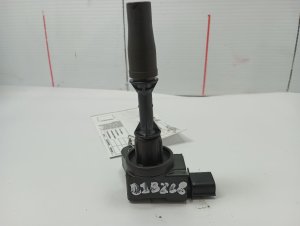
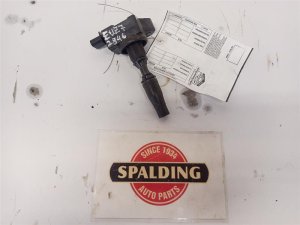
- Faulty Ignition Coil 🔴 High Probability Coil-on-plug systems are a common failure point on most modern vehicles as they age due to heat and vibration.
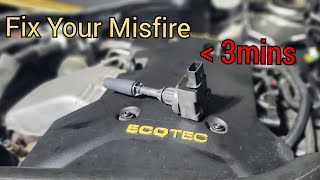
How to confirm: Swap the ignition coil from cylinder 2 with another cylinder (e.g., cylinder 1 on the 2.0L or cylinder 4 on the 3.6L). Clear the codes and drive the vehicle. If the code changes to P0301 or P0304 respectively, the ignition coil is faulty.
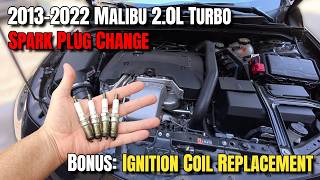
Typical fix: Replace the faulty ignition coil. It is often recommended to replace the corresponding spark plug at the same time.
Est. part cost: $40-$90 - Worn or Fouled Spark Plug 🔴 High Probability
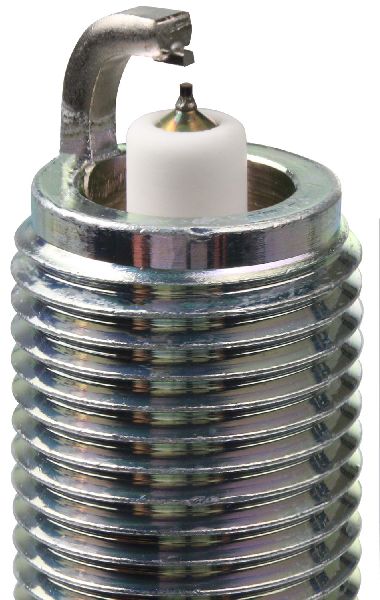
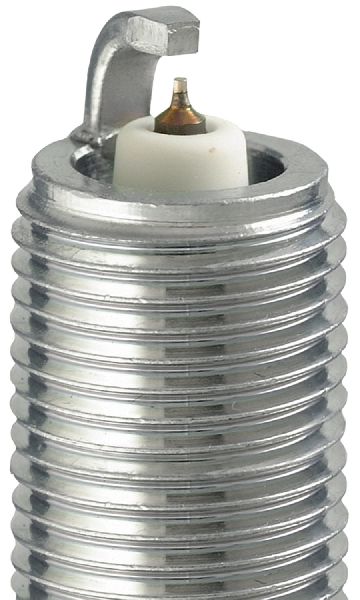
How to confirm: Remove the spark plug from cylinder 2 and inspect it. Look for a worn electrode, cracks in the porcelain, or heavy deposits of carbon or oil. The correct gap for the 2.0L LTG's OEM plug is 0.035 inches.
Typical fix: Replace the spark plug. It's best practice to replace all spark plugs at once if they are near the end of their service life. Use OEM-spec Iridium plugs for best performance.
Est. part cost: $15-$30 per plug - Faulty AFM Oil Control Valve (OCV) Solenoid (3.6L V6 Only) 🟡 Medium Probability A known issue documented in GM TSB #21-NA-036. An oil leak past the solenoid can cause improper oil pressure, leading to cylinder deactivation and a misfire on cylinder 2, which is an AFM cylinder. The plastic end of the solenoid can become brittle and break off in the camshaft cover bore.
How to confirm: After ruling out ignition and fuel issues, inspect the AFM solenoid for cylinder 2 for damage or oil leaks as described in the TSB. The solenoid may be broken upon removal, with the tip stuck in the bore.
Typical fix: Replace the damaged AFM OCV solenoid and its O-rings. If the tip is broken off, it must be carefully extracted from the camshaft cover with a pick tool.
Est. part cost: $50-$100 - Clogged or Faulty Fuel Injector ⚪ Low Probability
How to confirm: This is more difficult to confirm for a DIYer. A professional can perform a fuel injector balance test. You can also try swapping the injector with another cylinder, but this is a more labor-intensive job, especially on the V6 which requires removing the intake manifold.
Typical fix: Replace the faulty fuel injector.
Est. part cost: $70-$150
Rare But Worth Checking
- Porous Cylinder Head: GM TSB #21-NA-147 notes that a manufacturing defect can cause porosity in the cylinder head, allowing oil or coolant to leak directly into the spark plug tube, fouling the plug and causing a misfire. If you find oil in the spark plug well, first confirm it is not from a leaking valve cover gasket above. A porous head leak will seep from within the tube itself. The fix is a costly cylinder head replacement.
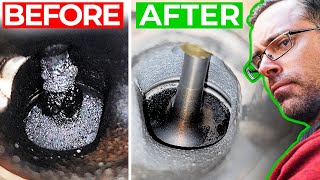
- Carbon Buildup on Intake Valves (2.0L Turbo): Direct-injection engines like the 2.0L Turbo are prone to carbon buildup on the back of the intake valves because fuel is injected directly into the cylinder and doesn't wash the valves clean. This can disrupt airflow and cause misfires, especially on cold starts. This typically requires professional cleaning (e.g., walnut blasting). 🎬 Watch this guide on how to clean engine carbon buildup.
- AFM Lifter/Rocker Arm Failure (3.6L V6): If the OCV solenoid is not the cause on a 3.6L V6, TSB #21-NA-036 suggests the next step is to inspect the AFM mechanical components (rockers and lifters) for failure, which can prevent the valves from opening correctly. This is a more involved mechanical repair.
Diagnosis Steps
- Confirm the code is P0302 using an OBD-II scanner.
- Determine your engine: 2.0L Turbo I4 or 3.6L V6 (for the GS model).
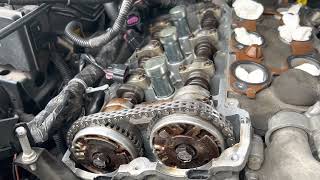
- Locate cylinder 2. On the 2.0L I4, it's the second cylinder from the front (belt side). On the 3.6L V6, the engine is mounted transversely. Bank 2 (cylinders 2, 4, 6) is the cylinder bank closer to the firewall. Cylinder 2 is the middle cylinder of that rear bank. 🎬 See how to diagnose and solve misfires on the 3.6L V6.
- Swap the ignition coil from cylinder 2 with an adjacent, accessible cylinder (e.g., cylinder 1 on the I4, or cylinder 4 on the V6).
- Clear the codes and drive the car. If the code changes to P0301 or P0304 respectively, the ignition coil is bad and needs replacement.
- If the code remains P0302, remove the spark plug from cylinder 2. Inspect for wear, damage, or fouling from oil or fuel. Replace if necessary.
- For 3.6L V6 models: If ignition and fuel seem okay, inspect the AFM Oil Control Valve (OCV) solenoid for cylinder 2 for damage or leaks, per TSB #21-NA-036. Be prepared for the solenoid tip to be broken off in the head.
- Check for oil or coolant in the spark plug tube. If present and not from a valve cover gasket leak, suspect a porous cylinder head (TSB #21-NA-147).
- If all else fails, the issue could be a faulty fuel injector or, in rare cases, a mechanical engine problem like low compression, which would require professional diagnosis.
Parts You'll Likely Need
- Ignition Coil
(OEM #ACDelco 12652405 / 12654078 (for 2.0L LTG))— A primary cause of single-cylinder misfires. They fail electronically over time.
Trusted brands: ACDelco, Delphi, NGK
OEM price range: $60-$110
Aftermarket price range: $40-$90 - Spark Plug
(OEM #ACDelco 41-125 (for 2.0L LTG) / ACDelco 41-123 (for 3.6L LGX))— A standard maintenance item that wears out, causing a weak or inconsistent spark.
Trusted brands: ACDelco, NGK
OEM price range: $20-$35
Aftermarket price range: $15-$25 - AFM Oil Control Valve Solenoid (3.6L V6)
(OEM #ACDelco 12688037)— A known failure point on the 3.6L V6 engine that directly causes misfires on cylinder 2, as documented by GM in TSB #21-NA-036.
Trusted brands: ACDelco
OEM price range: $70-$120
Aftermarket price range: $50-$100
Related Codes That Often Appear With This One
- P0300 — If the misfire is intermittent or starting to affect other cylinders, a P0300 (Random Misfire) code may appear alongside P0302.
- P0305 — On the 3.6L V6, TSB #21-NA-036 specifically notes that P0302 and P0305 (Cylinder 5 Misfire) can occur together, as both are AFM cylinders affected by the same potential solenoid issues.
- P3400 — This code indicates an issue with the cylinder deactivation system. On the 3.6L V6, its appearance with P0302 strongly suggests the problem is related to the AFM system, likely the OCV solenoid or associated lifters.
Technical Service Bulletins (TSBs) & Recalls
- 21-NA-036: Addresses a MIL with DTCs P0300, P0302, and/or P0305 on 3.6L V6 engines, pointing to a faulty AFM oil control solenoid or related rocker arms.
- 21-NA-147: Describes how fluid (oil/coolant) in spark plug tubes from a porous cylinder head can cause various misfire codes, including P0302.
- PIP5029 / 21-NA-278: Provides a diagnostic strategy for engine misfires, which includes checking for carbon on intake valves, a common issue for direct-injection engines like the LTG and LGX.
Platform-Specific Known Issues
- TSB #21-NA-036: On 3.6L V6 engines, a damaged Active Fuel Management (AFM) Oil Control Valve (OCV) solenoid can cause an oil leak and misfire on cylinder 2 and/or 5. The solenoid can break during removal.
- TSB #21-NA-147: On some GM engines, a porous cylinder head casting can allow oil or coolant to leak into the spark plug tubes, causing misfires. This requires cylinder head replacement.
Mechanic-Grade Diagnostic Values
- Ignition Coil Secondary Resistance (2.0L LTG) — expected: ~9.11 kOhms (based on aftermarket spec). Failure: A reading of OL (open loop) or a value significantly different from other coils.
- Ignition Coil Secondary Resistance (3.6L LGX) — expected: 6,000 - 10,000 Ohms (6kΩ - 10kΩ). Failure: A reading significantly outside this range suggests a faulty coil winding.
- AFM Oil Control Solenoid Resistance (3.6L LGX) — expected: 8 - 12 Ohms. Failure: A reading outside this range, or an open/short circuit, indicates a faulty solenoid.
- Fuel Injector Resistance (3.6L LGX) — expected: 1.5 - 2.3 Ohms. Failure: A significant deviation from this range or an open/short circuit indicates a faulty injector coil.
- Low-Side Fuel Pressure (Key On, Engine Off) — expected: 50 - 75 PSI (345 - 517 kPa). Failure: Pressure below this range indicates a problem with the in-tank fuel pump or its control module.
- High-Side Fuel Pressure (At Idle / Under Load) — expected: 290 - 2,250+ PSI (2 - 15.5+ MPa). Failure: A scan tool showing actual fuel rail pressure failing to meet desired pressure under load can indicate a failing High-Pressure Fuel Pump (HPFP).
Hidden / Shadow Codes Worth Checking
- Misfire History Data: While not a specific code, GM's GDS2 scan tool can access detailed historical misfire counters for each cylinder that are not visible on standard OBD-II readers. This data can show if the misfire is recent, intermittent, or has a long history, which helps in diagnosis. (see via GM GDS2 (or equivalent professional-grade scan tool))
Scan Tool Commands That Help
- GDS2 (GM Dealer Tool): Cylinder Power Balance / Injector Balance Test — Used to identify a weak cylinder by measuring the drop in RPM (power balance) or fuel pressure (injector balance) when each injector is individually disabled. A cylinder with little to no drop is the likely source of the misfire.
- GDS2 (GM Dealer Tool): AFM Oil Control Valve Test — For the 3.6L V6, this command allows a technician to electronically activate the AFM solenoid for cylinder 2 to see if it responds. This can confirm if the solenoid is electrically functional before undertaking the physical labor to inspect or replace it.
- GDS2 (GM Dealer Tool): Crankshaft Position (CKP) Variation Relearn — Should be performed after major engine or transmission work, or if false misfires are suspected. This procedure calibrates the ECM to the normal rotational variations of the crankshaft, ensuring more accurate misfire detection.
Wiring & Ground Locations
- G102 / G103 — GM typically uses G102 for ignition coil grounds, often located on the rear of a cylinder head. G103 is a major powertrain ground, often found on the frame rail or cowl area near the brake booster.. A loose or corroded ground connection at these points can cause insufficient voltage to the ignition coils or erratic signals to the ECM, leading to misfires that are difficult to trace. A GM document specifically identifies a poor connection at G103 as a cause for a wide range of electrical issues.
Real Owner Repair Stories
- Carly forum user (2018 Buick Regal Hybrid) — Rough running, jerking during acceleration, constant check engine light.
❌ Tried (didn't work) Initial diagnosis focused on ignition coils and throttle response.
✅ What actually fixed it The problem was traced to a faulty fuel injector in cylinder 3 (analogous to a P0302 issue). Replacing the single defective injector resolved all symptoms. - YouTube user comment (Not specified, but general P0302 diagnosis) — Very bad rough idle, engine shaking, and stalling.
❌ Tried (didn't work) Replacing ignition coils, Replacing spark plugs
✅ What actually fixed it The owner added Redline fuel injector cleaner to the fuel tank. After running the car for a while, the misfire code cleared and the rough idle was resolved, indicating a clogged fuel injector was the likely cause.
Helpful Videos
Used OEM Parts in Stock
New Aftermarket Parts Available


The information in this article is provided for general reference and educational purposes only. Vehicle specifications, procedures, and part compatibility can vary by production date, trim level, and region. Always consult your vehicle's factory service manual and verify part numbers before purchasing or performing repairs. Safety-critical components such as airbags, seat belts, and braking systems should be installed by a qualified professional.
- Buick REGAL:
- 🎬 Helpful Videos
- 🛍️ Shop This Part
- What's Unique About the 2018-2019 Buick REGAL
- Diagnostic Flowchart
- Symptoms You May Notice
- Most Likely Causes
- Rare But Worth Checking
- Diagnosis Steps
- Parts You'll Likely Need
- Related Codes That Often Appear With This One
- Technical Service Bulletins (TSBs) & Recalls
- Platform-Specific Known Issues
- Mechanic-Grade Diagnostic Values
- Hidden / Shadow Codes Worth Checking
- Scan Tool Commands That Help
- Wiring & Ground Locations
- Real Owner Repair Stories
- 🎟️ Get 5% Off