

P0302 on 2019-2021 Audi A6: Cylinder 2 Misfire Causes & Fixes
P0302 indicates a misfire in cylinder 2. On the 2019-2021 Audi A6 (C8), this is most often caused by a failed ignition coil or a worn spark plug. Both are relatively inexpensive parts and simple to replace for a DIYer. A software update may also be required as per Audi TSBs. After ruling out ignition parts, carbon buildup is the next likely cause.
- P0302 on a 2019-2021 Audi A6 is a misfire on cylinder 2, most often caused by a bad ignition coil or spark plug.
- Diagnosis is straightforward for a DIYer: swap the coil from cylinder 2 to another cylinder to see if the fault code follows.
- Do not ignore a flashing check engine light, as it can lead to costly catalytic converter damage.
- Be aware that Audi has issued TSBs for this issue; a software update at a dealership might be the required fix if ignition parts are good.
- If coils and plugs don't solve the issue, the next most likely causes are carbon buildup on the intake valves or a faulty fuel injector.
What's Unique About the 2019-2021 Audi A6
For the C8 generation Audi A6, equipped with either the EA888 Gen 3 (2.0T) or EA839 (3.0T) engines, ignition coil failure is a very common maintenance item. Additionally, Audi has issued several Technical Service Bulletins (TSBs) for this year range indicating that the misfire detection system can be overly sensitive, particularly with certain fuel blends, and may require a software update to correct the issue. Like many modern direct-injection engines, the 2.0T and 3.0T are also susceptible to carbon buildup on the intake valves, which can restrict airflow and cause misfires, though symptoms on the Gen 3 EA888 may not appear until 60,000-90,000 miles. The 3.0T EA839 engine, while generally reliable, has documented cases of rocker arm and piston failures that can present as persistent misfires.
Diagnostic Flowchart
Tap your situation to follow the diagnostic path that matches what you're seeing on this vehicle.
Symptoms You May Notice
- Rough or vibrating idle
- Hesitation or stumbling during acceleration
- Flashing or solid Check Engine Light
- Reduced engine power and sluggish performance, sometimes referred to as 'limp mode'
- Decreased fuel economy
- Smell of raw gasoline from the exhaust
- Popping or banging sound from the exhaust
- Replacing only the spark plug when the ignition coil was the actual point of failure (or vice-versa).
- Replacing fuel injectors before thoroughly testing the ignition system (coils and plugs).
- Performing an expensive carbon cleaning service before checking for relevant software updates via TSBs.
- Assuming a single P0302 is a major mechanical failure before performing the simple coil and plug swap tests.
Most Likely Causes
- Faulty Ignition Coil 🔴 High Probability Ignition coils are a known common failure point on modern Audi engines due to high operating temperatures and electrical stress. Oil leaks from the valve cover gasket can also seep into the spark plug tubes and damage the coils. These coil-on-plug units are used across many VW/Audi models and have a finite lifespan.
How to confirm: The easiest way to confirm a bad coil is to swap the ignition coil from cylinder 2 with another cylinder (e.g., cylinder 1). Clear the codes using an OBD-II scanner and drive the car. If the code changes to P0301, the coil is the culprit. This is a definitive diagnostic step for a DIYer.
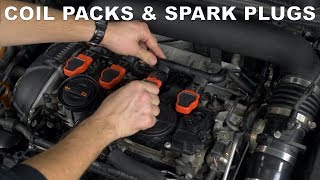
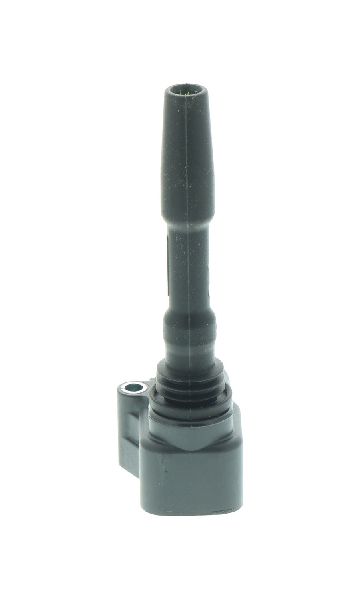
Typical fix: Replace the faulty ignition coil. It is often recommended to replace all coils at the same time, especially if they are original and have high mileage, to ensure balanced performance. Use reputable OEM brands like Bosch, NGK, or Beru.
Est. part cost: $30-$70 per coil - Worn Spark Plugs 🔴 High Probability Spark plugs are a regular maintenance item with a typical replacement interval of 40,000-60,000 miles. Worn electrodes increase the voltage required to create a spark, which can lead to misfires and also strain the ignition coil, potentially causing it to fail prematurely.
How to confirm: After confirming the ignition coil is good, remove the spark plug from cylinder 2. Inspect it for wear (rounded electrode), fouling (black, sooty, or oily deposits), or damage to the ceramic insulator. Compare it to a new plug.
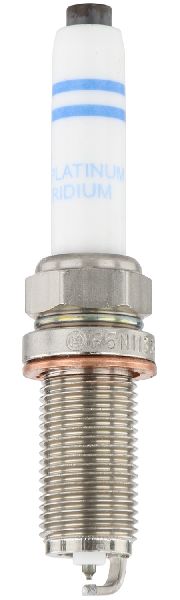
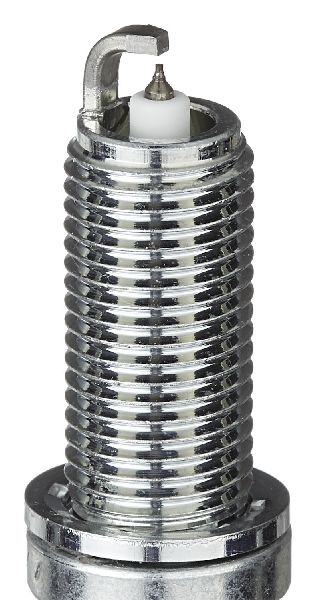
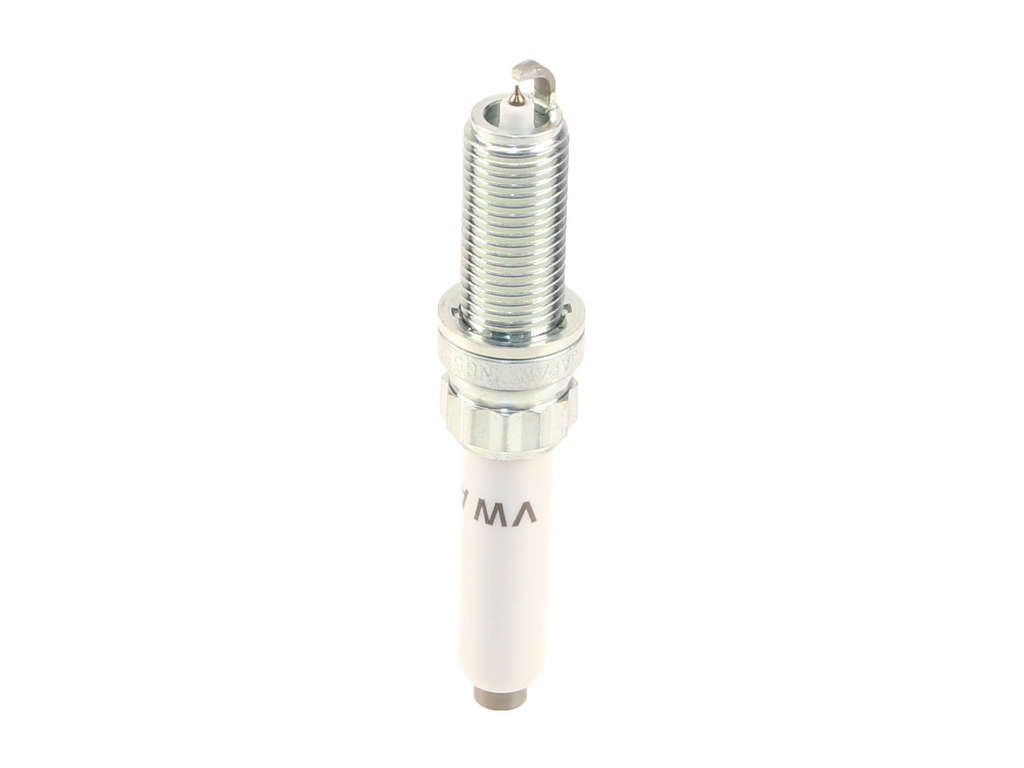
Typical fix: Replace the spark plugs. They should always be replaced as a full set (4 for the 2.0T, 6 for the 3.0T). Use OEM-spec plugs from brands like NGK or Bosch and ensure they are gapped correctly if required.
Est. part cost: $15-$30 per plug - Engine Control Module (ECM) Software Update Needed 🟡 Medium Probability Audi has released multiple TSBs (e.g., A0124212069038_5, A0122312069038_1) for these models, stating that the original software calibration can incorrectly detect misfires, sometimes related to winter-blend fuels or other specific conditions. These TSBs often address P0300-P0306 codes.
How to confirm: A dealership or qualified independent shop with access to Audi's ODIS diagnostic system can check the current software version against the latest available versions mentioned in the TSBs. This is typically done after ruling out ignition components.
Typical fix: The ECM must be updated with the new software. This is typically performed by an Audi dealer and may be covered under emissions warranty.
Est. part cost: $0 (if under warranty) - $250 - Carbon Buildup on Intake Valves 🟡 Medium Probability As direct-injection engines, the fuel is sprayed directly into the cylinder, so it never washes over the intake valves. Oil vapor from the PCV system bakes onto the hot valves, forming carbon deposits that restrict airflow and can cause misfires. For the EA888 Gen 3 (2.0T), this may become an issue around 60,000-90,000 miles, later than previous generations.
How to confirm: This requires a visual inspection using a borescope inserted into the intake ports after removing the intake manifold. It is often diagnosed after ruling out all ignition and fuel system issues.
Typical fix: The intake manifold is removed, and the carbon deposits are physically cleaned from the valves, most commonly through walnut shell blasting to avoid damaging the valve surfaces.
Est. part cost: $0 (parts are reused), but labor can be $800-$1300. - Faulty Fuel Injector ⚪ Low Probability While less common than coils or plugs, a fuel injector can become clogged or fail electronically, preventing the correct amount of fuel from being delivered to cylinder 2. This can sometimes be accompanied by injector circuit fault codes.
How to confirm: This is a more advanced diagnosis. A technician can use a tool like VCDS to monitor fuel trims and injector performance. Swapping injectors between cylinders is possible but is much more labor-intensive than swapping coils and often requires new seals.
Typical fix: Replace the faulty fuel injector. It's highly recommended to replace the injector's Teflon seal and any associated one-time-use hardware.
Est. part cost: $100-$250 per injector
Rare But Worth Checking
- Low Compression: Although rare on a newer vehicle, internal mechanical issues like a worn piston ring, a damaged piston, or a valve that isn't sealing properly can cause a persistent misfire. The EA839 (3.0T) has known, albeit uncommon, issues with piston and rocker arm failure that can lead to this. A compression and leak-down test is needed to diagnose this.
- Vacuum Leak: A leak in a vacuum hose, PCV system, or intake gasket can introduce unmetered air into the engine, leaning out the air/fuel mixture and causing misfires. This would typically be accompanied by other codes like P0300 (random misfire) or fuel trim codes (e.g., P0171/P0174).
Diagnosis Steps
- Read the trouble codes with an OBD-II scanner. Note P0302 and any other codes (e.g., P0300, P0202).
- Using a more advanced tool like VCDS or OBDeleven, check the live misfire counter for each cylinder (Measuring Block Group 15/16) to confirm the misfires are isolated to cylinder 2.
- Identify cylinder 2. On the 2.0L I4 (EA888), it's the second cylinder from the front of the car. On the 3.0L V6 (EA839), cylinders are numbered 1-2-3 on the passenger side (Bank 1, right side) and 4-5-6 on the driver's side (Bank 2, left side), front to back. Cylinder 2 is the middle cylinder on the passenger side.
- Swap the ignition coil from cylinder 2 with the coil from cylinder 1.
- Clear the codes and start the engine. Let it run or drive briefly until the check engine light returns.
- Re-scan for codes. If the code is now P0301, the ignition coil is bad and needs to be replaced.
- If the code remains P0302, the coil is likely good. Move the spark plug from cylinder 2 to cylinder 1.
- Clear codes and re-test. If the code moves to P0301, the spark plug is bad.
- If the code remains P0302, the issue is not a simple ignition component. The next steps are to investigate the fuel injector, check for applicable TSBs regarding software updates, or perform a visual inspection for carbon buildup with a borescope.
- If all else fails, a compression and leak-down test should be performed on cylinder 2 to rule out mechanical engine problems like bad valves or piston rings.
Parts You'll Likely Need
- Ignition Coil
(OEM #06L905110K (This is a common revision, earlier versions may end in F, H, etc. Always verify by VIN))— This is the most frequent cause of a single-cylinder misfire on this platform. The same part is often used for both 2.0T and 3.0T engines.
Trusted brands: Bosch, NGK, Beru, Genuine Audi/VW
OEM price range: $50-$70
Aftermarket price range: $30-$50 - Spark Plug (3.0T V6)
(OEM #06M905601 (or revision))— A worn or fouled spark plug is the second most common cause and is a standard maintenance item. The 3.0T uses a different plug than the 2.0T.
Trusted brands: NGK, Bosch
OEM price range: $25-$35
Aftermarket price range: $20-$30 - Spark Plug (2.0T I4)
(OEM #06K905601B (or revision))— A worn or fouled spark plug is the second most common cause and is a standard maintenance item.
Trusted brands: NGK, Bosch
OEM price range: $20-$30
Aftermarket price range: $15-$25
Related Codes That Often Appear With This One
- P0300 — If the misfire is intermittent or affects other cylinders, a P0300 (Random/Multiple Cylinder Misfire) code may appear alongside P0302, pointing to a systemic issue like a vacuum leak or fuel delivery problem.
- P0301, P0303, P0304, etc. — If other cylinder-specific misfire codes are present, it may point to a more systemic issue like a vacuum leak, low fuel pressure, or the need for a software update affecting all cylinders.
Technical Service Bulletins (TSBs) & Recalls
- A0124212069038_5: MIL on, cylinder misfires P0300-P0306
- A0123912069038_5: MIL on, DTCs P0300-P0306
- A0122312069038_1: Software update available for MIL on with P0300-P0306
Platform-Specific Known Issues
- EA839 3.0T Piston/Rocker Arm Vulnerability: While not extremely common, the 3.0T V6 engine (EA839) used in the A6 has documented cases of internal mechanical failures, including piston cracking and rocker arm issues. These issues can manifest as a persistent misfire code (like P0302) that is not resolved by replacing ignition or fuel components. Diagnosis requires a compression and leak-down test. This is considered a rare but notable cause for this specific engine.
Helpful Videos

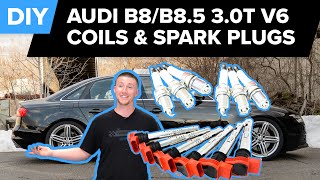
Used OEM Parts in Stock
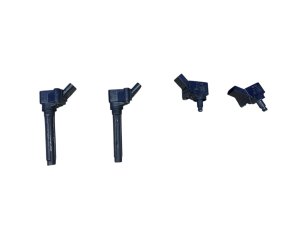
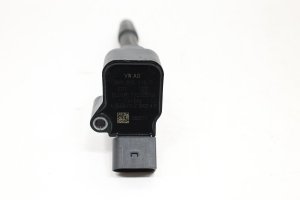
New Aftermarket Parts Available
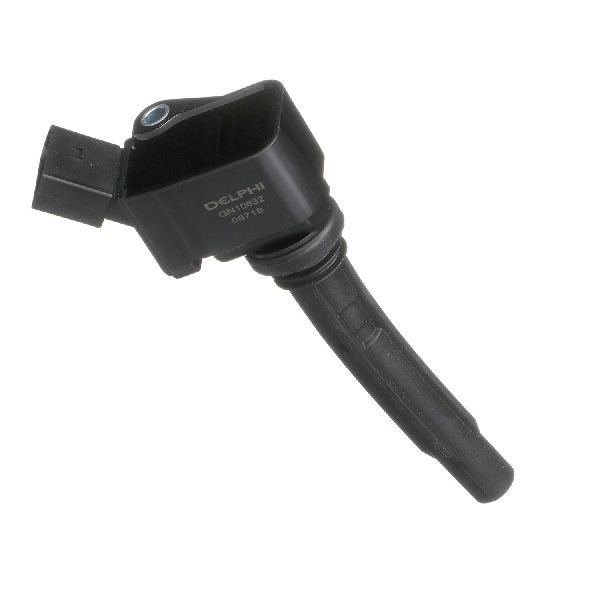


The information in this article is provided for general reference and educational purposes only. Vehicle specifications, procedures, and part compatibility can vary by production date, trim level, and region. Always consult your vehicle's factory service manual and verify part numbers before purchasing or performing repairs. Safety-critical components such as airbags, seat belts, and braking systems should be installed by a qualified professional.
- Audi A6:
- 🎬 Helpful Videos
- 🛍️ Shop This Part
- What's Unique About the 2019-2021 Audi A6
- Diagnostic Flowchart
- Symptoms You May Notice
- Most Likely Causes
- Rare But Worth Checking
- Diagnosis Steps
- Parts You'll Likely Need
- Related Codes That Often Appear With This One
- Technical Service Bulletins (TSBs) & Recalls
- Platform-Specific Known Issues
- 🎟️ Get 5% Off