

P0301 on 2017-2022 VW Jetta: Cylinder 1 Misfire Causes and Fixes
P0301 on a 2017-2022 VW Jetta indicates a misfire in cylinder 1. The most common causes are a faulty ignition coil or a worn spark plug. Swapping the cylinder 1 ignition coil with another is a simple, no-cost diagnostic step. Replacement parts are affordable, with a coil costing $40-$90 and a set of spark plugs costing $40-$100. If these common fixes don't work, the issue could be a clogged fuel injector or carbon buildup on intake valves, a known issue with VW's direct-injected engines.
- P0301 on your Jetta is a misfire on cylinder 1, which is closest to the belts on the passenger side.
- The most likely fix is a new ignition coil or a new set of spark plugs.
- Always start your diagnosis by swapping the cylinder 1 ignition coil with another cylinder's coil to see if the problem moves.
- If the check engine light is flashing, pull over and stop driving to prevent expensive damage to your catalytic converter.
- If you have higher mileage (over 80k miles) and new plugs/coils don't fix the issue, the next most likely cause is carbon buildup on the intake valves, a known issue with TSI engines.
What's Unique About the 2017-2022 Volkswagen JETTA

The 2017-2022 Jetta primarily uses Turbocharged Stratified Injection (TSI) engines, which are a form of gasoline direct injection (GDI). While these engines are efficient, they are known to be susceptible to carbon buildup on the intake valves and fuel injector tips over time. This is because fuel is injected directly into the cylinder, so it no longer washes over the intake valves and cleans them. Oil vapors from the PCV (Positive Crankcase Ventilation) system can bake onto the hot valves, restricting airflow and causing misfires that might not be solved by the typical spark plug or coil replacement. This issue can appear even at relatively low mileage, sometimes under 40,000 miles.
Diagnostic Flowchart

Tap your situation to follow the diagnostic path that matches what you're seeing on this vehicle.
Generation note: This range covers two Jetta generations: the end of the Mk6 (2017-2018) and the Mk7 (2019-2022). The primary engine in non-GLI models is the 1.4T EA211, which was later updated to a 1.5T EA211 Evo in the Mk7. While the core causes of a P0301 misfire are the same, specific part numbers for ignition coils and spark plugs may differ between these engines. The 2.0T engine is found in the GLI models.
Symptoms You May Notice

- Rough or shaking idle.
- Hesitation or stumbling during acceleration, sometimes only under heavy load.
- Solid or flashing Check Engine Light.
- Reduced engine power and performance.
- Decreased fuel economy.
- Smell of raw gasoline from the exhaust.
- Noticeable engine vibration that can be felt in the cabin.
- Replacing oxygen (O2) sensors. A misfire will cause poor readings on the O2 sensors, sometimes triggering a 'rich mixture' code, but they are rarely the cause of a single-cylinder misfire.
- Replacing the catalytic converter. A misfire can destroy a catalytic converter with unburnt fuel, but the converter itself does not cause the initial misfire code.
Most Likely Causes

- Faulty Ignition Coil 🔴 High Probability Ignition coils are a very common failure item on VW TSI engines due to high heat and electrical stress. Many owner forums cite this as the first part to check.
How to confirm: Swap the ignition coil from cylinder 1 with the coil from cylinder 2. Clear the codes and run the engine. If the code changes to P0302 (Cylinder 2 Misfire), the ignition coil is confirmed to be bad. This is a widely documented and effective diagnostic step. 🎬 Watch: How to diagnose a misfire on your Jetta
Typical fix: Replace the faulty ignition coil. It is often recommended to replace all four coils at the same time for preventative maintenance, especially if they are original and high-mileage, but only the faulty one is strictly necessary. Stick to OEM brands like Bosch or NGK for reliability.
Est. part cost: $40 - $90 - Worn or Fouled Spark Plug 🔴 High Probability Spark plugs are a regular maintenance item with a finite lifespan. On turbocharged direct-injection engines, they can wear more quickly. An incorrect spark plug or gap can also cause immediate misfires.
How to confirm: After ruling out the coil, remove the spark plug from cylinder 1. Inspect it for a worn electrode, carbon fouling, oil contamination, or cracks in the ceramic insulator. A fuel-fouled plug (wet with gasoline) can point towards an ignition or injector issue.
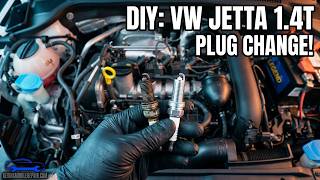
Typical fix: Replace the spark plugs. It is critical to replace them as a full set of four to ensure even performance. Use the correct type (Iridium or Platinum) and torque spec as specified for your engine. 🎬 See this step-by-step guide for replacing plugs and coils
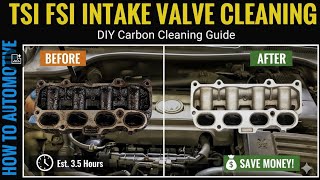
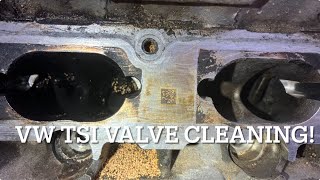
Est. part cost: $40 - $100 (for a set of four) - Carbon Buildup on Intake Valves 🟡 Medium Probability Direct injection (TSI) engines spray fuel directly into the cylinder, so gasoline detergents don't clean the intake valves. Over time, oil vapor from the crankcase ventilation system can bake onto the valves, restricting airflow and causing misfires, especially on cold starts. This is a well-documented issue on VW/Audi GDI engines.
How to confirm: This is difficult to confirm without tools. A mechanic can use a borescope to visually inspect the intake valves. Misfires that are worse when the engine is cold and improve as it warms up are a strong indicator. A scan tool may also show misfire counts climbing at idle.
Typical fix: The intake manifold must be removed and the valves cleaned manually, often through a process called walnut blasting. 🎬 Watch: How to perform a walnut blasting valve cleaning This is typically a job for a professional shop and can cost between $400 and $1000 depending on the shop.
Est. part cost: $0 (cleaning service) - Faulty or Clogged Fuel Injector ⚪ Low Probability The high pressure and heat in a direct injection system can cause injectors to clog or fail electronically. A stuck-open injector can flood the cylinder with fuel.
How to confirm: This is more advanced. If a new coil and plug don't fix the P0301 and the spark plug from cylinder 1 comes out wet with fuel, it could be a bad injector. A mechanic can test the injector's electrical resistance and spray pattern or use a scan tool to monitor fuel trims. Swapping injectors between cylinders is a possible but labor-intensive diagnostic step.
Typical fix: Replace the faulty fuel injector. This is more labor-intensive than a coil or plug as it may require removing the intake manifold. It's often recommended to replace the injector seals at the same time.
Est. part cost: $50 - $150
Rare But Worth Checking
- Low Engine Compression: This indicates a serious internal engine problem like a worn piston ring, a leaking valve, or a head gasket failure. A compression test is needed to diagnose this.
- Vacuum Leak: A leak in the intake manifold gasket near cylinder 1 could lean out the air/fuel mixture, causing a misfire. This can be found using a smoke machine.
- Damaged Ignition Coil Connector or Wiring: The plastic connectors on the ignition coils can become brittle and break from heat cycling, or the wiring can get damaged, leading to a poor connection and misfires. A user on a forum noted a pinched cable after a repair caused issues.
- PCV Valve Failure: A failed PCV (Positive Crankcase Ventilation) valve can lead to excessive oil consumption, which can foul spark plugs and contribute to carbon buildup, indirectly causing misfires.
Diagnosis Steps
- Confirm the code with an OBD-II scanner. Note if the Check Engine Light is solid or flashing. Use a capable scanner (like OBDeleven or VCDS for VWs) to check for live misfire counts for each cylinder.
- Identify cylinder 1. On the transverse 1.4T/1.5T/2.0T engines, cylinder 1 is on the passenger side of the engine bay, closest to the drive belt.
- Swap the ignition coil from cylinder 1 to cylinder 2. The coils are typically held by a small bolt or are just press-fit. Unclip the electrical connector and pull the coil straight up.
- Clear the codes with the scanner, start the engine, and let it run or drive it briefly until the Check Engine Light returns.
- Re-scan for codes. If the code is now P0302, the ignition coil is the problem. Replace the coil that is now in cylinder 2.
- If the code remains P0301, the coil is likely good. Proceed to inspect the spark plug.
- Remove the spark plug from cylinder 1. You will need a special thin-wall spark plug socket (often a 14mm 12-point or a standard 5/8" depending on the specific plug). Before removing, blow out any debris from the plug well to prevent it from falling into the cylinder.
- If the spark plug looks worn, fouled, or damaged, replace all four plugs as a set. Ensure they are the correct OEM-recommended type (Bosch or NGK are common OE suppliers) and pre-gapped.
- If the coil and plug appear fine but the P0301 code persists, the issue is likely more complex. At this point, consider a fuel injector issue, carbon buildup, or a compression problem, which may require professional diagnosis with tools like a borescope or compression tester.
Parts You'll Likely Need
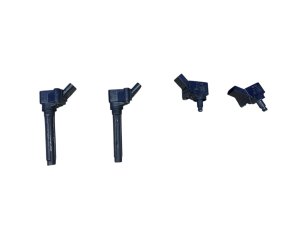
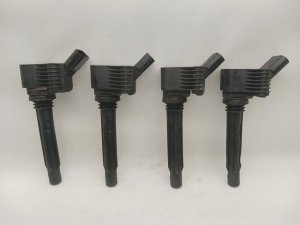
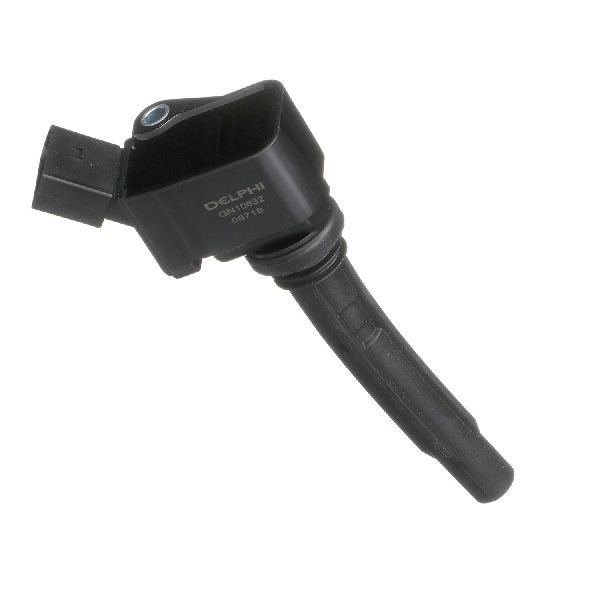
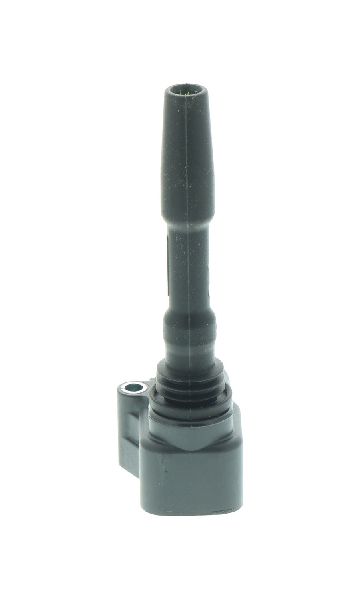
- Ignition Coil
(OEM #04E905110K (for 1.4T, may be superseded, always verify with VIN))— This is the most frequent cause of a single-cylinder misfire and the easiest to diagnose via the 'coil swap' method.
Trusted brands: Bosch, NGK, Eldor
OEM price range: $60-$90
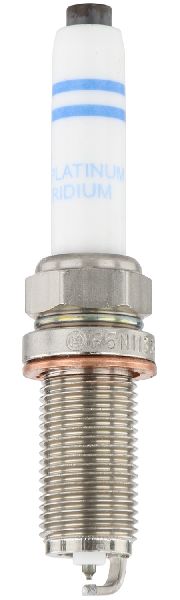
Aftermarket price range: $35-$60 - Spark Plugs (Set of 4) — Spark plugs are a routine maintenance item and the second most likely cause of a misfire after the ignition coil.
Trusted brands: NGK, Bosch, Denso
OEM price range: $60-$100
Aftermarket price range: $40-$80
Related Codes That Often Appear With This One
- P0300 — This code for 'Random/Multiple Cylinder Misfire' may appear alongside P0301 if the misfire is intermittent or starting to affect other cylinders.
- P0302, P0303, P0304 — If you see these codes with P0301, it points to a problem affecting multiple cylinders, such as a bad batch of fuel, a failing fuel pump, or significant carbon buildup across all valves.
Technical Service Bulletins (TSBs) & Recalls
- VIN4APIN20211116
Platform-Specific Known Issues
- A Technical Service Bulletin (TSB), #VIN4APIN20211116, notes that customer complaints of a Check Engine Light may include P0301 along with other misfire codes (P0300, P0302, P0303, P0304), indicating VW is aware of misfire conditions on these vehicles.
- Owners on VW forums frequently solve P0301 with a simple ignition coil or spark plug replacement. The coil swap is the universally recommended first step.
- For persistent misfires after replacing coils and plugs, carbon buildup is the next most cited cause, with many owners opting for a professional walnut blasting service.
- In some cases, even after replacing coils and plugs, the misfire persists and is traced to a faulty fuel injector, which may be stuck open or clogged.
Mechanic-Grade Diagnostic Values
- Low-Pressure Fuel System Pressure — expected: 5.0–6.0 bar (72-87 PSI). Failure: Pressure below 5.0 bar can indicate a failing in-tank fuel pump, potentially causing misfires under load.
- VCDS Misfire Counter — expected: 0 counts at idle and under load on all cylinders.. Failure: Any count incrementing on cylinder 1 in Measuring Value Blocks (MVB) 015 and 016 confirms the misfire location.
- Ignition Coil Primary Resistance — expected: While specific OEM values are not published for DIY testing, a common check is to compare the resistance between all four coils. They should be nearly identical.. Failure: A coil with a significantly different resistance reading (higher or lower) than the others is likely faulty.
Scan Tool Commands That Help
- VCDS (VAG-COM): Engine -> Measuring Blocks -> Groups 014, 015, 016 — Use this to view the live misfire counter for each individual cylinder. This is the primary way to confirm which cylinder is misfiring and under what conditions (e.g., at idle, under load).
- VCDS (VAG-COM): Engine -> Output Tests — This function can be used to sequentially test components, including fuel injectors. The test will cycle each injector, creating an audible click. An absent click on cylinder 1's test could indicate a failed injector or wiring issue. This test is typically run with the engine off.
Wiring & Ground Locations
- Ground Connection (15) — On the cylinder head.. A poor ground connection at the cylinder head can cause erratic behavior in the ignition system, as the ignition coils are grounded through the engine block.
- Ground Connection (12) — In the engine compartment, on the left side (typically near the battery tray/frame rail).. This is a primary chassis ground point. Corrosion or looseness here can cause a variety of electrical issues, including weak spark or inconsistent injector operation.
- Ignition Coil Connector (T4af for Cyl 1) — The 4-pin electrical connector on top of the ignition coil for cylinder 1.. These connectors can become brittle from engine heat and break, causing a loose connection and misfires. The wiring at the connector can also chafe or break. The pins are cylinder-specific and must be wired correctly.
Real Owner Repair Stories
- Reddit user in /r/MechanicAdvice (2017 Jetta 1.4T with 36,000 miles) — Persistent P0301 code, slight feeling of misfire, CEL on.
❌ Tried (didn't work) Replaced spark plugs (with RockAuto parts), Replaced ignition coils, Replaced fuel injectors and fuel rail (due to a recall)
✅ What actually fixed it The user's story was unresolved, but the dealership's final recommendation was to replace the spark plugs and ignition coil again, this time with "genuine VW parts," suggesting a potential issue with aftermarket part compatibility or quality. - Reddit user in /r/MechanicAdvice (2000 VW Jetta GLS 2.0L (older model, but relevant diagnosis)) — P0301, intermittent loss of power, blinking CEL.
❌ Tried (didn't work) Replaced spark plugs and wires, Replaced ignition coil, Replaced mass airflow sensor
✅ What actually fixed it The new spark plug wire for cylinder 1 was defective 'out of the box'. Replacing the brand new, faulty wire with another new one resolved the misfire.
OEM Part Supersession History
04E905110B, 04E905110E, 04C905110D, etc.→04E905110K (and potentially later revisions)— Standard part evolution for reliability and performance improvements. Aftermarket brands like RacingLine offer high-output versions as alternatives to OEM.
Heads up: While many revisions are interchangeable, it is always best practice to verify the correct part number for your specific vehicle's VIN. Using an incompatible revision could lead to performance issues or premature failure.
Model Year Variations Within This Range
- 2019-2022: The 1.5T EA211 Evo engine replaced the 1.4T EA211 engine starting in 2019 for most Jetta models. The 1.5T uses a Miller combustion cycle for better efficiency and may feature technologies like a variable turbine geometry (VTG) turbo. Some early 1.5T engines in other VW models were known for a cold-start hesitation or 'kangarooing' issue, which was addressed with software updates.
- 2017-2018: These model years use the 1.4T EA211 engine. While a very reliable engine, it lacks some of the advanced efficiency technologies of the later 1.5T Evo, such as the Miller cycle and advanced cylinder deactivation.
Helpful Videos
Used OEM Parts in Stock
New Aftermarket Parts Available


The information in this article is provided for general reference and educational purposes only. Vehicle specifications, procedures, and part compatibility can vary by production date, trim level, and region. Always consult your vehicle's factory service manual and verify part numbers before purchasing or performing repairs. Safety-critical components such as airbags, seat belts, and braking systems should be installed by a qualified professional.
- Volkswagen JETTA:
- 🎬 Helpful Videos
- 🛍️ Shop This Part
- What's Unique About the 2017-2022 Volkswagen JETTA
- Diagnostic Flowchart
- Symptoms You May Notice
- Most Likely Causes
- Rare But Worth Checking
- Diagnosis Steps
- Parts You'll Likely Need
- Related Codes That Often Appear With This One
- Technical Service Bulletins (TSBs) & Recalls
- Platform-Specific Known Issues
- Mechanic-Grade Diagnostic Values
- Scan Tool Commands That Help
- Wiring & Ground Locations
- Real Owner Repair Stories
- OEM Part Supersession History
- Model Year Variations Within This Range
- 🎟️ Get 5% Off