

P0301 on 2014-2017 Mazda MAZDA6: Cylinder 1 Misfire Causes and Fixes
For a P0301 code on a 2014-2017 Mazda6, the most likely culprits are a failed ignition coil or a worn spark plug for cylinder 1. A specific TSB (01-014/16) points to faulty 'YUMEBISHI' brand ignition coils on models produced before April 2016. Swapping the coil with another cylinder is a quick, no-cost diagnostic step. A new coil costs about $30-$75, and a spark plug is around $15-$25.
- P0301 means cylinder #1 is misfiring. On your Mazda6, this is the cylinder closest to the passenger side.
- The most probable cause is a bad ignition coil or spark plug. A simple swap test (moving the coil from cylinder 1 to 2) is the best first diagnostic step and costs nothing.
- Do not ignore a flashing check engine light, as this indicates a severe misfire that can quickly destroy your catalytic converter, a very expensive repair.
- Use only OEM-spec spark plugs, such as those from NGK or Denso, as these engines can be sensitive to incorrect plug types.
- If basic ignition parts don't solve the problem, consider a vacuum leak or carbon buildup on the intake valves, especially on higher-mileage vehicles.
What's Unique About the 2014-2017 Mazda MAZDA6

The 2014-2017 Mazda6 uses the reliable 2.5L SkyActiv-G direct-injection engine. While generally robust, Mazda issued a specific Technical Service Bulletin (TSB #01-014/16) for 2014-2016 models built before April 7, 2016, for misfire codes including P0301. This TSB identifies that ignition coils from a specific vendor, 'YUMEBISHI', were prone to internal failure. The fix involves replacing the faulty coil(s) with the more reliable 'MITSUBISHI'-produced parts. Additionally, other TSBs link misfire codes with fuel injector circuit faults, suggesting a known, though less common, connection between injector wiring issues and misfires. [TSB #01-004-17-3317a, TSB #01-017-16-3242]
Diagnostic Flowchart
Tap your situation to follow the diagnostic path that matches what you're seeing on this vehicle.
Symptoms You May Notice
- Rough idle or engine shaking
- Hesitation or stumbling during acceleration
- Solid or flashing Check Engine Light
- Reduced engine power
- Decreased fuel economy
- Slight backfiring on cold starts
- Hissing sound during acceleration, potentially indicating a vacuum leak
- Replacing the mass airflow (MAF) sensor without proper diagnosis.
- Replacing oxygen (O2) sensors, which are more likely to report an issue caused by the misfire rather than be the cause itself.
Most Likely Causes

- Faulty Ignition Coil 🔴 High Probability Ignition coils are a common failure point. Mazda TSB #01-014/16 specifically calls out 'YUMEBISHI'-brand coils on 2014-2016 models for internal failures due to temperature fluctuations. The bulletin advises replacing them with 'MITSUBISHI'-brand coils.
How to confirm: Swap the ignition coil from cylinder #1 with the coil from cylinder #2. Clear the codes and drive the car. If the code changes to P0302, the coil is the faulty part. This is the exact procedure recommended in the TSB.
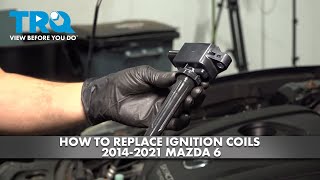
Typical fix: Replace the faulty ignition coil. 🎬 Watch: Step-by-step guide to replacing your Mazda 6 ignition coils. Per TSB 01-014/16, if other coils are also the 'YUMEBISHI' brand (identified by a 4-digit lot number), they should also be replaced to prevent future failures.
Est. part cost: $30 - $75 - Worn or Fouled Spark Plug 🔴 High Probability Spark plugs are a regular maintenance item with a recommended replacement interval of 75,000 miles for the 2.5L SkyActiv-G engine. Using non-OEM plugs or extending the interval can lead to a weak spark and misfires.
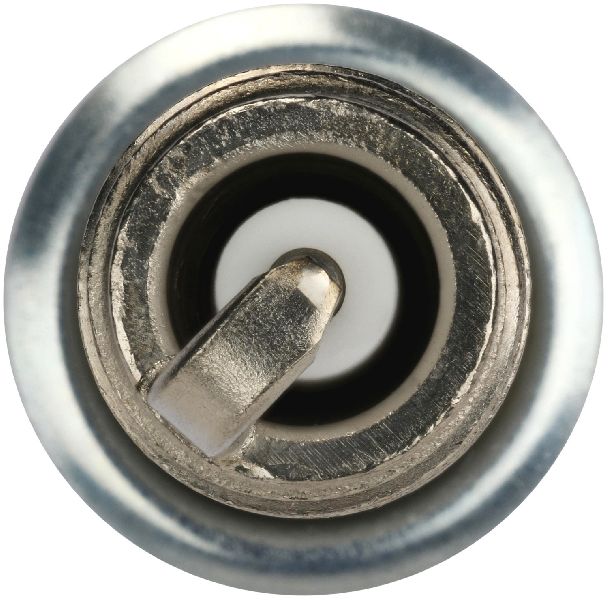
How to confirm: After confirming the coil is good, inspect the spark plug from cylinder #1. Look for a worn-down center electrode, heavy carbon deposits, or oil/fuel residue. Compare it to a new plug.
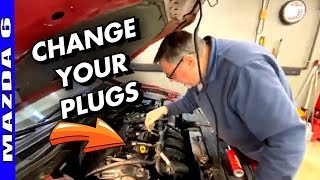
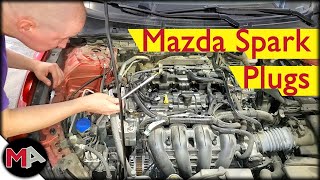
Typical fix: Replace the spark plug. 🎬 See this walkthrough for replacing spark plugs on the 2.5L engine. It is often recommended to replace all four spark plugs at the same time for even performance and to reset the maintenance schedule.
Est. part cost: $15 - $25 per plug - Carbon Buildup on Intake Valves 🟡 Medium Probability As a direct-injection (GDI) engine, fuel is sprayed directly into the cylinder, not over the intake valves. This means there's no fuel to wash away carbon deposits, which can build up over 80,000-100,000+ miles and disrupt airflow, causing misfires, especially on cold starts.
How to confirm: This requires a mechanic to use a borescope to visually inspect the intake valves by inserting it through the intake manifold or spark plug hole.
Typical fix: Perform a walnut shell blasting service to clean the carbon off the intake valves and ports. Some shops may offer a chemical cleaning service as a less intensive alternative.
Est. part cost: $0 (service only) - Faulty Fuel Injector ⚪ Low Probability While less common than ignition issues, injectors can become clogged or fail electronically. Mazda TSBs specifically link injector circuit faults (P0201) with misfire codes (P0301) on this platform, pointing to a known wiring or component issue. [TSB #01-004-17-3317a]
How to confirm: A professional can perform a fuel injector balance test or check the injector's resistance with a multimeter. Swapping injectors between cylinders is possible but more labor-intensive than swapping coils.
Typical fix: Replace the faulty fuel injector and its seals.
Est. part cost: $80 - $150
Rare But Worth Checking
- Vacuum Leak: A hissing sound during acceleration can point to a vacuum leak. A leak in a hose (like the PCV hose) or an intake manifold gasket near cylinder #1's runner can lean out the mixture and cause a misfire. One owner on Reddit reported this sound while chasing a persistent P0301.
- Leaking Valve Cover Gasket: The gasket sealing the spark plug tube can fail, allowing engine oil to fill the well. This oil can soak the ignition coil boot and spark plug, causing a poor connection and misfires. If you find oil when removing the ignition coil, the valve cover gasket set needs to be replaced.
- Low Engine Compression: This is a more serious mechanical issue, such as a worn piston ring, a bad valve, or a leaking head gasket. A compression test followed by a cylinder leak-down test is needed to diagnose this.
Diagnosis Steps

- Read the code with an OBD-II scanner and confirm P0301 is present. Note any other codes.
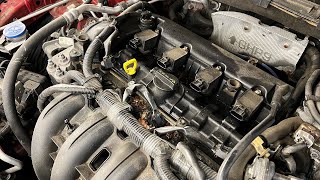
- Identify cylinder #1. On the 2.5L SkyActiv-G engine, the cylinders are numbered 1-2-3-4 from the passenger side (belt side) to the driver side.
- Swap the ignition coil from cylinder #1 to cylinder #2. Clear the codes and run the engine. If the code changes to P0302, the ignition coil is faulty.
- If the code remains P0301, inspect the ignition coil you just removed. Look for a 4-digit lot number, which indicates the failure-prone 'YUMEBISHI' brand mentioned in TSB 01-014/16. If it is, replace it.
- If the coil is not the issue, move the spark plug from cylinder #1 to cylinder #3. Clear codes and run the engine. If the code changes to P0303, the spark plug is faulty.
- While the coil and plug are out, inspect the spark plug well for any oil. Oil in the well indicates a leaking valve cover tube seal, which must be replaced.
- If the coil and plug are good, inspect the wiring harness and connector for the cylinder #1 ignition coil and fuel injector for any visible damage or corrosion.
- Listen to the fuel injector with a mechanic's stethoscope; it should have a consistent clicking sound. Compare it to the other injectors.
- If the problem persists, more advanced diagnostics like checking for vacuum leaks, a fuel pressure test, or a compression test are necessary and may require professional help.
Parts You'll Likely Need

- Ignition Coil
(OEM #PE20-18-100A (Verify by VIN, TSB replacement is Mitsubishi brand))— This is the most common failure part for a single-cylinder misfire, with a known defect on 2014-2016 models documented in TSB 01-014/16. It's responsible for generating the high voltage for the spark plug.
Trusted brands: Mazda (OEM - Mitsubishi), NGK, Denso
OEM price range: $60-$90
Aftermarket price range: $30-$60 - Spark Plug
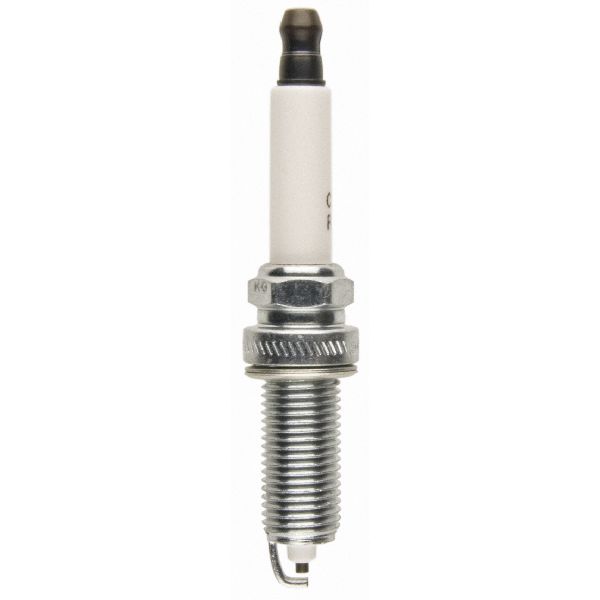
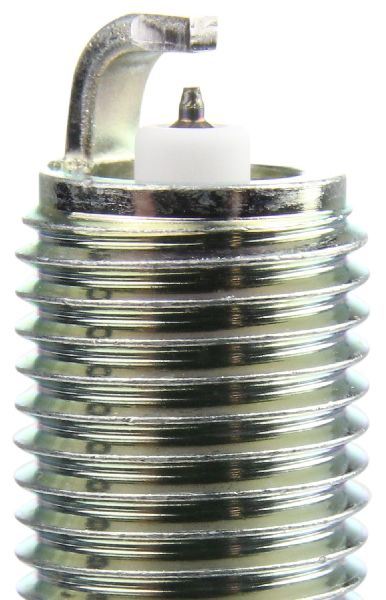
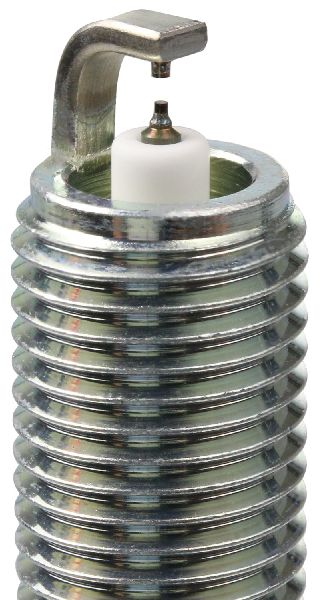
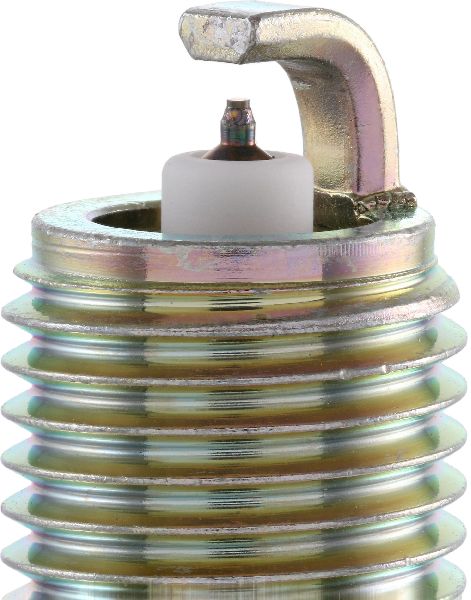
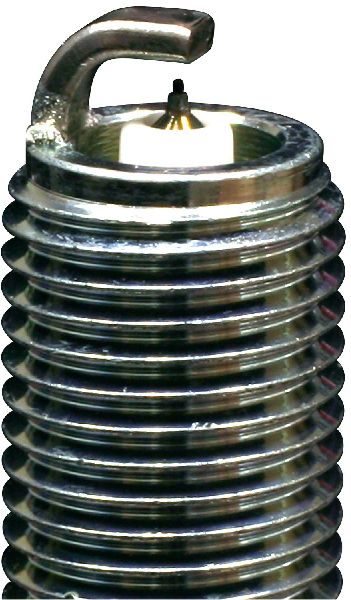
(OEM #PE5R-18-110A (NGK ILKAR7L11))— Spark plugs are a routine maintenance item with a 75,000-mile service life and a frequent cause of misfires as they wear out.
Trusted brands: NGK (ILKAR7L11 - OEM supplier), Denso
OEM price range: $20-$30
Aftermarket price range: $15-$25
Related Codes That Often Appear With This One
- P0300 — If the misfire is intermittent or affects other cylinders, a P0300 (Random Misfire) code may appear alongside P0301.
- P0302, P0303, P0304 — If you swap a faulty component from cylinder 1 to another cylinder for diagnosis, the code will follow to that new cylinder (e.g., P0301 becomes P0302 after swapping coils).
- P0201 — This code for 'Fuel Injector Circuit/Open Cylinder No.1' is specifically mentioned in Mazda TSBs as a companion code to P0301, indicating a potential wiring or injector issue. [TSB #01-004-17-3317a]
Technical Service Bulletins (TSBs) & Recalls

- 01-014/16: CHECK ENGINE LIGHT ON WITH DTC P0300-P0304. Details failure of YUMEBISHI-produced ignition coils.
- 01-007-19-3541: Rough idle and check engine light with P0301-P0304.
- 01-004-17-3317a: Engine runs rough with DTCs P0201/P0204 or P0202/P0203, noting that misfire DTCs (P0301-P0304) are usually stored at the same time.
- 01-017-16-3242: Similar to above, linking injector circuit codes to misfire codes.
- 01-002-17-3299a: Rough idle and check engine light with P0301-P0304.
- 01-002-17: Rough idle and check engine light with P0301-P0304.
Platform-Specific Known Issues
- TSB #01-014/16: Specifically for 2014-2016 Mazda6 models (among others) built before April 2016, this bulletin addresses misfire codes P0300-P0304 caused by internal failure of 'YUMEBISHI' brand ignition coils. The fix is to replace them with 'MITSUBISHI' brand coils.
- TSBs #01-004-17-3317a and #01-017-16-3242: These bulletins note that engine misfire DTCs (P0301-P0304) are often stored at the same time as fuel injector circuit DTCs (P0201-P0204), indicating a known pattern of injector-related misfires.
Mechanic-Grade Diagnostic Values
- Ignition Coil Primary Winding Resistance — expected: 0.49 - 0.57 Ohms at 20°C (68°F). Failure: A reading outside this range indicates a faulty coil.
- Fuel Injector Resistance — expected: 1.74 - 2.04 Ohms at 20°C (68°F). Failure: A reading of 0 (short) or OL (open) on a multimeter indicates a faulty injector.
- High-Pressure Fuel System (Live Data) — expected: 3.0 MPa (435 psi) or more at idle. Failure: A reading below 3.0 MPa at idle suggests a problem with the high-pressure fuel pump.
Hidden / Shadow Codes Worth Checking
- Mode $06, TID $A2-$A5: Misfire counts for each cylinder (Cylinder 1 is typically TID $A2). While not a hidden code, this data is not always displayed on basic scanners and allows a technician to see the raw number of misfire events detected by the PCM for each cylinder, even if they aren't frequent enough to set a P030x code. (see via An advanced OBD-II scanner or software like FORScan that can display Mode $06 test results.)
Scan Tool Commands That Help
- Mazda M-MDS / FORScan: Misfire Counter PID Monitoring — To watch for misfires in real-time on a specific cylinder during a test drive under various load conditions. This can help confirm an intermittent misfire that doesn't immediately set a code.
- Mazda M-MDS / FORScan: Clear KAM (Keep Alive Memory) — After replacing a component like a fuel injector or cleaning the throttle body, clearing the KAM resets the engine's learned adaptive strategies. This forces the PCM to relearn values with the new/clean parts, which can resolve performance issues after a repair.
Wiring & Ground Locations
- Engine Ground Points — Common locations for main engine grounds include a strap to the chassis near the passenger side motor mount, a ground point on the top of the transmission case, and a point on the frame underneath the driver's side headlight area.. A poor ground for the PCM or ignition system can cause weak spark or erratic sensor readings, leading to misfires. While schematics for the 2014-2017 model are not readily available, these locations from a similar platform are primary points to check for corrosion or looseness.
Real Owner Repair Stories
- Reddit user on r/MechanicAdvice (2004 Mazda 6 i 2.3L (similar DISI engine family)) — Severe stuttering and a P0301 code. Engine would misfire from a stop and randomly while driving.
❌ Tried (didn't work) Replacing only the valve cover gasket and the single spark plug in cylinder 1 after finding oil in the spark plug well. The problem returned., Replacing the spark plug wires. The problem improved slightly but still persisted.
✅ What actually fixed it The consensus and successful fix reported by others in the thread was to replace all four spark plugs with the correct OEM-spec NGK Iridium plugs, not just the one in the misfiring cylinder, and to inspect/replace the ignition coil pack. The initial use of non-OEM plugs and replacing only one was a misstep.
OEM Part Supersession History
PE01-18-100, PE01-18-100A, P51B-18-100→PE20-18-100A— Part has been revised multiple times by the manufacturer, likely to improve reliability and address failures noted in TSBs (like the Yumebishi coil issue).
Heads up: Using older part numbers is not advised. PE20-18-100A is the current recommended replacement coil.
Model Year Variations Within This Range
- 2014 - Early 2016: Models built before April 7, 2016, may be equipped with failure-prone 'YUMEBISHI' brand ignition coils as identified in TSB 01-014/16. Later models used more reliable 'MITSUBISHI' coils.
- 2017: The 2017 model year received a refresh focused on refinement. While the core 2.5L engine and power output remained the same, Mazda introduced G-Vectoring Control for improved handling, added more sound deadening for a quieter cabin, and updated interior tech like a color head-up display. These changes do not directly affect the cause of a P0301 but distinguish the model year.
Helpful Videos
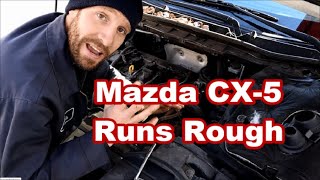

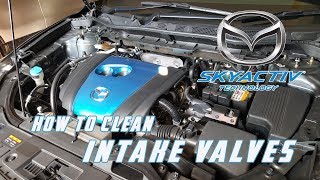

Used OEM Parts in Stock

New Aftermarket Parts Available

The information in this article is provided for general reference and educational purposes only. Vehicle specifications, procedures, and part compatibility can vary by production date, trim level, and region. Always consult your vehicle's factory service manual and verify part numbers before purchasing or performing repairs. Safety-critical components such as airbags, seat belts, and braking systems should be installed by a qualified professional.
- Mazda MAZDA6:
- 🎬 Helpful Videos
- 🛍️ Shop This Part
- What's Unique About the 2014-2017 Mazda MAZDA6
- Diagnostic Flowchart
- Symptoms You May Notice
- Most Likely Causes
- Rare But Worth Checking
- Diagnosis Steps
- Parts You'll Likely Need
- Related Codes That Often Appear With This One
- Technical Service Bulletins (TSBs) & Recalls
- Platform-Specific Known Issues
- Mechanic-Grade Diagnostic Values
- Hidden / Shadow Codes Worth Checking
- Scan Tool Commands That Help
- Wiring & Ground Locations
- Real Owner Repair Stories
- OEM Part Supersession History
- Model Year Variations Within This Range
- 🎟️ Get 5% Off