

P0301 on 2014-2020 Mazda CX-5: Cylinder 1 Misfire Causes and Fixes
P0301 on a Mazda CX-5 most often means a bad ignition coil or a worn spark plug in cylinder 1. A failing ignition coil is a known issue documented in Mazda TSB #01-014-16-3208A, particularly on 2013-2016 models with YUMEBISHI-brand coils. Start diagnosis by swapping the ignition coil from cylinder 1 to another cylinder (e.g., cylinder 2) to see if the code changes to P0302.
- P0301 on a 2014-2020 CX-5 is most likely a bad ignition coil on cylinder 1.
- A simple and effective first step is to swap the ignition coil from cylinder 1 to another cylinder to see if the misfire code follows.
- If the coil isn't the problem, a worn spark plug is the next most likely cause.
- Be aware of Mazda's Technical Service Bulletins (TSBs), as they point to specific known issues with ignition coils and, on turbo models, more serious mechanical problems.
- Driving with a flashing check engine light can cause expensive damage to your catalytic converter.
What's Unique About the 2014-2020 Mazda CX-5

The 2014-2020 Mazda CX-5 is subject to several specific Technical Service Bulletins (TSBs) related to misfire codes. One key TSB (#01-014-16-3208A) points to internal failures of specific ignition coils from supplier YUMEBISHI, which were prone to failure due to large temperature swings. Additionally, 2.5L Turbo models have a separate, more severe TSB (#01-001-23a) for an issue where a seized valve in the exhaust manifold can cause excessive heat, leading to exhaust valve seat wear, compression loss, and misfires that may require cylinder head replacement. Finally, some earlier models experienced misfires in cold weather due to PCM logic or, in rare cases, water freezing in the exhaust system.
Diagnostic Flowchart

Tap your situation to follow the diagnostic path that matches what you're seeing on this vehicle.
Generation note: This range covers two generations of the CX-5: the first generation (KE, 2014-2016) and the second generation (KF, 2017-2020). While many causes are the same, a 2019 recall (#3719F) for a PCM software issue causing misfires specifically affects 2018-2019 KF generation models with cylinder deactivation. The TSB for failing YUMEBISHI ignition coils is most relevant to the KE generation (up to early 2016 models). The severe exhaust valve issue is specific to 2.5L Turbo models, which were introduced in the KF generation.
Symptoms You May Notice
- Rough or shaky idle, sometimes only on cold starts
- Hesitation or stumbling during acceleration
- Noticeable loss of engine power
- Flashing or solid Check Engine Light
- Smell of unburned gasoline from the exhaust
- Poor fuel economy
- In some cases, other warning lights like 'Smart Brake Malfunction' may appear, as the misfire can disrupt other vehicle systems
- Replacing only the spark plug when the ignition coil is the actual point of failure. The coil swap test is crucial to avoid this.
- Replacing ignition components repeatedly when the root cause is mechanical, such as carbon buildup on the intake valves or low compression, especially on higher-mileage engines.
- Assuming a flashing CEL and multiple system warnings (e.g., brake malfunction) are separate issues, when they are often triggered by the engine misfire itself.
Most Likely Causes

- Failing Ignition Coil 🔴 High Probability Mazda issued TSB #01-014-16-3208A for certain 2013-2016 models, noting that ignition coils from a specific supplier (YUMEBISHI) were prone to internal failure due to large ambient temperature changes, causing misfires. This is a widely reported failure by owners.
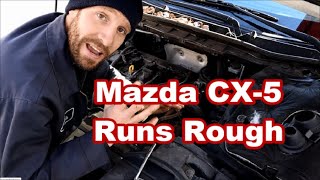
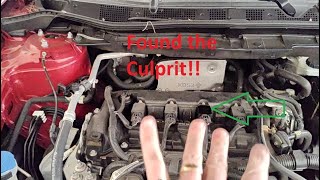
How to confirm: Swap the ignition coil from cylinder 1 with the coil from cylinder 2. Clear the codes with a scanner and drive the vehicle. If the code changes to P0302, the ignition coil is faulty. This is the most common and effective first diagnostic step. 🎬 Watch: How to diagnose and fix misfires and rough idling.
Typical fix: Replace the faulty ignition coil. It is often recommended to replace all four coils at once, especially if they are original and high-mileage, to prevent future failures.
Est. part cost: $40-$90 per coil (aftermarket), $130-$180 per coil (OEM) - Worn or Fouled Spark Plug 🔴 High Probability Spark plugs are a standard maintenance item. The service interval is 75,000 miles for naturally aspirated 2.5L engines and shorter at 40,000 miles for the 2.5T engine. A plug that is worn past its service life or fouled by oil or carbon can cause a weak or nonexistent spark.
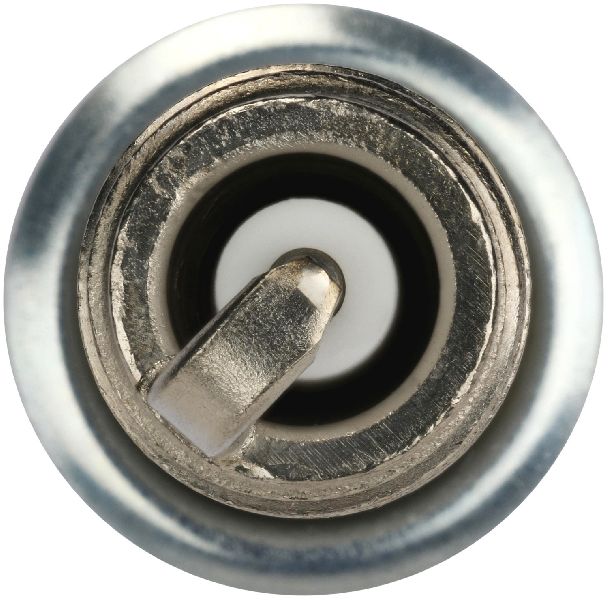
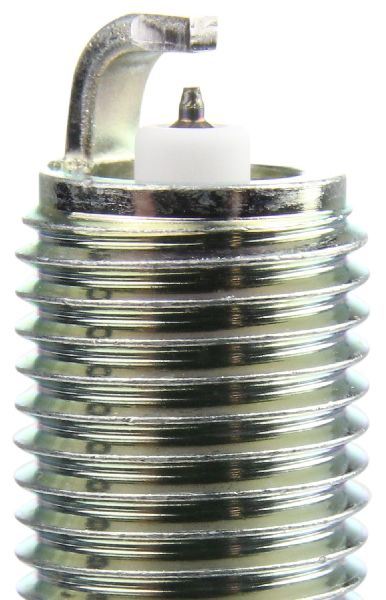
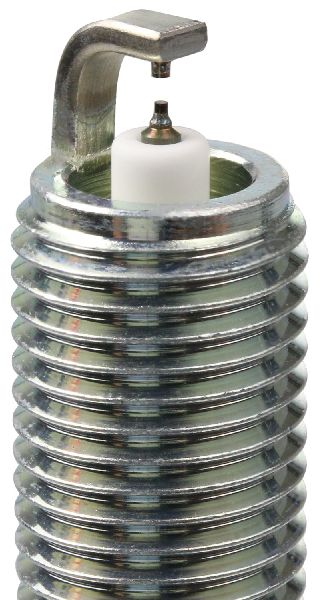
How to confirm: Remove the spark plug from cylinder 1 and inspect it. Look for a worn-down center electrode, heavy black soot (carbon fouling), or an oily residue. A healthy plug should have a light tan or grayish appearance. Compare it to a plug from another cylinder.
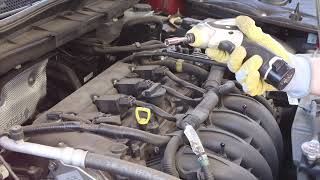
Typical fix: Replace the spark plug in cylinder 1. It is best practice to replace all four spark plugs at the same time to ensure even performance. Use a 14mm spark plug socket. 🎬 See this step-by-step walkthrough for changing your spark plugs.
Est. part cost: $15-$30 per plug - Carbon Buildup on Intake Valves 🟡 Medium Probability Like many direct-injection (GDI) engines, the Skyactiv-G engines do not have fuel washing over the intake valves. This allows oil vapor and combustion byproducts to bake onto the valves over time, forming hard carbon deposits that disrupt airflow into the cylinder and cause misfires, especially during cold starts when the fuel mixture is less stable.
How to confirm: This requires a borescope to visually inspect the intake valves for black, crusty deposits. A misfire that only occurs on a cold start and disappears when the engine warms up is a strong indicator of this issue.
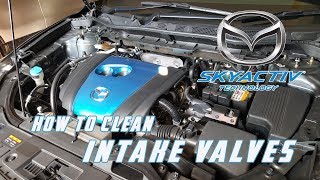
Typical fix: The intake valves need to be physically cleaned. The most effective method is walnut shell blasting, where crushed walnut shells are used as a media to blast the carbon off without damaging the metal surfaces. Chemical cleaners are often less effective on heavy buildup. 🎬 Watch: How to clean carbon buildup from your intake valves.
Est. part cost: $50 (for DIY cleaning tools/solvents) - $800+ (for professional walnut blasting service) - Clogged or Faulty Fuel Injector ⚪ Low Probability While not as common as ignition issues, a fuel injector can become clogged with deposits or fail electronically. TSBs #01-017-16-3242 and #01-004-17-3317a note that misfire codes are often stored at the same time as fuel injector circuit codes (like P0201), pointing to an electrical issue with the injector or its wiring.
How to confirm: Listen for a consistent clicking sound from the injector with a mechanic's stethoscope. You can also swap the injector with another cylinder to see if the misfire code follows, though this is more labor-intensive than swapping a coil.
Typical fix: Replace the faulty fuel injector. Sometimes professional fuel system cleaning can restore a clogged injector.
Est. part cost: $70-$150
Rare But Worth Checking
- Exhaust Manifold/Valve Seat Wear (2.5L Turbo Only): Per TSB #01-001-23a, on 2.5T engines, a variable valve in the exhaust manifold can seize. This causes excessive localized heat, leading to exhaust valve seat wear and a loss of compression, which results in a persistent misfire. This is a major mechanical repair that may require cylinder head replacement.
- PCM Software Issue (Cylinder Deactivation Models): A 2019 recall (Mazda #3719F, NHTSA #19V497000) was issued for 2018-2019 models with cylinder deactivation. Improper PCM software could cause a rocker arm to dislodge when the engine switched from 2-cylinder to 4-cylinder mode, leading to a sudden misfire and potential engine damage. The fix is a simple PCM software update performed by a dealer.
- Cracked Cylinder Head (Some 2.5L non-turbo): A less common but documented issue involves hairline cracks forming on the cylinder head near the exhaust manifold, causing a coolant leak. While this often presents as a coolant loss issue, if the leak is internal, it can cause a misfire. Mazda issued a TSB (01-013/21) for this on some models.
Diagnosis Steps

- Read the code with an OBD-II scanner to confirm P0301 and check for any other codes. Note if the Check Engine Light is solid or flashing.
- Perform the Ignition Coil Swap Test: Label and swap the ignition coil from cylinder 1 with the coil from cylinder 2. Clear the codes and run the engine (or drive it, if necessary to trigger the fault). If the code changes to P0302, the coil is bad and needs replacement. This is the most critical first step.
- If the misfire stays on cylinder 1, inspect the spark plug. Remove the plug from cylinder 1 (requires a 14mm socket). Look for wear, damage, or fouling (black soot or oily residue). If it looks bad or is past its service interval (75k miles for NA, 40k for Turbo), replace all four plugs.
- Check the wiring and connector to the cylinder 1 ignition coil and fuel injector. Look for any frayed wires, loose pins, or corrosion.
- Listen to the fuel injector on cylinder 1 with a mechanic's stethoscope or a long screwdriver. It should have a steady, audible clicking sound that matches the other injectors.
- If the misfire is primarily on cold starts and goes away when warm, suspect carbon buildup on the intake valves. This requires a borescope for visual confirmation.
- Perform a compression test to rule out mechanical engine problems. A healthy Skyactiv engine should have high compression (e.g., 13.0:1 ratio). A low reading on cylinder 1 points to issues like worn piston rings, or more seriously, the valve seat wear described in TSB #01-001-23a for turbo models.
Parts You'll Likely Need

- Ignition Coil
(OEM #PE20-18-100A)— This is the most frequent cause of a P0301 code on this vehicle and is specifically mentioned in TSB #01-014-16-3208A as a known failure point, especially on 2013-2016 models. This part number supersedes PE20-18-100.
Trusted brands: Mazda (OEM), NGK, Denso, Delphi
OEM price range: $130-$180
Aftermarket price range: $40-$90 - Spark Plug
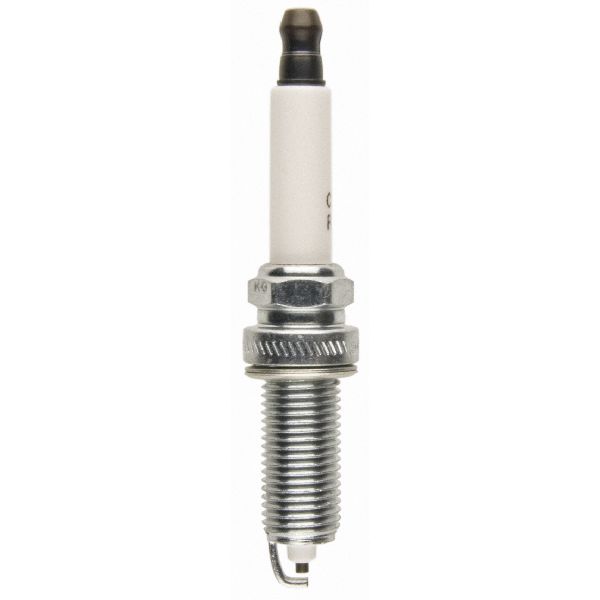
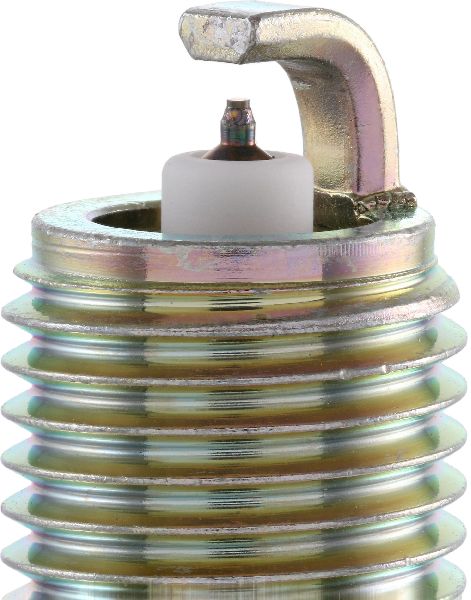
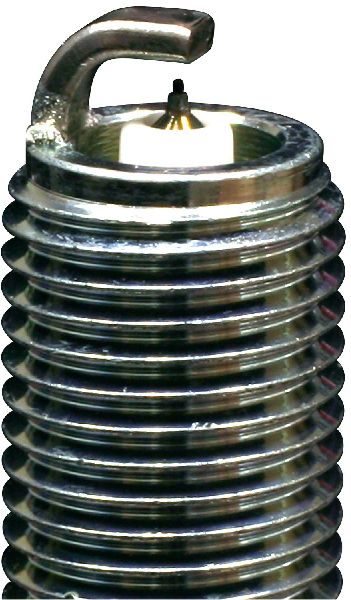
(OEM #PE5R-18-110A)— As a routine maintenance item, a worn spark plug is a very common and simple fix for a single-cylinder misfire. The OEM plug is typically a re-branded NGK or Denso Iridium plug. This part number supersedes PE5R-18-110 and others.
Trusted brands: NGK (ILKAR7L11 / 94124), Denso (ZC20HPR11), Mazda (OEM)
OEM price range: $25-$35
Aftermarket price range: $15-$25
Related Codes That Often Appear With This One
- P0300 — This is a 'Random Misfire' code. It often appears with P0301 if the misfire is intermittent or beginning to affect other cylinders.
- P0302, P0303, P0304 — These codes indicate misfires in other cylinders. Seeing them together can point to a common problem like bad fuel, a vacuum leak, or a failing fuel pump. If you swap a bad coil from cylinder 1 to 2, you expect to see P0301 disappear and P0302 appear.
- P0201 — This code means 'Fuel Injector Circuit/Open Cylinder No.1'. Mazda TSBs #01-017-16-3242 and #01-004-17-3317a explicitly state that this code is often stored at the same time as P0301, pointing directly to a fuel injector or wiring issue.
- P0171 — This code indicates 'System Too Lean'. A vacuum leak near cylinder 1 or a clogged fuel injector on that cylinder can cause both a lean condition and a misfire.
Technical Service Bulletins (TSBs) & Recalls
- 01-001-23a: Poor acceleration and rough idling on TURBO engines with P0301-P0304.
- 01-007-19-3541: Rough idle with DTCs P0300-P0304.
- 01-014-16-3208A: Lack of power/rough idle with P0300-P0304 caused by internal ignition coil failure.
- 01-017-16-3242: Notes that engine misfire DTCs (P0301-P0304) are usually stored at the same time as fuel injector circuit DTCs (P0201-P0204).
- 01-004-17-3317a: Repeats the information from the TSB above, linking misfire codes to fuel injector circuit codes.
Platform-Specific Known Issues
- TSB #01-014-16-3208A: Notes that some 2013-2016 models may experience misfires (P0300-P0304) due to internal failure of YUMEBISHI-brand ignition coils in environments with large temperature swings. The fix is to replace the faulty coil(s) with an updated part.
- TSB #01-001-23a: Applies only to 2.5L Turbo engines. A seized variable valve in the exhaust manifold can cause excessive heat, leading to exhaust valve seat wear and compression loss, resulting in misfires (P0301-P0304). This is a major repair requiring cylinder head replacement.
- Recall #3719F (NHTSA #19V497000): Affects 2018-2019 models with cylinder deactivation. A software glitch in the PCM could cause a rocker arm to become dislodged when switching between cylinder modes, causing a misfire. The remedy is a dealer-installed software update.
Mechanic-Grade Diagnostic Values
- Ignition Coil Primary Winding Resistance — expected: 0.49—0.57 ohms at 68°F (20°C). Failure: A reading outside of this range indicates a faulty coil.
- Ignition Coil Secondary Winding Resistance — expected: 9.5—11.1 kilohms. Failure: A reading outside of this range indicates a faulty coil.
- Engine Compression Ratio (Specification) — expected: 13.0:1 (for naturally aspirated 2.5L Skyactiv-G). Failure: While not a direct measurement, this high ratio means a compression test should yield high PSI values. A significantly lower reading in one cylinder indicates a mechanical problem.
Hidden / Shadow Codes Worth Checking
- Proprietary System Codes (e.g., for ABS/TCS): When a P0301 misfire occurs, it can disrupt signals used by other modules, such as the ABS/TCS or Advanced Driver-Assistance Systems (ADAS). This can set secondary, manufacturer-specific codes (e.g., 'Smart Brake Malfunction') that are not visible on basic OBD-II readers. (see via A professional-grade scan tool (like Mazda IDS or FORScan) that can read all vehicle modules, not just the PCM.)
Scan Tool Commands That Help
- Mazda IDS, FORScan, or other advanced scan tools: Cylinder Power Balance Test — Use this active test to isolate a misfiring cylinder when the cause is unclear. The tool disables one cylinder at a time (by cutting fuel or spark) and measures the corresponding drop in engine RPM. If disabling cylinder 1 causes little or no RPM drop compared to other cylinders, it confirms cylinder 1 is not contributing power.
Wiring & Ground Locations
- Ignition Coil Wiring (Cylinder 1) — At the connector for the ignition coil on cylinder 1 (passenger side of the engine).. According to a 2017 wiring diagram, the signal wire for the ignition module on cylinder 1 is White, located at pin AL of the main harness connector. This is useful for checking signal continuity from the PCM.
- Main Engine Bay Ground Point — A primary ground connection point is located on the chassis in the engine bay, often used for jump-starting.. A poor engine ground can cause a weak spark and lead to intermittent or multiple misfires. The owner's manual shows a designated ground point on the chassis for jump-starting, which serves as a reference for a main ground location.
Real Owner Repair Stories
- Mazdas247.com user 'duker733' (2014 Mazda CX-5 2.5L with 187,000 km) — Audible misfire and P0301 code, but only during cold start warmup. Ran fine once warm.
❌ Tried (didn't work) Replacing spark plugs, Swapping ignition coils between cylinder 1 and 2, Cleaning the throttle body and MAP sensor
✅ What actually fixed it Manually cleaning significant carbon buildup off the intake valves. The user soaked the valves with carb cleaner and used brushes and zip ties on a drill to scrub the carbon off, which resolved the cold-start misfire. - Reddit user 'RoastedClams' (2018 Mazda CX-5 with 125k miles) — P0301 code, sputtering, limp mode, and simultaneous 'Smart Brake Malfunction' and 'Front Radar Malfunction' warnings.
❌ Tried (didn't work) The user had previously experienced a P0302 two months prior, which was fixed by replacing the coil on cylinder 2 and all spark plugs.
✅ What actually fixed it The diagnosis pointed to a sequential failure of another ignition coil. The immediate diagnostic step that confirms the fix is swapping the cylinder 1 coil with another cylinder and seeing if the code follows (e.g., to P0303 or P0304), confirming the coil is bad. - YouTube channel 'NoNonsenseKnowHow' (2014 Mazda CX-5 2.0L with 140,000 miles) — Rough running and a dead misfire felt at idle, but no check engine light was on initially.
❌ Tried (didn't work) Swapping the ignition coil from the misfiring cylinder (Cylinder 2 in this case) to another cylinder did not move the misfire.
✅ What actually fixed it The misfire followed the spark plug when it was swapped to another cylinder. The root cause was a bad spark plug, suspected to have an internal porcelain crack that was not visible. Replacing all four spark plugs fixed the issue completely.
When the Usual Fixes Don't Work
- While the most common advice for a P0301 that doesn't move with a coil swap is to check for fuel or compression issues, real-world owner reports for the CX-5 strongly point to another major cause: carbon buildup on the intake valves. In one documented case on a 2014 CX-5, a P0301 that only occurred during cold starts was not resolved by swapping plugs or coils. The final fix was a mechanical cleaning of the intake valves, a known issue with gasoline direct injection (GDI) engines like the Skyactiv-G. This shows that for misfires that persist after basic ignition checks, especially on higher-mileage engines or with cold-start-only symptoms, valve cleaning should be a primary consideration before assuming more severe mechanical failure.
OEM Part Supersession History
PE01-18-100, PE01-18-100A, PE20-18-100→PE20-18-100A— Standard part revision and supplier updates over the vehicle's production life.
Heads up: This part number (PE20-18-100A) is for engines WITHOUT cylinder deactivation.Unknown→PYFS-18-100 (or PX5H-18-100)— Different coil design required for engines with cylinder deactivation.
Heads up: This part is specifically for 2.5L engines WITH cylinder deactivation. Using the standard PE20-18-100A coil on these engines may cause issues.
Model Year Variations Within This Range
- 2018-2020: Models equipped with the cylinder deactivation feature use a different ignition coil (Part #PYFS-18-100 or PX5H-18-100) than models without it. This is a critical distinction when ordering replacement parts.
Helpful Videos
Used OEM Parts in Stock

New Aftermarket Parts Available

The information in this article is provided for general reference and educational purposes only. Vehicle specifications, procedures, and part compatibility can vary by production date, trim level, and region. Always consult your vehicle's factory service manual and verify part numbers before purchasing or performing repairs. Safety-critical components such as airbags, seat belts, and braking systems should be installed by a qualified professional.
- Mazda CX-5:
- 🎬 Helpful Videos
- 🛍️ Shop This Part
- What's Unique About the 2014-2020 Mazda CX-5
- Diagnostic Flowchart
- Symptoms You May Notice
- Most Likely Causes
- Rare But Worth Checking
- Diagnosis Steps
- Parts You'll Likely Need
- Related Codes That Often Appear With This One
- Technical Service Bulletins (TSBs) & Recalls
- Platform-Specific Known Issues
- Mechanic-Grade Diagnostic Values
- Hidden / Shadow Codes Worth Checking
- Scan Tool Commands That Help
- Wiring & Ground Locations
- Real Owner Repair Stories
- When the Usual Fixes Don't Work
- OEM Part Supersession History
- Model Year Variations Within This Range
- 🎟️ Get 5% Off