

P0301 on 2016-2019 Mazda CX-3: Cylinder 1 Misfire Causes and Fixes
P0301 on a 2016-2019 Mazda CX-3 indicates a misfire in cylinder 1. The most common fixes are replacing a faulty ignition coil or a worn spark plug. This is a simple DIY repair, with parts costing between $20 for a spark plug and $150 for a coil. If the issue persists, fuel injectors are a known, albeit more expensive, culprit on this platform.
- P0301 on your Mazda CX-3 is a misfire on cylinder 1, the cylinder closest to the belts.
- Start your diagnosis with the cheapest and easiest fixes: inspect the spark plug and swap the ignition coil with another cylinder to see if the problem moves.
- If a new spark plug and coil don't fix the issue, the fuel injector is a likely culprit, as noted in Mazda's own service bulletins.
- Do not ignore a flashing check engine light, as this signals a severe misfire that can quickly destroy your catalytic converter, a much more expensive repair.
- Replacing spark plugs and ignition coils is a beginner-friendly DIY job that can save you hundreds in labor costs.
What's Unique About the 2016-2019 Mazda CX-3

The 2016-2019 Mazda CX-3 uses the reliable 2.0L Skyactiv-G direct-injection engine, which features a high compression ratio to maximize efficiency. While generally robust, misfire codes are a common issue on most modern engines as ignition components wear. For this specific platform and its Skyactiv relatives, Mazda has issued Technical Service Bulletins (TSBs) that note misfires can be linked to specific component failures. TSB #01-004-17-3317a points to an internal PCM failure on some models causing injector circuit codes and misfires, while TSB #01-007-19-3541 notes that misfires on cold starts can be caused by ice buildup in the exhaust restricting flow. [Bulletin #01-004-17-3317a, Bulletin #01-007-19-3541] These bulletins suggest that diagnosis should go beyond a simple coil and plug swap if the problem isn't immediately obvious.
Diagnostic Flowchart

Tap your situation to follow the diagnostic path that matches what you're seeing on this vehicle.
Symptoms You May Notice

- Rough or shaking idle. [Bulletin #01-007-19-3541]
- Solid or flashing Check Engine Light.
- Engine hesitation or stumbling during acceleration.
- Reduced engine power and poor fuel economy.
- Smell of unburned gasoline from the exhaust.
- In some cases, other warning lights like Smart Brake Malfunction may appear, as the misfire can disrupt other vehicle systems.
- Replacing the oxygen sensor. A misfire will cause incorrect readings from the O2 sensors, which might trigger other codes, but the sensor itself is rarely the root cause of the misfire.
Most Likely Causes


- Faulty Ignition Coil 🔴 High Probability Ignition coils are a common wear item on most modern engines with coil-on-plug designs. Heat and vibration eventually cause them to fail. Owners on forums often report one coil failing, followed by another a few months later, leading to sequential misfire codes (e.g., P0302 then P0301).
How to confirm: The easiest way to confirm a bad coil is to swap the ignition coil from cylinder 1 with another cylinder (e.g., cylinder 2). Clear the codes and drive the vehicle. If the code changes to P0302, the coil is faulty. This is a widely accepted diagnostic step in owner forums.
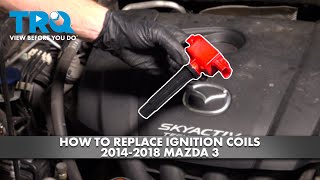
Typical fix: Replace the faulty ignition coil. 🎬 See this walkthrough on how to replace your ignition coils. It's often recommended to replace all four if they are original and have high mileage to prevent future failures.
Est. part cost: $40-$150 - Worn or Fouled Spark Plug 🔴 High Probability Spark plugs are a routine maintenance item with a finite lifespan. The high-energy ignition on Skyactiv engines requires them to be in good condition. They can wear out, crack, or become fouled with carbon or oil, the latter of which could indicate a failing valve cover gasket.
How to confirm: Remove the spark plug from cylinder 1 and inspect it. Look for a worn electrode, cracks in the porcelain, or heavy carbon/oil deposits. Compare it to a new plug. A fouled plug may appear coated in black soot.
Typical fix: Replace the spark plug. It is best practice to replace all four spark plugs at the same time to ensure consistent performance. Ensure they are gapped correctly and torqued to spec (approx. 16 ft-lbs).
Est. part cost: $15-$40 - Faulty Fuel Injector 🟡 Medium Probability Mazda TSB #01-004-17-3317a specifically links misfire codes with fuel injector circuit issues on some 2016 models, indicating a known potential failure point. [Bulletin #01-004-17-3317a] A clogged or electrically failed injector will cause a persistent misfire on one cylinder.
How to confirm: This is more difficult to diagnose. A professional can perform a fuel injector balance test. A DIY method involves listening for a clicking sound from the injector with a mechanic's stethoscope or swapping injectors between cylinders, which is a more involved job. Resistance can also be tested with a multimeter; a healthy injector should read around 12-13 Ohms.
Typical fix: Replace the faulty fuel injector. It's also recommended to replace the injector seals at the same time. This is a more costly repair than ignition components.
Est. part cost: $70-$200
Rare But Worth Checking
- Vacuum Leak: A leak in a vacuum hose or intake manifold gasket can introduce unmetered air, leaning out the air/fuel mixture and causing a misfire. This would typically affect multiple cylinders but can sometimes manifest as a single cylinder misfire initially.
- Low Engine Compression: Internal engine issues like a worn piston ring, a leaking valve, or a blown head gasket can cause a loss of compression in cylinder 1, leading to a misfire. This is a serious mechanical issue requiring a compression test to diagnose.
- Carbon Buildup on Intake Valves: As a direct-injection engine, the Skyactiv-G can be prone to carbon buildup on the intake valves over time, as fuel is not sprayed over them to keep them clean. Severe buildup can impede airflow into the cylinder and cause misfires, especially on cold starts. This issue is often resolved with a professional 'walnut blasting' service.
- Frozen Exhaust Condensation: TSB #01-007-19-3541 describes a specific scenario where, in freezing temperatures, water can accumulate and freeze in the main silencer (muffler), creating an exhaust restriction that causes a rough idle and misfire codes (including P0301) on the first start of the day. [Bulletin #01-007-19-3541]
Diagnosis Steps
- Verify the code using an OBD-II scanner. 🎬 Watch: A helpful breakdown of the P0301 code and fixes. Note if the check engine light is solid or flashing.
- Check for any other stored codes. A P0201 code, for example, would point you toward the fuel injector first.
- Locate cylinder 1. On the 2.0L Skyactiv-G, it is the cylinder closest to the drive belts on the passenger side of the engine.
- Swap the ignition coil from cylinder 1 to cylinder 2. Clear the codes and run the engine to see if the misfire code moves to P0302. If it does, the ignition coil is bad. This is the most common first step recommended by owners.
- If the misfire remains on cylinder 1, inspect the spark plug for cylinder 1. You will need a 14mm thin-wall spark plug socket. 🎬 Watch: Step-by-step guide to replacing Skyactiv engine spark plugs. Check for wear, damage, or fouling (black soot or oil). If fouled with oil, inspect the valve cover gasket for leaks.
- If the plug is worn or fouled, replace all four spark plugs, ensuring they are torqued to the correct specification (approx. 16 ft-lbs).
- If the problem persists, inspect the wiring and connector for the fuel injector on cylinder 1. Look for damage or corrosion. Test the injector's resistance with a multimeter; a reading around 12-13 Ohms is expected, while 'OL' indicates a dead injector.
- If wiring is okay, consider testing the fuel injector. This may require professional tools or swapping the injector with another cylinder, which is a more advanced repair.
- Check for vacuum leaks by visually inspecting hoses and listening for hissing sounds. A smoke test is the most effective way to find a leak.
- If all else fails, perform an engine compression test to check for mechanical engine problems like bad rings or valves.
- If the misfire only occurs on cold starts in freezing weather, consider the possibility of a frozen muffler as described in TSB #01-007-19-3541. [Bulletin #01-007-19-3541]
Parts You'll Likely Need
- Ignition Coil
(OEM #PE20-18-100A)— This is one of the most common failure points for a single-cylinder misfire. They are subjected to high heat and vibration.
Trusted brands: Mazda (OEM), NGK, Denso, Bosch
OEM price range: $100-$150
Aftermarket price range: $40-$90 - Spark Plug
(OEM #PE5R-18-110 / PE5S-18-110)— Spark plugs are a regular maintenance item and a primary cause of misfires as they wear out. The OEM plugs are made by NGK (PE5R) or Denso (PE5S).
Trusted brands: NGK (ILKAR7L11), Denso (ZC20HPR11)
OEM price range: $25-$35
Aftermarket price range: $15-$25 - Fuel Injector
(OEM #PE01-13-250C)— Mazda TSBs indicate this can be a specific problem on this platform, causing misfires that might otherwise be mistaken for ignition issues. Failure is less common than coils/plugs but is a significant possibility.
Trusted brands: Mazda (OEM), Bosch, AUS Remanufactured
OEM price range: $288-$349
Aftermarket price range: $70-$150
Related Codes That Often Appear With This One
- P0300 — If the misfire is intermittent or affects other cylinders, a P0300 (Random Misfire) code may be stored alongside P0301.
- P0302, P0303, P0304 — If the cause (like a vacuum leak or bad fuel) affects multiple cylinders, you may see misfire codes for other cylinders as well.
- P0201 — As noted in Mazda TSB #01-004-17-3317a, a P0201 (Fuel Injector Circuit/Open Cylinder 1) code often accompanies P0301, pointing directly to an issue with the fuel injector, its wiring, or in some cases, the PCM itself. [Bulletin #01-004-17-3317a]
Technical Service Bulletins (TSBs) & Recalls
- 01-007-19-3541: Acknowledges P0301 with rough idle in cold weather due to frozen exhaust.
- 01-004-17-3317a: Links P0301 with fuel injector circuit codes (P0201), sometimes caused by a PCM internal failure.
- 01-002-17-3299a: Acknowledges P0301 with rough idle and check engine light (superseded by 01-007-19-3541).
Platform-Specific Known Issues
- Mazda Technical Service Bulletin #01-004-17-3317a notes that on some 2016 models, misfire DTCs (including P0301) are often stored at the same time as fuel injector circuit DTCs (like P0201). The cause may be an internal PCM issue requiring a specific diagnostic and repair procedure outlined in the bulletin. [Bulletin #01-004-17-3317a]
Mechanic-Grade Diagnostic Values
- High-Pressure Fuel System Pressure (at idle) — expected: 3.0 MPa (435 psi) or more. Failure: Pressure significantly below 3.0 MPa indicates a weak high-pressure fuel pump.
- Low-Pressure Fuel System Hold Pressure (engine off) — expected: 230 kPa (33.4 psi) or more. Failure: Pressure dropping below the specification indicates a leak in the low-pressure fuel line or a faulty fuel pump check valve.
- Fuel Injector Coil Resistance (engine cold) — expected: Approx. 12.0 - 13.0 Ohms. Failure: A reading of 'OL' (Open Loop/infinite) or 0.0 Ohms indicates a dead injector. A reading that is +/- 20% different from the other injectors indicates it is failing.
- Ignition Coil Connector Pin Voltages (Key On) — expected: Pin 1 (Green Wire): Constant +12V. Pin 2 (Black Wire): Constant Ground. Pin 3 (Brown Wire): Pulsing positive signal when engine is cranking/running.. Failure: Missing +12V or ground indicates a wiring issue. A missing or weak pulse signal from the brown wire points to a problem with the PCM or wiring.
Scan Tool Commands That Help
- Advanced OBD-II Scanner (e.g., FORScan, Autel): Fuel Injector Active Test — After checking for spark, use this bidirectional command to individually disable the cylinder 1 fuel injector. If there is little to no change in how the engine runs, it confirms the injector was not contributing properly (likely clogged or failed).
Wiring & Ground Locations
- Engine Bay Ground Points — Various points on the engine block, chassis, and near the battery.. A poor ground for the ignition coils or fuel injectors can cause erratic behavior and misfires. A wiring diagram confirms specific locations for 'Grounding point (engine room)'.
- Ignition Coil Connector — Plugged directly into the top of the ignition coil for cylinder 1.. This connector provides power, ground, and the trigger signal from the PCM. Checking for +12V (Green wire), Ground (Black wire), and a pulse signal (Brown wire) at this connector is a key diagnostic step.
Real Owner Repair Stories
- Reddit user on r/mazda (2018 Mazda3 2.5L (Skyactiv-G family)) — P0300 and P0301 codes appearing every couple of weeks on cold starts.
❌ Tried (didn't work) Replacing all spark plugs., Swapping ignition coils between cylinder 1 and 2.
✅ What actually fixed it Manually cleaning heavy carbon buildup from the intake valves. The user noted that cylinder 1 was the dirtiest, which likely caused the persistent misfire on that specific cylinder. - Mazdas247 forum user (2009 Mazda CX-9 (different engine, but demonstrates injector failure diagnosis)) — P0304 and P0204 (Cylinder 4 Misfire and Injector Circuit Malfunction), loss of power.
❌ Tried (didn't work) Initial diagnosis pointed away from simple ignition issues.
✅ What actually fixed it Testing the fuel injectors with a multimeter revealed cylinder 4's injector had 0 Ohms resistance (dead short). Replacing only that single faulty fuel injector resolved all codes and symptoms. The new injector measured 12.8 Ohms.
"I Checked Everything" — The Actual Cause
- A common scenario for the Skyactiv-G engine is having a persistent P0301 code despite passing a smoke test (which checks for vacuum leaks). In these cases, the root cause is often severe carbon buildup on the back of the intake valves. This restricts airflow into cylinder 1 but does not create a vacuum leak that a smoke test can detect, making it a commonly missed diagnosis until more invasive inspection is performed.
When the Usual Fixes Don't Work
- While swapping ignition coils is the go-to diagnostic for P0301, there are documented cases where this fails to resolve the problem. A notable repair story for a similar Skyactiv engine involved swapping coils with no change in the fault code's location. The actual cause was severe carbon deposits on the intake valve for cylinder 1, which required a 'walnut blasting' cleaning service to fix. This demonstrates that if the common, easy fixes don't work, a deeper mechanical or engine cleanliness issue may be the culprit.
OEM Part Supersession History
PE01-18-100, PE01-18-100A, P51B-18-100→PE20-18-100A— Standard part evolution for improved reliability or manufacturing changes.
Model Year Variations Within This Range
- 2018-2019: The 2018 model year introduced Mazda's G-Vectoring Control (GVC) system as standard, which subtly reduces engine torque on turn-in to improve handling. While not a direct cause of P0301, it represents a change in the software that controls engine output based on driver inputs.
- 2019: The 2019 models were updated to G-Vectoring Control Plus (GVC+), which adds subtle braking force on corner exit to further enhance stability. This is another evolution of the vehicle dynamics software.
Helpful Videos
Used OEM Parts in Stock

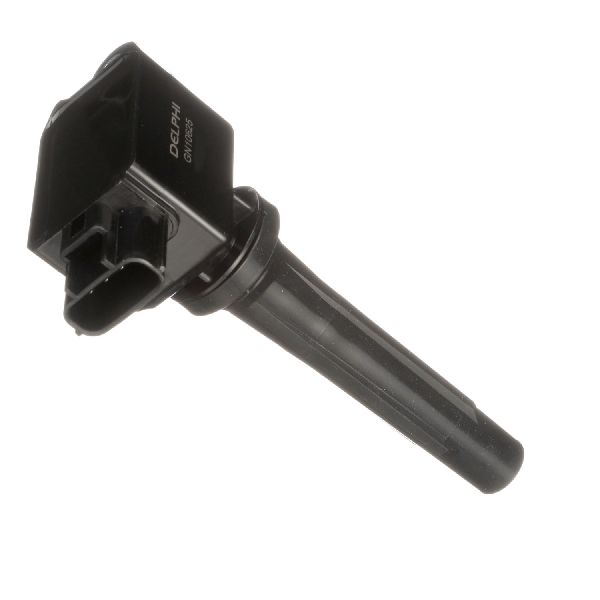
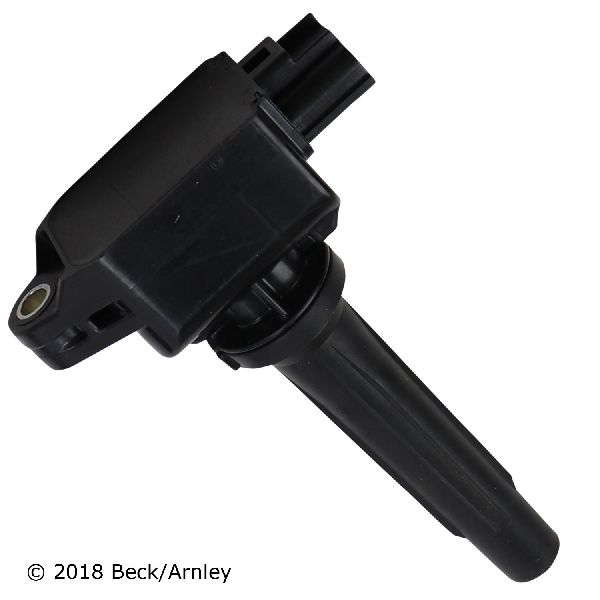
New Aftermarket Parts Available


The information in this article is provided for general reference and educational purposes only. Vehicle specifications, procedures, and part compatibility can vary by production date, trim level, and region. Always consult your vehicle's factory service manual and verify part numbers before purchasing or performing repairs. Safety-critical components such as airbags, seat belts, and braking systems should be installed by a qualified professional.
- Mazda CX-3:
- 🎬 Helpful Videos
- 🛍️ Shop This Part
- What's Unique About the 2016-2019 Mazda CX-3
- Diagnostic Flowchart
- Symptoms You May Notice
- Most Likely Causes
- Rare But Worth Checking
- Diagnosis Steps
- Parts You'll Likely Need
- Related Codes That Often Appear With This One
- Technical Service Bulletins (TSBs) & Recalls
- Platform-Specific Known Issues
- Mechanic-Grade Diagnostic Values
- Scan Tool Commands That Help
- Wiring & Ground Locations
- Real Owner Repair Stories
- "I Checked Everything" — The Actual Cause
- When the Usual Fixes Don't Work
- OEM Part Supersession History
- Model Year Variations Within This Range
- 🎟️ Get 5% Off