

P0301 on 2011-2015 Lexus CT HYBRID: Cylinder 1 Misfire Causes & Fixes
On a 2011-2015 Lexus CT Hybrid, P0301 is a cylinder 1 misfire. While it could be a simple spark plug or coil, it's very often a symptom of a clogged EGR system or the beginning of head gasket failure, a known issue on this engine. Start with ignition checks, but be prepared to investigate the EGR and monitor coolant levels closely. Do not ignore this code, as it can precede catastrophic engine damage.
- P0301 on a Lexus CT Hybrid is more than a simple misfire code; it's a serious warning.
- The two most probable causes, beyond basic ignition faults, are a clogged EGR system and a failing head gasket. These issues are directly linked.
- Check your coolant level immediately. A consistent drop, no matter how small, is a strong indicator of head gasket failure.
- Proactive maintenance is key. Cleaning the EGR valve, cooler, and intake manifold around every 50,000-75,000 miles can help prevent the chain of events that leads to head gasket failure.
- Do not ignore a rough or shaky engine start on a cold morning; this is the classic 'death rattle' symptom of coolant leaking into a cylinder overnight.
What's Unique About the 2011-2015 Lexus CT HYBRID

The Lexus CT Hybrid shares its 1.8L 2ZR-FXE engine with the 3rd generation Toyota Prius, and they both share a well-documented, critical weakness. A P0301 misfire is frequently the first warning sign of two major platform-specific issues: a severely clogged Exhaust Gas Recirculation (EGR) system and subsequent head gasket failure. The EGR passages and cooler are prone to clogging with carbon, which increases combustion temperatures, leading to engine knock and eventually causing the head gasket to fail, often starting with cylinder 1. While standard ignition or fuel issues can cause this code, the high probability of these more serious underlying problems makes diagnosis on the CT Hybrid different from most other vehicles.
Diagnostic Flowchart
Tap your situation to follow the diagnostic path that matches what you're seeing on this vehicle.
- Replacing only the spark plugs and ignition coils without investigating the EGR system or checking for head gasket failure. Many owners on forums like PriusChat and 2CarPros report replacing these parts, only to have the P0301 code return because the root cause (clogged EGR or leaking head gasket) was not addressed.
Most Likely Causes

- Clogged EGR System (Valve, Cooler, and Intake Manifold Ports) 🔴 High Probability The 2ZR-FXE engine's EGR design is highly susceptible to carbon buildup, which clogs the cooler, pipe, and intake manifold passages. This disrupts airflow and combustion, leading to misfires, particularly during light acceleration. Lexus issued TSB L-SB-0019-16 specifically for this issue, which can cause P0301, P0302, P0303, and P0304 codes.
How to confirm: Symptoms include rough running or shaking, especially during light acceleration or idle. A common diagnostic test is to unplug the EGR valve connector and drive the vehicle; if the misfire disappears, the EGR system is the culprit (this will set a separate EGR code). Visual inspection of the EGR pipe, cooler, and intake manifold ports will show heavy, black carbon deposits.
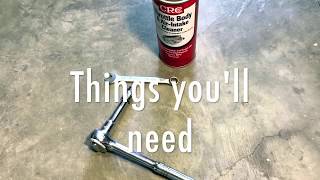
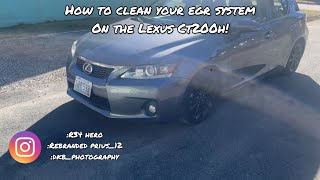
Typical fix: Thoroughly clean the EGR valve, EGR cooler, EGR pipe, and the EGR passages within the intake manifold. Many owners recommend soaking the metal components in a cleaning solution followed by scrubbing or pressure washing. 🎬 See this step-by-step guide to cleaning the EGR system TSB L-SB-0019-16 recommends replacing the intake manifold assembly entirely. Gaskets for the EGR pipe and intake manifold should be replaced during this service.
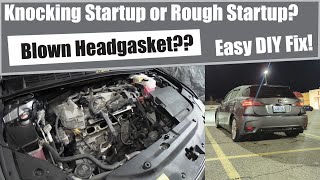
Est. part cost: $20-$60 (for gaskets and cleaners like carb cleaner), $250-$400 (for a new intake manifold if needed) - Failing Head Gasket 🔴 High Probability This is a notorious failure point for the 2ZR-FXE engine, often triggered or accelerated by a clogged EGR system that leads to overheating and engine knock. Coolant slowly leaks into cylinder 1 (the most common failure point), causing a misfire upon a cold start. This often produces a violent shaking or loud rattling sound (the 'death rattle') as the engine starts and attempts to burn off the coolant. Multiple owner complaints and forum threads document this exact failure pattern.
How to confirm: Check for a gradual loss of coolant in the reservoir with no visible external leaks. A gurgling sound from behind the dashboard upon startup or shutdown can indicate air in the cooling system. Look for white, sweet-smelling smoke from the exhaust, especially on startup. A 'block tester' kit can detect combustion gases (hydrocarbons) in the coolant, which is a strong indicator. A professional can perform a cylinder leak-down test for definitive proof.
Typical fix: Replacement of the head gasket. This is a major engine repair. It is critical that the entire EGR system (cooler, valve, pipe, intake manifold ports) be thoroughly cleaned at the same time to prevent a repeat failure. Many shops specialize in this specific repair due to its frequency.
Est. part cost: $150-$300 (for a quality head gasket kit like Fel-Pro and new head bolts). A full dealer repair with parts and labor can range from $4,000 to over $5,700, while specialized independent shops may charge between $1,900 and $2,500. - Faulty Ignition Coil or Spark Plug 🟡 Medium Probability While a common failure on any car, it's often the first part replaced for a P0301 before the true underlying EGR or head gasket issue is found. It should still be the first diagnostic check due to its simplicity.
How to confirm: Swap the ignition coil from cylinder 1 with another cylinder (e.g., cylinder 2). Clear the codes and drive. If the code changes to P0302, the ignition coil is bad. If the code remains P0301, swap the spark plug from cylinder 1 with another (e.g., cylinder 3). If the code then moves to P0303, the spark plug is bad. Inspect the pulled spark plug for fouling from oil or coolant.
Typical fix: Replace the faulty ignition coil or spark plug. It's recommended to replace all four spark plugs at the same time if they are near the end of their 120,000-mile service life. Use reputable brands like Denso or NGK to avoid issues with counterfeit parts.
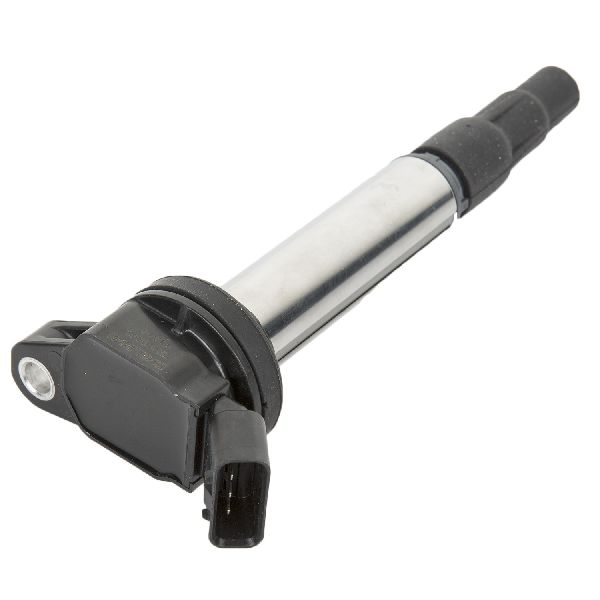
Est. part cost: $40-$90 (for one OEM-quality Denso ignition coil), $10-$20 (for one Denso or NGK iridium spark plug) - Clogged or Faulty Fuel Injector ⚪ Low Probability
How to confirm: After ruling out ignition and EGR issues, the fuel injector is a possibility. A professional can test fuel flow and spray pattern, or an active test can be performed with a scan tool to disable individual injectors and observe the effect on engine smoothness.
Typical fix: Replace the faulty fuel injector. It can be beneficial to have all four injectors professionally cleaned and tested at the same time.
Est. part cost: $50-$150
Rare But Worth Checking
- Engine Control Module (ECM) Logic: TSB L-SB-0174-17 notes that P0301 can be set due to incorrect ECM logic, especially after a cold soak, accompanied by a rattle from the transaxle. This would likely require a software update from a Lexus dealer.
- Low Compression (Mechanical Engine Damage): Beyond a head gasket, a misfire can be caused by internal mechanical issues like leaking valves, worn piston rings, or damaged cylinder walls, though this is less common than the EGR/head gasket pathway on this specific engine. A compression test and leak-down test would be required for diagnosis.
Diagnosis Steps

- Read the trouble codes with an OBD-II scanner. Note if the check engine light is flashing, which indicates a severe, potentially damaging misfire.
- Check the coolant level in the reservoir and check for signs of bubbling in the coolant system. If it is low with no external leaks, this is a strong sign of a head gasket issue.
- Perform a basic ignition system check. Swap the ignition coil from cylinder 1 to cylinder 2. Clear the codes and drive. If P0302 appears, the coil is bad.
- If the code remains P0301, swap the spark plug from cylinder 1 to cylinder 3. Clear codes and drive. If P0303 appears, the plug is bad. Inspect the old plug for unusual deposits.
- If ignition components are good, investigate the EGR system. A quick test is to unplug the EGR valve and test drive (this will set an EGR code). If the misfire is gone, the EGR passages are clogged.
- For a more thorough EGR check, remove the EGR pipe between the valve and intake manifold and inspect for heavy carbon buildup. If the pipe is clogged, the cooler and intake manifold ports are almost certainly clogged as well.
- If the misfire persists, especially on cold starts, and you are losing coolant, a head gasket failure is highly likely. Use a combustion leak detector ('block tester') to check for exhaust gases in the coolant.
- For a definitive diagnosis of a head gasket failure, a professional should perform a cylinder compression and leak-down test. Lower compression in cylinder 1 is a key indicator.
Parts You'll Likely Need

- Intake Manifold Gasket
(OEM #17176-37010)— Required when removing the intake manifold to clean the EGR ports. This is a must-do step for either an EGR service or a head gasket replacement.
Trusted brands: Lexus OE, Fel-Pro
OEM price range: $15-$25
Aftermarket price range: $5-$15 - Ignition Coil
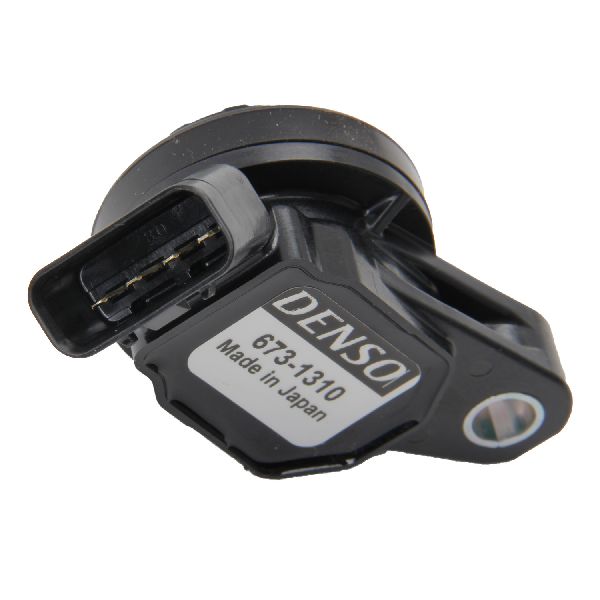
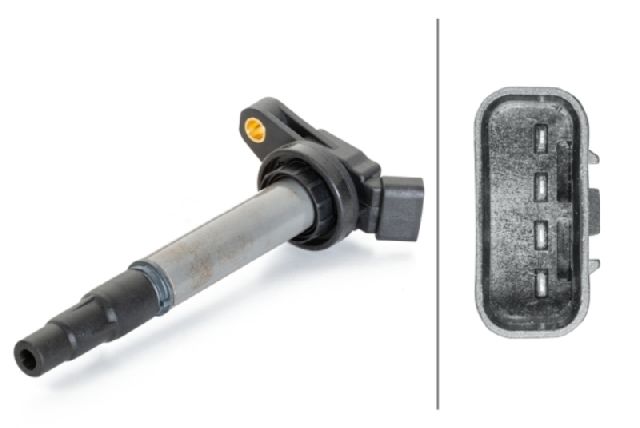
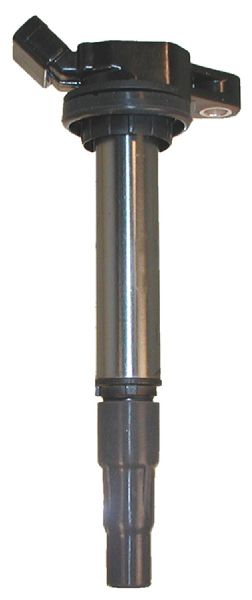
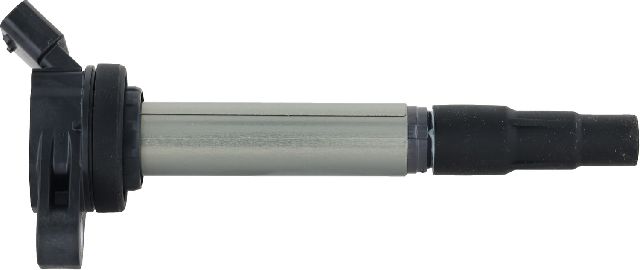
(OEM #90919-02252 (may be superseded by 90919-02258))— A common cause of a single-cylinder misfire on any vehicle and the first logical part to test via swapping.
Trusted brands: Denso (OEM), NGK, Delphi
OEM price range: $70-$100
Aftermarket price range: $30-$60 - Spark Plugs (Set of 4)
(OEM #90919-01253 (Denso SC20HR11))— A worn or fouled spark plug is a primary cause of misfires. Should be replaced as a set every 120k miles. A plug fouled by coolant can be a key clue for a head gasket leak.
Trusted brands: Denso (OEM), NGK
OEM price range: $12-$20 per plug
Aftermarket price range: $8-$15 per plug - Head Gasket Kit
(OEM #04111-37312 (Example OEM kit number, verify with VIN))— The ultimate fix if the head gasket has failed, a known weak point on this engine that presents with a P0301 code. The kit should include the head gasket, valve cover gaskets, seals, and other necessary one-time-use items.
Trusted brands: Toyota/Lexus OE, Fel-Pro (Part # HS 26297 PT)
OEM price range: $200-$300
Aftermarket price range: $145-$185
Related Codes That Often Appear With This One
- P0300 — Random/Multiple Cylinder Misfire. This often appears alongside P0301 if the underlying issue, like a clogged EGR or failing head gasket, begins to affect other cylinders.
- P0302, P0303, P0304 — Misfire codes for other cylinders. As the EGR clogging or head gasket issue worsens, it can cause misfires across multiple specific cylinders. TSB L-SB-0019-16 explicitly lists all cylinder misfire codes as potential results of a clogged EGR.
- P0401 — Insufficient EGR Flow. This code is a direct pointer to a clogged EGR system and often precedes the misfire codes. If you see this code, cleaning the EGR system is not optional.
Technical Service Bulletins (TSBs) & Recalls
- Addresses a 'runs rough' condition with misfire DTCs (P0300-P0304) during light acceleration. States the cause can be clogged EGR ports in the intake manifold and recommends replacing the intake manifold assembly.
- Notes that misfire DTCs (P0300-P0304) can be set due to incorrect ECM logic after a cold soak, accompanied by a rattle from the transaxle. The fix is a software update.
- An earlier TSB for the CT200h that recommended replacing the EGR valve and updating the PCM to address rough idle and rattle issues, which are often related to the same EGR system problems.
Platform-Specific Known Issues
- Head Gasket Failure Progression: This is the most significant issue. A P0301 code, especially with a rough/shaky cold start ('death rattle') and gradual coolant loss, is a classic symptom of a failing head gasket on the 2ZR-FXE engine. The failure is often caused by a clogged EGR system creating excessive heat and pressure. The progression is well-documented in owner forums.
- EGR System Clogging: Lexus TSB L-SB-0019-16 directly addresses misfires (including P0301) caused by clogged EGR ports in the intake manifold. Owners on PriusChat and YouTube have created extensive guides for cleaning the entire system, including the EGR cooler, which is often the most restricted part. Proactive cleaning every 50k-60k miles is recommended to prevent head gasket failure.
Mechanic-Grade Diagnostic Values
- Ignition Coil Primary Winding Resistance — expected: 0.49 - 0.57 Ω. Failure: A reading outside this range indicates a faulty primary coil winding.
- Ignition Coil Secondary Winding Resistance — expected: 9.5 - 11.1 kΩ. Failure: A reading outside this range indicates a faulty secondary coil winding.
- Compression Test (Cold Engine) — expected: ~124 PSI per cylinder. Failure: A reading of 115 PSI or lower in the affected cylinder, especially when other cylinders are higher, points towards a mechanical issue like a head gasket leak.
Hidden / Shadow Codes Worth Checking
- Mode $06 Misfire Data: The ECU logs misfire counts for each cylinder even if they don't reach the threshold to set a Check Engine Light. Accessing this data via a capable scan tool (like Techstream) can show a history of misfires on cylinder 1 before the P0301 code becomes persistent. (see via Use a scan tool with Mode $06 capabilities, or use Toyota's Techstream software and navigate to the 'Misfire Monitor' utility.)
Scan Tool Commands That Help
- Techstream: Misfire Monitor — To view live and historical misfire counts per cylinder. This is extremely useful for confirming which cylinder is the primary offender and seeing if intermittent misfires are occurring that haven't yet set a hard code.
- Techstream: Active Test: Control the Select Cylinder Fuel Cut — To diagnose a misfire by individually cutting fuel to each cylinder while the engine is idling. When you cut fuel to a good cylinder, the engine RPM will drop and run rougher. If you cut fuel to cylinder 1 and there is NO change in engine operation, it confirms that cylinder 1 was not contributing (misfiring) in the first place. This helps isolate the issue to a specific cylinder.
- Techstream: ECM (PCM) Calibration Update — As per TSB L-SB-0174-17, if P0301 is accompanied by a rattle from the transaxle after a cold soak, an ECM logic issue may be the cause. A dealer would use Techstream to flash the ECM with an updated calibration file.
Wiring & Ground Locations
- D1 — Located on the top of the engine.. This is a primary ground point for engine-mounted components. A loose or corroded connection here could cause erratic behavior in sensors or actuators, including those related to the ignition system.
- EA, EB, EC (Engine Bay Grounds) — These are key ground points located in the engine bay, typically bolted to the chassis or inner fender. For example, 'EA' is often found on the left side fender apron.. The ECM and ignition system rely on solid ground connections to the vehicle chassis. A fault at one of these main grounding points can introduce electrical noise and voltage drops, potentially leading to misfire detection.
Real Owner Repair Stories
- 2CarPros Forum User (2012 Lexus CT200h, 152,000 miles) — P0301 code, occasional rough start when cold, slight coolant loss (1 liter per 1.5 tanks of gas), bubbles in coolant reservoir.
❌ Tried (didn't work) Replaced spark plugs and coil pack for cylinder #1., Thoroughly cleaned the entire EGR system.
✅ What actually fixed it The combination of persistent P0301, coolant loss, bubbles in the coolant, and a slightly lower compression test on cylinder 1 (115 psi vs 124 psi on others) was a definitive indicator of a failing head gasket, which required replacement. - Reddit user r/CT200h (2013 Lexus CT200h, 170,000 miles) — P0301 code, aggressive shaking and 'death rattle' noise for 5-10 seconds when engine kicks on.
❌ Tried (didn't work) Replacing all 4 spark plugs and the ignition coil.
✅ What actually fixed it The symptoms returned the day after the ignition parts were replaced. Another user confirmed the symptoms were identical to their experience where coolant had leaked into a cylinder due to a clogged EGR and a failed head gasket. The final fix is head gasket replacement and a thorough EGR system cleaning. - Reddit user r/CT200h (Lexus CT200h, 138,000 miles) — Misfire code.
❌ Tried (didn't work) Replaced faulty ignition coils and spark plugs.
✅ What actually fixed it After replacing ignition components, the misfire returned. The shop then diagnosed dirty fuel injectors and recommended a $4500 valve job. Other owners pointed out that the photo of the dirty injector was likely a symptom of a clogged EGR system or leaking PCV valve, and that cleaning the intake manifold and EGR system should be the next step before considering major head work.
OEM Part Supersession History
N/A→13101-37120 (Piston Sub-Assembly)— To address an engine oil consumption issue, the piston and piston ring assembly were changed.
Heads up: This applies to vehicles built before VIN JTHKD5BH#E2180953. While not a direct cause of P0301, excessive oil consumption can foul spark plugs, leading to misfires. This is documented in TSB L-SB-0096-16.N/A→25601-37010 (EGR Cooler Assembly)— While not officially listed as a supersession for a defect, this is the current OEM part number for the EGR cooler assembly which is central to the misfire issue.N/A→90919-02258 (Ignition Coil)— Current OEM part number for the ignition coil.
Model Year Variations Within This Range
- 2014+: Some owners and mechanics report that the 2014 and later models have an improved EGR system design, making them less susceptible to the severe clogging that leads to head gasket failure compared to the 2011-2013 models. However, the risk is still present across all years.
- 2011-2014 (early models): Vehicles produced before VIN JTHKD5BH#E2180953 may be prone to excessive oil consumption due to piston ring design. Lexus issued TSB L-SB-0096-16 with a procedure to replace the pistons and rings with an updated design. This can indirectly cause P0301 by fouling the spark plug.
Helpful Videos
Used OEM Parts in Stock


New Aftermarket Parts Available

The information in this article is provided for general reference and educational purposes only. Vehicle specifications, procedures, and part compatibility can vary by production date, trim level, and region. Always consult your vehicle's factory service manual and verify part numbers before purchasing or performing repairs. Safety-critical components such as airbags, seat belts, and braking systems should be installed by a qualified professional.
- Lexus CT HYBRID:
- 🎬 Helpful Videos
- 🛍️ Shop This Part
- What's Unique About the 2011-2015 Lexus CT HYBRID
- Diagnostic Flowchart
- Most Likely Causes
- Rare But Worth Checking
- Diagnosis Steps
- Parts You'll Likely Need
- Related Codes That Often Appear With This One
- Technical Service Bulletins (TSBs) & Recalls
- Platform-Specific Known Issues
- Mechanic-Grade Diagnostic Values
- Hidden / Shadow Codes Worth Checking
- Scan Tool Commands That Help
- Wiring & Ground Locations
- Real Owner Repair Stories
- OEM Part Supersession History
- Model Year Variations Within This Range
- 🎟️ Get 5% Off