

P0301 on 2012-2016 Land Rover Range Rover Evoque: Cylinder 1 Misfire Causes and Fixes
P0301 on a 2012-2016 Range Rover Evoque indicates a misfire in the first cylinder. The most common culprits are a failed ignition coil or a worn spark plug. A faulty fuel injector is also a known issue for this vehicle, as highlighted in manufacturer service bulletins. In some cases, issues with the high-pressure fuel pump or carbon buildup on intake valves can also trigger this code.
- P0301 specifically points to a misfire in cylinder 1.
- Start your diagnosis with the easiest and most common fixes: the ignition coil and spark plug for cylinder 1.
- The easiest way to test an ignition coil is to swap it with one from another cylinder and see if the misfire code follows.
- Be aware that faulty fuel injectors are a known issue on the 2012-2016 Evoque and may be the cause if ignition components are good. [SSM71894]
- Driving with a flashing check engine light is not recommended, as it can lead to costly catalytic converter damage.
What's Unique About the 2012-2016 Land Rover RANGE ROVER EVOQUE
The 2012-2016 Evoque uses a 2.0L turbocharged four-cylinder engine, which is a version of the Ford 2.0L EcoBoost. While misfires from coils and plugs are common on many vehicles, Land Rover has specifically investigated fuel injector failures on this platform which can cause cold start misfires and rough running, making it a more probable cause. [SSM71894] Additionally, as a direct injection engine, it is susceptible to carbon buildup on intake valves, which can restrict airflow and lead to misfires. TSBs also point to potential issues with the high-pressure fuel pump's metering valve, which can cause misfires along with other codes. [LTB00730NAS1]
Diagnostic Flowchart
Tap your situation to follow the diagnostic path that matches what you're seeing on this vehicle.
Symptoms You May Notice
- Rough or shaking idle
- Engine hesitation or stumbling, especially under load during acceleration.
- Flashing Check Engine Light
- Poor or hard starting. [LTB01101NAS4]
- Reduced engine power and 'Restricted Performance' message on the dash.
- Smell of unburned fuel from the exhaust.
- Decreased fuel economy.
- Replacing only the spark plug when the ignition coil is the actual cause.
- Replacing oxygen sensors, which are unlikely to cause a single-cylinder misfire but may be flagged due to the air/fuel ratio disruption.
- Assuming a fuel injector is good because it is clicking; it may still have a poor spray pattern or be partially clogged.
Most Likely Causes
- Faulty Ignition Coil 🔴 High Probability Coil-on-plug ignition systems are common failure points due to constant heat exposure and vibration. Several owners report coil pack failure as the solution to misfires, sometimes after replacing plugs did not solve the issue.
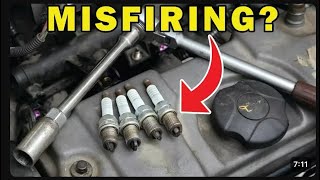
How to confirm: Swap the ignition coil from cylinder 1 with another cylinder (e.g., cylinder 2). Clear the codes and drive the vehicle. If the code changes to P0302, the ignition coil is faulty. 🎬 See how to diagnose a misfire without replacing the whole engine.
Typical fix: Replace the faulty ignition coil. It is often recommended to replace all four coils and spark plugs at the same time for preventative maintenance, especially on higher mileage vehicles.
Est. part cost: $50-$100 per coil - Worn or Fouled Spark Plug 🔴 High Probability Spark plugs are a regular maintenance item. A worn electrode, carbon fouling, oil contamination, or a cracked porcelain insulator can cause a weak or inconsistent spark, leading to a misfire.
How to confirm: Remove the spark plug from cylinder 1 and inspect it. Compare its condition to the plugs in other cylinders. Look for signs of wear on the electrode, heavy carbon deposits, or oil fouling.
Typical fix: Replace the spark plug. It is best practice to replace all four spark plugs at the same time to ensure consistent performance.
Est. part cost: $15-$35 per plug - Faulty Fuel Injector 🟡 Medium Probability Land Rover issued a technical bulletin (SSM71894) to investigate a pattern of fuel injector failures causing misfires on this platform, particularly at cold start. [SSM71894] Forum discussions confirm owners have resolved cold start misfires and rough running by replacing the cylinder 1 injector.
How to confirm: This is more difficult for a DIYer. A professional can perform a fuel injector balance test. One can also swap the injector from cylinder 1 to another cylinder, but this is labor-intensive. Listening for a consistent clicking sound from the injector with a mechanic's stethoscope can sometimes identify a dead injector.
Typical fix: Replace the faulty fuel injector. Using a fuel system cleaner like BG 44K is sometimes suggested as a first step for a potentially clogged injector.
Est. part cost: $90-$150 per injector
Rare But Worth Checking
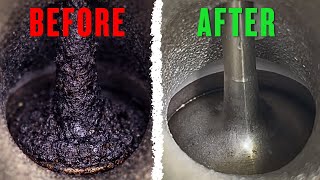
- Carbon Buildup on Intake Valves: As a direct injection engine, fuel does not wash over the intake valves. This can lead to carbon deposits restricting airflow into the cylinder, causing a lean misfire. This often requires professional cleaning (e.g., walnut blasting). 🎬 Watch this video to learn how to clean carbon off intake valves.
- Vacuum Leak: A leak in a vacuum hose, PCV system, or the intake manifold gasket can introduce unmetered air, leading to a lean condition and misfires. This may also trigger lean codes like P2096 or P2097. [LTB00902NAS2]
- Low Engine Compression: Internal engine damage such as worn piston rings, a burnt valve, or a leaking head gasket can cause a loss of compression in cylinder 1, resulting in a misfire. This is a serious mechanical issue requiring a compression test to diagnose.
- Faulty High-Pressure Fuel Pump (HPFP): TSB LTB00730NAS1 indicates that an internal fault with the metering valve in the high-pressure fuel pump can cause rough running, hard starting, and misfire codes including P0301.
- Stretched Timing Chain: While less common for a single-cylinder misfire, a stretched timing chain can affect valve timing enough to cause an initial misfire in one cylinder that may later spread to others, often accompanied by a P0300 code.
Diagnosis Steps
- Read all codes from the PCM using an OBD-II scanner and note any other codes present, paying attention to lean codes or codes for other cylinders.
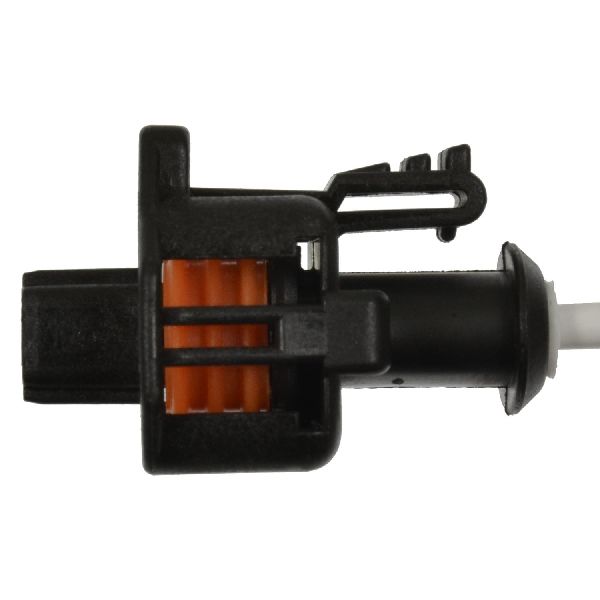
- Visually inspect the wiring and connector for the cylinder 1 ignition coil and fuel injector for any damage, corrosion, or loose connections.
- Swap the ignition coil from cylinder 1 to cylinder 2. Clear the codes, start the engine, and let it run or drive it briefly. Re-scan for codes. If the misfire code moves to P0302, the coil is bad.
- If the misfire remains on cylinder 1, remove and inspect the spark plug. Replace it if it appears worn, fouled, or damaged. It's best to replace all four.
- If the coil and plug are good, the next most likely cause is the fuel injector. This may require professional diagnosis, but trying a quality fuel injector cleaner is a low-cost first step.
- Check for vacuum leaks using a smoke machine or by carefully spraying brake cleaner around the intake manifold gaskets and vacuum lines while listening for a change in engine idle speed.
- If the issue persists, perform an engine compression test on all cylinders to rule out mechanical problems like bad valves or piston rings.
- If all else fails, the issue could be more complex, such as a problem with the high-pressure fuel pump or carbon buildup, which may require professional diagnosis with specialized tools.
Parts You'll Likely Need
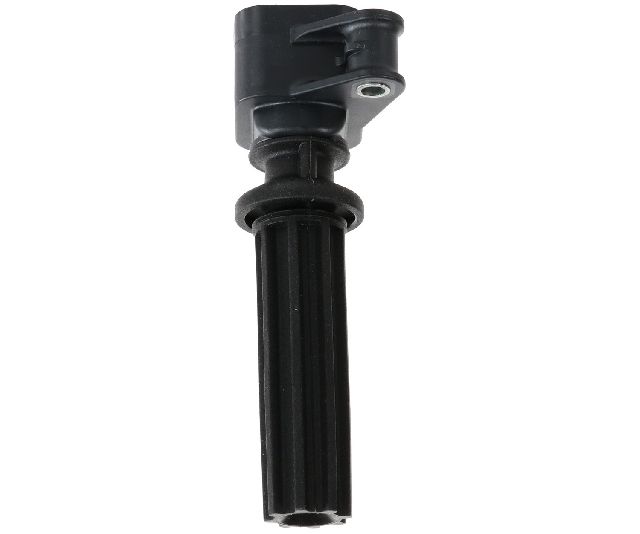
- Ignition Coil
(OEM #LR084889)— This is a very common failure point for a single-cylinder misfire and is easy to diagnose and replace.
Trusted brands: Bosch (0221604700), Delphi, NGK
OEM price range: $80-$120
Aftermarket price range: $50-$90 - Spark Plug
(OEM #LR091617 (supersedes LR025605))— As a standard maintenance item, a worn spark plug is a frequent cause of a weak spark and misfire.
Trusted brands: NGK (ILTR6R8G / 91794), Bosch, Denso
OEM price range: $25-$40
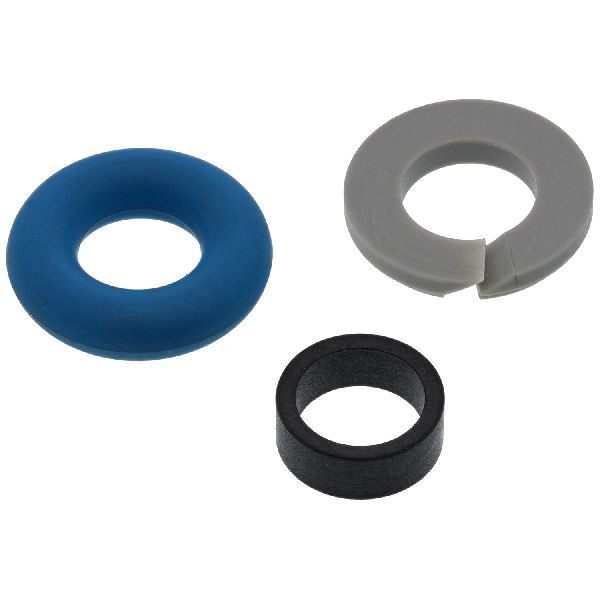
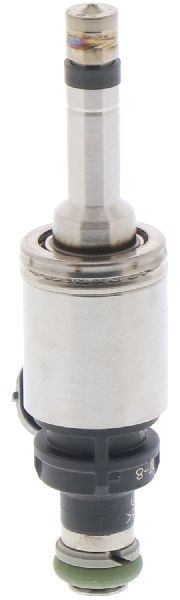
Aftermarket price range: $15-$25 - Fuel Injector
(OEM #LR024998)— A known issue on this specific vehicle, as documented by Land Rover TSB SSM71894, making it a more probable cause than on other cars.
Trusted brands: Bosch, Standard Motor Products
OEM price range: $150-$250
Aftermarket price range: $90-$150
Related Codes That Often Appear With This One
- P0300 — If the misfire is intermittent or begins to affect other cylinders, a P0300 (Random/Multiple Cylinder Misfire) code may be stored. [LTB01101NAS4, 43]
- P0302, P0303, P0304 — These codes indicate misfires in other cylinders and often appear alongside P0301 when the root cause (like a vacuum leak, fuel pressure, or timing issue) affects the whole engine. [LTB00755NAS1]
- P1315 — This is a manufacturer-specific code for a persistent misfire that could damage the catalyst. It is often seen with the P030x series of codes. [LTB01101NAS4]
- P2096 / P2097 — A TSB notes that these lean codes (Post Catalyst Fuel Trim System Too Lean/Rich) can be stored in conjunction with misfire codes, often pointing to a vacuum leak or fuel delivery issue. [LTB00902NAS2]
- P0171 — System Too Lean (Bank 1). This can appear with P0301 if the misfire is caused by a vacuum leak near cylinder 1 or a clogged fuel injector on that cylinder.
Technical Service Bulletins (TSBs) & Recalls
- SSM71894: Notes investigation into fuel injector failures causing cold start misfires and rough running.
- LTB01101NAS4 / LTB01101NAS2: Links rough running, poor starting, and MIL illumination to misfire codes including P0301.
- LTB00902NAS2: States that after lean codes P2096/P2097 are stored, misfire DTCs like P0301 are also likely to be stored.
- LTB00755NAS1: Connects engine instability and MIL display with P0301 and other misfire codes, and reminds technicians about the premium fuel requirement.
- LTB00730NAS1: Identifies a potential cause for misfires as an internal fault within the high-pressure fuel pump's metering valve.
Platform-Specific Known Issues
- TSB SSM71894 was issued due to a pattern of fuel injector failures causing misfires, particularly on cold starts. [SSM71894]
- TSB LTB00755NAS1 notes that engine instability and misfire codes can occur and reminds technicians that premium unleaded gasoline is required, as low-quality fuel can contribute to performance issues. [LTB00755NAS1]
- TSB LTB00730NAS1 was released for issues including misfires, rough running, and hard starting caused by an internal fault in the high-pressure fuel pump's metering valve.
Mechanic-Grade Diagnostic Values
- Low-Pressure Fuel System Pressure (In-tank pump) — expected: Approximately 65 PSI at idle, jumping to the 80s on snap throttle. Should be near 90 PSI during cranking.. Failure: Pressure dropping to ~31 PSI at idle can trigger a low-pressure code (like P008A) and may contribute to misfires.
- High-Pressure Fuel System Pressure (Engine-mounted HPFP) — expected: Approximately 3.0-8.0 MPa (435-1160 PSI) at idle, increasing with engine speed.. Failure: If the HPFP is faulty, pressure may read low, around 700-900 KPa (101-130 PSI), and will not increase with engine speed.
- Short-Term and Long-Term Fuel Trims — expected: Normal values should be between -5% and +5%.. Failure: High positive values indicate the engine is running lean (potential vacuum leak or clogged injector); high negative values indicate a rich condition.
Scan Tool Commands That Help
- JLR SDD (Symptom Driven Diagnostics): Live Data Monitoring: 'Fuel rail pressure' and 'Fuel rail pressure - Low range sensor' — Used to diagnose a faulty high-pressure fuel pump as described in TSB LTB00730NAS1. By monitoring both high and low pressure signals at idle and with increased engine speed, a technician can determine if the HPFP is failing to build adequate pressure.
- Advanced OBD-II Scanner (e.g., Autel, OBDeleven): Misfire Counter Live Data — To confirm that cylinder 1 is the primary source of misfires and to observe under what conditions (e.g., idle, high load) the misfires are most frequent. This helps isolate whether the issue is constant or load-dependent.
Wiring & Ground Locations
- G1D130A / G1D130C — Located at the left front of the engine compartment.. This is a primary ground point for the Engine Control Module (ECM). A poor connection here can cause a variety of erratic engine management issues, including misfires.
- G1D122B — Located at the lower left front of the engine compartment.. This ground is used by the Electrical Power Assisted Steering (EPAS) ECU, but ensuring all engine bay grounds are clean and secure is a critical step in diagnosing any electrical fault, as a bad ground can cause unpredictable behavior in nearby components.
- Jump Start Negative Terminal — A specific bolt on an engine mounting, located on the right-hand side of the engine bay just behind the windscreen washer filler cap.. While intended for jump-starting, this is a known, accessible, and robust chassis ground point in the engine bay. It can be used as a reference point for testing continuity or voltage drops when diagnosing grounding issues for ignition components.
Real Owner Repair Stories
- ScannerDanner Forum user (2015 Land Rover Range Rover Evoque 2.0L Turbo GDI) — Code P008A-07 (Low pressure fuel pressure too low, mechanical). While not P0301, this is a direct contributor as per TSBs.
❌ Tried (didn't work) The vehicle drove well with good power, making the low fuel pressure fault confusing. The code would set on every restart.
✅ What actually fixed it The diagnosis focused on the low-side fuel pressure. At idle with the code set, pressure was only 31psi. Clearing the code while running caused pressure to jump to a normal 65psi. The user suspected the in-tank fuel pump was weak and unable to meet the 90psi cranking pressure demanded by the ECU, causing it to default to a low-pressure mode on startup. The final fix was replacing the in-tank low-pressure fuel pump.
OEM Part Supersession History
LR025605→LR091617, LR123892— Standard part evolution and supplier changes.
Heads up: LR025605 is the widely referenced part number for this engine, also cross-referenced to Ford and NGK numbers. The newer numbers are direct replacements.LR030637→LR084889— Part design update for reliability or manufacturing change.
Heads up: LR084889 is the current OEM ignition coil for this application.LR024998→LR072564, then LR082008— Updates to the fuel injector design, possibly to address the issues noted in TSB SSM71894.
Heads up: When replacing fuel injectors, it is critical to ensure the correct, most up-to-date part number is used.
Model Year Variations Within This Range
- 2014-2016: For the 2014 model year, the Evoque received a significant update, replacing the 6-speed automatic transmission with a new ZF 9-speed automatic. While the 2.0L engine remained the same, this change affected drivetrain software and performance characteristics.
- 2014-2016: An 'Active Driveline' on-demand four-wheel-drive system became available, which operates primarily in front-wheel drive at speeds above 22 mph (35 km/h) to improve fuel economy.
Helpful Videos

Used OEM Parts in Stock

New Aftermarket Parts Available


The information in this article is provided for general reference and educational purposes only. Vehicle specifications, procedures, and part compatibility can vary by production date, trim level, and region. Always consult your vehicle's factory service manual and verify part numbers before purchasing or performing repairs. Safety-critical components such as airbags, seat belts, and braking systems should be installed by a qualified professional.
- Land Rover RANGE ROVER EVOQUE:
- 🎬 Helpful Videos
- 🛍️ Shop This Part
- What's Unique About the 2012-2016 Land Rover RANGE ROVER EVOQUE
- Diagnostic Flowchart
- Symptoms You May Notice
- Most Likely Causes
- Rare But Worth Checking
- Diagnosis Steps
- Parts You'll Likely Need
- Related Codes That Often Appear With This One
- Technical Service Bulletins (TSBs) & Recalls
- Platform-Specific Known Issues
- Mechanic-Grade Diagnostic Values
- Scan Tool Commands That Help
- Wiring & Ground Locations
- Real Owner Repair Stories
- OEM Part Supersession History
- Model Year Variations Within This Range
- 🎟️ Get 5% Off