

P0301 on 2025-2026 Jeep Compass: Cylinder 1 Misfire Causes and Fixes
P0301 indicates a misfire in cylinder 1. On a 2025-2026 Jeep Compass with the 2.0L Turbo engine, this is most often caused by a faulty ignition coil or a worn/fouled spark plug. However, manufacturer service bulletins also link this code to fuel pressure problems, which may require a PCM software update or professional diagnosis if new ignition parts don't solve the issue.
- P0301 is a misfire on cylinder 1 (passenger side).
- Start your diagnosis with the simple and cheap parts: swap the ignition coil first, then inspect the spark plug.
- A flashing check engine light is a serious warning to stop driving to prevent catalytic converter damage.
- Be aware that on this specific vehicle, the misfire may be caused by a fuel pressure problem, as documented in several manufacturer TSBs.
- For a vehicle this new, the issue is likely covered under the manufacturer's powertrain warranty. Contacting a dealer for service is a recommended step.
What's Unique About the 2025-2026 Jeep COMPASS
For the 2025-2026 Jeep Compass equipped with the 2.0L Turbo GME 'Hurricane' direct-injection engine, a P0301 code, while often a simple ignition issue, carries a notable warning. Multiple Technical Service Bulletins (TSBs) issued by the manufacturer specifically connect misfire codes (including P0301) with low fuel rail pressure (DTC P0087). This suggests the high-pressure fuel system on this platform may be a more common cause for misfires compared to other vehicles. The fix often starts with a PCM software update to improve diagnostic logic before replacing hardware like the high-pressure fuel pump. Additionally, as a Gasoline Direct Injection (GDI) engine, it is more susceptible to carbon buildup on intake valves over time, which can also lead to misfires.
Diagnostic Flowchart
Tap your situation to follow the diagnostic path that matches what you're seeing on this vehicle.
Symptoms You May Notice
- Rough or shaky idle
- Engine hesitation or stumbling during acceleration
- Noticeable loss of power
- Solid or flashing Check Engine Light
- Smell of unburnt gasoline from the exhaust
- Slight vibration felt in the cabin at a standstill
- Replacing oxygen sensors. While an O2 sensor can be related to fuel mixture codes, it will not cause a misfire isolated to a single cylinder.
- Immediately replacing the high-pressure fuel pump without first checking for required PCM software updates as outlined in TSBs.
Most Likely Causes
- Faulty Ignition Coil 🔴 High Probability Ignition coils are a common wear item exposed to high heat and vibration. Oil leaks from the valve cover gasket can also saturate the coil boot, causing it to fail.
How to confirm: The easiest way to confirm a bad coil is to swap the ignition coil from cylinder 1 with another cylinder (e.g., cylinder 2). Clear the codes and drive the vehicle. If the code changes to P0302 (Cylinder 2 Misfire), the coil is faulty.
Typical fix: Replace the failed ignition coil. It's only necessary to replace the one that has failed, but some owners replace them as a set for preventative maintenance. Apply dielectric grease to the new coil boot.
Est. part cost: $40-$90 - Worn or Fouled Spark Plug 🔴 High Probability Turbocharged, direct-injection engines are harder on spark plugs, leading to shorter service intervals. Plugs can become fouled by carbon or oil, preventing a strong spark.
How to confirm: After ruling out the ignition coil, remove the spark plug from cylinder 1. Inspect it for signs of wear (worn electrode), carbon fouling, oil contamination, or cracks in the ceramic. The gap for the OEM NGK plug should be around 0.026 inches.
Typical fix: Replace the spark plug. It is best practice to replace all four spark plugs at the same time to ensure consistent performance. Use OEM-spec Iridium plugs which often come pre-gapped.
Est. part cost: $15-$30 per plug - Low Fuel Pressure 🟡 Medium Probability Multiple manufacturer TSBs (#14-009-25 REV. D, #09-016-25) explicitly link misfire codes with DTC P0087 (Fuel Rail Pressure Too Low), indicating a known issue on this powertrain.
How to confirm: This requires a capable OBD-II scanner that can read live data. Monitor the 'Fuel Rail Pressure - Desired' vs. 'Fuel Rail Pressure - Actual' PIDs. A significant discrepancy points to a fuel delivery problem. A dealer may need to perform a software update as the first step.
Typical fix: The first step per TSBs is often a PCM software update to improve diagnostic logic. If the problem persists, it can involve a failing high-pressure fuel pump (HPFP), a faulty fuel pressure sensor, or a leaking fuel injector. Professional diagnosis is often required.
Est. part cost: $100-$800+ - Clogged or Faulty Fuel Injector ⚪ Low Probability Direct injection (GDI) fuel injectors operate under high pressure and can be susceptible to clogging from carbon deposits over time. A leaking injector is also a possibility noted in related TSBs.
How to confirm: Listen to the injector with a mechanic's stethoscope; it should make a consistent clicking sound. An advanced diagnostic step involves a fuel injector balance test, which measures the fuel output from each injector. The injector's resistance can also be tested with a multimeter and should be approximately 12 Ohms.
Typical fix: Replace the faulty fuel injector. It's recommended to replace the injector seal at the same time. This is a more involved job on a GDI engine.
Est. part cost: $70-$200
Rare But Worth Checking
- Carbon Buildup on Intake Valves: Gasoline Direct Injection (GDI) engines spray fuel directly into the cylinder, so fuel detergents don't clean the intake valves. Over time, oil vapor from the PCV system can bake onto the valves, restricting airflow and causing misfires, especially during cold starts.
- Vacuum Leak: A leak in a vacuum hose or intake manifold gasket can introduce unmetered air, leaning out the air-fuel mixture and causing misfires. A faulty PCV valve integrated into the valve cover is a known potential source of unmetered air on GME engines.
- Low Engine Compression: A mechanical engine problem, such as a worn piston ring, a poorly sealing valve, or a damaged cylinder wall, can cause a loss of compression in the cylinder, leading to a persistent misfire. This is the least likely and most expensive cause.
- Faulty Camshaft/Crankshaft Position Sensor: While less common for a single-cylinder misfire, a failing camshaft or crankshaft sensor can provide incorrect data to the PCM, leading to timing issues and misfires. This would usually be accompanied by other codes.
Diagnosis Steps
- Read all stored trouble codes with an OBD-II scanner. Note if P0301 appears alone or with other codes like P0300 or P0087.
- Perform an ignition coil swap. Move the coil from cylinder 1 to cylinder 2, clear the codes, and see if the misfire moves to P0302. If it does, the coil is bad. 🎬 Still misfiring after swapping parts? See what to check next.
- If the misfire remains on cylinder 1, inspect the spark plug. Remove it and check for wear, damage, or fouling. Replace if necessary, ensuring it is the correct type and gapped properly. The correct gap for the OEM NGK plug is ~0.026 inches.
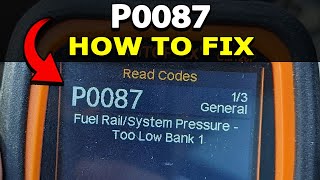
- If ignition components are good, check for fuel-related issues. If available, use a scanner to monitor live fuel rail pressure data, looking for values below specification, especially during acceleration. 🎬 Learn more about diagnosing and fixing low fuel pressure issues.
- Check for any available PCM software updates by contacting a dealership, as TSBs indicate this can resolve false or intermittent misfire codes related to fuel pressure.
- Listen to the fuel injector on cylinder 1 with a stethoscope or long screwdriver. It should have a steady, rhythmic clicking. An silent or erratic injector is suspect.
- Visually inspect for vacuum leaks, listening for hissing sounds around the intake manifold and vacuum hoses. A smoke test is the most effective way to find a leak.
- If all other steps fail, perform an engine compression test on cylinder 1 to rule out mechanical engine problems like bad rings or valves.
Parts You'll Likely Need
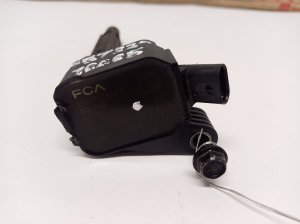
- Ignition Coil
(OEM #68322823AB)— This is one of the most common failure points for a single-cylinder misfire. The coil is responsible for generating the high voltage needed for the spark plug.
Trusted brands: Mopar, NGK, Delphi, Bosch
OEM price range: $70-$120
Aftermarket price range: $40-$90 - Spark Plug
(OEM #NGK ILKAR7C10 (NGK 94940))— Spark plugs are a routine maintenance item that wear out over time. A worn or fouled plug is a primary cause of insufficient spark and misfires on this GDI turbo engine.
Trusted brands: NGK, Champion, Bosch
OEM price range: $25-$40
Aftermarket price range: $15-$30
Related Codes That Often Appear With This One
- P0300 — If the condition causing the misfire is not isolated to one cylinder (e.g., a vacuum leak or systemic fuel pressure issue), it may cause random misfires across multiple cylinders.
- P0302, P0303, P0304 — These codes indicate misfires in other cylinders. Seeing them together with P0301 points to a systemic problem affecting the whole engine, such as a fuel delivery problem or major vacuum leak.
- P0087 — As cited in TSBs #14-009-25 REV. D and #09-016-25, this 'Fuel Rail Pressure Too Low' code is a known companion to misfire codes on this platform, pointing directly to a fuel delivery issue.
- P006C — This code for 'MAP - Turbocharger Inlet Pressure Correlation' is also listed in TSB #14-009-25 alongside P0087 and misfire codes, suggesting it can be triggered by the same underlying fuel system fault.
Technical Service Bulletins (TSBs) & Recalls
- 14-003-26: Lists P0301-00 as a potential DTC related to the fuel/propulsion system.
- 14-009-25 REV. D: Connects P0301-00 with fuel line pressure issues (P0087-00).
- 09-026-25: Notes P0301-00 as a possible DTC for engine-related complaints.
- 09-016-25: Links P0301 with fuel rail pressure being too low (P0087).
Platform-Specific Known Issues
- TSB #14-009-25 REV. D and TSB #09-016-25 both document instances where misfire codes, including P0301, are set in conjunction with P0087 - Fuel Rail Pressure Too Low. This indicates a known potential weakness in the fuel delivery system. The first step is often a software update, not immediate hardware replacement.
- TSB #14-003-26 and TSB #09-026-25 also list P0301 as a potential diagnostic trouble code related to propulsion and engine systems, confirming it as a monitored fault by the manufacturer.
Mechanic-Grade Diagnostic Values
- Ignition Coil Primary Resistance — expected: 0.56 - 0.68 Ohms. Failure: A reading outside this range indicates a faulty primary winding in the coil.
- Ignition Coil Secondary Resistance — expected: 7.8 - 9.6 kOhms. Failure: A reading outside this range points to a failure in the secondary coil winding.
- Fuel Injector Resistance — expected: Approximately 12 Ohms. Failure: A reading significantly higher or lower than 12 Ohms suggests a failed injector coil.
- Low-Pressure Fuel Pump (In-Tank) — expected: 58 - 64 PSI (Key On, Engine Off). Failure: Pressure below 58 PSI can indicate a weak in-tank fuel pump, leading to lean conditions and misfires.
- High-Pressure Fuel Pump (Direct Injection) — expected: Up to 2,900 PSI (200 bar) under load.. Failure: Significantly lower pressure than desired under load, often setting code P0087, indicates a failing high-pressure fuel pump (HPFP).
- Long-Term Fuel Trim (LTFT) — expected: Within +/- 5%. Failure: Consistent values above +10% indicate the PCM is compensating for a lean condition (e.g., vacuum leak), which can cause misfires.
Scan Tool Commands That Help
- wiTECH 2.0: Misfire Counter / All Cylinder Misfire Counts — The OEM dealer tool can display live misfire counts for each cylinder before a DTC is officially set. This is invaluable for diagnosing intermittent misfires that don't immediately trigger a check engine light.
- wiTECH 2.0: Fuel Injector Balance Test — After ruling out ignition issues, this function commands each injector to fire for a specific duration and measures the corresponding drop in fuel pressure. It can identify a weak or clogged injector without physically removing it.
- wiTECH 2.0: PCM Flash / Reprogramming — As noted in TSBs, some misfire conditions related to fuel pressure monitoring are resolved by updating the PCM software. This function is used to install the latest calibration from the manufacturer.
Wiring & Ground Locations
- Cylinder 1 Ignition Coil Connector — On the 2.0L Turbo engine, this is the coil on the far passenger side of the engine.. The plastic connector or its locking tab can become brittle from heat cycles and break, leading to a poor connection and an intermittent misfire on cylinder 1.
- Engine Ground Strap — There are multiple ground straps. A key one often connects the engine block or engine mount to the vehicle's chassis/frame to complete the electrical circuit.. A loose, corroded, or broken main engine ground strap can cause a weak spark across all cylinders, leading to random misfires (P0300) or single-cylinder misfires if the voltage drop is inconsistent. It can create phantom electrical issues that are difficult to diagnose.
- Cylinder 1 Fuel Injector Connector — Located under the intake manifold, connected to the fuel rail for cylinder 1 (passenger side).. Damage to this specific connector or its wiring harness will prevent the injector from firing, guaranteeing a P0301 code. The wiring can be susceptible to rodent damage or chafing.
Real Owner Repair Stories
- YouTube user 'JT4x4 Off-Roading' (2020 Jeep Wrangler with 3.6L Pentastar (related platform, demonstrates a severe edge-case)) — Intermittent P0301 code, very slight rough idle on cold start for about 30 seconds, no visible coolant loss or steam from exhaust.
❌ Tried (didn't work) Initial diagnosis did not point to a clear cause; ignition and fuel components were not the primary issue.
✅ What actually fixed it A blown head gasket. The dealership used a borescope to find traces of coolant inside cylinder 1 and confirmed the leak by pressure testing the cooling system. The repair involved replacing the cylinder head gasket and related seals.
"I Checked Everything" — The Actual Cause
- In some cases on related platforms, a P0301 code that isn't resolved by ignition or fuel parts, and where a smoke test shows no leaks, has been traced to a stuck-open EVAP purge solenoid. If the solenoid's port on the intake manifold is physically close to the intake runner for cylinder 1, it can create a localized lean condition that specifically causes a misfire in that cylinder.
Model Year Variations Within This Range
- 2026 (projected): Stellantis has announced plans for a heavily redesigned 2.0L Turbo engine for 2026 models, potentially called the GME-T4 Evo. It may feature Turbulent Jet Ignition (TJI) technology from Maserati, which would make ignition components and diagnostic procedures different from the 2025 models.
Helpful Videos

We Have This Part in Stock

The information in this article is provided for general reference and educational purposes only. Vehicle specifications, procedures, and part compatibility can vary by production date, trim level, and region. Always consult your vehicle's factory service manual and verify part numbers before purchasing or performing repairs. Safety-critical components such as airbags, seat belts, and braking systems should be installed by a qualified professional.
- Jeep COMPASS:
- 🎬 Helpful Videos
- 🛍️ Shop This Part
- What's Unique About the 2025-2026 Jeep COMPASS
- Diagnostic Flowchart
- Symptoms You May Notice
- Most Likely Causes
- Rare But Worth Checking
- Diagnosis Steps
- Parts You'll Likely Need
- Related Codes That Often Appear With This One
- Technical Service Bulletins (TSBs) & Recalls
- Platform-Specific Known Issues
- Mechanic-Grade Diagnostic Values
- Scan Tool Commands That Help
- Wiring & Ground Locations
- Real Owner Repair Stories
- "I Checked Everything" — The Actual Cause
- Model Year Variations Within This Range
- 🎟️ Get 5% Off