

P0301 on 2014-2019 Jeep Cherokee: Cylinder 1 Misfire Causes and Fixes
P0301 on a Jeep Cherokee indicates a misfire in cylinder 1. The most common causes are a faulty ignition coil or a worn/fouled spark plug. On the 3.2L V6, a failed rocker arm is also a known issue, often preceded by a ticking noise. For the 2.4L, oil consumption can foul plugs. Expect to pay $40-$80 for a coil and plug, while a rocker arm repair can cost over $1000.
- P0301 is a serious code for a misfire in cylinder 1. Do not ignore it, especially if the check engine light is flashing.
- For both the 2.4L and 3.2L engines, the most likely and easiest fixes are a new spark plug or ignition coil.
- Always diagnose by swapping the ignition coil from cylinder 1 to another cylinder before buying parts. If the code follows the coil, you've found the problem.
- If you have the 3.2L V6 and a new plug/coil doesn't fix the issue, a failed rocker arm is a strong possibility and requires more involved mechanical repair.
- Check for other codes. If you see P0201, focus on the fuel injector. If you see P0335, investigate the crankshaft position sensor circuit per TSB #18-004-16 REV. A.
What's Unique About the 2014-2019 Jeep CHEROKEE

The 2014-2019 Jeep Cherokee (KL generation) was available with two main engines: the 2.4L 4-cylinder Tigershark and the 3.2L V6 Pentastar. While standard ignition component failure is common on both, the 3.2L V6 has a known weakness with rocker arms, where the roller bearing can fail, leading to a persistent misfire on one cylinder. This failure is often accompanied by a distinct ticking sound from the top of the engine. The 2.4L Tigershark engine is known for excessive oil consumption issues, which can lead to the spark plugs becoming fouled with oil, causing a misfire. Additionally, several Technical Service Bulletins (TSBs) exist for this platform that address misfire codes, often through a PCM software update. TSB #18-110-20, for example, lists P0301 as one of several codes that can be resolved by reprogramming the PCM. TSB #08-027-20 addresses misfires on the 2.4L engine by replacing the ignition coil insulating boots.
Diagnostic Flowchart

Tap your situation to follow the diagnostic path that matches what you're seeing on this vehicle.
Generation note: The 2014-2019 model years cover the Jeep Cherokee KL generation. A significant facelift occurred for the 2019 model year, but the powertrain options and the common causes for a P0301 code remained largely the same.
Symptoms You May Notice
- Rough or shaky idle
- Engine hesitation or stumbling during acceleration
- Noticeable loss of power
- Flashing or solid Check Engine Light
- Smell of gasoline from the exhaust
- Engine ticking noise (especially on 3.2L V6 with rocker arm failure)
- Replacing only the spark plug when the ignition coil was the actual cause. It's best to test the coil by swapping it before buying parts.
- On the 2.4L, repeatedly replacing oil-fouled spark plugs without addressing the root cause, which could be a leaking valve cover gasket or the more serious internal oil consumption issue.
Most Likely Causes

- Faulty Ignition Coil 🔴 High Probability Coil-on-plug systems are common failure points on most modern engines as they age. Heat cycles and vibration eventually lead to internal failure. TSB 08-027-20 also suggests replacing the insulating boots on the 2.4L engine to resolve misfires.
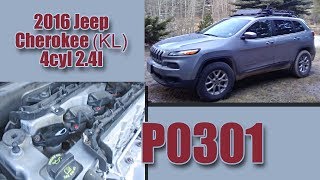
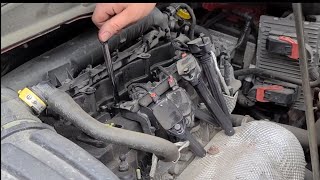
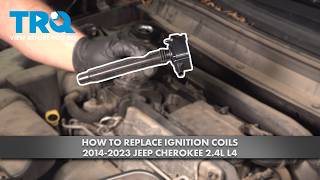
How to confirm: Swap the ignition coil from cylinder 1 with another cylinder (e.g., cylinder 2 or 3). Clear the codes and drive the vehicle. If the code changes to P0302 or P0303, the coil is bad. On the 2.4L engine, all four coils are easily accessible after removing the engine cover. 🎬 Watch: Step-by-step ignition coil replacement for the 2.4L engine. Cylinder 1 is the cylinder closest to the serpentine belt.
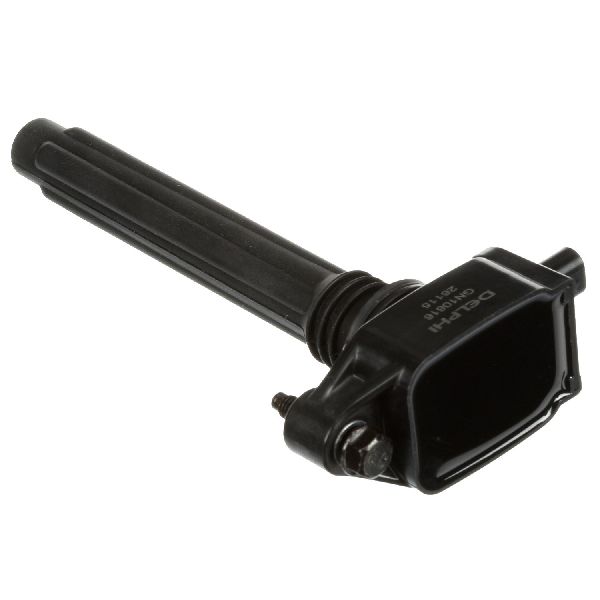
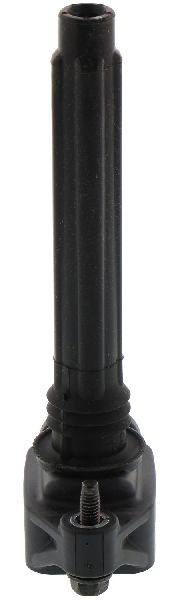
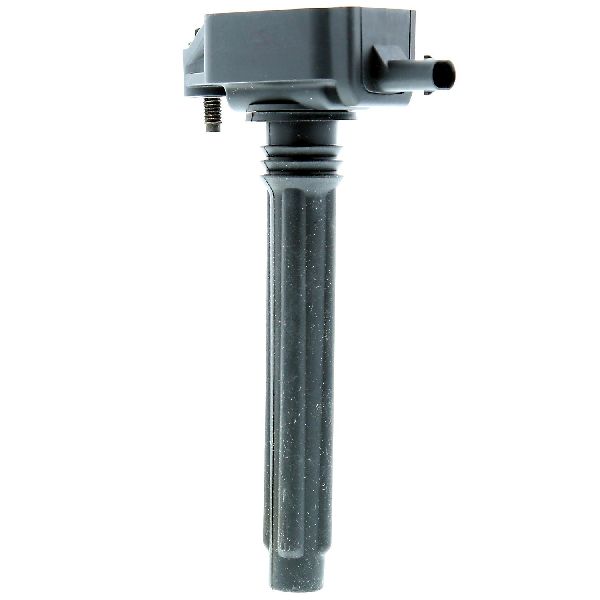
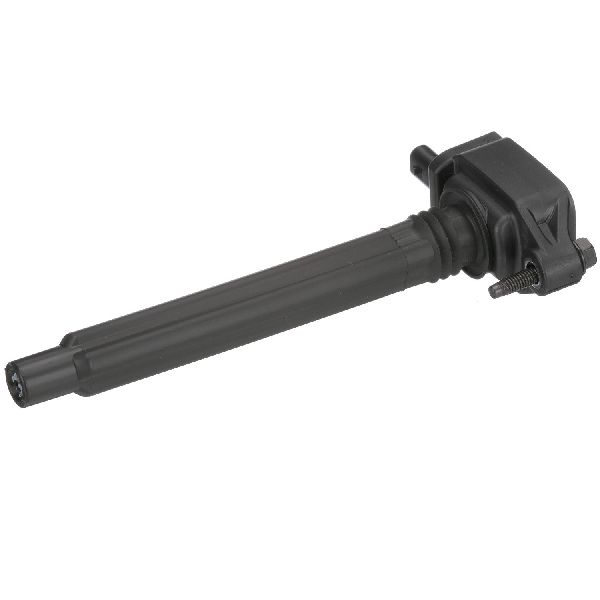
Typical fix: Replace the faulty ignition coil. It is often recommended to replace the corresponding spark plug at the same time. The OEM Mopar part number for the 3.2L V6 coil is 5149168AI. For the 2.4L, a common part number is 68242286AB.
Est. part cost: $40-$95 - Worn or Fouled Spark Plug 🔴 High Probability Spark plugs are a regular maintenance item. The 2.4L Tigershark engine is known for excessive oil consumption, which can cause spark plugs to become saturated in oil and foul prematurely, leading to misfires. Using incorrect or improperly gapped spark plugs can also cause misfires.
How to confirm: Remove the spark plug from cylinder 1 and inspect it. Look for heavy carbon buildup, oil fouling, a worn/damaged electrode, or an incorrect gap. Compare it to a plug from another cylinder. Oil in the spark plug well is a strong indicator.
Typical fix: Replace the spark plug. It is best practice to replace all spark plugs as a set. The OEM Mopar Iridium spark plug for the 3.2L V6 is part number SP149125AE.
Est. part cost: $15-$30 per plug - Failed Rocker Arm (3.2L V6) 🟡 Medium Probability The 3.2L and 3.6L Pentastar engines are known to have issues with the roller bearings on the rocker arms failing. This causes excessive play, prevents the valve from opening correctly, and results in a misfire, often accompanied by a ticking sound.
How to confirm: This is a more advanced diagnosis. After ruling out ignition and fuel issues, listen for a distinct ticking noise from the upper engine. A mechanic will remove the valve cover to physically inspect the rocker arms for cylinder 1. A failed rocker will often have a loose or collapsed roller. 🎬 See how to diagnose a failed rocker arm on the V6.
Typical fix: Requires removing the valve cover and camshafts to replace the failed rocker arms and lifters for the affected cylinder. Often the camshaft is also damaged and requires replacement. 🎬 Watch this detailed walkthrough of the rocker arm and camshaft repair. The updated Mopar rocker arm part number is 5184296AH.
Est. part cost: $150-$500 for parts (rockers, lifters, gaskets, possibly a camshaft) - Faulty Fuel Injector ⚪ Low Probability Fuel injectors can become clogged or fail electrically over time. This can sometimes occur with code P0201 (Injector Circuit/Open - Cylinder 1).
How to confirm: Listen to the injector with a mechanic's stethoscope to ensure it's clicking. You can also test the injector's resistance with a multimeter or swap it with another cylinder, though this is more labor-intensive, especially on the V6.
Typical fix: Replace the faulty fuel injector.
Est. part cost: $50-$150
Rare But Worth Checking
- PCM Software Issue: Multiple TSBs (#18-110-20, #18-004-16 REV. A) list P0301 among a host of other DTCs that can be resolved by reprogramming the Powertrain Control Module (PCM) with updated software. This suggests the misfire may be falsely detected by the computer.
- Low Engine Compression: A bent valve, worn piston rings, or a leaking head gasket can cause a loss of compression in cylinder 1, leading to a misfire. A compression test will confirm this. In one forum case, a user found a bent spark plug tip from an internal obstruction, which caused low compression on cylinder 1. This is a serious mechanical issue.
- Vacuum Leak: A leak in a vacuum hose or the intake manifold gasket near cylinder 1 can lean out the air/fuel mixture and cause a misfire.
- Leaking Valve Cover Gasket (2.4L): On the 2.4L engine, the valve cover gasket and integrated spark plug tube seals can fail, allowing oil to leak into the spark plug wells. This saturates the ignition coil boot and spark plug, causing a misfire.
Diagnosis Steps
- Read the codes: Use an OBD-II scanner to confirm P0301 and check for any other codes.
- Check for a flashing Check Engine Light: If it's flashing, the misfire is severe and driving should be avoided to protect the catalytic converter.
- Swap the Ignition Coil: The easiest first step. Remove the engine cover. Swap the ignition coil from cylinder 1 with cylinder 2. Clear the codes and run the engine. If the code changes to P0302, the coil is faulty.
- Inspect the Spark Plug: If the misfire remains on cylinder 1, remove the spark plug. Check for wear, damage, or fouling (oil/carbon). On the 2.4L engine, check for oil in the spark plug tube, which indicates a leaking valve cover gasket. Replace if necessary.
- Check the Fuel Injector: Listen for a steady clicking from the cylinder 1 injector using a long screwdriver or stethoscope. If it's silent or has an irregular sound, it may be faulty.
- Check for Vacuum Leaks: With the engine running, carefully spray brake cleaner or starting fluid around the intake manifold near cylinder 1. If the engine RPM changes, you have a vacuum leak.
- Perform a Compression Test: If the above steps don't identify the issue, a compression test is needed. A low reading in cylinder 1 points to a mechanical problem like a bad valve, piston ring, or head gasket.
- Inspect Rocker Arms (3.2L V6): If compression is good but the misfire persists, listen for a top-end ticking noise. The valve cover must be removed to physically inspect the rocker arms for failure, a known issue on this engine.
Parts You'll Likely Need
- Ignition Coil
(OEM #5149168AI (3.2L V6), 68242286AB (2.4L I4))— This is one of the most common failure items causing a single-cylinder misfire.
Related Codes That Often Appear With This One
- P0300 — If the misfire is intermittent or begins to affect other cylinders, a P0300 (Random/Multiple Cylinder Misfire) code may appear alongside P0301.
- P0302, P0303, P0304, etc. — If there are underlying issues like low fuel pressure or a large vacuum leak, other cylinders may also begin to misfire, setting their respective codes. Also seen when swapping a bad coil from cylinder 1 to another cylinder for diagnosis.
- P0201 — This code for 'Cylinder 1 Injector Circuit/Open' points directly to an electrical problem with the fuel injector for cylinder 1, which would cause a P0301 misfire.
- P0335 — A manufacturer TSB (#18-004-16 REV. A) links this 'Crankshaft Position Sensor Circuit' code with misfire codes on the 2015 Cherokee, indicating a possible related sensor or wiring fault that is often fixed with a PCM software update.
Technical Service Bulletins (TSBs) & Recalls
- 18-110-20: Addresses MIL illumination for various DTCs including P0301 on 2017 models with the 2.4L engine, fixed by a PCM software update.
- 08-027-20: For 2015-2019 models with the 2.4L engine, this TSB involves replacing all four ignition coil insulating boots to fix rough running and misfire codes (P0300, P0301, etc.).
- 18-004-16 REV. A: For 2014-2015 models with the 2.4L engine, this TSB involves a PCM software update to fix a variety of diagnostic issues, including misfire codes and P0335 (Crankshaft Position Sensor Circuit).
Platform-Specific Known Issues

- TSB #18-004-16 REV. A notes that on 2015 models, misfire codes (P0301-P0304) can be set along with P0335 for the Crankshaft Position Sensor Circuit, suggesting a potential sensor or wiring issue as a root cause.
- TSB #18-110-20 and #08-027-20 also list P0301 as part of potential software-related powertrain issues that may require a PCM update at a dealership.
- On 3.2L V6 engines, failure of the rocker arm roller bearings is a well-documented cause of persistent single-cylinder misfires that won't be fixed by replacing plugs or coils.
Mechanic-Grade Diagnostic Values
- Fuel Pressure (Key On, Engine Off) — expected: Approximately 45-51 PSI. Failure: Pressure below this range may indicate a weak fuel pump or leak. Pressure that drops quickly after the pump primes indicates a leak or faulty check valve.
- Fuel Injector Resistance (3.2L V6) — expected: Approximately 12-14 Ohms. Failure: A reading significantly outside this range, or an open circuit (infinite resistance), indicates a failed injector coil.
- Engine Compression — expected: 120-150 PSI, with no more than 30 PSI variation between any two cylinders.. Failure: A reading for cylinder 1 that is significantly lower than the other cylinders points to a mechanical engine problem.
Scan Tool Commands That Help
- wiTECH (Chrysler/Jeep Dealer Tool): Clear Mis-fire TLC (Trip Life Counter) — This function is used to reset the misfire counters after a repair. It's part of the TLC (Tooth Learn Corrector) relearn procedure, which may be necessary after certain repairs or software updates to ensure the PCM accurately detects misfires.
- wiTECH (Chrysler/Jeep Dealer Tool): OBDII Monitors > Mis-fire Mon SWC screen — This screen allows a technician to watch live misfire counts per cylinder while performing diagnostic steps, such as warming up the engine, to see if the misfire occurs under specific conditions.
- wiTECH 2.0 J2534 Application: Reprogram PCM — Used to flash the Powertrain Control Module with updated software to resolve falsely detected misfire codes as specified in TSBs like #18-070-15 and #18-110-20.
Wiring & Ground Locations
- Cylinder 1 Location (3.2L V6) — The cylinder closest to the passenger side (right side of the vehicle) on the bank of cylinders against the firewall (rear bank).. Correctly identifying cylinder 1 is the first step for any diagnosis, ensuring you are testing or replacing components on the correct cylinder.
- Cylinder 1 Location (2.4L I4) — The cylinder closest to the serpentine belt, on the passenger side (right side) of the engine.. Correctly identifying cylinder 1 is crucial for swapping coils, checking plugs, and testing the injector circuit for the P0301 code.
Real Owner Repair Stories
- YouTube user 'sotex an' (2016 Jeep Cherokee KL Latitude 2.4L I4, at 75,000 miles) — Vehicle started hesitating and jerking/hiccuping during a road trip. Check engine light came on with code P0301.
❌ Tried (didn't work) Replacing the spark plug in cylinder 1 helped the problem slightly but did not solve it.
✅ What actually fixed it Replacing the ignition coil for cylinder 1 resolved the hesitation and cleared the P0301 code. - Reddit user in r/askcarguys (2020 Jeep Grand Cherokee with 87,000 miles (Note: Grand Cherokee, but 3.6L Pentastar has similar rocker arm issues as the 3.2L)) — Flashing check engine light with P0301 only when accelerating past 80 MPH at high RPM.
❌ Tried (didn't work) Replaced all 6 spark plugs with new NGK plugs., Replaced all 6 ignition coils., Replaced the battery.
✅ What actually fixed it The user reported the vehicle ran much better after the tune-up, but the high-RPM misfire issue was not resolved in the post, suggesting the cause was not a simple ignition component and could be fuel-delivery or mechanical (like a weak valve spring or rocker arm issue) under high load.
OEM Part Supersession History
5184296AD, 5184296AE, 5184296AF, 5184296AG→5184296AH— This is the updated Mopar rocker arm for the 3.2L/3.6L Pentastar V6 engine, designed to address the common roller bearing failure that leads to misfires.
Model Year Variations Within This Range
- 2019-2022: A 2.0L Turbo 'Hurricane' engine was added as an option. While not part of the original engine lineup, owners of later models should be aware. Its firing order is 1-3-4-2, same as the 2.4L.
Helpful Videos
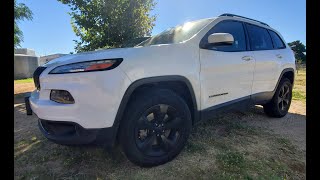
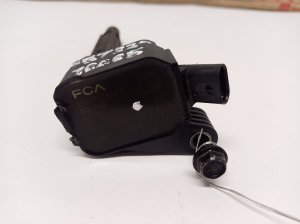
Used OEM Parts in Stock


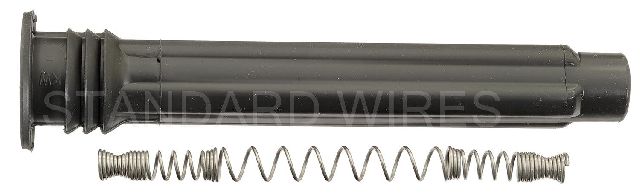
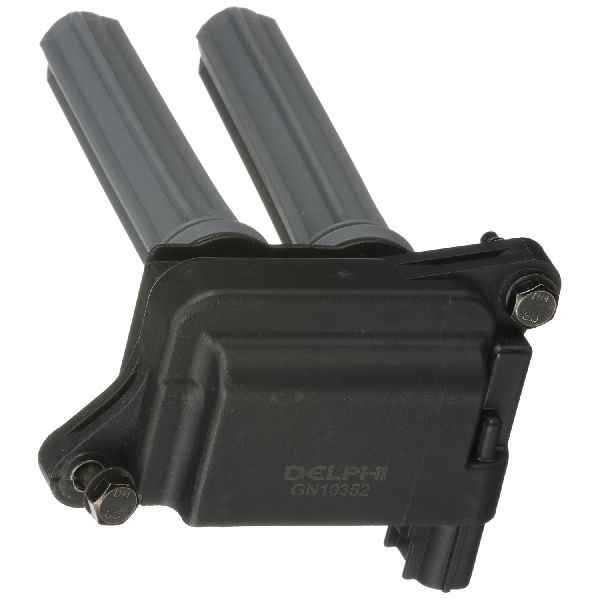
New Aftermarket Parts Available

The information in this article is provided for general reference and educational purposes only. Vehicle specifications, procedures, and part compatibility can vary by production date, trim level, and region. Always consult your vehicle's factory service manual and verify part numbers before purchasing or performing repairs. Safety-critical components such as airbags, seat belts, and braking systems should be installed by a qualified professional.
- Jeep CHEROKEE:
- 🎬 Helpful Videos
- 🛍️ Shop This Part
- What's Unique About the 2014-2019 Jeep CHEROKEE
- Diagnostic Flowchart
- Symptoms You May Notice
- Most Likely Causes
- Rare But Worth Checking
- Diagnosis Steps
- Parts You'll Likely Need
- Related Codes That Often Appear With This One
- Technical Service Bulletins (TSBs) & Recalls
- Platform-Specific Known Issues
- Mechanic-Grade Diagnostic Values
- Scan Tool Commands That Help
- Wiring & Ground Locations
- Real Owner Repair Stories
- OEM Part Supersession History
- Model Year Variations Within This Range
- 🎟️ Get 5% Off