

P0301 on 2009-2015 Jaguar XF: Cylinder 1 Misfire Causes and Fixes
P0301 indicates a misfire in cylinder 1. On the 2009-2015 Jaguar XF, the most common causes are a failed ignition coil or a worn spark plug. For V6/V8 engines, cylinder 1 is the front-most cylinder on the right-hand (passenger side in North America) bank. Swapping the coil from cylinder 1 to another cylinder is a quick way to diagnose the problem. A single coil costs between $50 and $120.
- P0301 is a misfire on cylinder 1, most often caused by a bad ignition coil or spark plug.
- A simple and effective diagnostic is to swap the ignition coil from cylinder 1 to another cylinder and see if the fault code follows.
- If the check engine light is flashing, stop driving immediately to prevent expensive damage to the catalytic converter.
- On V8 and supercharged V6 models, a failed PCV valve is a common cause of vacuum leaks that can trigger this code.
- Be aware of several TSBs for 2013-2014 models that point to software or fuel pump issues, which may require professional service.
What's Unique About the 2009-2015 Jaguar XF
The first-generation Jaguar XF (X250) used a wide array of engines, from a 2.0L turbo to 3.0L V6s and large 5.0L V8s (AJ126 and AJ133 respectively). While standard ignition issues are common, these engines have specific weaknesses. The V8 and supercharged V6 models are known for PCV valve failures integrated into the valve cover, which can create vacuum leaks leading to misfires. Additionally, Jaguar issued several Technical Service Bulletins (TSBs) for 2013-2014 models, indicating that misfire codes could be caused by software glitches requiring an ECM reprogram (JTB00533NAS1) or, in some cases, a fault in the high-pressure fuel pump (JTB00410NAS1), making diagnosis more complex than a simple tune-up. The direct injection on these engines can also lead to carbon buildup on intake valves, which can restrict airflow and cause misfires, though this is less common on Jaguars than on some other DI engines.
Diagnostic Flowchart
Tap your situation to follow the diagnostic path that matches what you're seeing on this vehicle.
Symptoms You May Notice
- Rough or vibrating idle
- Hesitation or stumbling during acceleration
- Flashing or solid Check Engine Light
- Reduced engine power
- Smell of unburnt fuel from the exhaust
- Hissing noise from the engine bay (if caused by a vacuum leak)
- Difficulty starting the engine
- Replacing only the spark plug when the ignition coil is the actual cause.
- Replacing ignition components when a hidden vacuum leak from a failed PCV valve is the root problem.
- Assuming a fuel injector is good when it is clogged or failing electronically, after spark and air leaks have been ruled out.
Most Likely Causes
- Faulty Ignition Coil 🔴 High Probability Ignition coils are a common failure item on modern gasoline engines, including the various petrol engines in the XF, due to constant exposure to high heat and voltage. The 3.0L V6 and 5.0L V8 engines use the same coil-on-plug ignition coil.
How to confirm: Swap the ignition coil from cylinder 1 with one from another cylinder (e.g., cylinder 2). Clear the codes and drive the car. If the code changes to P0302, the ignition coil is faulty. This is the standard first diagnostic step recommended by owners.
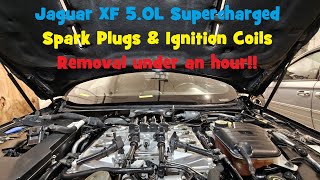
Typical fix: Replace the faulty ignition coil. It is often recommended to replace all spark plugs at the same time. 🎬 Watch: How to remove 5.0L spark plugs and coils in under an hour.
Est. part cost: $50 - $120 - Worn or Fouled Spark Plug 🔴 High Probability
How to confirm: After confirming the coil is good, remove the spark plug from cylinder 1. Inspect it for wear (eroded electrode), carbon buildup, oil or fuel fouling. A wet or black plug points to fuel or oil intrusion issues. You can swap it with another cylinder's plug to see if the misfire code follows.
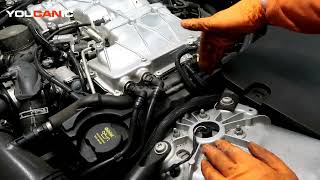
Typical fix: Replace the spark plug. It is best practice to replace all spark plugs as a set to ensure even performance. 🎬 Watch: Step-by-step ignition coil and spark plug replacement for 3.0L engines.
Est. part cost: $15 - $30 per plug - Faulty PCV Valve / Vacuum Leak 🟡 Medium Probability On the 5.0L V8 and 3.0L V6 engines, the PCV valve diaphragm is integrated into the valve cover and is a known failure point. A rupture creates a significant vacuum leak, often causing a lean condition (P0171/P0174) and subsequent misfires.
How to confirm: A loud whistling or hissing noise from the engine is a primary indicator. A mechanic can perform a smoke test to pinpoint the source of the vacuum leak. Spraying carb cleaner near suspected leak areas while monitoring engine RPM can also help identify leaks.
Typical fix: On older models, the PCV diaphragm can sometimes be replaced separately. 🎬 See this detailed DIY guide for replacing the PCV diaphragm. On many 5.0L and 3.0L engines, the entire valve cover assembly must be replaced as the PCV is integrated.
Est. part cost: $40 (diaphragm kit) - $400 (valve cover) - Clogged or Faulty Fuel Injector 🟡 Medium Probability
How to confirm: If spark and vacuum leaks are ruled out, the fuel injector is the next suspect. A professional can test the injector's flow rate and spray pattern. Swapping injectors between cylinders is possible but is a more labor-intensive diagnostic step.
Typical fix: Replace the faulty fuel injector. It's crucial to use high-quality OEM-spec injectors, as cheap copies are known to fail or leak. Injectors on these engines can sometimes become seized in the cylinder head, requiring significant effort to remove.
Est. part cost: $100 - $250
Rare But Worth Checking
- Engine Control Module (ECM) Software Issue: Jaguar issued TSB #JTB00533NAS1 for 2013-2014 models with 3.0L/5.0L engines where misfire codes (including P0301) could be triggered by a fuel injection calibration issue during a cold start. The fix requires reprogramming the ECM at a dealership or qualified shop.
- High-Pressure Fuel Pump Fault: TSB #JTB00410NAS1 for 2013 models indicates that an internal fault in the high-pressure fuel pump's metering valve can cause rough running and misfire codes. This is a more complex and expensive repair. Codes like P228F or P00C6 may also be present.
- Low Engine Compression: Mechanical issues like a worn piston ring, a burnt valve, or a leaking head gasket can cause a loss of compression in cylinder 1. A compression test is needed to diagnose this. One owner on JaguarForums performed a compression test and found all cylinders to be healthy, ruling out this cause.
- Intake Valve Carbon Buildup: As direct injection (DI) engines, the AJ-series V6 and V8 do not have fuel washing over the intake valves. This can allow oil vapors from the PCV system to bake onto the valves, restricting airflow and causing misfires. While a known issue for DI engines, it appears less frequently on these Jaguars compared to other brands.
- Leaking Supercharger Intercooler: On supercharged 3.0L and 5.0L engines, the charge air cooler (intercooler) located under the supercharger can develop internal coolant leaks. This allows coolant to be ingested into the cylinders, which can foul spark plugs and cause misfires, often accompanied by unexplained coolant loss and white exhaust smoke.
Diagnosis Steps
- Read the trouble codes with an OBD-II scanner and note any other codes present, such as P0300, P0171/P0174, or P0316.
- Check if the Check Engine Light is flashing. If so, avoid driving the vehicle to prevent catalytic converter damage.
- Identify Cylinder 1: On V6/V8 engines, this is the front-most cylinder on the right-hand (passenger side in NA) bank.
- To test the ignition coil, swap the coil from cylinder 1 with a coil from an adjacent cylinder (e.g., cylinder 2).
- Clear the codes and run the engine. If the code returns as P0302, the ignition coil is bad and needs replacement.
- If the code remains P0301, inspect the spark plug in cylinder 1 for wear, damage, or fouling. Check for oil in the spark plug well, which indicates a leaking valve cover gasket. Replace if necessary.
- If ignition components are good, inspect for vacuum leaks. Listen for hissing noises. A smoke test is the most effective way to find leaks, paying close attention to the PCV valve and intake manifold gaskets.
- If no vacuum leaks are found, investigate the fuel injector for cylinder 1. Listen for a consistent clicking sound from the injector using a mechanic's stethoscope. Consider swapping the injector with another cylinder if you have the mechanical skill.
- If all else fails, perform a cylinder compression test to rule out internal mechanical engine problems.
- Check for any applicable TSBs, especially on 2013-2014 models, which may require an ECM software update (JTB00533NAS1) or investigation of the high-pressure fuel pump (JTB00410NAS1).
Parts You'll Likely Need
- Ignition Coil
(OEM #C2Z18619)— This is the most frequent cause of a single-cylinder misfire. Heat and high voltage cause them to fail over time.
Trusted brands: Bosch, NGK, Delphi, Bremi
OEM price range: $80 - $150
Aftermarket price range: $50 - $120 - Spark Plug
(OEM #C2D59998 (for 5.0L SC))— As a routine maintenance item, spark plugs wear out and can no longer produce a strong enough spark, leading to misfires.
Trusted brands: NGK, Bosch, Denso
OEM price range: $20 - $35
Aftermarket price range: $15 - $25 - PCV Valve / Valve Cover
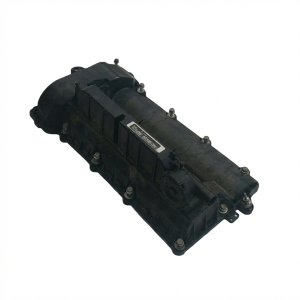
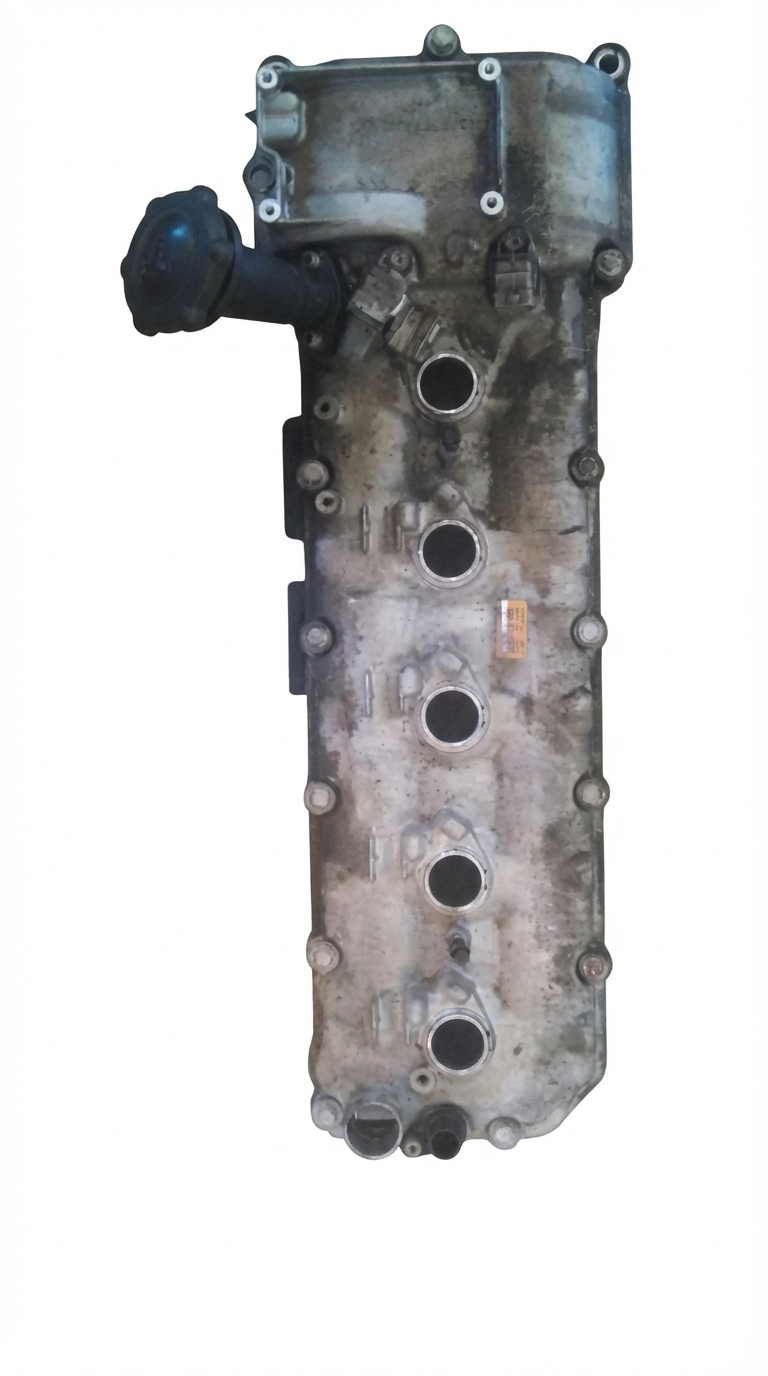
(OEM #C2D60163 (for 5.0L V8))— A common failure on the V8 and V6 SC engines, a ruptured PCV diaphragm causes a vacuum leak that leads to misfires.
Trusted brands: Genuine Jaguar, URO Parts
OEM price range: $350 - $450
Aftermarket price range: $150 - $250
Related Codes That Often Appear With This One
- P0300 — If the misfire is intermittent or affects multiple cylinders, a P0300 (Random/Multiple Cylinder Misfire) code may appear alongside P0301.
- P0302, P0303, etc. — If other cylinders are also misfiring, their corresponding codes will be stored. This could point to a systemic issue like a vacuum leak or fuel pressure problem.
- P0171 / P0174 — These 'System Too Lean' codes often accompany a misfire code if it's caused by a vacuum leak, such as a failed PCV valve, which allows unmetered air into the engine.
- P0316 — This code for 'Misfire Detected on Startup' was specifically mentioned with P0301 in TSB #JTB00533NAS1, often pointing to a software calibration issue on cold starts.
Technical Service Bulletins (TSBs) & Recalls
- JTB00533NAS1: MIL illuminated with DTC P0316 and/or P0300-P0308 stored.
- JTB00445NAS1: MIL may be illuminated with misfire DTCs (P0300-P0304, P1315), requiring ECM reprogramming.
- JTB00410NAS1: Rough running and misfire DTCs may be caused by a high-pressure fuel pump internal fault.
- SSM-63697: Misfire codes may be stored due to poor fuel quality.
Platform-Specific Known Issues
- Cylinder 1 Location: For the V6 (AJ126) and V8 (AJ133) engines, Cylinder 1 is located at the front of the engine on the right-hand bank (passenger side in North America / LHD vehicles). This is crucial for correctly diagnosing the misfire by swapping the correct coil and plug.
- Direct Injection Carbon Buildup: Because these are direct injection engines, fuel does not spray over the intake valves. Over time, oil vapor from the PCV system can bake onto the back of the valves, creating carbon deposits that restrict airflow and can lead to misfires. While not as severe as on some German counterparts, it is a potential cause for persistent, otherwise undiagnosed misfires.
- V6 Engine (AJ126) Design Quirk: The 3.0L supercharged V6 (AJ126) is derived from the 5.0L V8 (AJ133) block. It essentially uses the V8 block with two cylinder bores unused, which are blanked off. This means it shares many of the same core components and potential issues as its larger V8 sibling.
Mechanic-Grade Diagnostic Values
- High-Pressure Fuel Rail Pressure (Direct Injection) — expected: Up to 2,900 PSI (200 Bar) under load. A forum user reported normal idle pressure around 500-600 PSI and startup pressure of 2100 PSI.. Failure: Significantly lower pressure under load, which may trigger a P0087 code along with misfires.
- Low-Pressure Fuel Pump (In-Tank) — expected: Approximately 40-75 PSI feeding the high-pressure pumps.. Failure: Low pressure from the in-tank pump will starve the high-pressure pumps, causing misfires under load.
- Upstream Oxygen Sensor Voltage — expected: Fluctuating between 0.1 and 0.9 volts on a healthy engine.. Failure: A reading that is consistently low or high can indicate an improper air-fuel mixture, which can be a cause or a result of a misfire.
- Ignition Coil Bolt Torque — expected: 7 Nm (just a little more than hand-tight).. Failure: Over-tightening can crack the coil housing; under-tightening can lead to a poor ground or the coil vibrating loose.
Hidden / Shadow Codes Worth Checking
- Mode 6 Misfire Counters: Most advanced OBD-II scanners can access Mode 6 data, which contains non-DTC information like misfire counts per cylinder for the current and previous drive cycles. This can reveal which cylinder is misfiring even before a P0301 code is officially set. (see via A professional-grade OBD-II scanner with Mode 6 functionality. Some Jaguar owners have noted that even the dealer-level IDS/SDD software may not display these counters clearly, making a generic pro-level scanner more useful for this specific data point.)
Scan Tool Commands That Help
- Jaguar SDD / Pathfinder: Symptom Driven Diagnostics (SDD) — For 2009-2016 models, SDD is the dealer tool. It guides the technician through a symptom-based diagnostic tree. It can also perform module programming, such as the ECM re-flash mentioned in TSBs JTB00533NAS1 and JTB00410NAS1.
- Jaguar SDD / Pathfinder: Injector Coding / Programming — When replacing a fuel injector, the dealer tool may be required to code the new injector to the ECM to ensure correct fuel delivery and performance.
Wiring & Ground Locations
- G1D123 — Located at the right rear of the engine compartment.. This is a primary engine compartment ground. A corroded or loose connection here can cause erratic behavior from various engine sensors and actuators, including the ignition coils and injectors.
- G1D124 — Located behind the right front fender splash shield.. Another critical ground point on the right side of the vehicle, near cylinder 1. Corrosion in this area from wheel spray can lead to intermittent electrical faults.
- G1D129 / G1D131 — Located behind the left (G1D129) and right (G1D131) headlamp assemblies.. These grounds serve components in the front of the engine bay. A fault at G1D131 on the right side could potentially affect the cylinder 1 ignition coil or injector circuits.
Real Owner Repair Stories
- YouTube user @Jaguar5.0aj133MissfireFix (Jaguar with 5.0L AJ133 Supercharged V8) — Persistent misfire after checking coils, injectors, and spark plugs.
❌ Tried (didn't work) Checking ignition coils, Checking spark plugs, Checking fuel injectors
✅ What actually fixed it The root cause was a leaking supercharger intercooler (charge cooler) located in the engine valley. Coolant was leaking internally into the cylinders, fouling the plugs and causing the misfire. The fix required removing the supercharger to replace the leaking intercooler core. - JaguarForums user (Jaguar XF with 5.0L V8) — Misfire at high RPM (above 4000 RPM) with power loss, but no Check Engine Light.
❌ Tried (didn't work) Initial diagnosis did not show any codes.
✅ What actually fixed it A dealer diagnosed the issue as two failing high-pressure mechanical fuel pumps. The user noted that this specific failure mode did not trigger a check engine light. Replacing both high-pressure pumps resolved the high-RPM misfire.
"I Checked Everything" — The Actual Cause
- In cases involving the supercharged engines, a smoke test for vacuum leaks may come back clean, yet a misfire persists. The actual cause can be an internal coolant leak from the charge air cooler (intercooler) located under the supercharger. This allows coolant to be drawn into the cylinders, causing a misfire that mimics an ignition or fuel issue but will not be found by a smoke test. Symptoms include mysterious coolant loss and sometimes white smoke from the exhaust.
When the Usual Fixes Don't Work
- While faulty ignition components are the most common cause of P0301, several owner accounts on Jaguar Forums highlight the importance of not stopping there. In one case, a high-RPM misfire that did not set a code was ultimately traced to failing high-pressure fuel pumps, a fix that would be missed by only focusing on ignition parts. In another documented case, a persistent misfire that survived coil and plug swaps was caused by a leaking supercharger intercooler, a repair requiring removal of the supercharger. These stories emphasize that if the simple fixes don't work, the cause on these specific engines may be a more complex, platform-specific issue.
OEM Part Supersession History
8W93-12A366-DA→AJ811378, C2Z18619, LR010687— Standard part evolution and consolidation across the Jaguar Land Rover (JLR) lineup.
Heads up: The ignition coils for the 3.0L V6 (AJ126) and 5.0L V8 (AJ133) are physically the same and interchangeable across many JLR models from this era. When buying used, it is critical to inspect for cracks or oil fouling on the boot.
Model Year Variations Within This Range
- 2013-2014: Models with the 3.0L V6 and 5.0L V8 may experience misfire codes due to an ECM software calibration issue, particularly on cold starts. TSB JTB00533NAS1 addresses this and requires a dealership to reprogram the Powertrain Control Module (PCM).
- 2010-2012 vs 2013-2015: The engine lineup changed significantly around 2012-2013. Earlier models primarily used 4.2L and 5.0L V8s. Later models introduced the 2.0L I4 Turbo and 3.0L Supercharged V6. While the P0301 diagnosis is similar, the specific known issues like the PCV valve failure and supercharger cooler leaks apply mainly to the later 3.0L/5.0L engines.
Helpful Videos

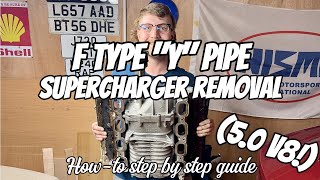
We Have This Part in Stock

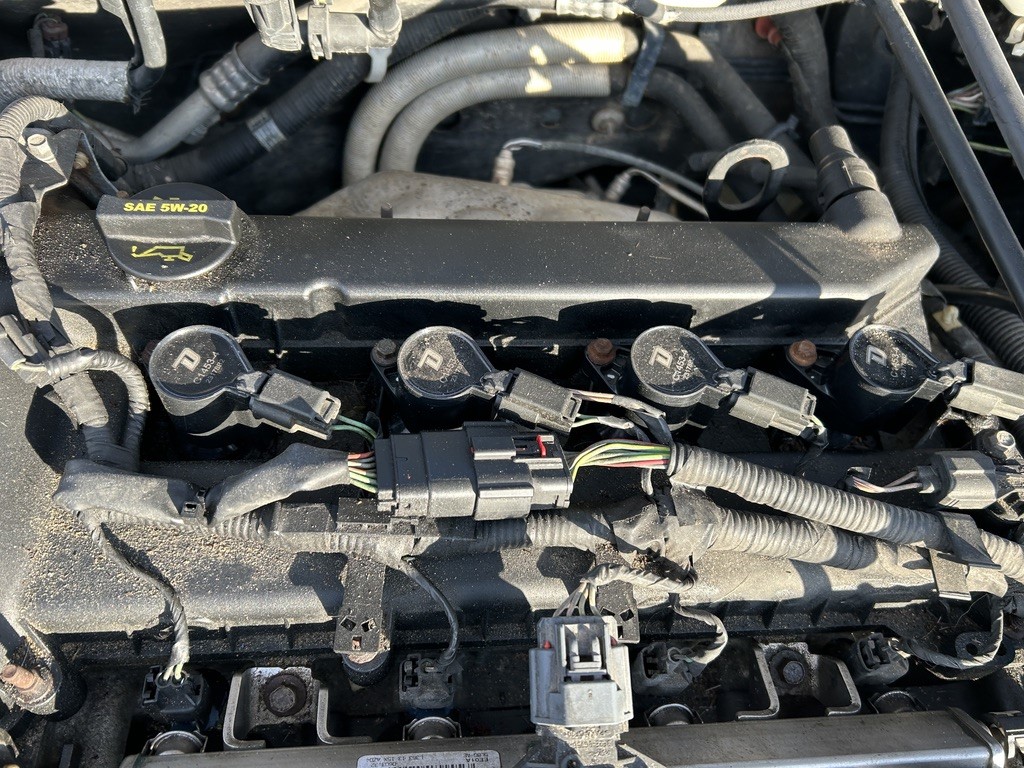

The information in this article is provided for general reference and educational purposes only. Vehicle specifications, procedures, and part compatibility can vary by production date, trim level, and region. Always consult your vehicle's factory service manual and verify part numbers before purchasing or performing repairs. Safety-critical components such as airbags, seat belts, and braking systems should be installed by a qualified professional.
- Jaguar XF:
- 🎬 Helpful Videos
- 🛍️ Shop This Part
- What's Unique About the 2009-2015 Jaguar XF
- Diagnostic Flowchart
- Symptoms You May Notice
- Most Likely Causes
- Rare But Worth Checking
- Diagnosis Steps
- Parts You'll Likely Need
- Related Codes That Often Appear With This One
- Technical Service Bulletins (TSBs) & Recalls
- Platform-Specific Known Issues
- Mechanic-Grade Diagnostic Values
- Hidden / Shadow Codes Worth Checking
- Scan Tool Commands That Help
- Wiring & Ground Locations
- Real Owner Repair Stories
- "I Checked Everything" — The Actual Cause
- When the Usual Fixes Don't Work
- OEM Part Supersession History
- Model Year Variations Within This Range
- 🎟️ Get 5% Off