

P0301 on 2009-2016 Honda Pilot: Cylinder 1 Misfire Causes and Fixes
P0301 on a 2009-2016 Honda Pilot indicates a misfire in cylinder 1. This is most often caused by a spark plug fouled with oil, a symptom of a well-documented issue with piston rings related to the engine's VCM system. The fix starts with inspecting the spark plug in cylinder 1 (front bank, passenger side) but may require disabling the VCM system and, in severe cases, addressing the underlying engine condition as outlined in Honda's class-action settlement.
- P0301 on a 2009-2016 Pilot is almost always caused by an oil-fouled spark plug in cylinder 1.
- The root cause is a well-known design issue with Honda's Variable Cylinder Management (VCM) system, which leads to oil consumption and is covered by multiple TSBs.
- A simple diagnostic step is to swap the ignition coil to another cylinder; if the code doesn't move, the spark plug is the next item to inspect.
- While replacing the spark plug will temporarily fix the misfire, the problem will likely return unless the underlying oil consumption is addressed.
- Many owners choose to install an aftermarket VCM disabling device for about $100-$150 as a long-term solution to prevent recurring spark plug fouling.
What's Unique About the 2009-2016 Honda PILOT

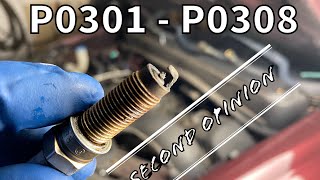
The 3.5L V6 engine in this era of Honda Pilot is equipped with Variable Cylinder Management (VCM). While designed to improve fuel economy by shutting down cylinders during light load, it has a widely documented side effect: it causes oil to get past the piston rings on the deactivated cylinders (often cylinders 1-4). This oil burns and fouls the spark plugs, leading directly to misfire codes like P0301. 🎬 Watch: A breakdown of what causes the P0301 misfire code. Honda acknowledged this in a class-action lawsuit, *Soto et al. v. American Honda Motor Co., Inc.*, and issued multiple Technical Service Bulletins (TSBs) and a warranty extension (8 years/unlimited miles) to address the problem.
Diagnostic Flowchart

Tap your situation to follow the diagnostic path that matches what you're seeing on this vehicle.
Generation note: This range covers the second generation (2009-2015) and the first model year of the third generation (2016). Both use a 3.5L V6 engine with VCM. The piston ring and oil consumption issues are most prevalent on the 2nd-gen models (J35Z4 engine), as detailed in TSB A13-082. The 2016 model (J35Y6 engine) can also suffer from VCM issues, but is also specifically called out in TSB 20-100 for misfires caused by faulty fuel injectors.
Symptoms You May Notice

- Rough or shaking idle
- Hesitation or stumbling during acceleration
- Flashing or solid Check Engine Light
- Noticeable loss of power
- Decreased fuel economy
- Smell of unburned gasoline from the exhaust
- VTM-4 light may illuminate along with the Check Engine Light
- Replacing only the ignition coil without checking the spark plug. The plug is the most likely culprit due to the VCM oil fouling issue.
- Replacing the spark plug but not addressing the root cause (VCM/piston rings). The new plug will eventually foul as well, with many owners reporting the code returning within a few hundred miles.
- A dealership recommending a full piston ring replacement for thousands of dollars without first suggesting the installation of a VCM disabling device, which is a common and effective fix discussed in owner communities.
Most Likely Causes

- Fouled Spark Plug (Cylinder 1) 🔴 High Probability As described in Honda TSBs A13-082 and A26-002, the VCM system can cause piston rings to align or stick, allowing oil to seep into the combustion chamber and foul the spark plugs, especially in cylinders 1-4.
How to confirm: Remove the spark plug from cylinder 1. Cylinder 1 is located on the front bank (closest to the radiator) on the passenger side of the vehicle. The plug will likely be black, wet with oil, or have heavy, crusty carbon deposits. Compare it to a plug from a cylinder on the rear bank (e.g., cylinder 5 or 6).
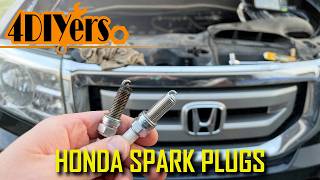
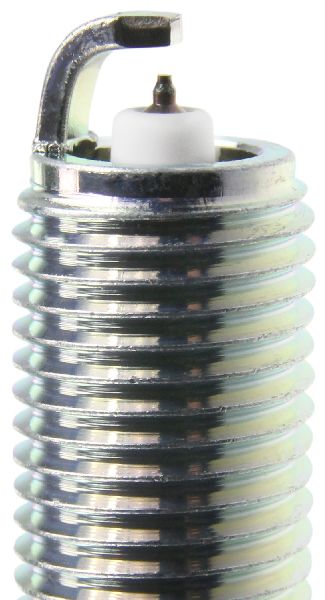
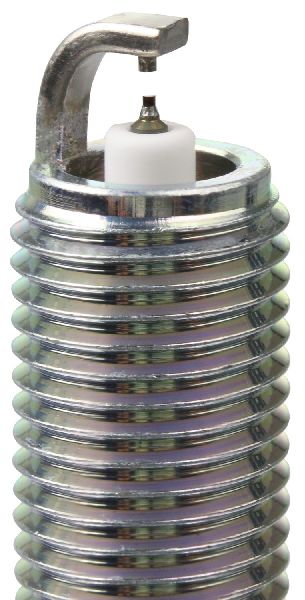
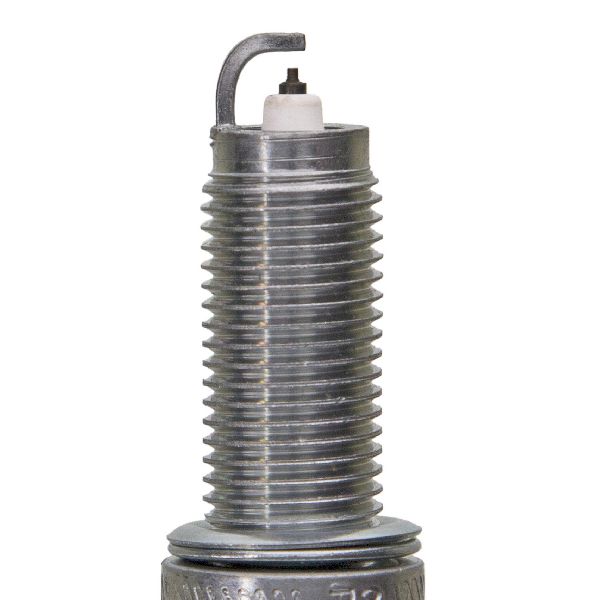
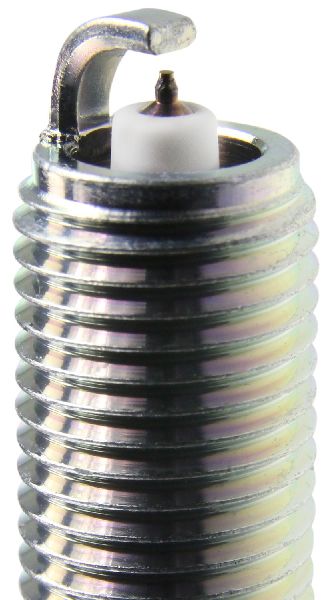
Typical fix: Replace the fouled spark plug. Many owners on forums like Piloteers.org recommend using OEM-spec NGK Laser Iridium plugs. 🎬 See this walkthrough on how to change your spark plugs. However, this is a temporary fix if the underlying oil consumption issue isn't addressed. For a long-term solution, all spark plugs should be replaced and the root cause (VCM) must be managed.
Est. part cost: $15-$30 per plug for OEM-spec Iridium plugs - Piston Ring / Oil Consumption Issue 🔴 High Probability This is the root cause of the fouled spark plugs. The VCM system's operation leads to stuck or aligned piston rings, causing excessive oil consumption. This was the subject of the *Soto et al. v. American Honda* class-action lawsuit and a warranty extension.
How to confirm: This is difficult for a DIYer to confirm directly. Key signs include repeatedly fouling the same spark plugs (P0301-P0304) and measurable oil loss between changes. A professional would perform a cylinder leak-down or compression test. A borescope may reveal a wet, oily piston top.
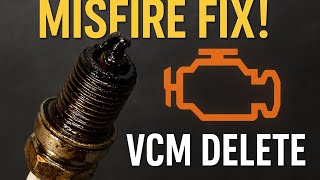
Typical fix: The official Honda repair (Procedure B in TSB A13-082) involves a partial engine disassembly to clean the pistons and replace the piston rings in the affected cylinders. This is a major, expensive repair. A widely adopted long-term solution by owners is to disable the VCM system with an aftermarket device like a VCMTuner II or S-VCM Controller. 🎬 Watch: How to install a VCM disabling device yourself. This prevents the cylinders from deactivating, which stops the oil consumption mechanism.
Est. part cost: $1000+ for engine rebuild parts; $100-$150 for a VCM disable device. - Faulty Ignition Coil (Cylinder 1) 🟡 Medium Probability
How to confirm: Swap the ignition coil from cylinder 1 with one from another cylinder (e.g., cylinder 2). Clear the codes and drive the vehicle. If the code changes to P0302, the ignition coil is bad. Many forum users report that this is often misdiagnosed as the primary failure when the spark plug is the actual fouled component.
Typical fix: Replace the faulty ignition coil. Hitachi is an OEM supplier for Honda coils.
Est. part cost: $40-$100 - Faulty or Clogged Fuel Injector (Cylinder 1) ⚪ Low Probability TSB #A18-025 and #20-100 mention that debris from the manufacturing process can clog injectors on some models, particularly the 2016 Pilot, causing misfires and air-fuel ratio codes. Honda extended the warranty for this issue to 10 years or 150,000 miles.
How to confirm: This is more difficult to diagnose. It may involve checking injector resistance or performing a fuel system cleaning. A professional can perform a flow test to confirm a clogged or failing injector.
Typical fix: Replace the faulty fuel injector(s). Honda sells them as a set of six. The OEM part number for the 2016 Pilot injector set is 16010-RLV-315.
Est. part cost: $50-$150 for a single injector, or $250+ for the OEM set.
Rare But Worth Checking
- Valve Adjustment Needed: Honda J-series engines use solid lifters that require periodic valve clearance adjustments, typically recommended around 100,000 miles. If neglected, tight valves can cause poor compression and misfires, especially when the engine is cold.
- Clogged EGR Passages: The Exhaust Gas Recirculation (EGR) system can become clogged with carbon over time. A clogged passage to a specific cylinder can disrupt the air/fuel mixture and cause a misfire on that cylinder.
Diagnosis Steps
- Read all stored trouble codes with an OBD-II scanner. Note if other misfire codes (P0302, P0303, P0304) or air/fuel ratio codes (P219A/B) are present.
- Check the engine oil level. An abnormally low oil level is a strong indicator of the VCM-related oil consumption issue.
- Locate Cylinder 1. On the J35 engine, it is the front-most cylinder on the bank closest to the radiator, on the passenger side.
- Swap the ignition coil from cylinder 1 to cylinder 2. Clear the codes, drive the vehicle, and re-scan. If the code is now P0302, the coil is faulty.
- If the code remains P0301, remove the ignition coil and spark plug from cylinder 1.
- Inspect the spark plug for signs of heavy oil fouling, carbon tracking, or excessive wear. A heavily fouled plug is the most likely finding.
- If the plug is fouled, replace all spark plugs (especially cylinders 1-4) with the recommended OEM type (NGK Laser Iridium Part #95350 is a common recommendation).
- For a long-term fix, install a VCM deactivation device (e.g., VCMTuner II, S-VCM Controller). This is a 10-minute DIY job that prevents the root cause of plug fouling.
- After installing new plugs and/or a VCM device, some owners recommend adding a bottle of fuel system cleaner like Techron to the gas tank and performing an "Italian tune-up" (driving at high RPMs for a short period) to help clean out existing carbon deposits.
- If new plugs and a good coil do not resolve the issue (especially on a 2016 model), the fuel injector for cylinder 1 is the next likely suspect. Diagnosis may require professional assistance.
Parts You'll Likely Need
- Spark Plug
(OEM #12290-R70-A01)— This is the most common failure point due to oil fouling from the VCM system issue. The specific recommended plug is often NGK Laser Iridium #95350.
Trusted brands: NGK, Denso
OEM price range: $20-$30
Aftermarket price range: $15-$25 - VCM Disabling Device — An aftermarket part that prevents the root cause of spark plug fouling by keeping the VCM system from activating. This is a preventative measure, not a direct fix for an existing misfire, but is considered essential by many owners for long-term reliability.
Related Codes That Often Appear With This One
- P0300 — If the misfire is intermittent or affects multiple cylinders, a P0300 (Random Misfire) code may be stored alongside the specific cylinder code.
- P0302, P0303, P0304 — These codes indicate misfires in cylinders 2, 3, and 4. Because the VCM issue primarily affects the front bank of cylinders (1-4), it's common to see multiple misfire codes from this group as stated in TSB A13-082.
- P219A / P219B — As noted in TSB #A18-025 and #20-100, these codes for air-fuel ratio imbalance can appear with misfire codes, often pointing towards a fuel injector issue on 2016 and newer models.
Technical Service Bulletins (TSBs) & Recalls
- A18-025: Notes that P0301 can occur with air-fuel ratio codes (P219A/B), often pointing to fuel injectors.
- A26-002: Directly links P0301 to low toughness piston rings, sludge, and oil fouling of spark plugs.
- A13-082: Details the class-action settlement and warranty extension for P0301-P0304 caused by piston rings rotating and aligning, leading to spark plug fouling.
Platform-Specific Known Issues
- Piston Ring / VCM-Related Oil Consumption: The primary issue for this vehicle and code. Honda's VCM deactivates cylinders 1-4 to save fuel, but this causes oil to bypass the piston rings, fouling spark plugs and triggering misfires. Honda acknowledged this with TSB A13-082 and the *Soto et al. v. American Honda* class-action settlement, which extended the warranty to 8 years/unlimited miles for this specific failure. The long-term fix is either an expensive engine repair (piston ring replacement) or installing an aftermarket VCM disabling device, a solution widely endorsed on owner forums like Piloteers.org and Reddit.
- Fuel Injector Issues (2016 models): TSB #20-100 (which supersedes A18-025 for the Pilot) notes that 2016 Pilots can suffer from clogged fuel injectors due to manufacturing debris. This can cause misfires (P0301-P0306) and air-fuel ratio codes (P219A/B). Honda extended the warranty on the fuel injectors to 10 years or 150,000 miles due to this known defect.
Mechanic-Grade Diagnostic Values
- Fuel Injector Resistance — expected: 10 to 15 ohms is typical for high-impedance injectors used in these models.. Failure: A reading significantly outside this range, or that differs by more than 0.5-1.0 ohm from the other injectors, indicates a faulty injector.
- Ignition Coil Primary Resistance — expected: Approximately 0.49 - 0.57 ohms at 68°F (20°C).. Failure: A reading outside of this specific range indicates a faulty primary winding in the coil.
- Ignition Coil Secondary Resistance — expected: Approximately 9.5 - 11.1 kilohms (kΩ).. Failure: An 'OL' (Overload/Open Loop) reading or a value outside this range points to a bad secondary winding.
- Fuel Pressure (Low Pressure) — expected: Honda J-series engines typically operate with a fuel pressure around 51 ±7 psi (0.35 ±0.05 MPa).. Failure: Low fuel pressure can cause lean conditions and misfires across multiple cylinders, not typically isolated to just P0301.
Hidden / Shadow Codes Worth Checking
- Mode 6 Misfire Counters: Advanced scan tools can access Mode 6 data, which provides raw misfire counts for each cylinder before they are high enough to trigger a specific P030x code. This can help identify intermittent misfires or confirm which cylinder is the primary offender. (see via Use a professional-grade scan tool (like Honda HDS or a capable Launch/Autel scanner) and navigate to the Mode 6 or "Misfire Data" stream.)
Scan Tool Commands That Help
- Honda HDS (Honda Diagnostic System): CKP Pattern Clear / CKP Pattern Learn — This function is used to reset and relearn the crankshaft position sensor's stored pattern. It can resolve 'ghost misfires' where the ECU incorrectly logs misfire codes due to signal noise or after major engine work. A technician noted that after replacing parts, multiple random misfire codes appeared, and performing the CKP relearn procedure resolved the issue.
- Honda HDS (Honda Diagnostic System): Cylinder AF Test — This is a bidirectional test that can help identify air-fuel ratio imbalances in specific cylinders, which can be caused by a faulty fuel injector. This test is mentioned in relation to misfire diagnostics on newer Hondas.
- Honda HDS (or advanced bidirectional scanner): Misfire Data Stream — Viewing the live data stream for misfire counts on all six cylinders can confirm that the misfire is isolated to cylinder 1 and not randomly occurring on others.
Wiring & Ground Locations
- G101 — Typically located at the left rear of the engine compartment, often a braided strap from the chassis to the engine block or transmission.. A poor engine ground can cause a host of electrical issues, including weak spark or erratic sensor readings that could lead to misfire codes. Ensuring G101 is clean and tight is a crucial step in diagnosing electrical-related misfires.
- G1 / G2 — G1 is on the left side of the engine compartment near the battery; G2 is on the right side.. These are primary chassis and component grounds. The ignition coils and PCM rely on solid ground connections for proper operation. A wiring diagram shows Ignition Coil 1 receives its ground path through the PCM, which in turn relies on these main grounds.
- Ignition Coil Connector — On top of the valve cover, directly connected to the ignition coil for cylinder 1.. This is the connection point for testing coil resistance and checking for power/ground signals to the coil. A damaged connector or spread pins can cause an intermittent connection and misfire.
Real Owner Repair Stories
- Reddit user in r/hondapilot (2011 Honda Pilot, 170k miles) — P0301 code with flashing check engine light.
❌ Tried (didn't work) The user was a new owner; the previous mechanic had done a lot of work but had not installed a VCM disabling device he owned.
✅ What actually fixed it The user installed a VCM Tuner II, performed a fresh oil change, and added Techron fuel system cleaner. This combination is the community-accepted method to halt the VCM-induced oil fouling and begin cleaning existing carbon deposits. - Reddit user in r/HondaOdyssey (same J35 engine/VCM issue) (2016 Honda Odyssey) — P0301 code, erratic idle, and FCW (Forward Collision Warning) Failure light.
❌ Tried (didn't work) The vehicle already had a VCM Tuner II installed. The user replaced the intake hose (a common source of vacuum leaks) and replaced the spark plug in cylinder 1. The problem persisted.
✅ What actually fixed it The user noted heavy corrosion on both battery terminals. Cleaning the terminals was the next suggested step, as poor battery connections can cause widespread, erratic electrical issues, including sensor malfunctions and misfires. - YouTube video by 'Simple Fix' (2008 Honda Pilot (similar J35 engine)) — Flashing check engine light when going uphill, loss of power, and multiple misfire codes (P0301-P0306).
❌ Tried (didn't work) Replacing the spark plugs did not solve the issue.
✅ What actually fixed it The problem was solved by replacing the internal spring and rubber boot of the coil-on-plug insulators. The original springs showed signs of corrosion, which created excessive resistance and a weak spark under load. This was an instant fix.
When the Usual Fixes Don't Work
- While the vast majority of P0301 cases on this platform are due to the VCM/piston ring issue, many owners have successfully prevented catastrophic engine damage or costly rebuilds by installing an aftermarket VCM disabling device for around $100-$150. Multiple owner accounts state that after installing the device and replacing the fouled plugs, the misfire codes did not return, contradicting the idea that a full piston ring job is the only permanent solution.
OEM Part Supersession History
16010-RLV-305→16010-RLV-315— This is the fuel injector set called for in TSBs #A18-025 and #20-100 for 2016+ models to address clogging and air-fuel ratio issues. The new part number represents the revised injectors designed to prevent the issue.
Heads up: The part is sold as a complete kit of 6 injectors with O-rings and seals. It is recommended to replace all six to ensure balanced fuel delivery.
Model Year Variations Within This Range
- 2009-2011: TSB A13-082 specifies a two-step repair for these years. Step 1 was a PCM software update and spark plug replacement. Only if the problem returned would the dealer perform Step 2 (piston ring replacement).
- 2012-2013: These models came from the factory with the updated PCM software. TSB A13-082 directs technicians to skip directly to the mechanical repair (piston cleaning and ring replacement) if a VCM-related misfire is diagnosed.
- 2016: This model year uses the newer J35Y6 engine with direct injection. While still susceptible to VCM issues, it is also specifically named in TSB 20-100 for misfires caused by clogged fuel injectors. The fuel pressure and injector design are different from the earlier J35Z4 engine.
Helpful Videos


We Have This Part in Stock

The information in this article is provided for general reference and educational purposes only. Vehicle specifications, procedures, and part compatibility can vary by production date, trim level, and region. Always consult your vehicle's factory service manual and verify part numbers before purchasing or performing repairs. Safety-critical components such as airbags, seat belts, and braking systems should be installed by a qualified professional.
- Honda PILOT:
- 🎬 Helpful Videos
- 🛍️ Shop This Part
- What's Unique About the 2009-2016 Honda PILOT
- Diagnostic Flowchart
- Symptoms You May Notice
- Most Likely Causes
- Rare But Worth Checking
- Diagnosis Steps
- Parts You'll Likely Need
- Related Codes That Often Appear With This One
- Technical Service Bulletins (TSBs) & Recalls
- Platform-Specific Known Issues
- Mechanic-Grade Diagnostic Values
- Hidden / Shadow Codes Worth Checking
- Scan Tool Commands That Help
- Wiring & Ground Locations
- Real Owner Repair Stories
- When the Usual Fixes Don't Work
- OEM Part Supersession History
- Model Year Variations Within This Range
- 🎟️ Get 5% Off