

P0301 on 2010-2012 Honda Crosstour: Cylinder 1 Misfire Causes and Fixes
P0301 on a 2010-2012 Honda Crosstour with the 3.5L V6 engine is most often caused by a fouled spark plug or a failed ignition coil in cylinder 1. The spark plug fouling is a well-documented issue related to the engine's VCM system, as noted in Honda TSB A13-079. This TSB was the result of a class-action lawsuit concerning excessive oil consumption and misfires on cylinders 1-4. A new OEM-equivalent spark plug costs $15-$30, and an ignition coil is about $50-$100. Many owners install a VCM disabl
- P0301 on a 2010-2012 Crosstour V6 is very likely due to a spark plug in cylinder 1 that has been fouled by engine oil.
- The root cause is a known issue with the engine's Variable Cylinder Management (VCM) system, as documented by Honda in TSB A13-079.
- The easiest and most common diagnostic step is to swap the ignition coil from cylinder 1 to another cylinder to see if the misfire follows.
- Replacing the spark plugs is often a successful short-term fix. For a long-term solution, many owners install an aftermarket VCM disabling device to prevent future spark plug fouling.
What's Unique About the 2010-2012 Honda CROSSTOUR
The 2010-2012 Honda Crosstour is equipped with the 3.5L J35Z2 V6 engine, which features Honda's Variable Cylinder Management (VCM) system. 🎬 Watch: Why this VCM system is so controversial for owners. This system is designed to improve fuel economy by deactivating certain cylinders (including cylinder 1) during light-load conditions. However, a widely recognized issue, detailed in Honda Technical Service Bulletin (TSB) A13-079, is that this system can cause the piston rings in the deactivated cylinders to become fouled with carbon and stick. This leads to increased oil consumption, which then fouls the spark plugs, causing misfires like P0301. The issue was so prevalent it led to a class-action lawsuit and a warranty extension from Honda for this specific problem.
Diagnostic Flowchart
Tap your situation to follow the diagnostic path that matches what you're seeing on this vehicle.
Symptoms You May Notice
- Rough or shaky idle
- Hesitation or stumbling during acceleration
- Flashing or solid Check Engine Light
- Noticeable loss of engine power
- Reduced fuel economy
- Smell of unburnt gasoline from the exhaust
- On some models, the 'FCW Failure' (Forward Collision Warning) light may appear simultaneously with the misfire.
- Replacing only the ignition coil when the spark plug is fouled with oil. The new coil will work for a while, but the misfire will return if the underlying oil fouling issue isn't addressed by replacing the plug.
- Repeatedly replacing spark plugs without addressing the root cause of the oil fouling (the VCM system). The problem will continue to recur every few thousand miles.
- Assuming the engine is permanently damaged. Many owners have successfully stopped the misfires and oil consumption simply by replacing the fouled plugs and installing a VCM disabling device, avoiding a costly piston ring job.
Most Likely Causes
- Fouled Spark Plug in Cylinder 1 🔴 High Probability As described in TSB A13-079, the V6 engine's VCM system can lead to oil consumption that fouls spark plugs, particularly in the cylinders that are frequently deactivated (1-4).
How to confirm: Remove the ignition coil and spark plug from cylinder 1. Inspect the spark plug's electrode and ceramic insulator. Look for black, oily, wet deposits, which are a clear sign of oil fouling. A dry, black, sooty deposit indicates a rich fuel mixture, while a white, ashy deposit can indicate coolant or excessive oil burning.
Typical fix: Replace the fouled spark plug. The OEM specified plug is NGK ILZKR7B11 (Honda P/N 12290-R70-A01, which has been superseded by 12290-R70-A02). It is highly recommended to replace all six spark plugs at the same time for even performance and to prevent future misfires on other cylinders. This is often a temporary fix if the root cause (VCM/piston rings) is not addressed.
Est. part cost: $15-$30 for a single NGK plug, $90-$180 for a set of six. - Faulty Ignition Coil on Cylinder 1 🔴 High Probability Ignition coils are a common wear item on most modern vehicles. The constant heat and vibration from the engine cause the internal windings to break down over time.
How to confirm: Swap the ignition coil from cylinder 1 with another cylinder (e.g., cylinder 4, which is easily accessible on the front bank). Clear the codes with a scanner and drive the vehicle. If the code changes from P0301 to P0304, the ignition coil is confirmed to be faulty.
Typical fix: Replace the failed ignition coil. It's a simple, single-bolt replacement. The original part 30520-R70-A01 has been superseded by 30520-R70-S01.
Est. part cost: $50-$100 for one aftermarket coil, $90-$120 for an OEM coil. - Internal Engine Issue (Piston Rings) 🟡 Medium Probability This is the root cause described in TSB A13-079 and the subject of a class-action lawsuit. The VCM system's repeated deactivation of cylinders 1-4 can cause the piston rings to align or become stuck with carbon deposits, leading to oil blow-by into the combustion chamber, which fouls the spark plugs.
How to confirm: This is difficult to confirm without professional diagnosis. A history of recurring P0301-P0304 codes despite new plugs and coils is a strong indicator. A cylinder compression test or a leak-down test showing low compression in cylinder 1 would point to this issue. The dealer procedure involves inspecting the cylinder walls after removing the spark plugs.
Typical fix: The official Honda fix per TSB A13-079 involves a software update (for 2010-2011 models) and, if the problem persists, an invasive engine repair to clean the pistons and replace the piston rings in the affected cylinders. This is a very expensive repair, often costing $2,000-$4,000+. Due to the high cost, many owners opt to first replace the fouled plugs and then install an aftermarket VCM disabling device (like VCMTuner or S-VCM) to prevent the system from engaging. Owners on forums report this is a highly effective long-term solution.
Est. part cost: $2000-$4000+ for piston ring replacement. A VCM disabling device costs around $100-$150. - Clogged or Faulty Fuel Injector ⚪ Low Probability
How to confirm: Listen to the injector with a mechanic's stethoscope to ensure it's clicking. You can also test its resistance with a multimeter (expect 10-13 Ohms) or swap it with an injector from another cylinder to see if the misfire code follows. This is more labor-intensive than swapping a coil.
Typical fix: Replace the faulty fuel injector. Sometimes running a high-quality fuel system cleaner (like Techron) through the tank can resolve a minor clog.
Est. part cost: $70-$200.
Rare But Worth Checking
- Vacuum Leak: A leak in the intake manifold gasket or a cracked/disconnected vacuum hose can introduce unmetered air, leaning out the air-fuel mixture and causing a misfire.
- Valve Adjustment Needed: Honda J-series engines require periodic valve lash adjustments, typically around 100,000 miles. Exhaust valves, in particular, can tighten over time, which can reduce compression and cause misfires, especially when the engine is warm.
- Leaking Valve Cover Gasket / Spark Plug Tube Seal: The gasket around the valve cover and the seals for the spark plug tubes can become hard and brittle with age, allowing oil to leak into the spark plug well. This can short out the ignition coil and cause a misfire, mimicking the symptoms of oil fouling from piston rings. When you pull the ignition coil out, if it is covered in oil, this is a likely cause.
Diagnosis Steps
- Read the trouble codes with an OBD-II scanner to confirm P0301 and any other related codes (e.g., P0300, P0302, P0303, P0304).
- Locate cylinder 1. On the J35Z2 engine, the cylinders are numbered 1-2-3 on the rear bank (closest to the firewall, from passenger to driver side) and 4-5-6 on the front bank (easiest to see). Cylinder 1 is on the rear bank, passenger side.
- Swap the ignition coil from cylinder 1 with the coil from cylinder 4 (an easily accessible front cylinder). Clear the codes and run the engine. If the code changes to P0304, the ignition coil is bad.
- If the code remains P0301, remove the ignition coil and inspect the spark plug tube for liquid oil. If oil is present on the outside of the spark plug and on the coil boot, the valve cover gasket/tube seal is likely leaking.
- If the tube is dry, remove the spark plug from cylinder 1. Inspect it for signs of heavy, black, oily deposits on the electrode. This indicates oil fouling from the VCM/piston ring issue.
- If the spark plug is fouled, replace it (and preferably all six) with NGK ILZKR7B11 plugs. This is the most likely fix, even if temporary.
- For a long-term solution, install a VCM disabling device after replacing the spark plugs to prevent the oil fouling from recurring.
- If the misfire persists with a good coil and new plug, check the fuel injector wiring and listen for its operation. Consider swapping the injector if you have the tools and expertise.
- If all else fails, perform a compression test on cylinder 1. Low compression confirms a mechanical problem, likely the piston ring issue described in TSB A13-079, which may require professional engine repair.
Parts You'll Likely Need
- Spark Plug
(OEM #12290-R70-A01)— This is the most common failure point due to the VCM-related oil consumption issue fouling the plug electrode.
Trusted brands: NGK (ILZKR7B11), Denso
OEM price range: $25-$35
Aftermarket price range: $15-$25 - Ignition Coil
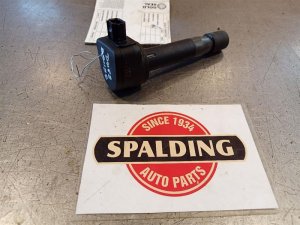
(OEM #30520-R70-A01 (superseded by 30520-R70-S01))— A common electrical failure part that is responsible for providing spark. It's a primary suspect for any isolated misfire code.
Trusted brands: Denso (673-2311), NGK, Hitachi
OEM price range: $90-$120
Aftermarket price range: $50-$100
Related Codes That Often Appear With This One
- P0300 — This is a 'Random/Multiple Cylinder Misfire' code. It often appears with P0301 if the misfire is intermittent or beginning to affect other cylinders.
- P0302, P0303, P0304 — The VCM-related piston ring issue described in TSB A13-079 specifically affects cylinders 1 through 4. It is extremely common to see misfire codes for any combination of these cylinders appear together as the problem progresses.
Technical Service Bulletins (TSBs) & Recalls
- A13-079: Warranty Extension: MIL Comes On With DTCs P0301 Thru P0304. This TSB directly addresses the root cause of spark plug fouling due to piston ring alignment issues on the V6 engine. It outlines the diagnostic and repair procedure, including a software update for some models and piston ring replacement.
Platform-Specific Known Issues
- Honda issued Technical Service Bulletin (TSB) A13-079 for a warranty extension related to this exact problem. The bulletin states, 'The piston rings on certain cylinders may rotate and align which can lead to spark plug fouling. This can set DTCs P0301...P0304'. This confirms the link between the engine design and this specific trouble code.
- The TSB was the result of the Soto et al. v. American Honda Motor Co., Inc. class-action lawsuit, which addressed widespread owner complaints about engine misfires and high oil consumption on V6 models with VCM.
- The official dealer repair for 2010-11 models involves a PCM software update first. If the issue returns, or for 2012 models, the repair is an engine-out service to clean pistons and replace the piston rings on cylinders 1-4.
Mechanic-Grade Diagnostic Values
- Fuel Injector Resistance — expected: 10-13 Ohms. Failure: A reading significantly outside this range, or that differs by more than 0.5-1.0 Ohm from the other injectors, indicates a faulty injector coil.
- Fuel Pressure (Key On, Engine Off) — expected: 50-64 psi. Failure: Pressure below this range could indicate a weak fuel pump or clogged filter, leading to lean misfires.
- Mode $06 Misfire Count (Cylinder 1) — expected: A low number of counts during a drive cycle.. Failure: A rapidly increasing number of misfire counts for Test ID $A2, Component ID $01 (for cylinder 1) on a capable OBD-II scanner, even before the Check Engine Light is set.
Scan Tool Commands That Help
- Honda HDS (Honda Diagnostic System): Power Balance Test — This function allows a technician to individually disable each cylinder and observe the corresponding drop in engine RPM. If disabling cylinder 1 causes little or no change in RPM, it confirms that cylinder is not contributing power, pinpointing the misfire.
Wiring & Ground Locations
- G101 — In the engine bay, on the driver's side, typically on the cylinder head or transmission housing.. This is a primary ground point for the engine and powertrain control module (PCM). A corroded or loose G101 ground can cause a host of erratic electrical issues, including weak spark or incorrect sensor readings that can lead to misfire codes.
- Cylinder 1 Ignition Coil Connector — On the rear cylinder bank (near firewall), passenger side.. Allows for testing of power, ground, and signal to the coil. Pin 1 (BLK/WHT) is power, Pin 2 is the trigger signal from the PCM, and Pin 3 (BLK) is ground. Verifying voltage and signal here can rule out a wiring or PCM driver issue.
Real Owner Repair Stories
- Owner forums (paraphrased from multiple accounts) (2010 Honda Crosstour 3.5L V6) — Recurring P0301 and P0303 codes, flashing check engine light, rough idle, especially when VCM/ECO mode engages.
❌ Tried (didn't work) Replacing spark plugs multiple times (fix only lasted a few thousand miles), Swapping ignition coils (misfire did not move to another cylinder)
✅ What actually fixed it The owner took the vehicle to a Honda dealer who performed the fix outlined in TSB A13-079, which involved cleaning the pistons and replacing the piston rings on cylinders 1-4 under the extended warranty. This permanently resolved the oil fouling and misfire issue. - DriveAccord.net and other Honda forums (paraphrased) (Honda with 3.5L J-series V6, high mileage (over 100k miles)) — Persistent P0301 misfire, particularly noticeable at idle when the engine is fully warmed up. Slight ticking noise from the engine.
❌ Tried (didn't work) New NGK spark plugs, New Denso ignition coil, Fuel injector cleaner
✅ What actually fixed it A valve lash adjustment. The exhaust valves on cylinder 1 were found to be too tight (had zero clearance). Adjusting the intake and exhaust valves back to specification restored compression and eliminated the misfire.
OEM Part Supersession History
12290-R70-A01→12290-R70-A02— Standard part revision by the manufacturer.
Heads up: The parts are interchangeable.30520-R70-A01→30520-R70-S01— Standard part revision by the manufacturer.
Heads up: The parts are interchangeable.
Model Year Variations Within This Range
- 2010-2011: According to TSB A13-079, the first step in the corrective action for these model years is to perform a PCM software update to change the VCM operating parameters. If the misfire returns after the update, then the mechanical piston ring repair is performed. For 2012 models, the procedure skips the software update and goes directly to diagnosis and potential piston ring replacement, as they likely have the updated software from the factory.
Helpful Videos

We Have This Part in Stock


The information in this article is provided for general reference and educational purposes only. Vehicle specifications, procedures, and part compatibility can vary by production date, trim level, and region. Always consult your vehicle's factory service manual and verify part numbers before purchasing or performing repairs. Safety-critical components such as airbags, seat belts, and braking systems should be installed by a qualified professional.
- Honda CROSSTOUR:
- 🎬 Helpful Videos
- 🛍️ Shop This Part
- What's Unique About the 2010-2012 Honda CROSSTOUR
- Diagnostic Flowchart
- Symptoms You May Notice
- Most Likely Causes
- Rare But Worth Checking
- Diagnosis Steps
- Parts You'll Likely Need
- Related Codes That Often Appear With This One
- Technical Service Bulletins (TSBs) & Recalls
- Platform-Specific Known Issues
- Mechanic-Grade Diagnostic Values
- Scan Tool Commands That Help
- Wiring & Ground Locations
- Real Owner Repair Stories
- OEM Part Supersession History
- Model Year Variations Within This Range
- 🎟️ Get 5% Off