

P0301 on 2016-2018 Honda Civic: Cylinder 1 Misfire Causes and Fixes
On the 1.5L Turbo Civic, P0301 is often caused by a faulty fuel injector or a software issue that Honda addressed with a warranty extension. On the 2.0L, it's more likely a bad spark plug or ignition coil. A DIY coil swap costs ~$50, while a shop-replaced fuel injector can be $300-$500.
- For the 1.5L Turbo engine, do not assume a P0301 code is just a bad spark plug. Faulty fuel injectors and software issues are highly probable causes.
- A simple diagnostic is to swap the ignition coil from cylinder 1 to cylinder 2. If the code changes to P0302, you've found the problem.
- Check with a Honda dealer to see if your vehicle is eligible for the warranty extension and has had the software update from TSB #A19-033 performed.
- If you replace spark plugs, use OEM-spec Iridium plugs from NGK or Denso for best performance, especially on the sensitive 1.5L Turbo engine.
- Ignoring a misfire can lead to costly damage to your catalytic converter, turning a moderate repair into a very expensive one.
What's Unique About the 2016-2018 Honda CIVIC

For the 2016-2018 Civic with the 1.5L Turbo engine, this is not just a generic misfire code. This platform suffered from a well-documented design issue related to fuel diluting the engine oil, especially in cold weather or during short trips. This oil dilution can lead to misfires, and Honda acknowledged the problem by issuing multiple Technical Service Bulletins (TSBs) and a warranty extension. The official fix often involves a software update for the engine (PGM-FI) and A/C control units, which changes the engine's warm-up strategy and thermal management to burn off excess fuel more effectively, a solution that goes beyond typical spark plug or coil replacement.
Diagnostic Flowchart

Tap your situation to follow the diagnostic path that matches what you're seeing on this vehicle.
Symptoms You May Notice

- Rough idle or engine vibration
- Hesitation or stumbling during acceleration, sometimes felt as a 'jerk' at low RPMs (1100-1300 RPM).
- Reduced engine power
- Poor fuel economy
- Flashing or solid Check Engine Light, often accompanied by other system warnings on the dashboard.
- Smell of gasoline from the exhaust or in the engine oil.
- Replacing only the spark plugs and ignition coils on a 1.5L Turbo model without addressing the more probable causes of a faulty fuel injector or a required software update. An owner on a Civic forum reported the dealer performed the software update, but the P0301 code returned a week later, and the final diagnosis was bad fuel injectors requiring a $2100 replacement.
Most Likely Causes

- Faulty Fuel Injector (1.5L Turbo Engine) 🔴 High Probability The direct fuel injectors on the 1.5L engine are a widely documented failure point. They can become clogged or fail electronically, leading to improper fuel delivery and misfires. After performing the software update, if the misfire returns, dealers often identify the injectors as the root cause.
How to confirm: After ruling out spark plugs and coils by swapping them, the next step is the injector. A mechanic can perform a fuel injector balance test. A common diagnostic step at the dealership is to swap the injector from cylinder 1 to another cylinder (e.g., cylinder 2) and see if the misfire code changes to P0302.
Typical fix: Replace the faulty fuel injector. Due to the high failure rate and to ensure balanced fuel delivery, it is highly recommended to replace all four injectors as a set with the latest revised part number. A 'joint pipe' for the fuel rail is also often replaced at the same time.
Est. part cost: $50-$150 per injector (aftermarket), $180+ for OEM - Engine Control Software Issue (1.5L Turbo Engine) 🔴 High Probability Honda released TSB #A19-033 acknowledging that factory software settings contributed to the oil dilution problem, which in turn causes misfires. The engine was designed to be so thermally efficient that it would be slow to warm up, allowing unburnt fuel to seep past piston rings into the oil, especially on short trips.
How to confirm: A Honda dealership can check the vehicle's VIN against their service records to see if TSBs #A19-033, #A19-012, or #A18-137 have been performed. This is the first step a dealer will take for this complaint.
Typical fix: The dealer performs a software update for the PGM-FI (engine computer) and replaces the A/C control unit. The new software adjusts engine and transmission behavior to help the engine warm up faster, reducing the conditions that lead to oil dilution. This is often done free of charge under the warranty extension.
Est. part cost: $0 if covered under warranty/TSB, otherwise dealer diagnostic fees apply. - Worn or Fouled Spark Plugs 🟡 Medium Probability On the 1.5T engine, the oil dilution issue can cause spark plugs to become fuel-fouled, leading to a misfire. On both the 1.5T and 2.0L engines, spark plugs are a normal wear item.
How to confirm: Remove the spark plug from cylinder 1 and inspect it. Look for a black, sooty appearance or a smell of gasoline, which indicates fuel fouling. Also check for normal electrode wear.
Typical fix: Replace the spark plug. It is best practice to replace all four spark plugs at the same time. Use high-quality Iridium plugs from OEM-equivalent brands like NGK or Denso.
Est. part cost: $40-$80 for a set of four - Failed Ignition Coil 🟡 Medium Probability While less common than injectors on the 1.5T, ignition coil failure is a standard potential cause for misfires on any modern engine, including the 2.0L K20C2.
How to confirm: Swap the ignition coil from cylinder 1 with the coil from cylinder 2. Clear the codes and run the engine. If the code changes to P0302 (Cylinder 2 Misfire), the ignition coil is faulty. This is a classic, effective DIY diagnostic step.
Typical fix: Replace the bad ignition coil. These are individual 'coil-on-plug' units and can be replaced one at a time. 🎬 Watch: Step-by-step guide to replacing your spark plugs and coils.
Est. part cost: $40-$100 per coil
Rare But Worth Checking
- Leaking Head Gasket (1.5L Turbo): While less common than injectors, the 1.5L Turbo has documented cases of premature head gasket failure. A small coolant leak into a cylinder can cause a misfire. Symptoms include unexplained coolant loss and a misfire code. This issue is part of a separate class-action lawsuit and is a major repair. A borescope inspection can sometimes spot the coolant leak inside the cylinder.
- Carbon Buildup on Intake Valves: As a direct-injection engine, the 1.5L Turbo can suffer from carbon buildup on the back of the intake valves over time, which can disrupt airflow and cause misfires. This typically occurs at higher mileage (over 80,000-100,000 miles) and is less likely to be the primary cause on lower-mileage vehicles experiencing the more common injector/software issues.
Diagnosis Steps
- Read the trouble codes with an OBD-II scanner to confirm P0301 and note any other codes present, especially P0172 or other P030x codes.
- For a 1.5L Turbo, contact a Honda dealer with your VIN to determine if TSB #A19-033 (or related bulletins) has been performed. If not, this is the most critical first step, as it addresses the underlying software and oil dilution issue.
- If the software update has been done or for any 2.0L model, begin with basic ignition diagnosis. Swap the ignition coil from cylinder 1 with the coil from cylinder 2. Clear codes and drive. If the code returns as P0302, the coil is the problem.
- If the code remains P0301, inspect the cylinder 1 spark plug. Look for heavy carbon/fuel fouling, oil, or excessive wear. Consider replacing all four plugs if they are old or fouled.
- If ignition components are good, the problem is likely fuel-related or mechanical. For the 1.5L Turbo, the next logical step is to suspect the fuel injector. A professional diagnosis may involve swapping injectors between cylinders to confirm.
- If all else fails, a compression test should be performed to check for mechanical engine problems like bad piston rings or a valve issue. For the 1.5T, a leaking head gasket is a possibility that can be investigated with a borescope or a block tester.
Parts You'll Likely Need
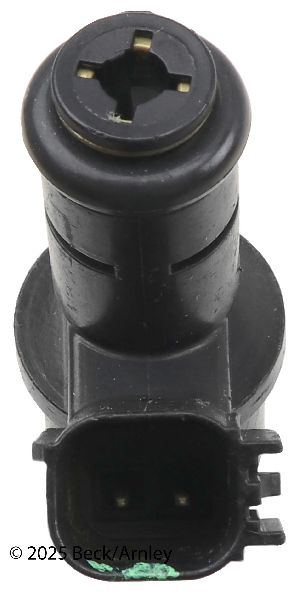
- Fuel Injector (1.5L Turbo)
(OEM #16010-5R1-315 (Kit of 4, check dealer for latest revision))— This is a very common failure item on the 1.5L Turbo engine causing this specific code, often after the software TSB has already been performed.
Trusted brands: Honda (Genuine), Beck/Arnley
OEM price range: $180-$250 per injector
Aftermarket price range: $50-$120 - Ignition Coil
(OEM #30520-59B-013)— A standard cause for a single-cylinder misfire. Easy to diagnose and replace. More common culprit on the 2.0L K20C2 engine than the 1.5T.
Trusted brands: Denso, NGK, Hitachi
OEM price range: $80-$120
Aftermarket price range: $40-$70 - Iridium Spark Plug (1.5L Turbo)
(OEM #12290-59B-003 (NGK DILKAR7C9H))— Spark plugs are a routine maintenance item and the first part to check for wear or fouling, especially with the oil dilution issues on the 1.5T.
Trusted brands: NGK, Denso
OEM price range: $20-$30
Aftermarket price range: $15-$25
Related Codes That Often Appear With This One
- P0300 — P0300 indicates a random/multiple cylinder misfire. It can appear alongside P0301 if the misfire is not isolated to just cylinder 1, often pointing to a systemic issue like the oil dilution problem.
- P0302, P0303, P0304 — These codes indicate misfires in other cylinders. Seeing multiple codes often points to a systemic issue like faulty injectors, software problems, or fuel delivery issues, as noted in TSB #A19-033.
- P0172 — This code means 'System Too Rich.' It often appeared with misfire codes on the 1.5L Turbo and was explicitly included in Honda's TSBs and warranty extensions. A leaking or malfunctioning fuel injector is a common cause for both a misfire and a rich condition.
Technical Service Bulletins (TSBs) & Recalls
- A19-033: 'Warranty Extension: 2016-18 Civic 1.5L: Software Update with A/C Control Unit Replacement; DTC P0300, P0301, P0302, P0303, P0304, or P0172; Whirling Noise from Engine'. This is the primary TSB for the issue.
- A19-012: Superseded by A19-033, this bulletin also addressed the misfire and whirling noise issues.
- A18-137: An earlier bulletin addressing driveability issues and misfire DTCs, also superseded by A19-033.
- ONLD4D07082019_2: A bulletin noting that the 1.5L turbo may experience driveability issues resulting in misfire DTCs.
Platform-Specific Known Issues
- Honda issued TSB #A19-033 and extended the powertrain warranty to 6 years/unlimited miles for some 2016-18 Civics with the 1.5L engine. This was to address drivability issues, including misfire codes P0300-P0304, which could result from the oil dilution issue.
Mechanic-Grade Diagnostic Values
- Ignition Coil Primary Winding Resistance — expected: 0.49 - 0.57 Ohms at 68°F (20°C). Failure: A reading outside of this range indicates a faulty coil.
- Ignition Coil Secondary Winding Resistance — expected: 9.5 - 11.1 kOhms. Failure: A reading outside of this range indicates a faulty coil.
- Fuel Rail Pressure (1.5L Direct Injection) — expected: 30 ±5 MPa (4352 ±725 psi) during engine starting.. Failure: Significantly lower pressure indicates a problem with the high-pressure fuel pump or its control circuit.
- Fuel Pressure (2.0L Port Injection) — expected: Approximately 40-55 PSI at idle.. Failure: Low fuel pressure suggests a weak fuel pump or clogged filter.
Hidden / Shadow Codes Worth Checking
- Mode 6, Test ID $82: This Mode 6 Test ID tracks the misfire count for Cylinder 1. While not a 'code,' viewing this data on an advanced scanner can show if misfires are occurring even if they aren't frequent enough to set a P0301 code. (see via An advanced OBD-II scanner capable of displaying Mode 6 data, or the Honda HDS.)
- Freeze Frame Data: When P0301 is set, the PCM stores a 'freeze frame' of all major sensor readings (engine speed, load, temperature, etc.) at the moment the fault occurred. This data is invaluable for diagnosing the conditions that lead to the misfire. (see via Any standard OBD-II scanner can read freeze frame data. The Honda HDS may provide more detailed parameters.)
Scan Tool Commands That Help
- Honda HDS (or advanced bidirectional scanner like Foxwell NT530): Power Balance Test / Injector Cut-off Test — This function allows a technician to disable individual fuel injectors one by one. When the injector for a good cylinder is disabled, engine RPM will drop noticeably. When the injector for the misfiring cylinder (Cylinder 1) is disabled, there will be little to no change in engine RPM, confirming the issue is isolated to that cylinder.
- Honda HDS: PCM Idle Learn Procedure — This procedure must be performed after replacing major components like fuel injectors or performing software updates, as outlined in Honda's TSBs. It allows the PCM to relearn the engine's idle characteristics.
Wiring & Ground Locations
- Cylinder 1 Location — The cylinder closest to the engine's accessory belts and pulleys (passenger side of the vehicle).. Correctly identifying Cylinder 1 is the first step for any hands-on diagnosis, such as swapping coils or inspecting the spark plug.
- G101 — On the thermostat housing, on the engine block.. This is a critical ground point for the PCM/ECM, including its logic and power grounds. A loose, corroded, or damaged G101 connection can cause intermittent stalling, erratic engine behavior, and misfire codes that mimic component failure.
Real Owner Repair Stories
- Honda-Tech forum user (Honda Civic (year not specified, but behavior is relevant)) — After replacing an engine coolant temp switch, the car would start but then immediately idle down and die. It would not run without feathering the gas pedal.
❌ Tried (didn't work) Repositioning the ground wire multiple times., Cleaning the terminal and bolt.
✅ What actually fixed it The issue was a poor connection at the G101 ground on the thermostat housing, which had been disturbed during the initial repair. Another user confirmed a frayed G101 wire inside the loom caused similar random dying and no-restart issues, which was fixed by running a new ground wire from the ECU pin to the chassis.
OEM Part Supersession History
Various individual injector part numbers→06160-5PA-305— This is a complete factory replacement kit designed to address the known injector failure issues on the 1.5T engine.
Heads up: This kit includes 4 injectors, 4 clips, and the fuel joint pipe, and is considered the definitive OEM fix for the 2017+ 1.5L Turbo engine.N/A→16450-5BA-L01— This is the OEM fuel injector for the 2.0L (K20C2) non-turbo engine.
Heads up: This injector is for the port-injected 2.0L engine and is NOT compatible with the direct-injected 1.5L Turbo engine.
Model Year Variations Within This Range
- 2016-2018: The primary variation affecting this code is the engine installed. The 1.5L Turbo (L15B7) uses direct injection and is prone to the software/oil-dilution and fuel injector failure issues covered by TSBs. The 2.0L (K20C2) uses traditional port injection, and a P0301 code is more likely to be caused by standard ignition components like a spark plug or ignition coil.
Helpful Videos
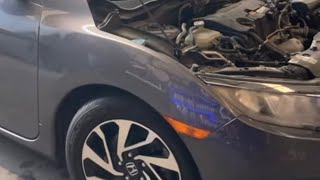
Used OEM Parts in Stock


New Aftermarket Parts Available

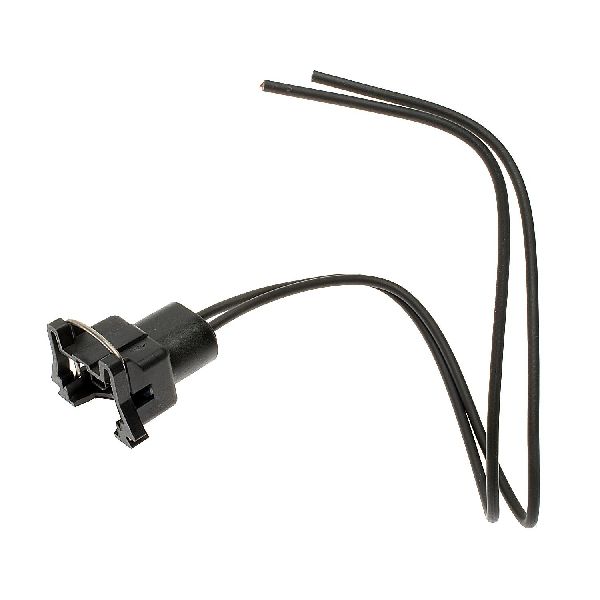

The information in this article is provided for general reference and educational purposes only. Vehicle specifications, procedures, and part compatibility can vary by production date, trim level, and region. Always consult your vehicle's factory service manual and verify part numbers before purchasing or performing repairs. Safety-critical components such as airbags, seat belts, and braking systems should be installed by a qualified professional.
- Honda CIVIC:
- 🎬 Helpful Videos
- 🛍️ Shop This Part
- What's Unique About the 2016-2018 Honda CIVIC
- Diagnostic Flowchart
- Symptoms You May Notice
- Most Likely Causes
- Rare But Worth Checking
- Diagnosis Steps
- Parts You'll Likely Need
- Related Codes That Often Appear With This One
- Technical Service Bulletins (TSBs) & Recalls
- Platform-Specific Known Issues
- Mechanic-Grade Diagnostic Values
- Hidden / Shadow Codes Worth Checking
- Scan Tool Commands That Help
- Wiring & Ground Locations
- Real Owner Repair Stories
- OEM Part Supersession History
- Model Year Variations Within This Range
- 🎟️ Get 5% Off