

P0301 on 2008-2012 GMC Yukon Denali: Cylinder 1 Misfire Causes and Fixes
P0301 on a Yukon Denali indicates a misfire in cylinder 1. The most common causes are a worn spark plug, a bad ignition coil, or a faulty spark plug wire. Oil fouling on the spark plug due to AFM-related oil consumption is a very common vehicle-specific cause. Expect to spend $50-$150 on parts for a DIY fix, which is often as simple as swapping a coil or plug.
- P0301 on your Yukon Denali is a misfire on the front driver's side cylinder.
- Start your diagnosis with the simple and cheap fixes: check the spark plug wire, swap the ignition coil with another cylinder, and inspect the spark plug.
- Given the TSBs for this vehicle, pay close attention to loose spark plug wires (TSB #PIP4819A) and oil on the spark plug (TSB #PIP4525D).
- Due to the engine's Active Fuel Management (AFM) system, a failed lifter is a possible, though more serious and expensive, cause.
- Do not ignore a flashing check engine light, as it signals a severe misfire that can quickly damage your catalytic converter.
What's Unique About the 2008-2012 Gmc YUKON DENALI
The 6.2L V8 in this generation of Yukon Denali is equipped with Active Fuel Management (AFM), a system that deactivates cylinders to save fuel. This system is a known weak point and is directly linked to P0301 misfires. TSB #10-06-01-008H details how the AFM system can cause excessive oil consumption, leading to oil-fouled spark plugs, particularly in cylinders 1 and 7. Furthermore, the specialized AFM lifters themselves can mechanically collapse or get stuck, a common failure that causes a persistent misfire on the affected cylinders (1, 4, 6, or 7). This is often accompanied by a ticking noise and can lead to camshaft damage if not addressed.
Diagnostic Flowchart
Tap your situation to follow the diagnostic path that matches what you're seeing on this vehicle.
Symptoms You May Notice
- Rough or shaky idle
- Hesitation or stumbling during acceleration
- Noticeable loss of engine power
- Flashing or solid Check Engine Light
- Reduced fuel economy
- Smell of unburnt gasoline from the exhaust
- Engine ticking noise (if related to AFM lifter failure)
- Replacing oxygen sensors before diagnosing the root cause of the misfire. An O2 sensor might report an issue, but it's usually a symptom of the misfire, not the cause.
- Assuming a P0301 code is always a simple plug or coil without considering the high probability of AFM-related issues like oil fouling or lifter failure on this specific engine.
Most Likely Causes
- Worn or Fouled Spark Plug 🔴 High Probability TSB #PIP4525D and TSB #10-06-01-008H both link misfires on this engine to oil consumption issues fouling the spark plugs. Cylinder #1 is one of the most commonly affected. Forum posts frequently show owners pulling a heavily oil-fouled plug from cylinder 1 as the direct cause of the P0301 code.
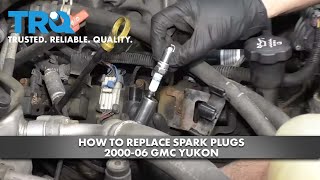
How to confirm: Remove the spark plug from cylinder 1 (front driver's side) and inspect it. Look for a black, oily deposit, heavy carbon buildup, or a worn/damaged electrode. A plug dripping with oil is a strong indicator.
Typical fix: Replace the spark plug. It's best practice to replace all 8 spark plugs at the same time with high-quality Iridium plugs. The original OEM part was ACDelco 41-110, which was later superseded by 41-162. Some owners report better performance by sticking with the original 41-110 plugs.
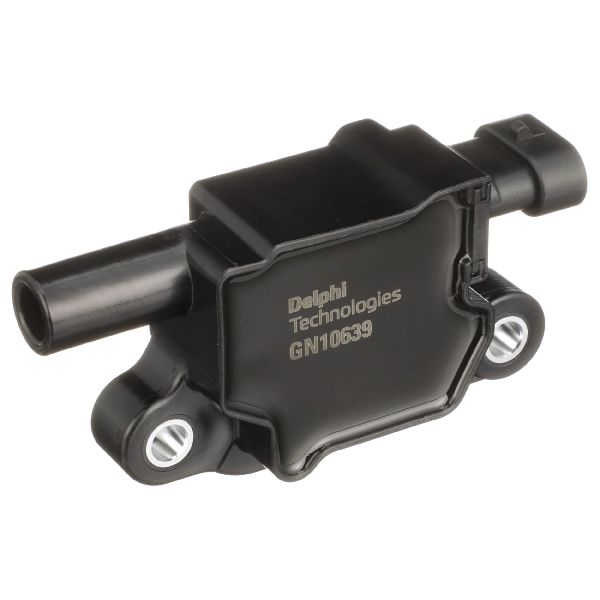
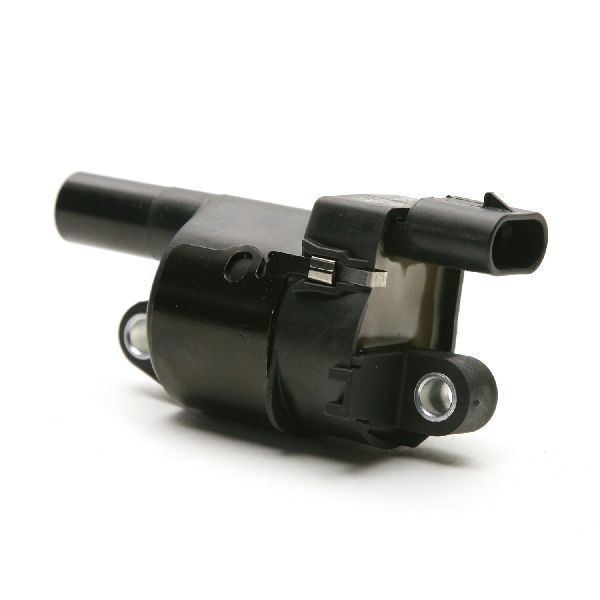
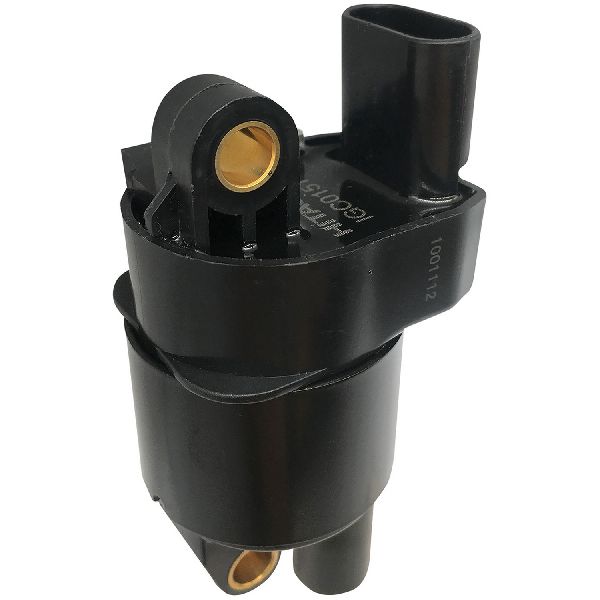
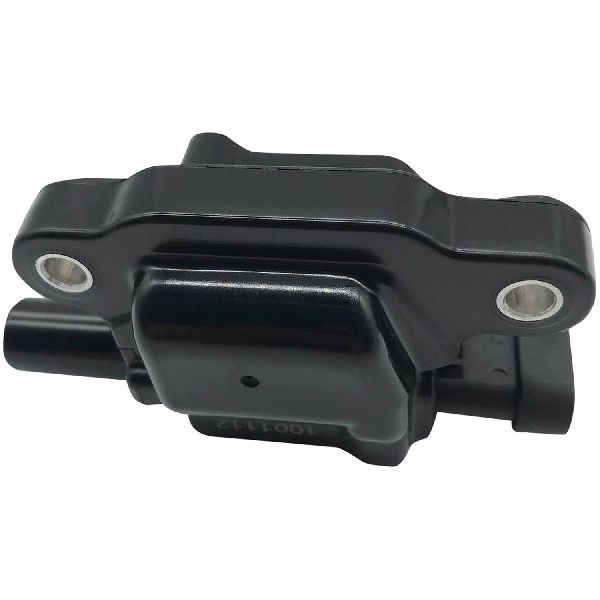
Est. part cost: $10-$20 per plug - Faulty Ignition Coil 🔴 High Probability Coil-on-plug ignition systems are common failure points on many vehicles as they age due to heat and vibration. On these GM V8s, they are known to fail after 80k miles.
How to confirm: Swap the ignition coil from cylinder 1 with the coil from another cylinder (e.g., cylinder 3, the next one back on the driver's side). Clear the codes and drive the vehicle. If the code returns as P0303, the coil is bad. This is the most common DIY diagnostic step mentioned in forums.
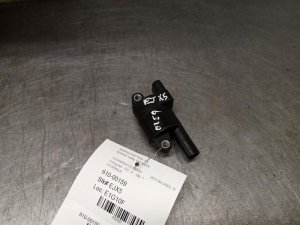
Typical fix: Replace the faulty ignition coil. ACDelco is the original equipment manufacturer. The square-shaped coil is part number 12611424 (stamped 12570616), also sold under D510C.
Est. part cost: $60-$110 - Loose or Damaged Spark Plug Wire 🟡 Medium Probability TSB #PIP4819A directly mentions inspecting and replacing loose spark plug wires as a fix for misfire codes on this platform. The short wires can sometimes back off the plug or coil pack.
How to confirm: Visually inspect the spark plug wire for cylinder 1. Ensure it is securely connected at both the coil and the spark plug with a distinct 'click'. Check for any signs of cracking, melting, or abrasion. A simple wiggle test can reveal a loose connection.
Typical fix: Reseat or replace the spark plug wire. It is recommended to replace them as a full set with a quality brand like ACDelco or NGK.
Est. part cost: $50-$100 for a set - Clogged or Faulty Fuel Injector ⚪ Low Probability
How to confirm: This is more difficult to diagnose. A professional may use a tool to check the injector's spray pattern and flow rate. A DIY method is to listen to the injector with a mechanic's stethoscope; it should make a consistent clicking sound. Another method is to swap the injector from cylinder 1 with another cylinder and see if the misfire code follows, though this is more labor-intensive than swapping a coil.
Typical fix: Replace the faulty fuel injector. It is often recommended to try a fuel system cleaner first, as it is inexpensive and can sometimes resolve a clogged injector.
Est. part cost: $70-$150
Rare But Worth Checking
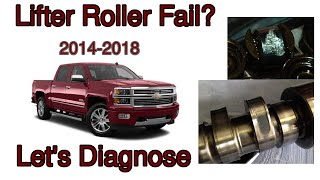
- Failed AFM Lifter: These engines are known for issues with the Active Fuel Management (AFM) lifters, which can become stuck or collapse, causing a persistent misfire on one of the AFM cylinders (1, 4, 6, or 7). This is a very common major failure on this platform, often discussed in owner forums. It is often, but not always, accompanied by a ticking noise. A forum user on tahoeyukonforum.com confirmed a P0301 code was caused by a failed lifter on cylinder 1 after removing the valve cover and seeing no rocker arm movement. This is a significant repair that involves removing the cylinder head. Many owners opt for an 'AFM delete' at this time.
- Intake Manifold Gasket Leak: A vacuum leak from a failed intake manifold gasket can lean out the air/fuel mixture on one or more cylinders, causing a misfire. This may be accompanied by a hissing sound from the engine bay and may throw a P0300 code along with P0301.
- Low Engine Compression: Internal engine problems like a worn piston ring, a bad valve, or a damaged camshaft lobe (often from a failed lifter) can cause low compression in cylinder 1, leading to a misfire. A compression test is needed to diagnose this. A mechanic on a forum noted a case where a piece of carbon broke off, damaging the piston rings and causing oil to saturate the cylinder, leading to a dead cylinder #1.
Diagnosis Steps
- Read the trouble codes with an OBD-II scanner. Confirm P0301 is present and check for any other codes, especially P0300.
- Locate cylinder 1. On the 6.2L V8, it is the front-most cylinder on the driver's side.
- Swap the ignition coil from cylinder 1 to cylinder 3 (next cylinder back on the same side). Clear the codes and drive. If the code changes to P0303, the ignition coil is faulty. This is the most common and recommended first diagnostic step.
- If the code remains P0301, inspect the spark plug wire for cylinder 1. Ensure it's fully seated and not damaged. Consider swapping it with another wire if possible.
- If the coil and wire are good, remove and inspect the spark plug from cylinder 1. Look for signs of wear, carbon fouling, or oil contamination as noted in TSB #PIP4525D and #10-06-01-008H. Replace if necessary. A heavily oil-fouled plug is a strong clue pointing to AFM-related oil consumption issues.
- If ignition components are good, consider the fuel system. Listen for a steady click from the #1 fuel injector using a stethoscope. If you are more advanced, you can swap the #1 injector with another cylinder's injector to see if the misfire follows.
- If all else fails, a mechanical issue is likely. Listen for a ticking noise that could indicate a failed AFM lifter. A compression test is the next step to check for internal engine problems. If a lifter has failed, you may see no movement on the rocker arm for that cylinder's valves.
Parts You'll Likely Need
- Ignition Coil
(OEM #12611424 (ACDelco D510C))— A common failure item that is easy to diagnose by swapping cylinders. Replacing a bad coil is a direct fix for a spark-related misfire.
Trusted brands: ACDelco, Delphi, NGK
OEM price range: $80-$110
Aftermarket price range: $50-$80 - Spark Plug
(OEM #41-110 (Original) or 41-162 (Superseded))— Spark plugs are a maintenance item and can become fouled, especially on engines with potential oil consumption issues as noted in TSB #PIP4525D and #10-06-01-008H. The 41-110 is the original spec, while the 41-162 is the replacement, though some owners prefer the 41-110.
Trusted brands: ACDelco, NGK
OEM price range: $12-$18
Aftermarket price range: $8-$15 - Spark Plug Wire Set
(OEM #ACDelco 9748RR (example))— TSB #PIP4819A points to loose wires as a potential cause. Wires can also degrade over time, causing weak spark.
Trusted brands: ACDelco, NGK
OEM price range: $80-$120
Aftermarket price range: $50-$90
Related Codes That Often Appear With This One
- P0300 — If the misfire is intermittent or affects multiple cylinders, a P0300 (Random/Multiple Cylinder Misfire) code may be stored alongside P0301. This can happen if the underlying cause, like a vacuum leak or fuel delivery issue, is not isolated to just cylinder 1.
Technical Service Bulletins (TSBs) & Recalls
- PIP4819A: Addresses engine misfires (including P0301) caused by loose spark plug wires.
- PIP4525D: Links engine misfires (including P0301) and oil consumption to oil-fouled spark plugs.
- 10-06-01-008H: Details issues with oil consumption due to the AFM system, which can foul plugs (specifically mentioning #1 and #7) and requires cleaning carbon and potentially installing an updated left valve cover.
Platform-Specific Known Issues
- TSB #PIP4525D notes that engine misfires (P0301) can be related to oil consumption, leading to oil-fouled spark plugs. The fix is to inspect and replace the plugs as needed. This is often a symptom of a larger AFM system issue.
Mechanic-Grade Diagnostic Values
- Ignition Coil Primary Resistance — expected: 0.4 to 2.0 ohms. Failure: A reading of 0 ohms (short) or infinite/OL (open circuit).
- Ignition Coil Secondary Resistance — expected: 6,000 to 10,000 ohms (6k-10k Ω). Failure: A reading outside of the specified range.
- Fuel Injector Control Wire (Cylinder 1) — expected: The wire is typically Pink for 12V power and the control wire for cylinder 1 is a specific color (e.g., Black) at the ECM connector.. Failure: Lack of signal or constant ground on the control wire, no 12V on the power wire.
Hidden / Shadow Codes Worth Checking
- Mode 6, Test ID $A2 (Cylinder 1 Misfire Data): This is not a DTC, but a specific Mode 6 test that shows the raw misfire count for cylinder 1 during the current and last driving cycles. A high count here confirms the misfire is on cylinder 1, even before the count is high enough to set a P0301 code. (see via A professional scan tool or an advanced OBD-II app that can read Mode 6 data.)
Scan Tool Commands That Help
- GDS2 / Tech2 (or equivalent professional scanner): Cylinder Power Balance Test — Use this test to confirm which cylinder is underperforming. The tool sequentially disables each cylinder's fuel injector and measures the corresponding drop in engine RPM. A cylinder with a significantly smaller RPM drop than the others is the source of the misfire. This can quickly confirm cylinder 1 is the problem, or reveal that the issue is elsewhere despite the P0301 code.
- GDS2 / Tech2 (or equivalent professional scanner): Automated Injector Test / Injector Flow Test — After ruling out spark, this function can be used to command the fuel injector for cylinder 1 to open and close, helping to diagnose a stuck or dead injector without having to remove it from the engine.
Wiring & Ground Locations
- G102 — Located at the left rear of the engine, often on the back of the cylinder head.. This is the primary ground for all 8 ignition coils. A loose or corroded G102 ground can cause weak or intermittent spark on multiple cylinders, potentially leading to random misfires (P0300) or an isolated misfire code like P0301 if the connection for that bank is most affected.
- G103 — Located on the front of the right (passenger side) cylinder head on non-hybrid models.. This ground point serves the Engine Control Module (ECM). A poor connection here can cause a wide range of erratic engine behaviors, including misfire codes, because the ECM's ability to control spark and fuel is compromised.
- Injector Wiring — At the fuel injector for cylinder 1 (front driver's side).. The injector connector has two wires: one is a shared 12V power wire (typically Pink on all injectors) and the other is the ground-side control wire from the ECM (color is unique to the cylinder). Damage to the control wire or connector can cause a P0301 by preventing fuel delivery.
Real Owner Repair Stories
- Chevrolet Forum User (2008 Chevy Tahoe 5.3L (similar AFM engine), 297,050 km) — Rough running engine, P0301 code stored.
❌ Tried (didn't work) Replaced ignition coil on cylinder 1, Replaced spark plug on cylinder 1
✅ What actually fixed it The problem was diagnosed as a collapsed AFM lifter on cylinder 1. The repair involved replacing all lifters on the driver's side bank and the head gasket. The camshaft was inspected and found to be undamaged.
OEM Part Supersession History
ACDelco 41-110 (Iridium Spark Plug)→ACDelco 41-162— Part number update due to design or supplier change. The 41-162 is physically shorter from the seat to the electrode tip.
Heads up: Both plugs are generally considered compatible. However, some owners and mechanics strongly prefer the original 41-110, claiming it is of higher manufacturing quality (Made in USA vs. other sources for the 41-162) and can resolve subtle idle misfires that the 41-162 does not.
Model Year Variations Within This Range
- 2008: The 2008 Yukon Denali most commonly used the 6.2L L92 engine. While it has the hardware for AFM (special lifters, oil passages), the system was not active on the L92. This makes a true AFM-related lifter *collapse* less common, but oil consumption issues noted in TSBs can still occur.
- 2010-2012: These model years used the 6.2L L94 engine, which is an evolution of the L92. The L94 has both Active Fuel Management (AFM) and Flex-Fuel (E85) capability. The active AFM system makes these years more susceptible to the common AFM lifter failure, which is a primary cause for P0301 on this platform.
- 2009: The 2009 model year used the L9H engine, which added Flex-Fuel capability to the L92 but did not yet have Active Fuel Management (AFM).
Helpful Videos
Used OEM Parts in Stock

New Aftermarket Parts Available


The information in this article is provided for general reference and educational purposes only. Vehicle specifications, procedures, and part compatibility can vary by production date, trim level, and region. Always consult your vehicle's factory service manual and verify part numbers before purchasing or performing repairs. Safety-critical components such as airbags, seat belts, and braking systems should be installed by a qualified professional.
- Gmc YUKON DENALI:
- 🎬 Helpful Videos
- 🛍️ Shop This Part
- What's Unique About the 2008-2012 Gmc YUKON DENALI
- Diagnostic Flowchart
- Symptoms You May Notice
- Most Likely Causes
- Rare But Worth Checking
- Diagnosis Steps
- Parts You'll Likely Need
- Related Codes That Often Appear With This One
- Technical Service Bulletins (TSBs) & Recalls
- Platform-Specific Known Issues
- Mechanic-Grade Diagnostic Values
- Hidden / Shadow Codes Worth Checking
- Scan Tool Commands That Help
- Wiring & Ground Locations
- Real Owner Repair Stories
- OEM Part Supersession History
- Model Year Variations Within This Range
- 🎟️ Get 5% Off