

P0301 on 2016-2021 GMC Yukon: Cylinder 1 Misfire Causes & Fixes
P0301 on a 2016-2021 GMC Yukon indicates a misfire in cylinder 1. The most common fixes are replacing the spark plug or ignition coil. However, a failed Active/Dynamic Fuel Management (AFM/DFM) lifter is a significant and costly possibility unique to these GM V8 engines, often preceded by a distinct ticking noise.
- P0301 is a misfire on cylinder 1, located at the front of the engine on the driver's side.
- Always start with the simplest and most likely fixes: inspect the spark plug and swap the ignition coil with another cylinder to see if the misfire moves.
- Be aware that a persistent P0301, especially if accompanied by a ticking engine noise, may be a symptom of a failed AFM/DFM lifter—a common and expensive repair on these Yukon V8 engines.
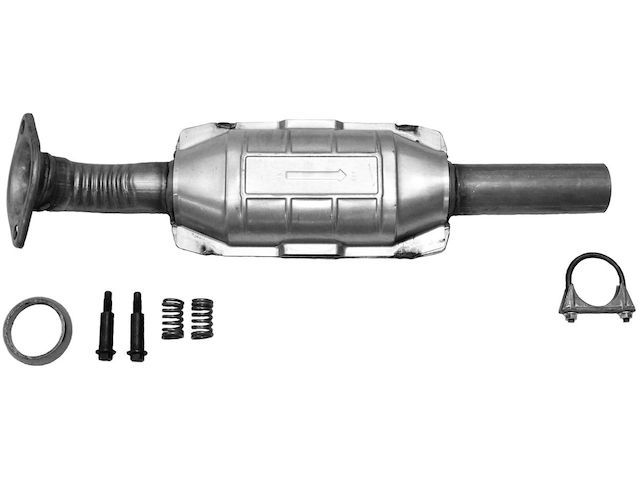
- Do not drive if the Check Engine Light is flashing, as this can cause rapid and costly damage to the catalytic converter.
What's Unique About the 2016-2021 Gmc YUKON

While any vehicle can have a misfire, the 5.3L and 6.2L EcoTec3 V8 engines in this generation of Yukon are uniquely prone to failures of the Active Fuel Management (AFM) or Dynamic Fuel Management (DFM) systems. The specialized lifters used for cylinder deactivation are a known weak point and can collapse, get stuck, or have their internal locking pin fail. This can cause a persistent misfire on an AFM cylinder like cylinder 1. This issue is so prevalent that GMC issued Technical Service Bulletin #23-NA-043 specifically addressing misfire codes (P0300-P0308) caused by this lifter failure.
Diagnostic Flowchart
Tap your situation to follow the diagnostic path that matches what you're seeing on this vehicle.
Generation note: This range covers the end of the fourth generation (2016-2020 K2UG) and the beginning of the fifth generation (2021 T1UG) Yukon. Both generations use the EcoTec3 family of V8 engines and share the same common causes for a P0301 code, including the highly probable AFM/DFM lifter failure. The 2019+ L84/L87 engines began using Dynamic Fuel Management (DFM), an evolution of AFM, but still utilize deactivation lifters that are a common failure point.
Symptoms You May Notice
- Rough or shaking idle
- Noticeable loss of power, especially during acceleration
- Hesitation or stumbling when accelerating
- Flashing or steady Check Engine Light
- Engine vibration
- Smell of unburnt fuel from the exhaust
- Distinct ticking, chirping, or squeaking noise from the engine bay, especially the driver's side
- Replacing only the oxygen sensor without diagnosing the root cause of the misfire.
- Repeatedly replacing spark plugs and coils without performing a compression test to check for mechanical failure, especially when a ticking noise is present.
Most Likely Causes

- Worn or Fouled Spark Plug 🔴 High Probability Oil fouling on spark plugs is a known issue, sometimes related to the AFM system's operation or PCV issues, as noted in TSB #PIP4525D. A plug can become completely caked in carbon and oil deposits, causing a dead miss.
How to confirm: Remove the spark plug from cylinder 1 (driver's side, front). Inspect for a worn electrode, cracks in the porcelain, or black, oily deposits. A plug dripping with oil is a sign of a severe mechanical issue.
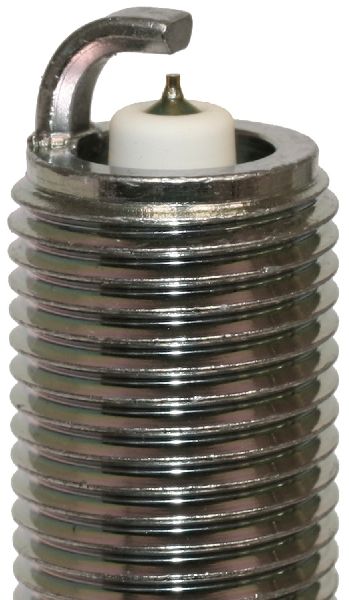
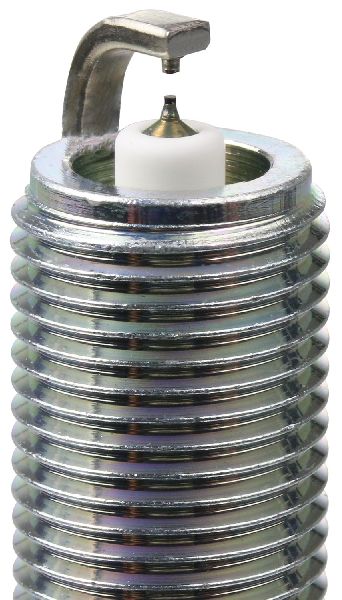
Typical fix: Replace the spark plug. The recommended OEM part is an ACDelco Iridium 41-162. It is often recommended to replace all 8 plugs at the same time for even performance.
Est. part cost: $10-$25 per plug - Failed Ignition Coil 🔴 High Probability
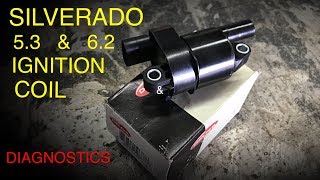
How to confirm: Swap the ignition coil from cylinder 1 with another cylinder (e.g., cylinder 3, the next one back on the driver's side). Clear the codes and drive the vehicle. If the code changes to P0303, the coil is faulty. This is a definitive and free diagnostic step.
Typical fix: Replace the failed ignition coil. It's a simple, single-bolt replacement.
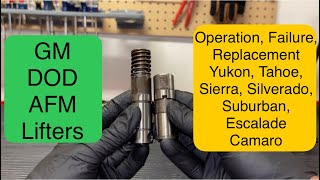
Est. part cost: $40-$90 - Failed AFM/DFM Lifter 🟡 Medium Probability This is a well-documented weak point in GM's 5.3L and 6.2L engines. The lifters for the cylinders that are deactivated by AFM/DFM (cylinders 1, 7, 4, and 6 on AFM) are prone to collapsing or getting stuck, often due to an internal pin failure. This prevents the valve from opening, causing a dead cylinder. TSB #23-NA-043 directly addresses this failure.
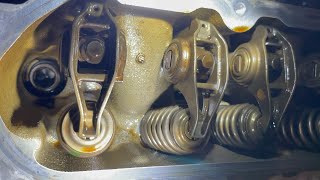
How to confirm: A distinct ticking or chirping noise from the driver's side of the engine is a strong indicator. 🎬 Watch: How to diagnose that specific AFM lifter ticking noise. A mechanic would confirm by removing the valve cover to observe if the rocker arms for cylinder 1 are moving properly. A compression test showing very low or zero compression on cylinder 1 is also a key indicator.
Typical fix: This is a major repair requiring removal of the cylinder head to replace all lifters and lifter guides on the affected bank. Per TSB 23-NA-043, if the vehicle has under 16,000 miles, both banks should be replaced. Many owners opt to install an 'AFM delete kit' at this time to prevent future failures, which involves replacing the camshaft as well. 🎬 Watch: A complete guide to replacing failed lifters and pushrods.
Est. part cost: $500-$2000 for parts, including lifters, guides, head gaskets, and bolts - Clogged or Faulty Fuel Injector ⚪ Low Probability The EcoTec3 engines use direct injection, and while injectors are generally reliable, they can fail or become clogged over time, a known issue on Gen 5 engines.
How to confirm: An advanced scan tool can monitor fuel trims and perform an injector balance test. A more definitive test is to swap the cylinder 1 injector with another cylinder's injector to see if the misfire follows, though this is more labor-intensive than a coil swap.
Typical fix: Replace the faulty fuel injector. This requires removing the fuel rail.
Est. part cost: $50-$120
Rare But Worth Checking
- Broken Valve Spring: A broken valve spring can prevent the valve from closing properly, causing a loss of compression and a misfire. This is sometimes found in conjunction with or as a result of a collapsed lifter. TSB 19-NA-219 mentions this as a possible cause to investigate alongside lifter failure.
- Bent Pushrod: A collapsed or stuck lifter can sometimes lead to a bent pushrod. TSB 23-NA-043 explicitly mentions finding a bent pushrod as part of the diagnosis for lifter failure. The pushrod must be replaced along with the lifters.
- Intake Manifold Gasket Leak: A vacuum leak near the cylinder 1 runner can lean out the fuel mixture, causing a misfire. This might be accompanied by a hissing sound at idle and could potentially set lean codes like P0171.
- Damaged Piston or Piston Rings: This would cause low compression and likely result in significant oil fouling on the spark plug, as mentioned in TSB #PIP4525D. A compression test followed by a cylinder leak-down test is needed to confirm this severe mechanical failure.
Diagnosis Steps
- Read the code with an OBD-II scanner. Note if the Check Engine Light is steady or flashing. Use a scanner with live data to monitor misfire counts for each cylinder to confirm the issue is isolated to cylinder 1.
- Swap the ignition coil from cylinder 1 (front, driver's side) to cylinder 3 (next back on driver's side). Clear codes and drive. If the code changes to P0303, the ignition coil is bad.
- If the misfire stays on cylinder 1, remove and inspect the spark plug. Look for heavy carbon/oil fouling, electrode wear, or cracks. Replace if in doubt with an ACDelco 41-162.
- Listen carefully to the driver's side valve cover area for a persistent ticking or chirping noise. This is a very strong indicator of a failed lifter.
- Check the wiring harness and connector for the cylinder 1 ignition coil and fuel injector for any visible damage or loose connections.
- If the simple steps do not resolve the issue, perform a compression test on cylinder 1 and compare it to a healthy cylinder (e.g., cylinder 3). A reading of 90 PSI or lower, when others are 150+, points to a significant mechanical problem.
- If compression is low, remove the driver's side valve cover and visually inspect the valve train. Start the engine briefly and check if both rocker arms for cylinder 1 are moving up and down. A stationary rocker indicates a collapsed lifter.
- If all else fails, a cylinder leak-down test is the final step to pinpoint the source of compression loss (piston rings, intake valve, or exhaust valve).
Parts You'll Likely Need
- Spark Plug
(OEM #ACDelco 41-162)— Spark plugs are a maintenance item and the most frequent cause of a single-cylinder misfire. The original 41-110 has been superseded by the 41-162 for this application.
Trusted brands: ACDelco, NGK
OEM price range: $15-$25
Aftermarket price range: $8-$18 - Ignition Coil
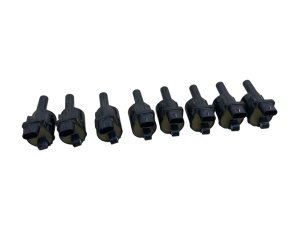
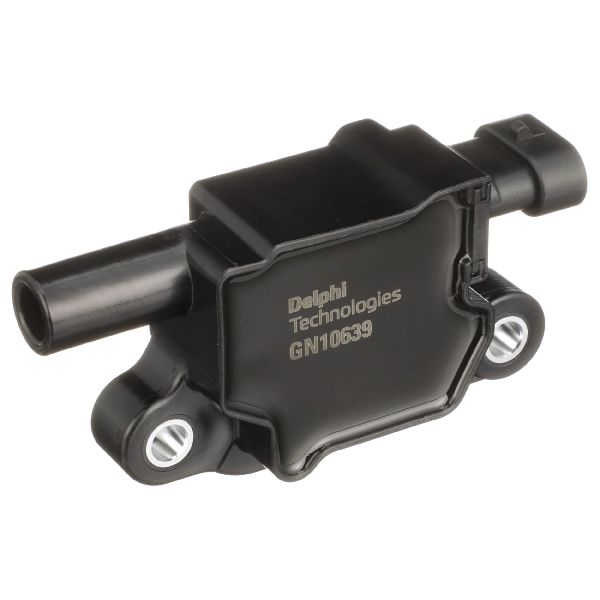
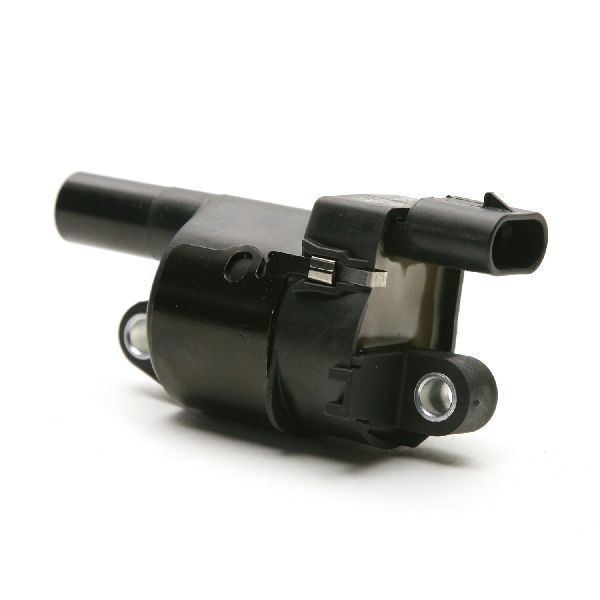
(OEM #12674754)— Ignition coils are a common failure point that directly causes misfires. They are easy to diagnose by swapping between cylinders.
Trusted brands: ACDelco, Delphi
OEM price range: $70-$90
Aftermarket price range: $40-$65 - AFM/DFM Valve Lifter Kit
(OEM #12680871 (Lifter))— A failed lifter is a significant, vehicle-specific cause for P0301 on these engines, as documented in TSB #23-NA-043. The repair requires replacing the lifters, lifter guides, head gasket, and head bolts.
Trusted brands: ACDelco, General Motors
OEM price range: $400-$800
Aftermarket price range: $250-$500
Related Codes That Often Appear With This One
- P0300 — If the misfire is intermittent or affects multiple cylinders, a P0300 (Random/Multiple Cylinder Misfire) may be stored alongside P0301. Often, the issue starts as a P0301 and escalates to a P0300.
- P050D — This code for rough idle at cold start can be associated with misfires. GM service information sometimes links this to injector or mechanical issues that also cause P0300-series codes.
- P219A — This code indicates an air-fuel ratio imbalance on Bank 1 (the driver's side). A dead cylinder like a P0301 will cause this, as unburnt oxygen floods the exhaust and confuses the O2 sensor.
Technical Service Bulletins (TSBs) & Recalls
- Bulletin #23-NA-043: Provides the official procedure to replace valve lifters and guides to correct engine misfires (P0300-P0308). It specifies replacing lifters on one or both banks depending on vehicle mileage.
- Bulletin #19-NA-219: A diagnostic guide for technicians chasing misfires and engine noises (chirp, squeak, tick). It lists potential causes as worn cam lobes, sticking valves, broken valve springs, and collapsed AFM lifters.
- Bulletin #PIP4525D: An older TSB that connects P0301 to oil-fouled spark plugs, which can be a symptom of underlying mechanical issues like poor oil control or ring wear.
Platform-Specific Known Issues

- Failure of the Active Fuel Management (AFM) or Dynamic Fuel Management (DFM) lifters is a widely recognized problem. TSB #23-NA-043 was issued by GM to address engine misfires (including P0301) caused by faulty lifters.
Mechanic-Grade Diagnostic Values
- Ignition Coil Primary Resistance — expected: 0.4 to 2.0 ohms. Failure: A reading outside this range (e.g., open loop/infinite resistance) indicates a faulty coil.
- Ignition Coil Secondary Resistance — expected: 6,000 to 10,000 ohms. Failure: A reading significantly outside this range points to a failure in the secondary windings.
- Direct Fuel Injector Resistance — expected: Approximately 1.6 ohms (Note: Direct injectors have low resistance). Failure: A reading that is open (infinite) or significantly different from other injectors on the same engine.
- Fuel Injector Balance Test (Pressure Drop) — expected: All injectors should have a pressure drop within 20 kPa (3 psi) of each other.. Failure: An injector with a pressure drop significantly higher or lower than the average indicates it is clogged or leaking.
Scan Tool Commands That Help
- GDS2 / Tech 2 / High-End Scan Tool: Injector Balance Test — To confirm if a fuel injector is delivering the correct amount of fuel. The tool commands the injector to fire for a set duration and measures the corresponding drop in fuel rail pressure. This can identify a clogged or malfunctioning injector without removing it from the engine.
- GDS2 / High-End Scan Tool: Cylinder Deactivation / AFM/DFM System Test — To command the AFM/DFM system on and off while monitoring misfire counters. This can help determine if the misfire is directly related to the activation or deactivation of the cylinder, pointing towards a faulty lifter or solenoid in the Valve Lifter Oil Manifold (VLOM).
- GDS2 / High-End Scan Tool: Live Misfire Data / Misfire Graphic — This is the first step in diagnosis. Viewing the 'Misfire Current Counters' for each cylinder in real-time confirms that the misfire is isolated to cylinder 1 and is not random (P0300).
Wiring & Ground Locations

- G102 — Located at the left rear of the engine.. This is the ground for all 8 ignition coils. A poor connection here could cause weak or intermittent spark on multiple cylinders, but could manifest as a single cylinder misfire initially.
- G103 — Located on the cowl at the left rear of the engine compartment, above the brake booster.. This is a major ground point for the Body Control Module (BCM) and the Data Link Connector (DLC). While not a direct cause of a single cylinder misfire, a poor connection here can cause a wide range of bizarre electrical issues and communication problems with scan tools.
- ECM Connector X1 — One of the main connectors on the Engine Control Module.. This connector contains the control circuits for the ignition coils and fuel injectors. For example, on some models, Pin 13 controls the fuel pump relay and Pin 12 controls the Malfunction Indicator Lamp (MIL). Damage to specific pins or wires in this harness can cause an isolated misfire.
Real Owner Repair Stories
- Reddit user Obvious_Ad9996 (2016 GMC Yukon (also observed on a 2010 Silverado)) — No symptoms reported, but was investigating the common cause of AFM lifter failure.
❌ Tried (didn't work) N/A - This was a preventative check and theory validation.
✅ What actually fixed it The user discovered a theory that the valley cover / Valve Lifter Oil Manifold (VLOM) bolts are often under-torqued from the factory, especially the front ones. This leads to oil pressure leakage, which starves the AFM lifters and causes them to fail. On his 2016 Yukon with 42k miles, he found the front two bolts were finger-tight. He removed the intake manifold and properly torqued all valley cover bolts to factory spec. The vehicle subsequently reached over 160,000 miles with the original AFM system and no lifter noise or failure. - YouTube channel Built Tune Race (2014 L83 5.3L engine (mechanically similar)) — Rich running condition and misfire on one cylinder.
❌ Tried (didn't work) Initial diagnosis was uncertain between a lifter or injector.
✅ What actually fixed it The problem was confirmed to be a stuck-open fuel injector. The repair involved removing the intake manifold, high-pressure fuel pump, and fuel rails to access and replace the faulty direct injector. The video notes that this is a known issue on Gen 5 direct-injected engines.
OEM Part Supersession History
Elgin HL-7011 (AFM Lifter)→Elgin HL-7025 (DFM Lifter)— The newer DFM lifter (HL-7025) is a revised design that is backward compatible with older AFM engine applications.
Heads up: The newer DFM lifter (HL-7025) can be used in older AFM engines, but the original AFM-only lifter (HL-7011) CANNOT be used in the newer DFM engines.
Model Year Variations Within This Range
- 2016-2018 (approx.): These model years primarily use the 5.3L L83 and 6.2L L86 engines, which are equipped with Active Fuel Management (AFM). AFM deactivates the same four cylinders (1, 7, 4, 6) every time.
- 2019-2021: Starting in 2019, GM began phasing in the 5.3L L84 and 6.2L L87 engines, which use Dynamic Fuel Management (DFM). DFM is more advanced and can deactivate any number of cylinders in 17 different patterns, meaning all 8 cylinders may have deactivation-style lifters. While the technology is different, these DFM lifters are also a known failure point.
- 2021 (some models): Due to a semiconductor shortage in 2021, GM produced a number of trucks and SUVs with 5.3L V8s that had the AFM/DFM systems completely removed from the factory. These vehicles have the RPO code 'YK9'.
Helpful Videos
Used OEM Parts in Stock

New Aftermarket Parts Available


The information in this article is provided for general reference and educational purposes only. Vehicle specifications, procedures, and part compatibility can vary by production date, trim level, and region. Always consult your vehicle's factory service manual and verify part numbers before purchasing or performing repairs. Safety-critical components such as airbags, seat belts, and braking systems should be installed by a qualified professional.
- Gmc YUKON:
- 🎬 Helpful Videos
- 🛍️ Shop This Part
- What's Unique About the 2016-2021 Gmc YUKON
- Diagnostic Flowchart
- Symptoms You May Notice
- Most Likely Causes
- Rare But Worth Checking
- Diagnosis Steps
- Parts You'll Likely Need
- Related Codes That Often Appear With This One
- Technical Service Bulletins (TSBs) & Recalls
- Platform-Specific Known Issues
- Mechanic-Grade Diagnostic Values
- Scan Tool Commands That Help
- Wiring & Ground Locations
- Real Owner Repair Stories
- OEM Part Supersession History
- Model Year Variations Within This Range
- 🎟️ Get 5% Off