

P0301 on 2008-2010 GMC Sierra 2500: Cylinder 1 Misfire Causes and Fixes
For a 2008-2010 GMC Sierra 2500 with a 6.0L V8, a P0301 code is most often caused by a worn spark plug or a bad spark plug wire on cylinder 1. This is typically an inexpensive fix, costing under $100 for parts, and is a straightforward DIY repair. Swapping the ignition coil from cylinder 1 to another cylinder is a key diagnostic step.
- P0301 on your Sierra 2500 means cylinder 1 is misfiring, and the issue should be addressed promptly to avoid damaging the catalytic converter.
- The most likely causes are inexpensive and easy to fix: a bad spark plug (ACDelco 41-162) or a loose/failed spark plug wire.
- A simple and effective diagnostic step is to swap the ignition coil from cylinder 1 with another cylinder (like #3) and see if the misfire code moves (e.g., to P0303).
- This 6.0L V8 engine does not have AFM, so complex AFM lifter failure is not a cause for this code on this truck.
What's Unique About the 2008-2010 Gmc SIERRA 2500
On the GMT900 generation of the Sierra 2500 with the 6.0L V8 (LY6/L96) engine, the ignition system is a common source of misfires. General Motors has issued technical service bulletins specifically pointing to issues like loose spark plug wires at the coil and oil-fouled spark plugs as causes for this code. While one TSB (#PIP4525D) specifically links P0301 to oil fouling from a worn cam bearing on the 6.0L Hybrid (LFA) engine, the symptom of oil-fouled plugs causing misfires is still a relevant concern on the non-hybrid 6.0L V8s due to potential oil consumption. Unlike the 1500-series trucks with the 5.3L V8, the 6.0L V8 in the Sierra 2500 HD does not have the Active Fuel Management (AFM) system, so AFM-related lifter failure can be ruled out as a cause.
Diagnostic Flowchart
Tap your situation to follow the diagnostic path that matches what you're seeing on this vehicle.
Symptoms You May Notice
- Rough or shaky idle
- Hesitation or stumbling during acceleration
- Noticeable loss of engine power
- Check Engine Light is on and may be flashing
- Check Engine Light flashing specifically at highway speeds (e.g., over 70 mph)
- Smell of raw gasoline from the exhaust
- Replacing the oxygen sensors or catalytic converters before diagnosing the root cause of the misfire. These parts can be damaged by a misfire but are rarely the cause of a single-cylinder misfire code.
Most Likely Causes
- Worn or Fouled Spark Plug 🔴 High Probability Normal wear is common, but these engines can also suffer from oil consumption that fouls spark plugs. GM's official acceptable oil consumption rate is up to 1 quart per 2,000 miles. While a specific TSB (#PIP4525D) on oil-fouled plugs is for the hybrid model, the issue is seen across the engine family.
How to confirm: Remove the spark plug from cylinder 1 (front-most cylinder on the driver's side) and inspect it. Look for a worn electrode, white deposits, heavy carbon buildup, or a wet, oily appearance. Compare it to a plug from another cylinder.
Typical fix: Replace the spark plug. The current OEM recommended plug is ACDelco 41-162. 🎬 See this step-by-step guide to replacing your spark plugs. If all plugs are of a similar age, it's best to replace all eight.
Est. part cost: $8-$20 per plug - Bad Spark Plug Wire 🔴 High Probability GM TSB #PIP4819A identifies loose-fitting spark plug wires as a direct cause for misfire codes on these trucks. The bulletin specifies to check for a loose connection at the ignition coil end in particular.
How to confirm: Inspect the wire for cylinder 1 for any visible damage, cracks, or corrosion. Ensure it 'clicks' securely onto the spark plug and, most importantly, the ignition coil. You can also test the wire's resistance with a multimeter; a good wire should typically be within 250-750 ohms per foot. 🎬 Watch: How to properly install new spark plug wires.
Typical fix: Replace the spark plug wire. It is recommended to replace the full set of wires at the same time for preventative maintenance.
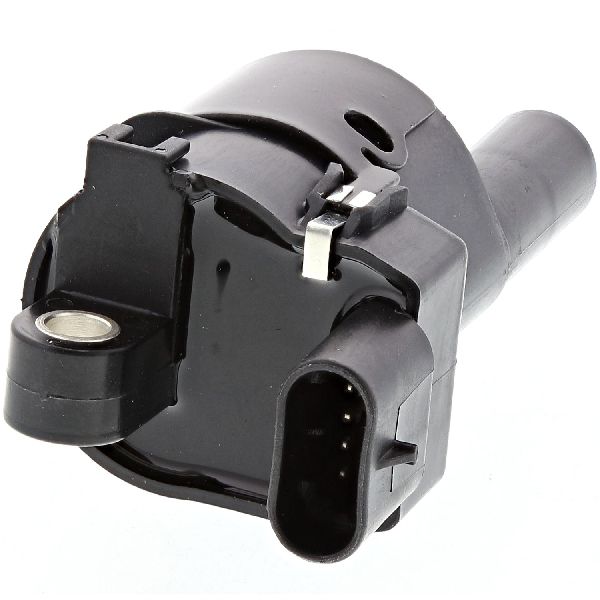
Est. part cost: $50-$100 for a set - Failed Ignition Coil 🟡 Medium Probability Coil-on-plug systems are durable, but individual coils can fail with age and heat cycles, leading to a weak or non-existent spark.
How to confirm: Swap the ignition coil from cylinder 1 with another cylinder (e.g., cylinder 3). Clear the codes and drive. If the code changes to P0303, the ignition coil is faulty. This is the most definitive DIY test.
Typical fix: Replace the failed ignition coil. It is generally acceptable to replace only the single failed coil.
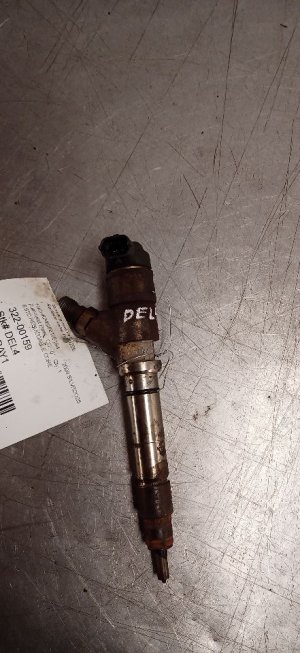
Est. part cost: $40-$95 per coil - Clogged or Faulty Fuel Injector ⚪ Low Probability Fuel injectors can become clogged with deposits over time, or the internal coil can fail, preventing the correct amount of fuel from reaching the cylinder.
How to confirm: Listen to the injector with an engine stethoscope; it should have a consistent clicking sound. For a more definitive test, swap the fuel injector from cylinder 1 with one from another cylinder. If the misfire code moves to that cylinder, the injector is bad. This is more labor-intensive than a coil swap.
Typical fix: Replace the faulty fuel injector. The OEM part number is commonly 12580681.
Est. part cost: $75-$230 per injector
Rare But Worth Checking
- Intake Manifold Gasket Leak: The intake gaskets on these engines can become brittle and leak, causing a vacuum leak. This allows unmetered air into the engine, creating a lean condition and misfires. This often triggers lean codes (P0171/P0174) alongside the misfire code. Symptoms can include a hissing sound from the engine bay, coolant loss with no visible drips, or engine overheating.
- Low Engine Compression: A mechanical issue can cause a loss of compression in the cylinder, leading to a persistent misfire that is not resolved by replacing ignition or fuel parts. According to GM TSB #19-NA-219, potential causes include a worn camshaft lobe, a sticking valve, or a broken valve spring. A mechanical compression test is required to diagnose this. 🎬 Watch: A real-world diagnosis of a 6.0L misfire problem.
Diagnosis Steps
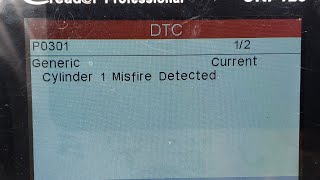
- Read the code with an OBD-II scanner to confirm P0301 and check for any other codes like P0300, P0171, or P0174.
- Visually inspect the spark plug wire for cylinder 1 (front driver's side) for damage. Per TSB #PIP4819A, pay close attention to ensure a tight, clicked-in connection at the ignition coil.
- Remove and inspect the spark plug from cylinder 1. Look for excessive wear, damage, or fouling (black and oily, or white and crusty).
- If the plug and wire look good, swap the ignition coil from cylinder 1 with the coil from cylinder 3. Clear the codes and run the engine. If the code returns as P0303, the coil is the faulty part.
- If the misfire stays on cylinder 1, the issue may be fuel-related. Listen to the injector with a stethoscope for a steady clicking. For a more advanced test, swap the fuel injector from cylinder 1 with another cylinder. If the code follows the injector, replace the injector.
- If the misfire still remains on cylinder 1 after checking ignition and fuel components, check for a vacuum leak around the intake manifold using a smoke machine or by carefully spraying brake cleaner around the gasket mating surface (a change in idle indicates a leak).
- As a final step for a persistent misfire, perform a compression test on cylinder 1 to check for mechanical engine problems like bad rings, valves, or a worn cam lobe.
Parts You'll Likely Need
- Iridium Spark Plug
(OEM #41-162 (supersedes 41-110))— Worn or oil-fouled spark plugs are a primary cause of misfires. Iridium is the OE material. The 41-162 is the current ACDelco part, replacing the older 41-110. Some owners on forums report a preference for the older 41-110 plugs if they can be found, citing differences in manufacturing, but the 41-162 is the official replacement.
Trusted brands: ACDelco, NGK
OEM price range: $10-$20
Aftermarket price range: $8-$15 - Spark Plug Wire Set
(OEM #748UU)— A loose or failed spark plug wire prevents spark from reaching the plug, directly causing a misfire, as noted in GM TSB #PIP4819A.
Trusted brands: ACDelco, DENSO
OEM price range: $70-$100
Aftermarket price range: $50-$80 - Ignition Coil
(OEM #12699382)— A failed coil provides weak or no spark to the plug. It's a common failure point after plugs and wires have been ruled out.
Trusted brands: ACDelco, Delphi, DENSO
OEM price range: $60-$95
Aftermarket price range: $30-$60 - Fuel Injector
(OEM #12580681)— A clogged or failed fuel injector will prevent the proper air/fuel mixture from forming in the cylinder, causing a misfire. This is less common than ignition components but is a likely culprit if ignition parts are good.
Trusted brands: ACDelco, Delphi
OEM price range: $120-$230
Aftermarket price range: $75-$150
Related Codes That Often Appear With This One
- P0300 — If the misfire is intermittent, severe, or begins to affect other cylinders, the PCM may also log a P0300 code for Random/Multiple Cylinder Misfire.
- P0171 / P0174 — These 'System Too Lean' codes can appear with P0301 if the misfire is caused by a vacuum leak, such as a faulty intake manifold gasket, that allows unmetered air into the engine.
Platform-Specific Known Issues
- TSB #PIP4819A: Loose Spark Plug Wires: GM has noted that misfire codes (P0300-P0308) can be caused by spark plug wires that are not fully seated. The bulletin specifically advises technicians to inspect the wire connection at the ignition coil end, as this is a common point of failure. If a wire is found to be loose, it should be replaced.
- TSB #PIP4525D: Oil Fouled #1 Spark Plug (Hybrid Specific): This bulletin connects a P0301 misfire with significant oil fouling on the #1 spark plug, potentially caused by a worn #1 cam bearing. It's important to note this TSB is specifically for the 6.0L Hybrid engine (RPO LFA)
Mechanic-Grade Diagnostic Values
- Fuel Pressure (Key On, Engine Off) — expected: 55-62 PSI. Failure: Pressure below 55 PSI can indicate a weak fuel pump or clogged filter, leading to a lean misfire.
- Ignition Coil Resistance (Primary Winding) — expected: 0.4 - 2.0 ohms. Failure: A reading outside this range (e.g., OL for open circuit or 0 for a short) indicates a faulty coil.
- Ignition Coil Resistance (Secondary Winding) — expected: 6,000 - 10,000 ohms (6k-10k Ω). Failure: A reading significantly outside this range suggests the internal windings are compromised.
- Short-Term Fuel Trim (STFT) at Idle — expected: Between -10% and +10%. Failure: A consistently high positive value (e.g., >15%) on Bank 1 can indicate a vacuum leak or fueling issue affecting cylinder 1.
Hidden / Shadow Codes Worth Checking
- Mode $06, TID $A2: This is not a DTC, but a monitor within the PCM that tracks the raw misfire count for cylinder 1. Technicians can view this data with an advanced scan tool to see if cylinder 1 is registering misfires, even if the count is not yet high enough to trigger the P0301 code and turn on the Check Engine Light. (see via An OBD-II scan tool that can display Mode $06 test results.)
Scan Tool Commands That Help
- Tech2 / GDS2 or equivalent professional scan tool: Cylinder Power Balance Test — Use this active test when the misfire is felt but the cause isn't obvious. The tool deactivates one cylinder at a time (by cutting fuel or spark) and measures the drop in engine RPM. A cylinder that causes little or no RPM drop when deactivated is not contributing power and is the source of the misfire.
- Tech2 / GDS2 or equivalent professional scan tool: Fuel Injector Balance Test — Use this after confirming spark is good. The tool pulses each injector for a precise duration and measures the corresponding drop in fuel rail pressure. If the pressure drop for cylinder 1 is significantly different from the others, the injector is either clogged or faulty.
- Tech2 / GDS2 or equivalent professional scan tool: Crankshaft Position Variation Learn — This procedure must be performed after replacing the crankshaft position sensor, PCM, or engine components. Failure to perform the 'crank relearn' can cause the PCM to inaccurately detect misfires and set false P030x codes.
Wiring & Ground Locations
- G104 — On the front of the driver's side (left) cylinder head.. This is a primary ground location for the Engine Control Module (ECM). A loose or corroded connection here can cause erratic ECM behavior, including false misfire detection and incorrect injector or coil commands.
- G102 — On the lower left front of the engine block.. This is the dedicated ground point for all eight ignition coils. A poor connection here can cause a weak spark on one or more cylinders, leading directly to misfires.
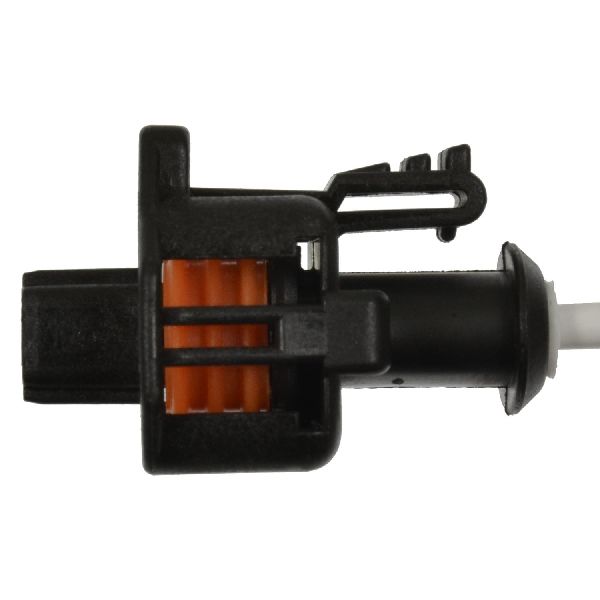
- Cylinder 1 Ignition Coil Connector — The coil for cylinder 1, located on the driver's side valve cover, front-most position.. The Pink (PNK) wire is the 12V+ ignition supply. The other wire (color varies) is the control wire that the ECM pulses to ground to fire the coil. Checking for 12V+ on the pink wire and using a noid light on the control circuit can verify electrical signals are reaching the coil.
- Engine Harness Chafe Point — Inspect the main engine harness for contact with the corners of the cylinder heads, metal brackets, and the firewall.. Vibrations can cause the harness loom to rub through, potentially shorting the ignition coil or fuel injector control wire for cylinder 1 to ground or another wire, causing a persistent or intermittent misfire.
Real Owner Repair Stories
- YouTube Channel 'Auto Aide Technical Services' / 'South Main Auto LLC' (2009 GMC Sierra 2500HD 6.0L) — Severe misfire, running rough, and backfiring badly. The issue started after the truck was serviced for an alternator and transmission lines.
❌ Tried (didn't work) A previous shop replaced a coil on a misfiring cylinder with no change., The diagnostic technician initially suspected a plugged catalytic converter due to misleading fuel trim data (one bank lean, one bank rich) but ruled it out with an in-cylinder pressure test.
✅ What actually fixed it The ignition coil harness for one of the cylinder banks had been installed backwards (rotated 180 degrees) during the previous service. This caused the coils to fire in the wrong order (e.g., cylinder 1's signal was going to cylinder 7's coil). Flipping the harness back to its correct orientation resolved all issues.
"I Checked Everything" — The Actual Cause
- In a documented case on a 2009 Sierra 6.0L, diagnostics ruled out a vacuum leak, but the engine exhibited symptoms that could mimic one, such as one bank running lean and the other rich. The actual cause was not an air leak but an electrical wiring error where an entire bank of ignition coils was firing in the wrong order due to an incorrectly installed sub-harness. This highlights that electrical faults can sometimes produce symptoms commonly associated with vacuum leaks.
When the Usual Fixes Don't Work
- While a P0301 is overwhelmingly caused by a simple ignition component like a spark plug or coil, there are documented cases where the root cause is far more obscure. In one instance, a 2009 Sierra 2500 with a severe misfire had all ignition and fuel components test correctly. The final cause was discovered to be an ignition coil sub-harness that had been installed backward by a previous mechanic, completely scrambling the firing order for that cylinder bank. This serves as a reminder that if the common causes don't resolve the issue, especially after recent service, considering human error and verifying harness routing is a valid next step.
OEM Part Supersession History
ACDelco 41-110 (originally 41-985)→ACDelco 41-162— Supplier and/or design change. The 41-162 is physically shorter than the 41-110.
Heads up: While 41-162 is the official replacement, some professional mechanics and owners report perceived lower manufacturing quality on the 41-162 plugs and prefer to source new-old-stock 41-110 plugs, claiming they provide a smoother idle. Both are functionally compatible.
Model Year Variations Within This Range
- 2008-2009 vs 2010: The 2008-2009 models primarily used the LY6 6.0L V8 engine. In 2010, this was updated to the L96 6.0L V8. The main difference is the L96 is Flex Fuel (E85) capable. This means the 2010 L96 has different, higher-flow fuel injectors and corresponding ECU programming compared to the 2008-2009 LY6. While diagnosis is similar, fuel injectors are not interchangeable between these engine versions.
Helpful Videos
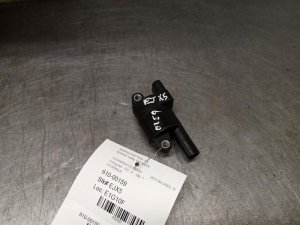
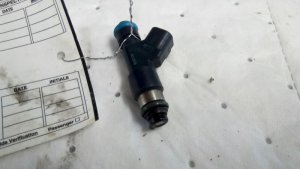
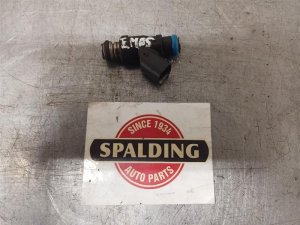
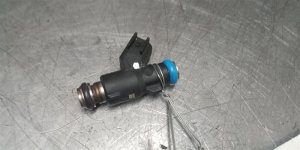
Used OEM Parts in Stock

New Aftermarket Parts Available


The information in this article is provided for general reference and educational purposes only. Vehicle specifications, procedures, and part compatibility can vary by production date, trim level, and region. Always consult your vehicle's factory service manual and verify part numbers before purchasing or performing repairs. Safety-critical components such as airbags, seat belts, and braking systems should be installed by a qualified professional.
- Gmc SIERRA 2500:
- 🎬 Helpful Videos
- 🛍️ Shop This Part
- What's Unique About the 2008-2010 Gmc SIERRA 2500
- Diagnostic Flowchart
- Symptoms You May Notice
- Most Likely Causes
- Rare But Worth Checking
- Diagnosis Steps
- Parts You'll Likely Need
- Related Codes That Often Appear With This One
- Platform-Specific Known Issues
- Mechanic-Grade Diagnostic Values
- Hidden / Shadow Codes Worth Checking
- Scan Tool Commands That Help
- Wiring & Ground Locations
- Real Owner Repair Stories
- "I Checked Everything" — The Actual Cause
- When the Usual Fixes Don't Work
- OEM Part Supersession History
- Model Year Variations Within This Range
- 🎟️ Get 5% Off