

P0301 on 2021-2025 Ford Mustang: Cylinder 1 Misfire Causes & Fixes
P0301 indicates a misfire in cylinder 1. On both the 2.3L EcoBoost and 5.0L V8 Mustang, the most common cause is a faulty ignition coil or a worn spark plug. This is a relatively inexpensive and straightforward DIY fix, typically costing under $100 for the parts. For 2021-2022 5.0L V8s, a known PCM software glitch can also be the cause, requiring a dealer update.
- P0301 means cylinder 1 is misfiring. On a Mustang, this is the front cylinder on the passenger side (5.0L V8) or the very front cylinder (2.3L EcoBoost).
- The most likely cause is a bad ignition coil or spark plug. Diagnose this for free by swapping the coil from cylinder 1 to another cylinder and seeing if the code follows.
- Do not ignore a flashing check engine light. This signals a severe misfire that can quickly damage your catalytic converter, a very expensive repair.
- On 2021-2022 5.0L V8 models, if the plugs and coils are good, the problem could be a software glitch that a Ford dealer can fix by reprogramming the computer, as per TSB 22-2464.
What's Unique About the 2021-2025 Ford MUSTANG
For the 2021-2025 Mustang, the cause of a P0301 code often depends on the engine. On 2.3L EcoBoost models, Ford has issued several Technical Service Bulletins (TSBs) pointing directly to faulty spark plugs and/or ignition coils as the likely culprits (SSM 53971, TSB 24-2384). For the 5.0L V8, especially in 2021-2022 models, a specific TSB (22-2464) suggests the misfire codes can be triggered by a software issue within the PCM, which requires a dealer reprogram to fix. Owners on forums have confirmed this reflash resolves the issue. It's important to note that if the vehicle has an aftermarket tune (e.g., from Roush), this Ford TSB may not apply.
Diagnostic Flowchart
Tap your situation to follow the diagnostic path that matches what you're seeing on this vehicle.
Generation note: This range covers the late S550 generation (2021-2023) and the new S650 generation (2024-2025). While the core 2.3L EcoBoost and 5.0L Coyote V8 engines are carried over, there are differences in electronics and PCM software. The S650's Gen 4 Coyote V8 features a new dual-throttle-body intake and revised internals, while the EcoBoost also received updates. However, the fundamental causes of a P0301 misfire (spark, fuel, compression) remain consistent across both generations.
Symptoms You May Notice
- Rough or shaky engine idle
- Hesitation or stumbling during acceleration
- Noticeable loss of engine power
- Flashing or solid Check Engine Light
- Smell of raw fuel from the exhaust
- Stutter or power cut-out under heavy acceleration/high RPM
- Replacing oxygen sensors. While a misfire can affect O2 sensor readings, the sensor is rarely the cause of a single-cylinder misfire code.
- Replacing the catalytic converter. A misfire can destroy a catalytic converter, but a bad converter will not cause a P0301 code.
Most Likely Causes
- Faulty Ignition Coil (Cylinder 1) 🔴 High Probability Coil-on-plug failures are a common issue on modern engines. Multiple TSBs for the 2.3L EcoBoost specifically mention ignition coils as a primary cause of misfires. Forum discussions are filled with owners resolving P0301 by replacing the coil.
How to confirm: Swap the ignition coil from cylinder 1 with another cylinder (e.g., cylinder 2). Clear the codes and drive. If the code changes to P0302, the ignition coil is faulty. This is the definitive DIY diagnostic step. 🎬 Watch: How to perform a Mustang ignition coil test
Typical fix: Replace the bad ignition coil. It's recommended to apply a small amount of dielectric grease to the inside of the new coil boot. Many owners and mechanics recommend replacing all coils and plugs at the same time for preventative maintenance.
Est. part cost: $40-$90 - Worn or Defective Spark Plug (Cylinder 1) 🔴 High Probability Spark plugs are a regular wear item. TSBs for the 2.3L EcoBoost point to spark plugs as a potential cause. On the 5.0L V8, cracked porcelain on spark plugs is also a known issue leading to misfires. On EcoBoost engines, incorrect gapping or carbon fouling can cause misfires under boost.
How to confirm: After ruling out the coil, remove the spark plug from cylinder 1 using a 5/8" spark plug socket. Inspect it for wear, carbon fouling, oil, or cracks in the porcelain insulator. Compare it to a new plug. 🎬 See this DIY spark plug replacement for EcoBoost engines
Typical fix: Replace the spark plug in cylinder 1. It is best practice to replace all spark plugs at the same time to ensure even performance. Ensure the new plugs are gapped correctly per the manufacturer's specification.
Est. part cost: $10-$25 per plug - PCM Software Issue (5.0L V8) 🟡 Medium Probability Ford TSB 22-2464 explicitly states that on 2021-2022 5.0L Mustangs, misfire codes including P0301 can be caused by 'various strategies within the PCM software'. This is not a hardware failure but a logic issue.
How to confirm: If ignition components (plugs, coils) are confirmed to be good on a 2021-2022 5.0L model, contact a Ford dealership and reference TSB 22-2464 to see if a PCM software update is available for your vehicle's VIN.
Typical fix: The Ford dealer will reprogram the PCM with updated software. Forum users confirm this is a quick and effective fix.
Est. part cost: $0 if under warranty, otherwise dealer labor charge for reprogramming (typically 0.5-1.0 hours). - Clogged or Faulty Fuel Injector (Cylinder 1) ⚪ Low Probability Direct injection systems, like those on both the EcoBoost and modern Coyote V8, operate under very high pressure and can be susceptible to injector issues, though less common than ignition problems. Some owners have reported needing an injector replacement to fix a persistent P0301.
How to confirm: This is more difficult to diagnose. A professional may need to perform a fuel injector balance test or use a scan tool to monitor injector data. A DIY method is to listen to the injector with a mechanic's stethoscope to ensure it's clicking like the others. Swapping injectors between cylinders is possible but is a much more involved job than swapping coils.
Typical fix: Replace the faulty fuel injector. This is a more involved job than plugs or coils and may require special tools.
Est. part cost: $70-$150
Rare But Worth Checking
- Vacuum Leak: A vacuum leak near the intake runner for cylinder 1 can lean out the air/fuel mixture and cause a misfire. Listen for hissing sounds around the intake manifold.
- Low Compression: This indicates an internal engine mechanical problem, such as a bad valve, worn piston rings, or even a damaged camshaft lobe. This is very rare on a newer vehicle but can be confirmed with a compression test. One owner on a forum suspected a coolant leak into the cylinder causing a misfire on startup.
- Damaged Wiring Harness: The wiring connector for the ignition coil or fuel injector can become loose, corroded, or damaged, leading to an intermittent connection and a misfire. One owner found a break in a factory wire.
Diagnosis Steps
- Read the code with an OBD-II scanner to confirm P0301 and any other related codes (like P0316).
- Identify Cylinder 1. On the 2.3L I4, it is the front-most cylinder (closest to the radiator). On the 5.0L V8, it is the front-most cylinder on the passenger side (right bank).
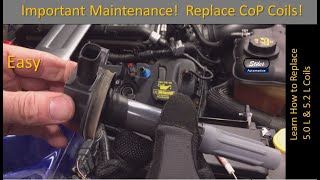
- Swap the ignition coil from cylinder 1 with a coil from another cylinder (e.g., cylinder 2). This requires an 8mm socket. 🎬 Watch: 5.0L V8 ignition coil replacement walkthrough
- Clear the codes with the scanner and start the engine. Let it run and/or drive it briefly to see if the Check Engine Light returns.
- Re-scan for codes. If the code has moved to P0302, the ignition coil is the faulty part and needs replacement.
- If the code remains P0301, the coil is likely good. Turn off the engine and move the spark plug from cylinder 1 to cylinder 2 (keeping the good coil on cylinder 1). This requires a 5/8" spark plug socket.
- Clear codes and test again. If the code moves to P0302, the spark plug is bad.
- If the code remains P0301 after swapping both the coil and plug, the issue is likely with the fuel injector, wiring, or a mechanical problem.
- Inspect the wiring connector for the cylinder 1 coil and injector for any damage, corrosion, or loose pins.
- For 2021-2022 5.0L models, if plugs and coils are confirmed good, consult a Ford dealer about TSB 22-2464 for a potential PCM update.
Parts You'll Likely Need
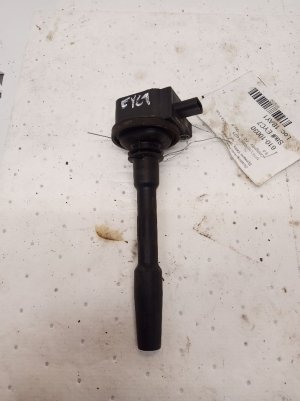
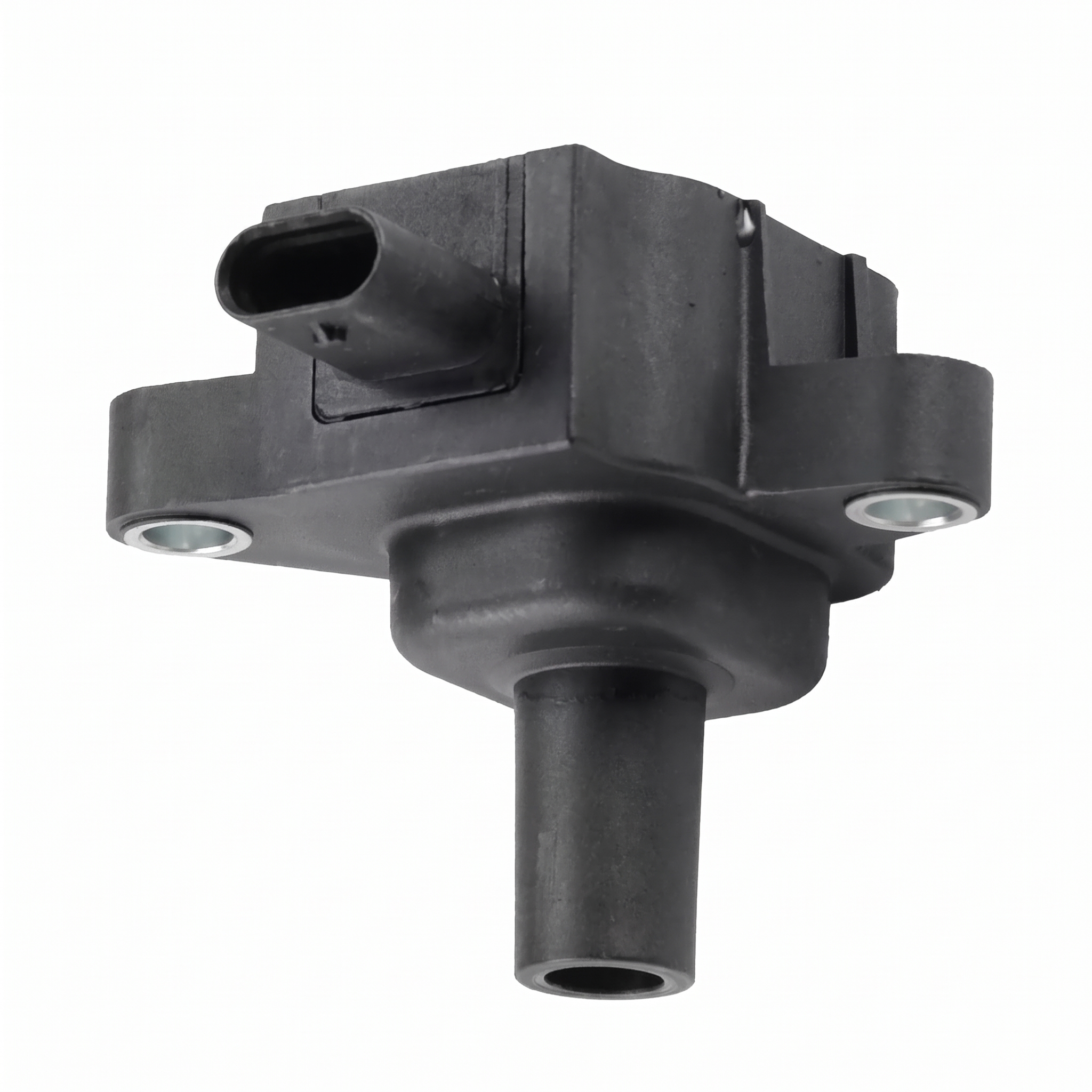
- Ignition Coil
(OEM #Motorcraft DG-565 (for 5.0L V8) or P2GZ-12029-A (for 2.3L EcoBoost))— This is one of the most common failure points for a P0301 code, as confirmed by Ford TSBs and numerous owner forums.
Trusted brands: Motorcraft, NGK, Bosch
OEM price range: $60-$90
Aftermarket price range: $40-$70 - Spark Plug
(OEM #Motorcraft SP-578 (CYFS-12Y-PT, for early S550 5.0L/2.3L) or SP-597 (for S650 2.3L). Part numbers can supersede; always verify with VIN.)— A worn, fouled, or cracked spark plug is a very common and inexpensive cause for a single-cylinder misfire.
Trusted brands: Motorcraft, NGK, Denso
OEM price range: $15-$25
Aftermarket price range: $10-$20
Related Codes That Often Appear With This One
- P0300 — If the misfire is intermittent or affects other cylinders randomly, a P0300 (Random/Multiple Cylinder Misfire) code may appear alongside P0301.
- P0302, P0303, P0304, etc. — If the cause of the misfire is not isolated to cylinder 1 (e.g., bad fuel, vacuum leak), codes for other cylinders may also be present.
- P0316 — This code indicates a misfire was detected within the first 1,000 engine revolutions at startup. It often accompanies a specific cylinder misfire code like P0301 and is mentioned in owner reports alongside the primary misfire code.
Technical Service Bulletins (TSBs) & Recalls
- TSB 22-2464: For 2021-2022 5.0L engines, notes that misfire DTCs P0300-P0308 can be caused by PCM software and fixed with a reprogram.
- SSM 53971: For 2025 2.3L EcoBoost engines, suggests P0301-P0304 may be due to spark plugs and/or ignition coils.
- TSB 24-2384: Cites engine misfires with P0301-P0304 on 2024-2025 2.3L EcoBoost engines and other models sharing the powertrain.
- SSM 52630: An earlier bulletin for 2024 2.3L EcoBoost engines also pointing to spark plugs and coils for P0301-P0304 codes.
Platform-Specific Known Issues
- TSB 22-2464: Some 2021-2022 Mustang models with the 5.0L engine may set misfire codes (P0301-P0308) due to PCM software strategies. The official fix is a PCM reprogram by a dealer, which has been confirmed by owners to solve the problem.
- SSM 53971: On 2025 models with the 2.3L EcoBoost engine (also applies to Bronco/Explorer/Ranger), misfire codes like P0301 may be due to the spark plugs and/or ignition coils.
- TSB 24-2384 & SSM 52630: These bulletins also point to spark plugs and ignition coils as the likely cause for misfires on 2.3L EcoBoost engines in 2024-2025 models.
Mechanic-Grade Diagnostic Values
- 5.0L V8 Ignition Coil Primary Resistance — expected: 0.35 - 0.63 ohms. Failure: A reading significantly outside this range indicates a faulty coil.
- 5.0L V8 Ignition Coil Secondary Resistance — expected: 5.5k - 6.5k ohms. Failure: A reading outside this range suggests a problem with the secondary windings.
- 2.3L EcoBoost GDI Fuel Injector Resistance — expected: 1.0 - 2.0 ohms. Failure: A reading outside this range, or an open circuit, points to a failed injector solenoid.
- Mode $06 Misfire Count (per cylinder) — expected: Near zero during normal operation.. Failure: A high or rapidly increasing count for cylinder 1, even before a P0301 code is set, confirms an intermittent misfire.
Scan Tool Commands That Help
- Ford IDS (or advanced aftermarket scanners like Autel): Power Balance Test — This is a critical diagnostic step to confirm which cylinder is not contributing power. The scan tool displays a graph for each cylinder's rotational speed contribution. A cylinder that is misfiring will show a significant drop or negative value compared to the others, visually confirming the location of the misfire without having to swap parts first.
- Ford IDS (or advanced aftermarket scanners): Cylinder Contribution Test — Similar to the Power Balance test, this function actively disables one cylinder at a time (either by cutting spark or fuel) and measures the resulting drop in RPM. A good cylinder will cause a noticeable RPM drop when disabled, while disabling a misfiring cylinder (like cylinder 1 with a P0301) will result in little to no change in RPM, confirming it wasn't contributing.
Wiring & Ground Locations
- Engine to Chassis Ground Strap — On the S550/S650 chassis, there is a primary ground strap connecting the engine block to the chassis/firewall, often on the driver's side.. A loose, corroded, or missing engine ground strap can create a weak ground path for the entire ignition system. This can cause a weak spark on one or more cylinders, leading to intermittent misfires that are difficult to diagnose as the coils and plugs may test good.
- G104 - DLC Ground — Located in the engine bay near the battery on the driver's side.. This ground is for the Data Link Connector (DLC). While not a direct cause of the misfire, a poor ground here can cause communication issues with your OBD-II scanner, making diagnosis difficult.
- Secondary Power Ground — Typically runs between the back of the intake manifold and the driver's side firewall.. This ground is crucial for various engine accessories. While less direct, poor grounding can introduce electrical noise into the system that may affect PCM calculations and sensor readings related to the ignition system.
OEM Part Supersession History
JR3Z-12029-A→DG-565— Standard part number update and consolidation by Motorcraft.
Heads up: DG-565 is the correct service part for 2018-2025 5.0L V8 Mustangs. Using coils from pre-2018 models may result in fitment or performance issues.
Model Year Variations Within This Range
- 2024-2025 (S650 Generation): The 5.0L 'Gen 4' Coyote V8 was introduced, featuring a new dual intake and dual 80mm throttle body design, stronger camshafts, and a new steel oil pan. Horsepower increased from 460 to 480+ hp. The 2.3L EcoBoost was also updated for a slight horsepower increase. While the core causes of P0301 remain, these significant engine changes mean wiring diagrams, component locations, and some part numbers will differ from the 2021-2023 S550 models.
- 2021-2022 (S550 Generation): These specific model years with the 5.0L V8 are subject to TSB 22-2464, which identifies a PCM software issue as a potential cause for misfire codes. This is a software-specific issue not officially noted for later model years.
Helpful Videos
We Have This Part in Stock


The information in this article is provided for general reference and educational purposes only. Vehicle specifications, procedures, and part compatibility can vary by production date, trim level, and region. Always consult your vehicle's factory service manual and verify part numbers before purchasing or performing repairs. Safety-critical components such as airbags, seat belts, and braking systems should be installed by a qualified professional.
- Ford MUSTANG:
- 🎬 Helpful Videos
- 🛍️ Shop This Part
- What's Unique About the 2021-2025 Ford MUSTANG
- Diagnostic Flowchart
- Symptoms You May Notice
- Most Likely Causes
- Rare But Worth Checking
- Diagnosis Steps
- Parts You'll Likely Need
- Related Codes That Often Appear With This One
- Technical Service Bulletins (TSBs) & Recalls
- Platform-Specific Known Issues
- Mechanic-Grade Diagnostic Values
- Scan Tool Commands That Help
- Wiring & Ground Locations
- OEM Part Supersession History
- Model Year Variations Within This Range
- 🎟️ Get 5% Off