

P0301 on 2011-2018 Ford F-150: Cylinder 1 Misfire Causes and Fixes
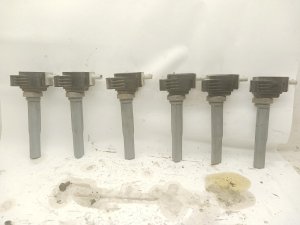
P0301 indicates a misfire in cylinder 1. The most common causes are a bad ignition coil or a worn/improperly gapped spark plug. A simple diagnostic is to swap the cylinder 1 coil with another cylinder's coil; if the code changes to that cylinder (e.g., P0302), the coil is faulty. This is a 15-minute DIY fix. For the 5.0L V8, the coil is part DG521. For the 3.5L EcoBoost, it's DG549. For EcoBoost engines, also check for intercooler condensation, especially in humid weather.
- P0301 is a misfire on cylinder 1, the front passenger-side cylinder.
- The most likely cause is a bad ignition coil or spark plug. Start your diagnosis by swapping the cylinder 1 coil with another to see if the misfire code follows it.
- Do not drive if the Check Engine Light is flashing, as this can quickly destroy your catalytic converter.
- For 3.5L EcoBoost engines, consider carbon buildup on intake valves as a possible cause if ignition components are good.
- For 5.0L V8 engines, check your oil level, as TSBs link misfires to excessive oil consumption issues.
What's Unique About the 2011-2018 Ford F-150

For the 2011-2018 F-150, the cause of a P0301 often depends on the engine. On the 1st Gen 3.5L EcoBoost V6 (2011-2016), this code can be an early sign of carbon buildup on the intake valves, a known issue for direct-injection engines. Additionally, 2011-2014 EcoBoost models are prone to misfires from condensation building up in the intercooler during humid weather, which gets ingested during acceleration. For the 5.0L V8, misfires can be linked to TSB 19-2384 regarding excessive oil consumption from worn valve guides, a repair that can escalate to cylinder head replacement. While standard ignition issues are most probable, these engine-specific problems are important secondary considerations.
Diagnostic Flowchart

Tap your situation to follow the diagnostic path that matches what you're seeing on this vehicle.
Generation note: This guide covers the end of the 12th generation (2011-2014) and the beginning of the 13th generation (2015-2018) Ford F-150. While the underlying engines like the 3.5L EcoBoost and 5.0L V8 were available in both, there were revisions. The 1st Gen 3.5L EcoBoost (2011-2016) is particularly noted for carbon buildup and intercooler condensation issues. The 13th generation introduced a lighter aluminum body and updated engine versions, including a 2nd Gen 3.5L EcoBoost in 2017.
Symptoms You May Notice

- Flashing or solid Check Engine Light
- Rough or shaky idle
- Engine hesitation or stumbling during acceleration
- Noticeable loss of power
- Poor fuel economy
- Smell of unburned gasoline from the exhaust
- Engine shudder under heavy acceleration, especially in humid weather (common with 3.5L EcoBoost intercooler issue)
- Replacing only the spark plug when the ignition coil was the actual problem (or vice-versa). The coil swap test is crucial to avoid this.
- On EcoBoost engines, confusing the symptoms of intercooler condensation (misfire under sudden load) with a bad coil or plug.
- Assuming a major engine problem before thoroughly testing the ignition and fuel systems, which are far more common failure points.
Most Likely Causes

- Faulty Ignition Coil 🔴 High Probability Coil-on-plug systems are common failure points on modern engines due to constant heat and vibration. After 60,000+ miles, the internal windings can break down, causing a weak or no spark. Many owners on forums report replacing coils one by one as they fail.
How to confirm: Swap the ignition coil from cylinder 1 with the coil from an adjacent cylinder (e.g., cylinder 2). Clear the codes. If the misfire code changes to P0302, the coil is bad.
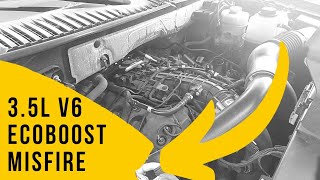
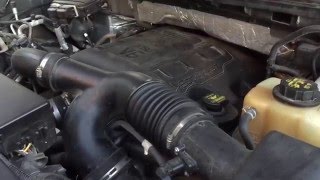
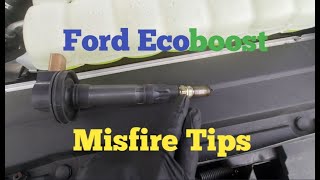
Typical fix: Replace the faulty ignition coil. 🎬 Watch: Step-by-step P0301 misfire fix for 3.5L EcoBoost engines. It's a single 8mm bolt and an electrical connector. OEM Motorcraft coils are highly recommended over aftermarket options to avoid premature failure.
Est. part cost: $50-$100 per coil - Worn or Fouled Spark Plug 🔴 High Probability Ford specifies a 60,000-100,000 mile service interval, but plugs can wear out sooner, especially on turbocharged EcoBoost engines which are harder on plugs. A worn electrode, cracked porcelain, or incorrect gap will cause a misfire. For EcoBoost engines, the spark plug gap is critical; a gap that is too wide can be 'blown out' under boost, causing misfires.
How to confirm: After ruling out the coil, remove the spark plug from cylinder 1. Inspect for wear, oil fouling, or carbon tracking (a thin black line on the ceramic indicating a crack). Check the gap with a feeler gauge. For a stock 3.5L EcoBoost, the gap should be around 0.030-0.033 inches.
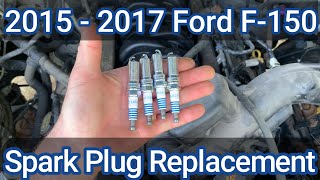
Typical fix: Replace the spark plug. It is highly recommended to replace all spark plugs at the same time. Ensure new plugs are gapped correctly before installation.
Est. part cost: $10-$25 per plug - Intercooler Condensation (2011-2014 3.5L EcoBoost) 🟡 Medium Probability On early 3.5L EcoBoosts, especially during long drives in humid or damp weather, water vapor can condense and pool inside the charge air cooler (intercooler). During sudden, hard acceleration, this collected water is ingested by the engine, causing a violent shudder and setting misfire codes.
How to confirm: The issue is situational and hard to replicate on demand. It typically happens after prolonged highway cruising in high humidity, followed by a sudden throttle input. Ford released TSBs (e.g., 13-8-1, 14-0017) to address this.
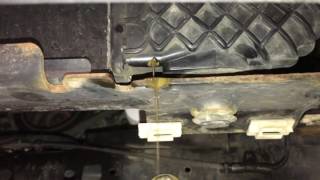
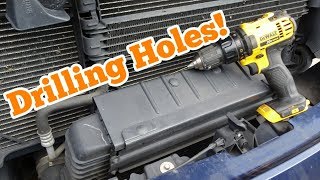
Typical fix: Ford's TSB procedure involves installing an air deflector on the intercooler and reprogramming the PCM. Some owners drill a small 1/16" weep hole in the bottom of the intercooler to allow moisture to drain. 🎬 Watch: How to drill a weep hole to fix EcoBoost shudder. Others upgrade to a redesigned or aftermarket intercooler.
Est. part cost: $20 for a deflector kit, or $400+ for an aftermarket intercooler. - Clogged or Faulty Fuel Injector 🟡 Medium Probability
How to confirm: If the coil and plug are good, the injector is a suspect. A DIY method involves listening to the injector with a mechanic's stethoscope to ensure it's clicking. A professional can perform a fuel injector balance test to measure its flow rate.
Typical fix: Replace the cylinder 1 fuel injector. On direct-injected engines like the EcoBoost, this is a more involved and costly job than on the port-injected 5.0L V8.
Est. part cost: $70-$200 for the part, labor is significantly higher for direct injectors. - Carbon Buildup on Intake Valves (3.5L EcoBoost) 🟡 Medium Probability First-generation (2011-2016) 3.5L EcoBoost engines are direct-injection only. Fuel is sprayed directly into the cylinder, so it never washes over the intake valves. Oil vapor from the PCV system can bake onto the valves, restricting airflow and causing misfires, especially on cold starts.
How to confirm: This requires a borescope inspection of the intake ports and valves to visually confirm the carbon deposits.
Typical fix: The valves must be cleaned manually, typically through walnut shell blasting. This is a labor-intensive shop repair costing between $500-$1000.
Est. part cost: $0 (labor is the main cost)
Rare But Worth Checking
- Internal Engine Problem (5.0L V8): A failed compression test could indicate a serious issue. Specifically for the 5.0L V8, TSB 19-2384 addresses excessive oil consumption (e.g., 1 quart in less than 3000 miles) which can be caused by faulty valve guides in the cylinder heads. This can lead to oil-fouled plugs and misfires. The ultimate fix can be a complete cylinder head replacement.
- Vacuum Leak: A leak in a vacuum hose or intake manifold gasket near cylinder 1 can lean out the air/fuel mixture and cause a misfire. This will often be accompanied by lean codes like P0171 or P0174.
- PCM Software Issue: Multiple TSBs (like TSB 20-2324 and TSB 18-2310) indicate that a PCM software update can resolve unexplained misfire codes. The PCM may be overly sensitive. This is usually performed by a dealer after other hardware causes are eliminated.
Diagnosis Steps
- Confirm the code is P0301 using an OBD-II scanner. Note if the check engine light is flashing (severe misfire) or steady.
- Locate cylinder 1. For V-engines like the 5.0L V8 and 3.5L V6, cylinder 1 is the front-most cylinder on the passenger side (right bank).
- Perform an ignition coil swap. Swap the coil from cylinder 1 with the coil from cylinder 2. Clear the codes with the scanner and test drive.
- If the code returns as P0302, the ignition coil from cylinder 1 is faulty and needs replacement.
- If the code returns as P0301, the coil is likely good. Proceed to inspect the spark plug.
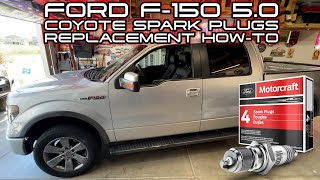
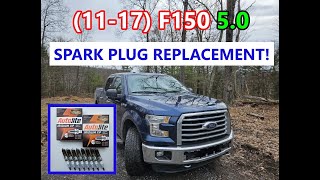
- Remove the cylinder 1 spark plug. Check for excessive wear, damage, oil, or carbon fouling. It's best practice to replace all plugs at once. 🎬 See how easy it is to replace 5.0L V8 spark plugs.
- CRITICAL for EcoBoost: Check the spark plug gap. Use a feeler gauge to ensure it's within spec (e.g., ~0.030"). An incorrect gap is a very common cause of misfires under boost.
- If the coil and plug are good but P0301 persists, the issue may be the fuel injector. Check wiring and listen for a clicking sound with a stethoscope.
- If ignition and fuel seem okay, consider engine-specific issues: for 2011-2014 EcoBoost, if misfires happen under load in humidity, suspect intercooler condensation. For any 1st Gen EcoBoost, consider carbon buildup. For 5.0L, check for signs of excessive oil consumption mentioned in TSB 19-2384.
- If all else fails, a compression test is needed to check for mechanical engine problems like a bad valve or worn rings. Consult a professional if you reach this step.
Parts You'll Likely Need
- Ignition Coil (Coil-on-Plug)
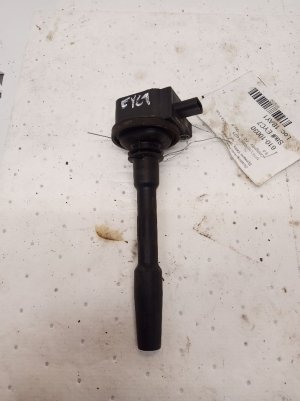
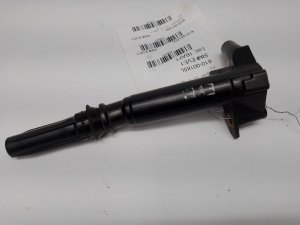
(OEM #5.0L V8: DG521 / 3.5L EcoBoost: DG549)— This is the most frequent cause of a single-cylinder misfire. It's a simple swap and a high-probability fix. Using OEM Motorcraft is highly recommended.
Trusted brands: Motorcraft, NGK, Denso
OEM price range: $70-$100
Aftermarket price range: $40-$70 - Spark Plug
(OEM #5.0L V8: SP-534 / 1st Gen 3.5L EcoBoost: SP-542 (colder plug, often recommended) or SP-580 (newer standard))— Spark plugs are a routine maintenance item that directly causes misfires when worn or incorrectly gapped. For EcoBoost engines, using the correct heat range and changing them on schedule is critical for performance.
Trusted brands: Motorcraft, NGK Ruthenium, NGK Iridium
OEM price range: $15-$25
Aftermarket price range: $10-$20 - Fuel Injector — If the spark is good, the next most likely component is a clogged or failed fuel injector. This is more common on higher mileage vehicles.
Trusted brands: Motorcraft, Bosch
OEM price range: $100-$200
Aftermarket price range: $70-$150
Related Codes That Often Appear With This One
- P0300 — P0300 means 'Random Misfire Detected.' If the misfire on cylinder 1 is intermittent or accompanied by misfires on other cylinders, you may see both codes.
- P0316 — This code means 'Misfire Detected on Startup (First 1000 Revolutions).' It often appears with specific cylinder misfire codes and is cited in several Ford TSBs alongside P0301. [TSB 20-2324, TSB 18-2310]
- P0171 / P0174 — These codes indicate the engine is running lean on Bank 1 / Bank 2. A vacuum leak causing the P0301 misfire could also be large enough to trigger a lean code.
Technical Service Bulletins (TSBs) & Recalls
- TSB 20-2324: PCM software update for various DTCs including P0301.
- TSB 19-2384: Misfires related to excessive oil consumption on some 5.0L engines.
- TSB-14-0160: Misfires on GTDI (EcoBoost) engines.
- TSB 18-2310: PCM software update for various DTCs including P0301.
- TSB 18-2237: Misfires related to excessive oil consumption and rough idle.
Platform-Specific Known Issues
- Carbon Buildup on Intake Valves: Direct injection design leads to carbon deposits restricting airflow, causing cold start misfires and rough idle. Requires manual cleaning (walnut blasting).
- Intercooler Condensation: Moisture collects in the intercooler in humid conditions and gets ingested during hard acceleration, causing a severe misfire and shudder. Addressed by Ford TSBs.
- Excessive Oil Consumption / Valve Guides: Some engines may consume excessive oil due to worn valve guides, as noted in TSB 19-2384. This can foul spark plugs and may require cylinder head replacement.
Mechanic-Grade Diagnostic Values
- Ignition Coil Primary Resistance (e.g., Motorcraft DG521/DG549) — expected: 0.3 to 1.0 ohms. Failure: A reading outside this range (open or shorted) indicates a faulty coil winding.
- Ignition Coil Secondary Resistance (e.g., Motorcraft DG521/DG549) — expected: 5,500 to 11,500 ohms (5.5kΩ - 11.5kΩ). Failure: A reading outside this range indicates a breakdown in the secondary windings.
- Low-Pressure Fuel System (Key On, Engine Off) — expected: ~60 PSI (approx. 400 kPa). Failure: Significantly lower pressure indicates a weak in-tank fuel pump or fuel pump driver module (FPDM) issue.
- High-Pressure Fuel System - 3.5L EcoBoost (Idle) — expected: Varies widely from ~800 PSI to over 3000 PSI depending on load, but should closely match the 'Desired Fuel Rail Pressure' PID on a scan tool.. Failure: If 'Actual' pressure cannot meet 'Desired' pressure (e.g., stuck at low pressure under load), it points to a failing high-pressure fuel pump (HPFP).
Hidden / Shadow Codes Worth Checking
- Mode 6, TID $53: This is not a DTC, but a Test ID within the OBD-II system's Mode 6 data. It provides raw misfire counts for each cylinder from the last and current drive cycles. You can see misfire counts for cylinder 1 (and others) before they are high enough to trigger a P0301 code. (see via Requires a professional scan tool or an advanced OBD-II app (like FORScan) that can access Mode 6 data. Look for Test ID $53 or 'Misfire Monitor'.)
Scan Tool Commands That Help
- Ford IDS (Integrated Diagnostic System) or FORScan: Power Balance Test — This is a powerful bidirectional test that graphically displays the power contribution of each cylinder in real-time. A cylinder with a misfire will show a significant drop on the graph. The tool also allows you to manually disable individual injectors to see the effect on engine speed, helping to confirm which cylinder is misfiring without swapping parts.
Wiring & Ground Locations
- PCM Ground — On the firewall, typically on the passenger side of the engine bay. There may be one or two ground studs in this location.. The Powertrain Control Module (PCM) relies on a clean, solid ground to get accurate readings from sensors and to properly fire the ignition coils and fuel injectors. A corroded or loose PCM ground can cause erratic behavior, including misfires.
- BCM Ground / Passenger Kick Panel Ground — Inside the cab, in the passenger side kick panel area, near the Body Control Module (BCM) and fuse box.. This is a major grounding point for many interior and some powertrain-related circuits. While less likely to cause a single-cylinder misfire, a problem here can lead to widespread electrical issues. Owners have reported these ground studs can be fragile and break if over-torqued.
- Cylinder 1 Ignition Coil Connector — The electrical connector on the ignition coil for the front-most cylinder on the passenger side of the engine.. When diagnosing, you can test for 12V+ on the power feed wire (often Yellow/Red) with the key on. The other wire is the trigger wire from the PCM; testing it requires a scope to see the signal, but checking for physical damage or corrosion is a key step.
Real Owner Repair Stories
- Ford F150 Forum (2015 F-150 Platinum 3.5L EcoBoost, 152k miles) — Intermittent shuddering under load in higher gear at lower RPM.
❌ Tried (didn't work) Replacing the spark plug in cylinder 1., Replacing the ignition coil on cylinder 1.
✅ What actually fixed it The owner had not yet posted the final fix, but the next logical step after replacing the plug and coil was to check the fuel injector. The thread illustrates a common diagnostic dead-end where the most obvious parts are not the cause. - 2CarPros Forum (2016 F-150 5.0L V8, 175,000 miles) — P0301 misfire code appeared immediately after replacing a VCT solenoid.
❌ Tried (didn't work) Replacing the spark plug on cylinder 1., Replacing the ignition coil on cylinder 1., Replacing the fuel injector on cylinder 1.
✅ What actually fixed it The issue was unresolved in the public thread, but the master tech's next recommended step was a compression test, suspecting a mechanical issue was either coincidentally revealed or inadvertently caused during the prior VCT solenoid repair. This highlights the need for mechanical checks when ignition and fuel components are ruled out.
OEM Part Supersession History
BL3Z-12029-A, BL3Z-12029-B→BL3Z-12029-C (Motorcraft DG549)— Internal revisions for improved reliability and performance in the 3.5L EcoBoost and related engines.
Heads up: While older versions may work, using the latest revision (BL3Z-12029-C) is highly recommended for longevity.DG511 (for earlier 3-Valve V8s)→DG521 (Motorcraft 8L3Z12029A)— Change in cylinder head design around 2008 required a slightly different coil boot length. The DG521 has a brown boot, while the DG511 typically has a black boot.
Heads up: Using the wrong coil can result in a poor seal against the spark plug, allowing moisture ingress or a weak connection, leading to misfires. The DG521 is the correct coil for the 2011-2018 5.0L V8.
Model Year Variations Within This Range
- 2011-2016: First Generation 3.5L EcoBoost engines use direct injection ONLY. This makes them prone to carbon buildup on the back of intake valves, which can cause P0301, especially on cold starts.
- 2017-2018: Second Generation 3.5L EcoBoost engines feature a dual-injection system (port and direct injection). The port injectors spray fuel onto the intake valves, which helps clean them and significantly reduces the carbon buildup issue seen in the first generation. A P0301 on these engines is less likely to be from carbon buildup.
Helpful Videos
Used OEM Parts in Stock



New Aftermarket Parts Available


The information in this article is provided for general reference and educational purposes only. Vehicle specifications, procedures, and part compatibility can vary by production date, trim level, and region. Always consult your vehicle's factory service manual and verify part numbers before purchasing or performing repairs. Safety-critical components such as airbags, seat belts, and braking systems should be installed by a qualified professional.
- Ford F-150:
- 🎬 Helpful Videos
- 🛍️ Shop This Part
- What's Unique About the 2011-2018 Ford F-150
- Diagnostic Flowchart
- Symptoms You May Notice
- Most Likely Causes
- Rare But Worth Checking
- Diagnosis Steps
- Parts You'll Likely Need
- Related Codes That Often Appear With This One
- Technical Service Bulletins (TSBs) & Recalls
- Platform-Specific Known Issues
- Mechanic-Grade Diagnostic Values
- Hidden / Shadow Codes Worth Checking
- Scan Tool Commands That Help
- Wiring & Ground Locations
- Real Owner Repair Stories
- OEM Part Supersession History
- Model Year Variations Within This Range
- 🎟️ Get 5% Off