

P0301 on 2023-2025 Ford Escape: Cylinder 1 Misfire Causes and Fixes
P0301 on a 2023-2025 Ford Escape most often points to a faulty ignition coil or a worn spark plug in cylinder 1. This is typically a straightforward and affordable DIY repair. However, owner complaints and TSBs confirm it can sometimes signal a more serious mechanical engine problem, warranting a thorough diagnosis.
- P0301 on a 2023-2025 Escape means cylinder 1 is misfiring.
- The most likely cause is a bad ignition coil or spark plug, which is an accessible DIY repair.
- Always start diagnosis by swapping the ignition coil from cylinder 1 to another cylinder to see if the misfire code follows.
- Do not ignore the code. A flashing check engine light indicates a severe misfire that can quickly damage the catalytic converter.
- If a spark plug is found to be damaged, Ford recommends a borescope inspection for internal engine damage before proceeding with repairs, per TSB 24-2384.
What's Unique About the 2023-2025 Ford ESCAPE
For the 2023-2025 Ford Escape, equipped with modern 1.5L 3-cylinder and 2.0L 4-cylinder EcoBoost engines, a P0301 code is frequently caused by a simple ignition component failure. However, it's crucial to not dismiss it. While the notorious coolant intrusion issue from the previous generation (2017-2019) was largely addressed with a revised engine block design, any misfire code warrants caution. Real-world owner complaints filed with the NHTSA for this specific vehicle show that this code can also be the first symptom of a more severe mechanical issue, such as low compression due to a potential cylinder head problem. TSB 24-2384 specifically addresses misfire codes on these models, directing technicians to inspect spark plugs and then use a borescope to check for internal engine issues if plugs are damaged.
Diagnostic Flowchart
Tap your situation to follow the diagnostic path that matches what you're seeing on this vehicle.
Symptoms You May Notice
- Check Engine Light is on (may be solid or flashing)
- Rough or shaky idle
- Engine hesitation or stumbling during acceleration
- Noticeable loss of engine power
- Reduced fuel economy
- Smell of gasoline from the exhaust
- Replacing only the spark plug when the ignition coil is the actual cause.
- Replacing ignition or fuel parts without first checking for more serious mechanical issues, especially if symptoms like coolant loss are present (a known issue on prior generation Escapes 🎬 See how to diagnose misfires related to coolant loss issues.).
- Assuming the issue is only a plug or coil and not performing a borescope inspection as recommended by Ford TSBs when a plug appears damaged.
Most Likely Causes
- Faulty Ignition Coil 🔴 High Probability Coil-on-plug systems are common failure points. An NHTSA complaint for a 2024 Escape with P0301 was resolved by replacing the coil pack.
How to confirm: Swap the ignition coil from cylinder 1 with another cylinder (e.g., cylinder 2). Clear the codes and drive. 🎬 Watch: A mechanic's guide to diagnosing intermittent cylinder misfires. If the code changes to P0302, the ignition coil is faulty.
Typical fix: Replace the failed ignition coil. It is often recommended to replace all coils if they are of the same age.
Est. part cost: $40-$90 - Worn or Damaged Spark Plug 🔴 High Probability Spark plugs are a regular maintenance item and a primary cause of misfires. Ford TSB 24-2384 for the 2023-2025 Escape explicitly lists inspecting spark plugs as the first step for diagnosing P0301-P0304 codes.
How to confirm: After confirming the coil is good, remove the spark plug from cylinder 1. Inspect it for wear, carbon fouling, oil, coolant residue, or damage to the porcelain insulator. A wet or 'steam-cleaned' plug can indicate a coolant leak.
Typical fix: Replace the spark plug. It is best practice to replace all spark plugs as a set to ensure even performance.
Est. part cost: $10-$25 per plug - Faulty Fuel Injector 🟡 Medium Probability
How to confirm: If the ignition system is confirmed to be working, the fuel injector is the next likely cause. Listen for a steady clicking sound from the injector. A more definitive test is to swap the injector with another cylinder, but this is more labor-intensive.
Typical fix: Replace the clogged or failed fuel injector.
Est. part cost: $70-$150
Rare But Worth Checking
- Low Engine Compression: This is a serious mechanical issue. An NHTSA complaint for a 2023 Escape with P0301 reported a diagnosis of only 70 PSI of compression in cylinder 1, pointing to a cylinder head leak. While the widespread coolant intrusion flaw of 2017-2019 models was redesigned, mechanical failures like a burnt valve or bad head gasket can still occur. TSB 24-2384 advises a borescope inspection if damaged spark plugs are found, looking for piston or cylinder wall damage.
- Leaking Valve Cover Gasket / Spark Plug Tube Seal: Oil can leak from the valve cover gasket into the spark plug tubes, fouling the spark plug and ignition coil boot. A Reddit user with a P0301 on a 2.0L EcoBoost noted this was the cause, identified by an oil-soaked coil boot. This is a less severe mechanical issue but requires replacing the valve cover gasket set.
Diagnosis Steps
- Read the trouble codes with an OBD-II scanner to confirm P0301 and note any other codes, such as P0316 or other cylinder misfires.
- Locate cylinder 1. On the 1.5L I3 and 2.0L I4 engines, this is the cylinder closest to the drive belts (passenger side of the engine).
- Swap the ignition coil from cylinder 1 to an adjacent cylinder (e.g., cylinder 2).
- Clear the codes and run the engine to see if the misfire code returns and has moved to the new cylinder (e.g., P0302). If it has, the ignition coil is bad.
- If the code remains P0301, remove the spark plug from cylinder 1. Inspect it for damage, excessive wear, or fouling from oil or coolant. If the coil boot was oily, suspect a leaking valve cover gasket.
- If the spark plug appears damaged, follow the guidance in TSB 24-2384: use a borescope to inspect the cylinder walls and piston for damage before proceeding.
- If the plug looks worn or fouled, replace it (ideally as a full set). If the misfire is resolved, the plug was the issue.
- If the misfire still remains on cylinder 1, inspect the fuel injector wiring and listen for its operation. Consider swapping the injector if you have the expertise.
- If ignition and fuel components are ruled out, perform an engine compression test on all cylinders to check for mechanical problems. A significant difference in cylinder 1 indicates a serious issue, as noted in NHTSA complaint #11720710.
Parts You'll Likely Need
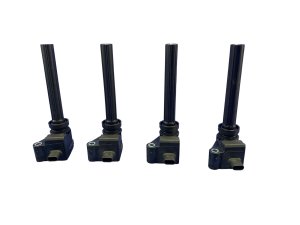
- Ignition Coil
(OEM #JX6Z-12029-B)— This is one of the most frequent culprits for a single-cylinder misfire on modern engines. This part number is applicable to the 2.0L EcoBoost engine and supersedes JX6Z-12029-A.
Trusted brands: Motorcraft, NGK, Bosch, Delphi
OEM price range: $80-$135
Aftermarket price range: $40-$80 - Spark Plug
(OEM #Motorcraft SP-594 (for 2.0L) / SP-550-X (for 1.5L))— As a standard wear item, a fouled or worn spark plug is a very common and simple fix for P0301. TSB 24-2384 identifies this as the first check. SP-594 (CYFS-12Y-RT3) fits the 2.0L engine. SP-550-X is listed for the 1.5L engine. 🎬 Watch: Step-by-step spark plug replacement for the 1.5L EcoBoost.
Trusted brands: Motorcraft, NGK
OEM price range: $15-$25
Aftermarket price range: $8-$15
Related Codes That Often Appear With This One
- P0316 — Indicates a misfire was detected within the first 1000 engine revolutions after startup. This code was reported alongside P0301 in an NHTSA complaint for a 2023 Escape, often pointing to a more significant issue like low compression or coolant in the cylinder overnight.
- P0300 — Indicates a random or multiple cylinder misfire. If the underlying cause affects more than just cylinder 1, this code may appear.
- P0302, P0303, P0304 — Indicates misfires in other specific cylinders. Their presence alongside P0301 suggests a more widespread problem, such as a vacuum leak, fuel delivery issue, or a systemic problem mentioned in TSBs.
Technical Service Bulletins (TSBs) & Recalls
- TSB 24-2384: Specifically for 2023-2025 Escape/Corsair models with 1.5L and 2.0L engines, this TSB addresses misfire codes P0301-P0304. It instructs technicians to first inspect spark plugs. If a plug is damaged, the procedure calls for a borescope inspection of the cylinder walls and pistons, as well as checking PCM ground circuits.
Platform-Specific Known Issues
- A 2024 Ford Escape owner reported a P0301 code, and the issue was resolved by replacing the coil pack and spark plugs, as documented in NHTSA ODI #11678879.
- A more severe case was reported for a 2023 Ford Escape with codes P0301 and P0316. Diagnosis revealed low compression in cylinder 1 (70 PSI), indicating a potential cylinder head leak, as noted in NHTSA ODI #11720710.
Mechanic-Grade Diagnostic Values
- Ignition Coil Primary Resistance — expected: 0.4 to 2.0 Ohms. Failure: A reading outside of this range indicates a faulty coil.
- Ignition Coil Secondary Resistance — expected: 6,000 to 10,000 Ohms. Failure: A reading outside of this range suggests the coil's secondary winding has failed.
- Fuel Injector Resistance (2.0L EcoBoost GDI) — expected: 1.0 to 2.0 Ohms. Failure: Readings outside this very low range suggest a faulty injector. Do not back-probe the connector with the engine running.
- Spark Plug Gap (2.0L EcoBoost) — expected: 0.027 - 0.031 inches. Failure: An incorrect gap can lead to a weak spark and misfires under boost.
Hidden / Shadow Codes Worth Checking
- Mode $06 Data: This diagnostic mode provides raw test data from the vehicle's non-continuous monitors. For misfires, it shows the raw count for each cylinder before the count is high enough to trigger a Check Engine Light. This is extremely useful for confirming an intermittent misfire on a specific cylinder. (see via A high-quality consumer OBD-II scanner or a professional scan tool with Mode $06 capability.)
Scan Tool Commands That Help
- Ford IDS (or equivalent professional scanner): Power Balance Test — This is the fastest way to confirm a live misfire. It graphically displays the rotational speed contribution of each cylinder in real-time, allowing a technician to see the drop from cylinder 1 and verify the repair is successful after parts are replaced.
- Ford IDS / High-End Aftermarket Scanners (e.g., Snap-on): Misfire Monitor Neutral Profile Correction — This procedure MUST be performed after major engine or transmission repairs, such as replacing a PCM, crankshaft sensor, or flexplate. Failure to relearn the crankshaft position sensor profile can cause false misfire codes (P0300, P0301, etc.) under load, even when no mechanical misfire is present.
Wiring & Ground Locations
- Engine Harness Chafe Points — On some GM models with similar engine layouts, harness chafe is a known issue near the ECM/TCM bracket, the driver's side upper control arm, and the shock tower. While not specific to the 2023-2025 Escape, these are logical places to inspect for any wiring that may have come loose from its clips and is rubbing against metal components.. A short-to-ground in the wiring for the ignition coil or fuel injector on cylinder 1 can cause an intermittent or constant misfire that mimics a component failure.
OEM Part Supersession History
JX6Z-12029-A→JX6Z-12029-B— Standard part revision by the manufacturer. Reasons are not publicly documented but typically involve improvements in materials, internal windings, or manufacturing processes for better reliability or performance.
Helpful Videos

We Have This Part in Stock

The information in this article is provided for general reference and educational purposes only. Vehicle specifications, procedures, and part compatibility can vary by production date, trim level, and region. Always consult your vehicle's factory service manual and verify part numbers before purchasing or performing repairs. Safety-critical components such as airbags, seat belts, and braking systems should be installed by a qualified professional.
- Ford ESCAPE:
- 🎬 Helpful Videos
- 🛍️ Shop This Part
- What's Unique About the 2023-2025 Ford ESCAPE
- Diagnostic Flowchart
- Symptoms You May Notice
- Most Likely Causes
- Rare But Worth Checking
- Diagnosis Steps
- Parts You'll Likely Need
- Related Codes That Often Appear With This One
- Technical Service Bulletins (TSBs) & Recalls
- Platform-Specific Known Issues
- Mechanic-Grade Diagnostic Values
- Hidden / Shadow Codes Worth Checking
- Scan Tool Commands That Help
- Wiring & Ground Locations
- OEM Part Supersession History
- 🎟️ Get 5% Off