

P0301 on 2015 Dodge Journey: Cylinder 1 Misfire Causes and Fixes
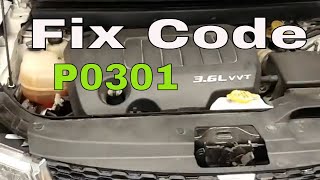
P0301 on a 2015 Dodge Journey indicates a misfire in cylinder 1. The most common causes are a worn spark plug or a faulty ignition coil. For the 2.4L engine, this code is often linked to a crankshaft position sensor issue per manufacturer TSBs. On the 3.6L V6, cylinder 1 is on the rear bank, requiring intake manifold removal for access. A simple fix like a spark plug can cost under $20, while a shop repair could range from $100 to over $600 if the intake needs to be removed.
- P0301 is a misfire on cylinder 1. The most common fixes are replacing the spark plug or ignition coil.
- A simple 'swap test' by moving the coil and plug to another cylinder is the fastest way to diagnose the problem.
- If you have the 2.4L engine and see other misfire codes or a P0335 code, the problem is likely the crankshaft position sensor circuit, which may require a software update from a professional.
- Do not ignore a flashing check engine light, as it indicates a severe misfire that can quickly destroy your expensive catalytic converter.
What's Unique About the 2015-2015 Dodge JOURNEY
For the 2015 Dodge Journey, a P0301 code can be a simple ignition issue, but there's a key difference depending on the engine. On the 2.4L I4 engine, Dodge issued Technical Service Bulletins (TSBs) #18-081-17 and #18-033-16, which directly link P0301 and other misfire codes to a fault in the crankshaft position sensor circuit. This means that for the 4-cylinder model, the problem may not be a simple tune-up part but rather a sensor issue that could require a PCM software update. For the 3.6L V6, the causes are more typical, but cylinder 1 is located on the rear bank (firewall side), making access difficult. Replacing the spark plug or coil for cylinder 1 requires removing the upper intake manifold, significantly increasing labor time and cost.
Diagnostic Flowchart
Tap your situation to follow the diagnostic path that matches what you're seeing on this vehicle.
Symptoms You May Notice
- Check engine light is on or flashing
- Rough or shaky idle
- Engine hesitation or stumbling during acceleration
- Loss of engine power
- Reduced fuel economy
- Smell of gasoline from the exhaust
- Noticeable engine vibration
- Replacing only the spark plug when the ignition coil is also weak.
- On the 2.4L engine, replacing ignition components when the root cause is the crankshaft position sensor circuit as described in TSBs.
- On the 3.6L engine, repeatedly replacing plugs and coils when the underlying issue is a failing rocker arm, as documented by owners on forums.
Most Likely Causes
- Worn or Faulty Spark Plug 🔴 High Probability Spark plugs are a routine maintenance item with a finite lifespan. The 3.6L V6 uses long-life iridium plugs, but they can still fail prematurely or wear out.
How to confirm: Remove the spark plug from cylinder 1 and inspect it for wear, fouling (black, oily, or white deposits), or damage to the electrode. A simple diagnostic test is to swap the spark plug from cylinder 1 with another cylinder on the same bank (e.g., cylinder 3). If the code changes to P0303, the spark plug is the problem.
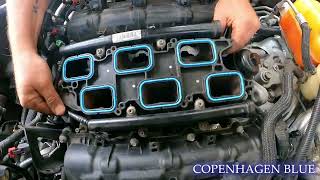
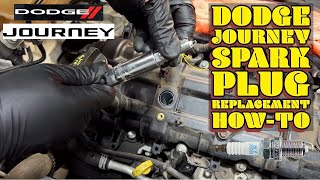
Typical fix: Replace the spark plug. It is highly recommended to replace all spark plugs as a set to ensure even performance. 🎬 See this step-by-step 3.6L spark plug and intake gasket walkthrough For the 3.6L, this is a labor-intensive job due to the need to remove the upper intake manifold to access the rear bank.
Est. part cost: $5-$20 per plug - Faulty Ignition Coil 🔴 High Probability Coil-on-plug ignition systems are subjected to significant heat and vibration, leading to eventual failure. This is a common failure point on many modern engines, including the Journey's.
How to confirm: Swap the ignition coil from cylinder 1 with another cylinder (e.g., cylinder 3). Clear the codes and drive the vehicle. If the misfire code moves to the other cylinder (e.g., P0303), the ignition coil is faulty.
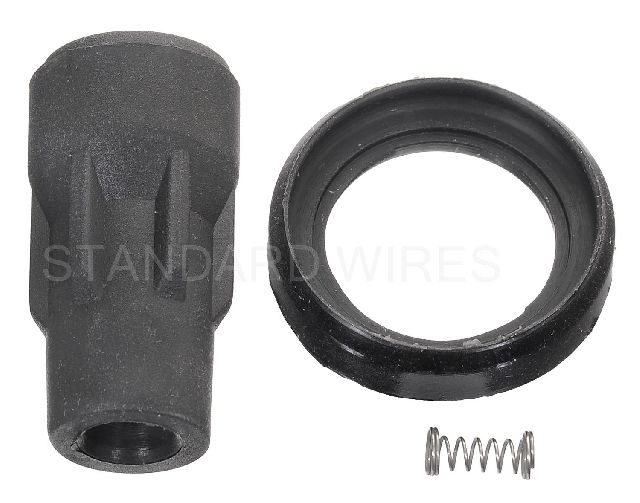
Typical fix: Replace the failed ignition coil. It's often wise to replace the corresponding spark plug at the same time, especially on the 3.6L V6, given the labor required to access cylinder 1.
Est. part cost: $40-$90 - Faulty Crankshaft Position Sensor or Circuit (2.4L Engine) 🟡 Medium Probability Manufacturer TSBs #18-081-17 and #18-033-16 specifically identify this as a problem on the 2.4L engine, where a software logic issue can misinterpret sensor data and set misfire codes.
How to confirm: This is best confirmed by a diagnostic scan that shows code P0335 (Crankshaft Position Sensor Circuit) alongside P0301 and other misfire codes (P0302, P0303, P0304). The TSB also mentions the vehicle may stall when stopping or turning. A forum user with a 2010 2.4L experienced this exact scenario of stalling and rough running, which led to a P0301 code after sensor replacement, indicating the complexity of the issue.
Typical fix: The official fix involves reprogramming the Powertrain Control Module (PCM) with updated software. In some cases, the crankshaft position sensor or its wiring harness may also need to be replaced.
Est. part cost: $30-$70 for the sensor - Failed Rocker Arm / Lifter (3.6L V6) 🟡 Medium Probability The 3.6L Pentastar engine is known for issues with rocker arm bearing failure, which causes a distinctive ticking sound ('Pentastar tick'). When the bearing fails, it can lead to improper valve lift, causing a misfire.
How to confirm: Listen for a loud, rhythmic ticking sound from the top of the engine, especially from the bank where cylinder 1 is located (rear bank). The sound may be more pronounced on a cold start. If ignition and fuel system checks do not resolve the P0301, a mechanical issue like this is the next logical step. Diagnosis requires removing the valve cover for visual inspection of the camshaft and rocker arms.
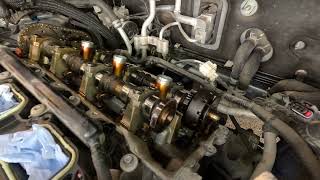
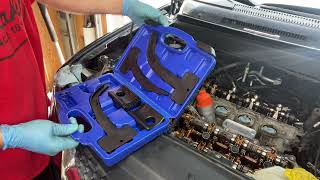
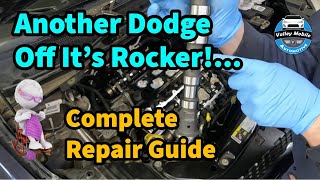
Typical fix: Replace all rocker arms and lifters on the affected cylinder head. This is a significant repair, requiring removal of the intake manifold and valve cover. It is a 7+ hour job. 🎬 Watch: Complete guided repair for Pentastar rocker arm replacement
Est. part cost: $10-$20 per rocker arm, but labor is the primary cost driver. - Faulty Fuel Injector ⚪ Low Probability
How to confirm: After confirming the spark plug and coil are good, you can listen to the injector with a mechanic's stethoscope or a long screwdriver to ensure it's making a consistent clicking sound. You can also swap the injector with another cylinder to see if the code follows, though this is more labor-intensive, especially for cylinder 1 on the 3.6L. A resistance test with a multimeter should show around 12.0-12.5 Ohms.
Typical fix: Replace the faulty fuel injector and its seals.
Est. part cost: $50-$120
Rare But Worth Checking
- Low Engine Compression: This indicates a more serious internal engine problem, such as a leaking valve, worn piston rings, or a bad head gasket. A compression test and a cylinder leak-down test are needed to diagnose this. A user on a Reddit forum with a similar Chrysler 3.6L engine had a P0301 and the dealer found low compression, leading to a deeper engine inspection.
- Vacuum Leak: A leak in the intake manifold gasket or a vacuum hose near cylinder 1 can lean out the air-fuel mixture and cause a misfire. This is usually accompanied by a hissing sound and a high idle. Given the intake manifold must be removed for a cylinder 1 repair on the 3.6L, it's critical to use new gaskets upon reassembly to prevent this.
- Oil in Spark Plug Tube (2.4L Engine): A failing valve cover gasket or spark plug tube seal can allow oil to leak into the spark plug well, shorting out the ignition coil and causing a misfire. When removing the coil, check for liquid oil on the coil boot and down in the tube.
Diagnosis Steps
- Read the codes: Use an OBD-II scanner to confirm P0301 and check for any other codes, especially P0335 on a 2.4L engine.
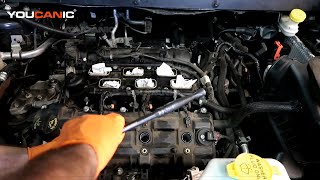
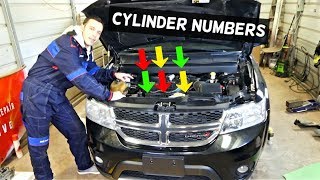
- Identify Cylinder 1 Location: On the 2.4L I4, cylinder 1 is on the driver's side (leftmost). On the 3.6L V6, cylinder 1 is on the rear bank (firewall side), passenger side. 🎬 Watch: How to identify cylinder locations on the 3.6L V6
- Check for a flashing Check Engine Light: If it's flashing, the misfire is severe and can cause catalytic converter damage. Avoid driving.
- Isolate the ignition system (2.4L Engine): For the 2.4L, access is easy. Swap the cylinder 1 coil to cylinder 2. Clear codes and run the engine. If the code changes to P0302, the coil is bad. If not, swap the spark plug next. If P0301 returns, the issue is elsewhere.
- Isolate the ignition system (3.6L Engine): Access to cylinder 1 requires removing the upper intake manifold. This is a more involved job. If you are committing to this, it is highly recommended to replace all three rear spark plugs and potentially the coils at the same time. However, a diagnostic swap can be performed by moving the cylinder 1 coil to the cylinder 3 position before reassembling. If the code changes to P0303, the coil was the culprit.
- Listen for Mechanical Noise (3.6L Engine): Before tearing down, listen for a distinct ticking from the rear valve cover area. This 'Pentastar tick' is a strong indicator of a failed rocker arm, a known issue.
- Investigate the fuel system: If ignition parts are good, check the fuel injector on cylinder 1. Listen for a steady clicking sound. Check the injector's electrical connector for power and damage.
- Check for TSB-related issues (2.4L Engine): If you have a 2.4L engine and codes P0335 or multiple misfire codes are present, refer to TSB #18-081-17. The fix likely requires a PCM software update from a dealer or qualified shop.
- Check for mechanical issues: If all else fails, perform a compression test to check for internal engine problems.
Parts You'll Likely Need
- Spark Plug
(OEM #SP149125AE (for 3.6L V6))— Spark plugs are wear items and the most frequent cause of a single-cylinder misfire.
Trusted brands: NGK, Champion
OEM price range: $15-$25
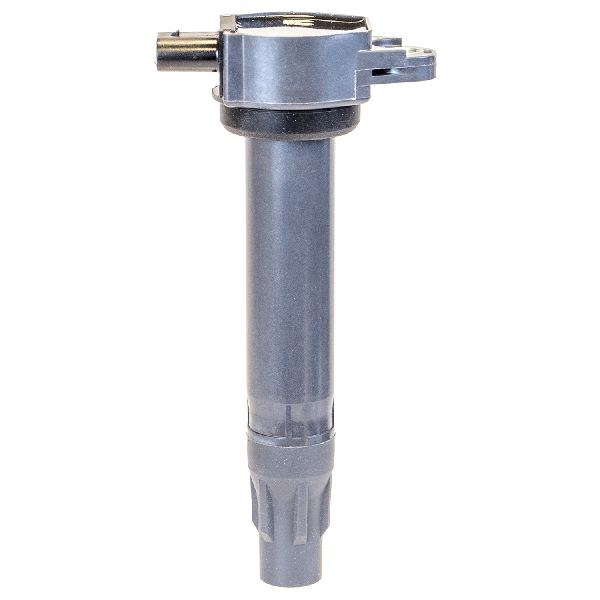
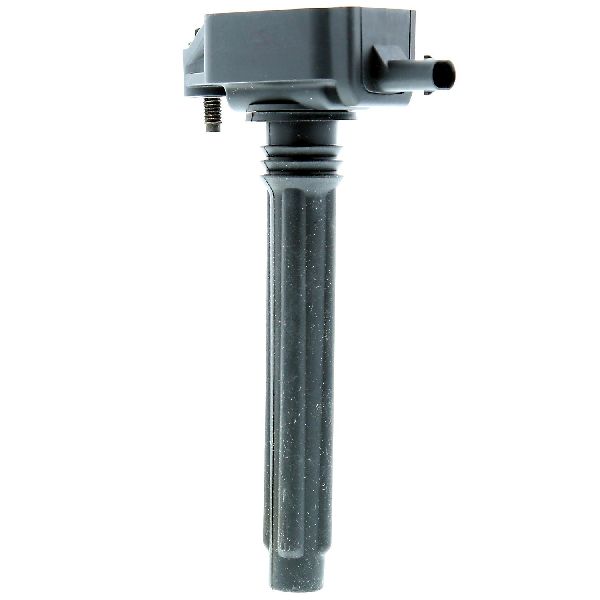
Aftermarket price range: $5-$20 - Ignition Coil
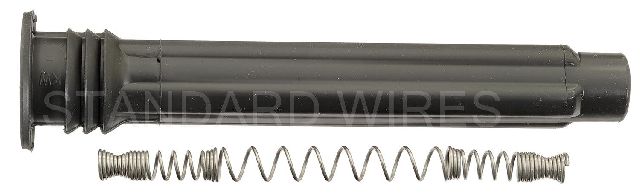
(OEM #5149168AH (superseded by 5149168AJ for 3.6L V6))— Ignition coils provide the high voltage for the spark plug and can fail over time, causing a misfire.
Trusted brands: Mopar, Denso, Delphi
OEM price range: $60-$100
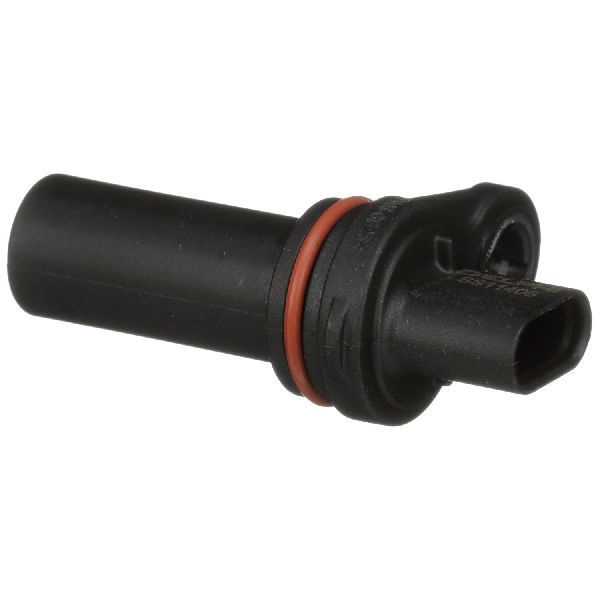
Aftermarket price range: $40-$90 - Crankshaft Position Sensor
(OEM #05149168AH (Note: This is an ignition coil part number, CKP part number is different, e.g., Mopar 68080819AC))— Specific to the 2.4L engine, a faulty sensor or circuit can incorrectly trigger misfire codes as documented in manufacturer TSBs.
Trusted brands: Mopar, Bosch, NTK
OEM price range: $50-$80
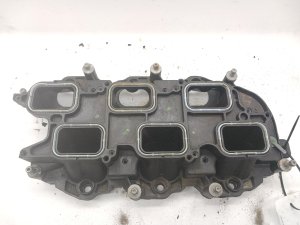
Aftermarket price range: $30-$70 - Upper Intake Manifold Gasket Set — Required for any repair involving cylinder 1 on the 3.6L V6, as the intake manifold must be removed. Reusing old gaskets is a major cause of vacuum leaks.
Trusted brands: Mopar, Fel-Pro
OEM price range: $30-$50
Aftermarket price range: $15-$30
Related Codes That Often Appear With This One
- P0300 — This is a 'Random/Multiple Cylinder Misfire' code. It often appears if the underlying issue, like a vacuum leak or fuel pressure problem, is starting to affect other cylinders.
- P0335 — On the 2.4L engine, this 'Crankshaft Position Sensor Circuit' code is directly linked to misfire codes per TSB #18-081-17 and #18-033-16, indicating the sensor system is the likely cause of the misfire detection.
- P0302, P0303, P0304 — Misfire codes for other cylinders. When seen with P0301 on the 2.4L engine, it strongly suggests the crankshaft position sensor issue noted in the TSBs.
- P0303, P0305 — Misfire codes for other cylinders on the same bank as cylinder 1 (rear bank) on the 3.6L V6. This could point to a shared issue like a vacuum leak at the intake manifold gasket for that bank.
Technical Service Bulletins (TSBs) & Recalls
- 18-081-17: Flash: Powertrain Diagnostic and System Enhancements. Links P0301, other misfires, and P0335 on the 2.4L engine to a crankshaft sensor circuit issue requiring a PCM update.
- 18-033-16: Flash: Powertrain Diagnostic and System Enhancements. An earlier version of the bulletin addressing the same 2.4L engine misfire and stall condition.
- 08-027-20: While not for the Journey specifically, this TSB for other 2.4L engines suggests misfires can sometimes be resolved by replacing the ignition coil insulating boots, indicating a potential point of failure.
Platform-Specific Known Issues
- 2.4L Engine Crankshaft Sensor Fault: TSBs #18-081-17 and #18-033-16 were issued for the 2015 Journey with the 2.4L engine. They state that faults in the crankshaft position sensor circuit can cause the PCM to set P0301, P0302, P0303, P0304, and P0335. The recommended fix is a PCM software update and potential sensor replacement. Symptoms can include engine stalling when coming to a stop.
- 3.6L V6 Cylinder 1 Access: On the 3.6L Pentastar engine, the cylinders are numbered 1-3-5 on the rear bank (firewall side) and 2-4-6 on the front bank (radiator side). This means accessing the spark plug or ignition coil for cylinder 1 requires the complete removal of the upper intake manifold, a process that adds significant labor time and cost to what would otherwise be a simple repair.
- 3.6L V6 Rocker Arm Failure: The Pentastar engine is widely known for premature failure of the rocker arm bearings, causing a loud ticking noise and eventually leading to misfires. If a P0301 code on a 3.6L is accompanied by a ticking sound and is not resolved by ignition components, this is a highly probable cause.
Mechanic-Grade Diagnostic Values
- Ignition Coil Primary Resistance (3.6L V6) — expected: 0.4 - 2.0 Ohms. Failure: A reading outside this range.
- Ignition Coil Secondary Resistance (3.6L V6) — expected: 6,000 - 10,000 Ohms. Failure: A reading outside this range.
- Fuel Injector Resistance (3.6L V6) — expected: Approximately 12.0 - 12.5 Ohms. Failure: A reading that is significantly higher, lower, or shows an open loop (OL).
- Long Term Fuel Trim (LTFT) at Idle — expected: -10% to +10%. Failure: Values significantly outside this range can indicate a vacuum leak or fuel delivery issue contributing to the misfire.
Hidden / Shadow Codes Worth Checking
- Live Misfire Counters (Mode 6 Data): The PCM tracks misfire events for each cylinder in real-time, even before they are frequent enough to set a P030x code. This data can confirm which cylinder is misfiring and how often. (see via Using a professional scan tool like the dealer's wiTECH software, navigate to OBD II Monitors and select 'Which cylinder is misfiring'. Many advanced consumer OBD-II scanners can also access Mode 6 data.)
Scan Tool Commands That Help
- wiTECH: OBD II Monitors -> Which cylinder is misfiring — Use this function to view live misfire counts for all cylinders. This is crucial for confirming that the misfire is isolated to cylinder 1 and not a random misfire (P0300) that is just beginning to manifest.
- wiTECH: Cylinder Power Balance Test — This bidirectional test allows the technician to sequentially disable the fuel injector for each cylinder. When the injector for a healthy cylinder is disabled, the engine RPM will drop noticeably. If disabling the cylinder 1 injector causes little or no change in RPM, it confirms that cylinder is not contributing power, pointing to a problem with its ignition, fuel, or compression.
Wiring & Ground Locations
- Cylinder 1 Ignition Coil Connector (3.6L) — On the rear cylinder bank (firewall side), passenger side. The connector has two pins.. The Dark Green/Orange wire is the control signal from the PCM. The other wire is the shared power feed. Checking for a pulsed ground signal on the control wire with a noid light or scope during cranking can verify if the PCM is commanding the coil to fire.
- Cylinder 1 Fuel Injector Connector (3.6L) — On the rear cylinder bank, under the intake manifold. The connector has two pins.. A loose or corroded connector can cause an open circuit (often triggering a P0201 code alongside P0301). One owner of an older 3.5L Journey fixed both codes by cleaning and tightening the pin terminals inside the injector connector. The wire colors are typically a shared power wire and a unique color for the PCM driver (e.g., Dark Green/Light Green).
- Engine Block to Chassis Grounds — A primary ground cable runs from the negative battery jump post on the driver's side strut tower to the engine block. Another smaller ground wire is located on the passenger side engine mount, connecting to the passenger strut tower.. Forum users report that the factory 4-gauge ground cables are undersized and that weak or corroded grounds are a source of numerous electrical issues on the Journey. A poor engine ground can cause intermittent issues with ignition coil and injector operation, leading to misfires. Upgrading these grounds is a common preventative measure recommended by owners.
Real Owner Repair Stories
- Dodge Journey Forum (2015 Journey V6 3.6L) — Check engine light with code P0301.
❌ Tried (didn't work) Replaced the spark plug for cylinder 1., Replaced the ignition coil for cylinder 1.
✅ What actually fixed it The user posted that after the common ignition parts were replaced and the code returned, the mechanic stopped responding. Another forum member suggested the next step would be to check for a faulty fuel injector or, more seriously, low compression or a failed rocker arm, which are known issues on the 3.6L engine. The thread highlights that when basic parts don't work, the problem is likely mechanical or fuel-related. - YouTube - MkNk FACIL (Dodge Journey V6 3.5L (similar diagnostic principle)) — Check engine light with codes P0301 (Cylinder 1 Misfire) and P0201 (Injector 1 Circuit Malfunction).
❌ Tried (didn't work) Initial diagnosis pointed towards replacing the fuel injector.
✅ What actually fixed it The mechanic found that the electrical connector terminals for the cylinder 1 fuel injector were spread too far apart, causing a poor connection. Instead of replacing the injector, he removed the orange terminal lock, carefully bent the female pins closer together with a small pick, and reconnected it. This restored the proper connection and resolved both codes.
OEM Part Supersession History
5149168AH, 5149168AI→5149168AJ— Standard part revision and improvement by the manufacturer.
Heads up: These part numbers are generally interchangeable for the 2015 3.6L Journey, but it is always best practice to use the latest revision (5149168AJ) for any replacement.5184296AD, AE, AF, AG→5184296AH— Updated design to address premature bearing failure in the rocker arms, which causes the 'Pentastar tick' and associated misfires.
Heads up: The 'AH' revision is the recommended replacement part to prevent recurrence of the failure.
Helpful Videos
Used OEM Parts in Stock


New Aftermarket Parts Available

The information in this article is provided for general reference and educational purposes only. Vehicle specifications, procedures, and part compatibility can vary by production date, trim level, and region. Always consult your vehicle's factory service manual and verify part numbers before purchasing or performing repairs. Safety-critical components such as airbags, seat belts, and braking systems should be installed by a qualified professional.
- Dodge JOURNEY:
- 🎬 Helpful Videos
- 🛍️ Shop This Part
- What's Unique About the 2015-2015 Dodge JOURNEY
- Diagnostic Flowchart
- Symptoms You May Notice
- Most Likely Causes
- Rare But Worth Checking
- Diagnosis Steps
- Parts You'll Likely Need
- Related Codes That Often Appear With This One
- Technical Service Bulletins (TSBs) & Recalls
- Platform-Specific Known Issues
- Mechanic-Grade Diagnostic Values
- Hidden / Shadow Codes Worth Checking
- Scan Tool Commands That Help
- Wiring & Ground Locations
- Real Owner Repair Stories
- OEM Part Supersession History
- 🎟️ Get 5% Off