

P0301 on 2022-2025 Dodge Durango: Cylinder 1 Misfire Causes and Fixes
P0301 means cylinder 1 is misfiring. The most common causes are a bad ignition coil or a worn spark plug. However, on the 3.6L V6, it can indicate a failing rocker arm, and on the 5.7L Hemi V8, it could be a collapsed lifter, which are more serious and costly repairs. Always check for ticking noises from the engine.
- P0301 is a misfire on cylinder 1. Do not ignore it, especially if the check engine light is flashing.
- Always start diagnosis with the simple, inexpensive parts: swap the ignition coil and inspect the spark plug for cylinder 1.
- Be aware of your engine. On the 3.6L V6, listen for a top-end tick (rocker arms). On the 5.7L/6.4L Hemi V8, listen for a deeper tick (lifters/camshaft).
- Several TSBs exist for this code, some of which point to a simple software update at the dealership. This is worth checking if no obvious mechanical fault is found.
- Repair costs vary dramatically. A spark plug is under $20, but a camshaft/lifter job can cost over $4,000. Proper diagnosis is key.
What's Unique About the 2022-2025 Dodge DURANGO
For the Dodge Durango, a P0301 code goes beyond typical spark plug issues. Depending on your engine, it can be a red flag for known, more severe mechanical problems. On the 3.6L Pentastar V6, this code is often an early warning for rocker arm bearing failure, a well-documented issue that causes a 'Pentastar tick'. For the 5.7L Hemi V8, it's frequently linked to the infamous 'Hemi tick,' caused by a failing MDS lifter and subsequent camshaft damage. While it's wise to check ignition components first, owners should be aware of these more serious, engine-specific possibilities that often require extensive repairs.
Diagnostic Flowchart
Tap your situation to follow the diagnostic path that matches what you're seeing on this vehicle.
Symptoms You May Notice
- Check Engine Light is on or flashing
- Rough engine idle
- Shaking or hesitation during acceleration
- Noticeable loss of power
- Reduced fuel economy
- Engine may stall when stopped
- Smell of gasoline from the exhaust
- Audible ticking or tapping sound from the engine, like a sewing machine
- Replacing only the spark plug when the ignition coil is the actual cause, or vice-versa.
- Replacing ignition components when the underlying cause is a mechanical issue like a failed lifter (Hemi) or rocker arm (Pentastar). This often happens when a DIYer or mechanic does not listen for the characteristic ticking sound.
- Assuming a ticking noise is a harmless exhaust leak when it is actually the 'Hemi tick' of a failing lifter.
Most Likely Causes
- Faulty Ignition Coil 🔴 High Probability Coils are a common wear item. A worn-out spark plug can overwork the coil, leading to premature failure. Cracks in the epoxy can also allow moisture in, causing failure.
How to confirm: Swap the ignition coil from cylinder 1 with another cylinder (e.g., cylinder 3). Clear the codes and drive. If the code changes to P0303, the coil is bad. Cylinder 1 is the front-most cylinder on the passenger side for both V6 and V8 engines.
Typical fix: Replace the faulty ignition coil. It's best practice to replace the corresponding spark plug at the same time.
Est. part cost: $40-$80 - Worn or Fouled Spark Plug 🔴 High Probability Spark plugs are a maintenance item with a finite lifespan. The provided TSBs mention misfires during warm-up or cold starts, which can be related to plug condition. Excessive time between changes can lead to a very wide gap, stressing the ignition coil.
How to confirm: Remove the spark plug from cylinder 1 and inspect it. Look for a worn electrode (no longer square), excessive carbon buildup, oil fouling, or a cracked porcelain insulator. Compare the gap to the manufacturer's specification.
Typical fix: Replace the spark plug. It is highly recommended to replace all spark plugs at the same time for consistent performance. On the 3.6L V6, this requires removing the upper intake manifold.
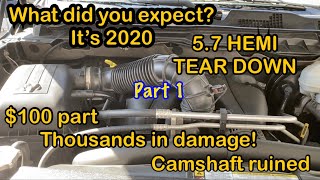
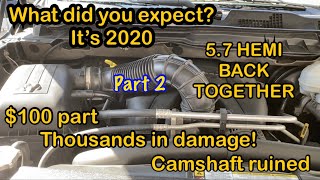
Est. part cost: $10-$25 per plug - Failed Lifter / Worn Camshaft (5.7L & 6.4L Hemi V8) 🟡 Medium Probability The Hemi engines, particularly those with the Multi-Displacement System (MDS), are known for lifter roller bearing failure. This causes the lifter to seize and grind down the camshaft lobe, leading to a persistent misfire and a characteristic 'ticking' sound. This is estimated to affect around 5% of Hemi engines.
How to confirm: Listen for a loud, rhythmic ticking or tapping noise from the engine that increases with RPM. A mechanic can confirm by removing the valve cover and inspecting the valvetrain for play or by cutting open the oil filter to look for metal shavings.
Typical fix: This is a major repair requiring replacement of the camshaft, all lifters (often upgrading to non-MDS 'Hellcat' lifters), head gaskets, and related components. It is labor-intensive and expensive.
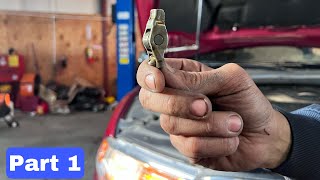
Est. part cost: $800-$2000+ - Failed Rocker Arm (3.6L Pentastar V6) 🟡 Medium Probability The 3.6L Pentastar engine has a known weakness in the needle bearings of the rocker arms. Failure leads to the roller seizing, which then wears on the camshaft, causing a ticking noise, excessive play, and eventually a misfire.
How to confirm: Listen for a distinct ticking sound from the top of the engine, particularly from the passenger side for cylinder 1. Diagnosis requires removing the upper intake and valve cover to physically inspect the rocker arms and camshaft lobes for wear and scoring.
Typical fix: Replace the failed rocker arm(s) and any damaged lifters. If the camshaft is scored, it must also be replaced. Many mechanics recommend replacing all 12 rocker arms and 12 lifters on the affected bank as a preventative measure.
Est. part cost: $150-$500 - Faulty Fuel Injector ⚪ Low Probability
How to confirm: A mechanic can perform a fuel injector balance test. A DIY method is to swap the cylinder 1 injector with another cylinder's injector and see if the misfire code follows the injector. This is more involved than swapping a coil. One can also use a mechanic's stethoscope to listen for the injector's clicking sound.
Typical fix: Replace the faulty fuel injector. Sometimes running a quality injector cleaner through the system can resolve a minor clog.
Est. part cost: $70-$150
Rare But Worth Checking
- PCM Software Issue: As per TSB #18-039-26 and #18-034-26, misfires (including P0301) can be set during cold start or warm-up periods due to software calibration. If no mechanical fault is found, a PCM update from the dealer could be the fix. These TSBs specifically address this scenario.
- Intake Manifold Gasket Leak: A vacuum leak near the cylinder 1 intake runner can lean out the air/fuel mixture and cause a misfire. This is especially a risk on the 3.6L V6 when the intake manifold is removed for other service, like a spark plug change. Diagnosis is done with a smoke test.
- Low Cylinder Compression: This indicates a more serious internal engine problem, such as a leaking valve, damaged piston, or head gasket failure. A compression test is required to diagnose this.
Diagnosis Steps
- Read the code with an OBD-II scanner and confirm P0301 is present. Note any other codes.
- Check for a flashing check engine light. If flashing, do not drive the vehicle to avoid catalytic converter damage.
- Listen for any unusual engine noises. A rhythmic ticking from the top of the engine is a critical clue for lifter/rocker arm issues.
- Start with the easiest and most common cause: the ignition system. Locate cylinder 1 (on both V6 and V8 engines, it is the front-most cylinder on the passenger side).
- Swap the ignition coil from cylinder 1 with another cylinder (e.g., cylinder 3). Clear the codes and run the engine. If the code changes to P0303, you have a bad coil.
- If the code remains P0301, remove and inspect the spark plug from cylinder 1. Replace if it's worn, fouled, or damaged. It's best to replace all plugs.
- If ignition components are good, inspect the fuel injector wiring for damage. Consider swapping the injector if you have the tools and expertise.
- If the misfire persists and you hear a ticking noise, the issue is almost certainly mechanical (lifter for Hemi, rocker arm for Pentastar). This should be confirmed by a professional.
- A professional can perform a compression test to check for internal engine health and a smoke test to check for vacuum leaks.
Parts You'll Likely Need
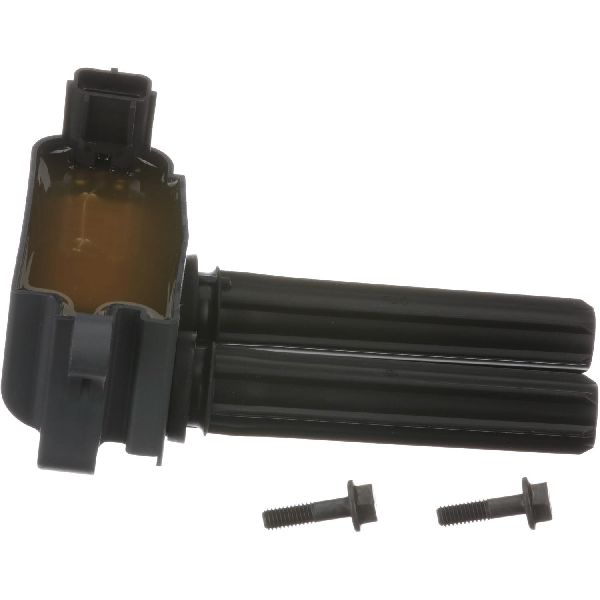
- Ignition Coil
(OEM #68238603AA (for 5.7L/6.4L Hemi), 68223569AD (for 3.6L V6))— This is one of the most frequent failure points for a single-cylinder misfire.
Trusted brands: Mopar, NGK, Delphi
OEM price range: $60-$90
Aftermarket price range: $40-$80 - Spark Plug
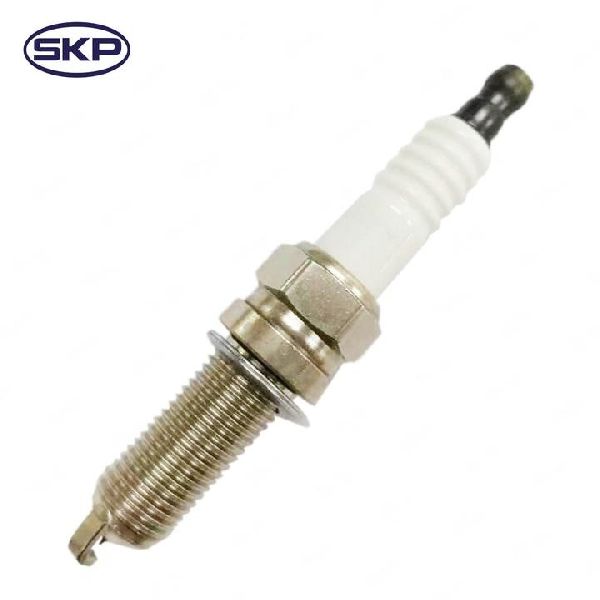
(OEM #SP225755AB (replaces 68225755AA for 3.6L V6), SP149212AC (for 6.4L V8))— Spark plugs are a routine maintenance item and a common cause of misfires as they wear out.
Trusted brands: NGK, Champion
OEM price range: $15-$25
Aftermarket price range: $8-$15 - Camshaft and Lifter Kit (Hemi V8) — For the 5.7L/6.4L Hemi, a P0301 accompanied by a ticking noise is very often due to a failed lifter and damaged camshaft.
Trusted brands: Mopar, COMP Cams, Brian Tooley Racing
OEM price range: $1200-$2000
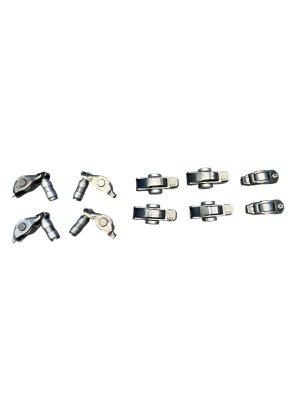
Aftermarket price range: $800-$1500 - Rocker Arm and Lifter Kit (Pentastar V6)
(OEM #5184296AH (Rocker Arm), 5184332AA (Lifter))— For the 3.6L V6, a P0301 with a ticking noise is a strong indicator of rocker arm failure, a known issue requiring replacement of these parts.
Trusted brands: Mopar, Mahle, Melling
OEM price range: $200-$400
Aftermarket price range: $150-$300
Related Codes That Often Appear With This One
- P0300 — This is a 'Random/Multiple Cylinder Misfire' code. It often appears with P0301 if the misfire is intermittent or starting to affect other cylinders, or if the root cause (like low fuel pressure) affects the whole engine.
- P0302, P0303, etc. — If you see other specific cylinder misfire codes alongside P0301, it could point to a common problem affecting all of them, like low fuel pressure, a vacuum leak, or a timing issue.
Technical Service Bulletins (TSBs) & Recalls
- 18-039-26: Addresses misfire codes (P0300, P0301, etc.) set during engine warm-up, recommending a PCM software update.
- 18-034-26: Addresses misfire codes set during cold start catalyst heating, also fixed by a PCM software update.
- 09-011-25: General bulletin for MIL illumination with various P030x codes, potentially resolved by software updates.
- 09-012-24: Bulletin for rough idle and shaking with P030x codes.
- 0902423: Bulletin for rough idle and shaking specifically mentioning P0301.
Platform-Specific Known Issues
- Rocker Arm Failure: The needle bearings in the rocker arms can fail, causing the roller to seize. This leads to a ticking noise and wears a groove into the camshaft lobe, resulting in a misfire. It's a widely documented problem across all platforms using this engine. The repair involves replacing the rocker arms, lifters, and often the camshaft on the affected cylinder bank.
- MDS Lifter and Camshaft Failure: The roller on the MDS (Multi-Displacement System) lifters is prone to seizing. When this happens, the lifter grinds against the camshaft lobe, destroying both components. This causes a distinct 'Hemi tick' and a persistent misfire. The standard fix is to replace the camshaft and all lifters, often using non-MDS lifters (like those from the Hellcat) and disabling the MDS system via tuning to prevent recurrence.
Mechanic-Grade Diagnostic Values
- Fuel Pressure (3.6L V6) — expected: 58 - 64 PSI. Failure: Pressure below 58 PSI can cause a lean condition and misfires.
- Fuel Injector Resistance (3.6L V6) — expected: 12.0 - 12.5 Ohms. Failure: Readings outside this range indicate a faulty injector coil.
- Ignition Coil Primary Resistance — expected: 0.4 - 2.0 Ohms. Failure: A reading outside this range suggests a problem with the primary winding of the coil.
- Ignition Coil Secondary Resistance — expected: 6,000 - 11,000 Ohms. Failure: A reading outside this range suggests a problem with the secondary winding of the coil.
Hidden / Shadow Codes Worth Checking
- Mode 6 Misfire Counters: The PCM tracks misfires per cylinder even if they are not frequent enough to trigger a Check Engine Light. High counts on cylinder 1 confirm an intermittent or developing issue. (see via A professional-grade scan tool (like wiTECH, Autel, Snap-on) with Mode 6 or live data capabilities.)
Scan Tool Commands That Help
- wiTECH or equivalent: View Misfire Data / Misfire Counter — Use this at the start of diagnosis to view live and historical misfire counts for each cylinder. This helps confirm the misfire is isolated to cylinder 1, especially for intermittent faults.
- wiTECH or equivalent: Cylinder Contribution Test — This function deactivates one cylinder at a time to measure the RPM drop. A cylinder with a small or no RPM drop when deactivated is not contributing properly, confirming the misfire location.
Wiring & Ground Locations
- G904 / G905 — Lower left side of the engine block.. These are primary engine ground points. Corrosion or looseness here can create a weak ground path for the ignition system, leading to a weak spark and misfires.
- G907a (3.6L) — Lower right front of the engine compartment.. Another critical engine ground. A poor connection can cause erratic behavior in sensors and the ignition system, contributing to misfire codes.
- Cylinder Head to Chassis Ground Strap — A braided or solid strap connecting the engine cylinder head to the vehicle's chassis/firewall.. The ignition coils are often grounded through the cylinder head. If this main ground strap is broken or corroded, it can cause a weak or inconsistent spark across all cylinders, which may first manifest as a single cylinder misfire.
Real Owner Repair Stories
- YouTube channel 'Fix It All' (2015 Dodge Durango 3.6L V6 with 214,000 km) — Check engine light with codes P0300 and P0301.
❌ Tried (didn't work) Swapped ignition coil from cylinder 1 to cylinder 3; the misfire code did not follow the coil.
✅ What actually fixed it Upon inspection, the spark plugs were found to be original and severely worn, with an excessive gap. Replacing all six spark plugs resolved the misfire codes. - YouTube channel 'Steven's Garage' (2015 Dodge Durango 3.6L V6 with over 150,000 miles) — Rough idle and jerky performance, with misfire counts on cylinder 1 visible on a scan tool, but no check engine light initially.
❌ Tried (didn't work) Initial state had aftermarket coils of unknown age.
✅ What actually fixed it The owner found the fuel injectors were gummed up and the spark plugs were carbon-fouled. Replacing all fuel injectors and all spark plugs resulted in a smooth idle and eliminated the misfire counts.
"I Checked Everything" — The Actual Cause
- In cases where a P0301 occurs only during cold starts or engine warm-up, a technician may perform a smoke test and find no vacuum leaks. Ignition and fuel components may also test good. The actual cause, as identified in TSB #18-039-26 and #18-034-26, can be a PCM software calibration issue that incorrectly flags a misfire during specific temperature cycles. The fix is a dealer-installed software update, not a mechanical repair.
When the Usual Fixes Don't Work
- While most P0301 codes are resolved by addressing common ignition or fuel system components, there are documented cases where the problem is much deeper and misdiagnosed. In one instance involving a 2018 3.6L Durango, an owner replaced spark plugs, ignition coils, fuel injectors, and even the PCM, but the P0301 (and P0300) persisted, particularly at high RPM. This indicates that after exhausting the common causes, diagnosis must shift to more complex areas like mechanical timing, camshaft position sensor function, or as is common with the Pentastar, internal valvetrain issues like rocker arms, which ultimately led to a cylinder head replacement in that owner's journey.
OEM Part Supersession History
5184296AD, AE, AF, AG→5184296AH— This is the rocker arm for the 3.6L Pentastar V6. The part has been updated multiple times to improve the durability of the needle bearings, which were a common failure point causing ticking and misfires.
Heads up: While older versions may physically fit, using the latest 'AH' revision is critical for a lasting repair. Some aftermarket versions have been reported to have an incorrect profile, causing further issues.5038784AA, 53021720AC (and others)→5038784AD— This is the MDS lifter for the 5.7L Hemi V8. Part numbers have been updated over the years to address the lifter roller bearing failure issue.
Heads up: When replacing failed MDS lifters, many owners and shops opt to install non-MDS 'Hellcat' lifters (e.g., P/N 53021720BB) along with a new camshaft and an MDS delete tune to prevent future failures.
Model Year Variations Within This Range
- 2022-2023: For 5.7L Hemi engines, TSB #09-012-24 notes that a P0301 misfire, especially when accompanied by a rough idle or shaking, may be caused by a cracked intake manifold, not just the more common ignition or lifter issues.
Helpful Videos
Used OEM Parts in Stock


New Aftermarket Parts Available


The information in this article is provided for general reference and educational purposes only. Vehicle specifications, procedures, and part compatibility can vary by production date, trim level, and region. Always consult your vehicle's factory service manual and verify part numbers before purchasing or performing repairs. Safety-critical components such as airbags, seat belts, and braking systems should be installed by a qualified professional.
- Dodge DURANGO:
- 🎬 Helpful Videos
- 🛍️ Shop This Part
- What's Unique About the 2022-2025 Dodge DURANGO
- Diagnostic Flowchart
- Symptoms You May Notice
- Most Likely Causes
- Rare But Worth Checking
- Diagnosis Steps
- Parts You'll Likely Need
- Related Codes That Often Appear With This One
- Technical Service Bulletins (TSBs) & Recalls
- Platform-Specific Known Issues
- Mechanic-Grade Diagnostic Values
- Hidden / Shadow Codes Worth Checking
- Scan Tool Commands That Help
- Wiring & Ground Locations
- Real Owner Repair Stories
- "I Checked Everything" — The Actual Cause
- When the Usual Fixes Don't Work
- OEM Part Supersession History
- Model Year Variations Within This Range
- 🎟️ Get 5% Off