

P0301 on 2014-2021 Dodge Durango: Cylinder 1 Misfire Causes and Fixes
P0301 indicates a misfire in cylinder 1. On Dodge Durangos, this is commonly caused by a bad ignition coil or spark plug. However, for the 3.6L V6, it can be a sign of a failing rocker arm, and for the 5.7L Hemi V8, it can point to a collapsed lifter, both of which are more serious mechanical issues.
- P0301 is a misfire on cylinder 1. Start diagnosis with the simple fixes: swap the ignition coil and inspect the spark plug.
- Listen carefully for a ticking noise. On a 3.6L V6, it points to rocker arms; on a 5.7L V8, it points to lifters.
- A flashing check engine light is a serious warning. Stop driving to avoid destroying your catalytic converter.
- Repair costs vary dramatically. A spark plug is cheap, but a camshaft and lifter job on a Hemi can cost thousands of dollars.
What's Unique About the 2014-2021 Dodge DURANGO

For the 2014-2021 Dodge Durango, the cause of a P0301 code often depends on the engine. While standard ignition issues are common on both the 3.6L Pentastar V6 and 5.7L Hemi V8, each engine has a well-documented, more severe potential point of failure. The 3.6L Pentastar engine is known for rocker arm bearing failure, which can lead to a ticking noise and eventually a misfire. The 5.7L Hemi V8 is susceptible to camshaft and lifter failure, particularly with the MDS (Multi-Displacement System) lifters, which can collapse when the roller bearing seizes, grinding down the camshaft lobe and causing a persistent misfire.
Diagnostic Flowchart

Tap your situation to follow the diagnostic path that matches what you're seeing on this vehicle.
Symptoms You May Notice

- Rough or shaky idle
- Hesitation or stumbling during acceleration
- Noticeable loss of engine power
- Flashing or solid Check Engine Light
- Engine ticking or tapping noise (especially if related to rocker arms or lifters)
- Reduced fuel economy
- Remote start feature disabled
- Replacing only the spark plug when the ignition coil is the actual cause.
- Replacing ignition components when the underlying issue is a mechanical failure like a rocker arm (3.6L) or lifter (5.7L), especially if a ticking noise is present.
- Assuming a ticking noise is a simple exhaust leak when it is actually the 'Hemi tick' of a failing lifter.
Most Likely Causes

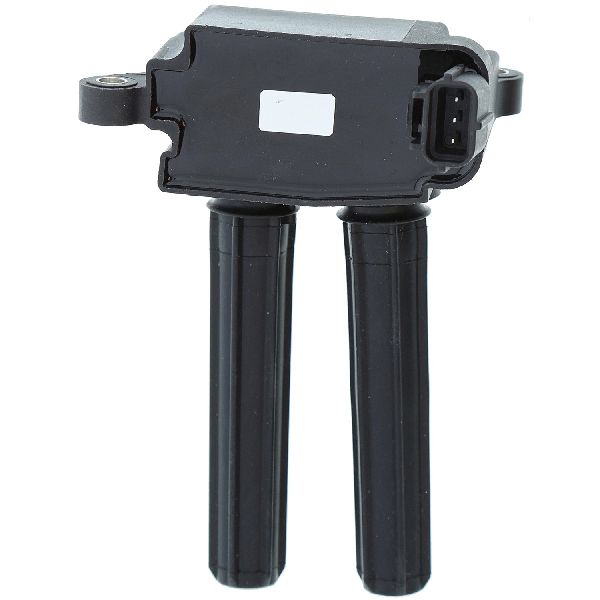
- Faulty Ignition Coil 🔴 High Probability
How to confirm: Swap the ignition coil from cylinder 1 with another cylinder (e.g., cylinder 3). Clear the codes and drive the vehicle. If the code changes to P0303, the coil is bad.
Typical fix: Replace the faulty ignition coil. It is often recommended to replace the spark plug at the same time, as a worn plug can overwork and damage the coil.
Est. part cost: $30-$75 - Worn or Fouled Spark Plug 🔴 High Probability Spark plugs are a regular maintenance item and wear out over time. For 2020-2021 3.6L models, there is a TSB (09-013-20 Rev. A) for internally cracked spark plugs from the factory causing misfires.
How to confirm: Remove the spark plug from cylinder 1 and inspect it. Look for heavy carbon buildup, oil fouling, or a worn/damaged electrode. Compare it to a new plug. An excessively large gap indicates wear.
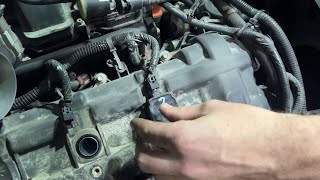
Typical fix: Replace the spark plug. It is best practice to replace all spark plugs at the same time for even performance. On the 3.6L V6, this is a labor-intensive job as the upper intake manifold must be removed 🎬 Watch: The Pentastar access problem and spark plug replacement explained. to access the driver's side plugs (cylinders 2, 4, 6).
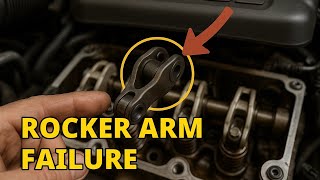
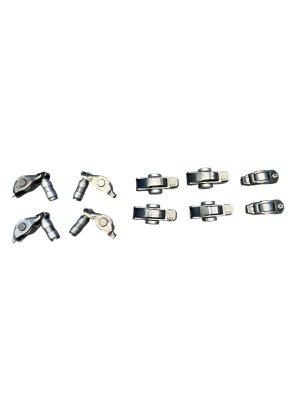
Est. part cost: $10-$25 per plug - Failed Rocker Arm/Lifter (3.6L Pentastar V6) 🟡 Medium Probability The 3.6L Pentastar engine has a known issue with the needle bearings in the rocker arms failing. This causes the roller to stop spinning, leading to excessive play, a ticking noise, and eventually camshaft lobe damage and misfires.
How to confirm: Listen for a distinct ticking noise from the top of the engine, often called the 'Pentastar tick'. A mechanic will remove the valve cover to visually inspect the rocker arms and camshaft lobes for wear, scoring, and damage.
Typical fix: Replace all rocker arms and hydraulic lifters on the affected cylinder head (Bank 1 for P0301). If the camshaft is damaged, it must also be replaced. This is a labor-intensive job.
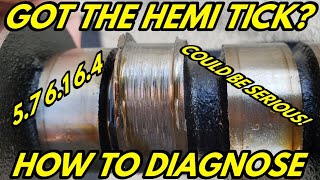
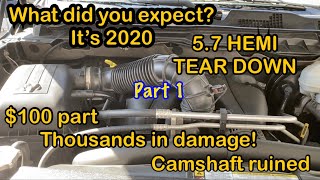
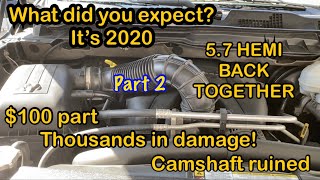
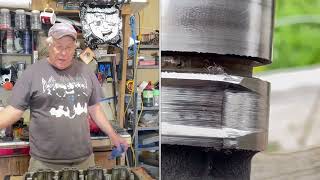
Est. part cost: $100-$300 for a rocker arm and lifter kit - Failed Lifter/Camshaft (5.7L Hemi V8) 🟡 Medium Probability The 5.7L Hemi, particularly the MDS (Multi-Displacement System) lifters, are prone to failure. The roller on the lifter can seize due to oiling issues or component defects, which then grinds away the corresponding camshaft lobe, causing a significant misfire often accompanied by a loud tick.
How to confirm: A ticking noise that gets worse as the engine warms up is a common symptom, often called the 'Hemi tick'. Diagnosis requires removing the valve covers and potentially the cylinder heads to inspect the lifters and camshaft for scoring or wear. A pressure transducer test can also reveal a worn cam lobe by analyzing cylinder pressure curves.
Typical fix: Replace the camshaft and all 16 lifters. It is common practice to replace the MDS lifters with non-MDS lifters (an 'MDS delete') to prevent recurrence, which also requires PCM tuning. 🎬 Watch: 5.7 Hemi camshaft replacement and MDS delete walkthrough. This is a very expensive repair due to the labor involved.
Est. part cost: $500-$1200 for a camshaft and lifter kit - Faulty Fuel Injector ⚪ Low Probability
How to confirm: Swap the fuel injector from cylinder 1 with another cylinder. If the misfire code follows the injector, the injector is faulty. This is more difficult than swapping a coil and may require new seals.
Typical fix: Replace the faulty fuel injector.
Est. part cost: $50-$150
Rare But Worth Checking
- Low Engine Compression: If ignition and fuel components are good, a compression test is needed. This can indicate more severe internal engine problems like a bad valve, damaged piston, or a blown head gasket.
- Vacuum Leak: A leak in the intake manifold gasket near cylinder 1 could lean out the air/fuel mixture enough to cause a misfire, though this would often be accompanied by other codes.
- PCM Software Issue: TSB 18-033-26 mentions misfire codes (including P0301) that can be set during the cold start catalyst heating cycle. The fix is a PCM software update, not a mechanical repair.
Diagnosis Steps
- Retrieve the stored trouble codes using an OBD-II scanner.
- Note if the Check Engine Light is solid or flashing. A flashing light indicates a severe misfire that can damage the catalytic converter.
- Listen for any ticking or tapping noises from the engine bay. A light tick on the 3.6L V6 could be a failing rocker arm. A more pronounced tick on the 5.7L Hemi, especially one that gets worse with temperature, points to a potential lifter/camshaft failure.
- Swap the ignition coil from cylinder 1 with another cylinder (e.g., cylinder 3). Clear the codes and test drive. If the code returns as P0303, the ignition coil is the culprit.
- If the misfire does not move, inspect the spark plug in cylinder 1. Check for wear, fouling, or damage. On 2020-2021 3.6L models, consider replacing all plugs as per TSB 09-013-20 Rev. A.
- If ignition components are good, test the fuel injector. This can be done by listening for its clicking operation with a mechanic's stethoscope or by swapping it with another cylinder's injector.
- If the above steps do not resolve the issue, perform an engine compression test on cylinder 1 to check for mechanical problems like bad rings or valves.
- If compression is good but a mechanical tick is present, the next step is to remove the valve cover(s) to visually inspect the valvetrain (rocker arms, lifters, camshaft) for scoring, wear, or damage.
Parts You'll Likely Need
- Ignition Coil
(OEM #5149168AH)— A failed ignition coil is a very common cause for a single-cylinder misfire.
Trusted brands: Mopar, NGK, Delphi
OEM price range: $50-$90
Aftermarket price range: $30-$75 - Spark Plug
(OEM #SP149125AE (3.6L V6), SPLZFR5C11 (5.7L V8))— Spark plugs are a routine maintenance item and a frequent cause of misfires as they wear out. Specific models had factory defects.
Trusted brands: NGK, Champion
OEM price range: $15-$30
Aftermarket price range: $10-$25 - Rocker Arm (3.6L V6)
(OEM #5184296AH)— For the 3.6L Pentastar engine, failed rocker arms are a known issue that directly causes misfires. This part number supersedes previous versions like ...AG, ...AF, and ...AE.
Trusted brands: Mopar, Melling
OEM price range: $200-$400 (for a set of 12)
Aftermarket price range: $100-$250 (for a set of 12) - Camshaft & Lifter Kit (5.7L Hemi V8)
(OEM #05038785AD (MDS Lifter Set))— For the 5.7L Hemi engine, a collapsed lifter often damages the camshaft, requiring replacement of both to fix the resulting misfire.
Trusted brands: Mopar
OEM price range: $800-$1500
Aftermarket price range: $500-$1200
Related Codes That Often Appear With This One
- P0300 — If the condition causing the misfire in cylinder 1 is starting to affect other cylinders, or if a major mechanical failure like a jumped timing chain occurs, a P0300 (Random/Multiple Cylinder Misfire) code may also appear.
- P030x — Codes like P0302, P0303, etc., may appear alongside P0301 if the cause is systemic, such as low fuel pressure, a major vacuum leak, or the factory defect with spark plugs noted in TSB 09-013-20 Rev. A.
- P0201 — This code for 'Cylinder 1 Injector Circuit/Open' may appear with P0301 if the issue is related to the fuel injector for cylinder 1 or its wiring.
Technical Service Bulletins (TSBs) & Recalls
- TSB 09-013-20 REV. A: Affects 2020-2021 Durango, Grand Cherokee, and other models with the 3.6L engine. Addresses a known manufacturing issue causing internal cracks in the original spark plugs, leading to misfires (P0301-P0306) and a rough running engine. The prescribed fix is to replace all six spark plugs.
- TSB 18-033-26: Mentions P0301 and other misfire codes that can be set during the 'cold start catalyst heating' phase. This suggests a PCM software calibration issue rather than a hard mechanical fault, with the fix being a software update.
- TSB 09-011-25, 18-055-16, etc.: These are more general bulletins that list a wide range of DTCs, including the P030x series, that are resolved by various PCM software updates. They confirm that P0301 can sometimes be a software-related issue.
Platform-Specific Known Issues
- 3.6L Pentastar V6: These engines are widely known for a 'Pentastar tick' which is caused by premature failure of the rocker arm roller bearings. Oil starvation to the upper valvetrain is a suspected cause. When the bearing fails, the rocker arm grinds against the camshaft lobe, causing wear, a ticking sound, and eventually a misfire code like P0301. The repair requires replacing all rocker arms and lifters on the affected bank, and often the camshaft as well.
- 5.7L Hemi V8: These engines are famous for the 'Hemi tick,' which is distinct from a benign exhaust manifold leak. This tick is the sound of a failed lifter, where the roller bearing seizes and the camshaft lobe begins to wear away. This is particularly common on the cylinders equipped with MDS (Multi-Displacement System) lifters. Theories for the failure range from oil aeration at high RPM, long oil change intervals, and inherent lifter design flaws. A P0301 code accompanied by this tick almost always means a costly camshaft and lifter replacement is necessary.
Mechanic-Grade Diagnostic Values
- Fuel Injector Resistance (3.6L V6) — expected: 12.0 - 12.5 Ohms. Failure: A reading significantly higher or lower than the expected range, or an open circuit (infinite resistance).
- Ignition Coil Primary Resistance — expected: 0.4 - 2.0 Ohms. Failure: A reading outside of this range indicates a faulty primary winding in the coil.
- Ignition Coil Secondary Resistance — expected: 6,000 - 11,000 Ohms (6k - 11k Ω). Failure: A reading outside of this range suggests a failure in the secondary winding.
- Fuel Pressure (3.6L V6) — expected: 58 - 64 PSI. Failure: Pressure that drops significantly under load or is consistently below the minimum specification.
- Fuel Pressure (5.7L V8) — expected: 55 - 60 PSI. Failure: Pressure dropping below 55 PSI, especially under acceleration, indicates a weak fuel pump or delivery issue.
- Engine Compression (3.6L V6) — expected: Should not be less than 100 PSI per cylinder.. Failure: A reading below 100 PSI, or a variance of more than 25% between any two cylinders, indicates a mechanical engine problem.
Hidden / Shadow Codes Worth Checking
- Mode 6 Misfire Counters: This is not a specific code but a data monitoring function. The PCM tracks misfires on each cylinder even if they aren't frequent enough to set a P0301 code and trigger the Check Engine Light. A high count on cylinder 1 is a definitive sign of a problem. (see via A professional-grade scan tool (like wiTECH, Autel, Snap-on) can access Mode 6 data or a dedicated 'Misfire Counter' screen to view live and historical misfire events per cylinder.)
Scan Tool Commands That Help
- wiTECH or equivalent professional scanner: View Misfire Data / Mode 6 — Use this at the beginning of diagnosis to confirm the misfire is isolated to cylinder 1, especially for intermittent issues or when no code is stored but a rough idle is present.
- wiTECH: PCM Flash / Software Update — If diagnosis points to TSB 18-033-26, where misfires are set during cold start catalyst heating, the PCM must be reprogrammed with updated software. This should only be done after ruling out mechanical or primary ignition/fuel faults.
Wiring & Ground Locations
- Cylinder 1 Coil/Injector Location — On both the 3.6L V6 and 5.7L V8, Cylinder 1 is the front-most cylinder on the passenger side of the engine (Bank 1).. Correctly identifying cylinder 1 is the first step for any diagnosis, such as performing a coil swap test or inspecting the specific wiring harness.
- Engine Ground Strap — Typically runs from the engine block or cylinder head to the vehicle's chassis/frame in the engine bay.. A corroded or loose engine ground can cause a weak spark or erratic behavior from sensors and injectors, leading to intermittent misfires that are difficult to diagnose.
- PCM Connector — The Powertrain Control Module (PCM) is located in the engine bay. The wiring for the cylinder 1 ignition coil and fuel injector runs from the component to a specific pin at the PCM's main electrical connectors.. If the coil, plug, and injector are good, a continuity and voltage test must be performed from the component's connector back to the PCM connector pin to check for a wiring break or short.
Real Owner Repair Stories
- Reddit user in /r/grandcherokee (2015 Jeep Grand Cherokee (same 3.6L Pentastar engine)) — Audible ticking noise from the right bank of the engine upon startup.
❌ Tried (didn't work) The user identified the issue via a pre-purchase inspection rather than throwing parts at it.
✅ What actually fixed it A mechanic replaced 12 rocker arms, the associated lifters, and one camshaft for approximately $1600. This completely resolved the ticking noise. - YouTube channel 'Just a Dude' (2015 Dodge Durango 3.6L V6 with 214,000 km) — Check engine light with codes P0300 and P0301.
❌ Tried (didn't work) Swapped ignition coil from cylinder 1 to cylinder 3; the misfire did not move.
✅ What actually fixed it Replaced all six spark plugs. The old plugs were the original Champions and were extremely worn, with the electrode eroded to a sharp point. The video also recommends replacing the intake manifold gaskets during this job. - Reddit user in /r/DodgeDurango (2013 Dodge Durango Citadel 5.7L Hemi with 180,000 miles) — Loud ticking noise like a diesel engine. Flashing check engine light when accelerating hard on the interstate.
❌ Tried (didn't work) A previous lifter failure was repaired for $5,000, but the problem returned.
✅ What actually fixed it The user decided to drive the vehicle with the ticking noise rather than attempt another expensive repair, highlighting the high cost and potential for recurrence of Hemi lifter failure.
"I Checked Everything" — The Actual Cause
- In cases where a misfire code is present with a knocking or ticking noise but all ignition, fuel, and compression tests are good, the cause could be a cracked flexplate. If the flexplate includes the crankshaft position sensor tone ring, a crack can cause erratic signals, which the PCM interprets as a misfire. This is often misdiagnosed as a major internal engine failure.
OEM Part Supersession History
5184296AD, 5184296AE, 5184296AF, 5184296AG→5184296AH— The original rocker arms for the 3.6L Pentastar used needle bearings that were prone to failure. The updated 'AH' part uses a more robust solid roller/bushing design to prevent this common failure mode.
Heads up: The 'AH' part is the recommended replacement for all 2014-2021 models with the 3.6L engine to prevent recurrence of the failure.
Model Year Variations Within This Range
- 2016-2021: Starting with the 2016 model year, the 3.6L Pentastar engine was upgraded (PUG). It received changes including Variable Valve Lift (VVL) and a revised VVT system. While the rocker arm issue can still occur, some reports suggest it is less frequent on these updated engines compared to the 2014-2015 models.
- 2014-2019: Models in this range were originally built with the needle-bearing rocker arm design that is prone to failure. When repairing a P0301 caused by a rocker arm, it is critical to use the updated part (5184296AH) which became standard on later models.
Helpful Videos

Used OEM Parts in Stock


New Aftermarket Parts Available


The information in this article is provided for general reference and educational purposes only. Vehicle specifications, procedures, and part compatibility can vary by production date, trim level, and region. Always consult your vehicle's factory service manual and verify part numbers before purchasing or performing repairs. Safety-critical components such as airbags, seat belts, and braking systems should be installed by a qualified professional.
- Dodge DURANGO:
- 🎬 Helpful Videos
- 🛍️ Shop This Part
- What's Unique About the 2014-2021 Dodge DURANGO
- Diagnostic Flowchart
- Symptoms You May Notice
- Most Likely Causes
- Rare But Worth Checking
- Diagnosis Steps
- Parts You'll Likely Need
- Related Codes That Often Appear With This One
- Technical Service Bulletins (TSBs) & Recalls
- Platform-Specific Known Issues
- Mechanic-Grade Diagnostic Values
- Hidden / Shadow Codes Worth Checking
- Scan Tool Commands That Help
- Wiring & Ground Locations
- Real Owner Repair Stories
- "I Checked Everything" — The Actual Cause
- OEM Part Supersession History
- Model Year Variations Within This Range
- 🎟️ Get 5% Off